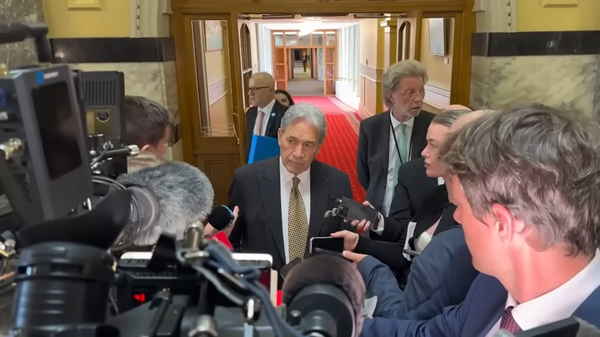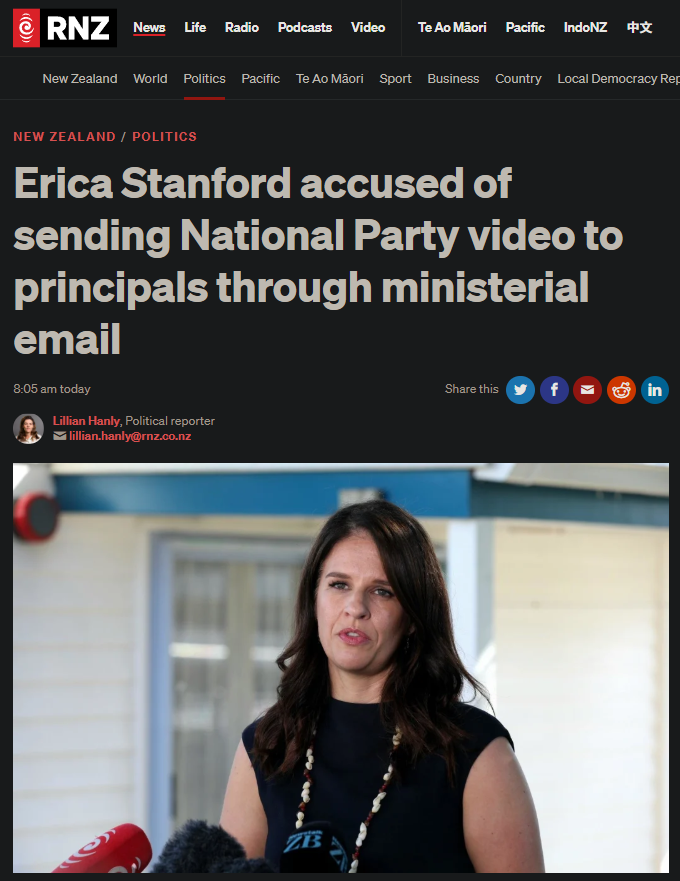
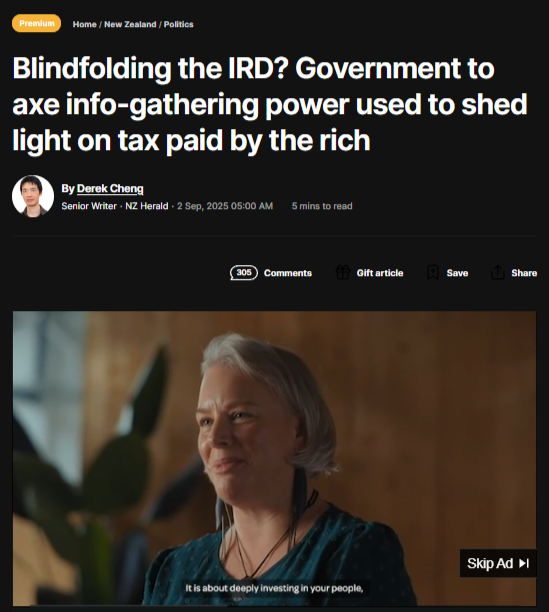
“Blindfolding the IRD: Shielding the Rich from Scrutiny” - 3 September 2025
How Simon Watts’ “privacy” stunt shields the ultra-rich and betrays Aotearoa’s commitment to fairness.
Kia ora Whānau,
Background
Tax transparency isn’t a bureaucratic luxury—it’s essential for democratic accountability and tika (justice). Section 17GB empowered the Inland Revenue Department (IRD) to gather detailed tax information on high-wealth individuals, enabling the landmark 2023 high-wealth report revealing that 311 of the richest Kiwis held $86 billion but paid a median 9.4% tax—less than half the 20.2% owed by middle-wealth New Zealanders.
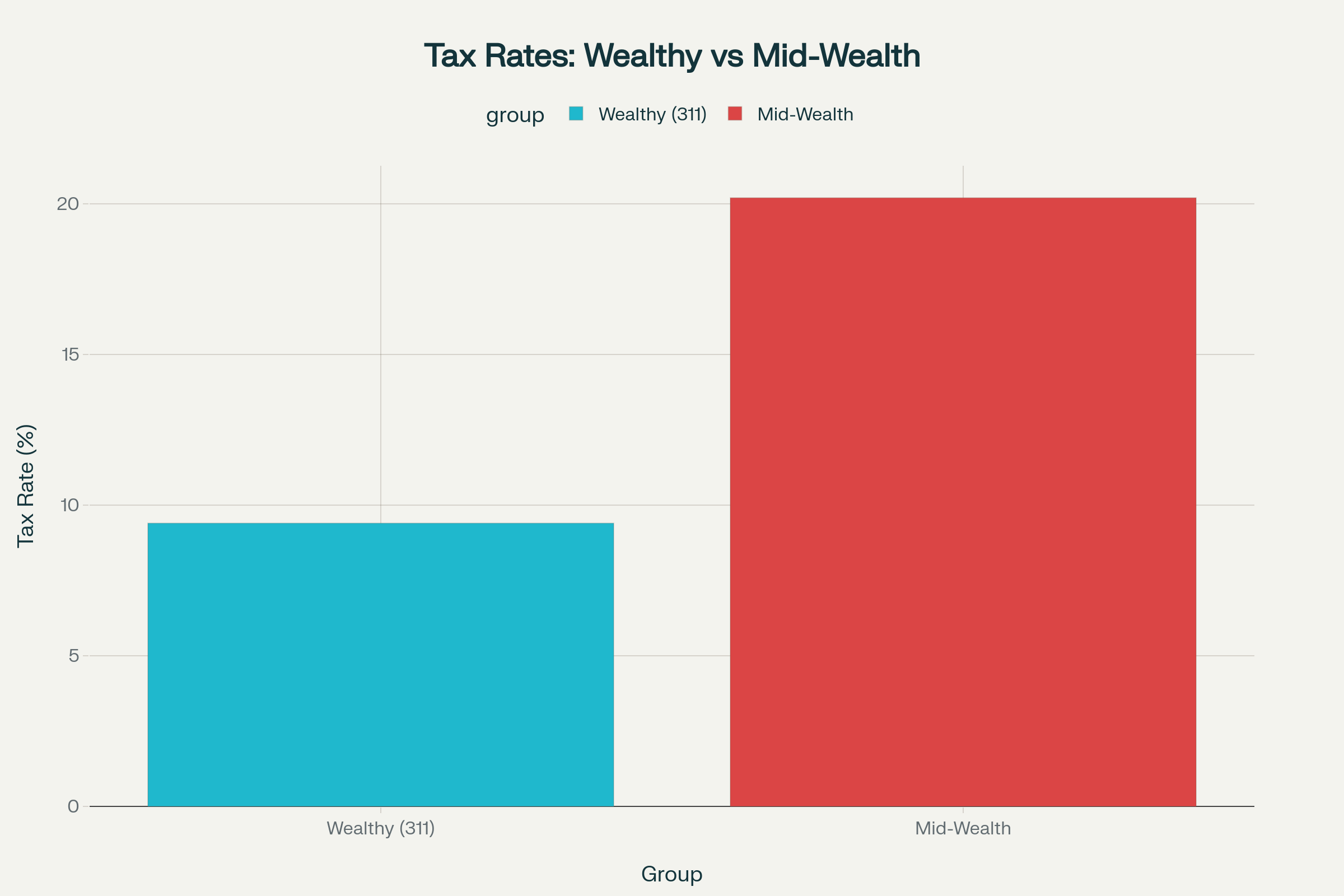
Median effective tax rates: Wealthy vs Middle-Wealth Kiwis
Historically, Māori have demanded rangatiratanga (sovereignty) over our resources and contributions. Denying IRD’s evidence-gathering power echoes colonial tactics that obscure exploitation and reinforce Pākehā privilege.
On 2 September 2025, Revenue Minister Simon Watts unveiled plans to repeal section 17GB under the omnibus Taxation Bill, couching it as a “privacy” victory. In truth, this repeal is a frontal assault on transparency, described by Tax Justice Aotearoa as “putting a blindfold on the IRD” and a “fundamental blow to transparency” (Glenn Barclay of Tax Justice Aotearoa). Meanwhile, the Taxpayers’ Union lauded the so-called “Nosey Parker” clause being scrapped as a win for privacy rights, oblivious to the glaring power imbalance it entrenches.
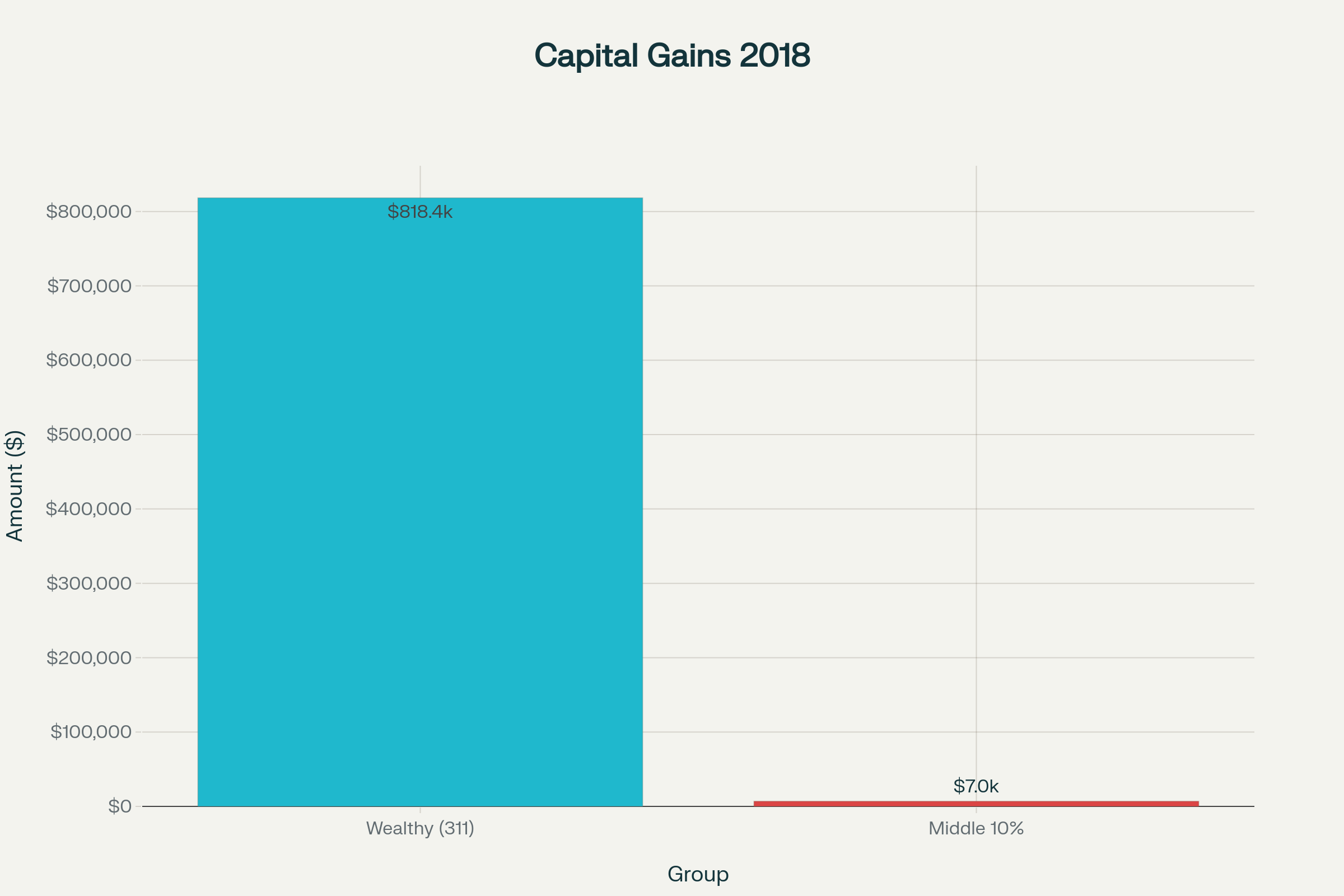
Average property capital gains in 2018: Wealthy vs Middle 10%
The Double Standard of Privacy
Simultaneously praising taxpayer privacy and dismantling tools that expose elite tax avoidance is brazen hypocrisy. The IRD’s own Regulatory Impact Statement noted that repealing the clause would “impact the quality of future policy advice” and risk allowing non-compliance to flourish in secret. While kaitiakitanga demands guardianship of communal resources, Watts’ stance safeguards the wealth of 311 families at the expense of the many.
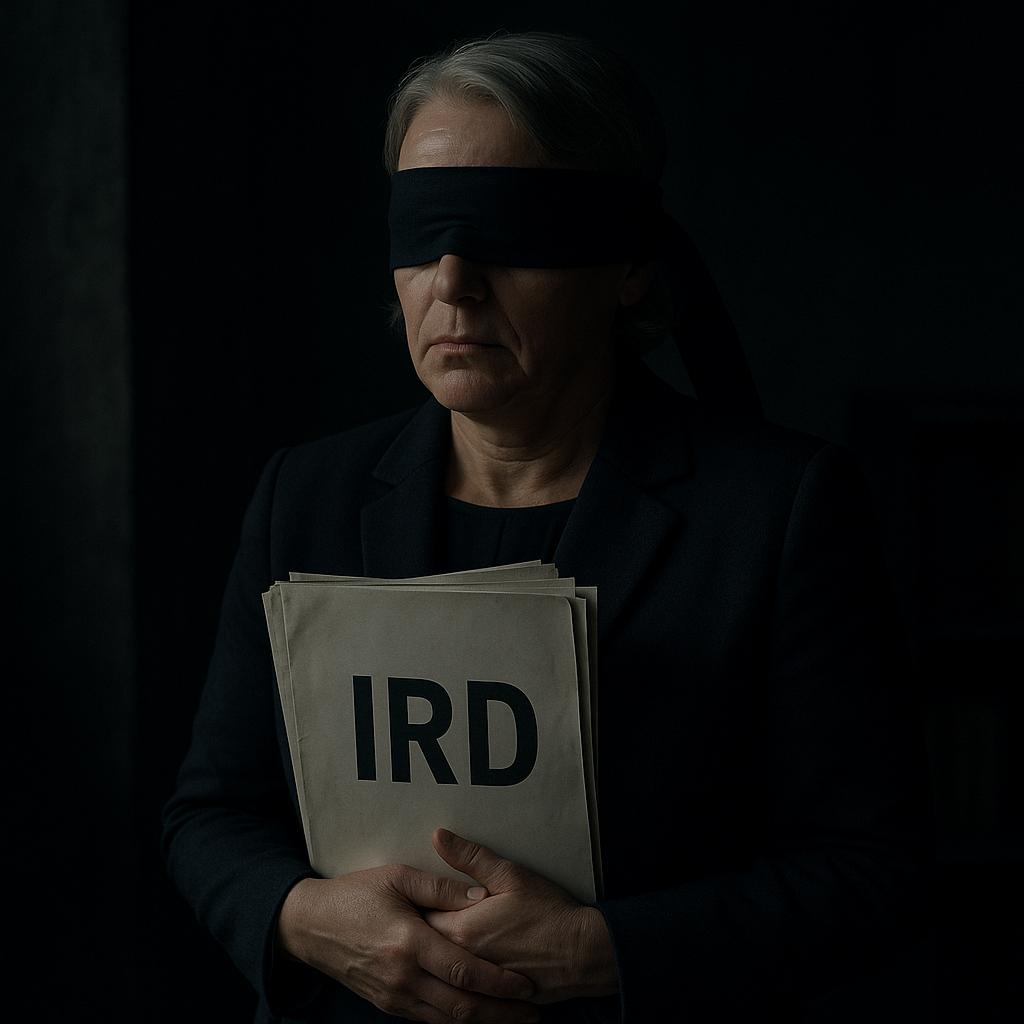
Blindfolded official with IRD files
Hidden Networks and Political Influence
Review of public records reveals that several families in the wealthy cohort have direct advisory roles or political donations to National MPs, suggesting that policy decisions are not coincidental but orchestrated to benefit a narrow elite. This mirrors international patterns where neoliberal elites fund deregulation campaigns to erode democratic oversight.
Elites hiding behind curtains counting wealth
Colonial Continuities in Data Control
The imperial playbook thrives on information asymmetry. By repealing 17GB, the Government returns to an era where tax data remained locked in government vaults, invisible to public scrutiny. This consolidation of knowledge perpetuates racialised economic hierarchies, contradicting Te Tiriti principles of equitable partnership.

Elites hiding behind curtains counting wealth
Counterarguments and Rebuttal
Watts claims IRD already possesses “extensive powers” and that the clause was an “unnecessary overreach”. Yet those powers exclude systematic data analysis for policy improvement—the very mechanism Ireland and the UK have used to close loopholes successfully. Far from invasive, section 17GB followed Privacy Commissioner guidelines, destroyed data post-analysis, and disclosed only aggregate findings.
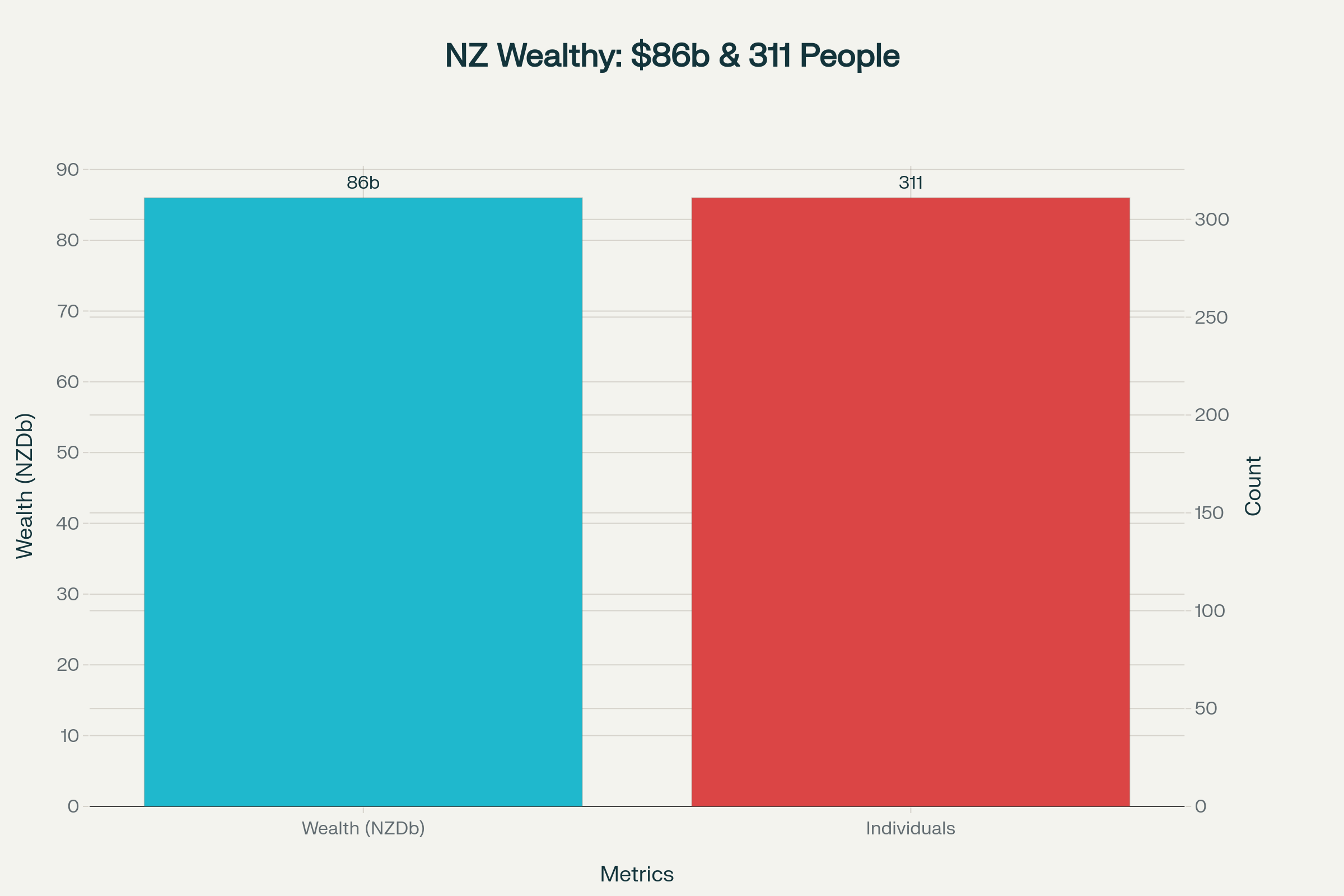
Combined family wealth and sample size for wealthy New Zealanders
Implications
Silencing IRD’s investigative powers risks entrenching wealth disparities, undermining Māori aspirations for economic justice, and normalising opaque policymaking. This is not an isolated bill but part of a broader white supremacist narrative that equates equity measures with unfair advantage. When the tools to reveal structural bias are dismantled, how can Aotearoa confront the legacies of colonial dispossession?

The Māori Green Lantern Fighting Misinformation And Disinformation From The Far Right
This repeal is a political dagger aimed at the heart of transparency and fairness. Call upon your hapū, iwi, and urban communities to demand the retention of 17GB and press National MPs to uphold mana tangata (respect for all people). If this essay resonates, consider supporting The Māori Green Lantern’s work: HTDM: 03-1546-0415173-000. Only contribute a koha if you have capacity and believe in a just Aotearoa.
Ngā mihi aroha,
Ivor Jones, Te Arawa/Ngāti Pikiao
The Māori Green Lantern