“Blood on the Coal: How Van Velden's Corporate Puppetry Betrays Pike River's Dead” - 28 August 2025
BLOOD ON THE COAL: Van Velden's Pike River Betrayal
Kia ora again whānau,
The Māori Green Lantern exposes how this government's assault on worker safety represents the same colonial violence that has always treated working people - especially Māori workers who are disproportionately represented in dangerous industries - as disposable commodities in the neoliberal machine.
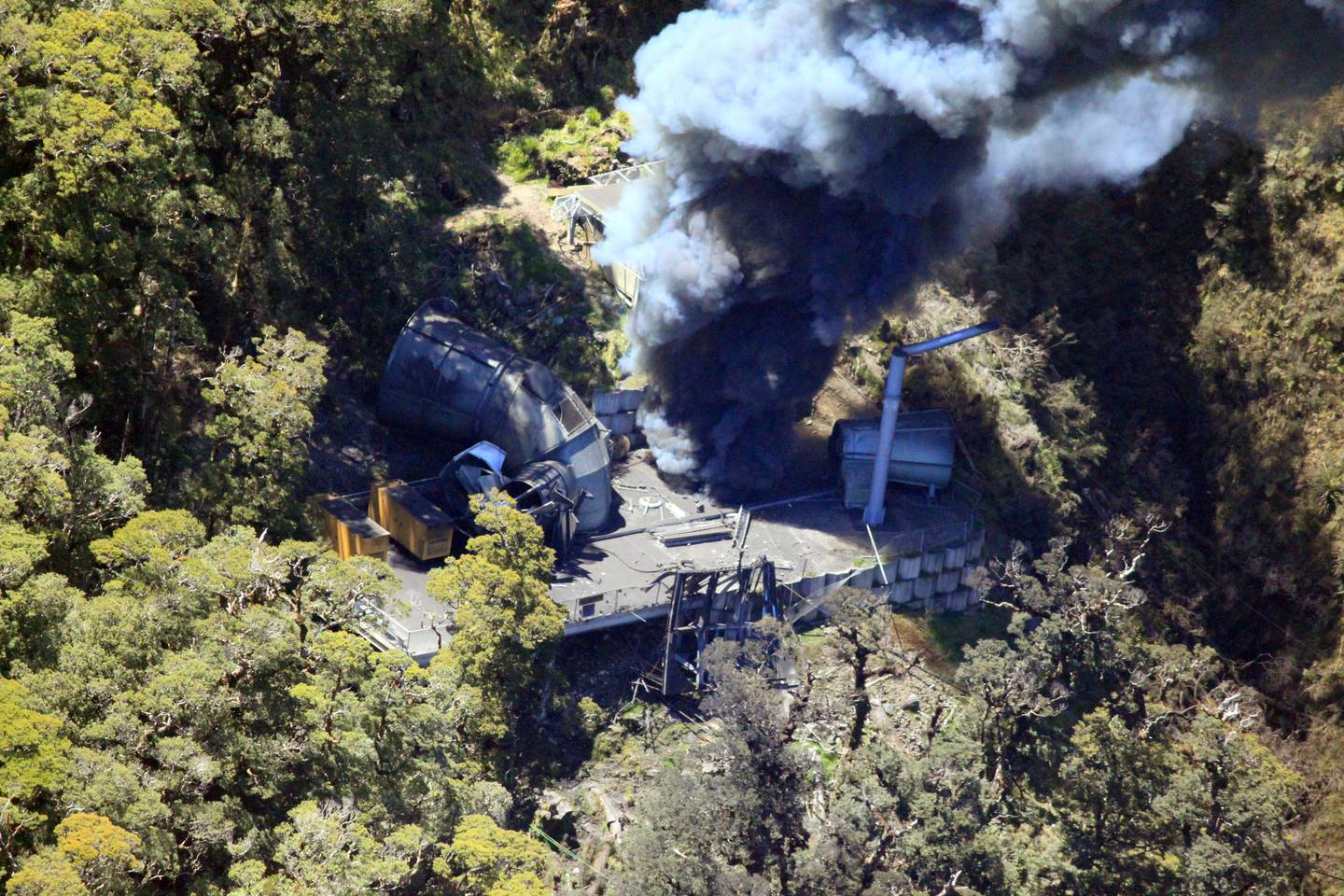
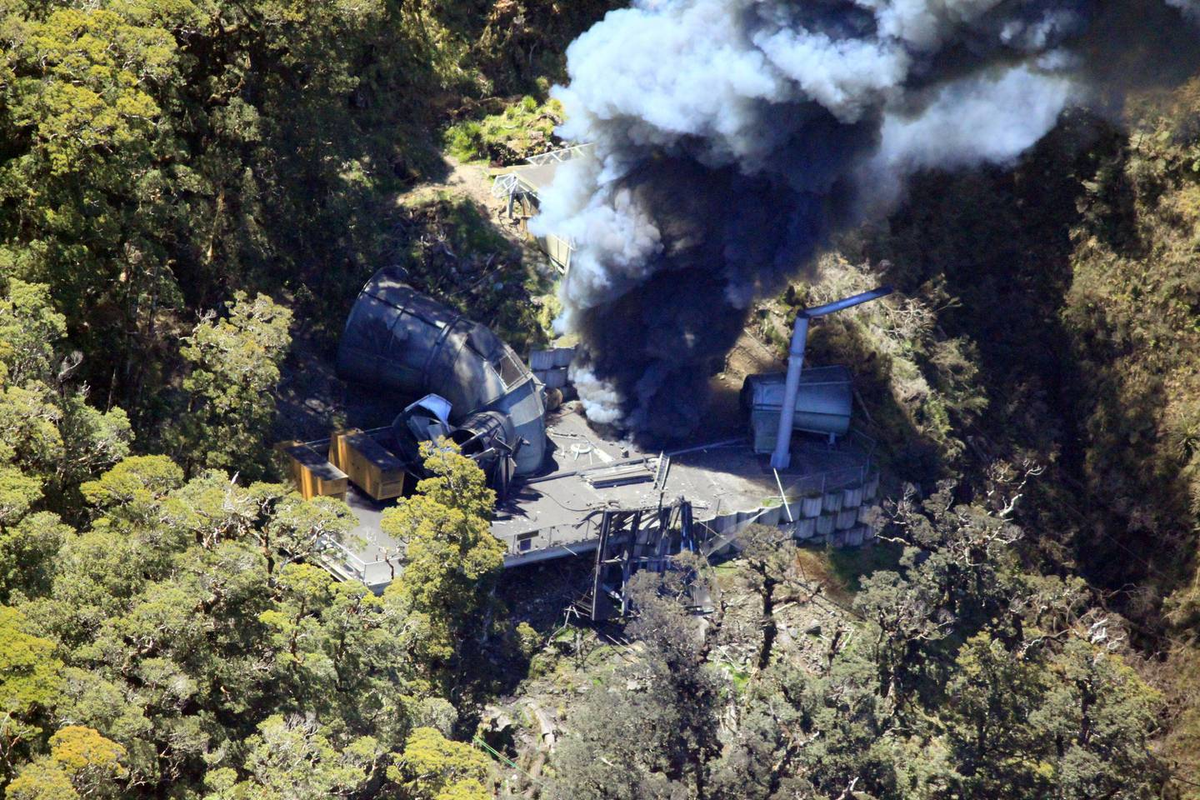
Aerial view of the Pike River coal mine site with black smoke rising after an explosion in West Coast, New Zealand

Van Velden, the ACT Party's neoliberal attack dog, has taken her marching orders straight from Uber's boardroom and is now serving them up as "workplace safety reform" with the audacity of a sociopath and the empathy of a corporate balance sheet.
Background: Pike River's Lessons Written in Blood
On November 19, 2010, twenty-nine men walked into Pike River mine and never came home. The youngest was just 17 years old. This wasn't an accident - it was corporate manslaughter enabled by exactly the kind of deregulated, self-policed system that van Velden is now resurrecting from its well-deserved grave.
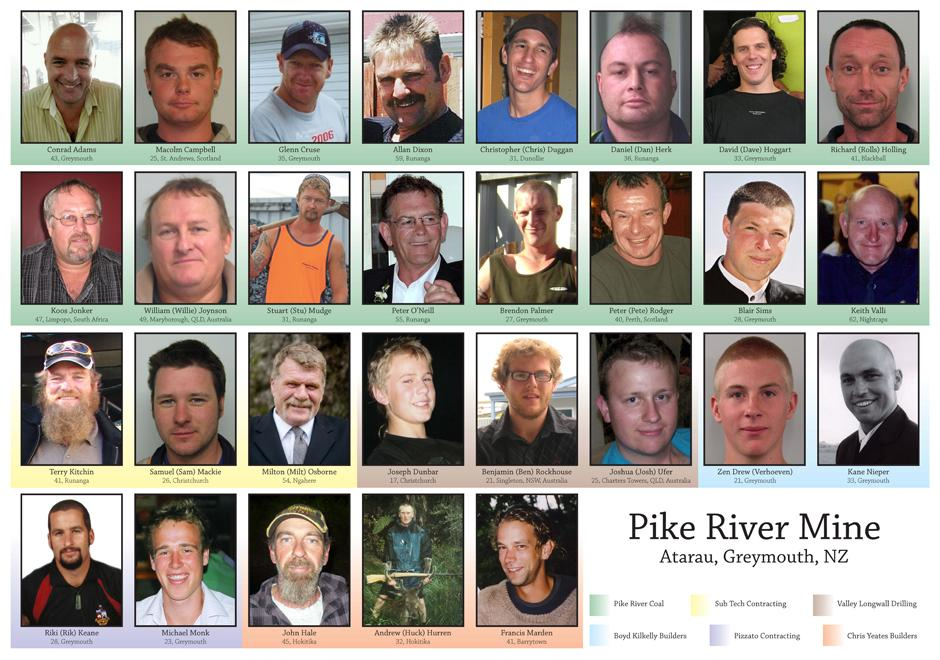
Memorial board showing portraits and details of the 29 victims of the Pike River Mine disaster in Greymouth, New Zealand, with color-coded company affiliations
The Pike River Royal Commission found that the company's board "did not protect the workforce from harm" and was "distracted" by "financial and production pressures". Numerous warnings of potential catastrophe were ignored as the company sacrificed workers' safety for speed and profit. The mine lacked adequate emergency exits, proper methane drainage, ventilation systems, and functioning gas sensors.
This disaster exposed the fatal flaws of New Zealand's previous "light-handed" regulatory approach - the same neoliberal fantasy that van Velden is now repackaging as "modernisation". The 2012 Royal Commission and 2013 Independent Taskforce both called for stronger regulation and better-resourced enforcement, leading to the creation of WorkSafe and the Health and Safety at Work Act 2015.
Van Velden's Corporate Capture in Action
Van Velden's so-called "reforms" represent nothing less than the complete corporate capture of workplace safety policy. Her plan shifts WorkSafe from enforcement to "guidance," creating industry-led codes of practice and carving out exemptions for small businesses. This is the same failed model that killed 29 men at Pike River, dressed up in the language of "reducing red tape" and eliminating the "culture of fear."
The government's own documents reveal the fraudulent nature of this policy. Ministry officials warned that relying on guidance rather than regulation could "repeat the failure identified by the Royal Commission and the Independent Taskforce in the wake of the Pike River Coal Mine tragedy." WorkSafe itself cautioned that "safe harbours" in industry codes might leave companies complying with approved guidance while still engaging in unsafe practices, making prosecution impossible.
Yet van Velden pushes ahead, driven not by evidence but by ACT Party ideology and corporate lobbying. Her meetings with Uber, her copy-paste adoption of their proposed amendments, and her systematic destruction of worker protections reveal a minister who serves corporate interests with the dedication of a bought-and-paid-for lobbyist.
Van Velden's Corporate Puppet Show: Following the Money
Van Velden's political career reads like a handbook on corporate influence peddling. Before entering Parliament, she worked as a lobbyist for Exceltium and spent two years as David Seymour's attack dog, prowling Parliament's corridors to pressure MPs into supporting ACT's euthanasia legislation. She admits to being called a "snake" and a "spy" - descriptors that prove remarkably prophetic given her current performance.
Her cosy relationship with Uber exposes the corrupt heart of her "contracting reform". Documents show Uber presented van Velden with "proposed amendments" to employment law in May 2024, amendments that were then adopted almost verbatim as government policy. When confronted about this blatant corporate capture, van Velden claimed she consulted "a range of stakeholders" - apparently forgetting that workers and their unions don't count as stakeholders in ACT's libertarian paradise.
The Green Party's Teanau Tuiono correctly identified this as the government being "deep in the pockets of Uber," essentially copying a corporation's homework and presenting it as independent policy. This isn't governance - it's corporate outsourcing with a ministerial seal of approval.
The Pike River Betrayal: Lessons Forgotten, Lives Forfeit
The parallels between Pike River's regulatory failures and van Velden's current agenda are terrifyingly precise. Both scenarios feature the same toxic combination: under-resourced regulators, industry self-regulation, and the prioritisation of corporate profits over worker safety.
Pike River Coal was found guilty on nine charges relating to health and safety violations. The company's negligence was "causative of the explosion and subsequent deaths". Yet CEO Peter Whittall's charges were mysteriously dropped in 2013, and to this day, no individual has been prosecuted or held accountable for the safety failures that killed 29 men.
Van Velden's reforms promise to make such accountability even less likely. By shifting from enforcement to guidance and creating "safe harbours" for companies that comply with industry codes, her system would have made prosecuting Pike River Coal impossible. The company could have pointed to their compliance with industry guidance while 29 men suffocated in the dark.
Sonya Rockhouse, who lost her son Ben in the Pike River explosion, captured the obscenity of van Velden's betrayal: "That's an insult to the memories of our guys - and not just our guys but the rest of the people killed in the workplace every year."
The Enforcement Collapse: Death by Design
Van Velden's assault on WorkSafe has already produced devastating results. The data reveals a system in deliberate collapse under government pressure:
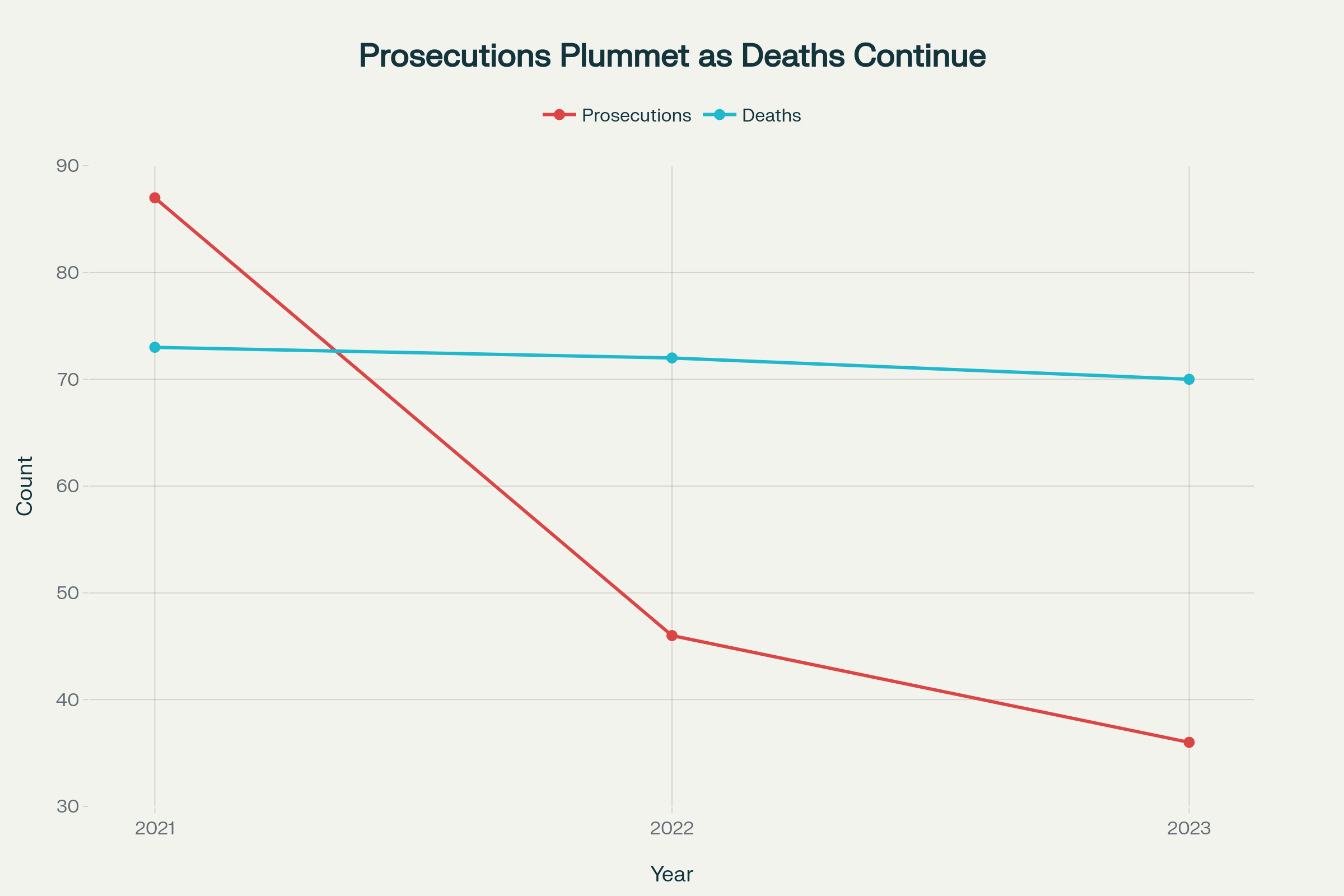
WorkSafe prosecutions have nearly halved from 87 in 2021 to just 36 in 2023, even as workplace deaths remain tragically high at around 70 people killed each year
WorkSafe prosecutions have nearly halved from 87 in 2021 to just 36 in 2023, even as workplace deaths remain at a horrific 70 people per year. The agency has cut 124 permanent roles - a 17 percent reduction in staff - while being handed new responsibilities without additional funding.
Van Velden has explicitly instructed WorkSafe to focus on "clear breaches and causation" and be "even handed," including "strengthening its approach to worker breaches of duty". This victim-blaming language reveals the true agenda: shifting responsibility from employers who control workplace conditions to workers who simply want to survive their shift.
New Zealand's International Shame: A Deadly Outlier
New Zealand's workplace safety record is an international disgrace that van Velden's reforms will only worsen. Our workplace fatality rate is 60 percent higher than Australia's and five times higher than the UK's. We average 2.6 deaths per 100,000 workers compared to Australia's 1.6 and the UK's 0.5.
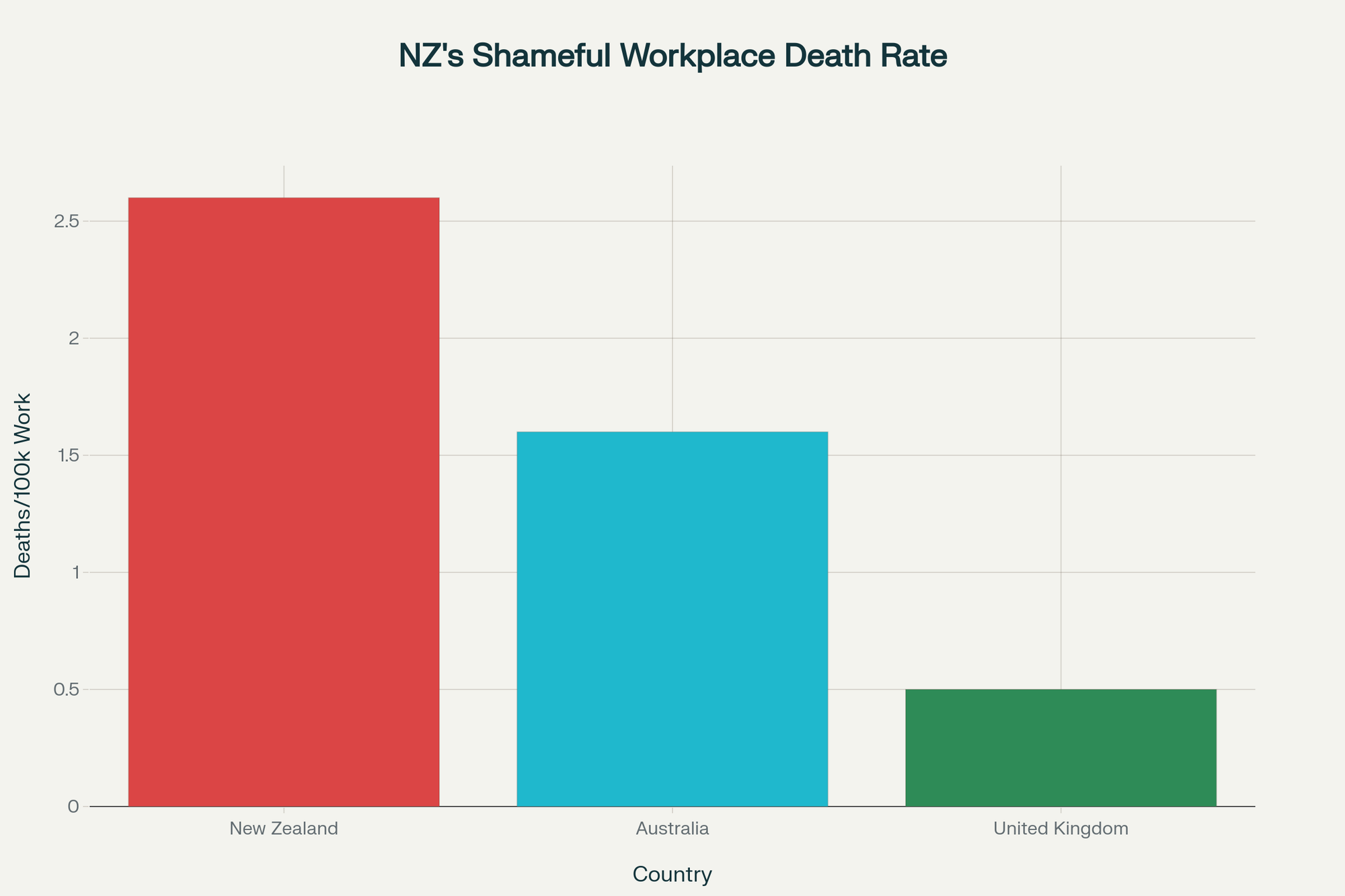
New Zealand's workplace fatality rate is more than 60% higher than Australia's and five times higher than the UK's, exposing the deadly consequences of inadequate safety enforcement
This isn't because New Zealand has inherently more dangerous industries. Countries that have invested in proper regulation, adequate enforcement, and robust inspector networks have dramatically reduced workplace deaths. Australia and the UK achieved their improvements through exactly the kind of proactive, well-resourced regulatory approach that van Velden is systematically destroying.
The Business Leaders' Health and Safety Forum found that New Zealand, relative to Australia, has fewer workplace visits, fewer inspectors, and fewer enforcement notices. We're already under-regulating and under-enforcing compared to our successful neighbours, yet van Velden's solution is to regulate and enforce even less.
The Neoliberal Death Cult: Market Fundamentalism Over Human Life
Van Velden's reforms represent pure neoliberal ideology in its most lethal form. Her background in lobbying, her corporate connections, and her systematic dismantling of worker protections reveal someone who views human safety as an obstacle to corporate profit maximisation.
The ACT Party's regulatory responsibility agenda has failed three times since 2007, rejected by successive governments who understood its dangers. Van Velden is now implementing this discredited ideology through the back door, using the coalition agreement to impose policies that ACT never campaigned on.
This is the same "light-handed regulation" and "self-regulation" approach that delivered the leaky buildings crisis, Pike River, and countless preventable workplace deaths. Yet van Velden persists, driven by the market fundamentalist belief that corporate self-interest will magically align with worker safety.
The Māori Dimension: Colonial Violence Through Policy
For Māori workers, van Velden's assault on workplace safety represents another manifestation of colonial violence. Māori are over-represented in dangerous industries like construction, forestry, and agriculture - precisely the sectors that will suffer most under weakened safety enforcement.

Workplace safety in logging
The principle of manaakitanga demands that we care for each other's wellbeing, yet van Velden's reforms abandon this responsibility to corporate boardrooms. Kaitiakitanga requires us to protect our people and environment from harm, but her deregulation prioritises profit over protection.
When Māori workers are killed or maimed because van Velden weakened safety protections to please her corporate donors, this becomes not just policy failure but cultural genocide - the systematic elimination of our people through state-sanctioned negligence.
The Corporate Conspiracy: Following the Money Trail
Van Velden's rapid rise to Cabinet reveals the corrupting influence of corporate money in ACT politics. From unknown lobbyist to deputy leader to senior minister in just four years, her trajectory reflects not merit but her utility to corporate interests seeking regulatory capture.
Her meeting with Uber wasn't an isolated incident but part of a systematic pattern. Van Velden regularly consults with business groups while treating unions as adversaries. She refuses interviews with RNZ's Morning Report, preferring friendly corporate venues where her policies won't face scrutiny.
The Coalition Government's commitment to create a Ministry for Regulation - three times the size of the abolished Productivity Commission - reveals the true agenda. This isn't about reducing regulation; it's about ensuring all regulation serves corporate interests rather than public safety.

The Māori Green Lantern fighting misinformation and disinformation from the far right
The Ideological Assault: ACT's War on Workers
Van Velden's workplace safety reforms must be understood within ACT's broader assault on worker rights. The party that brought us the Employment Contracts Act 1991 - which "bulldozed" unions and destroyed collective bargaining - is now completing its decades-long project of corporate supremacy.
The same party that wants to eliminate Fair Pay Agreements, restore 90-day trials, and gut employment protections is now dismantling workplace safety enforcement. This isn't coincidence; it's coordination. ACT's donors want maximum labour flexibility, minimum regulatory oversight, and zero accountability for workplace harm.
Richard Wagstaff from the Council of Trade Unions correctly identifies this as "ACT party ideology" rather than evidence-based policy. The government's own regulatory impact assessment found no evidence that the changes would reduce injuries or deaths, yet van Velden proceeds because ideology trumps evidence in the neoliberal playbook.
Implications: The Coming Carnage
Van Velden's reforms will kill people. This isn't hyperbole; it's the predictable consequence of weakening enforcement while maintaining dangerous working conditions. The government's own officials warned of "repeating the failure identified by the Royal Commission," yet van Velden ignores this advice.
When the next Pike River occurs - and it will, because van Velden has systematically removed the barriers preventing it - the blood will be on her hands and those of every politician who enabled this betrayal. The families of future victims will know exactly who to blame: the minister who chose corporate profits over human life.
For Māori communities already bearing disproportionate workplace harm, van Velden's reforms represent an escalation of colonial violence through policy. Our people will die so that ACT's donors can maximize their profits with minimum accountability.
Resistance and Remembrance
Van Velden's assault on workplace safety represents everything wrong with neoliberal capitalism: the systematic subordination of human life to corporate profit, the capture of democratic institutions by wealthy interests, and the abandonment of collective responsibility for individual wellbeing.
The 29 men who died at Pike River deserve better than this betrayal. Their families fought for stronger protections, not so that a corporate lobbyist turned minister could dismantle them to please her donors. Every worker who risks their life to build this country deserves protection from the predatory capitalism that van Velden represents.
We must resist this assault through every available means: political opposition, industrial action, community organising, and relentless exposure of the corporate interests driving these deadly policies. The principle of aroha demands nothing less than total opposition to reforms that treat human life as expendable.
Māori values of manaakitanga, kaitiakitanga, and whakatōhea require us to protect our people from harm, including the harm inflicted by neoliberal politicians serving corporate masters. Van Velden's reforms are not just bad policy; they are an act of violence against working people that must be stopped.
Kia kaha, whānau. The fight for worker safety is the fight for our collective survival against a system that values profit over people. We honour Pike River's dead not with empty words but with uncompromising resistance to those who would repeat their betrayal.
The MGL understands these tough economic times for whānau so please only contribute a koha if you have capacity and wish to do so: HTDM: 03-1546-0415173-000.
Arohanui,
Ivor Jones - The Māori Green Lantern