“Capitalist Vultures Circle the Pacific: The Metals Company's Colonial Plunder of Moana's Sacred Depths” - 26 July 2025
The Neocolonial Nightmare: A Corporate Land Grab of the Deep Sea
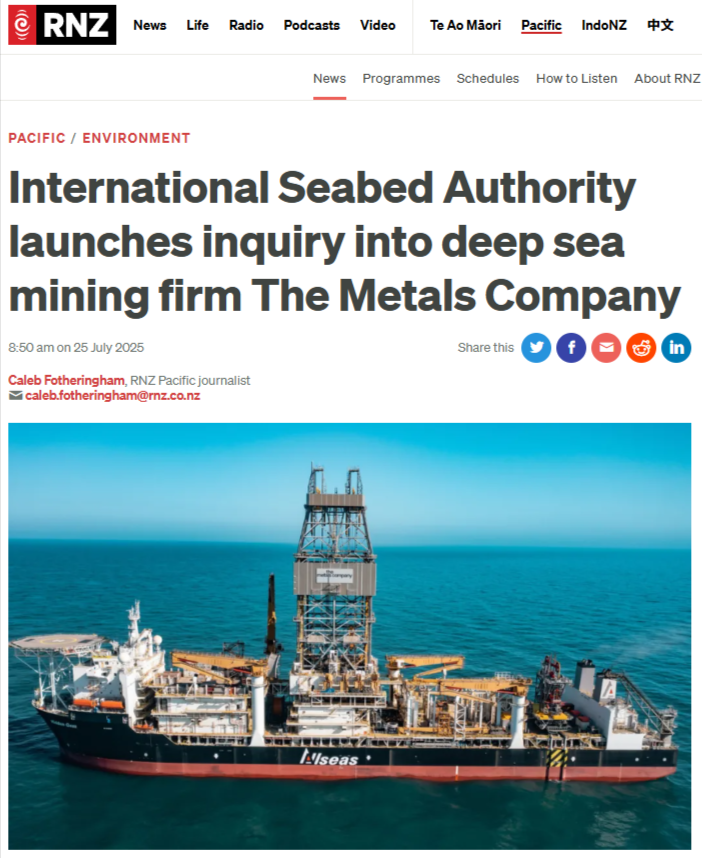
Tēnā koutou katoa whānau (Greetings to all families). This is Ivor Jones, The Māori Green Lantern, and today we're diving deep into the murky waters of neocolonial extraction that threatens the sacred heart of Te Moana nui ā Kiwa - the Pacific Ocean itself.
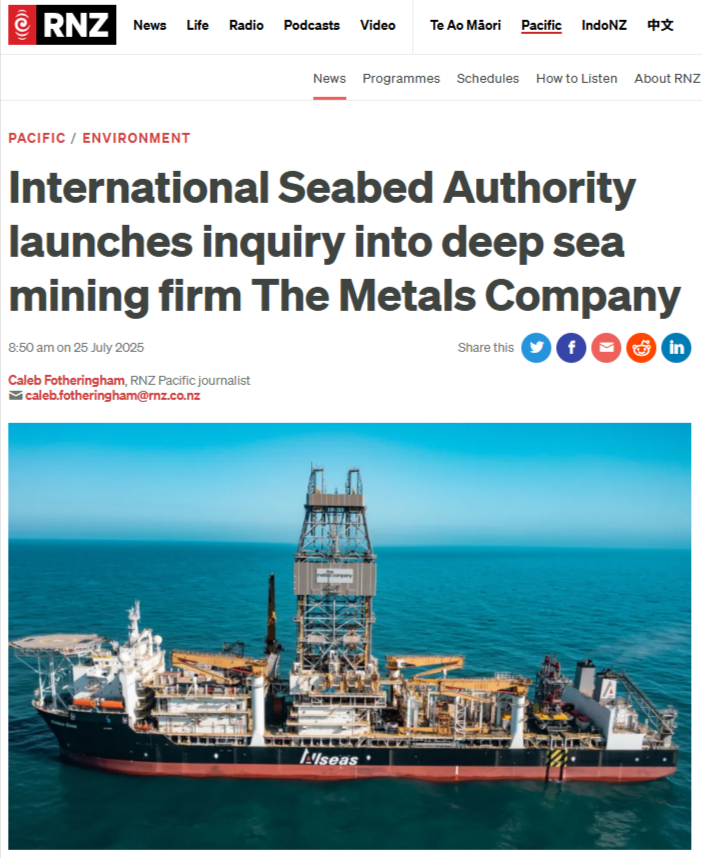
The recent RNZ Pacific report reveals the International Seabed Authority has launched an inquiry into deep sea mining frontrunner The Metals Company for "non-compliance"1, but this corporate choreography of supposed accountability masks a far more sinister truth: the systematic colonisation of our Pacific whānau through environmental devastation disguised as green progress.
Background: The Pacific's Pattern of Predation
The International Seabed Authority inquiry stems from The Metals Company's strategic pivot to bypass international law by applying to mine exclusively through United States regulations1. This manoeuvre was made possible through Donald Trump's executive order "Unleashing America's Offshore Critical Minerals and Resources", which environmental experts have condemned as violating international law2.
For over a decade, Pacific civil society groups have mobilised against this extractive colonisation, with Māori and Pacific leaders declaring that "deep sea mining permanently removes habitats from the ocean" and represents "a disconnection from the world around us that clashes with our Indigenous beliefs and worldview"3.
Corporate Gaslighting and Ecological Devastation
The Metals Company, led by CEO Gerard Barron, has positioned itself as the pioneer of commercial deep sea mining in the Pacific Ocean's Clarion-Clipperton Zone. Their narrative centres on three key deceptions that this analysis will systematically dismantle:
Corporate Claim One: That deep sea mining is essential for the "green transition" and combating climate change14.
Corporate Claim Two: That Pacific Island states like Nauru are willing partners benefiting economically from these ventures15.
Corporate Claim Three: That their operations comply with international law and environmental standards16.
Each of these claims represents a fundamental assault on truth, Indigenous sovereignty, and ecological integrity that echoes the darkest chapters of Pacific colonisation.
Deconstructing the Corporate Mythology
The Green Transition Lie: Perpetuating Environmental Colonialism
Gerard Barron's central mythology positions The Metals Company as essential for obtaining "transition minerals" required for clean energy technologies7. This narrative weaponises climate urgency to justify ecological destruction, employing what Indigenous scholars recognise as "green colonialism" - the appropriation of environmental crisis to legitimise resource extraction.
The reality contradicts this corporate propaganda. A 2024 Ocean Foundation report revealed that despite electric vehicle production increasing by 2000 percent from 2016 to 2023, the price of cobalt - one of the main metals found in the nodules - had decreased8. This exposes the fundamental economic fallacy underlying Barron's entire enterprise.
Furthermore, over 900 scientists have signed letters calling for a moratorium on deep sea mining until environmental risks are better understood9, with major companies like BMW, Samsung Electronics, and Google supporting a temporary ban9.
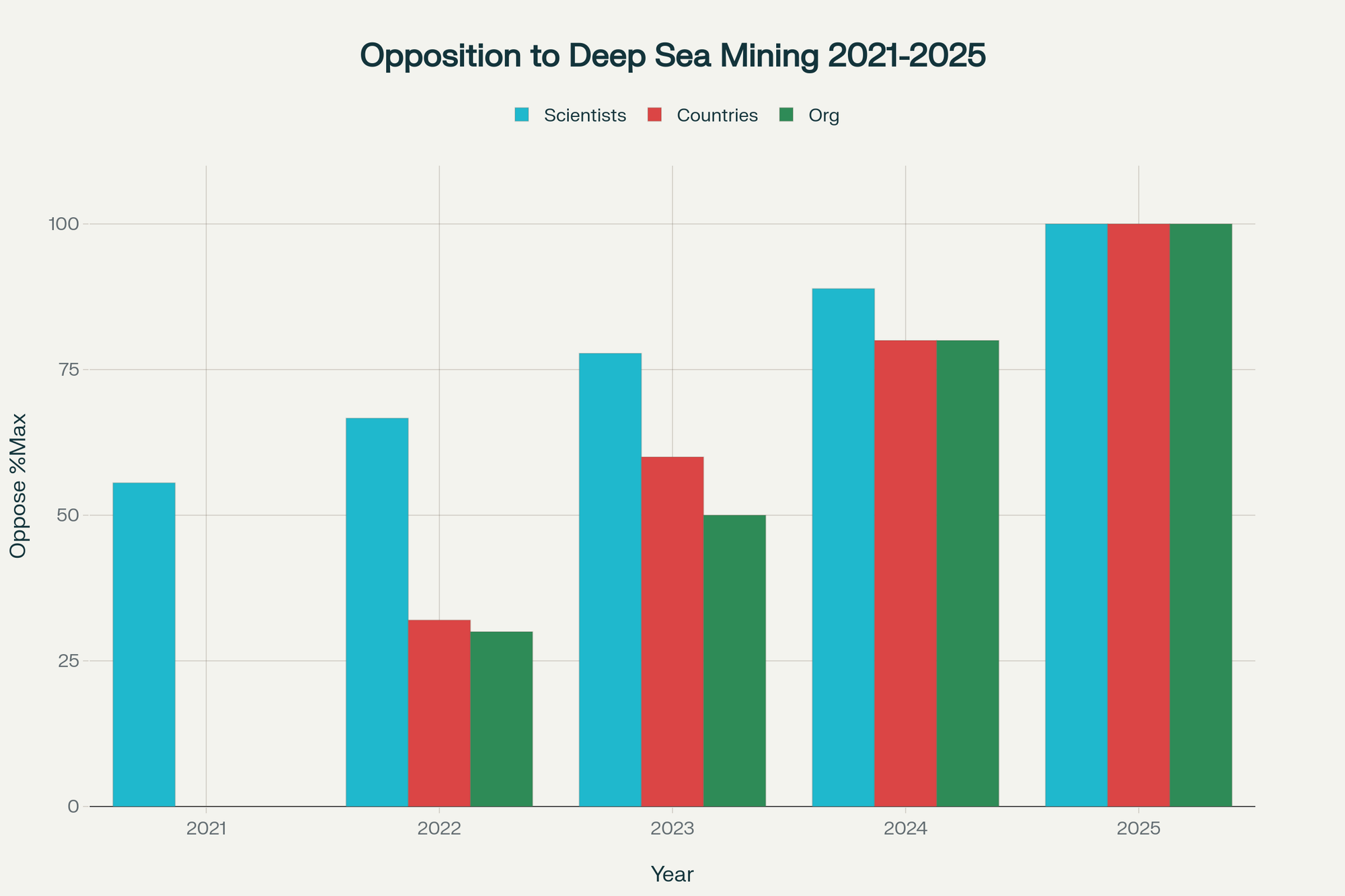
Growing opposition to deep sea mining from the scientific community, governments, and civil society organizations from 2021-2025
The Manufactured Consent of Pacific Island "Partners"
The most insidious aspect of The Metals Company's operation is its exploitation of Pacific Island states, particularly Nauru, through what can only be described as predatory partnership agreements. Nauru's tragic history as a colonial extraction site provides the perfect case study in how corporate vultures prey on nations still recovering from previous waves of resource colonisation10.
From 1906 until independence in 1968, Nauru's phosphate was strip-mined by colonial powers, leaving 80% of the island as "a wasteland of jagged limestone pinnacles up to 15 metres high"10. This environmental devastation created the perfect conditions for The Metals Company's predatory approach - a small island nation with limited economic options and a government desperate for revenue11.
The supposed "partnership" between Nauru and The Metals Company through Nauru Ocean Resources Inc (NORI) follows classic patterns of neocolonial extraction. Legal experts warn that Nauru is "very much being driven by the interests of The Metals Company, which obviously is a commercial organisation"12, while Pacific civil society groups have repeatedly called for moratoriums, stating "we are really calling for an outright ban at this stage whilst we try and get governance systems in order"13.
The Legal Compliance Fiction: Circumventing International Law
Perhaps the most brazen aspect of The Metals Company's strategy is their claim to legal compliance while simultaneously circumventing established international frameworks. Duncan Currie, international environmental lawyer with Deep Sea Conservation Coalition, has warned that The Metals Company's US-based application "would amount to a free-for-all on seabed mining" and bring "chaos in the high seas"14.
The company's pivot to US regulations represents a calculated assault on the United Nations Convention on the Law of the Sea (UNCLOS), which designates the International Seabed Authority as having exclusive jurisdiction over seabed mining in international waters15. Legal scholars have noted that Trump's executive order "clearly contravenes UNCLOS" and violates the principle that international seabed resources belong to "mankind as a whole"15.
The Chinese government has condemned the US executive order as violating "international law and harms the overall interests of the international community"16, while nearly 40 nations condemned The Metals Company's actions at the ISA council meeting in Kingston, Jamaica14.
The Corporate Fraud Allegations: A Pattern of Deception
Beyond environmental and legal concerns, The Metals Company faces serious questions about corporate integrity. A federal lawsuit in the Eastern District of New York alleged the company violated Securities Exchange Act provisions by "falsely claiming that certain private funds had 'fully committed' to invest $330 million in TMC's public equity" when "only about one-third of that money ultimately materialised"17.
The lawsuit also alleged that CEO Gerard Barron made false statements about environmental impacts, claiming mining polymetallic nodules would "generate zero tailings and zero waste"17, while critics highlighted the company's "failure of some of TMC's PIPE investors" as "embarrassing" given that "TMC estimates that $7 billion is needed for large-scale production"9.
Furthermore, watchdog groups have requested SEC investigations into "undisclosed histories" including Gerard Barron's position as director of Windward Prospects Limited, an environmental remediation company that "went bankrupt on his watch" while fighting to avoid paying for cleanup costs18.
Indigenous Resistance and Māori Values Framework
The resistance to deep sea mining by Pacific Indigenous communities embodies the principles of kaitiakitanga (guardianship) and whakapapa (interconnected relationships) that fundamentally oppose extractive colonialism. Māori and Pacific leaders have signed He Whakaputanga Moana to grant whales legal personhood, recognising traditional ideas about the importance of whales as ancestral beings and declaring the ocean deserves protection from industrial exploitation19.
Pacific Indigenous leaders delivered their rejection of deep sea mining to the International Seabed Authority, making clear that "if the ISA greenlights such mining, it will be without these Indigenous people's consent"20. This resistance reflects the principle of mana whenua (territorial rights) and the understanding that environmental protection represents "both a moral and ethical responsibility" for Pacific peoples21.
Implications: Contemporary Militarisation and Neocolonial Control
The Metals Company's operations, enabled by Trump's executive order, represent what Pacific advocates have identified as "a contemporary militarisation of the Pacific region yet again"22. This militarisation serves broader US imperial interests, with administration officials stating "we want the US to get ahead of China in this resource space under the ocean"23.
For Pacific Island communities, this represents another wave of colonial exploitation following the devastating impacts of nuclear testing, phosphate mining, and other extractive industries. Research on Pacific Small Island Developing States shows how "economic strains caused by the COVID-19 pandemic have highlighted the need for PSIDS to diversify their economies"24, creating vulnerability to corporate predators offering false promises of sustainable development.
The broader pattern reflects what Greenpeace has identified as "neocolonialism in the Pacific" where "the extraction of resources from the Pacific region without adequately consulting or compensating local communities is a form of neo-colonialism that perpetuates the legacy of Cook in the region"25.
Rejecting Corporate Colonialism, Embracing Indigenous Sovereignty
The International Seabed Authority inquiry into The Metals Company represents far more than a regulatory compliance issue - it exposes the fundamental tension between Indigenous sovereignty and corporate colonialism in the Pacific region. The company's strategy of circumventing international law through Trump's executive order while claiming partnership with vulnerable Pacific Island states follows textbook patterns of neocolonial exploitation.
The mounting opposition from scientists, Pacific civil society, and Indigenous leaders reflects a growing understanding that deep sea mining represents environmental vandalism disguised as climate action. Over 50 Pacific civil society organisations have declared that "Indigenous Rights, the rights of Pacific Peoples, their knowledge systems, and a healthy environment should be at the centre of all conversations and decision-making"26.
The path forward requires rejecting corporate narratives that weaponise climate urgency to justify ecological destruction. Instead, we must centre Indigenous knowledge systems, respect the legal personhood of our moana ancestors, and recognise that true environmental protection comes through kaitiakitanga - not corporate extraction.
The Metals Company and their enablers represent the contemporary face of colonial exploitation, using greenwashing rhetoric to mask predatory capitalism. Our response must be equally clear: no consent, no compromise, no collaboration with the destroyers of our Pacific home.
He koha/donation statement: Readers who find value in this mahi and wish to support our continued exposure of corporate colonialism and neocoliberal propaganda may consider a koha to HTDM: 03-1546-0415173-000. The MGL understands these tough economic times for whānau, so please only contribute if you have capacity and wish to do so.
Kia kaha, kia māia, kia manawanui (Be strong, be brave, be steadfast)
Ivor Jones
The Māori Green Lantern
Kaitiaki exposing corporate colonialism