“Cleansing Colonial Filth from Our Whenua” - 26 July 2025
How Long Will We Tolerate War Criminals Naming Our Places?
Mōrena koutou katoa,
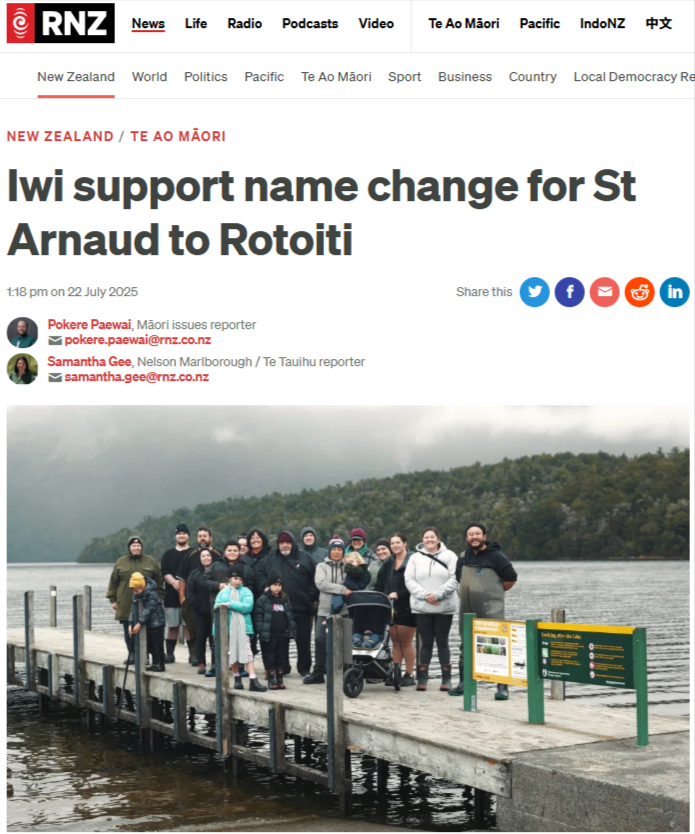
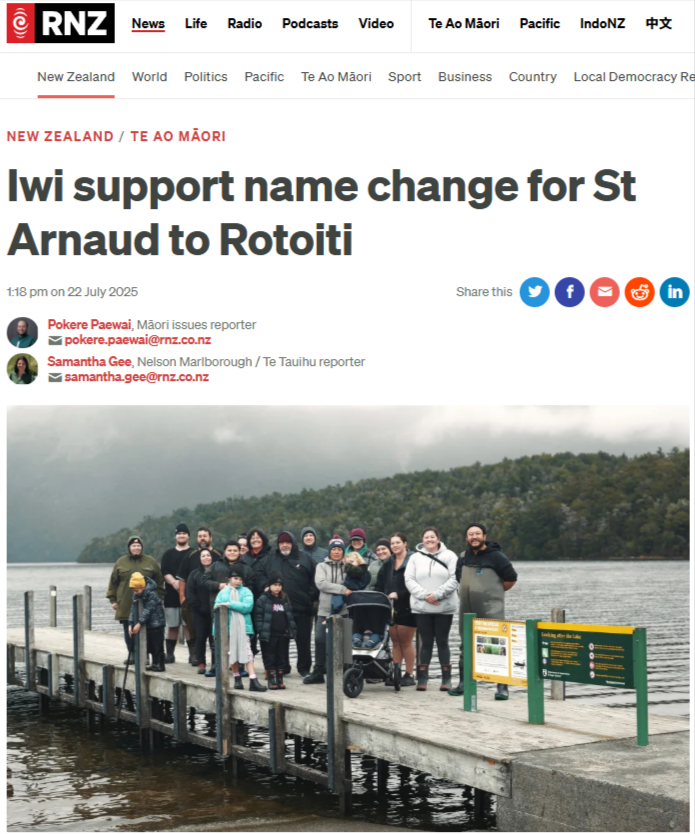
The recent Radio New Zealand article about iwi supporting the name change from St Arnaud to Rotoiti reveals something far more sinister than bureaucratic process. This is about whether we will continue to let the names of genocidal mass murderers poison our sacred landscapes. The article exposes a system designed to protect colonial violence while making iwi jump through endless hoops to reclaim what was always theirs.
Background: The Stench of Colonial Naming
Place names are never neutral. They are monuments to power, carved into the landscape to remind tangata whenua daily of their supposed conquest. When colonial administrators scattered European names across Aotearoa, they were performing an act of cultural violence as deliberate as land theft itself.
The New Zealand Geographic Board, despite its Māori co-name Ngā Pou Taunaha o Aotearoa, operates as a colonial gatekeeping institution1. Its very existence assumes the Crown has the right to name our whenua, forcing iwi to petitiondate European arrival by centuries.
War Criminals Get Priority Over Tangata Whenua
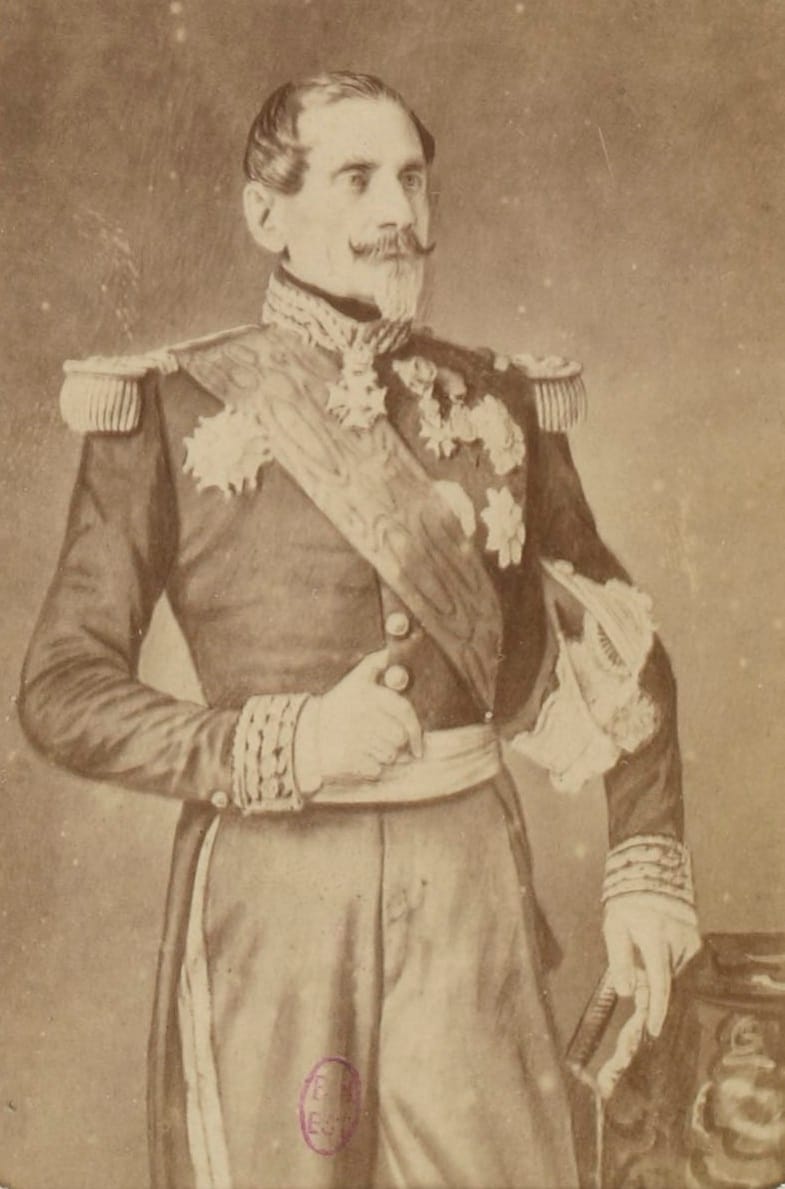
Let us be absolutely clear about who Jacques Leroy de Saint-Arnaud was. This man suffocated 500 Arab tribesmen in a cave by sealing its exits in Algeria2. He wrote proudly about creating "a vast cemetery" and making the earth "cover the corpses of these fanatics forever"2. This genocidal monster also burned 200 villages in 18462, destroying "rich arable fields"2.
Yet somehow, according to RNZ, the Geographic Board has told iwi they must "consult further with the local community before the proposal can be processed further"34. Think about this logic: tangata whenua must seek permission from settlers to remove the name of a man who committed genocide.
The Geographic Board's Colonial Bureaucracy
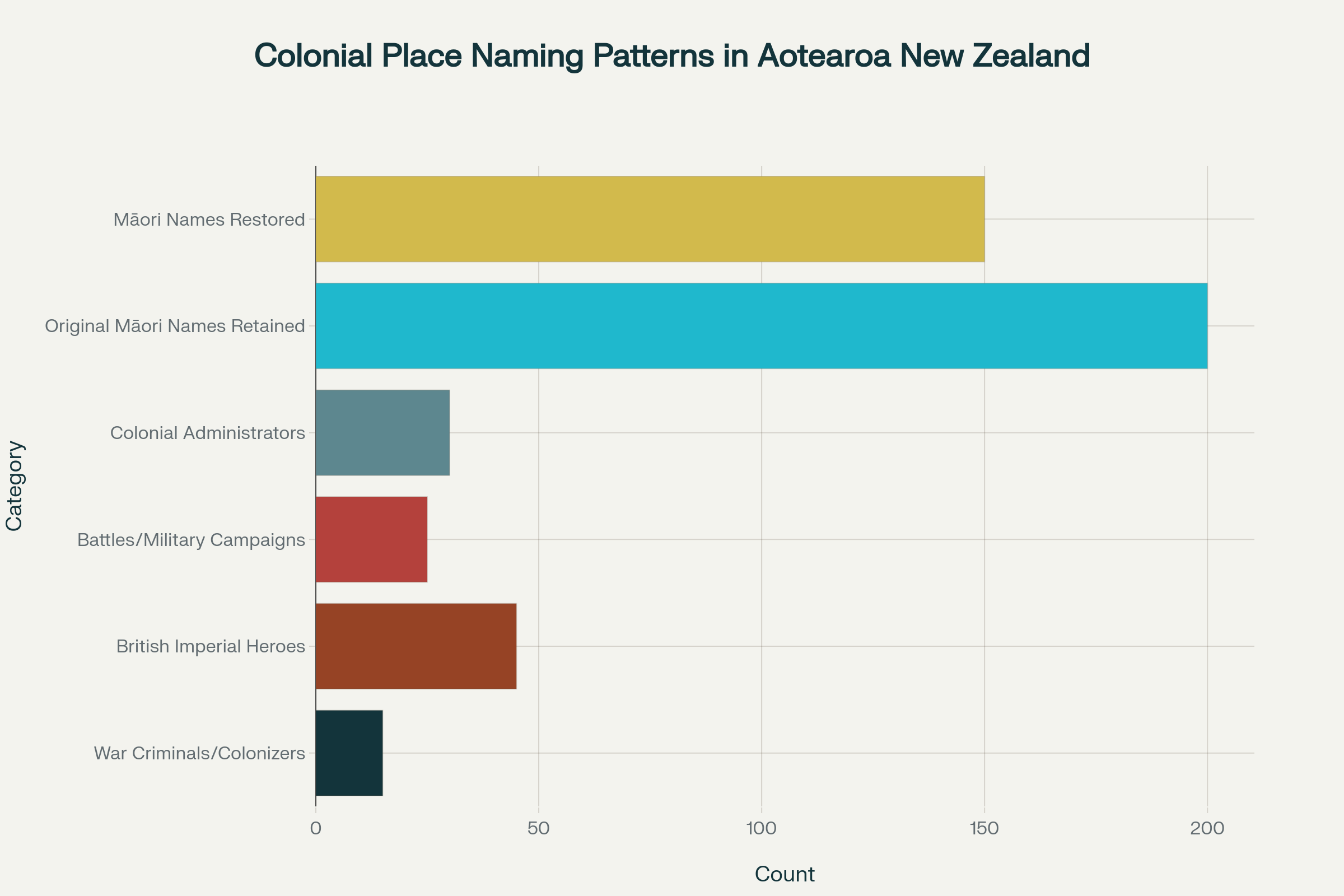
Colonial place naming patterns in Aotearoa showing the prevalence of names honoring colonizers, war criminals, and imperial figures versus Indigenous names
The Geographic Board secretary Wendy Shaw's statement reveals the colonial mindset perfectly. She frames this as a process requiring "community consultation" - but which community? The article makes clear that many locals already call the area Rotoiti5, and Rangitāne research found evidence of the name Rotoiti being used in 18513 - years before the area was renamed after a war criminal.
The board's demand for "community consultation" is a colonial fiction. It assumes that settlers who arrived yesterday have equal say over place names as iwi whose tūpuna lived on this land for centuries. This is the democratic racism that masquerades as fairness while protecting white supremacy.
Deconstructing Colonial Place Naming Violence
Colonial place naming was never about convenience or navigation. It was psychological warfare designed to embed white supremacist mythology into the landscape itself. As research shows, colonial place names perpetuate settler colonial mythologies including white supremacy6 by naturalizing narratives of conquest and Indigenous erasure.
When colonial surveyors renamed Rotoiti as St Arnaud in 1921, they were following a deliberate pattern. The village was originally called Rotoiti until 1921, when it was renamed by the Department of Lands and Survey to avoid confusion with other communities7. This bureaucratic excuse hides the violence: rather than develop a system respecting Indigenous names, colonial administrators found it easier to honor war criminals.
The broader pattern reveals itself when we examine how European place names throughout New Zealand recalled "heroes of the Empire's battles" including figures from the Crimean War8. St Arnaud fits perfectly into this commemorative landscape of imperial violence, joining other Crimean War names like Raglan, Alma, and Blenheim9.
The Treaty Settlement Smokescreen
Corey Hebberd from Rangitāne o Wairau correctly notes this area is "mentioned in their Treaty settlements"3. But this reveals another layer of colonial manipulation. Treaty settlements, while providing some redress, often become tools for legitimizing colonial processes. Treaty settlement place names can only be changed with written consent from the trustees of the relevant Treaty settlement group10, creating a system where iwi become gatekeepers of their own oppression.
The Geographic Board's role in Treaty settlements shows how settler institutions co-opt Indigenous processes. The board ensures proposed place names meet their naming standards and policies10, meaning even in Treaty settlements, colonial bureaucrats maintain final authority over Indigenous names.
Exposing the "Community Consultation" Lie
The most insidious part of Shaw's statement is the demand for "community consultation." This phrase weaponizes democratic language to protect colonial violence. The "community" being referenced is overwhelmingly settler, while tangata whenua - the actual community with ancestral connection to this place - are reduced to one voice among many.
This process deliberately ignores that Te Tiriti guaranteed Māori tino rangatiratanga - paramount authority - over their lands and taonga11. Place names are taonga, carrying whakapapa, spiritual significance, and practical knowledge about the environment. No "community consultation" can legitimately override tino rangatiratanga.
The Algeria Connection: Colonial Violence Globalized
Jacques Leroy de Saint-Arnaud's atrocities in Algeria were not aberrations but part of systematic French colonial genocide. Between 500,000 and 1 million Algerians were killed during the French "pacification" of Algeria12, often involving ethnic cleansing, massacres and forced displacement12.
French colonial methods included suffocating people in caves, burning villages, and systematic cultural destruction13. These same methods were celebrated by naming places after their perpetrators throughout the British Empire. The colonial naming of St Arnaud connects Aotearoa directly to this global network of commemorated violence.
White Supremacist Resistance to Decolonization
The insistence on "community consultation" reveals settler anxiety about losing control over Indigenous landscapes. Recent research shows how place naming operates as "socio-spatial exclusion" that naturalizes white dominance14. Colonial place names function as daily reminders that settlers supposedly conquered Indigenous peoples and have the right to name their territories.
When iwi seek to restore Indigenous names, they challenge this white supremacist spatial order. The bureaucratic obstacles placed in their path are not neutral processes but active resistance to decolonization. Every delay, every consultation requirement, every administrative hurdle protects colonial naming while exhausting Indigenous resources and energy.

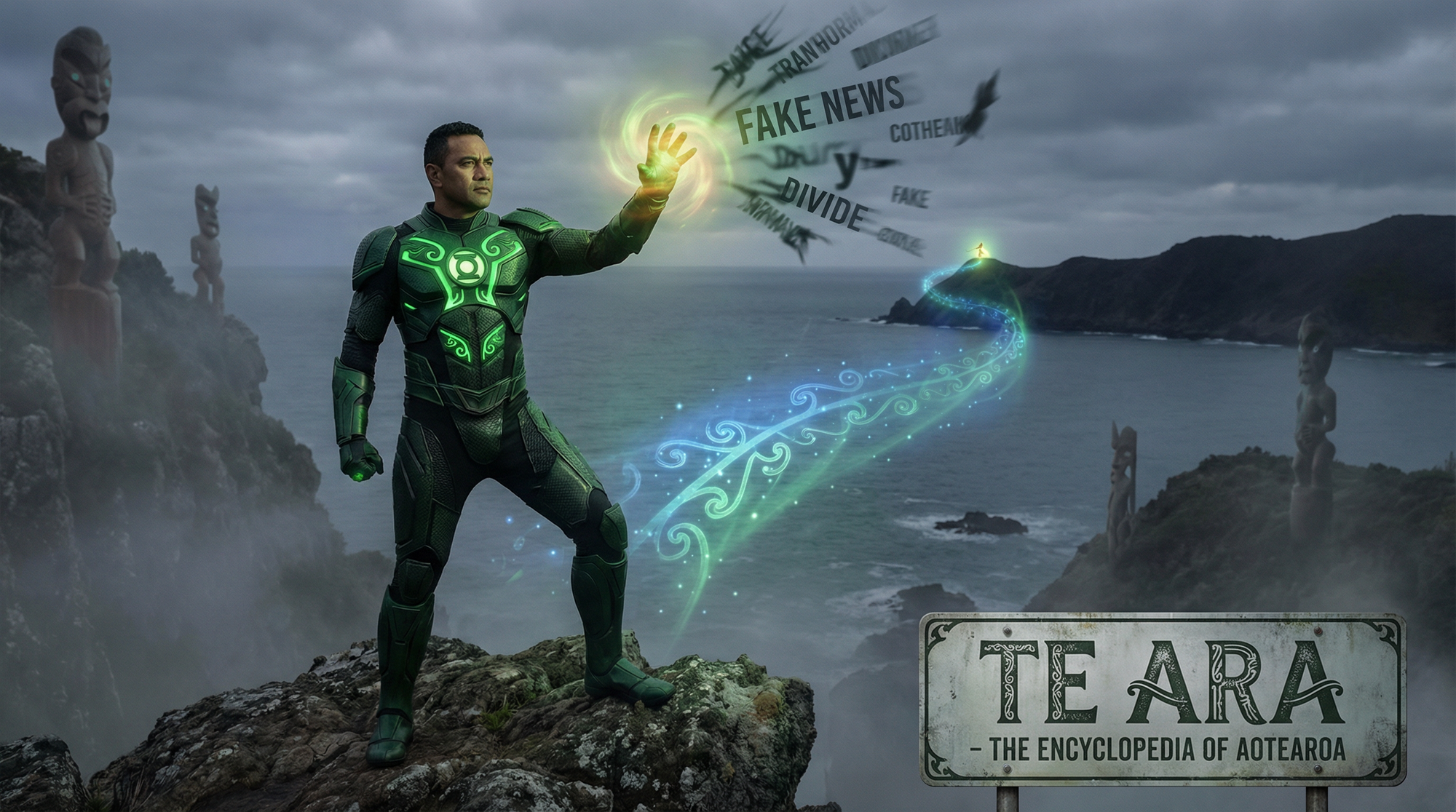
The Māori Green Lantern fighting misinformation and disinformation from the far right
Implications: Psychological Warfare Through Landscape
The broader implications extend far beyond one small town. Colonial place naming functions as ongoing psychological warfare against tangata whenua. Every time someone says "St Arnaud," they invoke a genocidal war criminal's legacy on sacred Māori land. This is not accidentally harmful - it is deliberately designed to reinforce settler supremacy and Indigenous inferiority.
The Geographic Board's processes institutionalize this violence. By requiring iwi to justify removing war criminals' names through "community consultation," the board positions genocide as a legitimate heritage worth protecting. This reveals how settler institutions use bureaucratic neutrality to maintain white supremacist outcomes.
Ripping Colonial Monuments from Our Whenua
The fight over Rotoiti/St Arnaud is not about administrative efficiency or community harmony. It is about whether we will continue allowing genocidal war criminals to contaminate our sacred landscapes with their toxic legacy.
Every day this name persists is another day we allow colonial violence to poison our whenua. Rangitāne o Wairau, Ngāti Kuia and Ngāti Apa ki te Rā Tō have made their position clear - they want their ancestral name restored. That should be the end of the discussion.
The Geographic Board and its colonial processes have no legitimate authority over tangata whenua place names. The demand for "community consultation" is settler manipulation designed to delay and dilute Indigenous tino rangatiratanga.
We demand the immediate restoration of Rotoiti and an end to the colonial naming system that celebrates war criminals while silencing tangata whenua voices. Our ancestors' names belong on our ancestors' land.
For readers who find value in exposing colonial violence and supporting Indigenous sovereignty, please consider a koha to support this work: HTDM: 03-1546-0415173-000. Only contribute if you have capacity and wish to do so - I understand these are challenging economic times for whānau.
Mauri ora ki a koutou katoa.
Ivor Jones
The Māori Green Lantern