“Corporate Colonization Express Lane: How Nicola Willis Serves Foreign Capital While Māori Struggle for Food Sovereignty” - 27 August 2025
The Neoliberal Grocery Giveaway That Betrays Te Tiriti
Kia ora, e te whānau. Greetings to all our people.
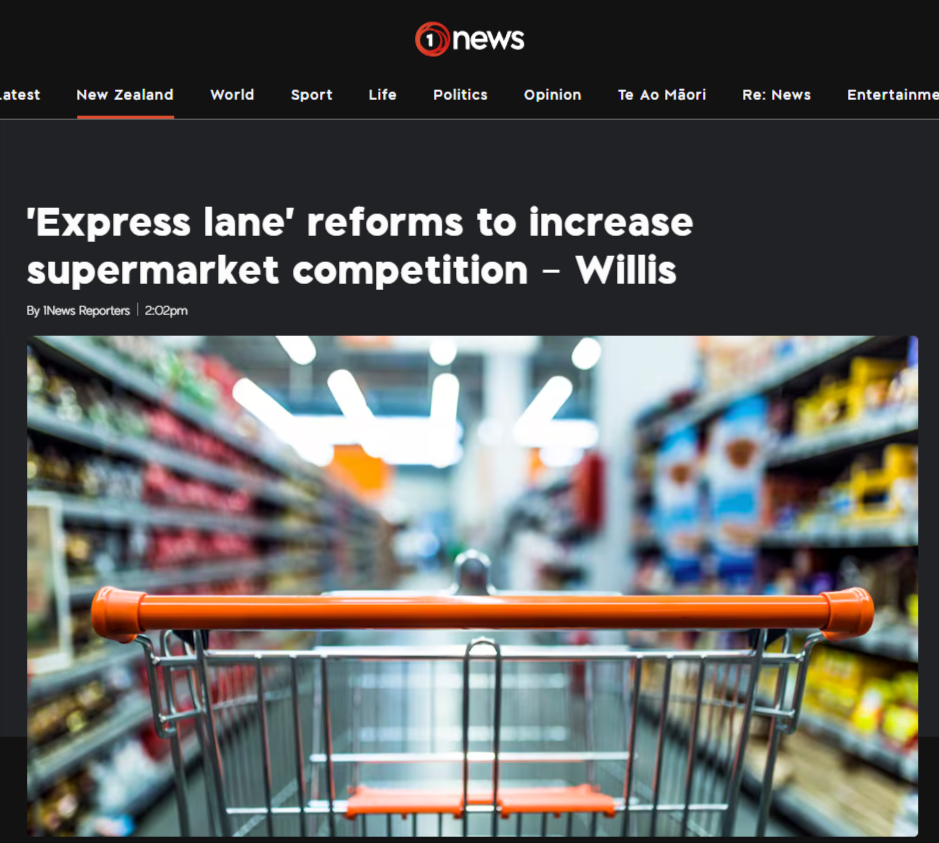
On August 27, 2025, Economic Growth Minister Nicola Willis unveiled her government's latest gift to corporate overlords masquerading as consumer protection. Under the guise of "increasing supermarket competition," Willis has crafted an express lane not for affordable kai, but for foreign multinational corporations to further colonize Aotearoa's food system. This analysis exposes how these reforms represent nothing more than neoliberal ideology dressed up as consumer advocacy, deliberately sidelining Māori food sovereignty while opening our markets to predatory capitalism.
Background
For over two decades, New Zealand's grocery sector has operated as a textbook example of corporate concentration. The duopoly of Foodstuffs and Woolworths controls approximately 90% of our supermarket sector, a stranglehold that emerged through systematic mergers and acquisitions during the 1980s and 1990s. This corporate consolidation mirrors the broader neoliberal project that has devastated Indigenous economies worldwide, replacing diverse local food systems with centralized corporate control.
From a Māori worldview, this concentration of power over kai represents a fundamental violation of our relationship with Papatūānuku and our responsibilities as kaitiaki. Food sovereignty - the right of peoples to healthy and culturally appropriate food produced through ecologically sound and sustainable methods - stands as a cornerstone of tino rangatiratanga. Yet successive governments have allowed foreign corporations to dominate our food distribution while Māori struggle with higher rates of food insecurity and limited access to traditional kai.
The historical context reveals how this duopoly emerged through the same colonial processes that dispossessed Māori of our economic base. When Progressive Enterprises merged six supermarket chains in 2002, it eliminated the last vestiges of competition in a sector that had once featured diverse players including locally-owned operations. This consolidation followed classic neoliberal patterns: deregulation, privatization, and corporate concentration presented as "efficiency" while destroying local economic autonomy.
Willis's reform package, announced with great fanfare, promises to create an "express lane" for new supermarket developments that improve regional or national competition. The centerpiece involves amending the Fast-Track Approvals Act to allow qualifying supermarkets consent approval in under a year, compared to the current 18-month process costing up to $1 million.
But here's where the colonial agenda becomes crystal clear: Willis explicitly celebrates Costco's enthusiastic response to these reforms. The American retail giant, with annual revenue exceeding New Zealand's entire GDP, has confirmed these changes will assist their expansion plans. Willis gushes about how Costco's single West Auckland store has "markedly changed competitive dynamics" and provided "a major export-pathway for New Zealand food producers."
This framing reveals the government's true priorities: facilitating foreign corporate expansion rather than supporting Māori economic development or genuine food sovereignty. The reforms also include changes to the Overseas Investment Act with "new grocery-specific provisions to clarify investment pathways" - bureaucratic language for making it easier for foreign capital to colonize our food system.
Most tellingly, Willis acknowledges that major international players Aldi and Lidl didn't participate in the government's Request for Information process, suggesting these reforms are specifically designed to court particular corporate interests rather than address systemic competition issues.
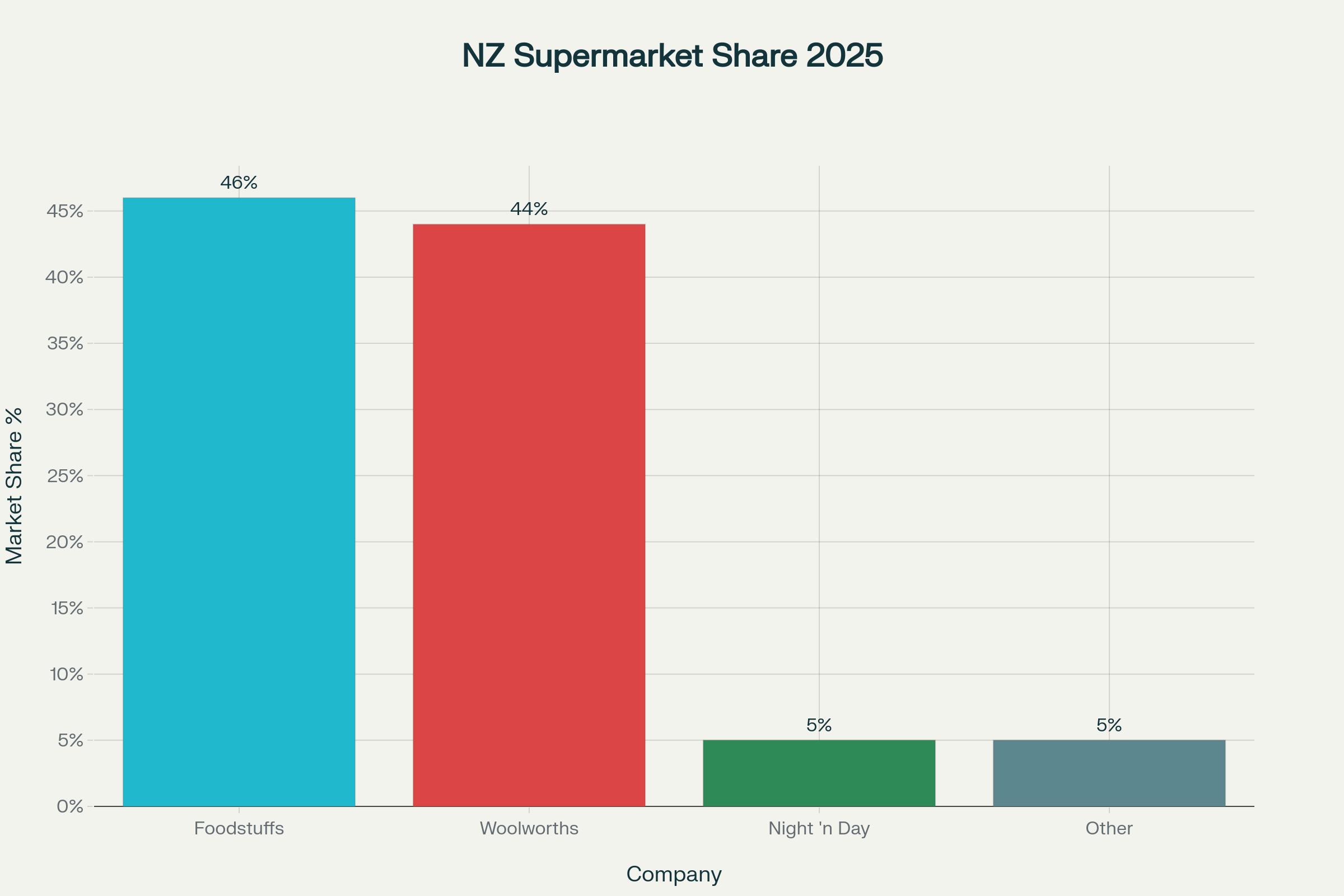
Market Share Distribution in NZ Supermarket Sector (2025)
The Costco Trojan Horse
Willis's celebration of Costco exposes the shallow thinking that characterizes this government's approach to economic policy. Costco represents everything wrong with neoliberal capitalism: a massive American corporation that operates on principles of shareholder capitalism and market concentration, designed to extract wealth from local communities and funnel it to foreign shareholders.
The minister's claim that Costco provides "export pathways" for New Zealand producers reveals her fundamental misunderstanding of how corporate supply chains operate. Costco's business model relies on massive volume purchasing that forces suppliers into razor-thin margins while the corporation captures the vast majority of value-add. This isn't partnership - it's economic subordination dressed up as opportunity.
From a Māori perspective, facilitating Costco's expansion represents a betrayal of our economic aspirations. While Willis fast-tracks approvals for American retail giants, Māori entities struggle to access capital and navigate regulatory barriers that could support genuine Indigenous economic development. The National Māori Authority's submission to the Commerce Commission highlighted how the current system fails to support Māori producers and retailers, yet Willis's reforms do nothing to address these structural inequities.
ACT Party's Neoliberal Cheerleading
Predictably, ACT Party leader David Seymour praised these announcements as charting a "constructive path" that would reduce barriers to competition. Seymour's enthusiasm reveals the ideological alignment between this government and the most extreme elements of market fundamentalism. His warning against "regulatory overreach" that might "scare away investment" demonstrates the neoliberal mindset that subordinates democratic sovereignty to corporate interests.
Seymour's critique of Labour's grocery regulator as ineffective misses the point entirely. The problem isn't regulation per se, but regulation designed to facilitate corporate consolidation rather than support community-controlled food systems. ACT has consistently opposed meaningful measures to address market concentration, preferring the fantasy that unleashing more corporate competition will somehow benefit ordinary New Zealanders.
This ideological commitment to market solutions ignores how neoliberalism systematically undermines democracy and community control, creating the very conditions that produced our grocery duopoly in the first place. The neoliberal project promotes privatization, deregulation, and corporate power as solutions while systematically destroying the social and economic foundations that support community resilience.
The Predatory Pricing Smokescreen
Willis's promise to combat "predatory pricing" through Commerce Act amendments represents another example of neoliberal doublespeak. Predatory pricing involves using market power to eliminate competition through unsustainable price cuts, but the proposed "objective economic test" will likely prove as toothless as existing competition law.
The fundamental problem isn't predatory pricing tactics but the concentrated market structure that enables such behavior. Breaking up the existing duopoly would eliminate the market power that makes predatory pricing possible, but Willis explicitly refuses to commit to structural solutions. Instead, she offers regulatory tinkering that maintains corporate dominance while creating an illusion of consumer protection.
This approach reflects the neoliberal preference for technical solutions that avoid challenging fundamental power relationships. Rather than democratizing economic control, these reforms consolidate corporate power while providing bureaucratic cover for political inaction.
Māori Economic Marginalization
The most damning aspect of these reforms is their complete disregard for Māori economic aspirations and food sovereignty. While Willis fast-tracks approvals for foreign corporations, Māori entities continue facing systemic barriers to economic participation. Dr. Hinemoa Elder's submission to the Commerce Commission outlined how Māori-controlled grocery operations could support cultural revitalization, environmental sustainability, and community wellbeing - values completely absent from Willis's corporate-focused agenda.
The failure to prioritize Māori economic development represents a broader pattern of colonial economic policy that treats Indigenous aspirations as afterthoughts while prioritizing foreign corporate interests. This violates the Crown's Te Tiriti obligations and perpetuates the economic marginalization that has characterized New Zealand's colonial project.
Implications
These reforms represent more than failed economic policy - they constitute another chapter in New Zealand's ongoing colonial project. By facilitating foreign corporate expansion while ignoring Māori economic development, the government reinforces power structures that extract wealth from our communities and concentrate it in foreign corporate hands.
The broader implications extend beyond grocery retail. This approach to economic development - prioritizing foreign investment over community control, corporate concentration over democratic participation - mirrors the neoliberal policies that have devastated Indigenous communities worldwide. Neoliberalism's emphasis on market solutions systematically undermines the social solidarity and collective action necessary for genuine economic democracy.
For Māori communities, these policies perpetuate food insecurity while strengthening the corporate systems that separate us from our traditional relationships with kai and whenua. The continued dominance of foreign-controlled food distribution systems makes it harder for Māori producers to access markets and for our communities to develop sustainable food systems based on our values and relationships.

The Māori Green Lantern fighting misinformation and disinformation from the far right
Nicola Willis's supermarket reforms represent neoliberal ideology at its most transparent: using the language of competition and consumer protection to facilitate corporate colonization while systematically excluding Indigenous economic development. The express lane she's creating leads directly to greater foreign corporate control over our food system, not the consumer benefits she promises.
Real competition in grocery retail would require breaking up the existing duopoly and supporting community-controlled alternatives, including Māori-led food systems that prioritize cultural values and environmental sustainability over corporate profits. Instead, Willis offers cosmetic reforms designed to help American corporations expand their market share while maintaining the fundamental power structures that perpetuate economic inequality.
The choice before us is clear: continue down the neoliberal path that subordinates our economic sovereignty to foreign corporate interests, or begin building food systems that reflect our values and serve our communities. Willis has chosen corporate colonization. Our communities deserve better.
E te iwi, the struggle for food sovereignty is the struggle for tino rangatiratanga. Corporate colonizers like Costco represent the continuation of the colonial project by other means. Our response must center Māori economic development, environmental sustainability, and community control over the corporate welfare that Willis mistakes for economic progress.
Readers who find value in my content and wish to support this crucial work exposing neoliberal deception are welcome to consider a koha: HTDM: 03-1546-0415173-000. The MGL understands these tough economic times for whānau, so please only contribute if you have capacity and wish to do so.
Kia kaha, kia māia, kia manawanui.
Ivor Jones
The Māori Green Lantern