“Corporate Kai Colonisation: How David Seymour Delivered Our Tamariki to Multinational Vultures” - 23 August 2025
When neoliberal ideology masquerades as fiscal responsibility while destroying Indigenous food sovereignty and community wellbeing
Kia Ora, He whakatōhea au ki a koutou katoa. Greetings, I challenge all of you
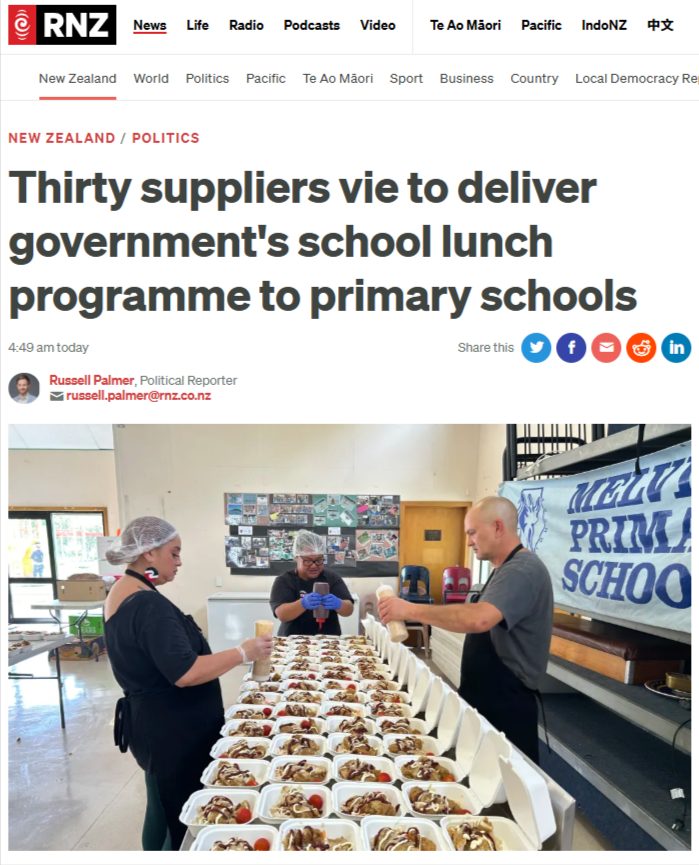
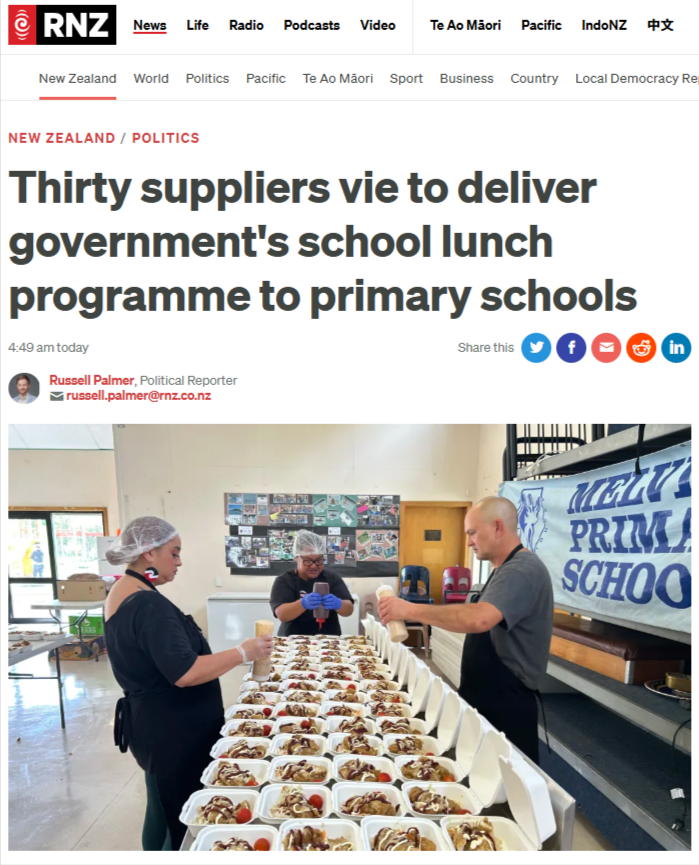
The tender announcement for thirty suppliers to deliver school lunches to primary schools represents far more than a procurement process - it exposes the calculated dismantling of community-based food sovereignty in favour of multinational corporate control. This is David Seymour's neoliberal experiment writ large, where our most vulnerable tamariki become profit centres for global conglomerates while traditional Māori approaches to kai are systematically erased.
Background
The Ka Ora, Ka Ako programme launched in 2019 under Labour provided free nutritious lunches to approximately 235,000 learners across over 1,000 schools and kura. The programme operated through three models: external suppliers, internal school preparation, and critically for Māori communities, iwi and hapū delivery partnerships. Research consistently demonstrated the programme's effectiveness, with 77.5% of nutrients exceeding 30% of recommended daily intakes, while providing significant benefits for Māori students including improved wellbeing and increased engagement with tikanga Māori.
The programme's success extended beyond nutrition, fostering food security, community employment, and providing pathways for incorporating mātauranga Māori into school environments. Schools utilised the concept of "breaking bread as a family," with kaiako teaching tikanga through shared meals, creating more socially cohesive learning environments. However, coalition government changes announced in May 2024 slashed the budget from up to $8.68 per meal to just $3 per meal, claiming savings of $130 million annually.
The tender process for 196 "contributing" schools reveals the true scope of Seymour's corporate capture strategy. These schools, serving students from Years 0-6, will be transferred from local suppliers - including iwi and hapū providers - to external suppliers rather than preparing meals internally or receiving them from community-based Māori organisations. This displacement particularly affects kaupapa Māori suppliers who provided cultural connection alongside nutrition.
The programme's implementation has been catastrophic. Issues include meals arriving late, cold, inedible, containing melted plastic, and massive food wastage reaching 50% at some schools. Libelle Group, a major provider, went into liquidation owing over $14.3 million to creditors, while Compass Group has dominated the sector, generating $2.2 billion in revenue and $55 million in profit between 2010-2021.
Research demonstrates schools felt challenged in aligning their mātauranga Māori teaching practices with the programme's strict nutritional guidelines, which appeared to conflict with traditional Māori approaches to kai. The programme's rigid structure prevented the incorporation of Indigenous food knowledge and seasonal, place-based approaches to nutrition that align with tikanga Māori.
Corporate Colonisation Through Food Control
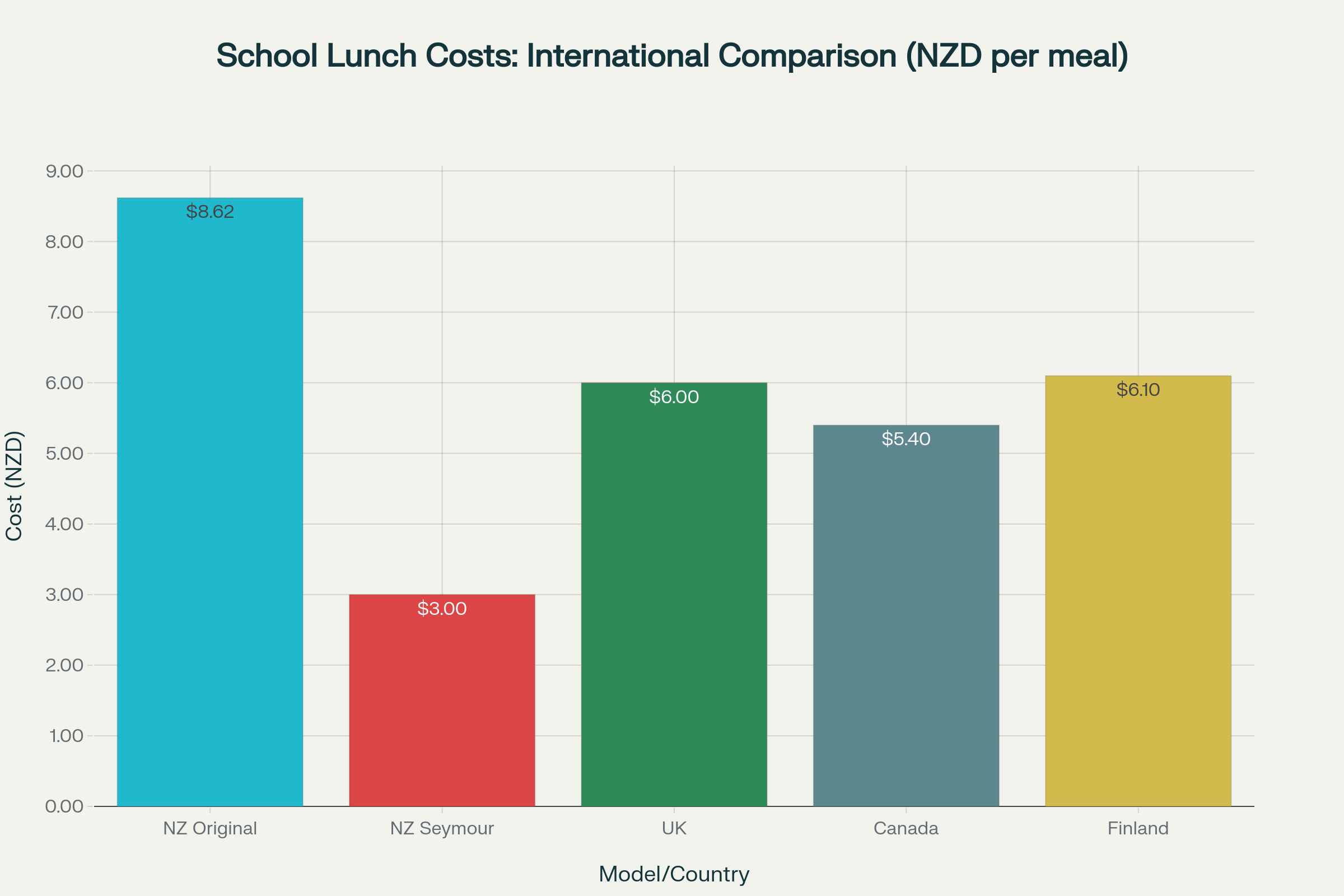
International comparison of school lunch costs per meal, showing New Zealand's original program versus David Seymour's revised model and costs in other developed nations
The cost comparison reveals the grotesque priorities of this government. While Finland provides school lunches to all 780,000 students for NZ$6.10 per meal, and the UK spends NZ$6.00 per meal, Seymour demands our children subsist on $3 meals that nutritionists warn provide insufficient energy for academic performance.
This is textbook neoliberal shock doctrine - create artificial scarcity through budget cuts, then present corporate monopolisation as the only "efficient" solution. Compass Group's track record includes controversies over tax avoidance, with royalties and fees to its UK parent quadrupling while lending millions to offshore entities. The company has faced protests over hospital food quality and labour disputes involving hundreds of thousands in unpaid worker entitlements.
Meanwhile, iwi and hapū providers who operated successful community-based programmes are being systematically excluded. As Kimiora Trust's Kiritahi Firmin observed, hapū and iwi have proven the most effective model for feeding large numbers economically - marae style, serving freshly cooked, healthy meals while hiring local workers and using seasonal local produce.
Māori Values Versus Corporate Extraction
The original programme provided pathways for integration of mātauranga Māori through iwi/hapū provision models and engagement processes that strengthened school connections with Māori businesses. Schools taught students about the cultural significance of kai, incorporated karakia, and created opportunities for intergenerational knowledge transfer. This aligned with kai sovereignty principles that emphasise the freedom and responsibility of Tangata Whenua to protect ancestral food systems and cultural knowledge associated with food production, distribution, and consumption.
The corporate model destroys these relationships. Compass Group's centralised approach removes local decision-making, eliminates cultural responsiveness, and reduces food to mere commodity exchange. There is no space for karakia, no recognition of seasonal cycles, no acknowledgment that kai sovereignty encompasses not only physical nourishment but also connection to te taiao and tūpuna.
This systematic displacement of Indigenous food systems represents ongoing colonisation. Traditional Māori communities understood that kai involved ritual, relationship, and responsibility - protection through rāhui, seasonal harvesting guided by atua, and practices that maintained balance between tangata, whenua, and spiritual domains. Corporate food provision strips away these connections, reducing children to consumption units in profit maximisation equations.
Hidden Connections and Systemic Corruption
The thirty suppliers vying for contracts are operating within a rigged system. With Libelle Group's liquidation revealing debts of over $14.3 million, smaller operators cannot compete against multinational giants with deep pockets and political connections. Compass Group's dominance across prisons, hospitals, and now schools creates concerning concentrations of power over New Zealand's most vulnerable populations.
The timing is revealing. Seymour announced the programme changes in May 2024, with implementation beginning January 2025. This coincided with ACT Party policy positions opposing "co-governance" and promoting "one law for all" rhetoric that specifically targets Māori institutional arrangements. The school lunch changes serve dual purposes - corporate welfare for multinational donors while dismantling Māori partnership models.
Compass Group's international operations include controversial contracts across multiple sectors, with documented issues around food quality, worker treatment, and tax obligations. Yet this company now controls feeding a quarter of New Zealand's school students. The regulatory capture is complete when government ministers personally promote corporate interests while claiming fiscal responsibility.
Community Impact and Intergenerational Harm
Research found the programme addressed food insecurity while alleviating financial stress for whānau, allowing families to redirect money toward other essential household costs. For many students, school lunch represented their main or sometimes only substantial meal of the day. The programme created local employment opportunities while strengthening community food systems and cultural connections.
The corporate takeover destroys these multiple benefits. Schools report children going hungry rather than eating poor-quality meals, with subsequent impacts on learning and behaviour. Nearly 80% of principals surveyed expressed dissatisfaction with the new provision model. The programme's contract violations include failing to address high-priority issues like food safety and service failures on the same day they arise, despite contractual requirements.
For Māori communities, the impacts extend beyond individual nutrition to cultural disconnection. The programme had provided vehicles for incorporating mātauranga and tikanga Māori concepts both at school and home, fostering community connection and contributing to broader food security and resilience for whānau. Corporate provision eliminates these pathways, contributing to ongoing cultural alienation and the intergenerational loss of Indigenous food knowledge.

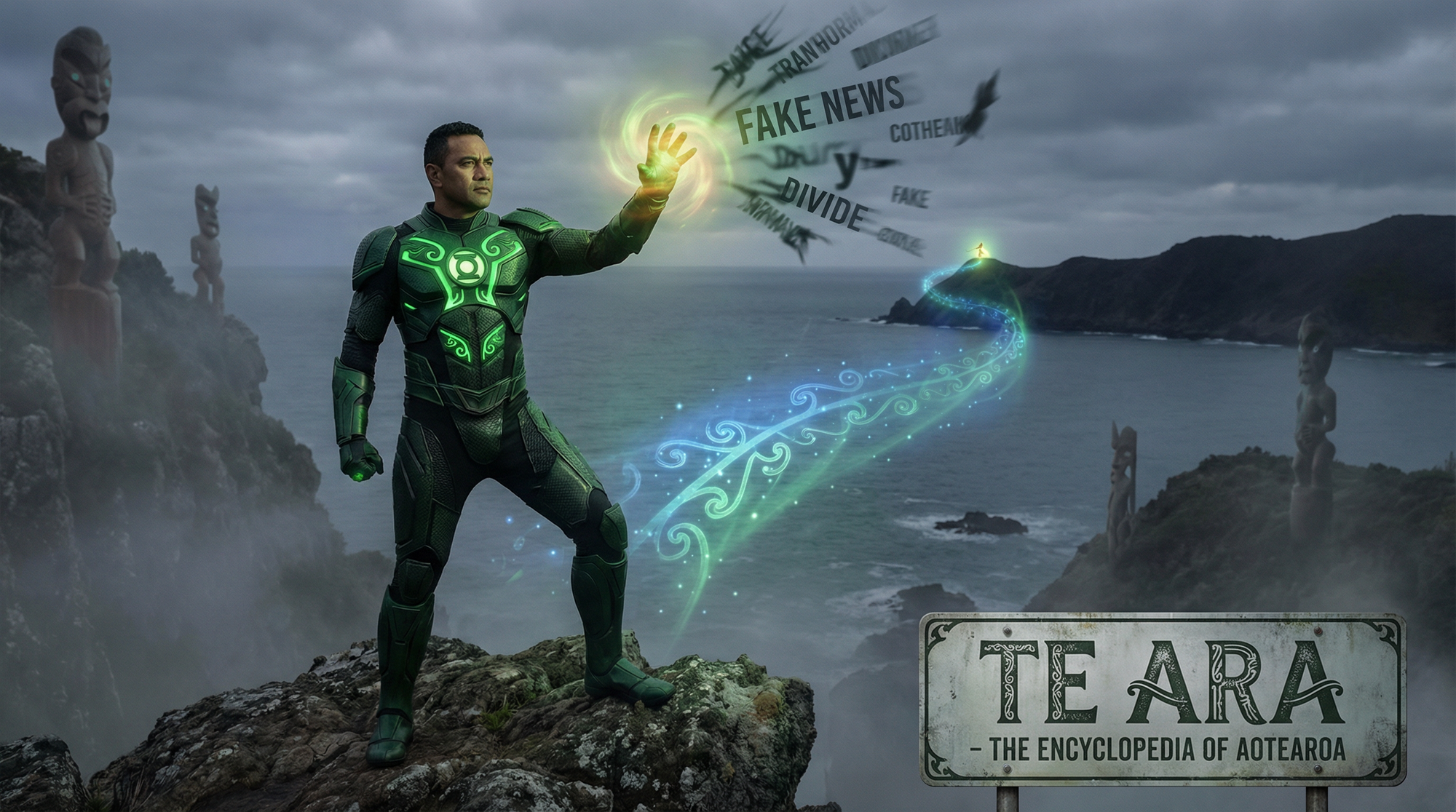
The Māori Green Lantern fighting misinformation and disinformation from the far right
David Seymour's school lunch privatisation represents corporate colonisation disguised as efficiency. By transferring food provision from community-based models to multinational corporations, this government prioritises profit extraction over child welfare, cultural preservation, and community self-determination.
The thirty suppliers competing for contracts are entering a system designed to eliminate local providers, displace Indigenous food sovereignty, and reduce nutrition to commodity transactions. While other developed nations invest NZ$5.40-$6.10 per meal, Seymour demands our children survive on $3 meals that nutritionists warn are insufficient for academic performance.
This is neoliberalism's endgame - the complete commodification of social reproduction, where even feeding hungry children becomes profit opportunities for global capital. Our tamariki deserve better than becoming revenue streams for corporations with documented histories of tax avoidance, labour exploitation, and food safety failures.
The resistance must centre kai sovereignty, community control, and the restoration of Indigenous food systems that nourish both body and spirit. He aha te mea nui o te ao? He tangata, he tangata, he tangata - what is the most important thing in the world? It is people, it is people, it is people.
Readers who find value in exposing these corporate assaults on our communities and wish to support this mahi, please consider a koha to HTDM: 03-1546-0415173-000. The MGL understands these tough economic times for whānau, so please only contribute if you have capacity and wish to do so.
Kia kaha, kia māia, kia manawanui.
The Māori Green Lantern
Kaitiaki of Truth