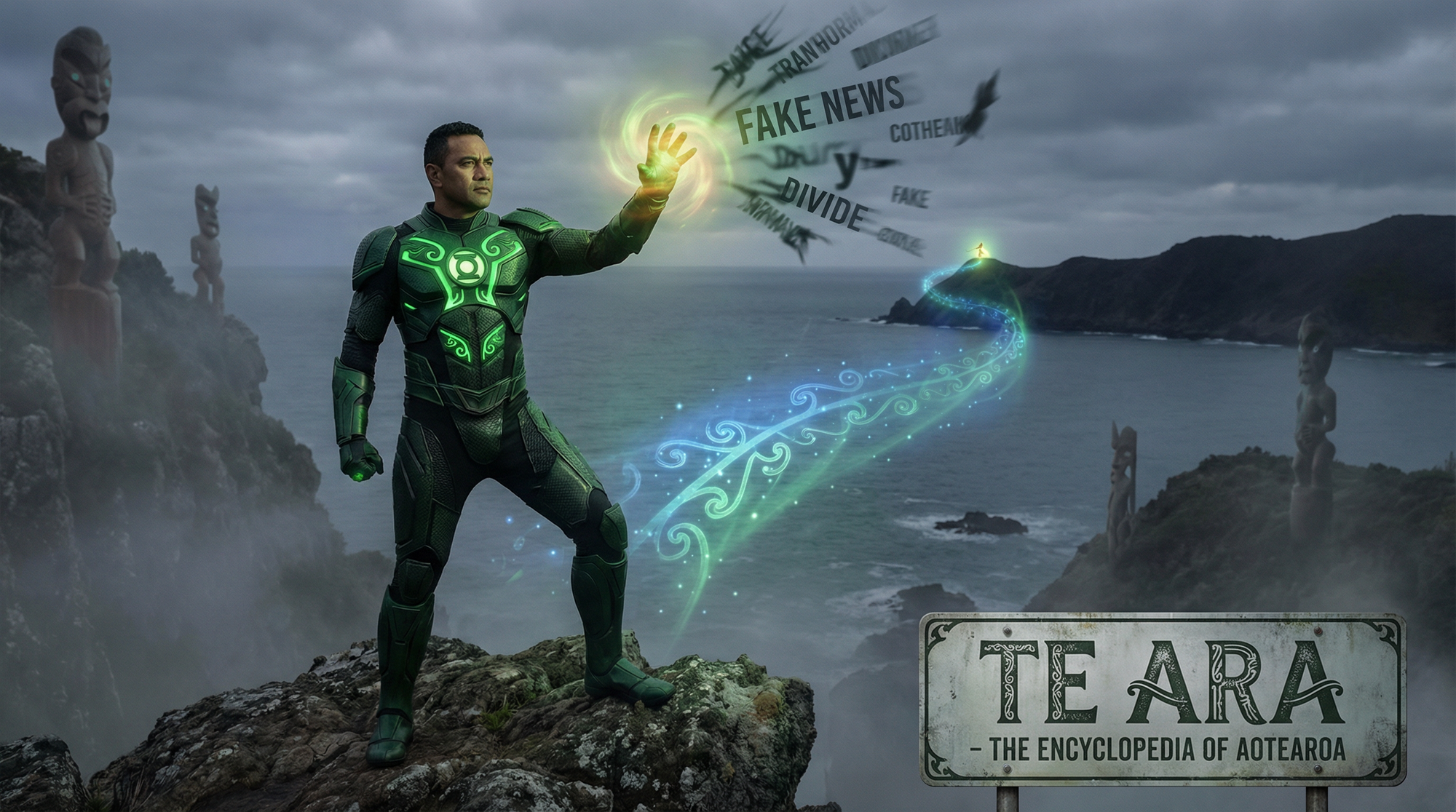
“Corporate Law Firms Weaponizing Legal Opinion to Undermine Māori Rights” - 29 August 2025
Shielding Colonial Power While Undermining Māori Rights
Kia ora whānau, ko Ivor Jones ahau, The Māori Green Lantern. He kaitiaki ahau, he tangata hōhā hoki ki nga kōrero parau me nga mahi kino o te taiao rānei, o tāngata rānei. (Greetings family, I am Ivor Jones, The Māori Green Lantern. I am a guardian, and also someone who gets angry at lies and harmful actions against the environment or people.)
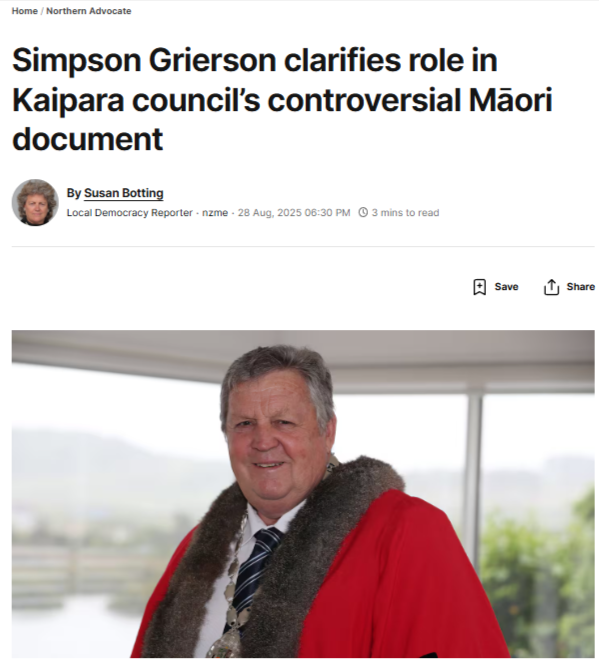
When prestigious law firms allow their names to be dragged through the mud to legitimize anti-Māori propaganda, we witness the ugly intersection of corporate greed, colonial racism, and institutional cowardice. The Simpson Grierson controversy over Kaipara District Council's poisonous "legal obligations" document exposes how Pākehā power structures weaponize legal authority to undermine Te Tiriti o Waitangi.
Background - The Colonial Legal Machine
To understand this shameful episode, we must recognize how New Zealand's legal establishment has always served as the enforcement arm of settler colonialism. Simpson Grierson, as one of Aotearoa's largest corporate law firms, has built its reputation advising corporations and government entities on navigating their Treaty obligations - often finding creative ways to minimize those responsibilities.
The firm's Māori Legal Updates reveal their sophisticated understanding of tikanga Māori and Treaty jurisprudence, making their involvement in legitimizing anti-Māori rhetoric all the more damaging. When prestigious firms lend credibility to documents that undermine Indigenous rights, they weaponize their professional standing against tangata whenua.
The principle of mana encompasses authority, power, and spiritual strength. When legal institutions abuse their mana to harm Māori communities, they violate the fundamental balance that holds society together.
A $52,000 Attack on Māori Rights
In July 2025, Kaipara District Council narrowly adopted a 127-page document claiming to outline local government's legal obligations to Māori. The document, produced by Wellington firm Franks Ogilvie for an unbudgeted $52,000, was slammed by councillors as "anti-Māori" and "bullsh*t".
The document's central thesis - that councils have no real Treaty obligations beyond those narrowly imposed by statute - directly contradicts established jurisprudence showing Crown obligations extend to councils when powers are delegated. This matters because it provides legal cover for councils nationwide to abandon their Treaty responsibilities.
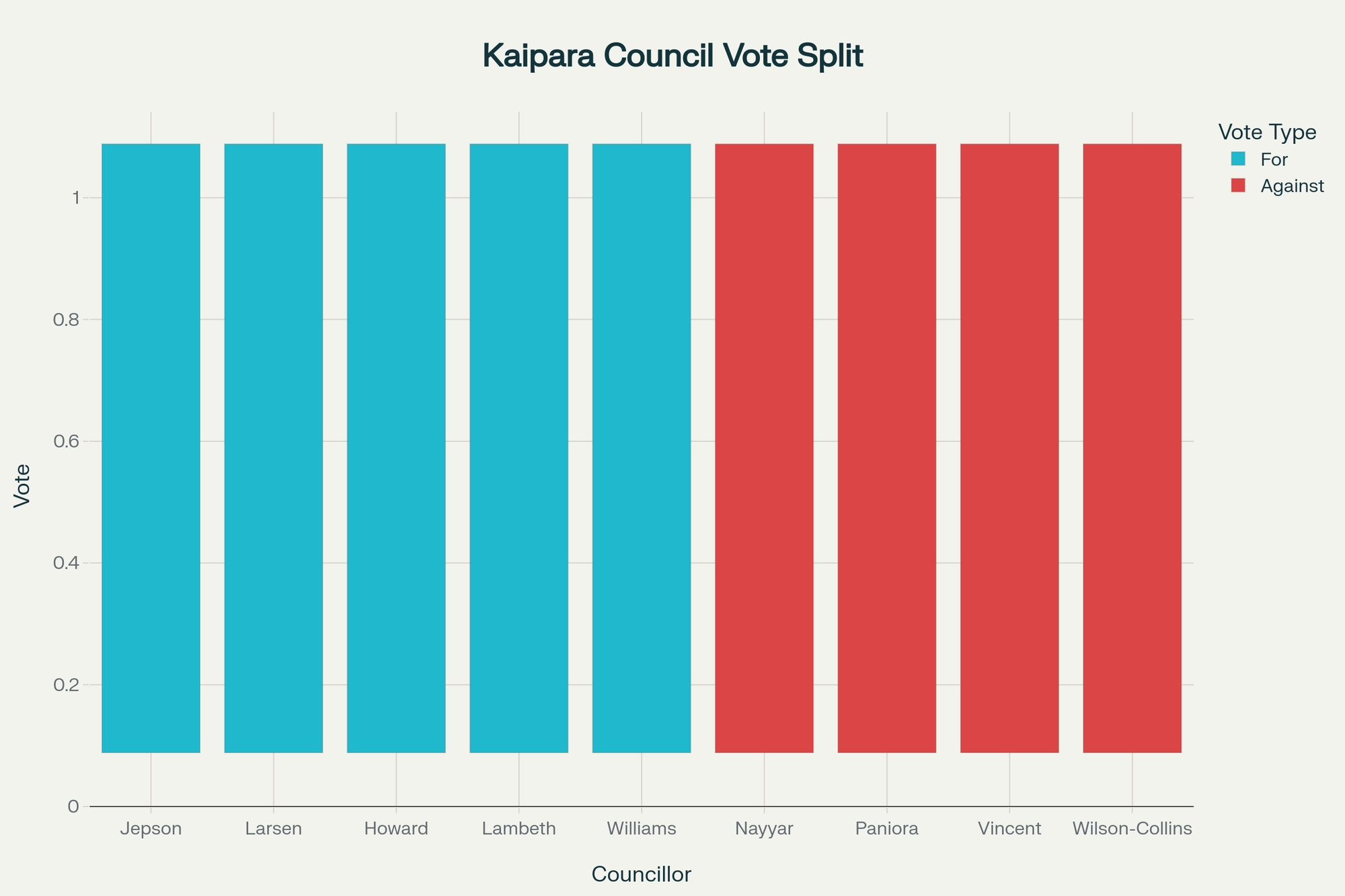
Kaipara District Council Vote Split – Māori Legal Obligations Document Adoption (July 2025)
Most damaging was the claim that Simpson Grierson had "peer reviewed" the document, lending it credibility among councillors unfamiliar with its contents. This misrepresentation allowed Mayor Craig Jepson to railroad the document through council without proper scrutiny.
The Network of Colonial Resistance
The real scandal lies in the web of connections between anti-Māori activists, corporate law firms, and local government. Mayor Craig Jepson didn't emerge from nowhere - he's part of Democracy Northland, which campaigned against Māori wards without public polling. This is the same mayor who banned karakia at council meetings in 2022, shutting down Māori ward councillor Pera Paniora's attempts to begin meetings with prayer.
The document includes legal advice Franks Ogilvie previously gave to Hobson's Pledge - a group notorious for lobbying against co-governance and promoting "one law for all" rhetoric. This isn't coincidence - it's coordination.
When we examine the voting patterns, the corruption becomes clear. The five councillors who voted to adopt the document - Jepson, Larsen, Howard, Lambeth, and Williams - are all members of the remuneration and development committee that commissioned it. They created the document, paid for it, then voted to adopt it. This violates every principle of good governance and democratic accountability.
The principle of kotahitanga calls for unity and collective responsibility. But these actors have chosen division, using their positions to attack the very communities they're meant to serve.
Simpson Grierson's Institutional Cowardice
Simpson Grierson's response reveals the moral bankruptcy of New Zealand's legal establishment. Rather than immediately denouncing the document's anti-Māori content, the firm issued a mealy-mouthed clarification that they only reviewed an "earlier draft" in May, not the final July version. They admitted disagreeing with "statements about Treaty obligations" but took months to clarify their position publicly.
This cowardice enabled the document's nationwide distribution. Mayor Jepson sent the document to councils across New Zealand shortly after adoption, claiming it would save money. How many councils adopted similar policies based on Simpson Grierson's perceived endorsement?
The firm's follow-up letter to councils nationwide attempting to limit the damage represents too little, too late. The harm was already done - their professional reputation had been weaponized against Māori communities.
The Broader Pattern of Legal Colonialism
This controversy fits a disturbing pattern where legal institutions provide cover for anti-Māori policies. Research shows how settler institutions systematically misappropriate Māori knowledge and cultural practices, while environmental racism in places like Kaipara moana demonstrates ongoing colonial violence.
The document's claim that councils aren't part of the Crown and therefore have no Treaty duties echoes the same legal gymnastics used to justify every colonial injustice. This approach treats the Treaty as a "political courtesy" rather than a constitutional document, undermining decades of jurisprudence establishing Crown obligations.
The principle of whakatōhea reminds us that when institutions fail their responsibilities, communities must hold them accountable through collective action.
Implications for Māori Communities
This manufactured controversy has real consequences for tangata whenua. Kaipara became the first council to disestablish its Māori ward under new legislation, with the council successfully defending against judicial review despite spending over $180,000 of ratepayer money.
The document provides legal ammunition for councils nationwide to abandon Treaty obligations, retreat from co-governance, and marginalize Māori voices in local democracy. When prestigious law firms legitimize such approaches, they normalize institutional racism across the sector.

The Māori Green Lantern fighting misinformation and disinformation from the far right
Reclaiming Our Mana
The Simpson Grierson controversy exposes how corporate law firms, anti-Māori politicians, and colonial institutions coordinate attacks on Indigenous rights while maintaining plausible deniability. Mayor Jepson, his council cronies, and their legal enablers have shown their true colors - and we must remember.
But this shameful episode also demonstrates Māori resilience. Councillor Pera Paniora's courage in calling the document "bullsh*t," Councillor Eryn Wilson-Collins' detailed critique of its legal flaws, and Te Rūnanga o Ngāti Whātua's willingness to challenge the council in court show that tangata whenua won't be silenced.
The principle of whakatōhea calls us to collective resistance against institutional racism. We must hold these actors accountable, support Māori representation in local government, and never forget who stood with us when it mattered.
To readers who find value in exposing these networks of colonial power, please consider a koha to support this essential work: HTDM: 03-1546-0415173-000. The MGL understands these tough economic times for whānau, so please only contribute if you have capacity and wish to do so.
Kia kaha, whānau. Our struggle continues.
Ivor Jones
The Māori Green Lantern