“Digital Deception: How Simeon Brown's Healthcare Cronyism Betrays Māori While Enriching Corporate Mates” - 28 August 2025
The Crony Capitalism In Our Health Care
Kia ora whānau. Greetings to you all.
When politicians talk about "innovation" and "digital solutions," reach for your wallet and your whakapapa - because somebody's about to get fleeced, and it won't be the well-connected contractors circling the public purse like karoro over a fish and chip shop. The latest revelations about Health Minister Simeon Brown's so-called 24/7 online GP service aren't just another procurement scandal - they're a masterclass in neoliberal sleight-of-hand, where genuine Māori health needs become convenient cover for corporate welfare and democratic accountability gets tossed aside faster than a Te Tiriti obligation at a National Party caucus meeting.
This isn't healthcare policy - it's crony capitalism with a digital bow tied around it, and the stench of corruption should make every New Zealander's stomach turn.
Background: The Manufactured Crisis and Neoliberal Solutions
To understand this scandal, we need to grasp the broader context of healthcare inequity that successive governments have weaponised for political gain. Māori face unconscionable health disparities - with amenable morbidity and mortality rates of 192.2 per 100,000 compared to just 77.7 for non-Māori non-Pacific peoples. These aren't accidents of history - they're the predictable outcomes of neoliberal policies that have systematically undermined public health systems since the 1980s.
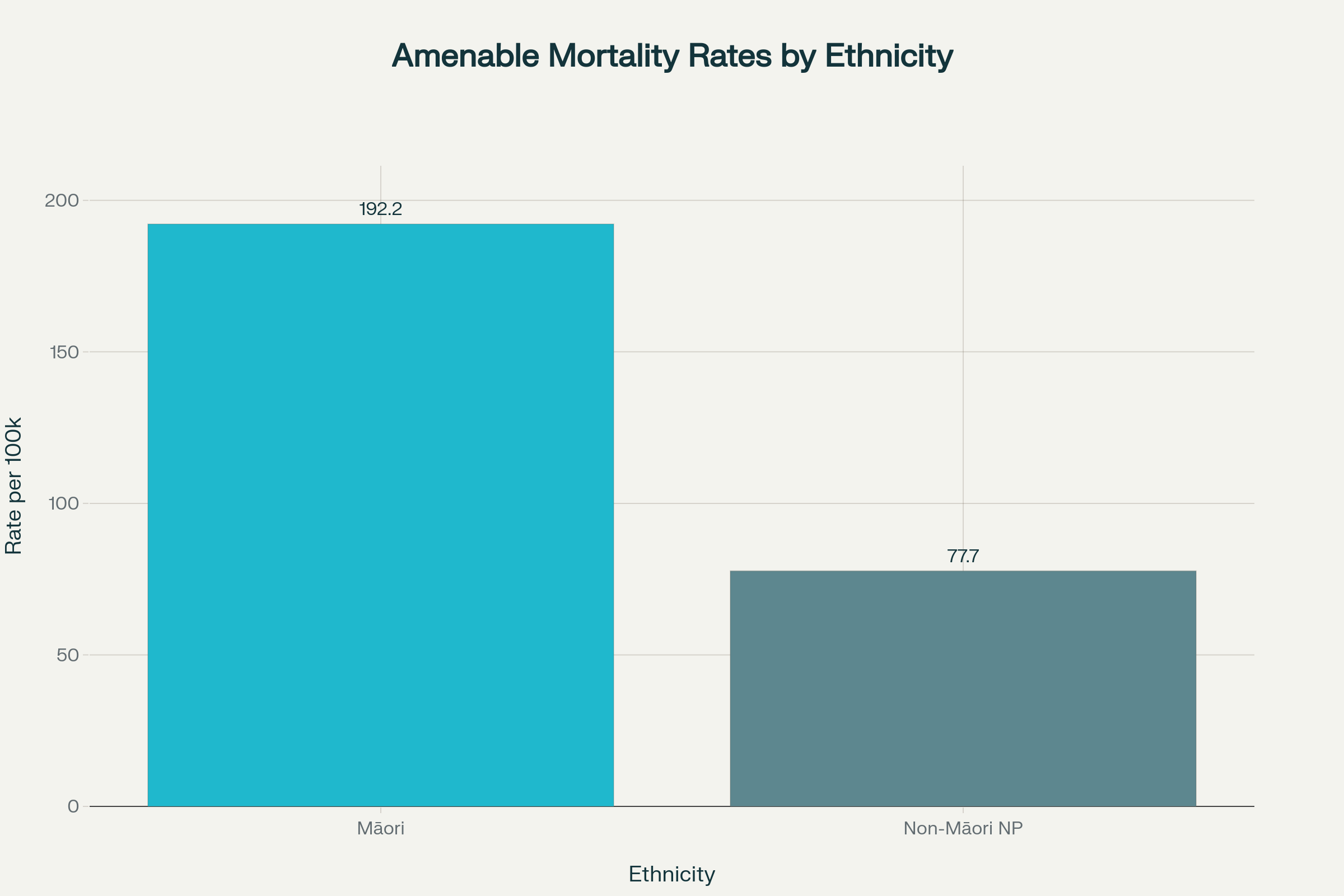
Disparity in Amenable Morbidity and Mortality Rates, New Zealand (2018)
The coalition government, driven by its racist coalition agreement and far-right lobby groups that Chris Hipkins accurately identified as targeting Māori, has spent months dismantling co-governance arrangements while simultaneously claiming to care about Māori health outcomes. This contradiction isn't cognitive dissonance - it's deliberate deception.
In Te Ao Māori, we understand that mana and mauri flow through all relationships, including our relationship with healthcare. When that mauri is corrupted by greed and political expediency, the entire system becomes spiritually bankrupt.
The Procurement Scandal Exposed
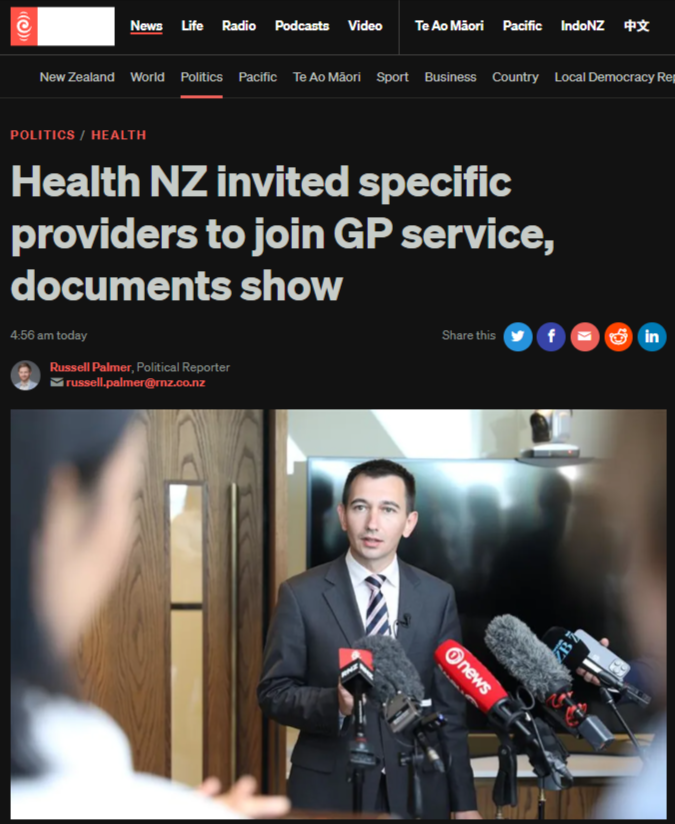
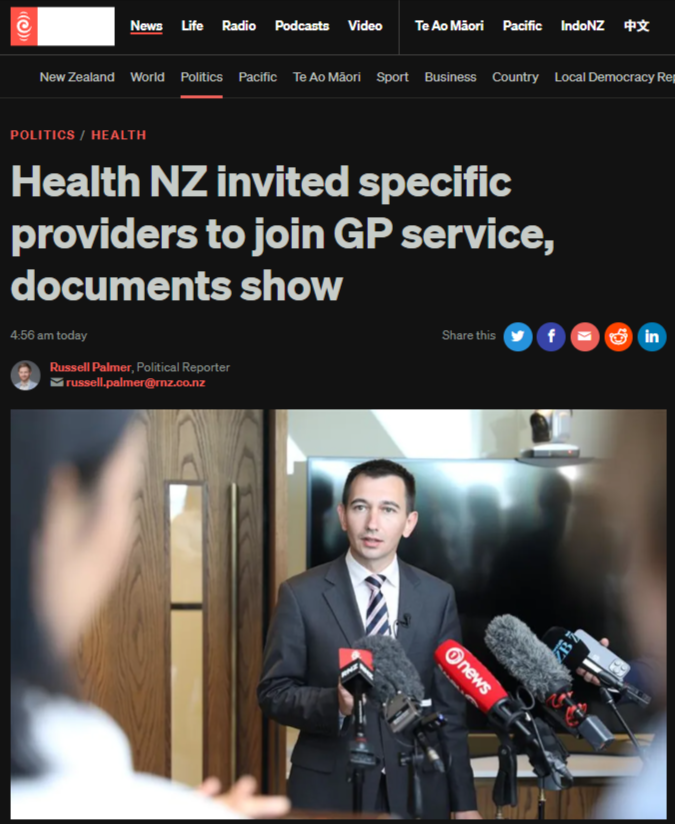
The RNZ investigation reveals a damning pattern of democratic subversion. Instead of following normal procurement processes that ensure transparency and value for taxpayers, Health NZ invited specific providers to participate in what they euphemistically called a "desk-top review." This wasn't an open tender - it was a closed shop designed to benefit predetermined corporate interests.
The timeline is particularly revealing:
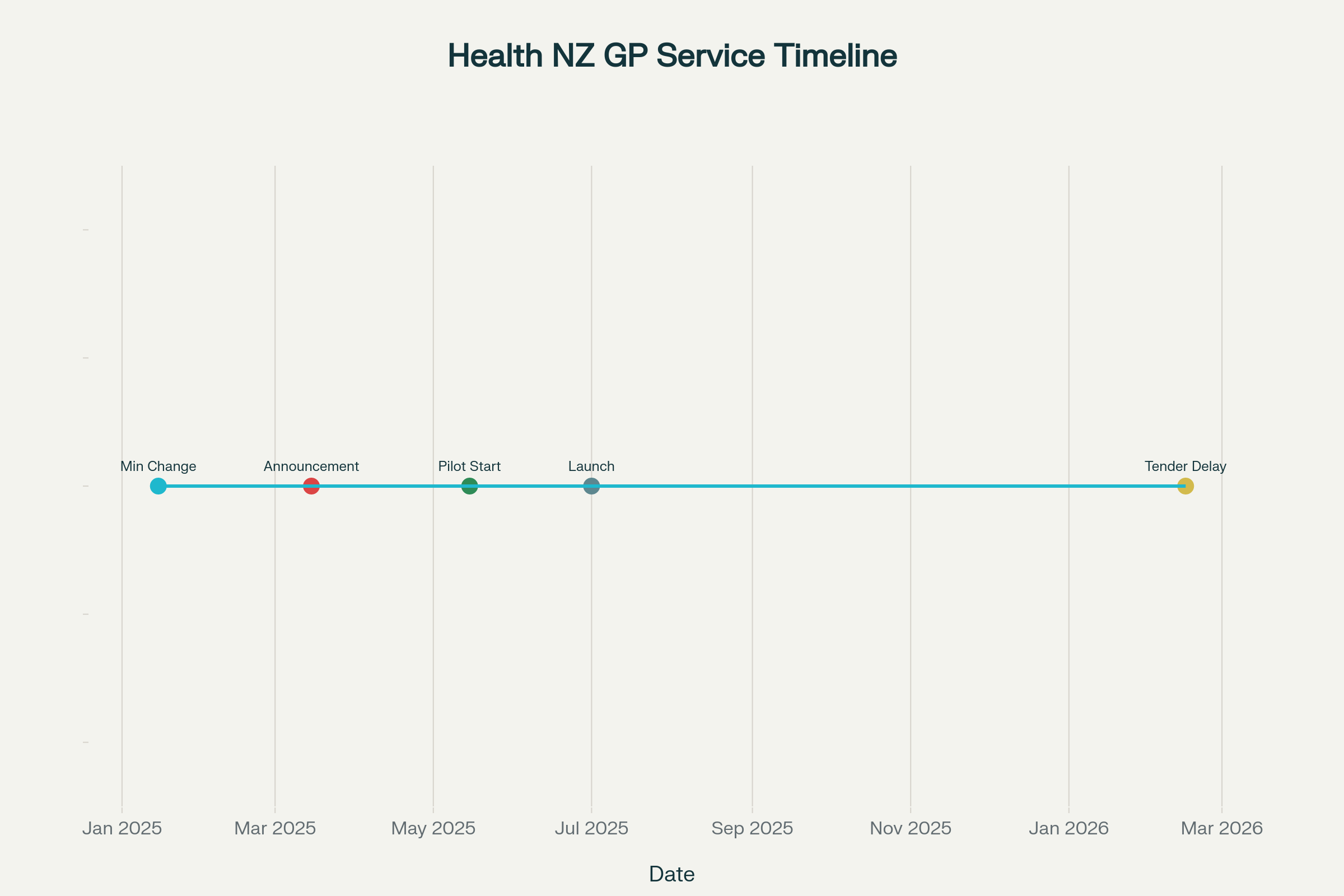
Timeline of Key Decisions: 24/7 Online GP Service Launch and Procurement Delay
Officials acknowledged this approach carried "high or extreme risk" to value for money, yet pushed ahead because it was "requested as part of a government initiated primary care tactical action plan." Translation: political masters wanted their preferred providers fast-tracked, and the bureaucrats obliged.
The budget has already ballooned from $22 million to $100.9 million over four years - a 358% increase that should trigger serious questions about competence and transparency. Meanwhile, the promised "open tender process" has been delayed until early 2026, ensuring these handpicked providers enjoy an extended period of preferential access to public funds.
This matters profoundly for Māori because research consistently shows telehealth can reduce inequities by removing barriers like transport costs and time constraints. But when the service is designed through crony capitalism rather than genuine consultation with Māori health providers, it becomes another tool of colonial extraction rather than healing.
Exposing the Neoliberal Con Game
Corporate Welfare Disguised as Innovation
The eight approved providers - Bettr Online, CareHQ, The Doctors Online, Emergency Consult, MedOnline, Pocket Lab, Tend, and Practice Plus - weren't selected through competitive merit but through what amounts to an inside track to public money. This is textbook neoliberalism: privatise the profits while socialising the risks, all while claiming to serve the public good.
Simeon Brown's justification that this "helps bridge the gap when traditional access to a GP isn't possible" is particularly galling when his own government has systematically underfunded GP services and excluded ethnicity from funding formulas despite expert advice. You can't simultaneously starve the public system then claim your private alternatives are necessary - that's arson followed by selling fire extinguishers.
The whakatōhea principle of shared responsibility becomes meaningless when contracts can be terminated for "convenience" - code for "when political winds change." This isn't healthcare planning; it's political opportunism with a three-year contract attached.
The Timeline of Corruption
Brown announced this service just six weeks after becoming Health Minister, replacing Shane Reti in January 2025. The rushed timeline reveals a government more interested in political announcements than genuine health outcomes. Leading GP Dr Buzz Burrell warned this would create "hit and run medicine" that fragments care, but his concerns were ignored in favour of corporate convenience.
The fact that Whakarongorau Aotearoa declined to participate should raise alarm bells. This Māori-led organisation understands healthcare through Te Ao Māori lens, recognising that healing involves whakapapa, whakatōhea, and holistic wellbeing. Their absence from the approved provider list suggests this service prioritises profit margins over cultural competency.
The Māori Health Contradiction
The draft contracts supposedly named "reducing Māori health inequities" as an overarching aim, yet this same coalition campaigned on providing health services "on need rather than race" - far-right dog-whistling that treats equity as discrimination. This contradiction exposes the fundamental dishonesty at the heart of this policy.
When far-right rhetoric portrays Māori health initiatives as "reverse racism" while simultaneously claiming to reduce inequities, we're witnessing the kind of double-speak that George Orwell would recognise. The mana of our people becomes a marketing slogan while the actual structures perpetuating harm remain untouched.
Financial Interests Over Democratic Process
The refusal to release documents citing "commercial negotiations" despite all providers receiving identical subsidies reveals contempt for public transparency. This isn't protecting legitimate commercial interests - it's hiding political embarrassment behind corporate privilege.
Research shows that transparency in healthcare spending is essential for accountability, yet Health NZ initially rejected RNZ's OIA request. Only persistent journalism exposed this scandal, demonstrating how fragile our democratic oversight has become under neoliberal capture.
Implications: Democracy, Health, and Corporate Capture
This scandal illustrates how neoliberal ideology corrupts everything it touches. When public services become profit centres for private companies, the relationship between government and citizens transforms from service to extraction. The broader pattern of neoliberal health reforms has consistently increased inequities, particularly for Indigenous populations.
For Māori communities already struggling with systemic racism in healthcare, this represents another layer of colonial extraction. Our health needs become justification for policies designed to enrich corporations rather than heal communities. The spiritual dimension of this harm cannot be understated - when the systems meant to nurture life become vehicles for greed, the entire society suffers spiritual sickness.
The delayed public tender process until 2026 ensures these handpicked providers will enjoy extended access to public funds without genuine competition. This timeline conveniently extends beyond the next election, suggesting awareness that this arrangement wouldn't survive proper democratic scrutiny.

The Māori Green Lantern fighting misinformation and disinformation from the far right
Reclaiming Mana from Corporate Thieves
Simeon Brown's digital health charade represents everything wrong with neoliberal governance: corporate welfare disguised as public service, democratic processes corrupted for political convenience, and Māori health needs weaponised for policies that ultimately serve capital over community.
The principle of utu demands accountability. Every dollar flowing to these handpicked providers could have supported kaupapa Māori health initiatives that understand healing through Te Ao Māori frameworks. Instead, we get Silicon Valley solutions to problems created by systematic defunding and colonial neglect.
The mauri of our healthcare system has been corrupted by greed and political expedience. Restoring it requires more than digital band-aids - it demands fundamental transformation toward models that honour Te Tiriti, prioritise equity, and serve people over profit.
Our tūpuna understood that health flows from right relationship - with each other, with the whenua, and with the principles that sustain life. When those relationships become corrupted by corporate capture and political cynicism, everyone suffers.
We must demand better. Not just better procurement processes or more transparent contracts, but a complete rejection of the neoliberal framework that treats healthcare as a commodity and Māori wellbeing as a marketing opportunity.
The fight for our health is the fight for our democracy, our sovereignty, and our future as a people. We cannot allow corporate parasites to feast on public resources while our whānau suffer from preventable illnesses and systemic neglect.
Kia kaha, whānau. The truth has a way of surfacing, no matter how deep the powerful try to bury it.
Noho ora mai,
Ivor Jones - The Māori Green Lantern
Readers who find value in exposing these patterns of corporate corruption and colonial harm, please consider offering koha to support this work: HTDM: 03-1546-0415173-000. The MGL understands these are tough economic times for whānau, so please only contribute if you have capacity and wish to do so.