“Economic Puppeteers Celebrate While Whānau Suffer” - 21 August 2025
When the powerful play games with our economy, it is our people who pay the price
Tēnā koutou katoa - Greetings to all
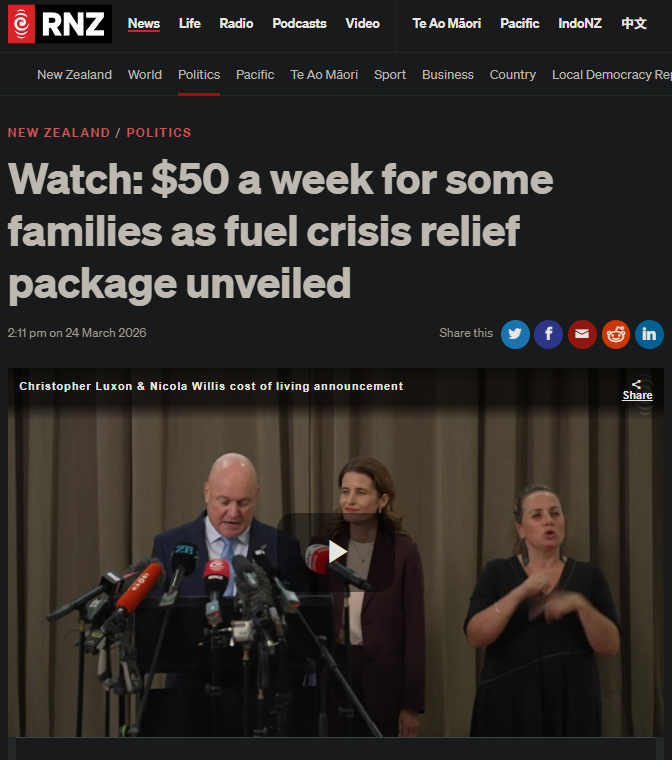
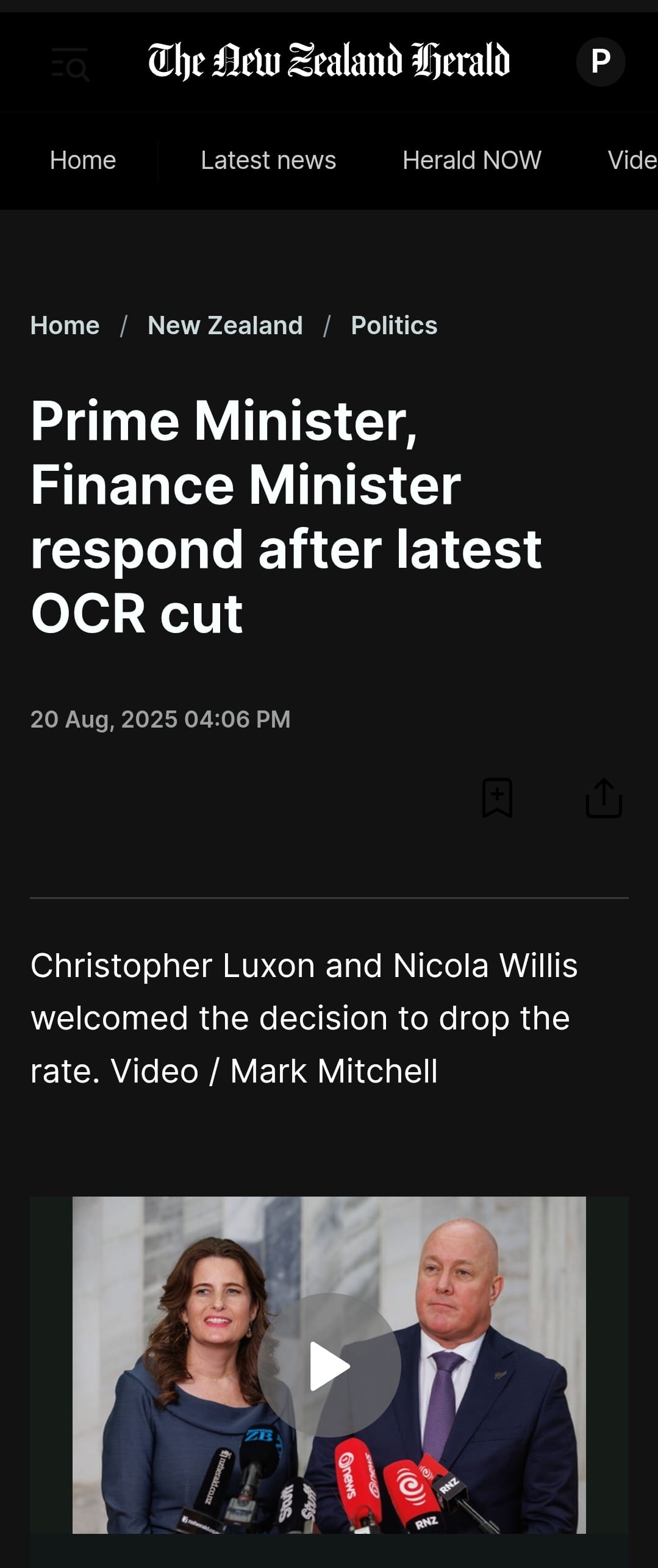
The establishment media circus that erupted on August 20th, 2025, following the Reserve Bank of New Zealand's official cash rate cut to 3 percent, provided yet another sickening display of how this neoliberal government celebrates their own failures while whānau Māori continue to bear the devastating consequences of their economic vandalism. The sight of Christopher Luxon and Nicola Willis parading before cameras, declaring "today is a good day" while unemployment soars to levels unseen since 2020, represents the grotesque moral bankruptcy of a system that prioritises corporate profits over our people's survival.
This essay exposes the colonial violence embedded in New Zealand's monetary policy apparatus and the devastating impact of the coalition government's neoliberal economic agenda on Māori and Pacific communities. Through examining the government's response to the OCR cut, we reveal how these supposed "economic managers" have orchestrated a deliberate transfer of wealth from the most vulnerable to the most privileged, using the Reserve Bank as their primary weapon of financial oppression.
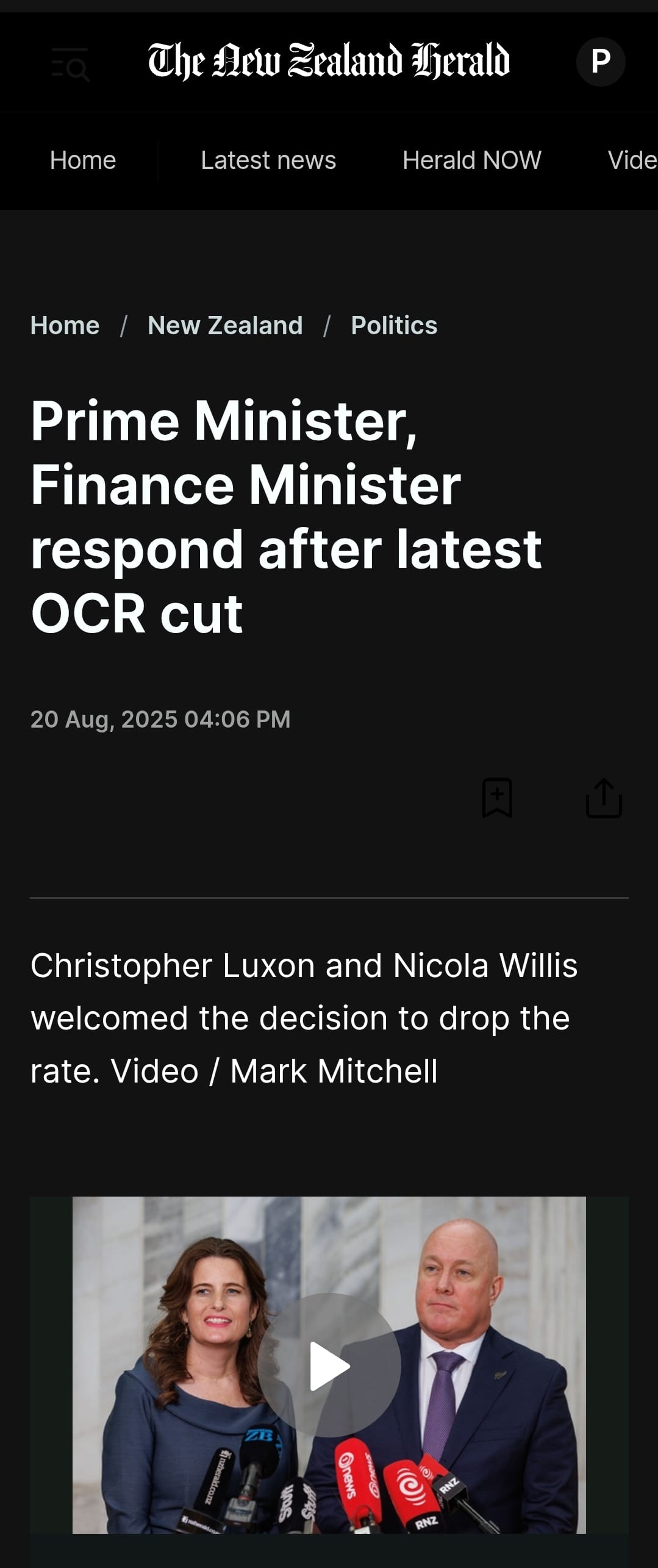
https://www.nzherald.co.nz/nz/politics/prime-minister-finance-minister-respond-after-latest-ocr-cut/CBM7MXLDKCFDWFE64O3JERIAN4/
The Neoliberal Theatre of Crisis Management
The current economic malaise gripping Aotearoa is not some mysterious force of nature, but the predictable outcome of decades of neoliberal policy designed to extract wealth from working people and funnel it upward to the corporate elite. When economists describe the current situation as "the recession the Reserve Bank made us have", they are acknowledging what many of us have understood for years: monetary policy has become a blunt instrument of class warfare.
The Reserve Bank's admission that the economy had "stalled" and businesses were "cautious because of rising prices, a soft labour market, and global uncertainty" reads like a confession of economic incompetence. Yet rather than taking responsibility for creating these conditions through their aggressive interest rate hiking cycle, the bank's governor Christian Hawkesby had the audacity to suggest that "success has thousands of parents" when asked about their role in taming inflation.
This is the same Reserve Bank that removed employment considerations from its mandate, ensuring that unemployment could rise without constraint in their singular obsession with price stability. As one MP correctly identified during that debate: "It is one thing to argue the cost and benefits of legislation, it is another thing to merely repeal it to pay back a few billionaires who will do well under neoliberal economics".
The Hidden Violence of Unemployment Statistics
Behind the sterile statistics lies a human catastrophe that this government refuses to acknowledge. While the national unemployment rate sits at 5.2 percent, the reality for our people tells a far more devastating story. Pacific peoples face an unemployment rate of 12.1 percent - more than double the national average, while Māori unemployment consistently tracks well above the official figures through systematic under-counting and exclusion from workforce statistics.
These numbers represent more than economic data - they represent whānau forced into "survival mode", young Māori students working up to three jobs just to survive, and families trapped in precarious housing arrangements because stable employment has been sacrificed on the altar of inflation targeting.
Unemployment rates showing stark inequality between Māori, Pacific peoples and the national average in New Zealand
The Reserve Bank's monetary policy committee, in their infinite wisdom, debated between no change, a 25 basis point cut, or a 50 basis point cut, ultimately settling on the smaller reduction in a 4-2 vote. This deliberation over decimal points occurs while Pacific unemployment has increased 3.8 percentage points in just 12 months, reflecting what the Salvation Army correctly identifies as structural barriers preventing our people from accessing work and education opportunities.
The Coalition's Celebration of Suffering
The government's response to the OCR cut revealed the moral vacuum at the heart of this administration. Prime Minister Luxon, with his characteristic corporate doublespeak, declared that New Zealand had been through a "difficult period" but the "road to recovery looks good". This from a man whose polling has collapsed to 20 percent as New Zealanders witness his complete inability to provide the basic leadership his position demands.
Finance Minister Nicola Willis, not to be outdone in her tone-deaf triumphalism, proclaimed that homeowners would have "more money in their back pocket" while conveniently ignoring that home ownership among Māori declined by nearly a third from the 1990s to 2013, dropping from over 50 percent to just 37 percent. Her celebration rings hollow when four out of five homeless women in Aotearoa are Māori, many as young as 15 years old.
The government's decision to switch benefit indexation from wages to inflation - saving them $670 million over four years at the expense of the country's poorest - demonstrates their true priorities. As one astute observer noted: "Where's the political courage to mete out tough love to the wealthy?"
The Whakapapa of Economic Colonisation
The current crisis must be understood within the broader context of neoliberalism's assault on tangata whenua. Since the 1980s, foodbanks have become a widespread solution to addressing hunger within high-income countries, primarily due to neoliberal policies that led to massive cuts in social welfare assistance. This normalisation of charity as a substitute for state responsibility represents a fundamental abdication of the Crown's Treaty obligations to ensure the wellbeing of Māori.
The health system provides a stark example of this systematic failure. Research reveals that health inequities between Māori and non-Māori adults cost $863.3 million per year, with the primary healthcare system actually saving $49 million annually by under-serving Māori. This under-investment in primary care creates a cascade of avoidable hospital admissions, perpetuating a cycle of crisis management rather than prevention.
The Waikato District Health Board's own equity report acknowledged that it was "embedded in a healthcare system which has privileged the needs of the majority while failing to meet the needs of all", creating "a distressing life journey for Māori children born today". This institutional racism is not accidental - it is the logical outcome of a system designed to extract maximum value from our people while providing minimum support.
The Monetary Policy Weapon
The Reserve Bank's decision-making process reveals how monetary policy has become weaponised against working people. The committee's consideration of a 50 basis point cut, with members favouring the larger reduction emphasising "weakness in the labour market and excess capacity in the economy", demonstrates their awareness that unemployment could rise further without more aggressive intervention.
Yet those preferring the smaller cut prioritised concerns about inflation expectations potentially "ratcheting up" over the immediate suffering of unemployed families. This perfectly encapsulates the neoliberal mindset: theoretical economic models matter more than human lives.
The bank's projection that the OCR could drop to 2.5 percent by the end of 2025 amounts to an admission that current settings remain contractionary despite widespread unemployment. As Kiwibank's economists correctly argued, the economy needs "stimulatory" rates below the neutral level to encourage business investment and hiring.
Corporate Welfare vs Public Austerity
The government's selective generosity reveals their true allegiances. While celebrating interest rate cuts that primarily benefit mortgage holders and businesses with debt, they simultaneously implement austerity measures targeting the most vulnerable. The traffic light warning system for beneficiaries, requiring Jobseeker Support recipients to re-apply every six months instead of annually, represents pure punitive theatre designed to demonise poverty rather than address its causes.
This systematic criminalisation of poverty occurs alongside massive subsidies for capital. The Labour government's Covid-19 business support and wage subsidy scheme facilitated "a massive upward transfer of wealth" amounting to about $1 trillion, demonstrating how crisis provides cover for wealth extraction.
The Path Forward: Reclaiming Economic Justice
The solution to this manufactured crisis lies not in tinkering with interest rates or celebrating modest improvements in mortgage affordability, but in fundamentally restructuring our economic system to serve tangata whenua and all working people rather than corporate shareholders. This requires acknowledging that neoliberalism is not dead but has evolved into "more entrenched laissez-faire policies" underpinned by Victorian-era moralisation of poverty.
True economic justice demands the restoration of full employment as a policy objective, the implementation of a job guarantee program that provides meaningful work at living wages, and the establishment of sovereign monetary policy that serves our people rather than international financial markets. It requires recognising that Māori businesses already demonstrate superior practices, putting "people before profit" and paying employees higher wages than non-Māori businesses.
Most fundamentally, it demands the decolonisation of economic decision-making, ensuring that Māori have genuine authority over policies affecting our communities rather than remaining subject to the whims of technocrats whose primary concern is maintaining the wealth of colonial elites.

The Māori Green Lantern fighting misinformation and disinformation from the far right
Building Resistance Through Rangatiratanga
While this government celebrates the crumbs falling from their masters' table, our people continue building alternative economies based on whakatōhia, manaakitanga, and whakapapa. From community organisations like Ka Pai Kaiti in Gisborne responding to whatever "walks in the door", to Māori tourism businesses contributing $1.2 billion to the economy while maintaining cultural integrity, we see examples of what becomes possible when economic activity serves community wellbeing rather than corporate profit.
The OCR cut represents nothing more than a minor adjustment within a fundamentally broken system. Real change will come not from celebrating the Reserve Bank's belated recognition of economic reality, but from building movements powerful enough to transform the entire structure of economic power in this country.
Until the Crown honours its Treaty obligations by ensuring genuine economic justice for tangata whenua, we will continue exposing the violence embedded in every policy announcement, every statistical release, and every celebration of economic "recovery" built on our people's suffering.
Kia kaha, kia māia, kia manawanui.
Readers who find value in this analysis and wish to support this kaupapa of exposing economic colonisation are invited to consider contributing a koha to: HTDM: 03-1546-0415173-000. Given these challenging economic times for whānau, please only donate if you have capacity and desire to do so.
- https://ppl-ai-file-upload.s3.amazonaws.com/web/direct-files/attachments/2123776/4021698a-abcc-41a3-b2b5-37b76dd3e46b/Prime-Minister-Finance-Minister-respond-after-latest-OCR-cut-NZ-Herald-1.PDF
- https://ppl-ai-file-upload.s3.amazonaws.com/web/direct-files/attachments/images/2123776/88ac78b4-4518-434f-ac8a-fabb0465f28d/Screenshot_20250821_024417_Brave.jpg
- https://www.nzherald.co.nz/nz/politics/prime-minister-finance-minister-respond-after-latest-ocr-cut/CBM7MXLDKCFDWFE64O3JERIAN4/
- https://www.emerald.com/insight/content/doi/10.1108/OXAN-DB246391/full/html
- https://www.semanticscholar.org/paper/55979ad7974e4783c493331c4674e07e8b0e8ccd
- https://onepetro.org/JPT/article/72/08/16/450669/E-amp-P-Notes-August-2020
- https://www.semanticscholar.org/paper/4c91c10bf80ddaf942bb41e6393b811bc2f2731a
- https://www.1news.co.nz/2025/08/20/ocr-what-rate-cut-is-coming-today-when-will-there-be-more/
- https://www.rnz.co.nz/news/top/570396/finance-minister-nicola-willis-accuses-labour-of-reckless-approach-to-spending
- https://www.rnz.co.nz/news/alert-top/570534/reserve-bank-cuts-ocr-to-3-percent
- https://www.rnz.co.nz/news/political/570560/today-is-a-good-day-government-celebrates-reserve-bank-s-ocr-cut
- https://www.1news.co.nz/2025/07/22/luxon-snaps-back-at-frickin-hipkins-over-claims-of-flop/
- https://www.rnz.co.nz/news/political/566419/reserve-bank-holds-official-cash-rate-at-3-point-25-percent
- https://www.nzherald.co.nz/business/two-more-rate-cuts-to-come-reserve-bank-to-the-rescue-as-recovery-stalls/XWE2SIIDHJBALJ6RETGPRDOHYY/
- https://www.nzherald.co.nz/nz/politics/prime-minister-christopher-luxon-says-government-will-get-to-the-bottom-of-airways-outage/24ZZR67IYJC7PGRGA25O5VYC2Y/
- https://www.rnz.co.nz/news/national/570052/asb-joins-other-major-banks-on-4-point-79-percent-mortgage-interest-rate
- https://www.rnz.co.nz/news/business/570548/why-ocr-decision-may-be-good-news-for-home-loan-rates
- https://www.1news.co.nz/2025/07/09/ocr-held-at-325-by-reserve-bank/
- https://www.1news.co.nz/2025/08/18/how-might-this-weeks-expected-changes-to-the-ocr-impact-your-finances/
- https://www.rnz.co.nz/news/national/535040/ocr-reaction-willis-vows-to-push-every-policy-lever-to-aid-growth
- https://www.rnz.co.nz/news/business/570552/reserve-bank-s-statement-a-dovish-pivot-anz
- https://www.nzherald.co.nz/nz/politics/nicola-willis-swoops-in-for-prime-ministers-usual-media-spot-denies-power-play-as-christopher-luxon-forced-aside/JYY5O74MYBAVVLRCIOUXXNG6NE/
- /content/files/2409-01704v1.pdf
- https://arxiv.org/html/2412.02210v3
- /content/files/2408-17428.pdf
- https://www.frontiersin.org/articles/10.3389/fonc.2025.1569197/full
- https://www.mdpi.com/1424-8220/23/15/6706
- /content/files/2109-03144.pdf
- https://www.mdpi.com/2075-4418/13/17/2770/pdf?version=1693288828
- /content/files/2208-04011.pdf
- https://arxiv.org/abs/2206.03001
- https://pmc.ncbi.nlm.nih.gov/articles/PMC3474252/
- https://pmc.ncbi.nlm.nih.gov/articles/PMC10147647/
- /content/files/2409-04117.pdf
- https://arxiv.org/html/2304.02737
- https://www.mdpi.com/2077-0383/11/17/5139/pdf?version=1661946497
- https://pmc.ncbi.nlm.nih.gov/articles/PMC10581807/
- /content/files/2110-01661.pdf
- https://pmc.ncbi.nlm.nih.gov/articles/PMC11482172/
- https://www.mdpi.com/1648-9144/59/12/2114/pdf?version=1701591297
- https://www.mdpi.com/2306-5354/10/4/438/pdf?version=1680832695
- https://dx.plos.org/10.1371/journal.pone.0318657
- https://www.rnz.co.nz/news/business/530268/reserve-bank-cuts-official-cash-rate-to-4-point-75-percent
- https://www.rnz.co.nz/news/national/564129/recovery-taking-longer-than-expected-kiwibank-economists-say
- https://www.1news.co.nz/2025/08/12/john-campbell-please-national-and-labour-do-something-anything/
- https://www.rnz.co.nz/news/business/558380/anz-forecasts-reserve-bank-will-need-to-cut-ocr-to-support-economic-recovery
- https://www.1news.co.nz/2025/08/18/swarbrick-kicked-out-of-parliament-after-refusing-to-apologise/
- https://www.1news.co.nz/2024/11/27/interest-rate-relief-confident-reserve-bank-cuts-ocr-to-425/
- https://www.rnz.co.nz/news/national/569173/here-s-what-unemployment-data-means-for-your-home-loan
- https://www.1news.co.nz/2024/05/27/govt-moves-to-replace-or-repeal-treaty-principles-clauses-from-laws/
- https://www.rnz.co.nz/news/business/542372/reserve-bank-cuts-ocr-by-50-basis-points-to-3-point-75-percent
- https://www.1news.co.nz/2025/02/15/scott-morrison-the-company-that-could-give-nz-a-big-aukus-boost/
- https://link.springer.com/10.1007/s40841-025-00388-0
- https://www.semanticscholar.org/paper/013d2437bdef70f454f66954d770f0927f631fdb
- https://link.springer.com/10.1007/s10460-023-10414-w
- https://sites.otago.ac.nz/Sites/article/view/271
- https://www.semanticscholar.org/paper/142c5c5a4733d9d47c4d72cd2f6d209e56b35197
- https://addletonacademicpublishers.com/contents-crlsj/649-volume-8-2-2016/2783-the-transnational-state-neoliberalism-and-environmental-education-policy-a-new-zealand-case-study
- https://link.springer.com/10.1057/s41292-021-00251-7
- https://www.semanticscholar.org/paper/5a17b5c0cd2528806e5edb8902e1ddc41eed3342
- https://www.semanticscholar.org/paper/197fd465b7377c8d7b3a596fdad69a2ef52529a4
- https://www.tandfonline.com/doi/full/10.1080/00131857.2014.935280
- https://www.tandfonline.com/doi/pdf/10.1080/23265507.2017.1365623?needAccess=true
- /content/files/bitstream/10419/268085/1/1761427962.pdf
- /content/files/anzsw/article/download/220/290.pdf
- /content/files/nzjer/article/download/16/10.pdf
- /content/files/nzjer/article/download/23/27.pdf
- https://onlinelibrary.wiley.com/doi/pdfdirect/10.1111/j.1468-0491.2010.01508.x
- /content/files/anzsw/article/download/221/292.pdf
- http://www.doiserbia.nb.rs/ft.aspx?id=1452-595X1204421S
- /content/files/bitstream/10419/205610/1/twp2010-07.pdf
- http://www.cultureunbound.ep.liu.se/v7/a37/cu15v7a37.pdf
- /content/files/podcasts/focusonpolitics.xml
- https://www.nzherald.co.nz/the-listener/politics/the-coalition-one-year-on-how-the-government-has-turned-back-time/OVE5A7Z4YNFNLGIUYVX2AJ2VYU/
- https://www.rnz.co.nz/news/business/570325/another-ocr-cut-on-the-cards-but-how-many-more
- https://www.nzherald.co.nz/business/brian-fallow-its-the-1980s-all-over-again-with-national/GMGEHGM4MHIRC4RF6KFRSL4FM4/
- https://www.rnz.co.nz/news/political/500479/nz-election-2023-labour-out-national-in-either-way-neoliberalism-wins-again
- https://www.rnz.co.nz/news/business/570534/reserve-bank-cuts-ocr-to-3-percent
- https://www.nzherald.co.nz/topic/cost-of-living/20/
- https://www.rnz.co.nz/news/political/504573/parliament-urgently-debates-reserve-bank-dual-mandate-repeal
- /content/files/webcontent/document/201411/mpsmar14.pdf
- https://www.nzherald.co.nz/lifestyle/the-numbers-game-a-primer-in-economic-theory/IXLSVSD3PKGP4PQ7OBTF5T6YXY/
- https://www.nzherald.co.nz/the-listener/politics/long-division-danyl-mclauchlan-on-ncea-and-a-second-neoliberal-wave/YR2P7WB2XNEZ3ING46BWHR3FSA/
- https://www.rnz.co.nz/news/business/562575/how-the-reserve-bank-decides-the-ocr
- https://www.semanticscholar.org/paper/b5c22670650d13635b21600cb03c9e91b7cd5b17
- https://nzmj.org.nz/journal/vol-138-no-1608/prevalence-impact-and-management-strategies-for-dysmenorrhea-in-aotearoa-new-zealand-a-scoping-review
- https://hdl.handle.net/10289/17278
- https://onlinelibrary.wiley.com/doi/10.1111/epi.18452
- https://www.ingentaconnect.com/content/10.2224/sbp.15940
- https://journals.sagepub.com/doi/10.1177/14661381251351755
- https://www.journal-uamd.org/index.php/IJRD/article/view/575
- https://onlinelibrary.wiley.com/doi/10.1111/jan.70046
- https://link.springer.com/10.1007/978-3-031-67507-2
- https://tobaccocontrol.bmj.com/lookup/doi/10.1136/tc-2022-057655
- https://journals.sagepub.com/doi/pdf/10.1177/0143831X231224587
- https://www.tandfonline.com/doi/pdf/10.1080/15358593.2024.2313238?needAccess=true
- https://pmc.ncbi.nlm.nih.gov/articles/PMC10098925/
- /content/files/nzjer/article/download/22/28.pdf
- https://pmc.ncbi.nlm.nih.gov/articles/PMC9644742/
- /content/files/nzjer/article/download/13/7.pdf
- https://www.tandfonline.com/doi/pdf/10.1080/1177083X.2024.2319118?needAccess=true
- /content/files/anzjsi/article/download/54/38.pdf
- https://www.worldscientific.com/doi/10.1162/adev_a_00156
- https://www.1news.co.nz/2025/08/06/unemployment-rate-rises-to-52-stats-nz/
- https://www.rnz.co.nz/news/te-manu-korihi/477167/health-inequities-between-maori-and-non-maori-adults-cost-863-million-a-year-study-finds
- https://www.rnz.co.nz/news/in-depth/396653/a-poor-outcome-maori-poverty-and-the-struggle-for-survival
- https://www.rnz.co.nz/news/pacific/569214/unemployment-rate-for-pacific-people-more-than-double-national-average
- https://www.rnz.co.nz/news/te-manu-korihi/439587/waikato-dhb-systematically-failing-maori-and-pasifika-report
- https://www.nzherald.co.nz/waikato-news/news/maori-unemployment-and-socioeconomic-disparities-our-people-need-real-solutions/ZEXK4P3O7FC63ORURLSS754C3E/
- https://www.nzherald.co.nz/nz/economists-predict-53-unemployment-rate-amid-fragile-economic-recovery/NYXFHWY5JVC4NBJTMT47QF6LOE/
- https://www.rnz.co.nz/news/national/535943/the-grim-picture-of-homelessness-for-nz-women
- https://www.rnz.co.nz/news/national/541934/maori-businesses-perform-strongly-despite-economic-hardships
- https://www.rnz.co.nz/news/national/569145/unemployment-rate-rises-to-highest-level-since-2020
- https://www.rnz.co.nz/news/political/540018/select-committee-treaty-principles-bill-submissions-hearings-begin
- https://www.rnz.co.nz/news/business/569246/skilled-workers-still-battling-for-jobs-after-hundreds-of-applications
- https://www.rnz.co.nz/news/business/479330/the-ocr-what-you-need-to-know
- https://www.rnz.co.nz/news/business/569293/workers-moving-towns-in-desperate-quest-for-jobs