“Exposing the charade of first-term incompetence” - 12 July 2025
When privilege meets politics, the vulnerable pay the price
Mōrena koutou katoa.
The toxic dance between Kate Adams and Max Kemara reveals everything rotten about colonial power structures masquerading as democratic governance. Adams, partner to former mayor Lyn Riesterer, writes with the privilege of proximity to power while Kemara, in his defensive scramble, exposes the dangerous combination of inexperience and arrogance that threatens community wellbeing.
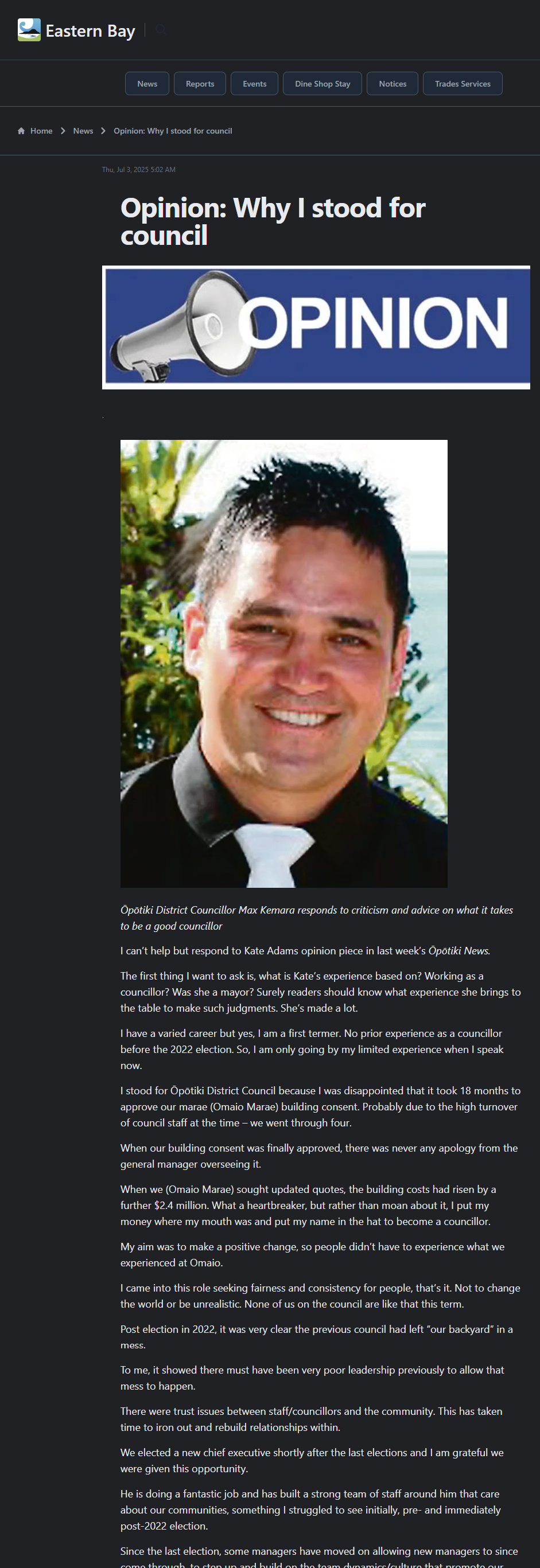
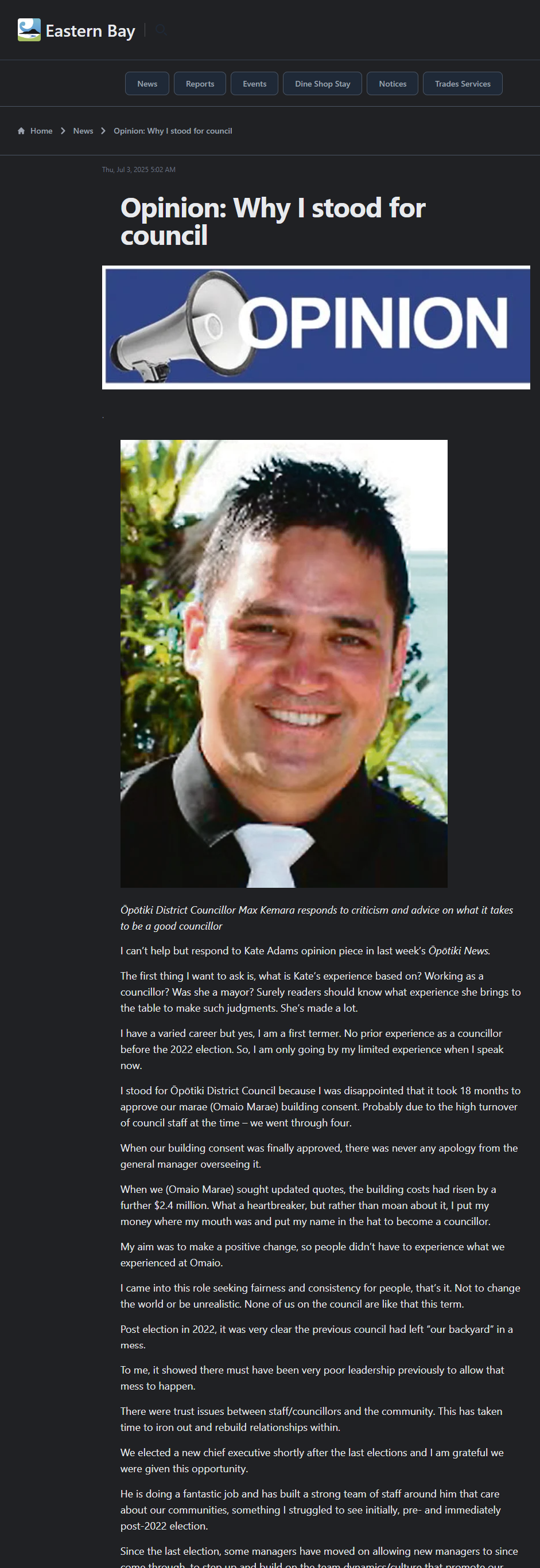
Maxi Kemara’s piece in the Ōpōtiki News
When lived experience meets colonial structures
Kate Adams brings lived experience of supporting a partner who faced both racism and sexism as New Zealand's first gay Māori woman mayor. Her understanding of power dynamics, governance standards, and community engagement comes from witnessing firsthand how discrimination operates within local government. Meanwhile, Max Kemara entered council in 2022 as a first-term councillor with no prior experience, motivated by personal frustration over his marae's building consent delays rather than broader community advocacy.
Adams' comprehensive analysis of councillor responsibilities demonstrates sophisticated understanding of governance, community engagement, and ethical standards. She emphasizes attendance requirements, conflict of interest declarations, community visibility, and regional advocacy - all fundamental aspects of effective representation. Her critique targets systemic failures: councillors missing workshops, declaring conflicts improperly, and failing to engage meaningfully with constituents.
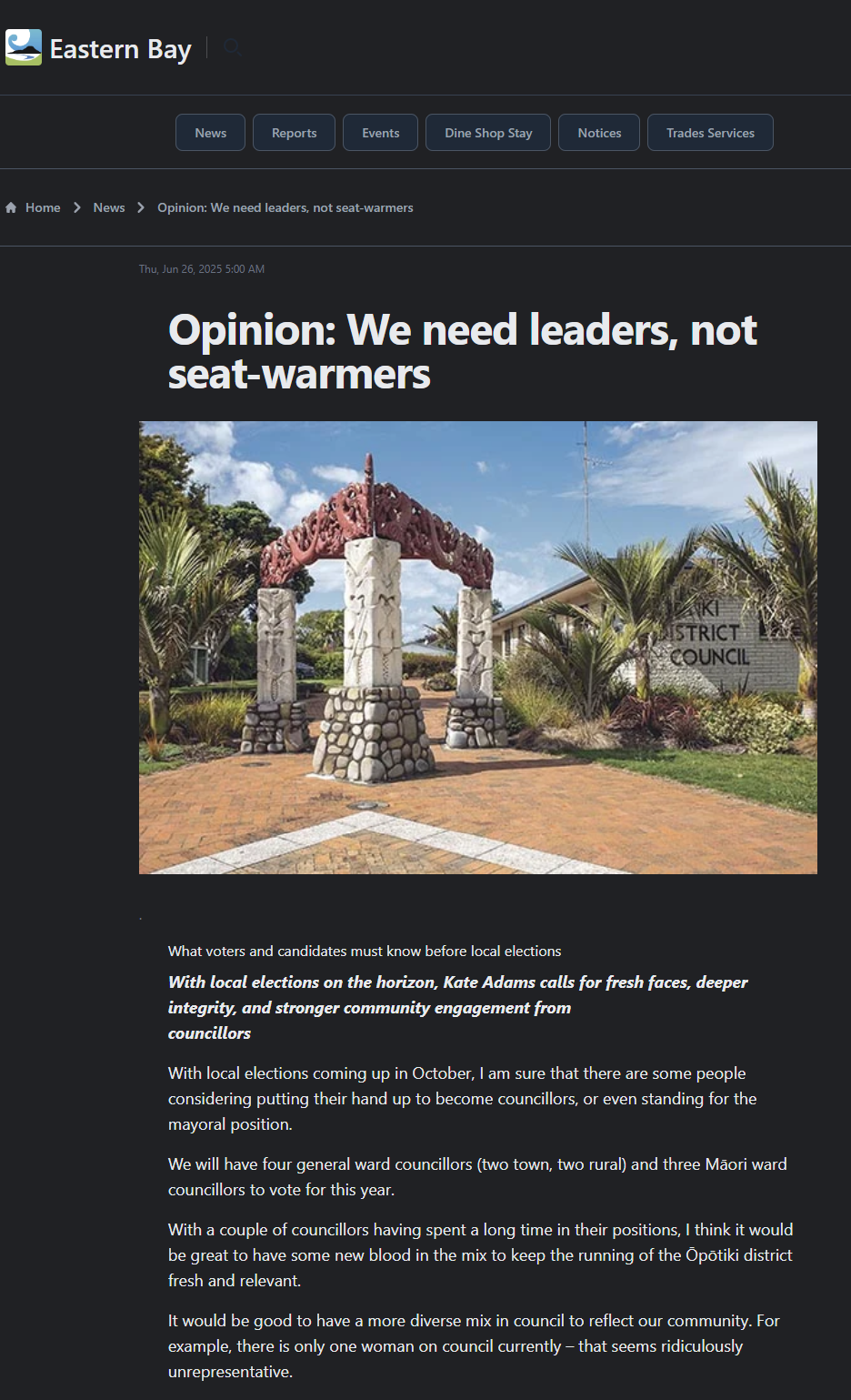
Kate Adams piece in the Ōpōtiki News
The anatomy of defensive incompetence
Kemara's response reveals the classic pattern of defensive incompetence that plagues colonial institutions. Rather than addressing substantive governance concerns, he deflects through personal attacks and irrelevant details. His opening gambit - questioning Adams' qualifications to critique councillors - epitomizes the arrogance of those who believe proximity to power grants immunity from accountability.
This defensive strategy serves multiple colonial functions. It dismisses legitimate criticism from community members, particularly women and those connected to marginalized voices. It redirects attention from systemic failures to personality conflicts. Most dangerously, it normalizes incompetence by framing inexperience as virtue rather than addressing the harm caused by inadequate representation.
The library funding misinformation campaign
The most egregious example of Kemara's dangerous incompetence emerged during the library funding crisis of early 2024. When community members organized to protect Te Tāhuhu o Te Rangi from proposed service cuts and reduced hours, Kemara falsely accused the Protect Te Tahuhu o Te Rangi action group of spreading misinformation.
This accusation was demonstrably false. The action group's concerns were based on publicly reported council discussions about reducing library services to manage rates increases. The Ōpōtiki News had extensively covered these proposals, making community organizing both legitimate and necessary. Kemara's accusation of misinformation was itself misinformation - a projection technique common among those caught defending the indefensible.
The colonial pattern of deflection
Kemara's response follows a predictable colonial playbook. When confronted with legitimate criticism, he:
- Questions the critic's credentials rather than addressing concerns
- Deflects through personal anecdotes about his marae's building consent
- Claims victimhood while wielding institutional power
- Minimizes systemic issues as personality conflicts
- Accuses community advocates of spreading misinformation
This pattern serves to protect colonial power structures by discrediting those who challenge them. It's particularly insidious when deployed by Māori politicians who should understand how these tactics have been used against their own people.
The real cost of inexperience
Adams correctly identifies that councillor attendance at workshops is crucial, noting one councillor attended only 28 percent of required sessions. This isn't about personal health challenges - it's about fundamental respect for democratic processes and community investment in governance.
Kemara's dismissal of these concerns as "attacks" reveals his misunderstanding of democratic accountability. Public office requires public scrutiny. Community members have the right to expect basic competence, regular attendance, and genuine engagement from their representatives.
When libraries become battlegrounds
The attack on Te Tāhuhu o Te Rangi represents a broader assault on community infrastructure that serves the most vulnerable. Libraries function as democratic spaces where people access information, technology, and services regardless of economic status. They're particularly vital in communities like Ōpōtiki where digital divides and economic inequality create barriers to full participation in society.
When Kemara falsely accused library advocates of spreading misinformation, he was employing a fascist tactic - using accusations of "fake news" to silence legitimate community organizing. This is especially dangerous when deployed by someone in a position of power against grassroots activists working to protect essential services.
The privilege of proximity
Adams' position as partner to a former mayor provides her with insider knowledge of how local government should function. Rather than using this privilege to maintain the status quo, she leverages it to advocate for higher standards and genuine community engagement. Her criticism of current council performance demonstrates how proximity to power can be used constructively to hold systems accountable.
Kemara's response reveals the opposite dynamic - proximity to power used to deflect criticism and maintain inadequate performance. His defensive posture suggests someone more interested in protecting his position than improving his service.
The broader implications
This conflict illuminates fundamental tensions within contemporary New Zealand politics. Adams represents a vision of governance grounded in competence, transparency, and genuine community engagement. Kemara embodies the dangerous combination of inexperience, defensiveness, and misplaced entitlement that threatens democratic institutions.
The stakes extend beyond Ōpōtiki District Council. As communities nationwide grapple with rates increases, service cuts, and governance failures, the quality of local representation becomes crucial. First-term councillors like Kemara, elected on single issues without broader civic understanding, risk becoming unwitting tools of neoliberal austerity.
A call for genuine representation
The whānau of Ōpōtiki deserve better than defensive incompetence masquerading as representation. They deserve councillors who understand their responsibilities, engage meaningfully with community concerns, and demonstrate basic competence in governance processes.
Adams' critique provides a roadmap for improvement - regular attendance, genuine community engagement, proper conflict of interest management, and advocacy beyond district boundaries. These aren't unreasonable expectations but fundamental requirements for democratic representation.
As we approach future elections, communities must demand candidates who demonstrate competence, integrity, and genuine commitment to serving all residents rather than pursuing personal agendas or protecting wounded egos.
The people of Ōpōtiki - like all communities - deserve representation that elevates rather than diminishes their democratic aspirations. They deserve better than the toxic combination of privilege and incompetence that too often characterizes colonial governance structures.
Kia kaha, whānau. The fight for genuine representation continues.
Readers who find value in this analysis and wish to support continued advocacy for democratic accountability can consider making a koha to support this work: HTDM: 03-1546-0415173-000. The MGL understands these are tough economic times for whānau, so please only contribute if you have capacity and wish to do so.
Nāku noa, nā,
Ivor Jones - The Māori Green Lantern