Exposing the Corporate Puppet: Christopher Luxon's Neoliberal Assault on Aotearoa
When the CEO of privilege masquerades as the people's champion, it's time to tear down the facade
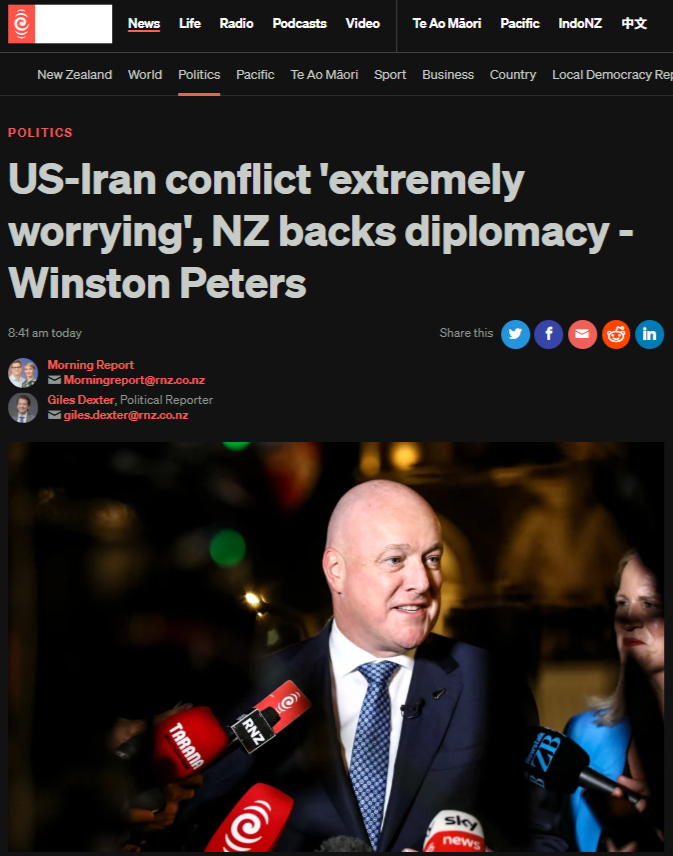
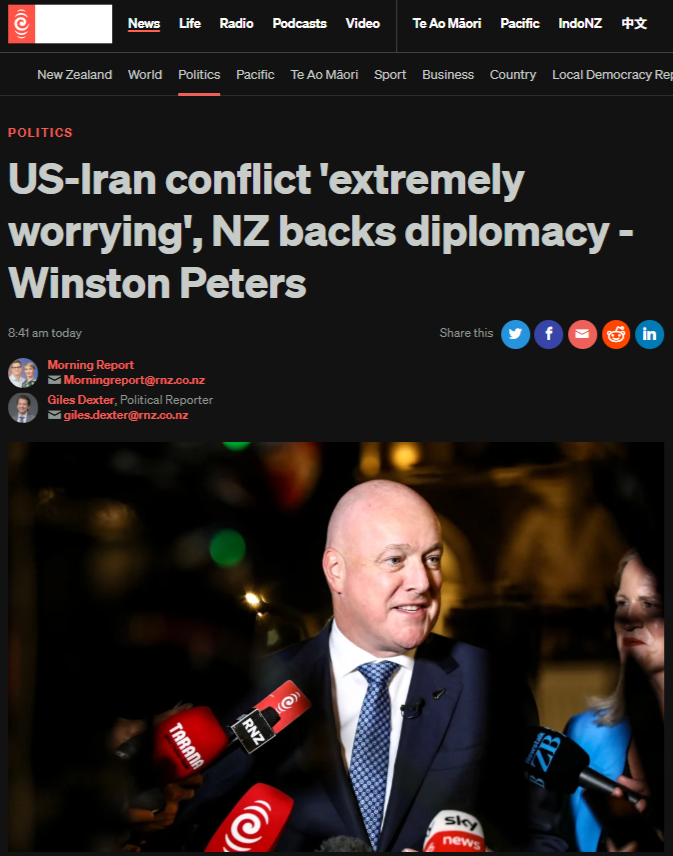
Christopher Luxon represents everything that is wrong with modern politics in Aotearoa. Here is a man who earned $4.2 million annually as CEO of Air New Zealand (source), owns seven properties worth over $21 million (source), and now claims to understand the struggles of ordinary Kiwis while implementing policies that further entrench inequality and corporate power. This essay exposes Luxon's neoliberal ideology and its devastating impact on our communities, particularly tangata whenua.
Background: The Making of a Corporate Politician
Christopher Luxon entered politics as the archetypal corporate candidate—a former multinational executive who spent 18 years at Unilever before becoming CEO of Air New Zealand (source). His background represents the revolving door between corporate boardrooms and political power that characterizes neoliberal governance (source). This is not merely about personal wealth, but about the ideology and worldview that such privilege instills.
Luxon's ascension to Prime Minister represents the triumph of market fundamentalism over democratic values (source). His government operates on the principle that what is good for business is automatically good for New Zealand, ignoring the reality that corporate interests often directly conflict with the wellbeing of working families and Māori communities.
Issue Summary: Neoliberal Ideology in Action
Luxon's government embodies what academics describe as "market fundamentalism"—the belief that market mechanisms are the optimal solution to all social and economic problems (source). This ideology manifests in several key areas:
Corporate Welfare Disguised as Economic Policy
Luxon has implemented massive tax cuts that overwhelmingly benefit the wealthy, with analysis showing that for every $1 the bottom half of earners receive, the top 5 percent get $10 (source). Meanwhile, his government has introduced corporate tax cuts while cutting public services (source).
Attack on Māori Rights and Co-governance
Luxon has systematically dismantled co-governance arrangements, claiming Māori seats "don't make a lot of sense" (source, source). His government supports ACT's Treaty Principles Bill while maintaining the facade of supporting Treaty partnerships (source).
Punitive Welfare Policies
Under the guise of "social investment," Luxon has implemented harsh benefit sanctions that push vulnerable families further into poverty (source, source). This represents the worst kind of neoliberal victim-blaming.
The Ideology of Corporate Capture
Luxon's worldview is fundamentally shaped by his corporate background, which explains his government's policies that consistently favor business interests over public good. As one analysis notes, “Budget 2025 represented a huge financial boost for the top end of town with little to offer the rest of us other than the bogus claim that one day, the rest of us will be the beneficiaries of such corporate largesse” (source).
This represents what Māori understand as the antithesis of whakatōhea (collective responsibility) and manaakitanga (care for others). Instead, Luxon promotes the neoliberal myth of trickle-down economics, which has been thoroughly debunked by decades of evidence (source).
While ordinary families struggle with housing costs and inflation, Luxon made $4.34 million in capital gains from his property portfolio in a single year—15 times more than his annual salary as National Party leader (source). Yet he claims the wealthy are “not the problem” even as IRD shows rich New Zealanders pay half the tax rate of middle-income earners (source, source).
Weaponizing "Anti-Woke" Rhetoric Against Māori
Luxon has joined the global far-right playbook by embracing "anti-woke" politics as a way to undermine Māori advancement (source). His support for legislation targeting DEI in the public sector is a direct attack on efforts to address structural racism.
When Luxon speaks of "meritocracy" and ending “woke social engineering,” he is using white supremacist dog whistles that frame Māori progress as “unfair advantage.”

Housing Crisis and Property Speculation
Perhaps nowhere is Luxon's hypocrisy more evident than in housing policy. While claiming to address the housing crisis, he personally benefits from property speculation that drives up housing costs (source). His policies restore tax deductibility for landlords while refusing to commit to lowering rents on his own investment properties (source, source).
This represents the fundamental contradiction of neoliberal housing policy: treating homes as commodities for wealth accumulation rather than as basic human rights. Luxon's government has prioritized landlord profits over housing affordability, implementing policies that Treasury and IRD specifically advised against because they would increase rents (source).
The impact on Māori communities is particularly severe, as they face disproportionate housing stress and homelessness. Yet Luxon's policies benefit mega-landlords with millions in tax breaks while vulnerable families face eviction from state housing under harsher tenancy rules (source, source).
Climate Denialism and Environmental Destruction
Luxon's government has embraced climate denialism by rejecting scientific advice on methane emissions, dismissing international climate scientists as "worthies" who should focus elsewhere (source). This represents the neoliberal prioritization of short-term profits over long-term environmental sustainability.
For Māori, this is particularly devastating as it violates fundamental principles of kaitiakitanga (environmental guardianship) and intergenerational responsibility. Luxon's approach treats the environment as an exploitable resource rather than a taonga to be protected for future generations.
Surveillance and Social Control
Luxon's embrace of "social investment" represents a sophisticated form of social control that uses big data to monitor and categorize vulnerable populations (source, source). Under the guise of early intervention, this approach creates what scholars describe as a “panoptic toolkit for poverty governance” that surveils and normalizes the poor rather than addressing structural inequality.
This approach particularly targets Māori families, who are overrepresented in government databases due to historical disadvantage and ongoing discrimination. Rather than addressing the root causes of inequality, social investment pathologizes poverty and subjects vulnerable families to increased surveillance and control.

Implications for Aotearoa
Luxon's ideology represents an existential threat to the values that should define Aotearoa – equality, collective responsibility, and respect for Treaty partnerships. His government's policies are creating what one observer calls a "reverse Robin Hood" approach that takes from the most vulnerable to give to the already wealthy (source).
The broader implications extend beyond immediate policy impacts. Luxon's approach represents the embedding of corporate values into government, treating public services as businesses and citizens as consumers (source). This fundamentally undermines democratic governance and community solidarity.
For Māori, Luxon's government represents a direct assault on tino rangatiratanga and the gains made through decades of struggle for justice. His policies threaten to roll back not just specific programs but the fundamental recognition of Māori rights and Treaty obligations.
The concentration of wealth and power that Luxon's policies enable threatens the democratic foundations of our society. As inequality increases, so does the political influence of the wealthy, creating a vicious cycle that further entrenches corporate capture of government (source).

Christopher Luxon and his government represent the worst aspects of neoliberal capitalism – corporate capture of democracy, systematic inequality, and the subordination of human dignity to market logic. His policies consistently benefit the wealthy while punishing the vulnerable, particularly Māori communities who face the brunt of his ideological assault.
The response must be grounded in Māori values of collective responsibility, environmental stewardship, and social justice. We must reject the neoliberal myth that there is no alternative and instead build an economy that serves people and planet rather than corporate profits.
This is not merely about changing policies but about fundamentally challenging the power structures that enable corporate elites like Luxon to impose their ideology on our communities. The fight against Luxon's agenda is ultimately a fight for the soul of Aotearoa – between the values of solidarity and justice versus greed and exploitation.
The choice is clear: we can continue down Luxon's path toward greater inequality and environmental destruction, or we can choose a different future based on justice, sustainability, and respect for Treaty partnerships. The time for half-measures and compromise with corporate power is over.

Ngā mihi nui to all whānau fighting for a just future.
For those who find value in this analysis and wish to support independent media that holds power accountable, please consider a koha to HTDM: 03-1546-0415173-000. These are tough economic times for many whānau, so please only contribute if you have capacity and wish to do so.
Kia kaha, kia māia, kia manawanui.
Ivor Jones
The Māori Green Lantern