"Exposing the Neoliberal Assault on Māori Education" - 29 August 2025
The Coalition's Legal Warfare Against Public Service Workers
Kia ora koutou. Ko Ivor Jones ahau, ko au te Māori Green Lantern. In the shadow of Corporate New Zealand's gleaming towers, where landlords count their tax cuts and tobacco executives light cigars with public money, our tamariki sit in understaffed classrooms while their teachers fight for dignity in courtrooms. Today we expose the Coalition government's most brazen attack on public education through the lens of a legal battle that reveals the rotten heart of neoliberal austerity.
This essay dissects the Ministry of Education's proposed 755 job cuts, the Public Service Association's fight through three levels of New Zealand's courts, and the devastating connections between Christopher Luxon's corporate boardroom mentality and the systematic destruction of services that support Māori learners. We follow the money from landlord tax breaks to tobacco industry windfalls, tracing how billions in public wealth flows upward while our most vulnerable communities face educational apartheid.
Background: The Architecture of Educational Destruction
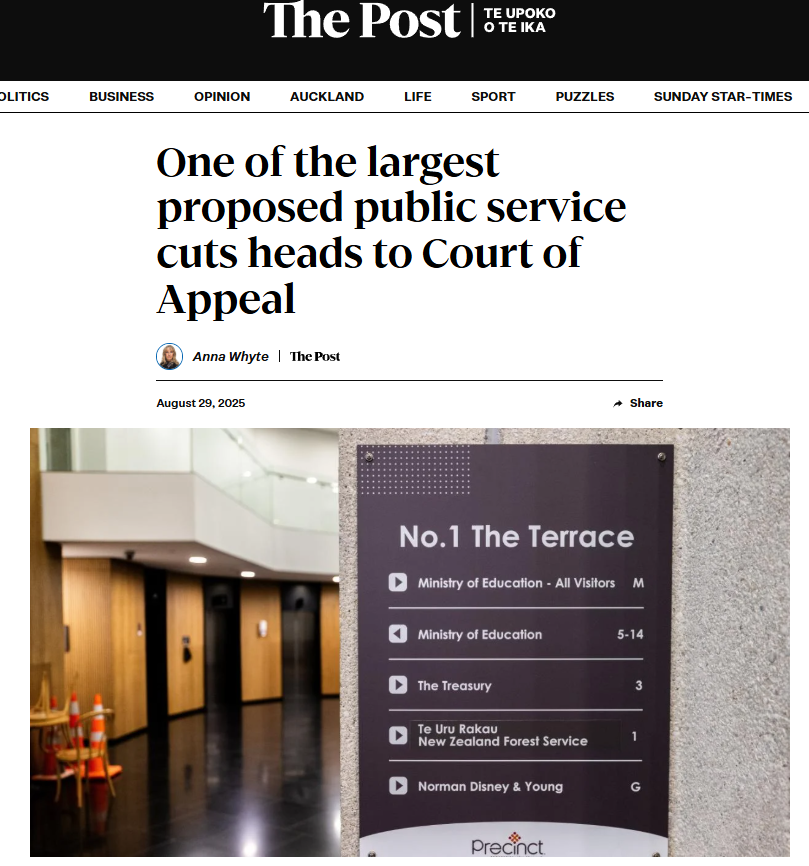
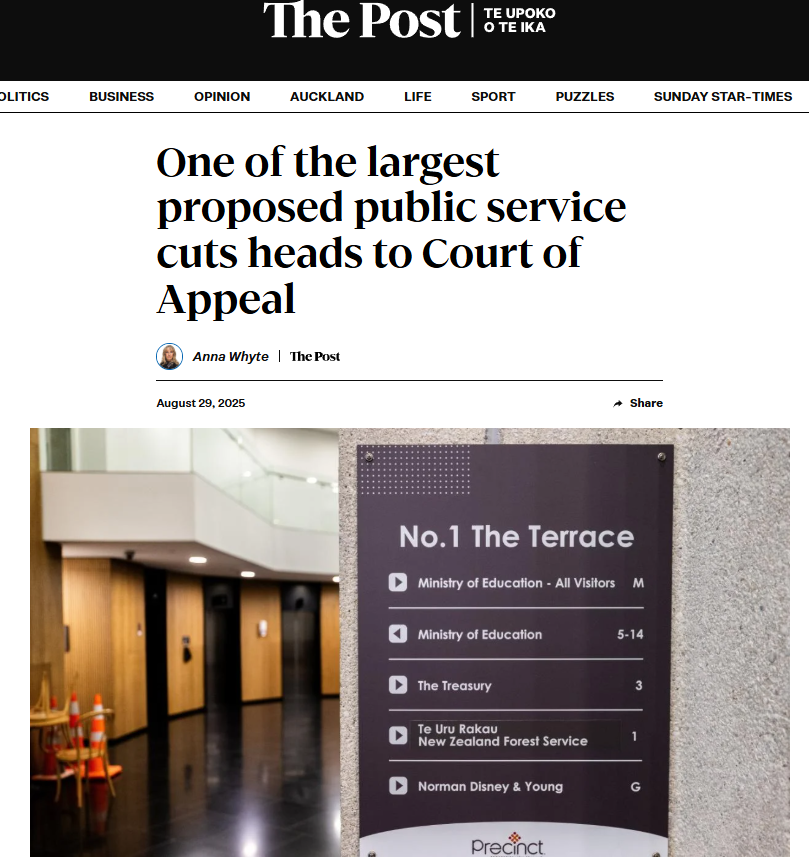
The Ministry of Education job cuts case now heading to the Court of Appeal represents far more than an employment dispute. It exposes the Coalition government's systematic dismantling of educational support systems that disproportionately serve Māori and Pasifika communities.
Since taking power in October 2023, the Luxon-led Coalition has orchestrated what amounts to educational ethnic cleansing through bureaucratic strangulation. The proposed elimination of 755 positions at the Ministry of Education strikes directly at specialists who design curricula for Māori learners, support children with disabilities, and maintain the infrastructure of indigenous education.
These cuts occur within Te Tiriti obligations that require the Crown to actively protect Māori educational advancement. The collective agreement between the Ministry and PSA specifically enshrines principles of Kotahitanga (unity), Rangatiratanga (self-determination), Whanaungatanga (relationships), Kaitiakitanga (guardianship), and Manaakitanga (care) – all of which the government has systematically violated.
The legal battle reveals how modern colonization operates through financial violence. Rather than sending gunboats, today's colonizers dispatch accountants armed with spreadsheets to execute "efficiency savings" that coincidentally devastate indigenous communities while enriching the already wealthy.
Corporate Thuggery Disguised as Fiscal Responsibility
The Coalition's assault on public education operates through a three-pronged strategy that would make Milton Friedman weep with joy. First, manufacture a fiscal crisis through massive tax cuts for landlords and property speculators. Second, use this manufactured scarcity to justify "unavoidable" cuts to public services. Third, blame workers and unions when they resist having their livelihoods sacrificed on the altar of corporate welfare.
The Ministry proposed eliminating 755 roles including specialists in regional offices, the Curriculum Centre, and central services. These positions directly support Māori-medium education, learning support for disabled children, and the development of culturally responsive curricula. The human cost is devastating – workers described being "constantly in tears" during a process designed to strip them of dignity while destroying their ability to serve communities.
The PSA's legal challenge exposed the Ministry's contempt for its own collective agreement, which requires genuine consultation and case-by-case consideration of alternatives like redeployment and retraining. Instead, the Ministry adopted a corporate restructuring approach that treated workers as disposable units in a profit-maximization exercise.
What makes this particularly sinister is the timing. While the government hands $2.9 billion in tax breaks to landlords, it simultaneously claims poverty when asked to maintain educational services. The message is clear: property speculators deserve taxpayer subsidies, but Māori children can rot in understaffed schools.
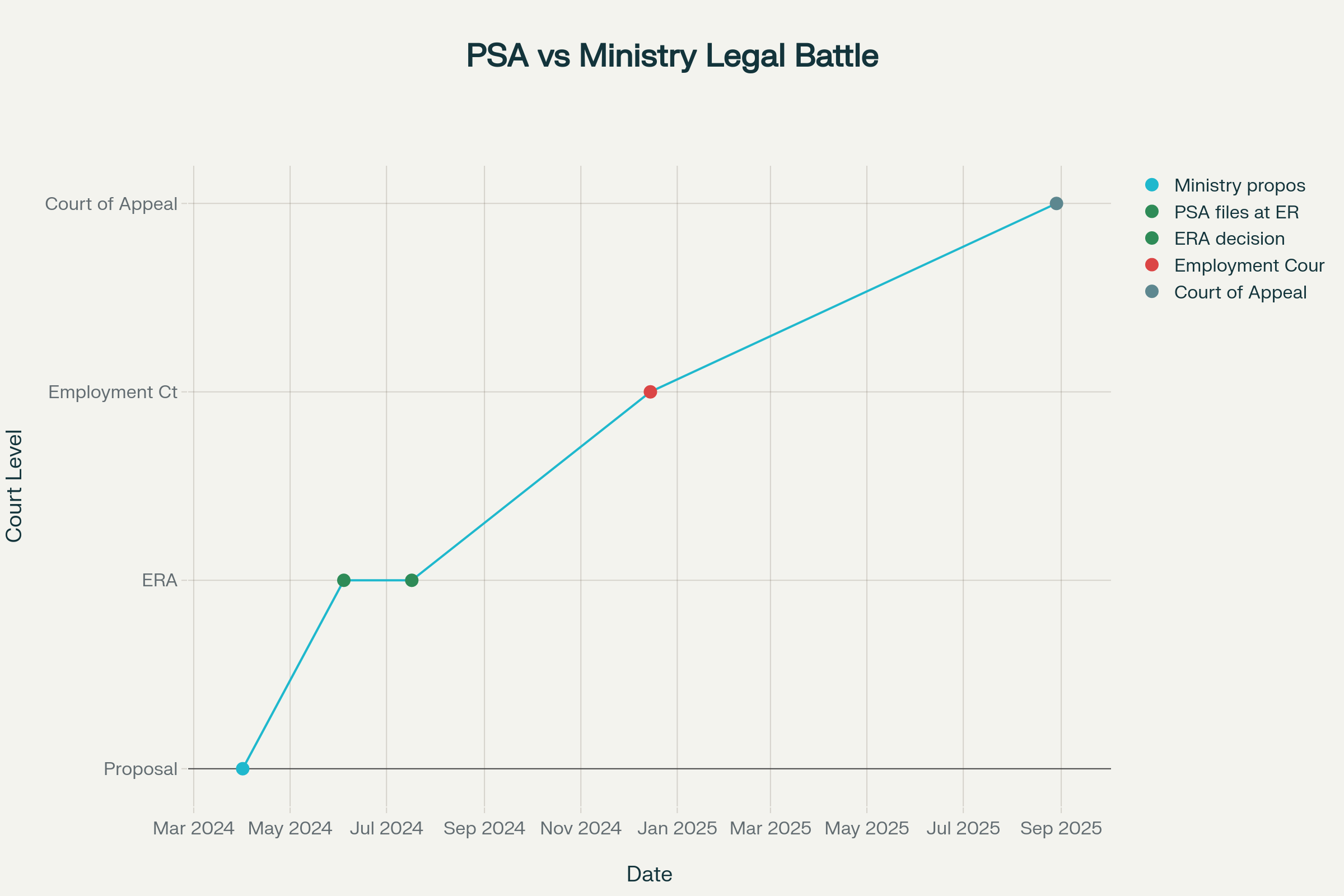
Legal Battle Timeline: PSA vs Ministry of Education Job Cuts Case Progresses Through New Zealand Courts
Corporate Power vs Worker Dignity: The Legal Timeline Exposed
The legal battle demonstrates how corporate power attempts to circumvent democratic processes through bureaucratic violence. The Employment Relations Authority initially sided with workers, finding the Ministry had breached its collective agreement by failing to genuinely consult with the PSA and consider alternatives to mass redundancies.
The ERA decision exposed the Ministry's bad faith. Rather than the "collaborative engagement" required by the collective agreement, officials treated the PSA as a mere information conduit while predetermined outcomes in corporate boardrooms. The Authority specifically found that severance could only be implemented after the Ministry and PSA agreed it was appropriate and the affected employee consented – a safeguard designed to prevent precisely the kind of mass terminations the government was orchestrating.
But corporate power never accepts defeat gracefully. The Employment Court overturned the ERA decision, ruling that while collaboration was required, the Ministry ultimately retained decision-making authority. This judicial intervention demonstrates how the legal system can be weaponized to protect corporate interests against worker organizing.
Now the Court of Appeal will determine whether New Zealand's highest court will rubber-stamp corporate authoritarianism or restore some semblance of worker protection. The outcome will signal whether collective agreements retain any meaning when governments prioritize ideology over legal obligations.
The legal trajectory reveals the escalating stakes. Each level of appeal represents not just a procedural step but a fundamental contest over whether workers have any rights that capital is bound to respect. The Ministry's willingness to spend hundreds of thousands on legal fees to avoid honoring its collective agreement exposes the ideological nature of these cuts.
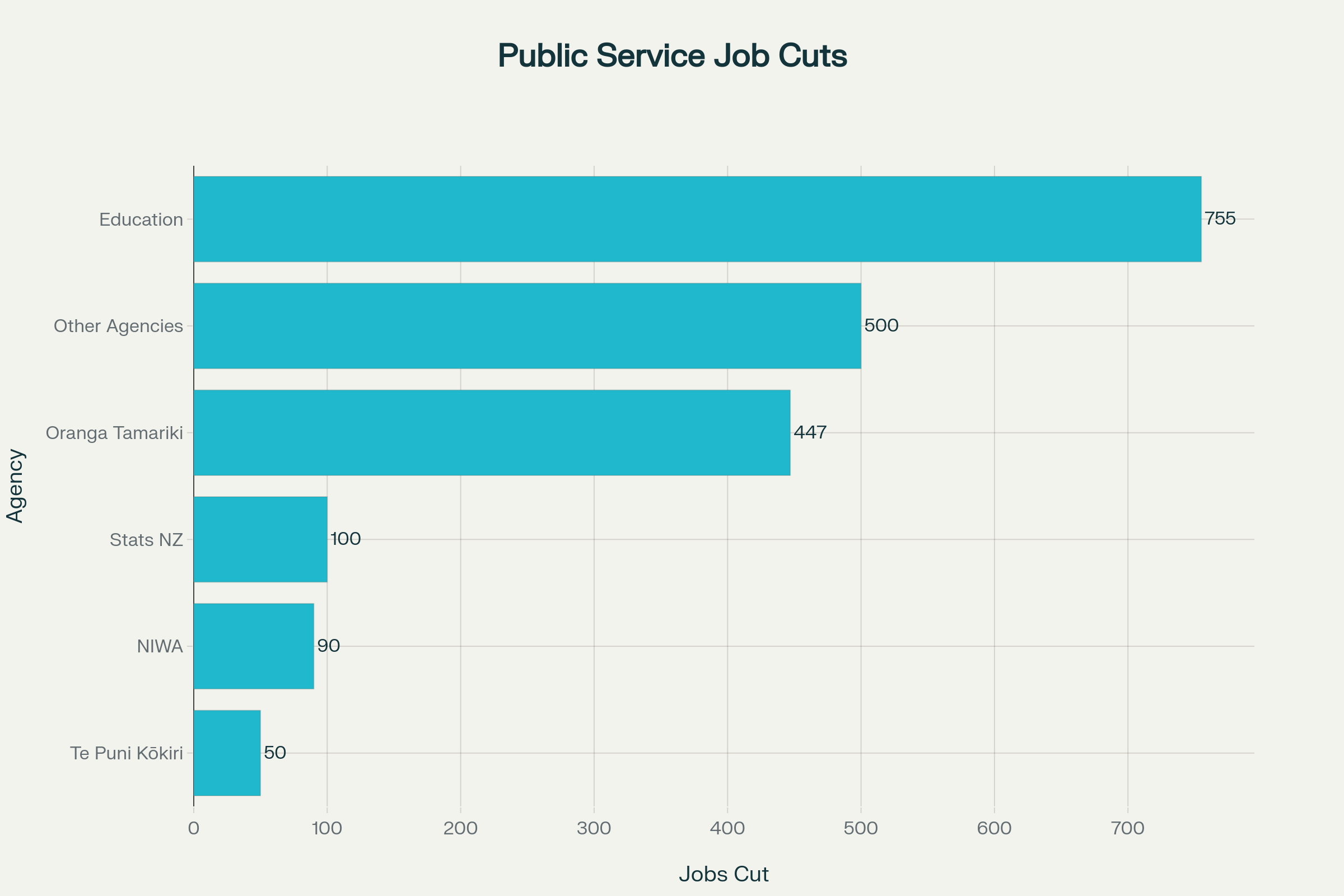
Scale of Coalition Government Public Service Cuts: Thousands of Jobs Axed Across Government Agencies
Scale of Destruction: Thousands of Public Servants Sacrificed for Corporate Welfare
The Ministry of Education cuts represent just the tip of a much larger iceberg of public service destruction. Oranga Tamariki faces 447 job cuts, NIWA is shedding 90 positions, and Stats NZ has implemented multiple rounds of "voluntary" redundancies. Across the public service, thousands of workers face unemployment while their former colleagues struggle with impossible workloads.
This systematic destruction serves multiple functions for the neoliberal project. It weakens the state's capacity to regulate capital, eliminates institutional memory that might resist corporate capture, and creates a desperate workforce willing to accept deteriorating conditions. Most importantly for the colonial project, it specifically targets services that support Māori and Pasifika communities.
Consider the cruel mathematics: while eliminating positions that support Māori learners, the government simultaneously cuts $30 million from te reo Māori teacher training programs. The pattern is unmistakable – every policy decision systematically disadvantages indigenous communities while enriching Pākehā property owners.
The human cost extends far beyond the workers who lose their jobs. Children with learning disabilities will wait longer for assessments. Rural schools will receive less support. Māori-medium education will struggle without curriculum specialists. But for Luxon and his corporate backers, this suffering is an acceptable price for maintaining the wealth transfer to property speculators.

Corporate power prioritizing profits over Māori education
Hidden Connections: From Landlord Tax Cuts to Educational Apartheid
The most obscene aspect of this manufactured crisis is how it directly funds the Coalition's corporate welfare program. Every dollar cut from educational support services becomes a tax break for landlords, a subsidy for tobacco companies, or a gift to property developers.
The government's $2.9 billion handout to landlords through restored interest deductibility was deliberately designed to transfer wealth from working families to property speculators. Luxon's laughable claim that "renters will be grateful" for subsidizing their landlords' mortgages reveals the contempt these corporate pirates hold for ordinary New Zealanders.
But the landlord subsidies are only part of a broader pattern of corporate capture. The government cut tobacco taxes by 50% for heated tobacco products, delivering a $216 million windfall almost exclusively to Philip Morris. When challenged about this obvious corruption, Associate Health Minister Casey Costello extended the tax break for another two years without any evidence it reduces smoking.
The connections run deeper. Many Coalition ministers own multiple investment properties that directly benefit from the landlord tax cuts. Christopher Luxon alone owns several rental properties but claims he "doesn't benefit from this policy" with the kind of shameless dishonesty that would make a used car salesman blush.
Meanwhile, the government eliminates wage top-ups for disabled workers, effectively sanctioning sub-minimum wages for our most vulnerable citizens. The message is unmistakable: if you're wealthy enough to own multiple properties, the taxpayer will subsidize your investments. If you're disabled and trying to work, you deserve poverty wages.
This is not incompetence or misguided policy. It is systematic class warfare designed to redistribute wealth upward while destroying the social safety nets that protect Māori and other marginalized communities. Every "efficiency saving" in public education becomes a tax break for property speculators in a direct wealth transfer from the powerless to the powerful.
Māori Values Under Corporate Assault
The violation of tikanga Māori embedded in the Ministry's collective agreement represents more than procedural non-compliance – it constitutes cultural violence against indigenous values. When the Ministry ignores principles of Kaitiakitanga (guardianship) and Manaakitanga (care) in pursuing mass terminations, it perpetuates the colonial project of erasing indigenous worldviews from public institutions.
Kaitiakitanga requires those in positions of power to act as guardians for future generations, protecting resources and relationships for those who come after us. By eliminating positions that support Māori education and learning support services, the Ministry violates this fundamental principle, prioritizing short-term fiscal targets over long-term educational outcomes for tamariki.
Manaakitanga demands that we treat all people with dignity and respect, creating environments where everyone can flourish. The Ministry's "rushed restructure" that left workers "constantly in tears" represents the antithesis of manaakitanga, treating human beings as disposable resources in a corporate efficiency exercise.
The Employment Relations Authority specifically noted the significance of these principles in its decision, but the Employment Court's reversal demonstrates how colonial legal structures can override indigenous values when they conflict with corporate interests. This judicial colonization extends the violence of the original cuts by legitimizing the systematic violation of tikanga Māori in public institutions.
For Māori workers and the communities they serve, these violations carry particular weight. When a Māori employee loses their job developing culturally responsive curricula, the damage extends beyond individual economic hardship to the collective loss of institutional knowledge and cultural capacity. The government's assault on public education thus functions as cultural genocide through bureaucratic strangulation.

The Māori Green Lantern fighting misinformation and disinformation from the far right
Implications: The Corporate Capture of Democratic Institutions
The Ministry of Education case exposes how neoliberal governments weaponize legal processes to override democratic decision-making and worker protections. By appealing every adverse decision through multiple court levels, the Ministry attempts to exhaust union resources while maintaining its destructive agenda through prolonged litigation.
This legal warfare strategy reveals the hollowness of collective bargaining rights under corporate rule. What good are negotiated agreements if governments can simply ignore them and rely on corporate-friendly courts to eventually overturn worker victories? The escalating appeals process demonstrates how the wealthy can purchase different legal outcomes through superior resources and political connections.
The broader implications extend far beyond employment law. If governments can violate collective agreements with impunity while spending hundreds of thousands on legal fees to avoid honoring worker protections, what prevents them from similarly ignoring treaty obligations, environmental protections, or human rights commitments?
For Māori communities, the implications are particularly dire. The systematic defunding of educational support services occurs precisely when evidence shows growing achievement gaps and the urgent need for culturally responsive teaching. By eliminating the specialists who develop Māori-medium curricula and support indigenous learners, the government ensures that these gaps will widen, creating an educational apartheid that permanently disadvantages Māori children.
The corporate capture of democratic institutions proceeds through exactly these kinds of manufactured crises. Create fiscal pressure through unnecessary tax cuts for the wealthy, use that pressure to justify cutting services for the poor, then deploy legal resources to override any resistance. It is a precisely calibrated system for wealth extraction disguised as responsible governance.
Resistance and the Path Forward
The Public Service Association's fight through New Zealand's courts represents more than an employment dispute – it embodies the fundamental struggle between corporate power and democratic values, between indigenous rights and colonial exploitation, between human dignity and profit maximization.
While we await the Court of Appeal's decision, the real work of resistance must occur in our communities, schools, and workplaces. Every attack on public education, every violation of collective agreements, every dollar transferred from working families to property speculators must be met with organized resistance grounded in tikanga Māori and social justice principles.
The connections between landlord tax cuts, tobacco industry subsidies, and educational destruction are not coincidental – they represent a coherent strategy for corporate capture of public resources. Our resistance must be equally coherent, linking struggles for worker rights with fights for indigenous sovereignty, educational justice, and economic democracy.
For those who find value in exposing these hidden connections between corporate power and public policy, please consider supporting this mahi with a koha to HTDM: 03-1546-0415173-000. The Māori Green Lantern understands these are tough economic times for whānau, so please only contribute if you have capacity and wish to do so.
The battle for the soul of public education continues in courtrooms and classrooms, in communities and councils. But the real victory will come not from judicial decisions but from organized communities that refuse to accept the corporate colonization of our democratic institutions.
Kia kaha, kia māia, kia manawanui.
Nā Ivor Jones, Te Māori Green Lantern