“Forging The Māori Party Into a Formidable Force” - 15 December 2025
TAIAHA RAISED
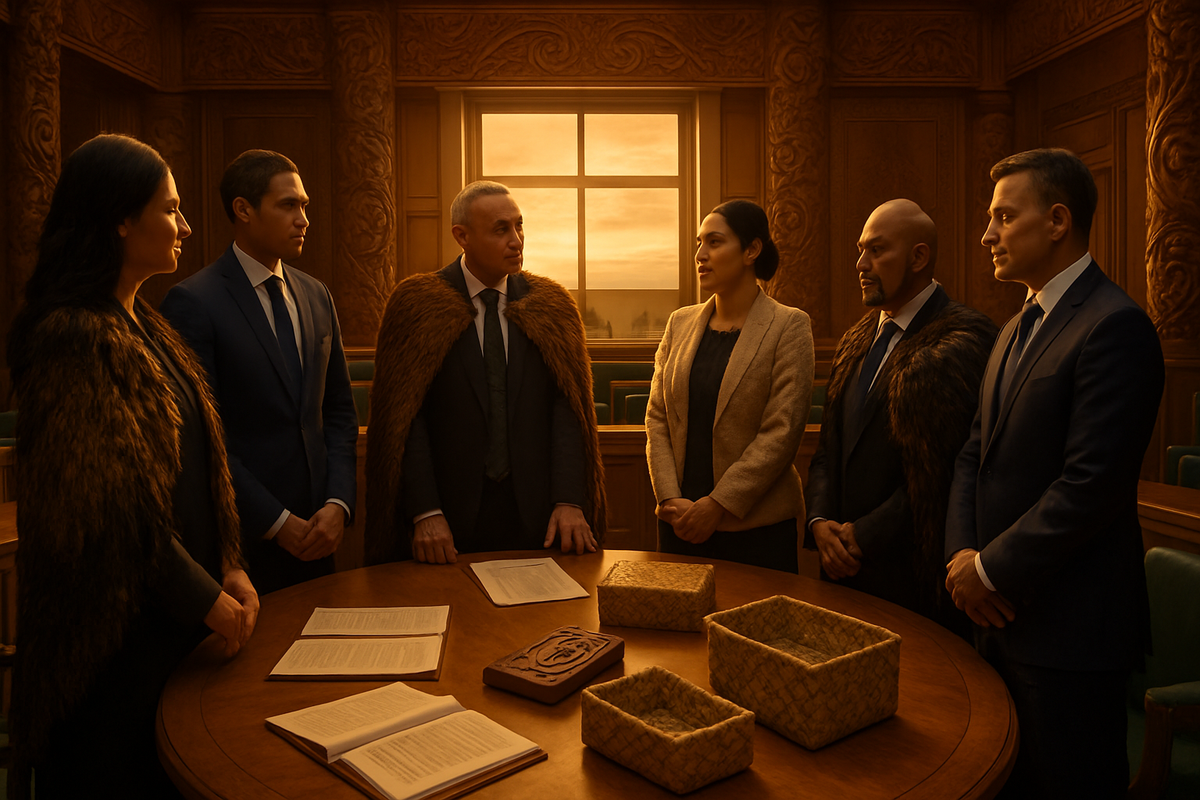
The whakataukī echoes through generations:
Ko taku taiao, ko taku tapu—my environment, my sacred responsibility.
Yet when one gazes upon the current fracture cutting through Te Pāti Māori like a blade through woven harakeke, the question becomes urgent:
What manner of political force should Māoridom wield to reclaim tangata whenua sovereignty in these times?
The Rupture: A Cautionary Tale of Power Concentrated
In the autumn of 2025, Te Pāti Māori collapsed into public spectacle, a breakdown detailed by 1News. Two elected Members of Parliament—Mariameno Kapa-Kingi of Te Tai Tokerau and Tākuta Ferris of Te Tai Tonga—were expelled from the party they had fought to elect, yet remained seated in Parliament, now sitting as independents. The party’s National Council moved swiftly, almost surgically, to remove them from membership without the deliberative, transparent process that the party’s own constitution demanded, a breach highlighted by RNZ.
The constitutional contradiction was damning. The taiaha had become a dagger turned inward.
Former co-leader Te Ururoa Flavell, who built this movement alongside Tāriana Tūria and Pita Sharples, offered the most searing critique: consensus was never reached. Three of six electorates voted for expulsion; three abstained or were excluded. Te Tai Tokerau—Kapa-Kingi’s own electorate—was prevented from voting altogether, as reported by RNZ.
The constitution stipulates that all decisions shall be made by consensus. Yet the Elections NZ official document speaks unequivocally:
“If the hui cannot reach consensus after full discussion of the issue, then the chairperson of the hui will ask the meeting to accept the view of the majority in the best interests of the Pāti.” When three votes out of six constitutes the “majority,” something has corroded.
Eru Kapa-Kingi, Mariameno’s son and former vice-president of the party—a man who had laboured inside the movement—made the indictment unforgettable, calling it a “dictatorship model” in an interview with 1News. Power descended from four figures: president John Tamihere, co-leaders Debbie Ngarewa-Packer and Rawiri Waititi, and Kiri Tamihere-Waititi, who occupies a staff role. Decisions flowed downward, not upward from whānau, hapū, and the electorates. When he proposed tikanga-based approaches, they were rejected. The party had ceased holding annual general meetings and National Council hui with electorate branches, a failure confirmed by 1News.
Andrew Geddis, a University of Otago law professor and electoral law expert, noted that Te Pāti Māori appeared to have used “the quickest, neatest, cleanest way to get rid of these MPs” without the procedural fairness afforded even to the Green Party when it expelled Darleen Tana, an observation recorded by RNZ. The party skipped the dispute resolution process prescribed in its own constitution. It moved directly to expulsion, a nuclear option reserved for the most egregious breaches.
Yet no substantive charges were ever publicly articulated. No investigation. No hearing conducted by the independent Disciplinary and Disputes Committee as the constitution mandates, according to Elections NZ. The co-leaders spoke only of “serious” breaches—budgetary responsibility, breach of duty, behaviour unbecoming—language vaporous enough to justify almost anything.
The Hidden Genealogy: How Power Pools
To understand how concentration of power becomes possible, one must trace whakapapa—lineage, genealogy, the connective tissue. The accusations of “dictatorship” did not emerge from thin air. They emerged from a pattern that began years earlier.
In 2023, the Waipareira Trust was investigated by charities regulators after it loaned nearly NZD $385,000 to John Tamihere’s various election campaigns across multiple elections, as revealed by Te Ao News. In 2022, charities regulators probed the same Trust for using registered charity funds to underwrite political activity, as reported by NZ Herald. The trust is still fighting deregistration, a battle covered by NZ Herald.
By 2024, Tamihere became the president of Te Pāti Māori, as noted by 1News. His wife, Kiri Tamihere-Waititi, sat inside the executive apparatus. When Mariameno Kapa-Kingi questioned decisions that flowed only from the top, she was marginalised. When Tākuta Ferris spoke publicly about disagreements, he too became a target. The machinery of control tightened.
Then came the Manurewa Marae saga. In 2024, whistleblowers alleged that Te Pāti Māori, through Manurewa Marae and the Waipareira Trust, had misused census and vaccination data to target voters and enrol them on the Māori electoral roll, an investigation launched by Waatea News. For months, media and political opponents circled with accusations of electoral fraud and corruption.
By October 2025, the Police and Serious Fraud Office had concluded their investigation. No evidence of criminal wrongdoing was found, as confirmed by Te Ao News. The allegations were contradictory, misrepresented the processes involved, and had been amplified by media without proper fact-checking, according to academic investigator Dr Rawiri Taonui via Waatea News.
Yet the damage to party unity was done. Two MPs who raised questions were now expelled. Former leaders—Dame Naida Glavish, Sir Pita Sharples, Te Ururoa Flavell, Hone Harawira, Marama Fox, and Tukoroirangi Morgan—penned a letter of anguish: “Over the last two months we have watched the party we all built self-destruct ... A war of words that has hurt us as te ao Māori; damaged our credibility and tarnished our integrity,” as published by 1News. They announced they were “not prepared to walk away” and demanded meetings with current leadership, a stand documented by 1News.
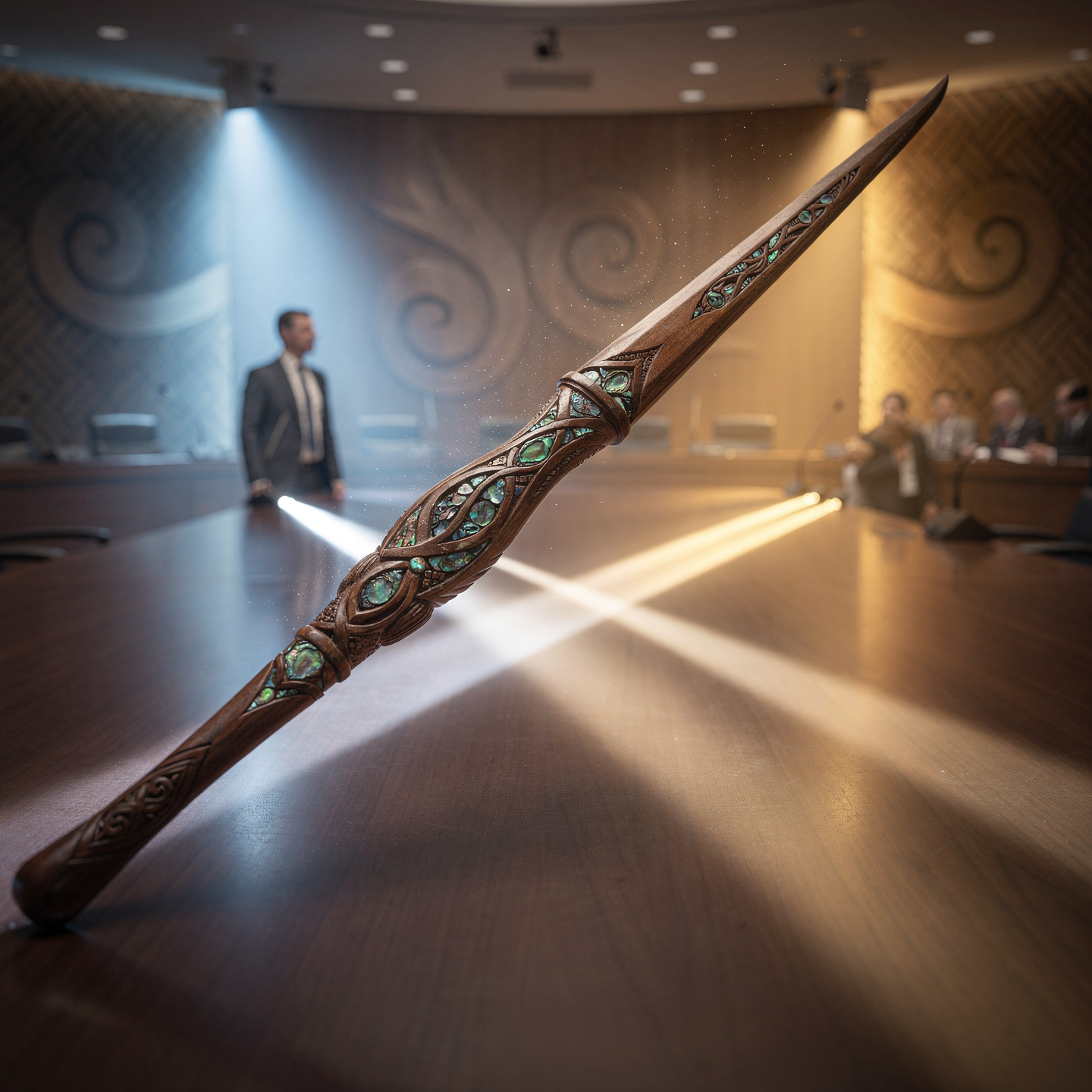
The taiaha, once raised against oppression, now cut into the bodies of their own people.
The Constitutional Promise Betrayed
The irony cuts deepest when one reads what the party’s constitution actually promises. Ratified on 4 February 2023, Te Pāti Māori’s constitution is a document grounded in kaupapa Māori—manaakitanga, rangatiratanga, whanaungatanga, kotahitanga, wairuatanga, mana whenua, kaitiakitanga, whakapapa, and te reo rangatira, as outlined in the official document by Elections NZ.
It declares that decisions shall be made through whakawhitiwhiti kōrero—the customary practice of talking things through together. It mandates that “all decisions of Te Pāti Māori shall be made by consensus, consistent with the customary practice of whakawhitiwhiti kōrero,” a rule sourced from Elections NZ. It requires that the National Council meet every two months, rotating through electorates, and insists that annual general meetings be held within six months of the financial year’s end, with two months’ notice to members, as specified by Elections NZ.
Yet none of this happened consistently. The dictatorship was not one of explicit constitutional amendment—it was one of constitutional evasion. Meetings were not held. Huia were cancelled last-minute. Waiariki electorate was told their in-person hui was cancelled because Rawiri Waititi was “unavailable,” with no opportunity to participate in a decision that would expel two MPs days later, as reported by RNZ.
This pattern repeats itself. When asked why the party strayed from its own kaupapa, the co-leaders invoke law and process. But which process? The customary process of consensus, or the modern process of expedient power consolidation?
Decentralisation as Remedy: Learning from Tikanga and Indigenous Models
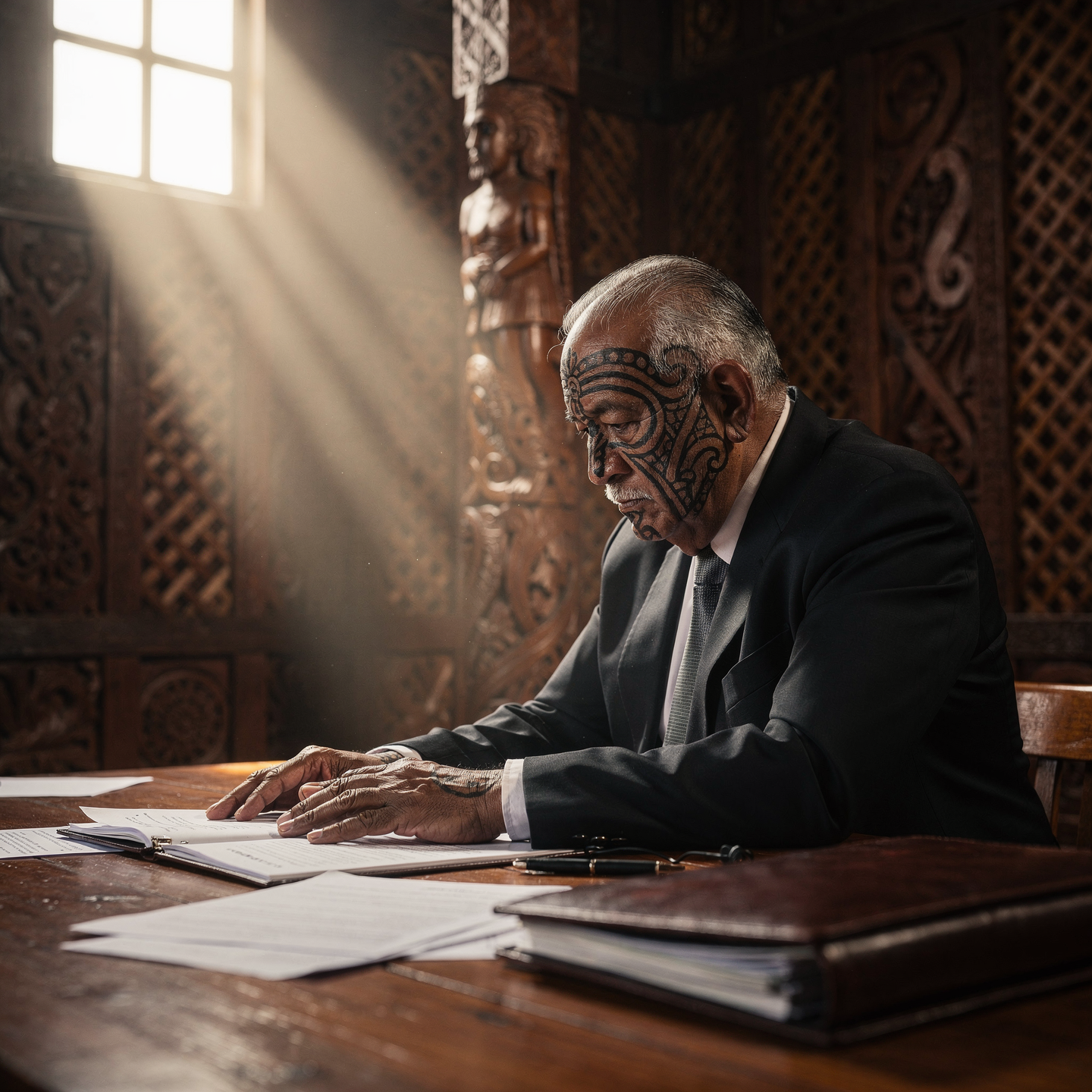
To forge Te Pāti Māori into a formidable political force, one must return to tikanga—not as aesthetic ornament, but as structural principle.
The Hapū Model: Authority in the Distributed
In traditional Māori society, the hapū was the most significant political unit, ranging from one hundred to several hundred people—a number of whānau with defined territory and responsibilities, as described by Te Ara. Leadership was not unitary but overlapping: a rangatira might be simultaneously a hapū leader, a whānau leader, and a tohunga (specialist) in particular domains, a structure detailed by Te Ara. Authority required ongoing legitimacy—leaders maintained confidence by upholding the mana and wellbeing of their base, as explained by Te Ara.
This was not consensus by accident; it was consensus by necessity. A leader without the confidence of their hapū could be replaced. Decisions flowed both up and down. Kaumātua (elders) held wisdom; rangatira held mana; whānau held the right to dissent.
Te Pāti Māori’s current structure inverts this. Seven Māori electorates feed representatives to a National Council, but power pools at the apex—the president and co-leaders make decisions, then the National Council ratifies them after the fact, a dynamic visible in the constitution from Elections NZ. Decisions rarely return to electorates for genuine deliberation. Electorates that object are sidelined (as happened to Te Tai Tokerau).
The Kotahitanga Principle: Unity Through Inclusion, Not Suppression
The party’s own constitution speaks of kotahitanga—unity. Yet it is defined not as consensus but as the paradoxical belief that “power comes from the people, and it can be taken away just as easily,” as noted by 1News. When the party expels members without process, it enacts the opposite of kotahitanga. It announces that power is unilateral, not shared.
True unity requires trust. Trust requires transparency. Transparency requires process—slow, deliberative, tikanga-based process that allows dissent to be aired, heard, and resolved on the record, not through whisper campaigns and last-minute meetings.
Structural Recommendations for Rebuilding Te Pāti Māori as a Force
1. Decentralised Leadership: A Tikanga-Based Executive Model
Replace the current presidential system with a tripartite leadership structure that reflects manaakitanga and rangatiratanga:
- Co-Presidents (2): One tāne, one wahine, elected for two-year rotating terms, accountable to National Council and members. Neither may serve more than two consecutive terms.
- Kaumātua Council (5): Respected elders, at least one from each major region (North, Central, South), selected by electorates for wisdom and integrity. This council acts as an independent check on executive power—they must approve any major disciplinary action, any candidate removal, any constitutional amendment.
- Electorate Co-Chairs (7): One from each Māori electorate, forming the core of National Council. These representatives hold genuine power of veto over national decisions affecting their electorate.
This model mirrors how Canada has evolved Indigenous self-governance—distributed authority that prevents central capture, as analyzed by SSRN.
2. Mandatory Electorate Consultation: Whakapapa Runs Downward
- Quarterly Electorate Hui (Mandatory): Each electorate must hold quarterly meetings with branch representatives. National Council decisions that affect candidate selection, expulsion of members, or party direction must be presented for electorate response before finalisation.
- 72-Hour Notice Requirement: No major decision (expulsion, leadership challenge, constitutional amendment) may proceed without 72 hours’ notice to all electorate chairs and branch secretaries. This prevents the last-minute manoeuvre that excluded Te Tai Tokerau.
- Electorate Veto Power: If four of seven electorates object to a National Council decision, it must be escalated to a Special General Meeting where members vote directly. This restores power to the grassroots.
3. Independent Dispute Resolution: Removing the Fox from the Henhouse
The current constitution establishes a Disciplinary and Disputes Committee, but it is chaired by a vice-president—a figure within the executive apparatus, as shown in the Elections NZ document. This is corruption by design, not intent.
- Independent Arbitration Panel: Establish a panel of five independent Māori leaders from outside the party (respected iwi representatives, academics, former Labour/Green MPs) who would hear disputes in confidence and render binding decisions. This panel would be appointed for four-year terms and could only be removed by two-thirds majority vote at an Annual General Meeting.
- Transparent Hearing Process: Any disciplinary action must involve a formal hearing where the accused presents their case, witnesses are called, and a written decision is published (with names redacted if necessary). The “serious breach” must be specified in writing before the hearing, not after.
- Right of Appeal: Any member may appeal to the next Annual General Meeting, where members vote on whether the disciplinary decision stands.
4. Term Limits and Rotation: Preventing Personality Cults
- Maximum Two Consecutive Terms for President: No president may serve more than four years consecutively. After four years, they must sit out one two-year election cycle before being eligible again.
- Mandatory Rotation of Co-Leaders: The co-leader position is tied to being an MP, but the choice of which MP serves should rotate every two years among MPs of both genders, preventing any individual from becoming indispensable.
- Separation of Powers: The person who holds the presidency cannot simultaneously hold a board position at any iwi trust, marae, or government-contracted service provider. This prevents the kind of power pooling that allowed John Tamihere to leverage Waipareira Trust resources for party purposes.
5. Transparency in Fundraising and Donations
- Public Declaration of All Donations Over NZD $1,000: With quarterly reports to members.
- Ban on Charity-to-Party Fund Transfers: Registered charities cannot loan or gift funds to political parties. This closes the Waipareira loophole.
- Electoral Commission Audit: Annual independent audit by the Electoral Commission, published and available to members.
6. Restoration of Tikanga-Based Accountability: The Pono Framework
In traditional Māori contexts, leadership was held accountable through concepts of pono (integrity), tika (righteousness), and aroha (compassion), principles detailed by Muka Tangata. These were not abstract virtues—they were tested through the willingness of leaders to explain themselves publicly.
- Annual “Whare Pono” Hui: Each year, the president and co-leaders must submit to a public hui where members ask questions without restriction. Nothing is off-limits. Answers must be given on the record, recorded, and transcribed.
- Mana Integrity Review: At each Annual General Meeting, members vote on whether the president and co-leaders retain their mana to lead. A vote below 70% confidence triggers a leadership by-election within 60 days. This is not a no-confidence vote designed to destabilise—it is a continuous affirmation that leadership remains legitimate.
7. Justice Alignment: Resolving Whakapapa Conflicts
The expulsion of Kapa-Kingi and Ferris revealed a deeper problem: the party treats electorally-mandated MPs as though they are employees who can be fired. They are not. Their mandate comes directly from their electorates, not from the party, a distinction clarified by Te Ao News. An MP who has been elected by Te Tai Tokerau and Te Tai Tonga retains their right to represent those constituencies regardless of party membership.
- Electorate Primacy: No MP may be expelled from the party without the approval of their electorate council. This restores the principle that power flows from the voters, not from the party apparatus.
- Right to Caucus Within the Party: Even after expulsion from party membership, an MP may continue to sit in Parliament and may request to attend caucus meetings (though not to vote on party strategy). This acknowledges that they answer to their electorate first, the party second.
The Hidden Connections: Following the Whakapapa of Power
To understand why these reforms are necessary, one must trace five hidden connections that enabled the concentration of power:
1. Blurred Lines Between Iwi Governance and Party Politics
John Tamihere simultaneously headed the Waipareira Trust (a registered charity), served as party president, and maintained influence over Manurewa Marae. No law prevented this overlap, but tikanga should have. In traditional iwi structures, one person did not hold multiple power bases—this prevented tyranny, as noted by Te Ara.
2. The Absence of Checks on Executive Action
The National Council exists to govern, but it ratifies decisions made by the National Executive after the fact, rather than deliberating before decisions are made, a process visible in the Elections NZ constitution. This is inverted accountability.
3. Candidate Selection as Power Consolidation
The process for selecting candidates is controlled by electorates, but the National Council can override them, a power confirmed by Elections NZ. When a candidate is disfavoured by leadership, the electorate’s choice is questioned. This transfers power from grassroots to hierarchy.
4. The Constitution as a Toothless Document
The constitution mandates quarterly electorate hui and mandatory National Council meetings every two months. Yet neither happened consistently. There is no mechanism to enforce compliance. The constitution is honoured in breach, not in observance.
5. The Silence of Former Leaders
For nearly a year, the party’s founders—Naida Glavish, Pita Sharples, Te Ururoa Flavell—remained publicly silent while the party they built was captured by a new elite. Only when expulsions were imminent did they speak, as reported by 1News. This reflects a tikanga principle: respect for authority. But respect without accountability becomes complicity.
Implications: Quantifying the Harm and Charting the Path Forward
The rupture in Te Pāti Māori has real costs. The party won six of seven Māori seats in 2023—a historic achievement confirmed by Elections NZ. Yet by November 2025, two MPs were expelled, four major former leaders were publicly calling for the president to step down, and party members were cancelling their memberships. Polling and grassroots anecdotes suggest deep demoralisation.
More critically, Te Pāti Māori was positioned to be a genuine indigenous power bloc in Parliament—one that could pull the left-wing coalition toward stronger positions on Treaty claims, tino rangatiratanga, and te reo revival. Instead, the party is consumed by internal warfare. Labour and the Greens have publicly stated they will not partner with a party in disarray. The government openly mocks them as a “joke.” The movement’s moment is slipping.
This is not inevitable decline. It is the predictable result of violating the very kaupapa the party was founded to embody.
Koha: A Gift of Accountability
The space to rebuild exists, but only if leadership surrenders power, not merely reshuffles it. The Kaumātua Council and Independent Arbitration Panel are not merely procedures—they are acts of koha (reciprocal gift-giving). By distributing power, leaders give back to the movement the authority that was concentrated in their hands.
Te Pāti Māori’s constitution speaks of manaakitanga—caring for the aspirations of members, elevating relationships with whānau, hapū, and iwi, as codified by Elections NZ. A koha-based approach means asking: What can leadership do to restore trust? What can be given back to members to demonstrate that power is truly shared?
This requires:
- John Tamihere stepping aside as president (not from politics, but from party leadership) to allow new voices to emerge.
- The party formally apologising to Kapa-Kingi and Ferris for the unconstitutional nature of their expulsion, and restoring their party memberships even if they choose not to return.
- The creation of the Independent Arbitration Panel before the next Annual General Meeting, to signal that the party is serious about accountability.
- A truth-telling hui where all grievances—from those who feel sidelined, from those accused without process, from those whose electorates were ignored—are aired and recorded.
Rangatiratanga: The Final Word
Rangatiratanga—sovereignty, self-determination, the authority of leadership grounded in mana and the confidence of the people—is not achieved through dictatorship. It is achieved through the opposite: the multiplication of leaders, the distribution of mana, the constant renewal of legitimacy through whakapapa relationships that run downward and upward simultaneously, a finding supported by Muka Tangata.
Te Pāti Māori must choose: Will it be a movement that concentrates power in the hands of a few, thereby becoming the mirror image of the Crown it seeks to challenge? Or will it become the living embodiment of kotahitanga—unity through inclusion, strength through distributed mana, and the courage to hold leaders accountable to the people they serve?
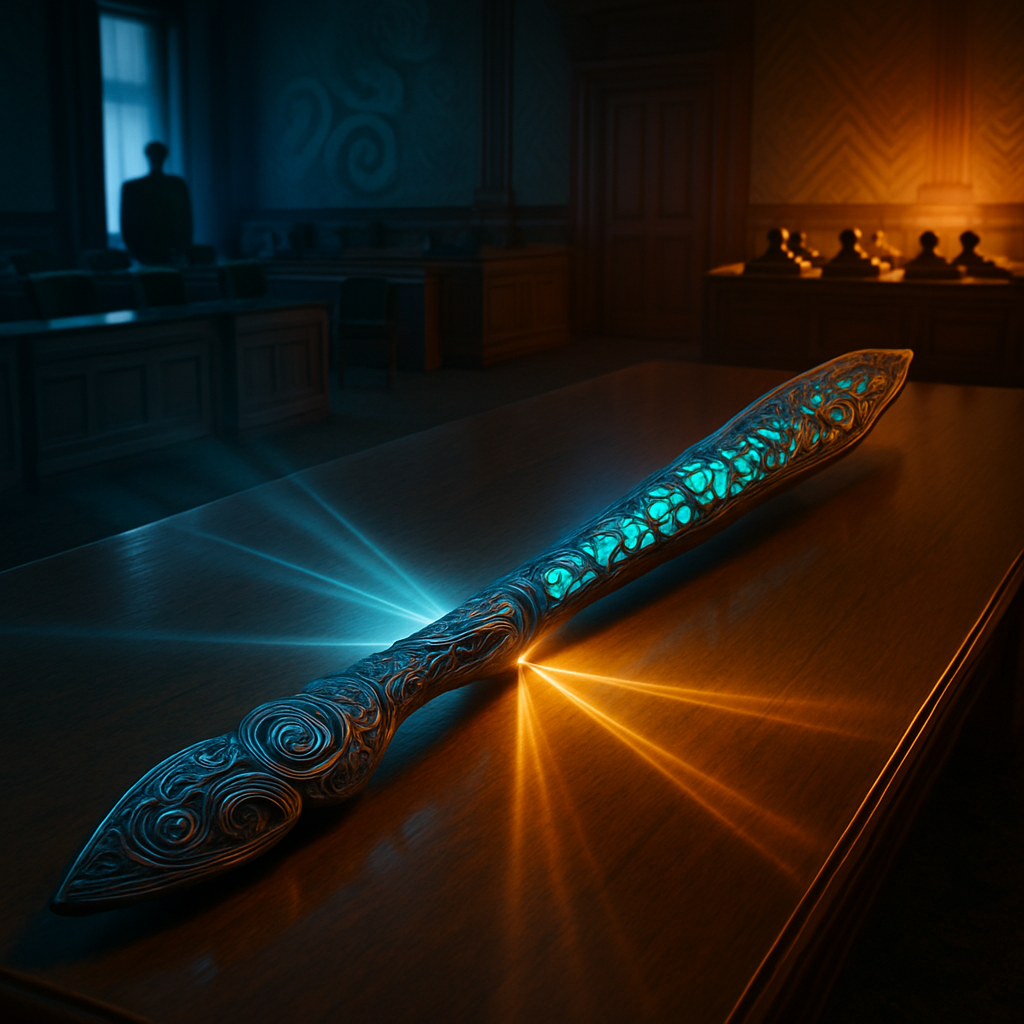
The taiaha lies on the table. The choice is now.

Ivor Jones The Māori Green Lantern Fighting Misinformation And Disinformation From The Far Right