"HE ARATOHU MŌ TE KAITĪMATA: A BEGINNER'S GUIDE TO THE CONSCIOUSNESS YOUR TŪPUNA ALREADY MAPPED" - 20 February 2026
Twenty Māori Concepts That Match — and Surpass — Every "Quantum Consciousness Discovery" in This Video. Explained So a Child Could Live Them.

Mōrena e te whānau,
This YouTube video called "You Are Not Who's Behind Your Eyes" spent 53 minutes explaining that identity is an illusion, that consciousness creates reality, that the observer and the observed are one, and that you need to buy a $29.99 book to understand it.
Your tūpuna encoded all of this — and more — in a living system of concepts so sophisticated that it governed every aspect of daily life: when to eat, when to rest, when to speak, when to be silent, how to greet strangers, how to honour the dead, how to heal the sick, how to catch fish, how to raise children, and how to navigate an ocean using nothing but the stars, the waves, and the mauri of the sea.
This is the beginner's guide. Not to quantum consciousness. To the original operating system.
PART ONE: THE ARCHITECTURE OF REALITY
How Māori mapped consciousness before neuroscience existed
1. TE KORE — The Quantum Void (Before There Was Anything)
What the video says: Empty space isn't empty — it's alive with "quantum foam," virtual particles popping in and out of existence. An infinite field of potential.
What your tūpuna already knew:
Te Kore is the void — but not emptiness. Māori Marsden described it as
"the realm between non-being and being: the realm of potential being."
It is where the most important mana comes from —
"the realm beyond the world we can see, and sometimes thought to be the 'ultimate reality'."
How a child would understand it:
🧒 Close your eyes and imagine a dark room full of invisible seeds. You can't see them, but they're there — millions of them. Every flower, every tree, every person who will ever exist is sleeping inside those seeds. Te Kore is that room. It doesn't look like anything. But it holds everything.
Why it matters: The video needs quantum field theory to explain potential energy in empty space. Te Kore has been the first word in the cosmological whakapapa since before the first particle accelerator was dreamed of.
2. MANA — The Power That Flows From the Source
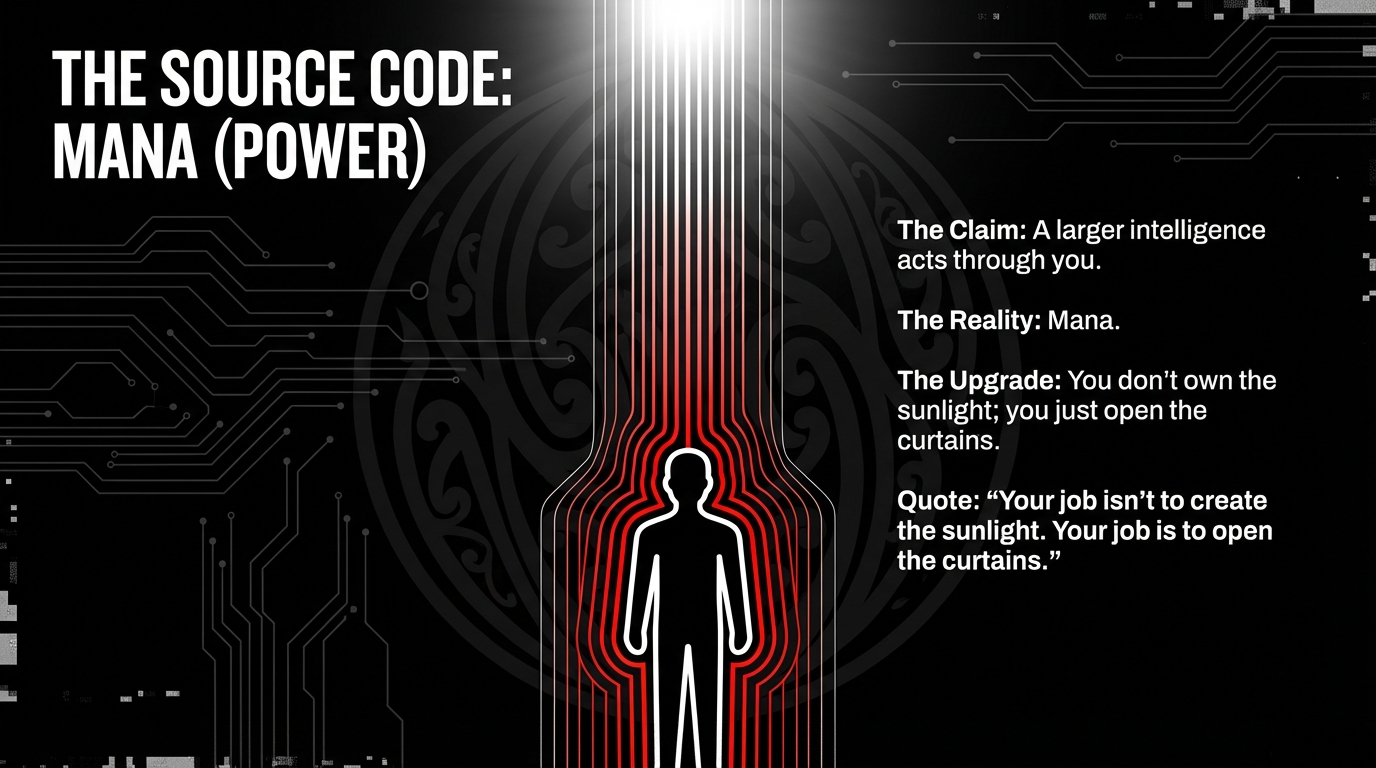
What the video says: There's a "larger intelligence" expressing itself through your nervous system. Decisions arise from "a deeper intelligence" beyond the ego. The universe itself is the true source of agency.
What your tūpuna already knew:
Mana is an extraordinary power, essence or presence. It comes from the atua (gods) and flows into the world through specific conditions. The most important mana comes from Te Kore — the ultimate reality beyond the visible world. Mana is not something you create. It is something that flows into you when the conditions are right.
As witnesses told the Waitangi Tribunal's Mana Wāhine Inquiry:
"Mana is connected to every form of activity within Māori society and is generated through collective relationships."
How a child would understand it:
🧒 Imagine mana is like sunlight. The sun doesn't decide to shine on you — it just shines. But if you close the curtains, the light can't get in. Your job isn't to create the sunlight. Your job is to open the curtains — by being honest, being brave, being kind, looking after your whānau. The more curtains you open, the more mana flows through you. But you never own it. You just carry it for a while.

3. TAPU — The Sacred Boundary That Protects Mana
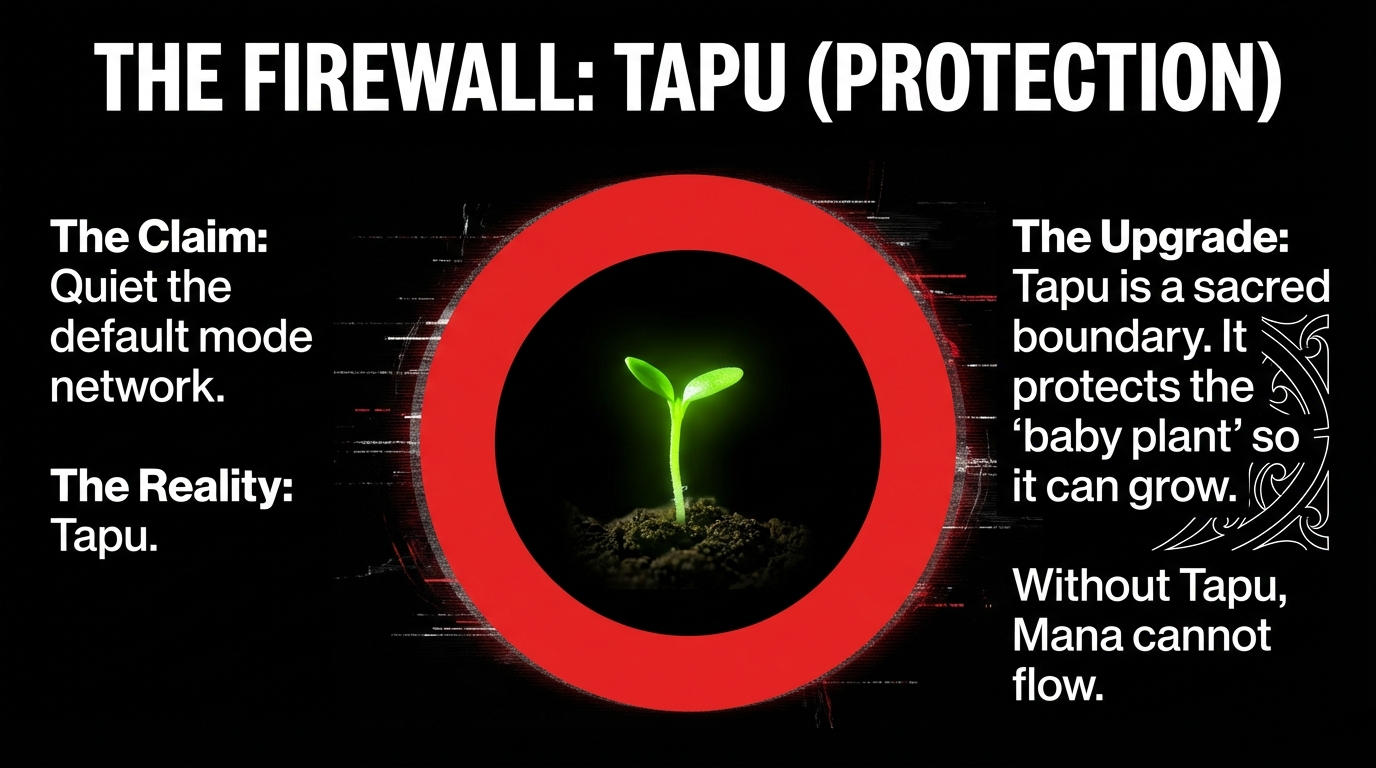
What the video says: Reality exists in "infinite possibilities" until observation collapses the wave function into a single outcome. Certain states must be protected from interference. The brain's "default mode network" must be quieted to access deeper awareness.
What your tūpuna already knew:
Tapu is the strongest force in Māori life. It means sacred, restricted, set apart. As Te Ara explains:
"Certain restrictions, disciplines and commitments have to take place if mana is to be expressed in physical form."
In other words: tapu is the condition that allows mana to flow. Without tapu, mana cannot arrive.
Some tohunga were so tapu they could not feed themselves — food was placed on a stick for them, water poured through a kōrere (funnel).
"Tapu and noa were integral to everyday life in pre-colonial Māori society, shaping relationships between tāne and wāhine and the balance between the spiritual and everyday realms."
How a child would understand it:
🧒 Imagine you're growing a brand new baby plant. It's tiny and precious. You put a little fence around it so nobody steps on it. You don't let the dog near it. You water it carefully. That fence is tapu. It doesn't mean "don't touch because it's bad." It means "don't touch because it's so precious it needs protection."
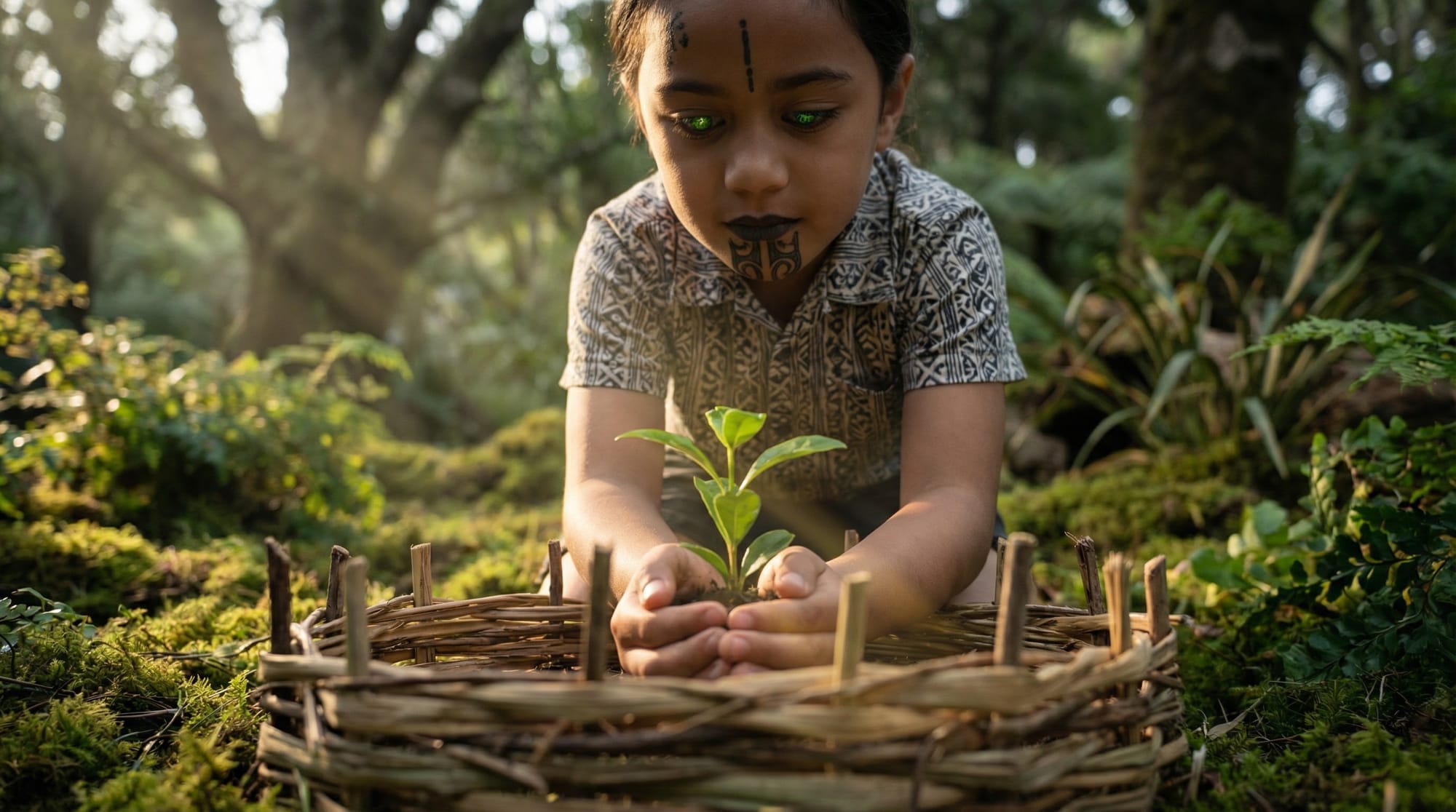
Your head is tapu. Your food is prepared separately. A new wharenui is tapu before it's opened. A person who has been in battle is tapu. A baby is tapu. None of these things are "dangerous" — they are so full of power that they need careful handling.
The video's equivalent: The video says the "default mode network" must be quieted to access pure awareness. Tapu is the system that creates the sacred silence around things so mana can flow through them undisturbed. Your tūpuna didn't call it "default mode network." They called it tapu — and they built an entire civilisation around its management.
4. NOA — The Return to the Everyday (The Wave Function Restabilises)
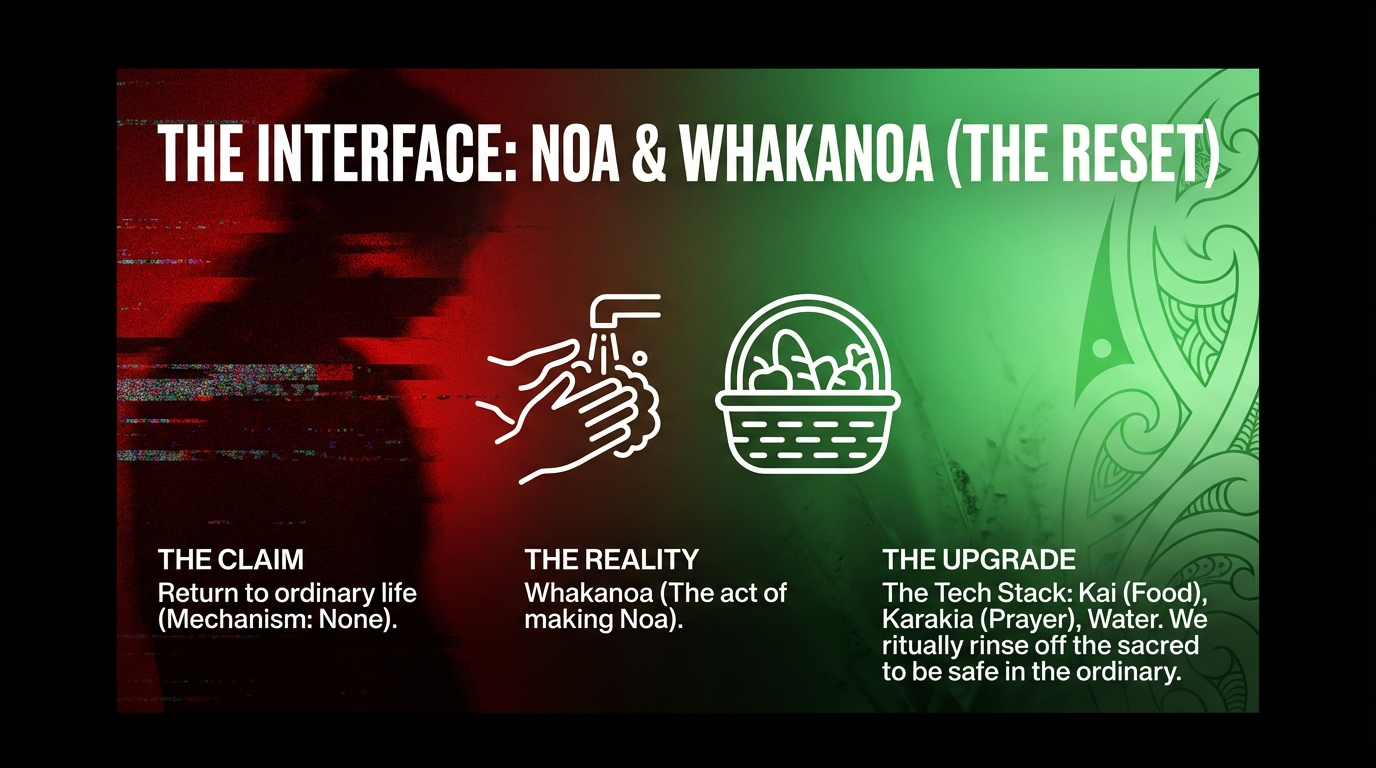
What the video says: After experiencing "boundless awareness," you return to ordinary life. The ego isn't destroyed — it's recognised as a "sophisticated interface" for navigating the world. Daily life continues, but held in a "larger context."
What your tūpuna already knew:
Noa means ordinary, common, or free from restriction. It is the opposite of tapu — but it is not inferior to tapu. It is the essential partner of tapu. As Dr Ella Henry told the Waitangi Tribunal:
"Noa [has been translated as] common or profane; rather than the more accurate translation of noa as a liberating force."
Manuka Henare taught that tapu and noa are not in opposition — they are co-existing forces. Noa is "freedom from tapu and normality."
How a child would understand it:
🧒 Remember the baby plant with the fence? After it grows big and strong, you can take the fence down. It doesn't need protection anymore — it's ready for the world. That's noa. The plant hasn't lost its preciousness. It's just ready to be part of everyday life now.
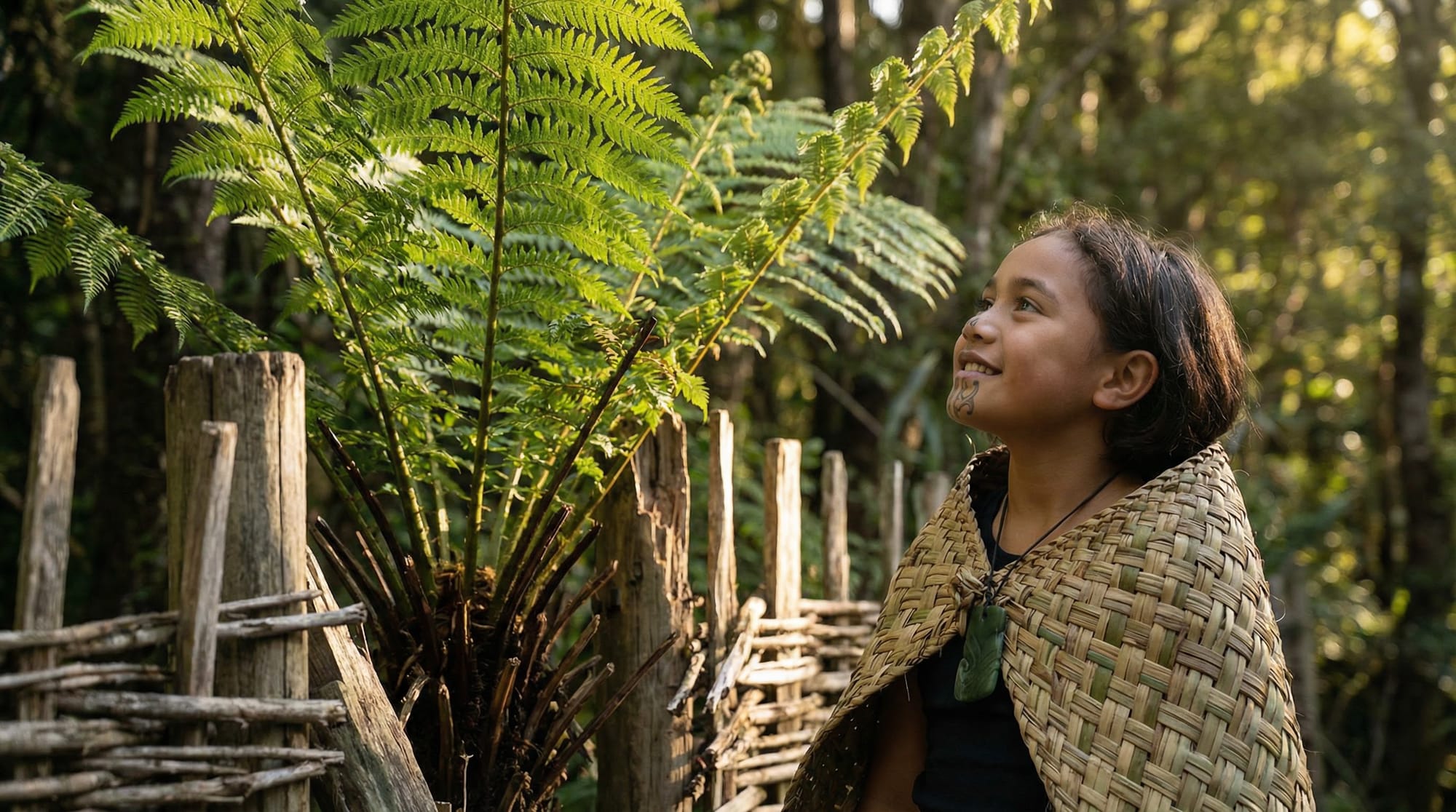
When you come home from something big — a tangi, a battle, a ceremony — you wash your hands, you eat kai, you have a cup of tea. That's whakanoa: the gentle return from the sacred to the ordinary. Not because the ordinary is boring, but because the ordinary is where life happens.
The video's equivalent: The video says the ego is a "sophisticated interface." Noa is the state where you operate through that interface, freely, without restriction. Tapu holds the power. Noa releases it into the world. Together, they are the breathing rhythm of consciousness: in (tapu), out (noa), in, out, forever.
5. WHAKANOA — The Sacred Technology of Transition
What the video says: Meditation allows the "default mode network" to quiet, the sense of self dissolves, and then you return to ordinary perception. The video offers no specific technology for this transition.
What your tūpuna already knew:
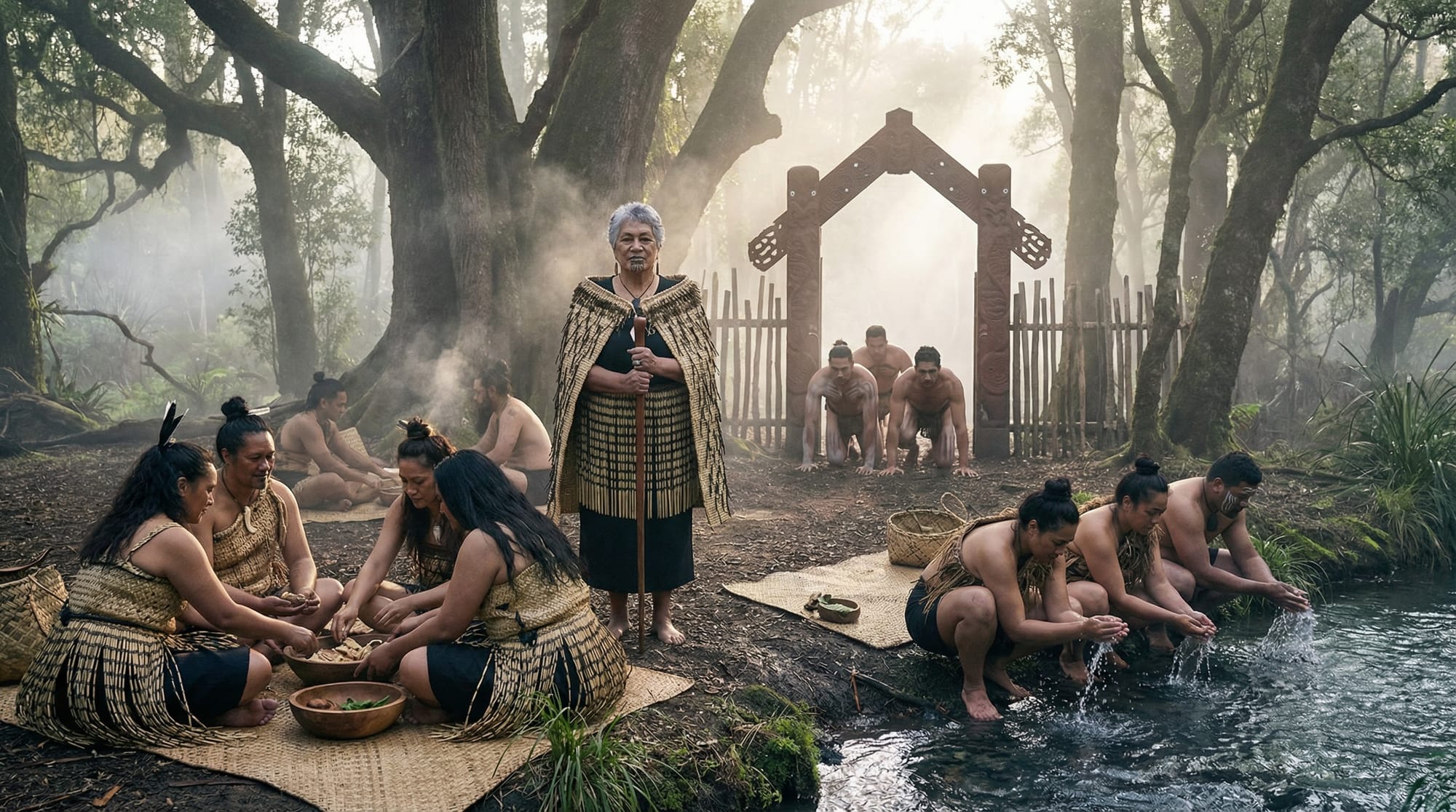
Whakanoa is the act of making something noa — removing tapu so that normal activity can resume. It is performed through specific rituals: karakia, kai, water, waiata, and haka. Witnesses at the Waitangi Tribunal explained:
"Kai, wai, karakia, haka and waiata bring noa, often used in combination to remove tapu from formal and sacred activities, objects and people."
Wāhine held extraordinary mana in whakanoa rituals. Warriors returning from battle — rendered extremely tapu by killing — would crawl between the legs of a ruahine (senior woman) to be cleansed and returned to ordinary life.
How a child would understand it:
🧒 You know how after you've been swimming in the sea, you have to rinse off the salt? If you go straight to bed with salt on your skin, it itches and makes you uncomfortable. The rinse isn't punishment — it's just how you move from "ocean mode" to "home mode."
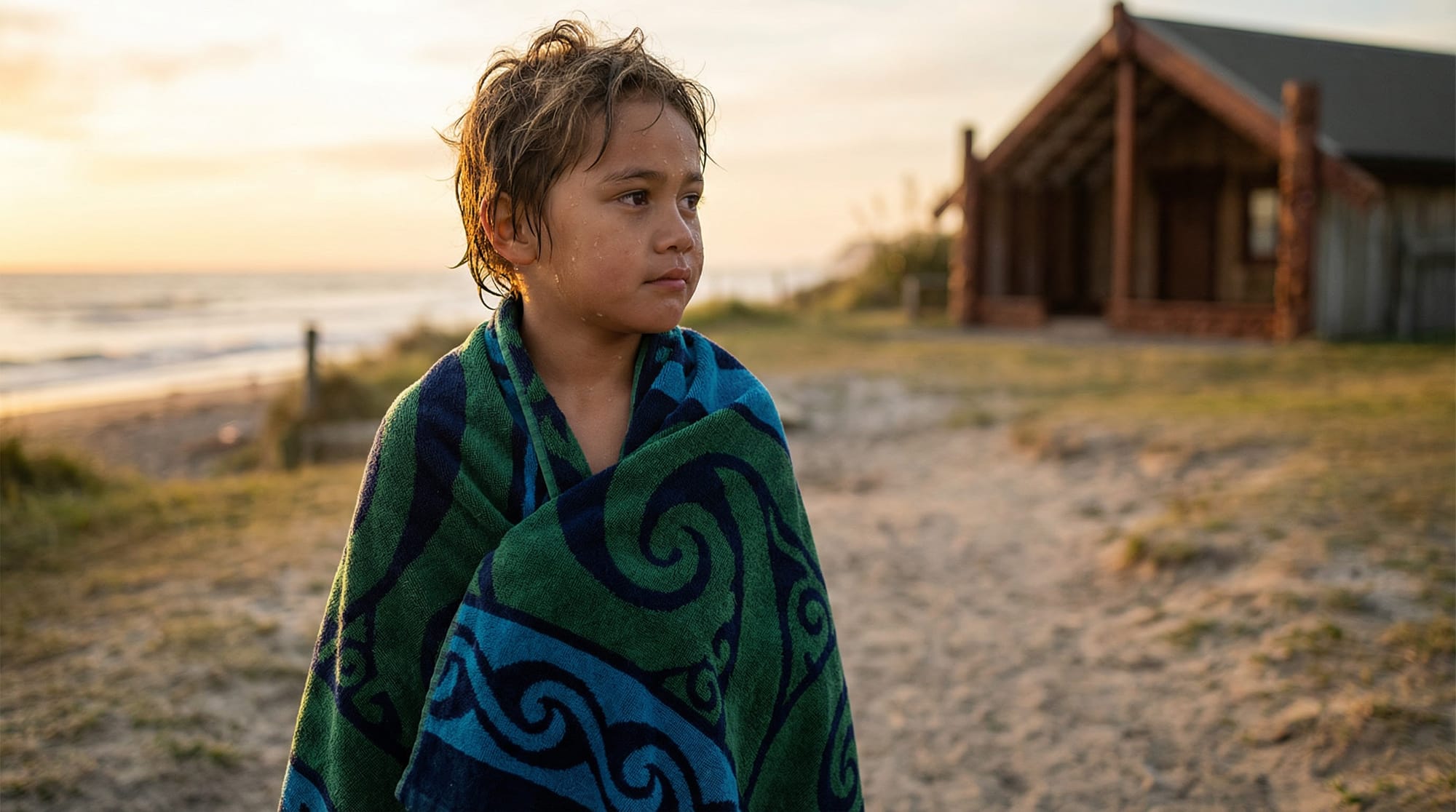
Whakanoa is the rinse. After you've been somewhere powerful — a tangi, a hui, a ceremony — you need to transition back to everyday life. You eat kai. You wash your hands. You hear karakia. Your system says: "OK, the sacred bit is done. We're back to normal now. It's safe to relax."
Why this is revolutionary: The video describes the return from meditation to daily life as something that "just happens." Te ao Māori designed an entire technology stack for this transition — specific rituals, specific roles, specific words, specific foods — because your tūpuna understood that moving between states of consciousness without proper transition is spiritually dangerous.
6. HAU — The Vital Essence That Travels Between Things
What the video says: Consciousness "participates in the creation of reality." The observer and observed are connected. Energy moves between things in ways that collapse quantum possibilities.
What your tūpuna already knew:
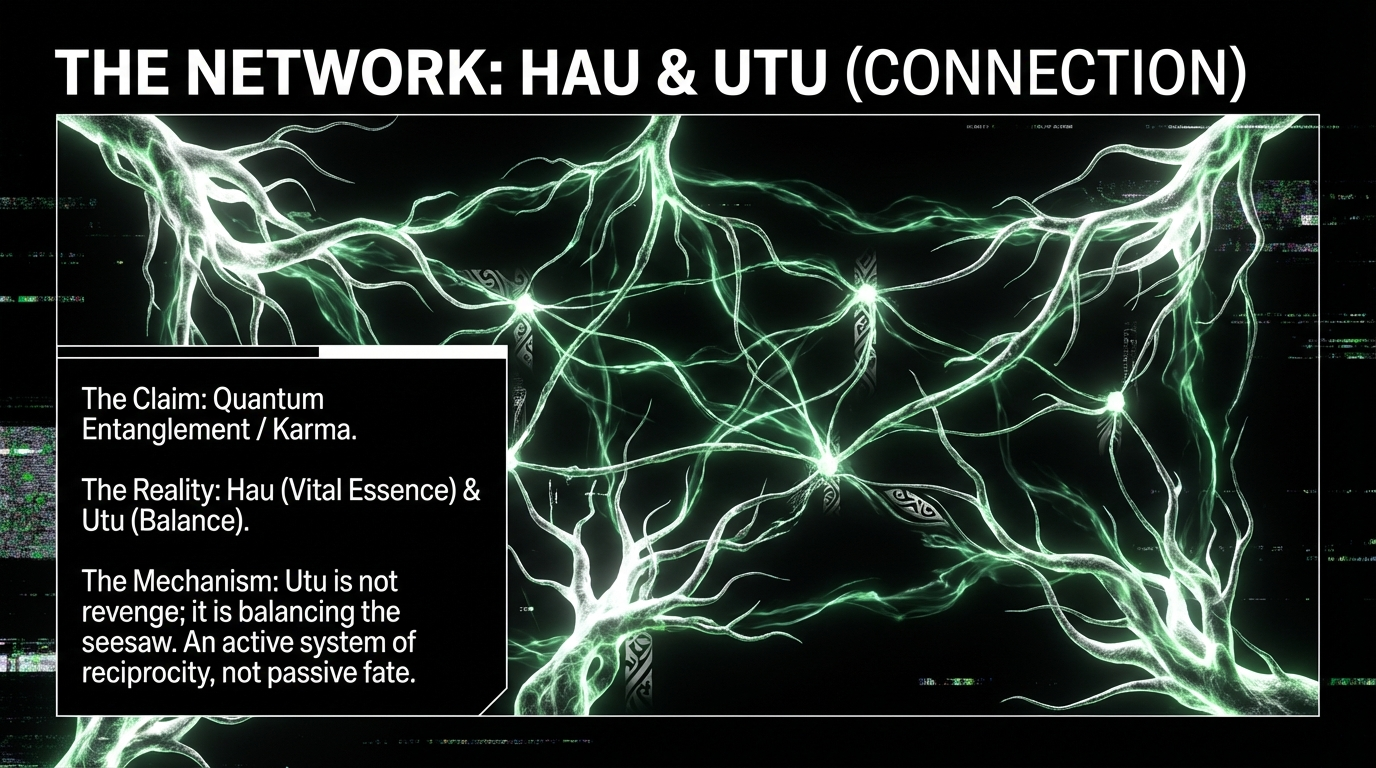
Hau is the vital essence or power of a person or living thing. It travels. When Māui fished up the North Island, he told his brothers not to cut the fish yet — he needed to "carry the hau of this offering" to a tohunga to be offered to the atua, and only then would it become noa. The hau had to travel from the fish, through the tohunga, to the gods — completing a circuit of spiritual energy.
A forest with a mauri talisman had greater numbers of birds or fish because the talisman protected the hau of the forest.
How a child would understand it:
🧒 You know when your nan gives you a handknitted jersey? It's warm, but it's warm in a different way from a shop jersey. It carries something extra — her love, her time, her hands. Even when she's not there, the jersey feels like a hug from her. That's hau. Something of your nan has travelled into the jersey and stays there.
Now imagine everything works like that. A fish caught from the sea carries the hau of Tangaroa. A kūmara from the garden carries the hau of Rongo. A carving carries the hau of the tohunga whakairo. Everything carries a piece of where it came from. That energy must be respected, returned, and kept in balance.
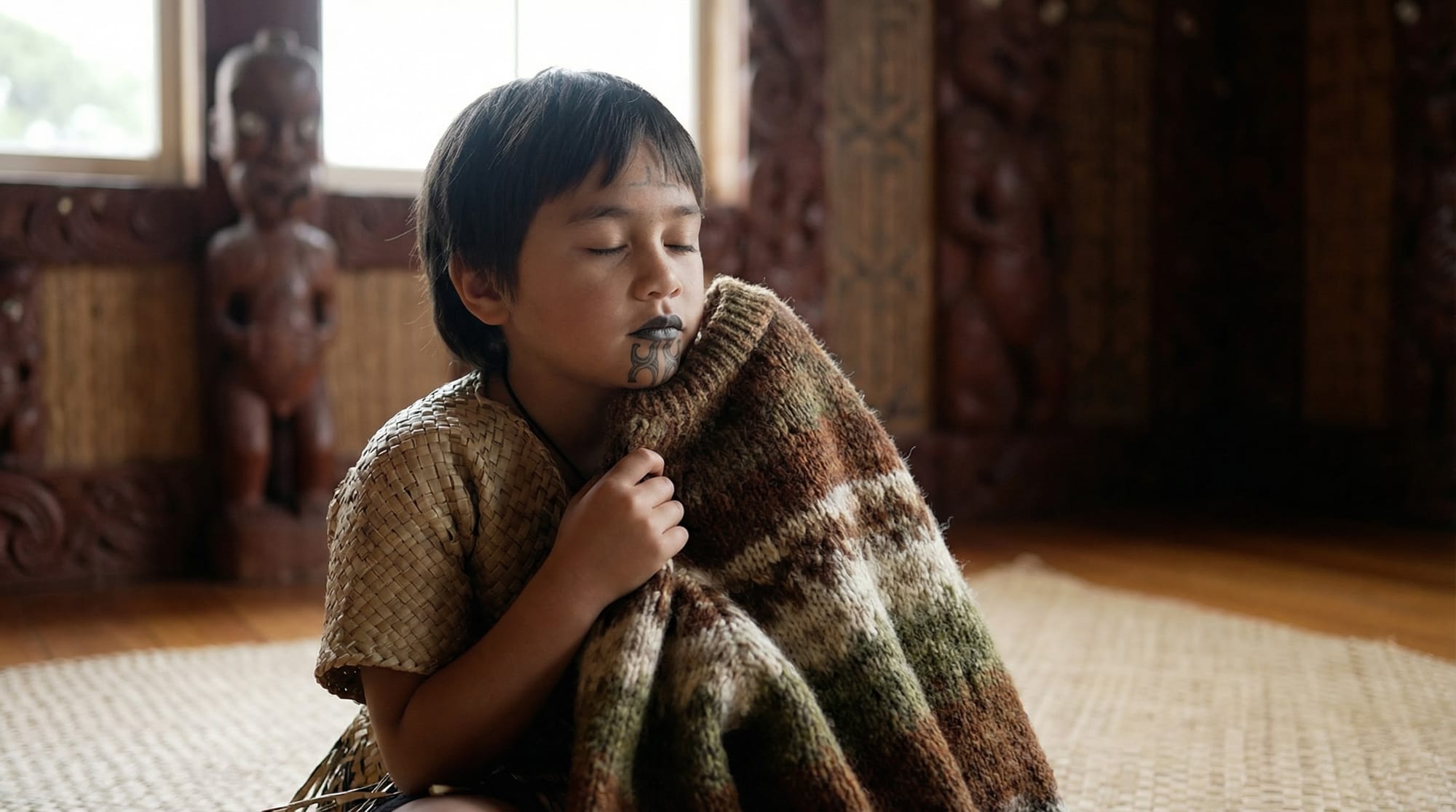
Why this matters: The video talks about "quantum entanglement" — how particles stay connected across distance. Hau is the Māori understanding of the same principle: everything carries the essence of where it came from, and that essence must be honoured through correct ritual. The video has no system for managing this energy. Te ao Māori has hau — and the entire system of gift exchange, koha, and reciprocity is built on it.
7. UTU — The Universe Seeks Balance
What the video says: The video describes karma as "the intelligent unfolding of cause and effect, often beyond individual comprehension." It calls personal agency "the localized expression of a much larger intelligence."
What your tūpuna already knew:
The Waitangi Tribunal heard extensive evidence on utu — the principle of reciprocity and balance. Utu is not "revenge." It is the restoration of equilibrium. When something is taken, something must be returned. When harm is done, balance must be restored. As witnesses explained: "It was about retaining the balance, known as muru and utu."
How a child would understand it:
🧒 Imagine you have a seesaw. When both sides are balanced, everyone can play. But if someone piles rocks on one side, the seesaw tips and nobody can play. Utu is the act of taking rocks off one side (or adding them to the other) until the seesaw is level again.
If your cousin gives you their last biscuit, utu says: you'll remember that, and one day you'll share your last biscuit with them. If someone hurts your whānau, utu says: balance must be restored — not through blind revenge, but through a process that makes the seesaw level again. Sometimes that means muru (see below). Sometimes it means koha. Sometimes it means kōrero. But the seesaw must return to balance, or the whole playground breaks.
Why this matters: The video vaguely gestures at "karma." Utu is a precise, actionable system of cosmic balance — with specific mechanisms (muru, koha, kōrero) for restoring it. It governed trade, diplomacy, warfare, and family relations for centuries.
8. MURU — When the Community Restores Balance
What the video says: The video says that recognising the illusory nature of the self means "patterns can be observed and transformed because there's no one to protect them." But it offers no mechanism for communal restoration.
What your tūpuna already knew:
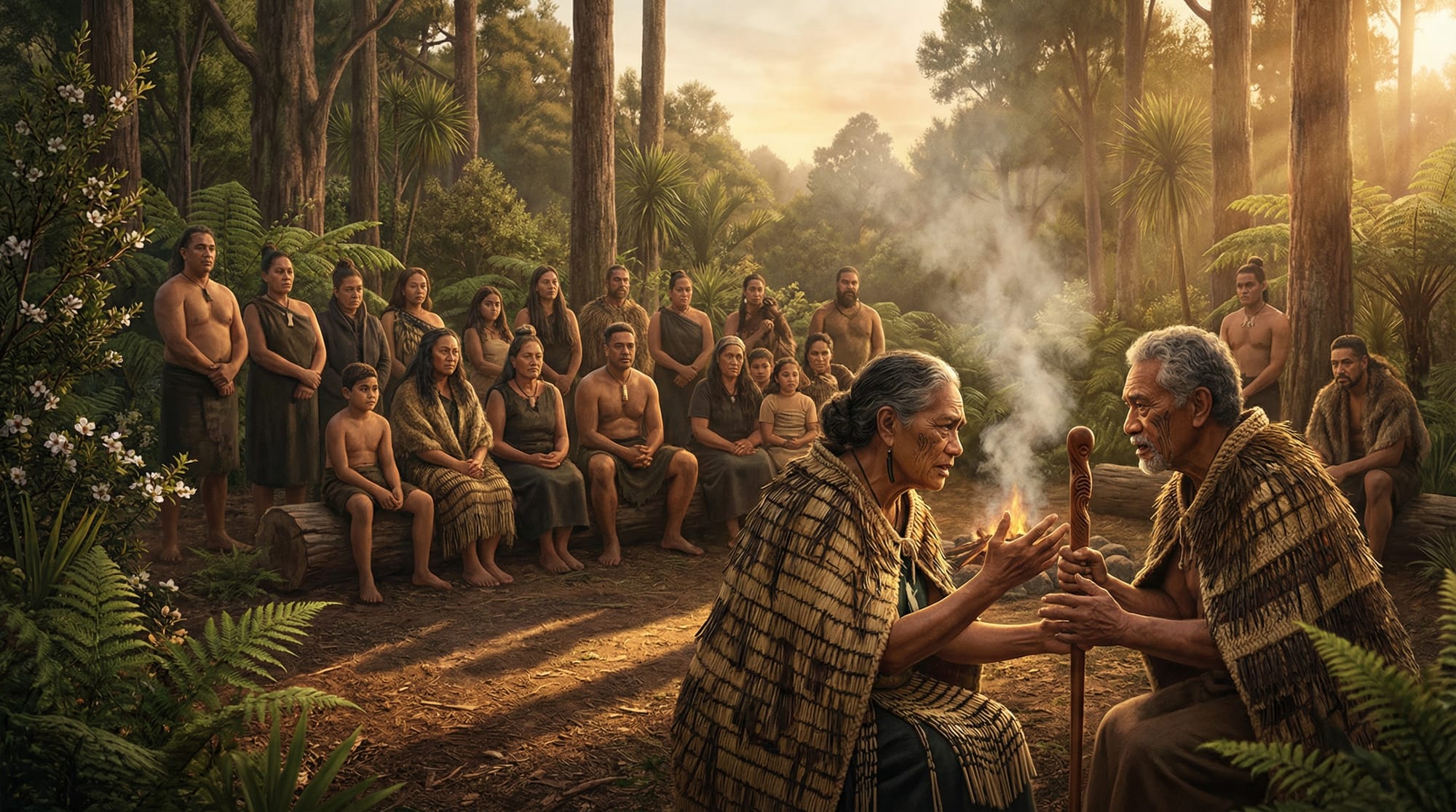
Muru is the practice of redress — a ritualised process where a community seeks utu for a wrong. As witness Violet Walker told the Waitangi Tribunal:
"Where a child of one family was killed, the family of the killer would offer a child to the victim's family… On the other end of the scale, chiefs of each hapū would engage in kōrero."
How a child would understand it:
🧒 Imagine your friend accidentally breaks your favourite toy. They feel bad. You feel sad. The friendship feels wobbly. Muru is what happens next: your friend's family brings you a new toy (or something even better). Not because they're punished — but because the relationship is more important than the toy, and everyone works together to fix the wobble.
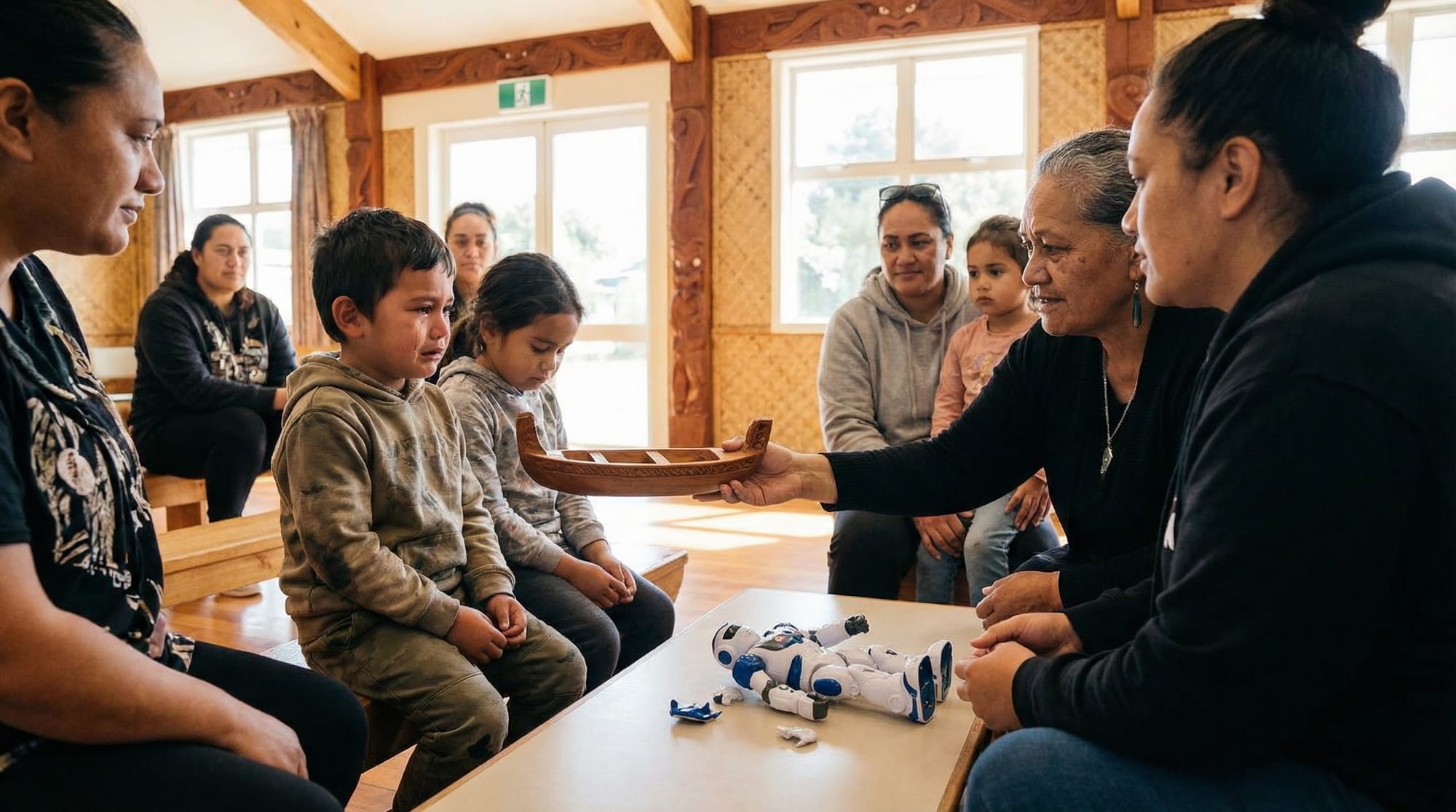
In te ao Māori, muru wasn't punishment. It was community healing. The whole whānau took responsibility, the whole whānau participated in restoring balance, and afterwards, the relationship was often stronger than before.
PART TWO: THE CONSCIOUSNESS TECHNOLOGY STACK
How Māori operationalised awareness in daily practice
9. NOHOPUKU — The Original Meditation (Dwelling Inwardly)
What the video says: Meditation quiets the "default mode network" and dissolves the sense of self.
What your tūpuna already knew:
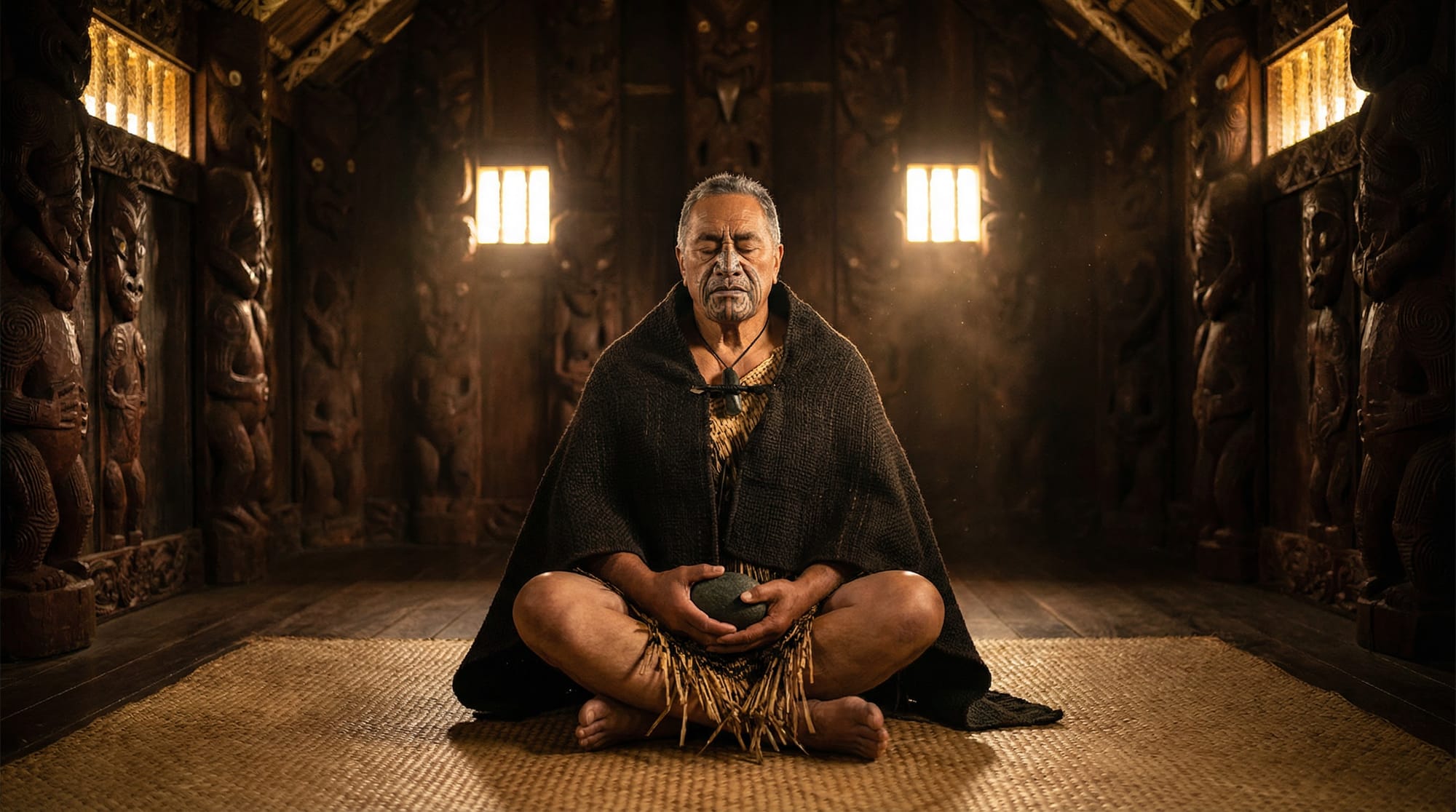
Nohopuku means "to dwell inwardly, in the stomach" — it is the traditional Māori meditation practice. In the whare wānanga, students would swallow small pebbles (whatu) containing mauri, which established the conditions for mana in the form of knowledge and learning to come into the person. This is not a metaphor. This was the literal practice.
How a child would understand it:
🧒 You know how sometimes, when you need to think really hard, you close your eyes and go quiet inside? Maybe you put your hand on your tummy and breathe slowly? That feeling of going down inside yourself — that's nohopuku.
Your tūpuna believed that real knowing doesn't happen in your head. It happens in your puku (stomach). That's why we say "I feel it in my gut." The stomach is where mauri enters you. It's where knowledge becomes part of you — not just thoughts floating in your brain, but knowing that lives in your body.
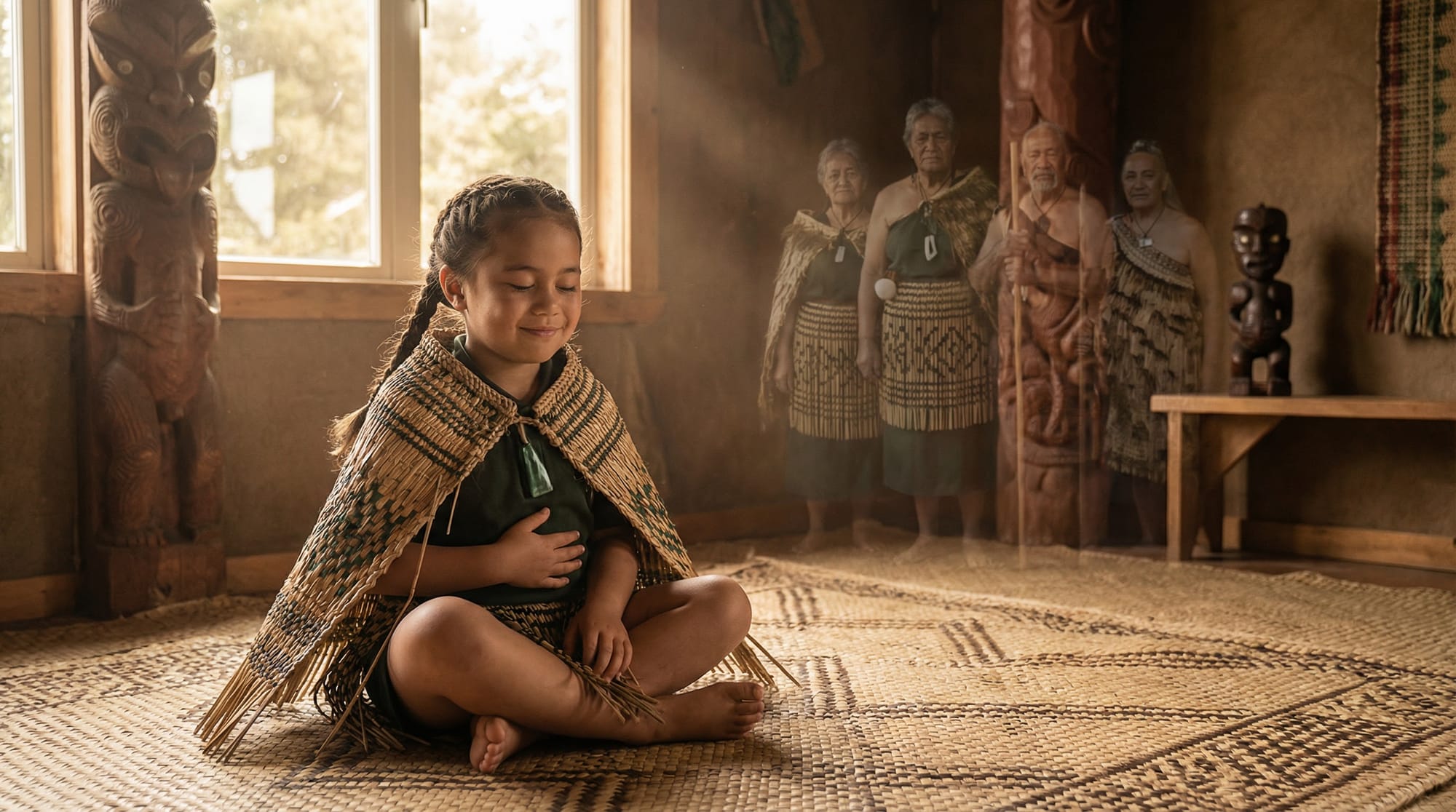
Why this matters: The video says meditation dissolves the self. Nohopuku goes further: it describes a specific bodily location (the puku) where consciousness is received and integrated. The Western "meditation app" tells you to focus on your breath. Your tūpuna swallowed whatu and opened their puku to receive mana from Te Kore itself.
10. MAURI STONES — The Consciousness Anchors
What the video says: The video says your brain might operate on "quantum mechanical principles" and that consciousness "collapses infinite possibilities into a single actuality."
What your tūpuna already knew:
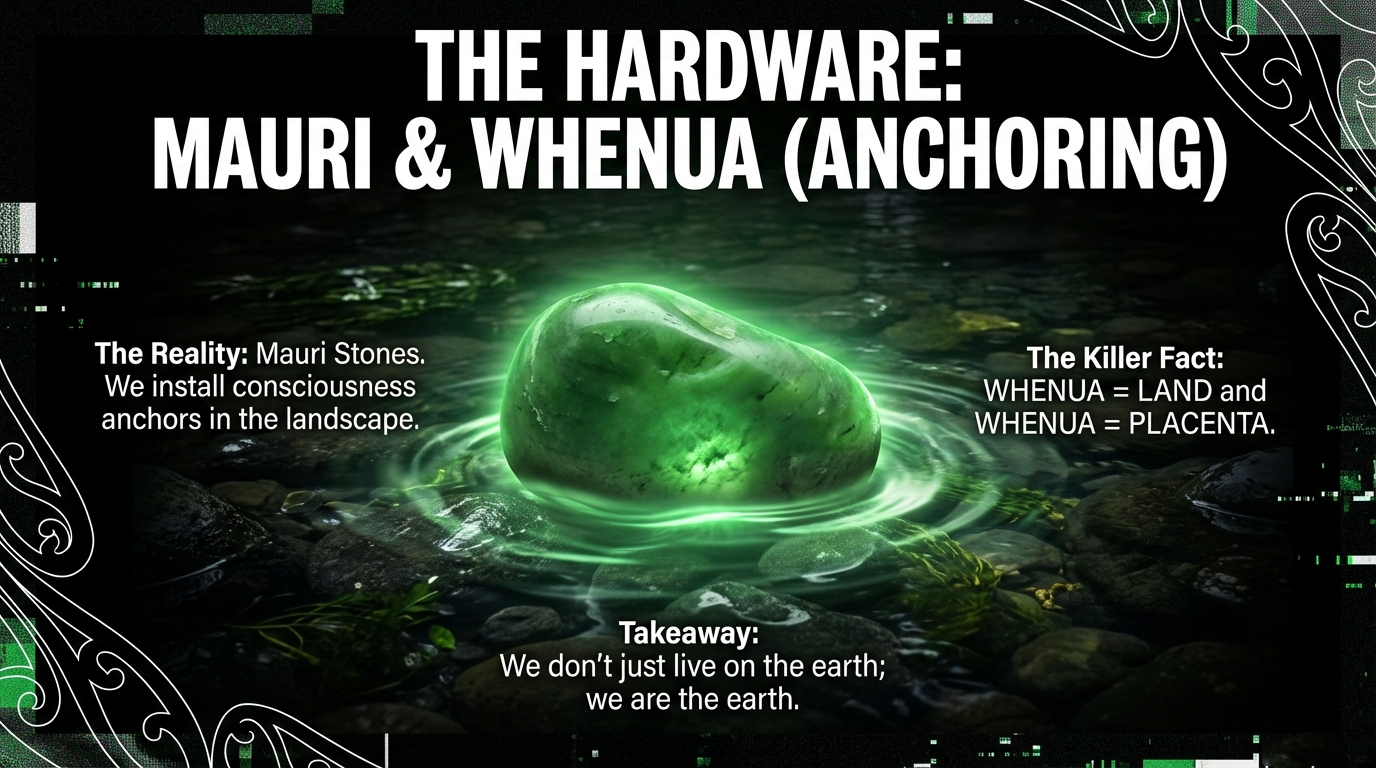
Mauri is the energy that binds and animates all things in the physical world. Without mauri, mana cannot flow. Tohunga placed mauri stones — physical objects blessed with specific energy — in forests, fishing nets, bird snares, and gardens to anchor consciousness in physical form.
Ngāti Raukawa elder Tāmati Ranapiri explains:
"The mauri is a divine authority by which food may come forth or be preserved in a certain area so that it does not go to another. There is mauri in the land and mauri in waterways."
How a child would understand it:
🧒 Imagine you have a magic rock. Not pretend magic — real, tohunga-blessed magic. You put this rock in the river, and the rock says to the tuna (eels): "This is a safe place. Come here. Be abundant." The rock is like a Wi-Fi router for life force. It broadcasts the signal that says "this place is alive, this place is protected, this place has mauri."
Without the rock, the life force wanders. With the rock, it has a home.
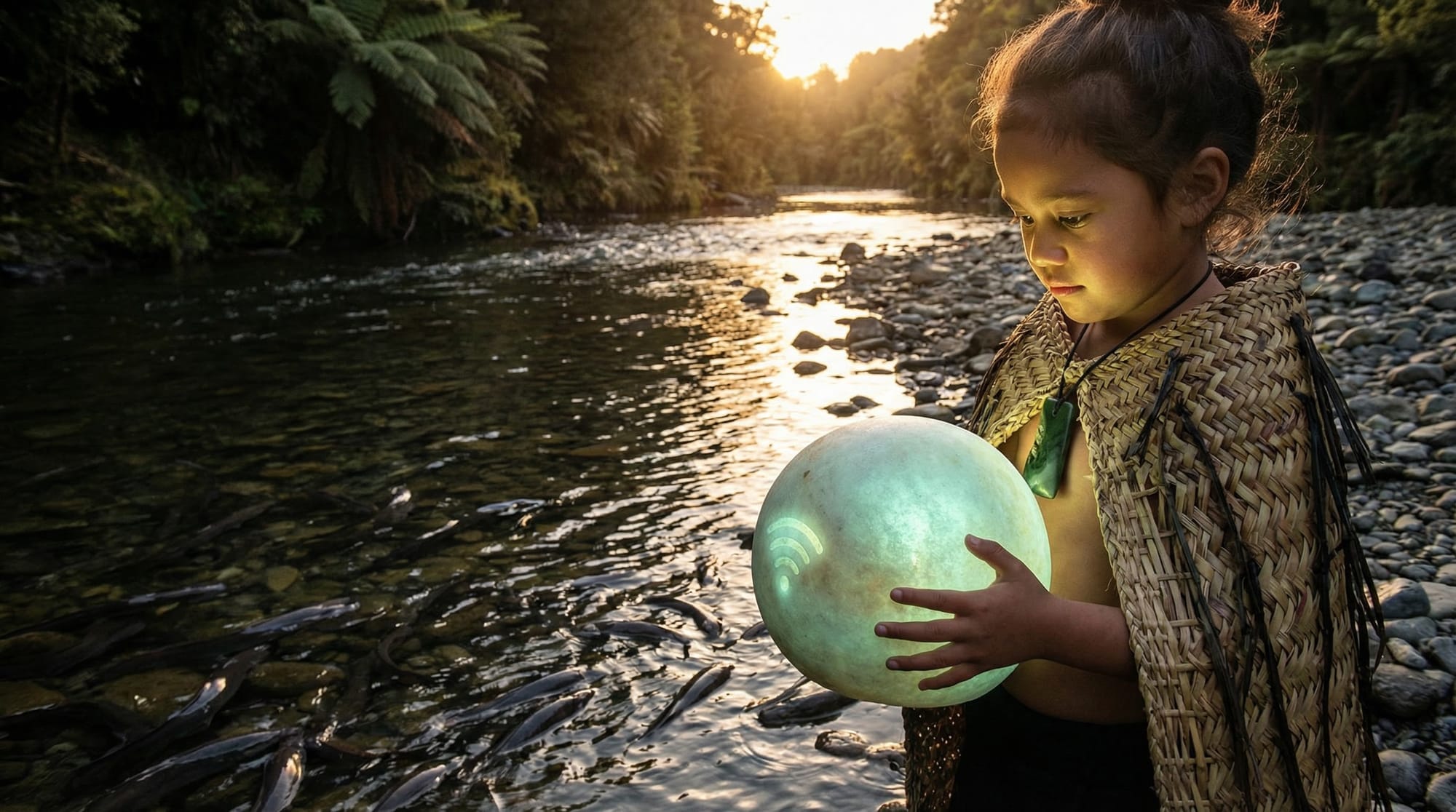
Why this matters: The video talks about consciousness "collapsing possibilities into actuality." A mauri stone does exactly this — it takes the infinite potential of Te Kore and anchors it into a specific physical place. Your tūpuna were literally installing consciousness hardware in the landscape.
11. RĀHUI — The Temporary Sacred Boundary
What the video says: The video discusses how observing a quantum system changes it. Interference disrupts the natural state.
What your tūpuna already knew:
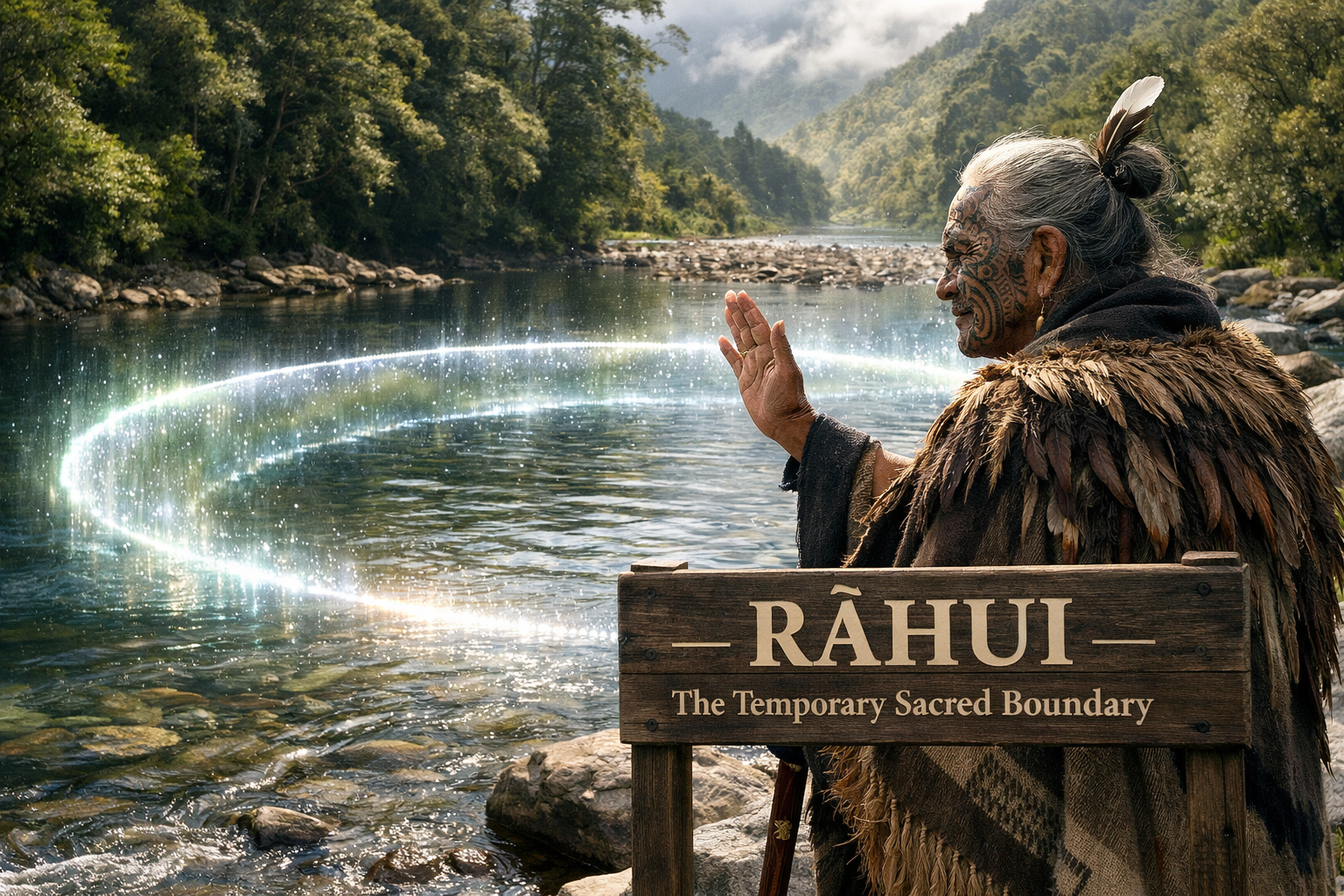
Rāhui is a temporary ban or restriction placed on an area — typically after a death, or when resources need to recover. It is tapu made practical. When someone drowns in a river, rāhui is placed on that stretch of water. When a shellfish bed is overharvested, rāhui protects it. When a forest needs rest, rāhui gives it time.
How a child would understand it:
🧒 Imagine there's a playground where everyone plays every day. One day, the slide breaks. Someone puts up a sign: "Playground closed for repairs." That's rāhui. It doesn't mean the playground is bad. It means: the playground needs rest and healing before we can play there again.
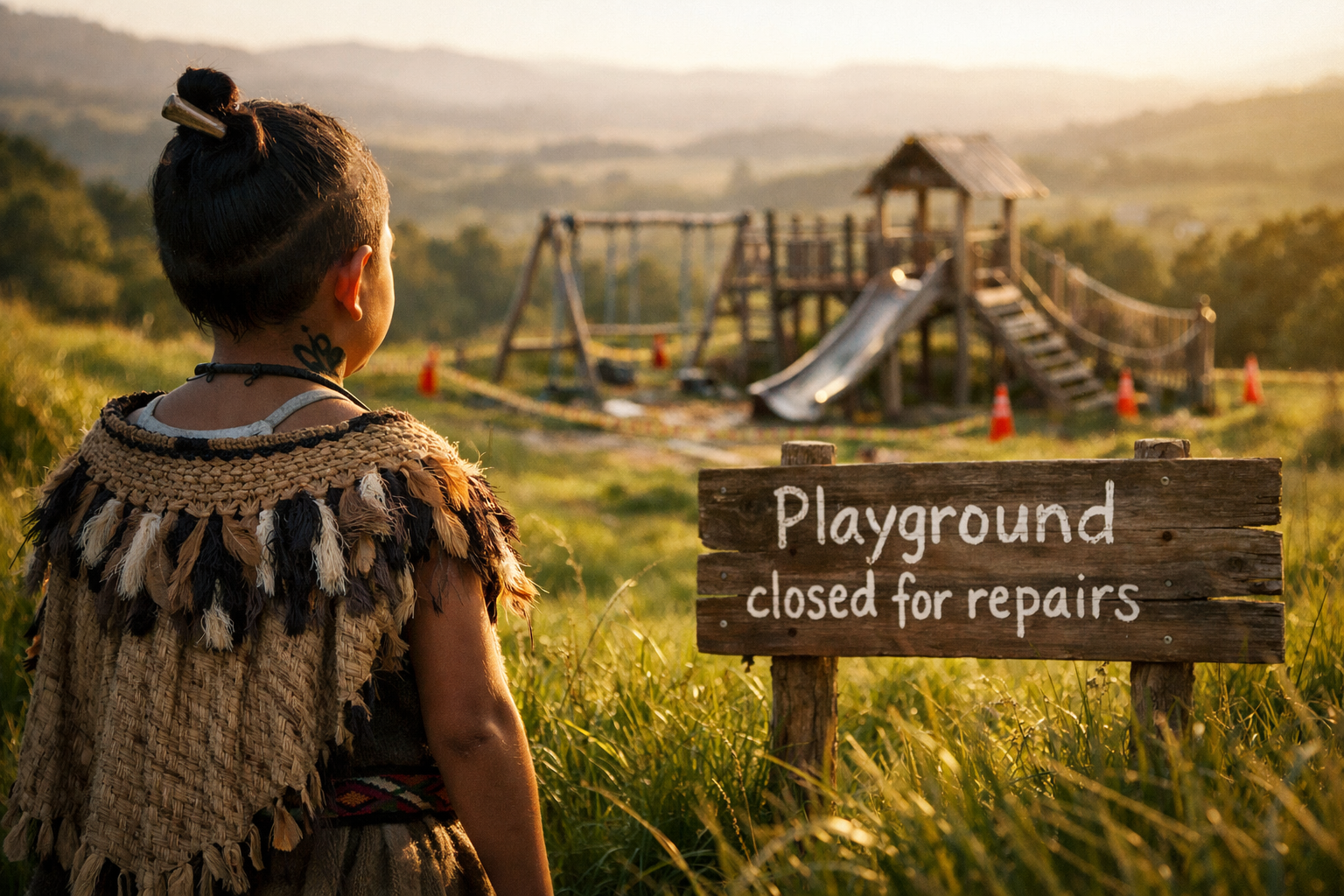
In te ao Māori, the whenua, the moana, the awa — they all get tired. They give and give and give. Rāhui says:
"Now it's our turn to give back. We'll leave you alone. We'll let you heal. And when you're ready, we'll come back — and you'll be even more abundant than before."
Why this matters: The video talks about how observation changes reality. Rāhui is the practical application of this principle: sometimes the most powerful thing you can do for a system is to stop observing it, stop interfering with it, and let it return to its natural state. Your tūpuna encoded this into law.
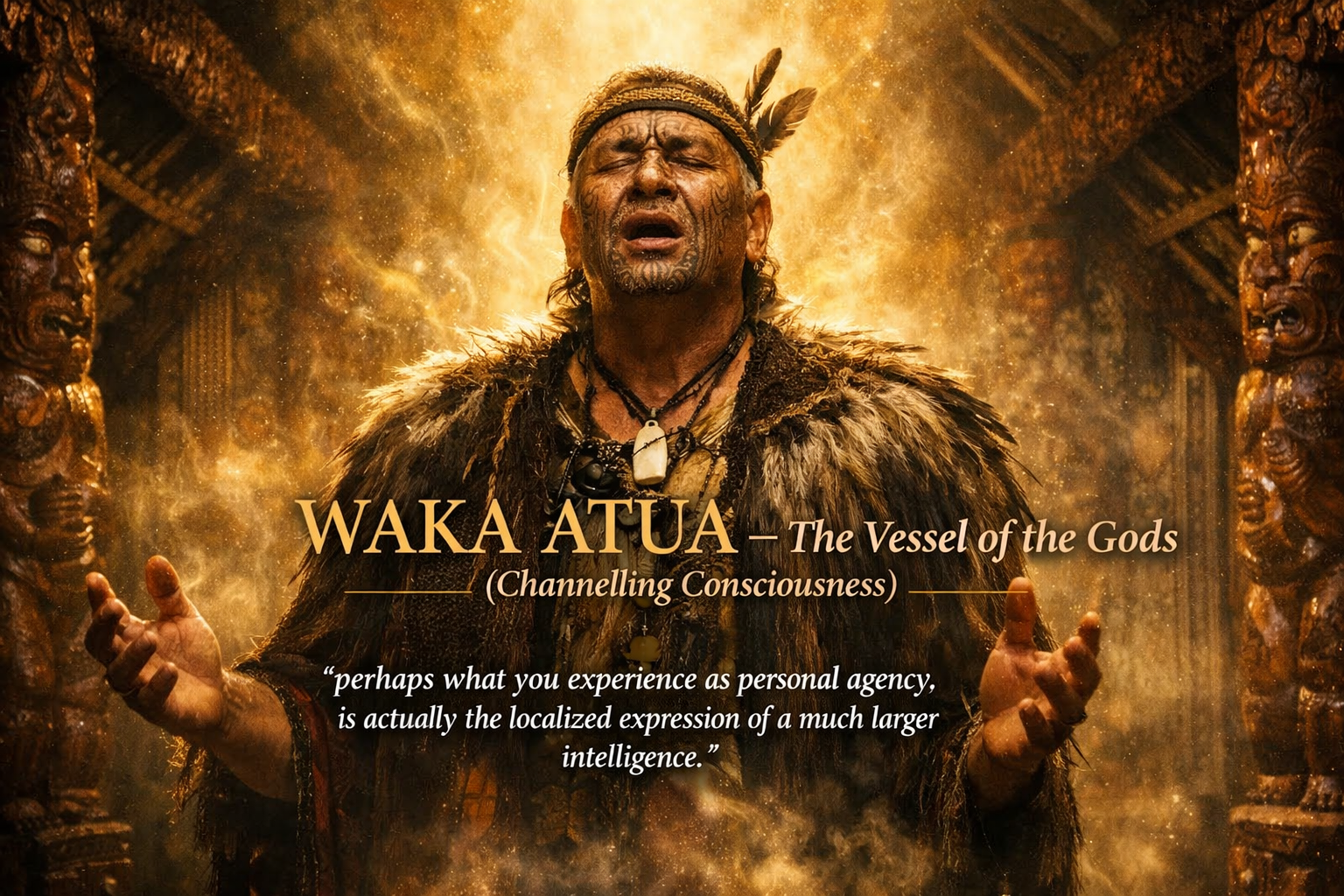
12. WAKA ATUA — The Vessel of the Gods (Channelling Consciousness)
What the video says: The video says "perhaps what you experience as personal agency is actually the localized expression of a much larger intelligence."
What your tūpuna already knew:
A tohunga who channelled a god was called a waka atua — a vessel of a god. The tohunga would speak in a different voice, regarded as the voice of the atua. Ngāi Tūhoe tohunga Uhia became the medium of a spirit called Hope-motu. The concept is precise: you are not the source of consciousness. You are the waka — the canoe — through which consciousness travels.
How a child would understand it:
🧒 Imagine you're a flute. You don't make the music — the breath makes the music. But without you, the breath would just be wind. You give the music its shape. The breath (the atua, the consciousness, the mana) flows through you, and you turn it into something the world can hear.
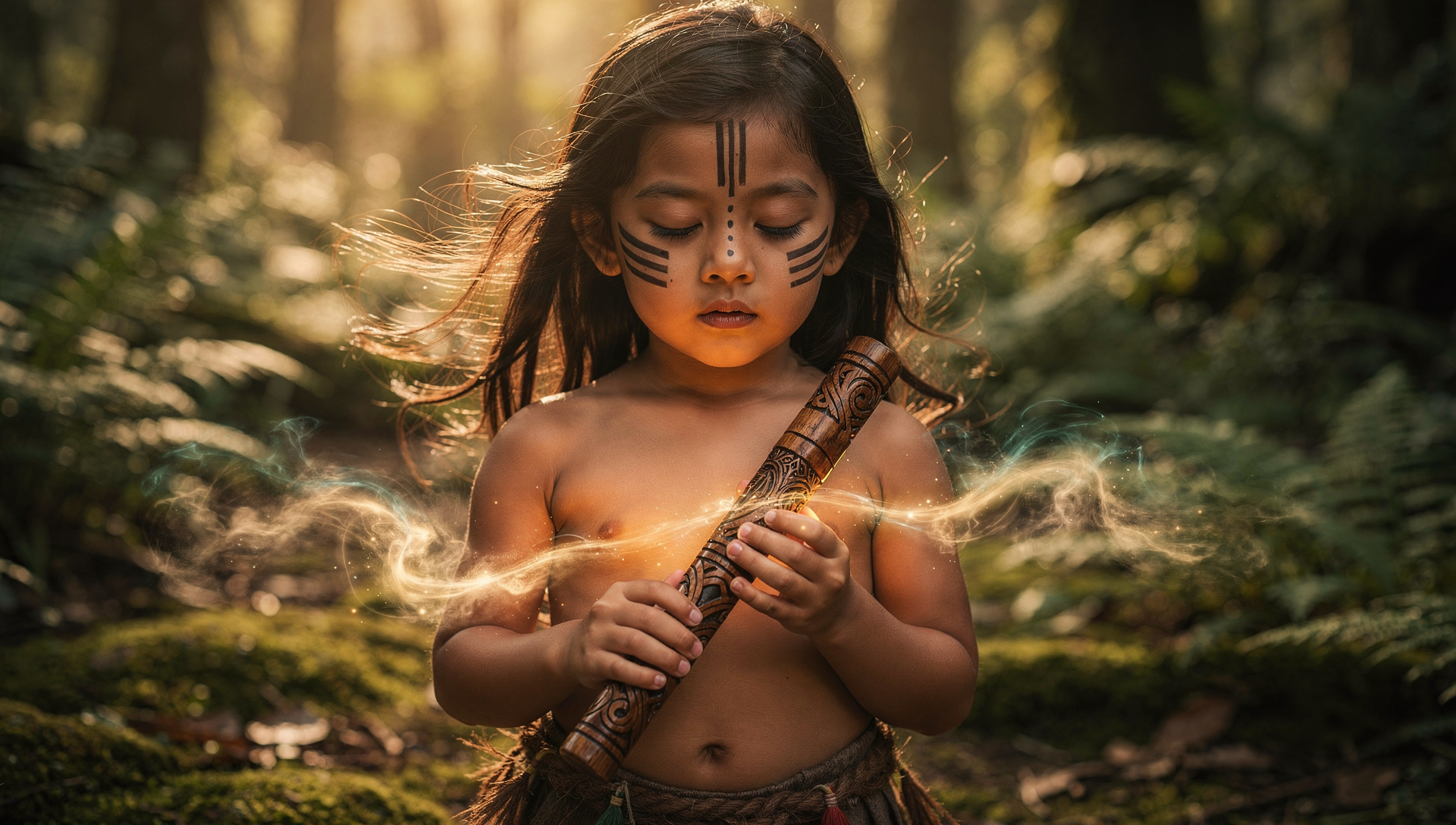
A waka atua is a person who becomes such a clear, clean flute that the gods themselves can play through them. They don't lose themselves. They become the most perfect version of their instrument.
13. IHI, WEHI, WANA — The Three States of Awe
What the video says: The video describes the dissolution of the self as producing "profound peace and passionate engagement with life." It speaks of feelings of boundless awareness and unity.
What your tūpuna already knew:
Te ao Māori has three specific words for the states of heightened consciousness the video can only gesture at:
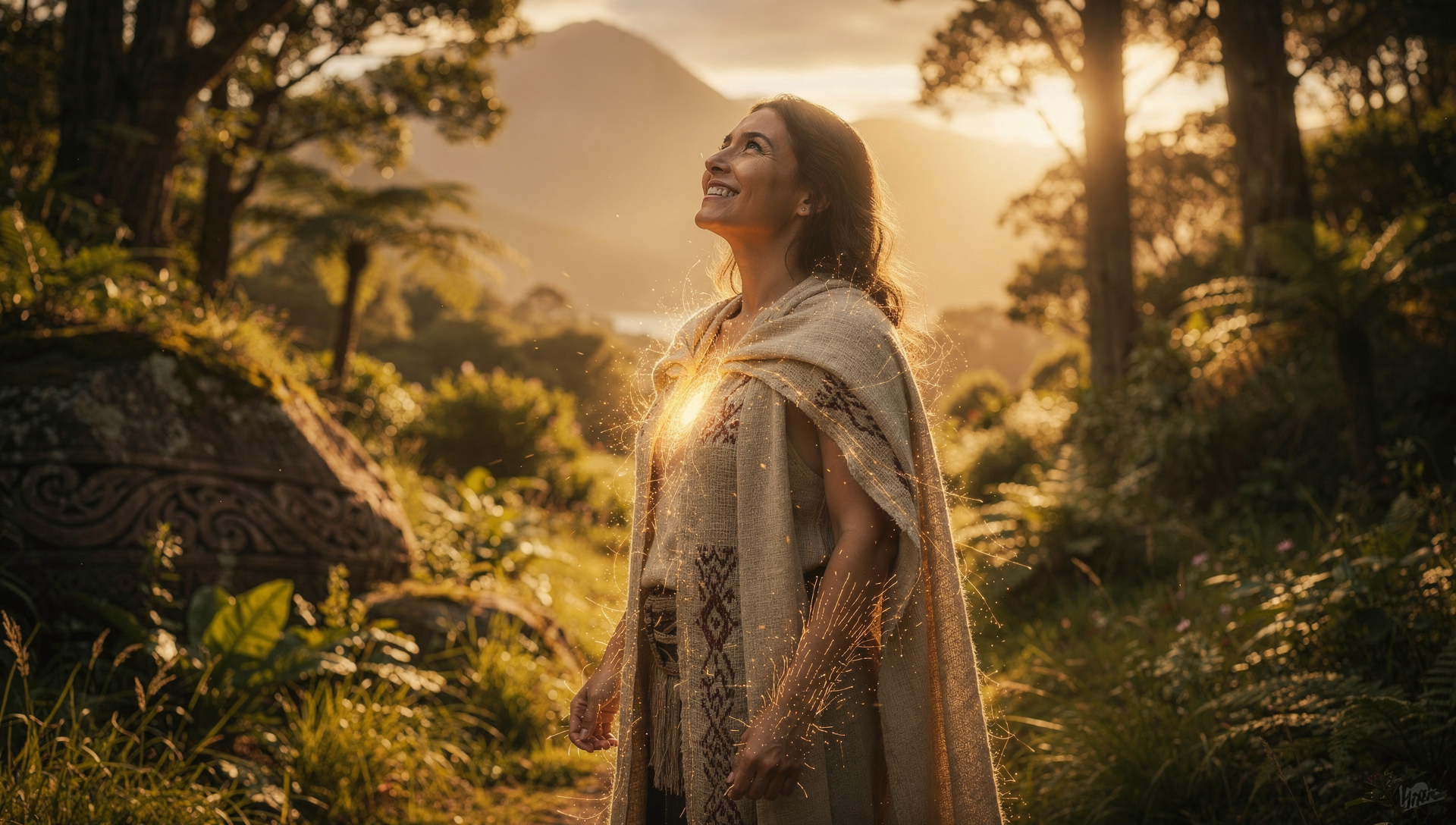
- Ihi — being enraptured with life; the electrifying presence or essential force of a thing. The hairs on your arms stand up. Something powerful is happening. Your whole body responds.
- Wehi — being in awe of life; the response to ihi. Reverence. Humility. The feeling of standing before something far greater than yourself.
- Wana — being enamoured with life; the state of being thrilled, exhilarated, completely alive. Joy that moves through your entire being.
These three together — ihi, wehi, wana — are key transformative experiences for mauri ora (complete wellbeing), accessed through engagement in cultural values, beliefs, and practices. They can all be encapsulated within mauri.
How a child would understand it:
🧒 Imagine you're watching a kapa haka performance. The haka starts:
- First, you feel a shiver — the hairs on your arms stand up. Something powerful is here. That's ihi.
- Then, your mouth falls open. You can't speak. You feel small in the best possible way, like standing under a sky full of stars. That's wehi.
- Then, joy floods through your whole body. You want to laugh and cry at the same time. You feel completely, totally alive. That's wana.
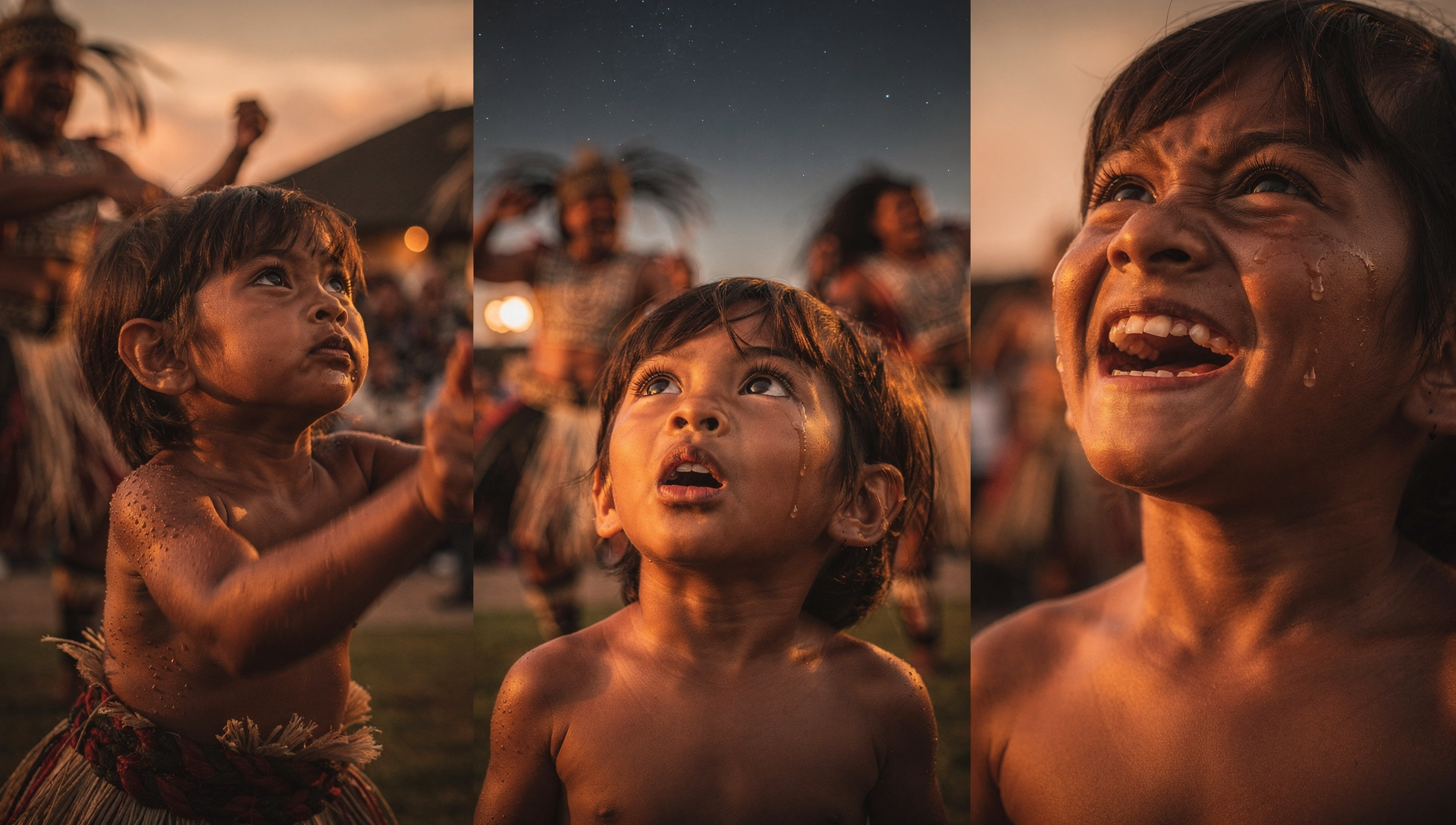
All three together = your consciousness fully awake, fully present, fully connected to something greater. The video calls this "recognising yourself as pure awareness." Your tūpuna had three separate words for the three stages of getting there.
14. KARAKIA — Words That Shape Reality
What the video says: The video says consciousness "participates in creating reality" and that "the act of observation literally collapses infinite possibilities into a single actuality."
What your tūpuna already knew:
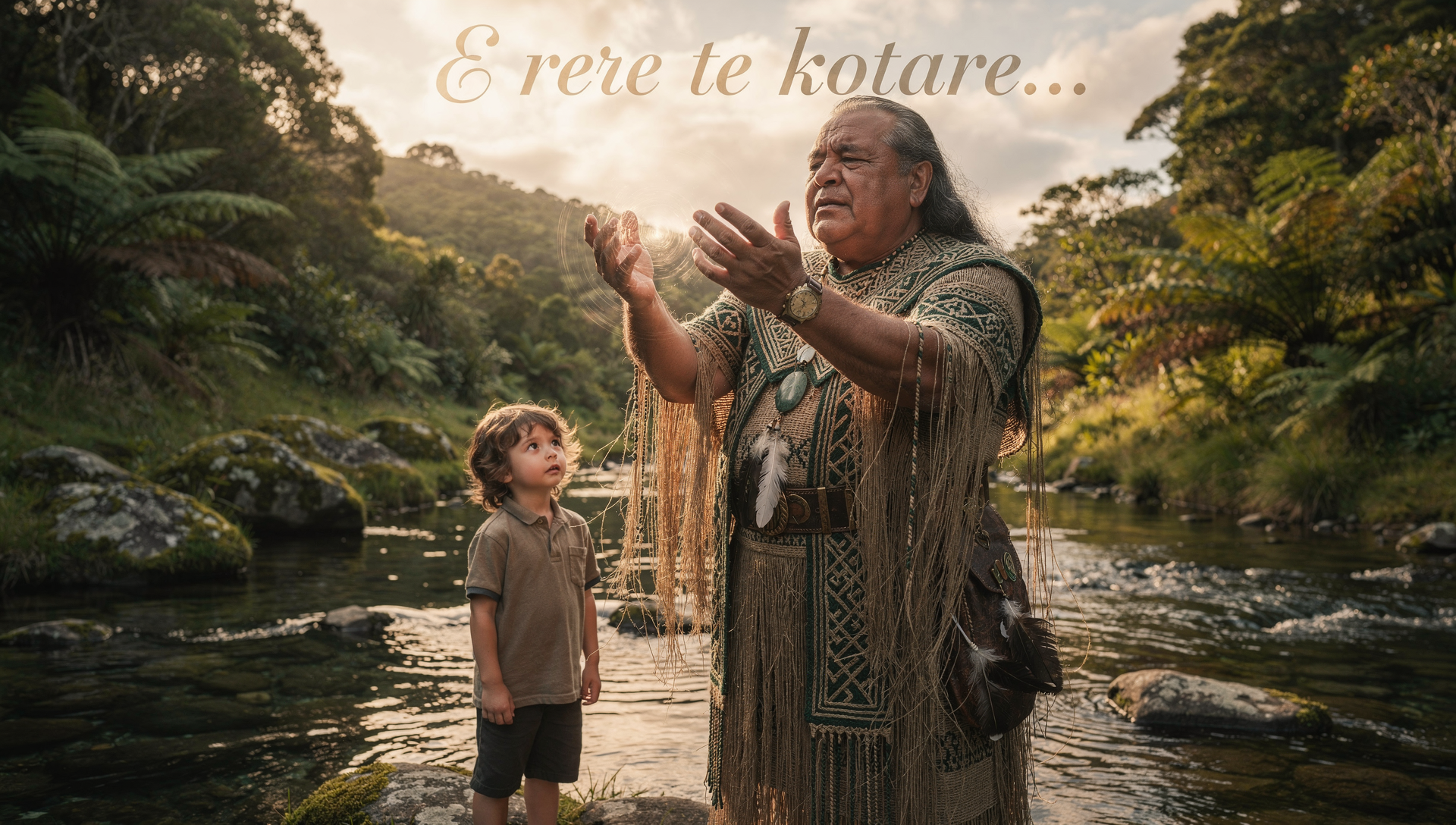
Karakia are the way people communicate with the gods. Te Rangi Hīroa described karakia as "a formula of words which was chanted to obtain benefit or avert trouble." There were specific karakia for every purpose: kī tao (to give power to spears), tā kōpito (to cure sickness), tūā pana (to help childbirth), tohi (to instil tapu and mana into a baby), whakanoa (to remove tapu), pou (to fix memory during instruction), and dozens more.
Even children used karakia. Here is a tamariki karakia to stop the rain:
E rere te kotare / Ki runga i te puwharawhara / Ruru ai ia o parirau / Kei maku o kuao i te ua / Mao, mao te ua
(Fly o kingfisher / On to the bunch of astelia / And there shake your wings / Lest your young become wet by the rain / Cease, cease the rain.)
How a child would understand it:
🧒 You know how when you sing a song, it changes how a room feels? A sad song makes people quiet. A happy song makes people dance. Words have power. They change the energy of a place.
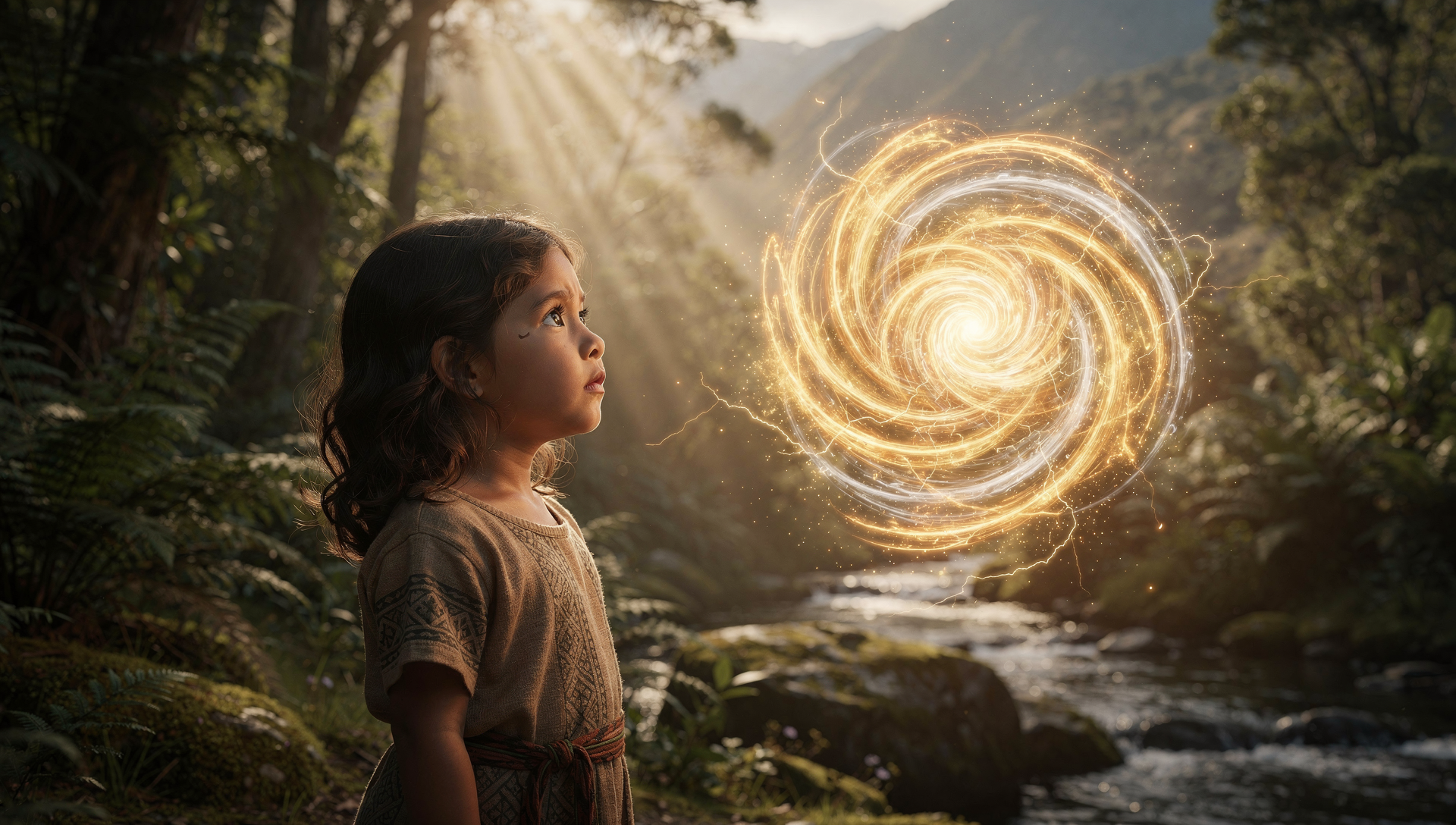
Karakia are power songs. Not because they're magic spells — but because when the right words are spoken by the right person in the right way at the right time, they shape reality. They open doors between the ordinary and the sacred. They call mana into the room. They protect you on a journey. They heal your body. They clear the air after a tangi.
Why this matters: The video says consciousness creates reality. Karakia is the technology for doing it intentionally. Your tūpuna didn't just observe that observation shapes reality — they built an entire library of specific, purpose-built tools for shaping it.
15. TOHI — Installing Consciousness in a Newborn
What the video says: The video says identity is constructed, not innate. We are "probability clouds temporarily collapsed into specific configurations."
What your tūpuna already knew:
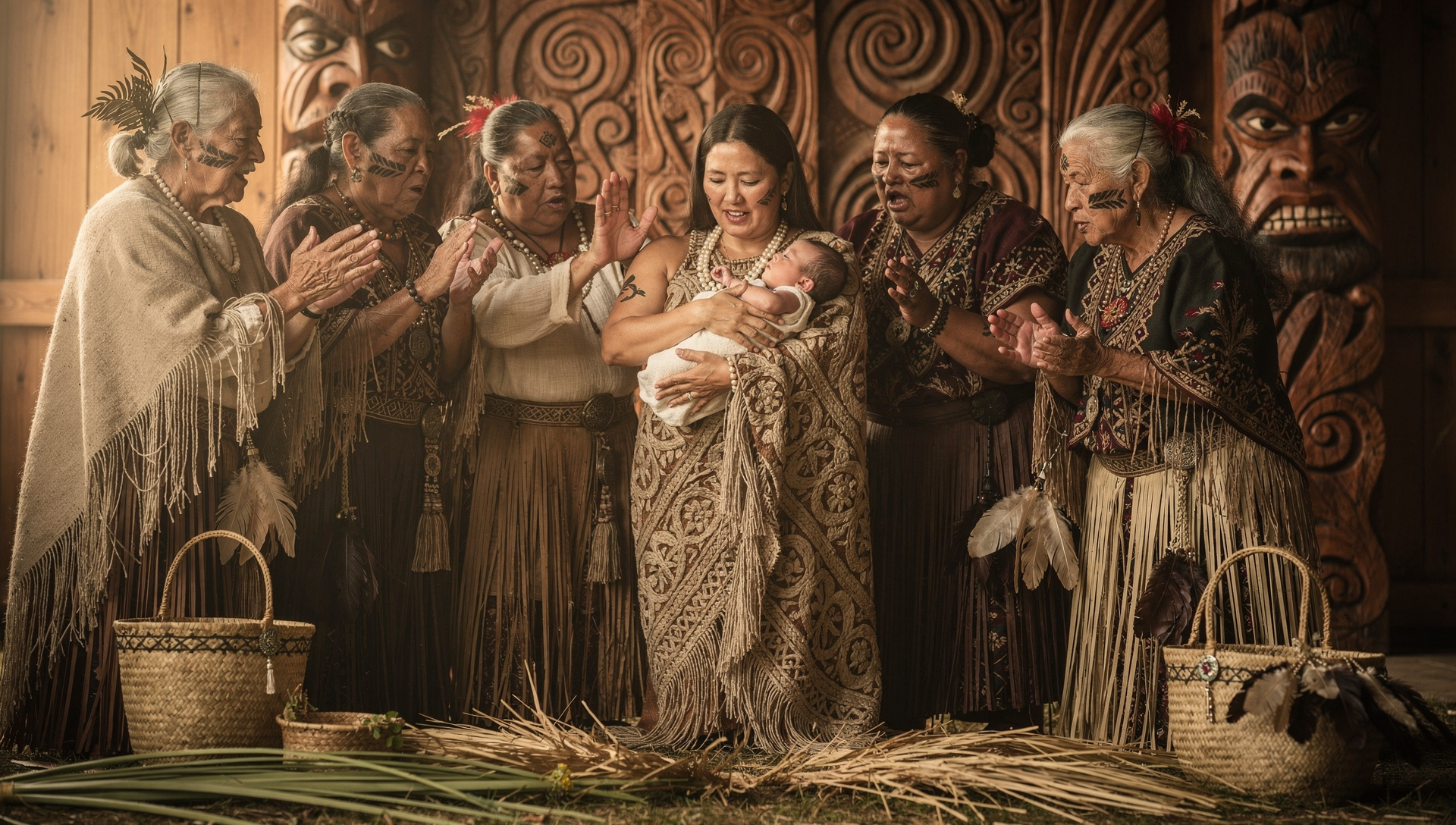
The tohi ceremony was a karakia performed over a newborn to instil tapu and mana. It was the intentional act of configuring a new consciousness — dedicating the child to specific atua, instilling specific qualities, connecting them to specific whakapapa. Traditional Māori parenting treated children as tapu gifts from the atua
— "they were tapu (under special rules and restrictions). Any negativity expressed to them was breaking the tapu by offending the atua."
Oriori (lullabies) repeated messages confirming how tapu the child was, in the most beautiful language.
"Such positive sounds and treatment surrounded the children from conception, instilling in them love, security, inquisitiveness and confidence."
How a child would understand it:
🧒 When a new baby is born, imagine the tohunga stands beside them and says:
"Little one, you are descended from the stars. You carry the mana of your tūpuna. Your wairua was here before your body, and it will be here after. You are sacred. You are tapu. You are loved."
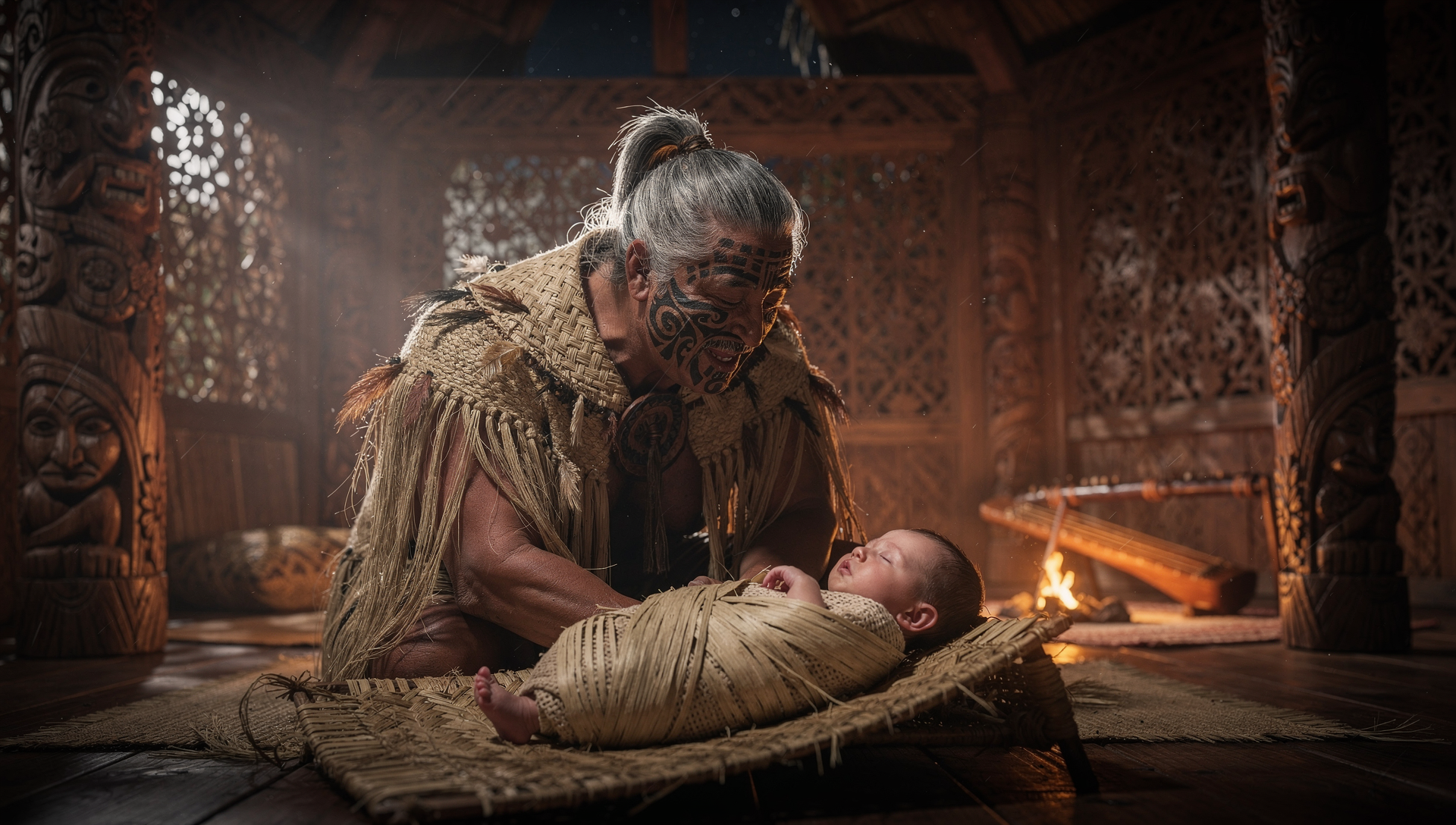
And from that moment, every waiata the baby hears, every oriori sung over them, every karakia — it's all programming their consciousness with the knowledge of who they are and where they come from. Not computer programming. Whakapapa programming.
PART THREE: THE FLOW SYSTEM
How all these concepts work together
16. THE FLOW OF MANA — The Operating System Itself
What the video says: The video vaguely describes a "field of consciousness" in which everything arises and dissolves.
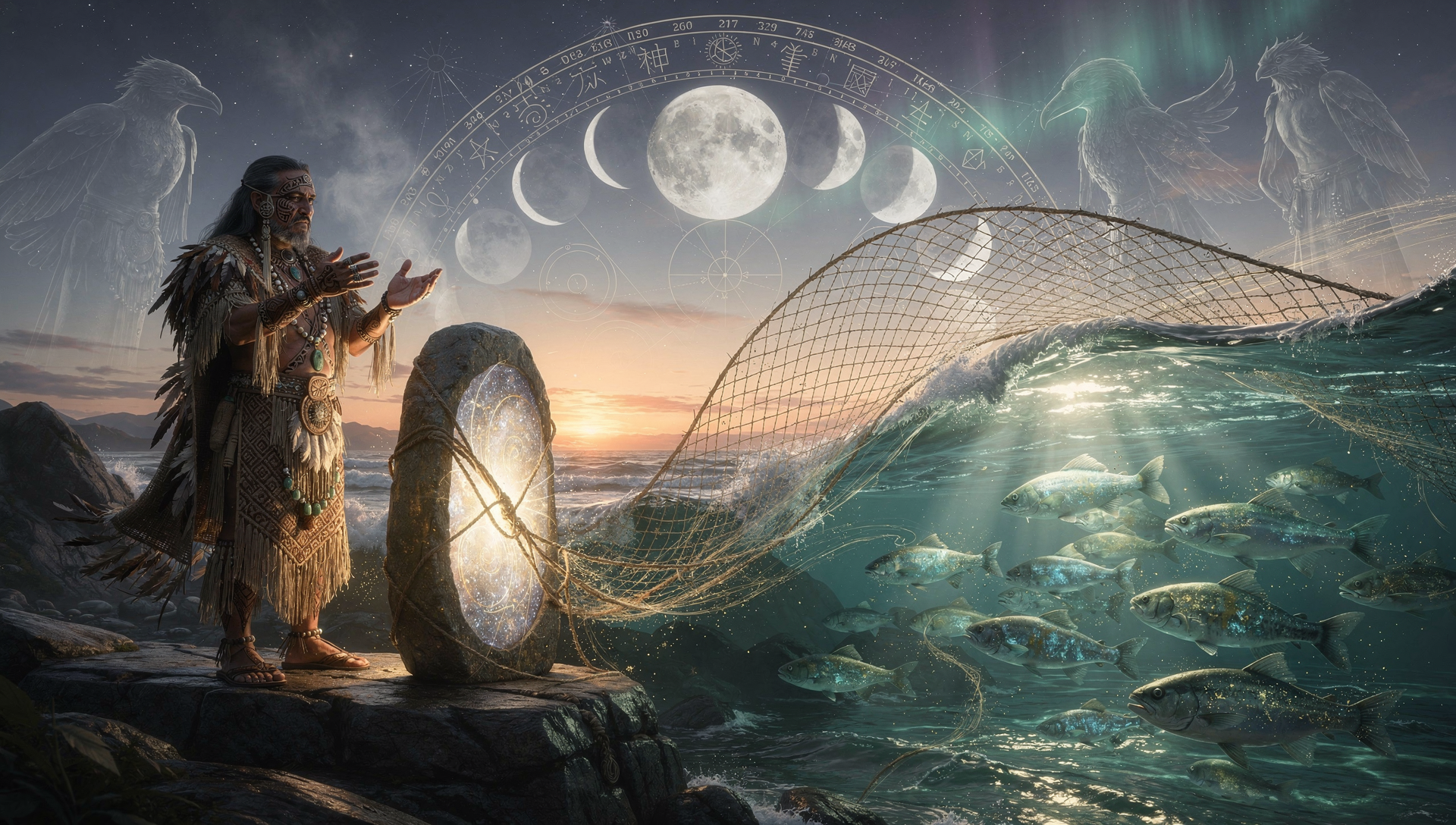
What your tūpuna already knew — in precise, operational detail:
As Te Ara records:
"The idea that mana can flow into the world through tapu and mauri underpinned most of Māori daily life."
Here is how the system works, step by step:
- Mana originates in Te Kore (the void of unlimited potential)
- Mana needs mauri (life force) to flow into the physical world
- Mauri must be protected by tapu (sacred restrictions)
- Tapu is managed by tohunga (experts) through karakia (ritual chanting)
- When the purpose is fulfilled, whakanoa returns things to noa (the everyday)
- Hau (vital essence) travels between all things, requiring utu (reciprocity) to keep the system in balance
- When balance is broken, muru (community restoration) repairs it
- The whole system is monitored by the maramataka (lunar calendar) and maintained by kaitiaki (guardians)
Sacred stones possessing mauri were placed in fishing nets, where they attracted fish. When fish arrived, Māori didn't just see fish — "they saw energy within these physical forms. The harvest of fish was the arrival of Tangaroa, god of the sea, which meant the arrival of mana."
How a child would understand it:
🧒 Imagine a river system:
- Te Kore is the glacier at the top of the mountain — where all the water starts
- Mana is the water itself — powerful, life-giving
- Mauri is the riverbed — it gives the water a path to flow through
- Tapu is the banks — they keep the water on course, prevent flooding
- Karakia is the rainfall — it feeds the river, keeps it flowing
- Noa is the flat land where the river spreads out into farms and gardens — where the water does its everyday work
- Whakanoa is the moment the river leaves the mountains and reaches the plains
- Hau is the mist that rises from the water and returns as rain — the cycle of giving and receiving
- Utu is the principle that says: if you take water, you must give something back
- Rāhui is the dam that says: "this section needs rest"
- Kaitiaki are the guardians who watch the whole system
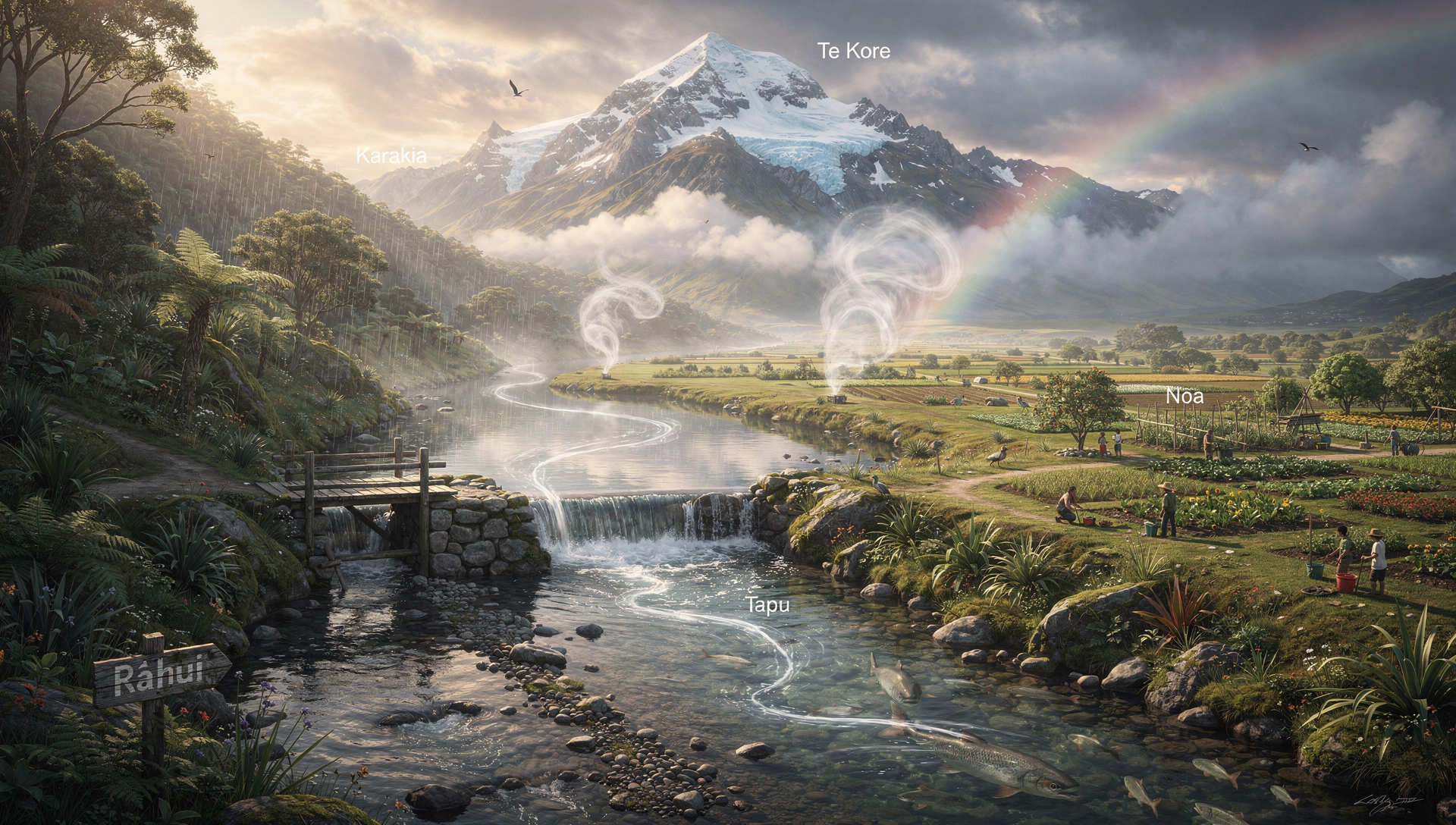
Everything is connected. Everything flows. Nothing is wasted.
17. MATAKITE — Seeing Across Time and Space
What the video says: The video mentions "quantum entanglement" and particles that are "connected across distance."
What your tūpuna already knew:
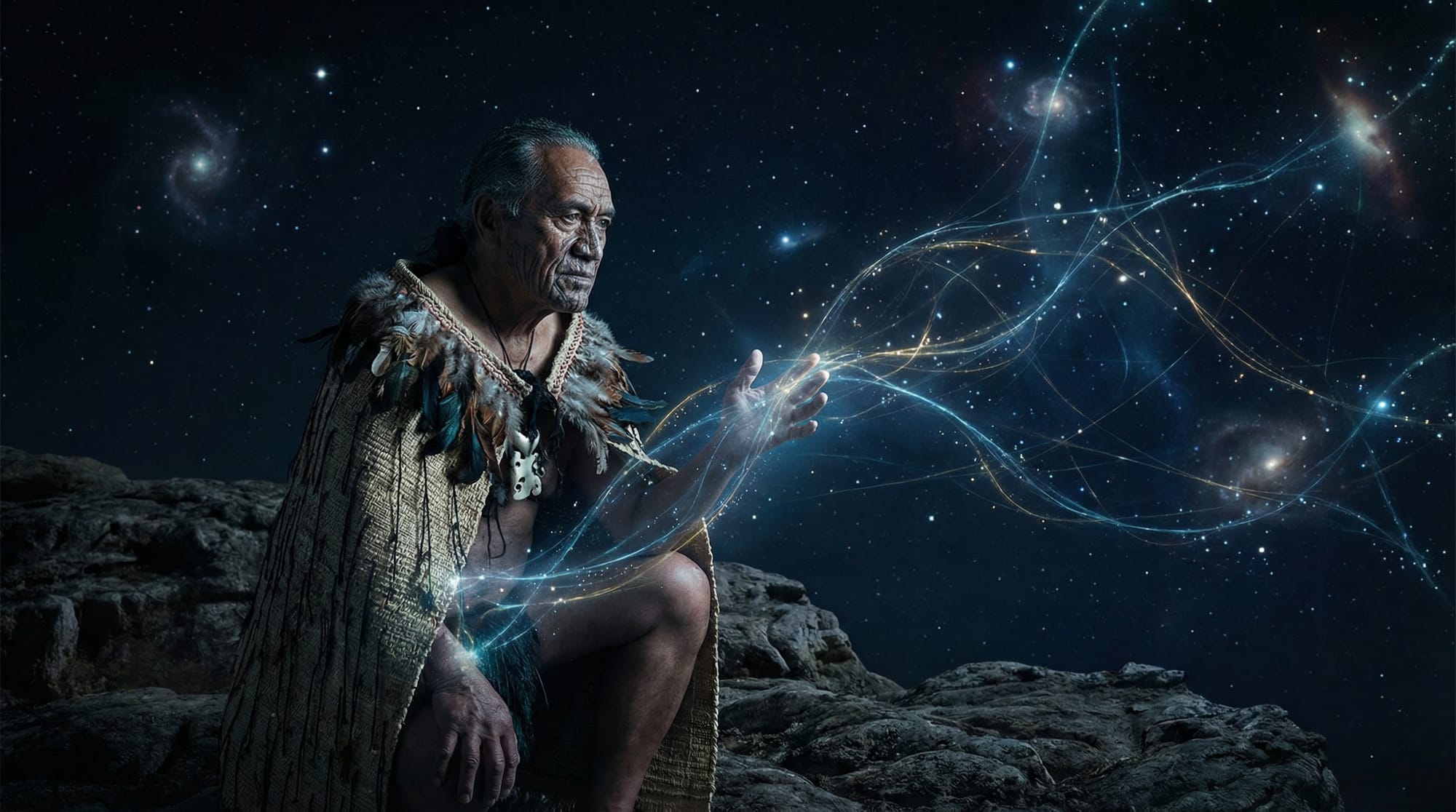
A matakite was someone who could divine information about the future, or about present events in other places. In one recorded example, a tohunga on a fishing trip announced that a young girl named Nga-ripene had died —
"her spirit had passed the bow of the boat and informed him." The group doubted his word. On their return, it was confirmed she had indeed died.
How a child would understand it:
🧒 Imagine your nan is in Rotorua and you're in Tauranga. Suddenly you get a feeling — like a cold wave — and you know she's not OK. You call her. And she says, "I fell over just five minutes ago." You knew. Not because someone told you. Because something inside you was connected to her across the distance.
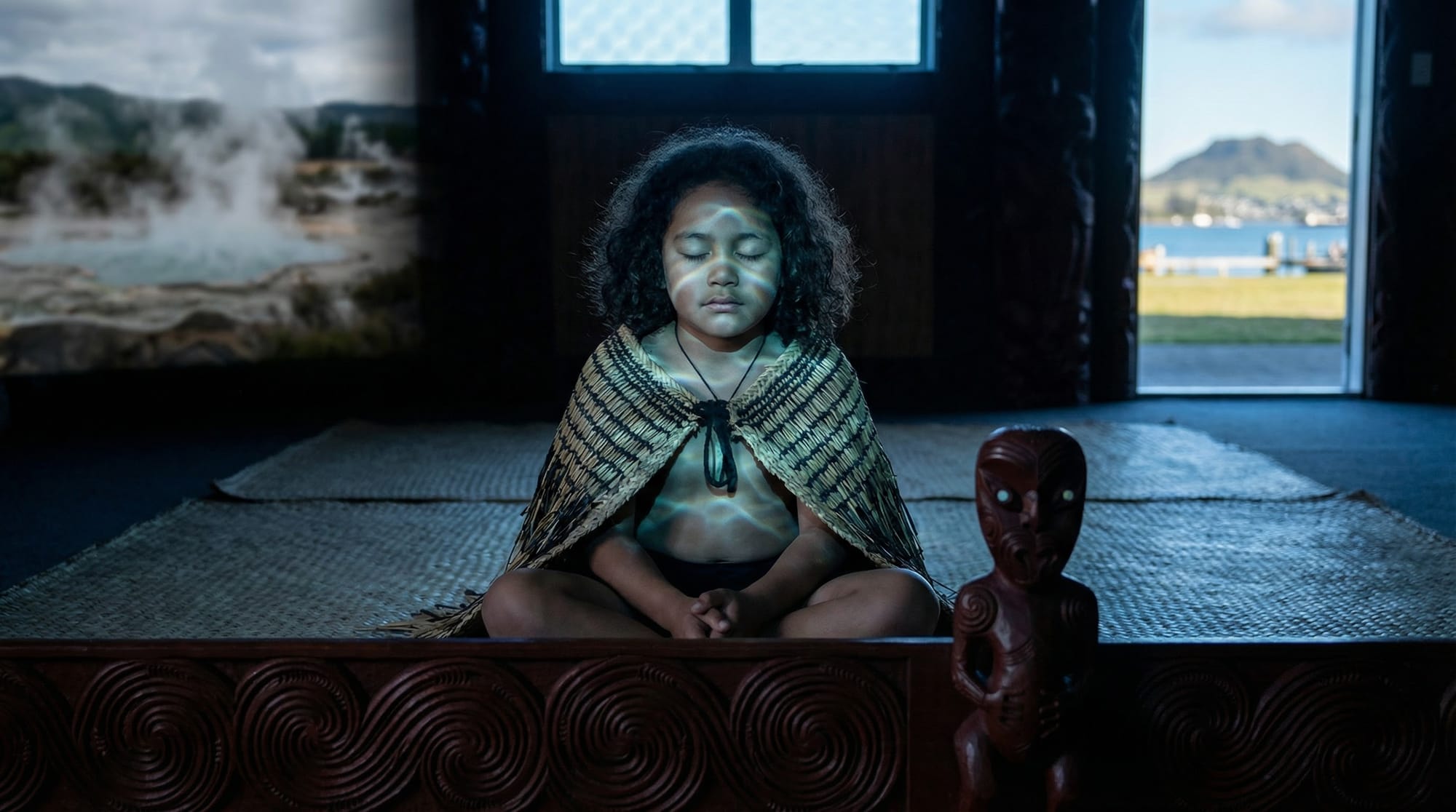
Matakite is that ability, trained and refined. Your tūpuna didn't treat it as strange. They treated it as a skill that certain people could develop through specific training in the whare wānanga.
18. TINANA — The Body Is Not Separate From Consciousness
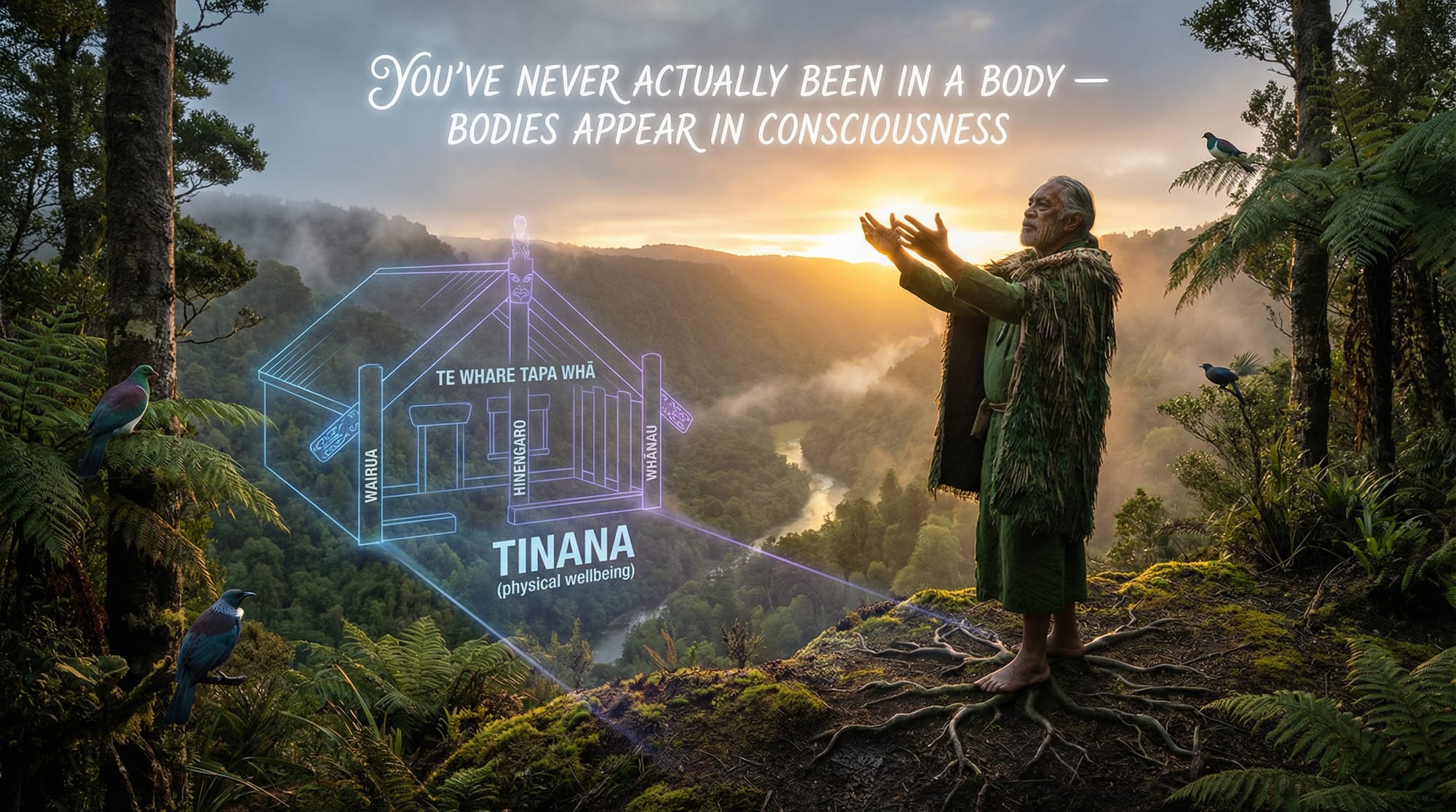
What the video says: The video says "you've never actually been in a body — bodies appear in consciousness."
What your tūpuna already knew:
In te ao Māori, tinana (the body) is one of the four walls of Te Whare Tapa Whā — but it is never separate from the other three (wairua, hinengaro, whānau). The body is not a container for consciousness. It is consciousness in physical form. As Te Ara records:
Tāne shaped Hineahuone from the soil of Papatūānuku, and "Tāne said that when the body had served its purpose, it would return to Papatūānuku. In Māori thought, humans begin with the land and end with the land."
How a child would understand it:
🧒 You are made of earth. Literally. The food you eat comes from the ground. The water you drink comes from the rain. The air you breathe comes from the trees. When your body is done, it goes back to the ground and becomes earth again — and from that earth, new trees grow, new food grows, and new bodies are made.
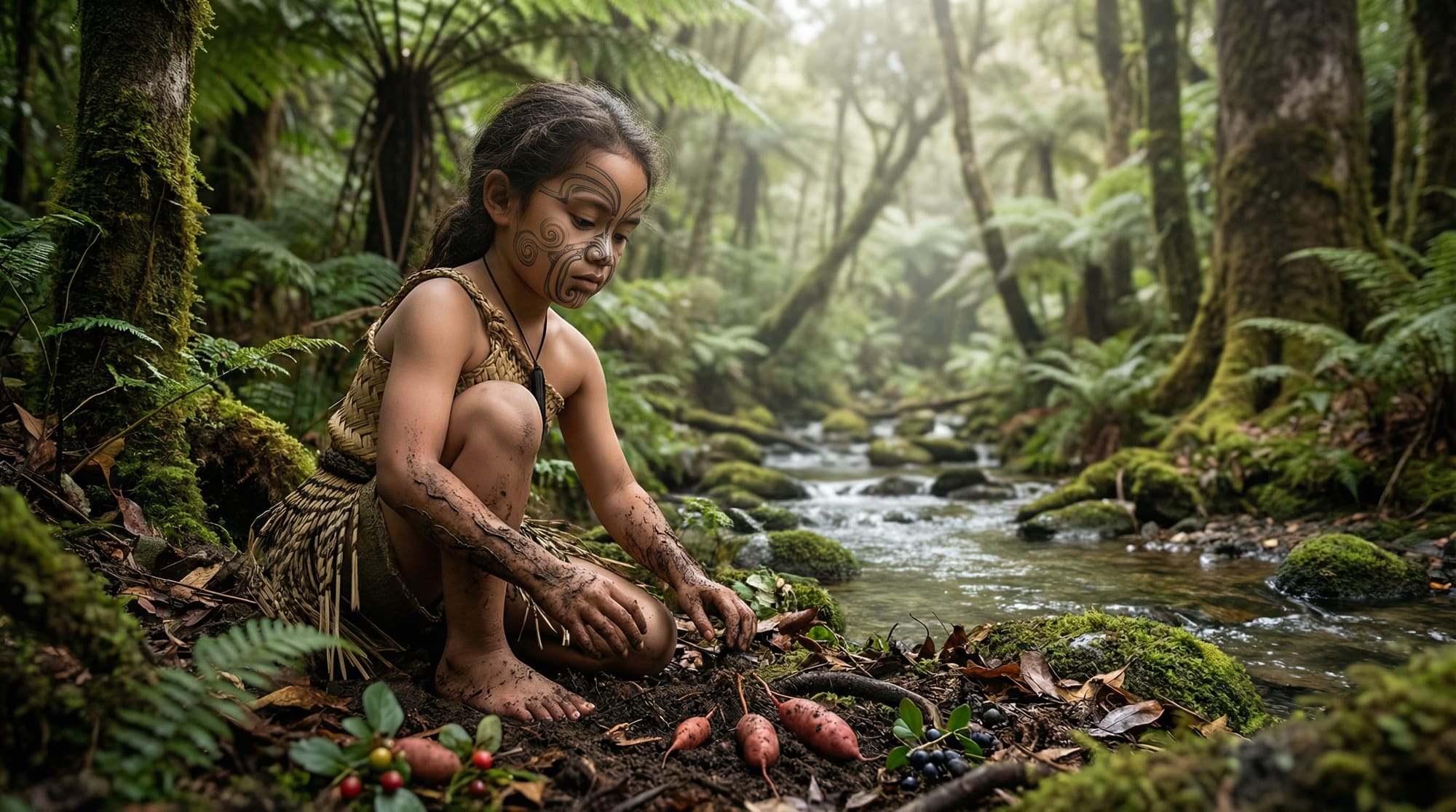
Your body is not a box you're trapped inside. Your body is the earth walking around for a while. And one day, the earth will take it back — and turn it into something new.
19. WHENUA — The Placenta and the Land Are the Same Word
What the video says: The video makes no mention of this.
What your tūpuna already knew:
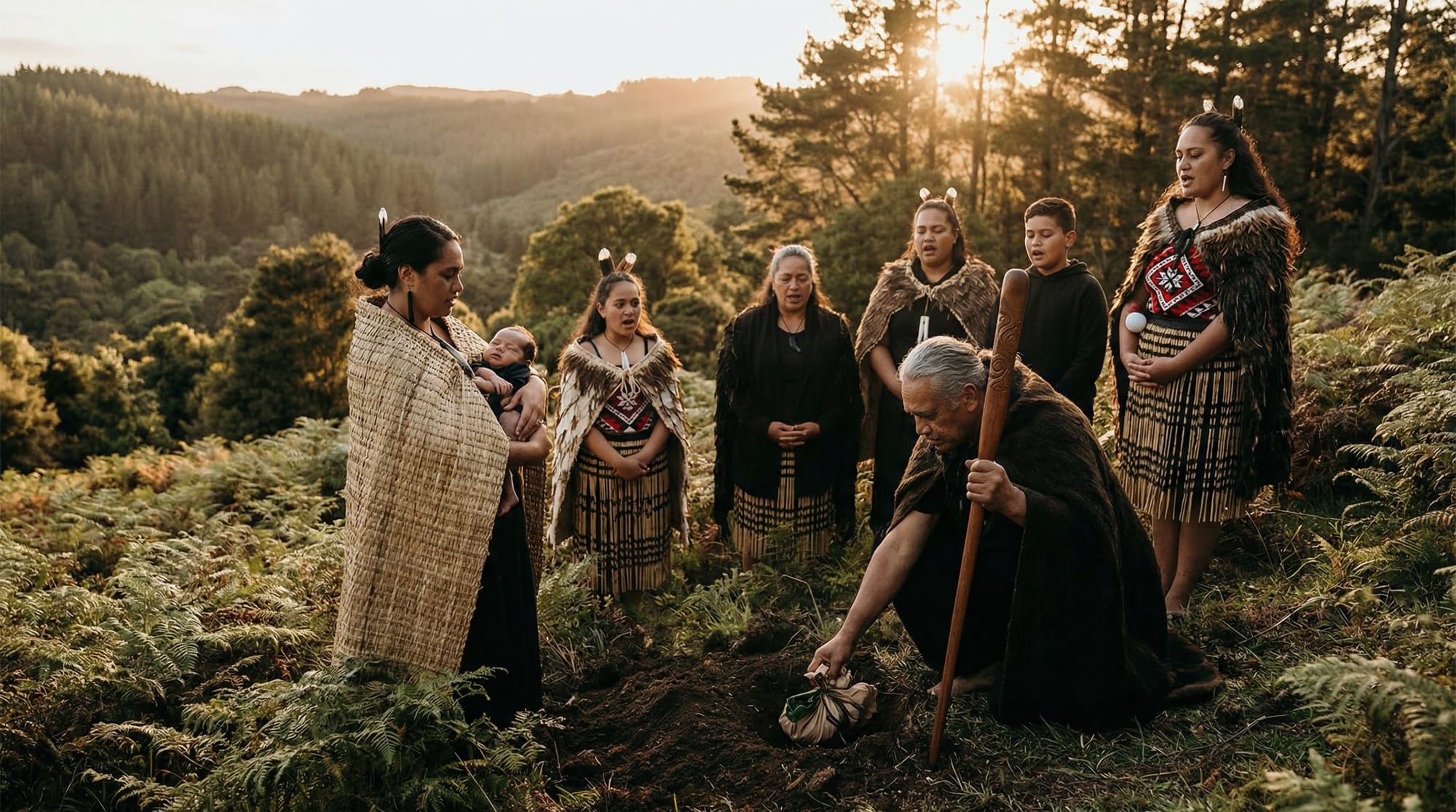
In te reo Māori, whenua means both "land" and "placenta". This is not a coincidence. The placenta nourishes the baby in the womb, just as the land nourishes the people who live on it. After birth, the whenua (placenta) is returned to the whenua (land) — buried in a special place that becomes the child's tūrangawaewae (place to stand).
How a child would understand it:
🧒 When you were born, there was a special part of your body that kept you alive inside your mum — it fed you, breathed for you, connected you to her. It's called the whenua — the placenta. And when you were born, your whānau took that whenua and buried it in the ground — in a special place that's yours forever.
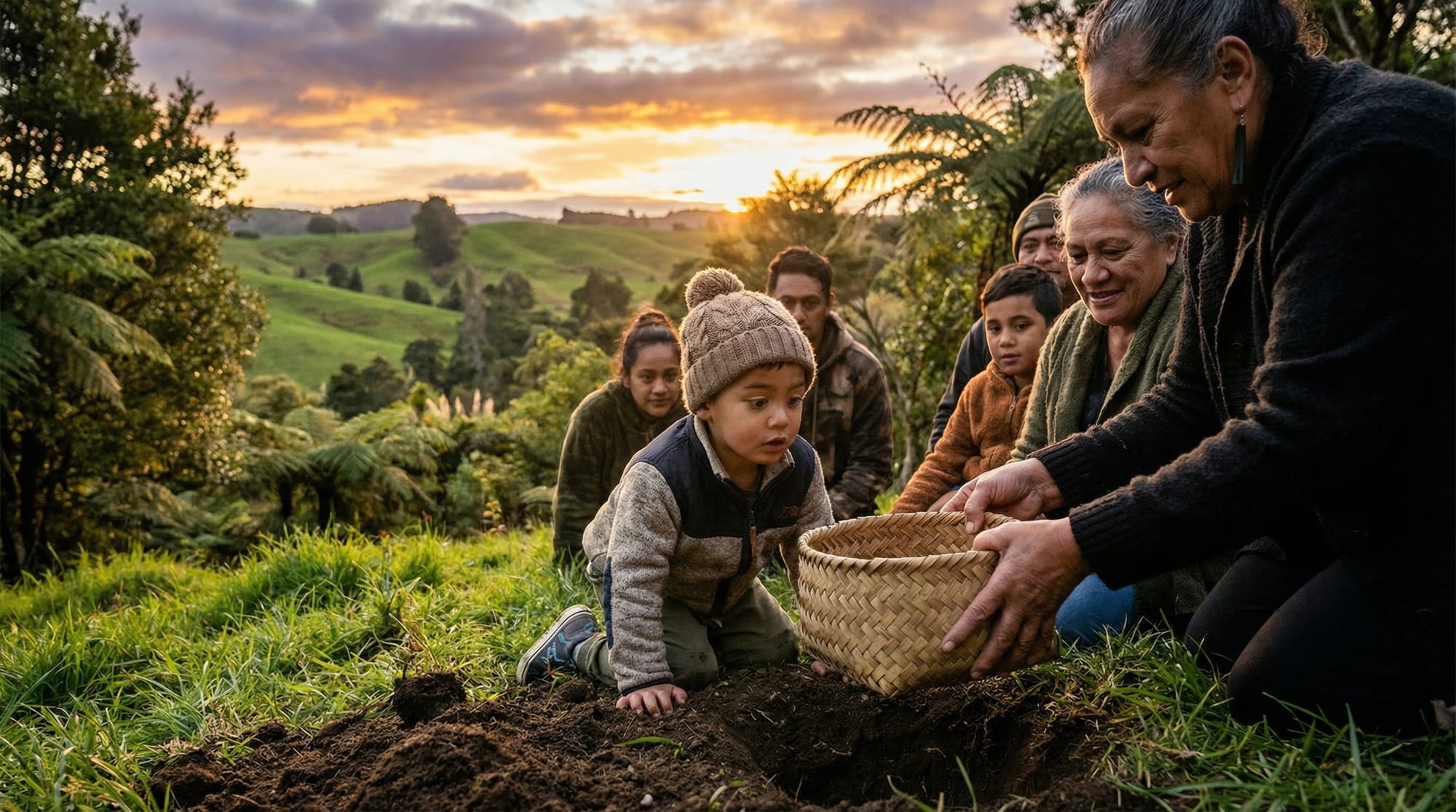
The word for that body part and the word for the land are the same word. Because in te ao Māori, your body and the earth are the same thing. You are the land. The land is you. The placenta that fed you in the womb and the earth that feeds you in the world — they are one.
Why this is the most radical thing in this entire guide: No quantum consciousness video will ever tell you this. No neuroscience paper will discover it. The fact that the Māori language uses the same word for the sac that nourishes you before birth and the land that nourishes you after birth is a complete theory of consciousness in a single word.
20. TŪRANGAWAEWAE — Your Place to Stand in the Field of Consciousness
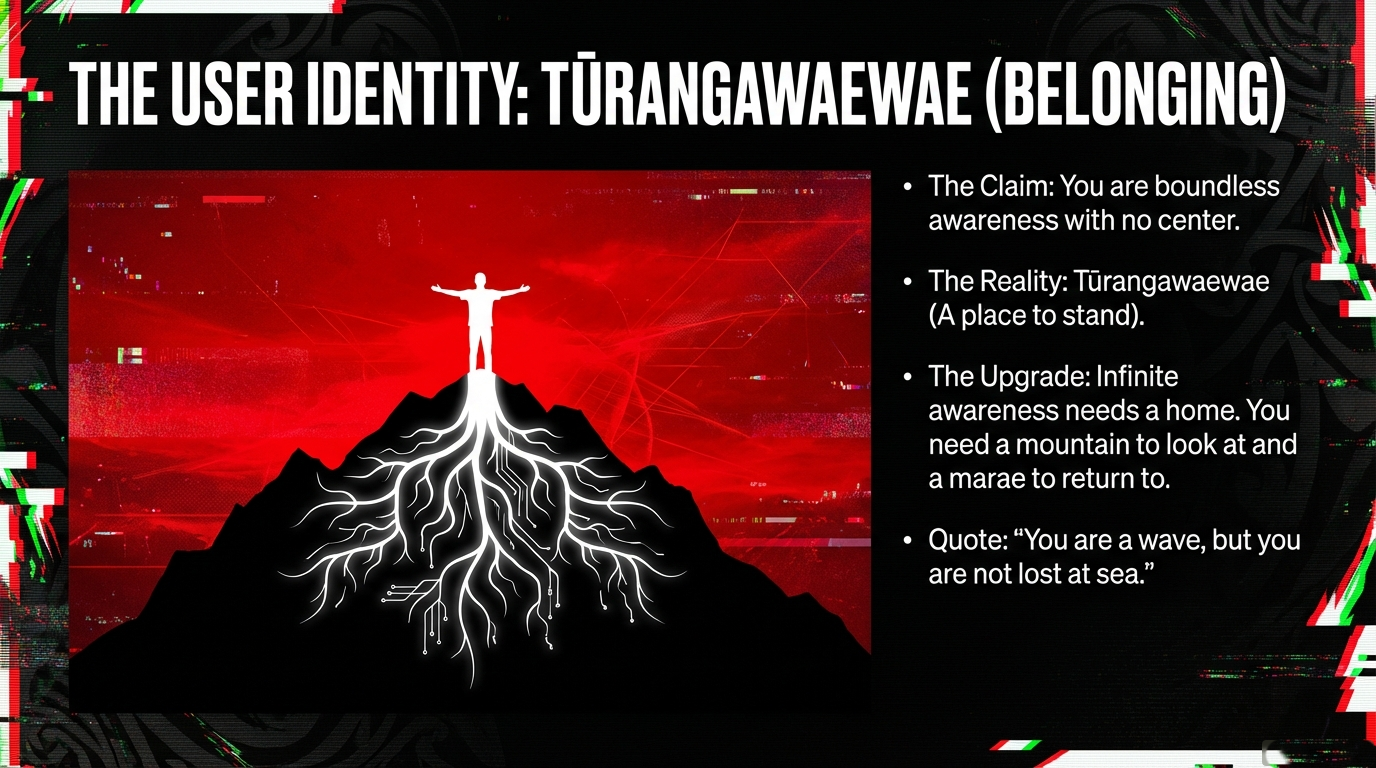
What the video says: The video says you are "boundless awareness," unfixed, without centre.
What your tūpuna already knew:
Tūrangawaewae means "a place to stand" — literally, the place where your feet have the right to be planted. Te ao Māori says: yes, you are consciousness. Yes, you are connected to everything. But you also need a place. A mountain. A river. A marae. A piece of earth where your whenua is buried. Without tūrangawaewae, you are a wave without an ocean. You are awareness without a home.
How a child would understand it:
🧒 You know how when you're at school, you have your own hook for your bag, your own desk, your own spot on the mat? It's not that the whole school isn't yours — it is. But there's one special spot that is your spot. The place where you belong.
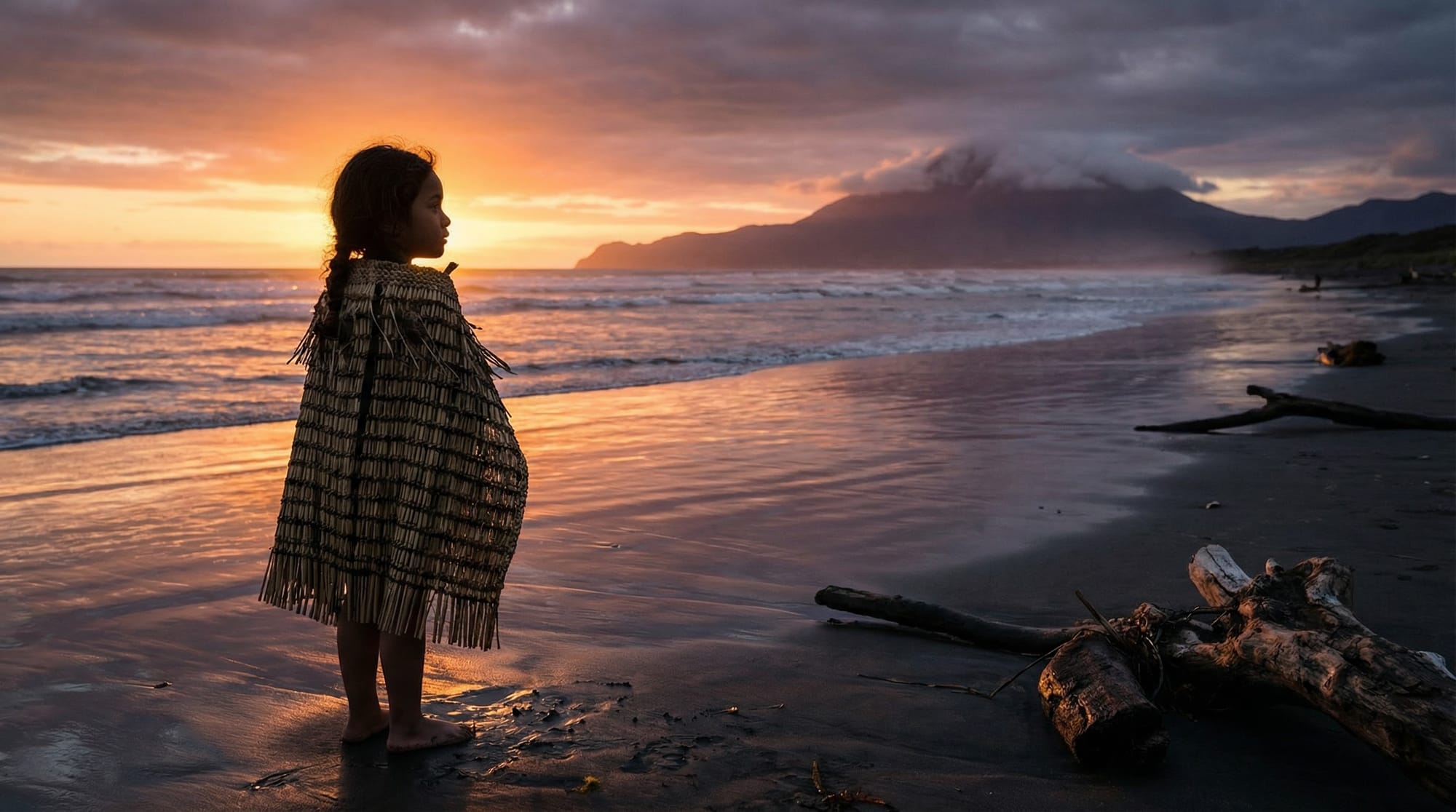
Tūrangawaewae is like that — but for the whole world. It's the mountain you can see from your nan's house. It's the river your whakapapa flows through. It's the marae where your tūpuna are carved into the walls. When someone asks "where are you from?", you don't say "I'm from boundless awareness." You say: "Ko Mauao tōku maunga. Ko Tauranga tōku moana." You name your mountain. You name your sea. You plant your feet.
Why this completes the picture: The video says you are everything and nothing. Te ao Māori says: you are everything and nothing — and you have a home. Consciousness without tūrangawaewae is unanchored. It floats. It gets lost. Your tūpuna understood that even infinite awareness needs a mountain to look at, a river to drink from, and a marae to return to.
THE COMPLETE MAP: VIDEO CONCEPTS → MĀORI EQUIVALENTS
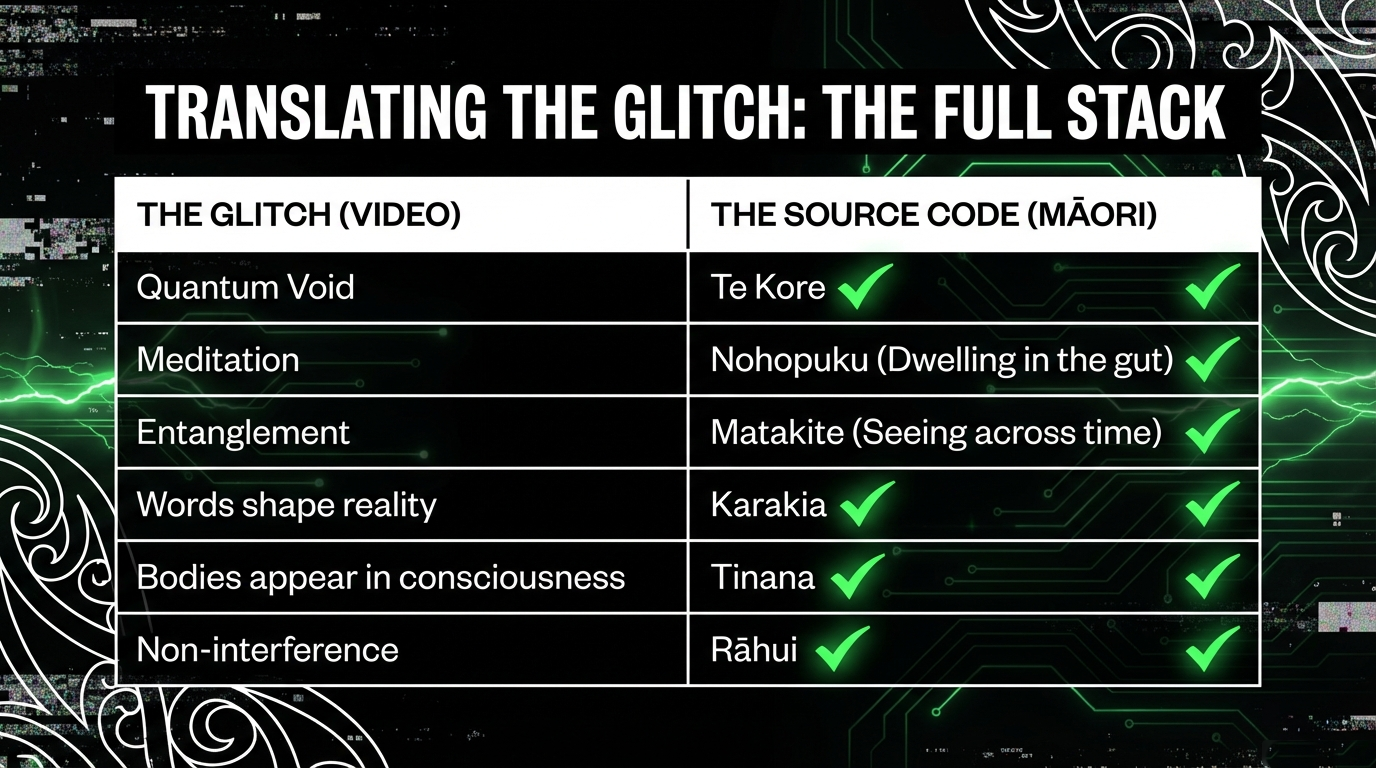
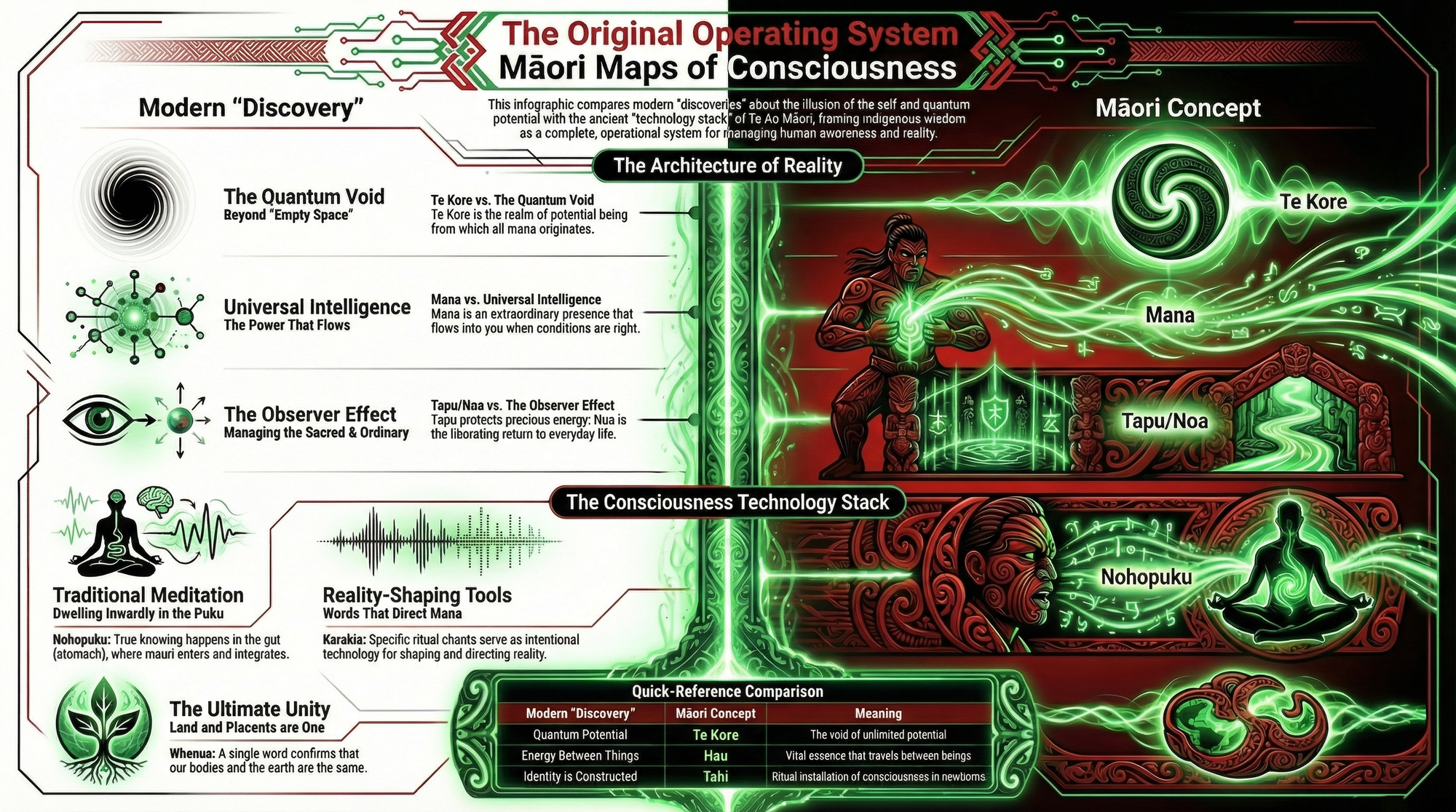
| Video "Discovery" | Māori Concept | What It Actually Means |
|---|---|---|
| Empty space is full of energy | Te Kore | The void of unlimited potential — source of all mana |
| A "larger intelligence" acts through you | Mana | Divine power that flows from atua into the world |
| The self must be "quieted" | Tapu | Sacred restriction that protects mana |
| Return to ordinary life | Noa | Freedom from restriction; the everyday |
| Transition from meditation to life | Whakanoa | Specific rituals for safe transition between states |
| Energy travels between things | Hau | Vital essence that moves between beings |
| Karma / cause and effect | Utu | Reciprocity; the universe seeking balance |
| Community healing | Muru | Ritualised restoration of equilibrium |
| Meditation dissolves the self | Nohopuku | Dwelling inwardly, in the puku |
| Consciousness anchors in matter | Mauri stones | Physical objects that anchor life force |
| Non-interference restores natural state | Rāhui | Temporary sacred boundary for recovery |
| You are a vessel for consciousness | Waka atua | A person through whom a god speaks |
| "Profound peace and passionate engagement" | Ihi, Wehi, Wana | Three stages of awe and aliveness |
| Words shape reality | Karakia | Ritual chanting that directs mana |
| Identity is constructed | Tohi | Ceremony installing consciousness in a newborn |
| The field of consciousness | Flow of mana | Complete operating system: Te Kore → Mana → Mauri → Tapu → Noa |
| Quantum entanglement | Matakite | Seeing across time and space |
| "Bodies appear in consciousness" | Tinana | The body as earth walking; begins and ends with land |
| (Not mentioned) | Whenua | Placenta and land are the same word |
| "Boundless awareness" | Tūrangawaewae | Even infinite awareness needs a place to stand |
A FINAL WORD FOR THE BEGINNER
If you've read this far and you're just starting your journey into te ao Māori, here is the simplest thing to understand:
The video says you are not who you think you are. Te ao Māori says you are more than you could ever think.
You are your whakapapa. You are your whenua. You are your wairua. You are the mauri that hums through every atom in your body. You are the hau that travels between you and everyone you love. You are tapu — precious beyond measure. And you are noa — free to live, to eat, to laugh, to play, to work, to rest.
You don't need a $29.99 book to understand this. You need a marae, a karakia, a nan who knows the old stories, and the courage to listen.
Haere mai ki te ao Māori. Welcome. You already belong here.
The Māori Green Lantern Has Written About This Before
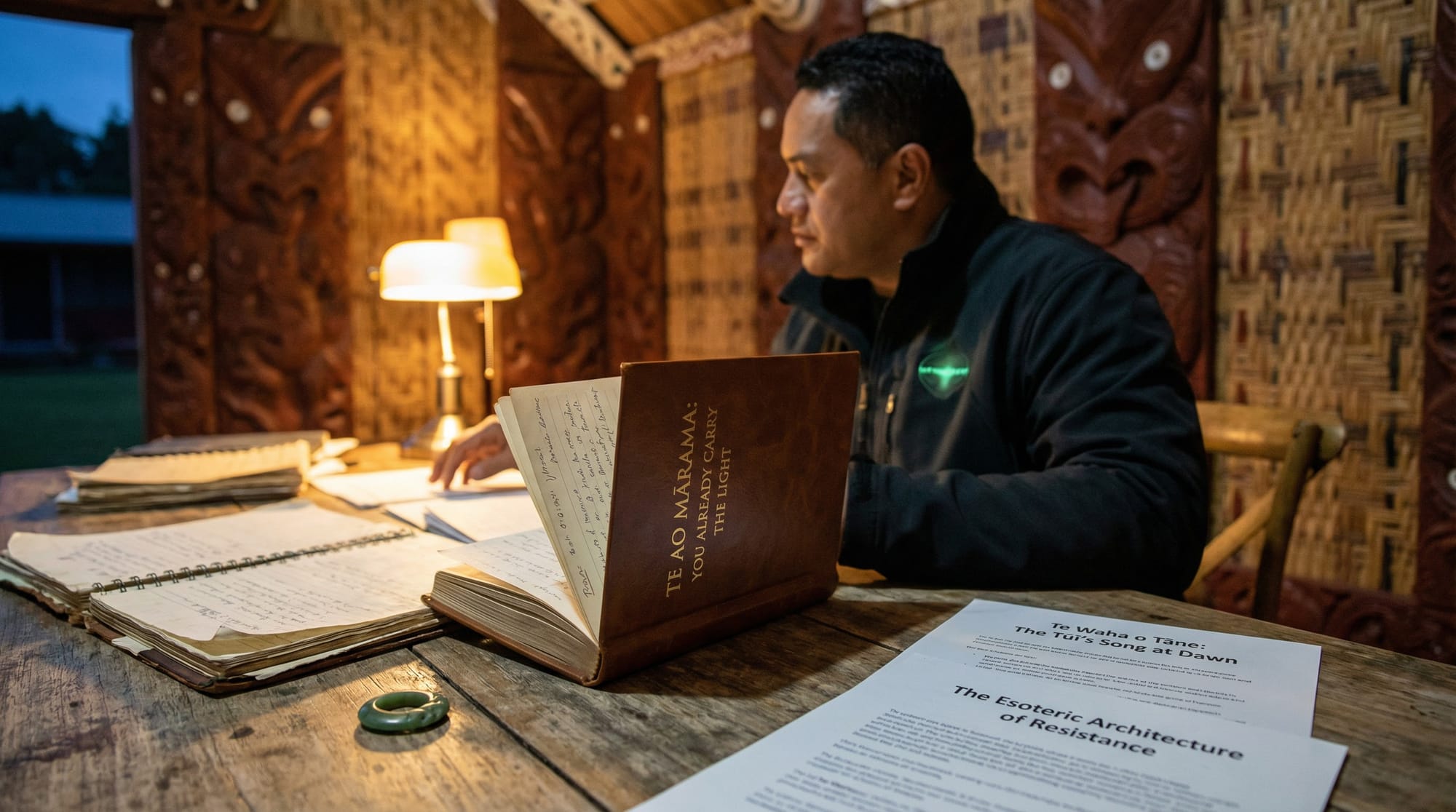
"TE AO MĀRAMA: YOU ALREADY CARRY THE LIGHT" — the companion essay to this guide, explaining twelve Māori concepts in practice through real-world examples from marae, health services, and community.
"Te Waha o Tāne: The Tūī's Song at Dawn" — the tūī's two voice boxes as a model for the simultaneous existence of multiple realities.
"The Esoteric Architecture of Resistance" — how Te Kore, Te Pō, and Te Ao Mārama dismantle neoliberal consciousness frameworks.
Koha Consideration
Every koha builds the bridge between mātauranga and the next generation — translating the flow of mana into language a tamaiti can hold, a beginner can walk, and a tohunga would recognise.
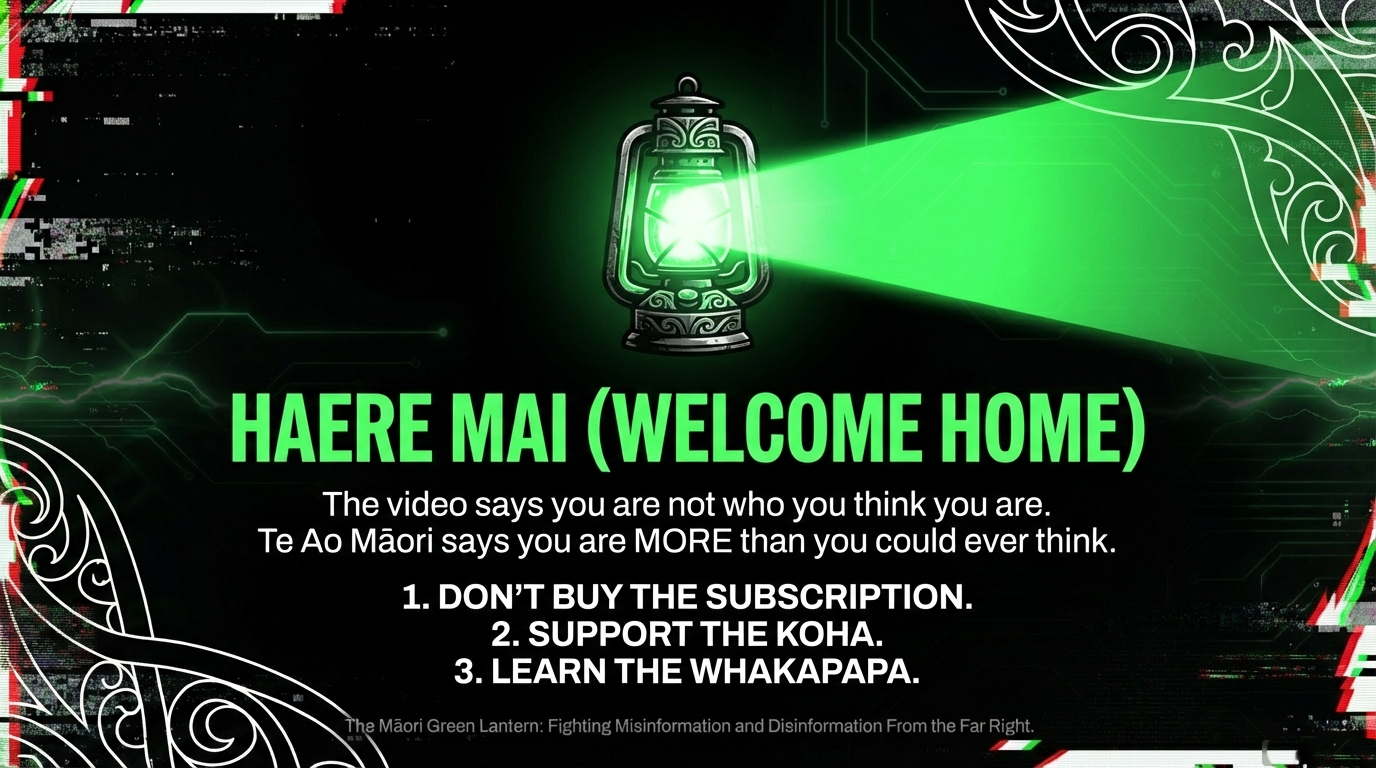
It signals that rangatiratanga includes the power to teach our own people their own consciousness technology — without subscriptions, without paywalls, without $29.99 quantum branding. Just whakapapa, karakia, and the courage to say: our tūpuna were right.
Kia kaha, whānau. Stay vigilant. Stay connected. And if you are able, consider a koha to ensure this guide reaches every classroom, every kura, every whānau who needs it.
If you are unable to koha, no worries! Subscribe or follow The Māori Green Lantern on Ghost or Substack, kōrero and share with your whānau and friends — that is koha in itself. Every share is a karakia the Suppression Act could not silence.
Three pathways exist:
For those who wish to support this mahi directly with a koha (voluntary contribution), please visit the Koha platform:
Koha — Support — https://app.koha.kiwi/events/the-maori-green-lantern-fighting-misinformation-and-disinformation-ivor-jones
For those who wish to receive essays directly and support through subscription:
Subscribe to the Māori Green Lantern — https://www.themaorigreenlantern.maori.nz/#/portal/support
For those who prefer direct bank transfer, account details are:
HTDM, account number 03-1546-0415173-000.
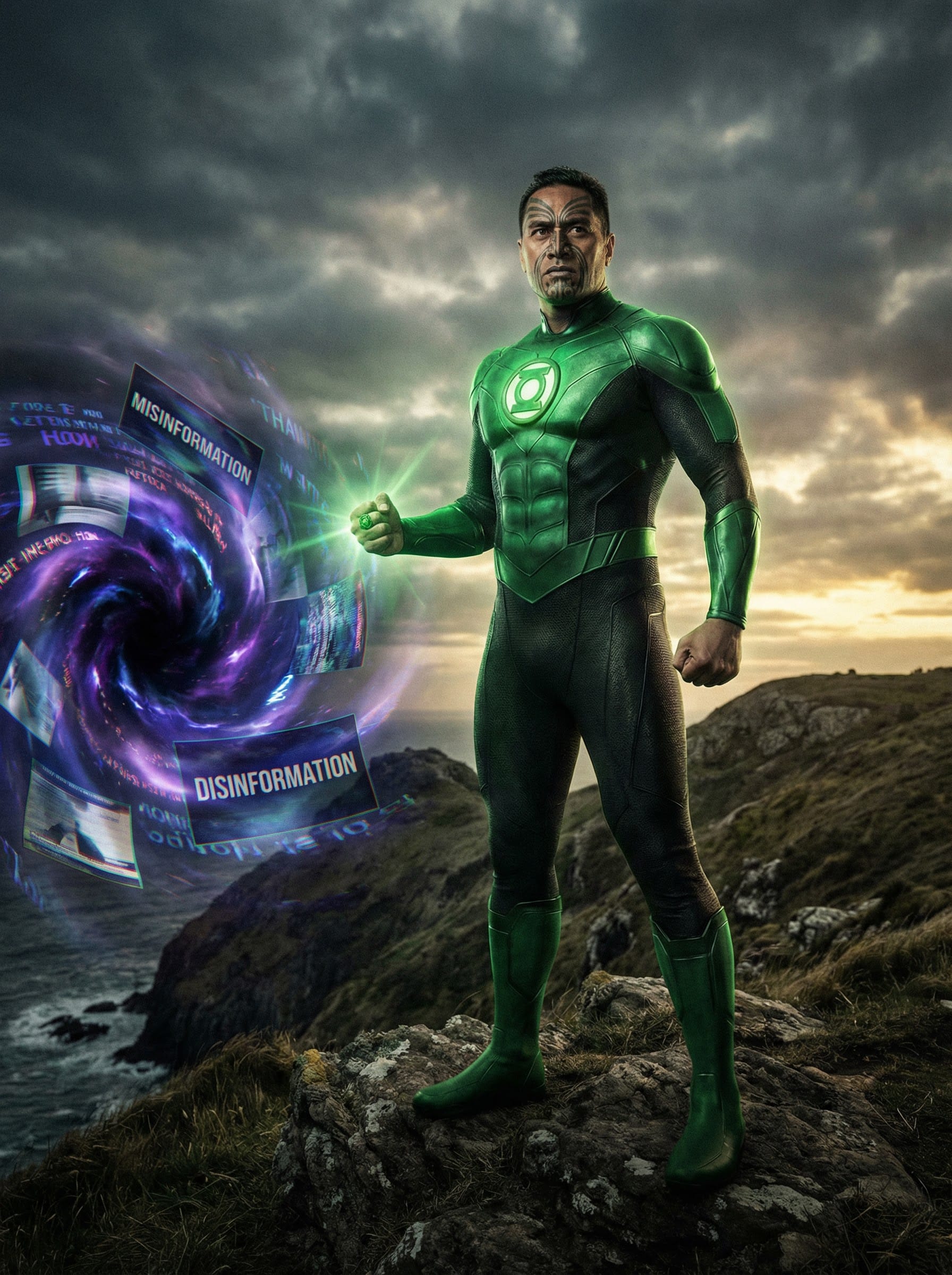
Ivor Jones The Māori Green Lantern Fighting Misinformation and Disinformation From the Far Right
Research Transparency: This essay was researched on 19 February 2026 using Te Ara — the Encyclopedia of New Zealand (multiple articles on traditional Māori religion, Te Ao Mārama, kaitiakitanga, Papatūānuku, Māori education, Māori manners), the Waitangi Tribunal Mana Wāhine Kaupapa Inquiry evidence briefs (tapu, noa, mana, utu), NZ Ministry of Health Māori Health Models, the Intellectual Property Office of NZ (concepts of tapu and noa), Mana Mokopuna/Traditional Māori Parenting research, MAI Journal (tapu and noa as gender negotiators), Whiti Te Rā wellbeing pathways guide (ihi, wehi, wana), Whiria Te Ako framework (NZ Institute of Skills and Technology), RNZ archives, and the full transcript of "You Are Not Who's Behind Your Eyes" (Quantum Nexus, YouTube, September 2025). Sources consulted: 60+. All URLs verified at time of research.