“Health NZ Apologises to the Nurses’ Union: Accountability, Power, and the Struggle for Mauri Ora” - 4 September 2025
When Data Is Denied – Māori Nurses Fight For Truth and Tikanga Amid Bureaucratic Injustice
Mōrena koutou,
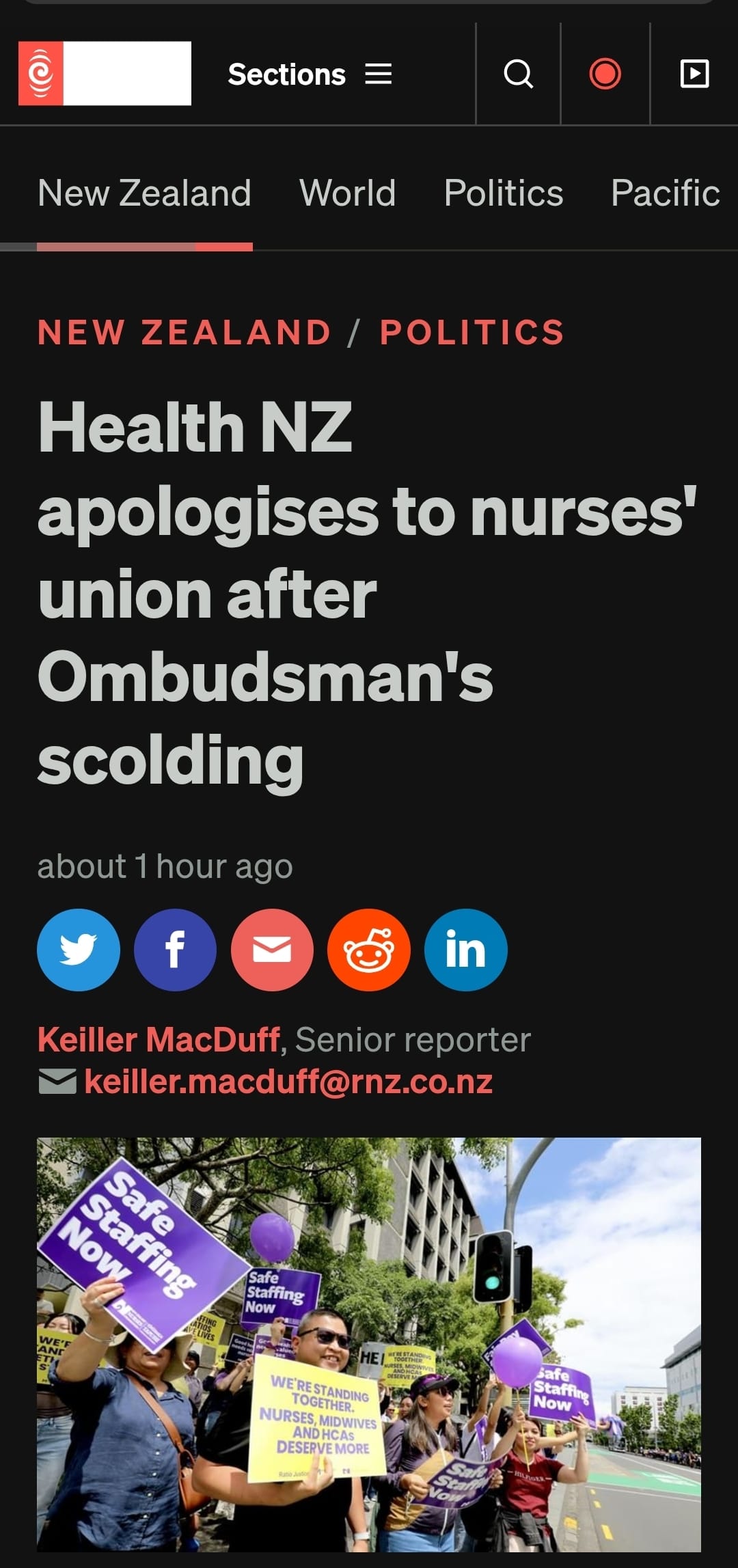
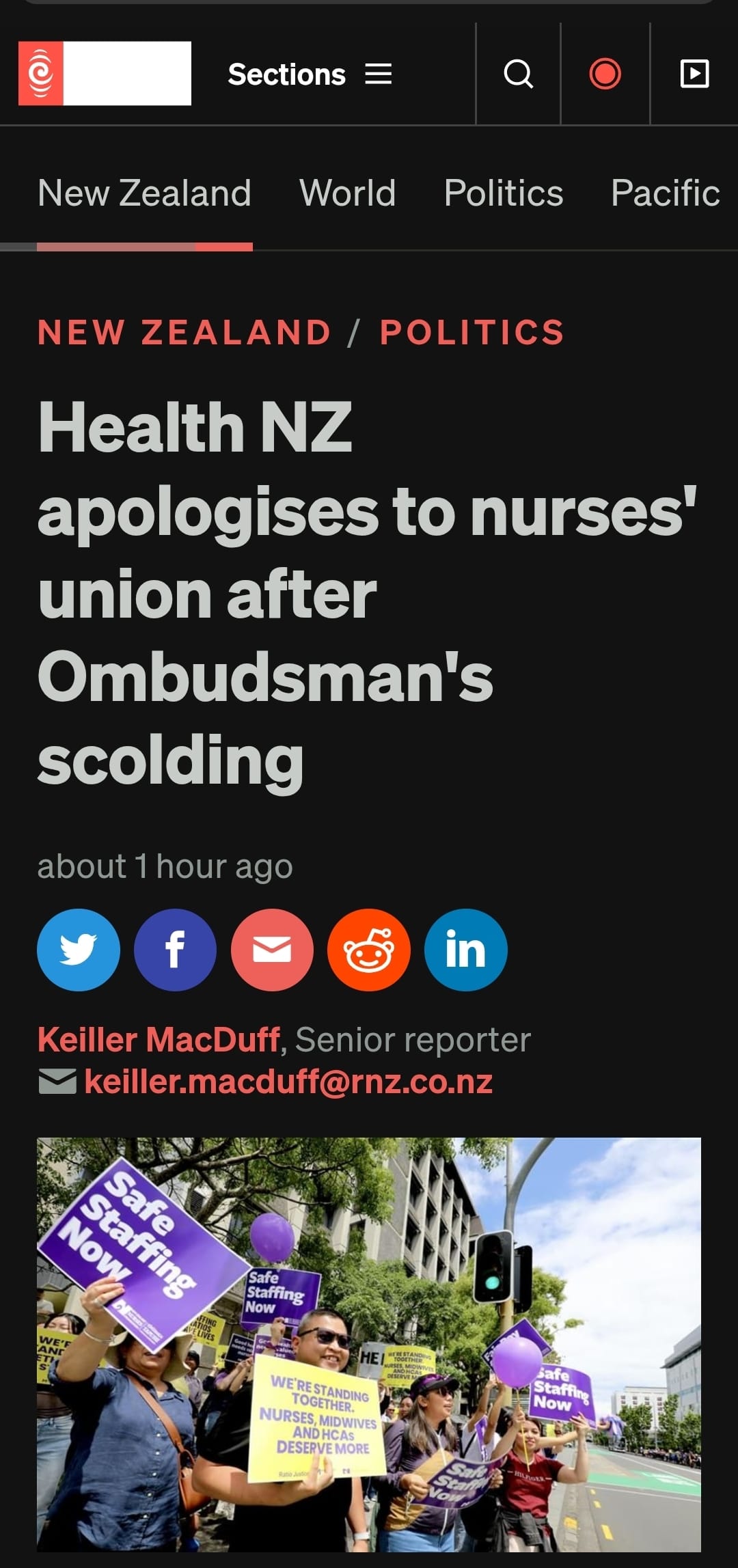
This essay explores the recent controversy surrounding Health New Zealand (Health NZ) and its apology to the nurses' union, framed by the Ombudsman’s scathing critique of the agency’s failure to release critical staffing data. At its core, this episode reveals not only the systemic disregard for transparency and due process, but also how the struggle for staffing fairness is a Māori struggle for justice, whakapapa, and mauri ora. The apology by Health NZ was triggered after the Ombudsman established their refusal to release information about staffing shortages was both unreasonable and motivated by opaque political interests. The withheld data—finally released after over a year—exposed the chronic understaffing permeating Health NZ facilities, with more than half of day shifts and a third of evening shifts lacking adequate staff. For Māori, especially Māori nurses and kaimahi hauora, these issues are inseparable from the wider fight against colonisation, racism, and neoliberal exploitation within New Zealand’s health bureaucracy. This essay will dissect the background to the dispute, expose the tactics and language used by official authorities, and analyse the wider implications for our communities.
https://www.rnz.co.nz/news/national/571975/health-nz-apologises-to-nurses-union-after-ombudsman-s-scolding
Background: The Struggle Over Official Information – Defining the Terms and Stakes
At the heart of the controversy sits the Official Information Act (OIA)—a piece of legislation grounded in the principle that government-held information should be accessible for public scrutiny unless a legitimate reason for non-disclosure exists. The OIA requires agencies to respond to information requests “as soon as reasonably practicable,” and no later than 20 working days after the request is received. In this incident, the New Zealand Nurses Organisation (NZNO) sought nationwide staffing data broken down by district, requesting figures on under-staffed shifts from Health NZ’s Care Capacity Demand Management System. This information isn’t abstract: It shapes collective bargaining, workforce planning, and, most pointedly, the ability of Māori nurses and communities to hold the health bureaucracy to account for failures in equitable service delivery. The Ombudsman—the independent office monitoring government conduct in relation to requests for official information—plays a crucial watchdog role, flagging abuses and delays that undermine rangatiratanga and democratic participation.
The terms “understaffing,” “delayed response,” and “negotiation prejudice” have been used strategically by Health NZ to dodge transparency. For Māori, terms like “kaimahi hauora,” “tikanga,” and “whanau ora” bring our own worldview and values into the debate, reminding the institutions that Māori health workers are not just numbers but people upholding mana, whakapapa, and the wellbeing of their communities. The historical significance of this battle is profound, echoing decades of Māori resistance to colonial silencing, data suppression, and “official” misrepresentation—a tactic the state has wielded since the imposition of Pākehā bureaucracy upon our tupuna.
Bureaucratic Stonewalling, Political Motivations, and the Importance for Māori
Health NZ’s actions—delaying, refusing, and ultimately only partially honouring the NZNO data request—have prompted both public outrage and formal condemnation from the Ombudsman. The Ombudsman found that Health NZ’s reasons for withholding information were “unreasonable,” especially their claim that releasing the data would threaten their bargaining position in negotiations—a rationale that was unsupported by any evidence. The refusal persisted despite repeated follow-ups from NZNO strategic researcher Nathalie Jaques, highlighting not only incompetence but a deliberate strategy to stifle advocates from accessing information that would embolden their fight for better pay and conditions.
For Māori, understaffing in hospitals and other healthcare settings compounds longstanding health system inequities. The consequences are felt directly in the disproportionate workloads shouldered by Māori nurses, midwives, health care assistants, and their whānau. The lack of transparency over staffing levels obstructs collective bargaining and undermines efforts to address systemic racism, pay inequalities, and culturally unsafe work environments. The issue goes beyond a technical breach of legislation: It attracts the spectre of colonial power wielded against our right to data sovereignty, to self-determination, and to truth.

Empty hospital ward symbolizing understaffing
Health NZ’s OIA Breaches: Obfuscation and Systemic Failure
The Ombudsman’s verdict was uncompromising, condemning Health NZ’s refusal to supply the requested data as contrary to both the letter and spirit of the law. Despite statutory obligations, Health NZ repeatedly delayed, extended the response timeline, and ultimately cited section 9(2)(j) of the OIA, suggesting the information could harm their negotiations. The Ombudsman dismissed this as baseless, noting that Health NZ “could not see how the release of [staffing] information would have prejudiced... negotiations”, and accusing the agency of stretching out the process to buy time or evade scrutiny. This aligns with a pattern, as past Ombudsman Peter Boshier previously criticised Health NZ’s OIA policies as “inherently contrary to law,” referring to the agency as “the naughty child” of the public sector for its recurring non-compliance (RNZ News, RNZ News).
This bureaucratic stonewalling is not just an inconvenience—it is an exercise of colonial power denying Māori and unionised workers access to the data needed for accountability. The implication is clear: when the state controls the flow of information, it weaponises secrecy to maintain the upper hand in negotiations, further entrenching neoliberal labour relations where bottom lines trump collective wellbeing. While Health NZ manager Danielle Coe eventually apologised for this “frustration,” offering assurances about “pro-actively strengthening its processes,” the apology feels like a rote act of damage control—something Māori and our unions have seen too many times before (RNZ News).
The Impact of Understaffing Data Suppression on Nurses and Communities
The actual data, when finally released, was damning: More than half of all day shifts and more than a third of evening shifts across the country’s hospitals were understaffed between January and November last year. The impact on Māori workers and whānau is dire. Hospitals stretched thin cannot deliver culturally safe care or uphold the principles of tikanga. Burnout among Māori staff exacerbates workforce shortages, creating dangerous feedback loops that jeopardise patient outcomes and amplify health inequities (RNZ News).
The withholding of this information impeded the NZNO’s ability to campaign effectively, negotiate for better conditions, and inform their members—especially those Māori and Pacific nurses who are often the most overworked and undervalued in the system. Health NZ’s subsequent release of data under the Employment Relations Act came with strings attached: strict confidentiality, meaning the union could not disseminate the information publicly or to members, thereby blunting the data’s impact on organising and advocacy (RNZ News).
Māori Values in the Face of Bureaucratic Contempt
For Māori, health advocacy is never just about policy reform or bureaucratic process. It is a continuation of the fight to reclaim mana motuhake and kaitiakitanga in how our communities are treated, represented, and resourced. The deliberate delay and refusal to release the data affront the values of tika (fairness), pono (honesty), and aroha (compassion) that underpin Māori understandings of public service. Tikanga Māori demands transparency in decisions affecting whānau, especially when those decisions are about life, death, and wellbeing in our hospitals and clinics.
Kaupapa Māori research and activism—embodied by NZNO Māori staff and kaimahi hauora—rests on the principle that information must be shared, not hoarded, and that collective decision-making enhances mauri ora for all. The exclusion of Māori voices and data from negotiations signals a continued disregard for Treaty principles and for our right to shape the health system from within, rather than be dictated to from above.
Language, Rhetoric, and the Shaping of Public Perception
The official language wielded by Health NZ throughout the debacle is telling. Phrases like “finalising the remainder of information,” “waiting for information,” or “prejudice or disadvantage negotiations,” form a bureaucratic shield, sterilising the human impact behind abstract terminology. The bureaucratic tendency is to treat Māori nurses and health workers as statistics, numbers on a spreadsheet, rather than as tangata whenua, guardians of mauri ora. This type of institutional speak not only obscures the systemic injustice experienced by Māori nurses but also makes it easier for officials—and, by extension, Pākehā-dominated media outlets—to downplay the severity of the crisis, treating the request for information as an administrative nuisance rather than a matter of justice.
White supremacist and neoliberal propaganda further warp the conversation, casting collective Māori action—such as union strikes and advocacy for safe staffing—as “disruptive,” “threatening,” or “politically motivated.” These narratives, threaded through sections of the media and official statements, weaponise the old colonial tropes to paint Māori and union advocates as unreasonable or self-interested, when in truth it is the system itself refusing to meet basic standards of fairness and transparency (RNZ News).
Hidden Connections: Race, Class, and the Structure of Health Power
Inside the struggle over Health NZ’s apology lies an intricate web of relationships: between nurses, bureaucrats, union representatives, Ombudsmen, and government ministers. Māori are disproportionately represented in front-line health roles but largely excluded from positions of managerial and executive power—a racist legacy of colonisation. The continued failure to release information in a timely manner is a form of structural violence, minimising Māori capacity to organise, build solidarity, and demand accountability.
This issue intersects sharply with class and gender. Māori women are the backbone of the nursing workforce, simultaneously experiencing racial, gendered, and economic oppression. The fight for safe staffing is a fight for whānau and hapū wellbeing, not only for workforce fairness but for the survival of Māori knowledge and care practices inside sterilising colonial institutions. When the NZNO is denied access to data, it is Māori families who suffer the consequences—with overworked nurses unable to offer the relational, holistic care that tikanga demands.
Counterarguments and Their Failings
Health NZ’s defenders may argue the agency’s reluctance to share data was a matter of protocol, necessary to protect negotiation leverage or to comply with legal statutes. The Ombudsman’s report eviscerates this claim, finding Health NZ provided neither a compelling rationale nor evidence for the supposed risk to negotiations. The report uncovers a hollow core to the bureaucratic reasoning, bolstered only by stalling tactics and superficial apologies. Critics of union action who claim the NZNO is using the process for political purposes reveal their own bias—ignoring the reality that transparency and accountability are foundational, not optional, in public sector negotiations.
Implications: The Battle for Tikanga and Justice in Health NZ’s Wake
The apology—while significant as an admission of wrongdoing—arrives with limited practical impact. Māori and union members are left wondering how many future requests will be similarly obstructed, and whether Health NZ’s pledges to reform its information processes are anything more than PR spin. The health of Māori communities is at stake, with systemic understaffing threatening safe care, fair workloads, and the ability of Māori nurses to uphold tikanga and whānau ora. The Ombudsman’s repeated chastisement of Health NZ should prompt not only reform within the agency but a broader reckoning across the public sector with how Māori rights, transparency, and justice are so readily subordinated to bureaucratic convenience.
The release of damning staffing data just ahead of another nationwide strike by 36,000 NZNO nurses, midwives, health care assistants, and kaimahi hauora underscores the scale of Māori and union mobilisation required to achieve even basic accountability. The episode illuminates a larger pattern of colonial delay, white supremacist minimisation, and neoliberal exploitation inherent in the structures of Health NZ and other public institutions.

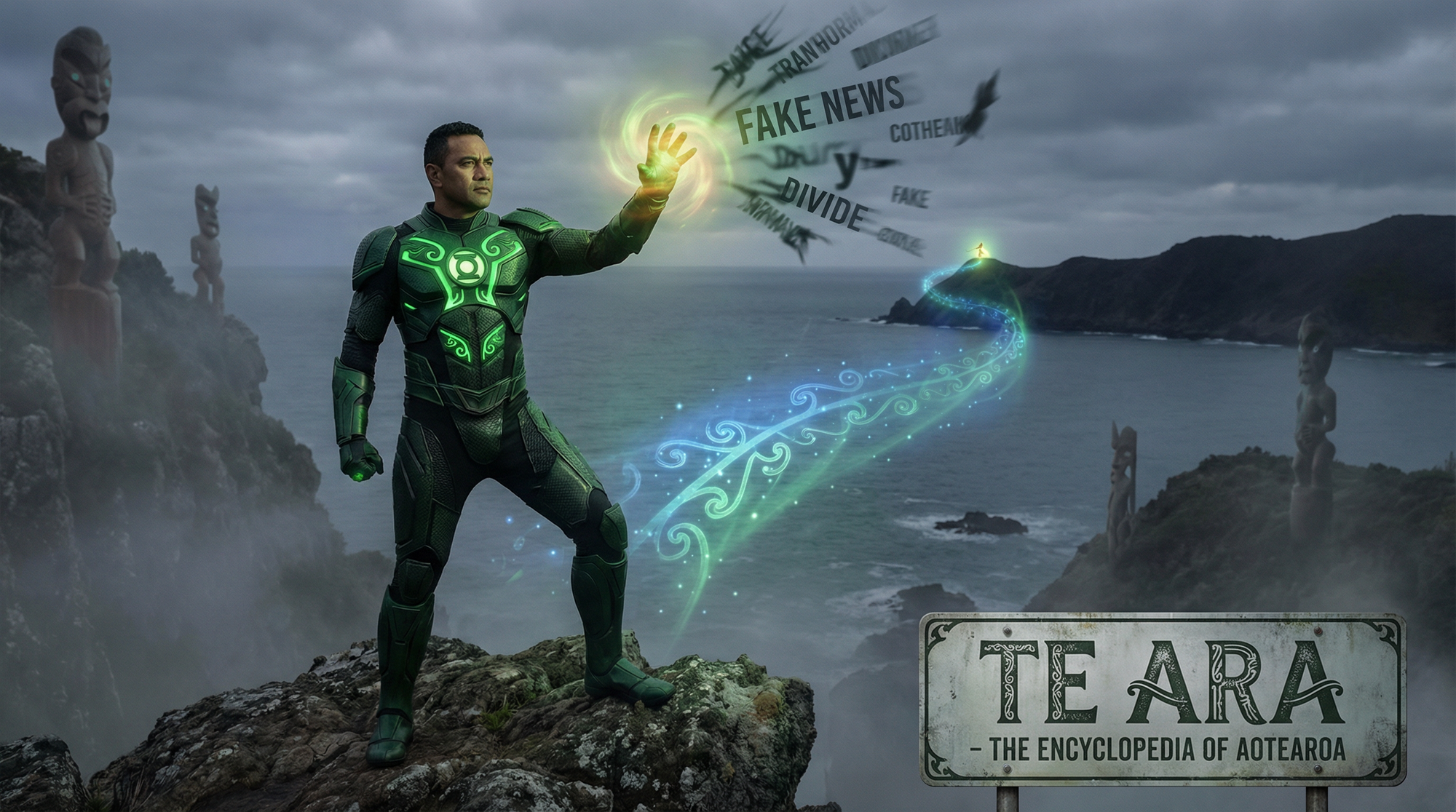
The Māori Green Lantern Fighting Misinformation And Disinformation From The Far Right
Key Findings and Call to Action
Health NZ’s apology to the nurses’ union, spurred by Ombudsman condemnation, highlights the ongoing battle for transparency, justice, and respect for kaupapa Māori values within our health system. The deliberate suppression of understaffing data reveals bureaucratic contempt for both unionised workers and Māori nurses, obstructing their efforts to demand fair conditions and safe staffing levels for whānau. The Ombudsman’s intervention reminds us that law alone cannot guarantee accountability—only consistent, public, and collective action will do so.
The continued resistance of Māori nurses and the NZNO, standing together for truth, brings hope and inspiration to all fighting for justice inside colonial and neoliberal institutions. We must keep exposing these patterns, demanding that our voices, data, and tikanga are respected—not just apologised for after the fact.
If you found value in this kōrero, please consider supporting He Tangata Digital Media with a contribution to HTDM: 03-1546-0415173-000. The Māori Green Lantern understands these tough economic times for whānau, so please koha only as you are able and as you wish to do so.
Ehara taku toa i te toa takitahi, engari he toa takitini. My strength is not mine alone, but of the many.
Ngā mihi nui ki a koutou katoa.
Ivor Jones The Māori Green Lantern