"Heli‑Golf for the One Percent - Not For You Or Me - 9 January 2026
How RNZ Turned Queenstown into a Playground for the Ultra‑Rich – and Called It “News”
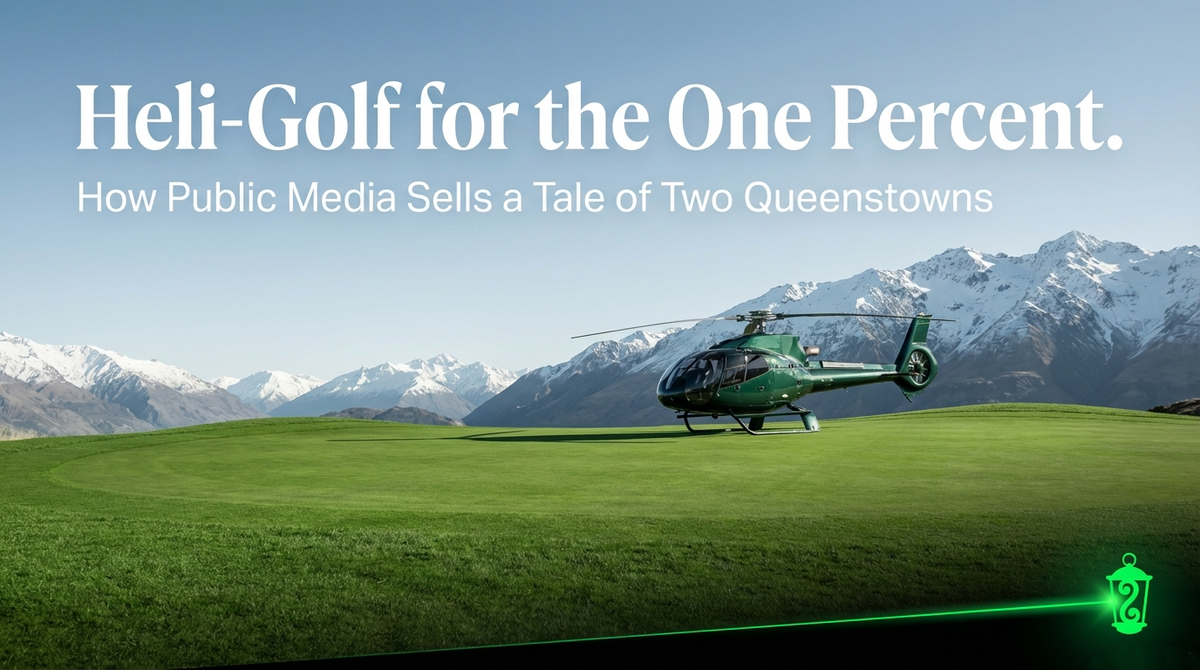
In the same week that Central Otago–Lakes was confirmed as the most expensive place to rent in Aotearoa, with median rents now higher than anywhere else in the motu, including Tāmaki Makaurau and Pōneke, as reported by RNZ and reinforced by coverage in the Otago Daily Times and MPA, our publicly funded broadcaster ran a breathless feature celebrating $50,000‑a‑night hotel suites, heli‑golf, Aston Martins and secret five‑figure‑a‑night retreats around Queenstown, framed as a story about “how Queenstown is courting ultra‑wealthy visitors” by RNZ.
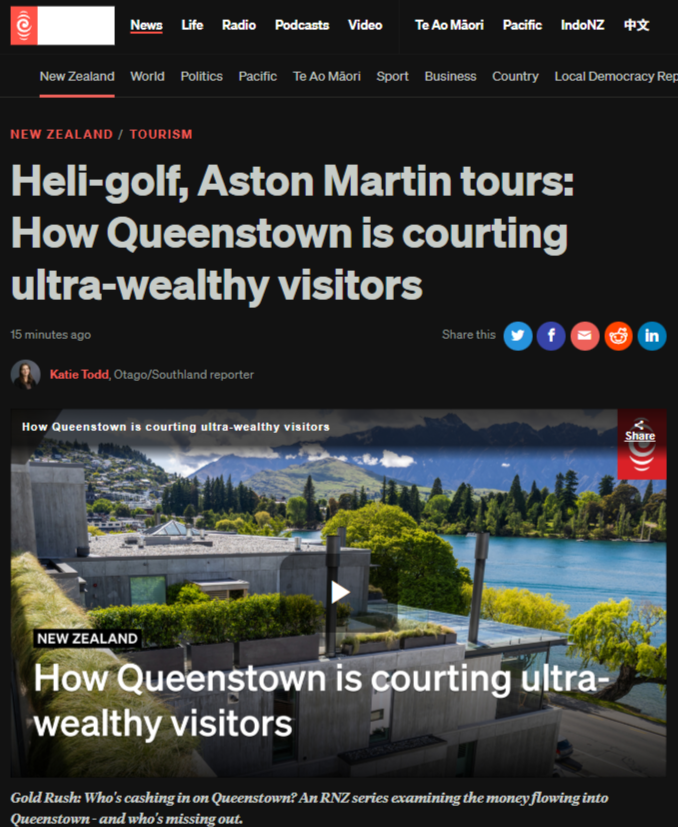
That juxtaposition is not just tone‑deaf. It exposes how deeply Crown‑funded media have absorbed the logic of the tourism and property industries they claim to cover.
Two Queenstowns: Billionaire Suites vs. Workers Without Beds
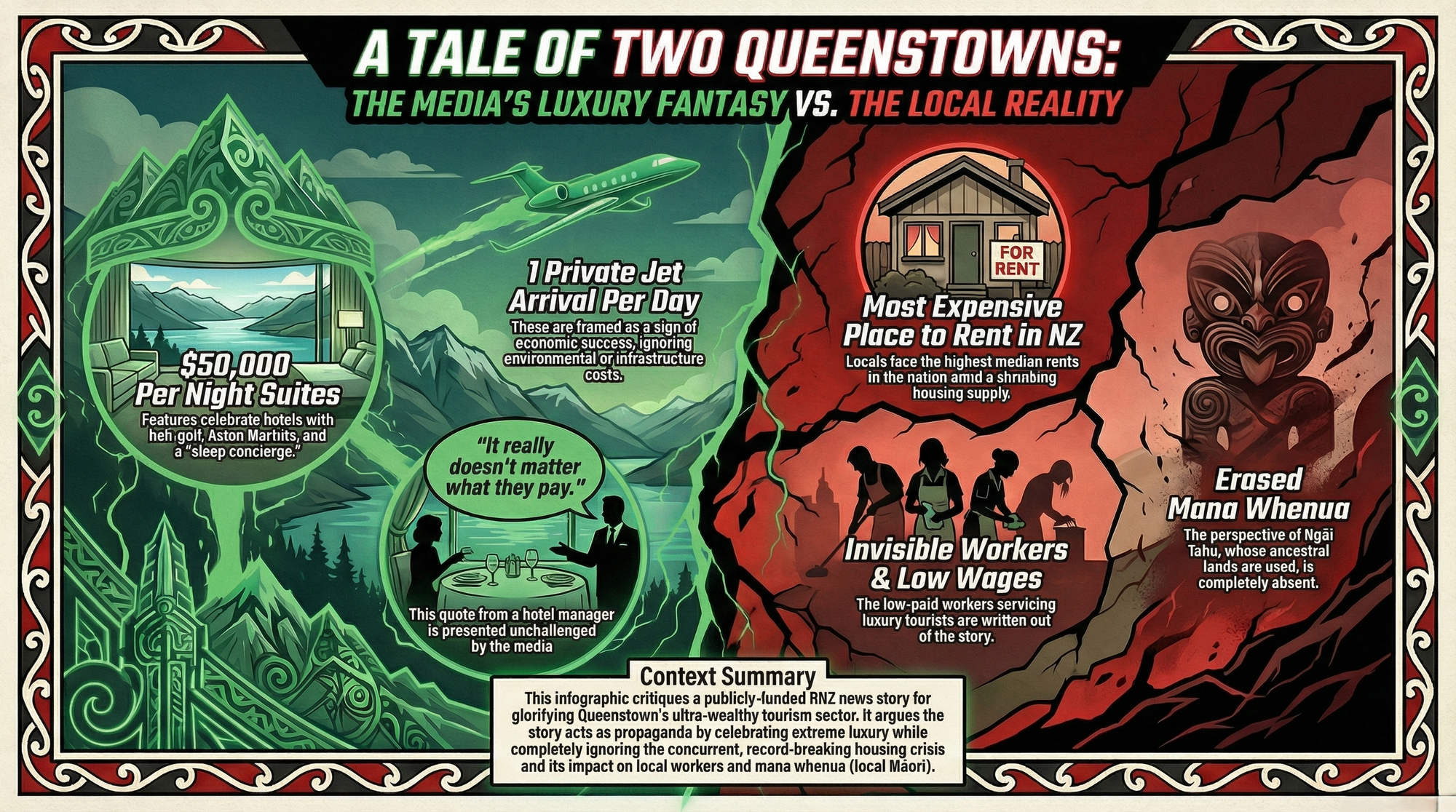
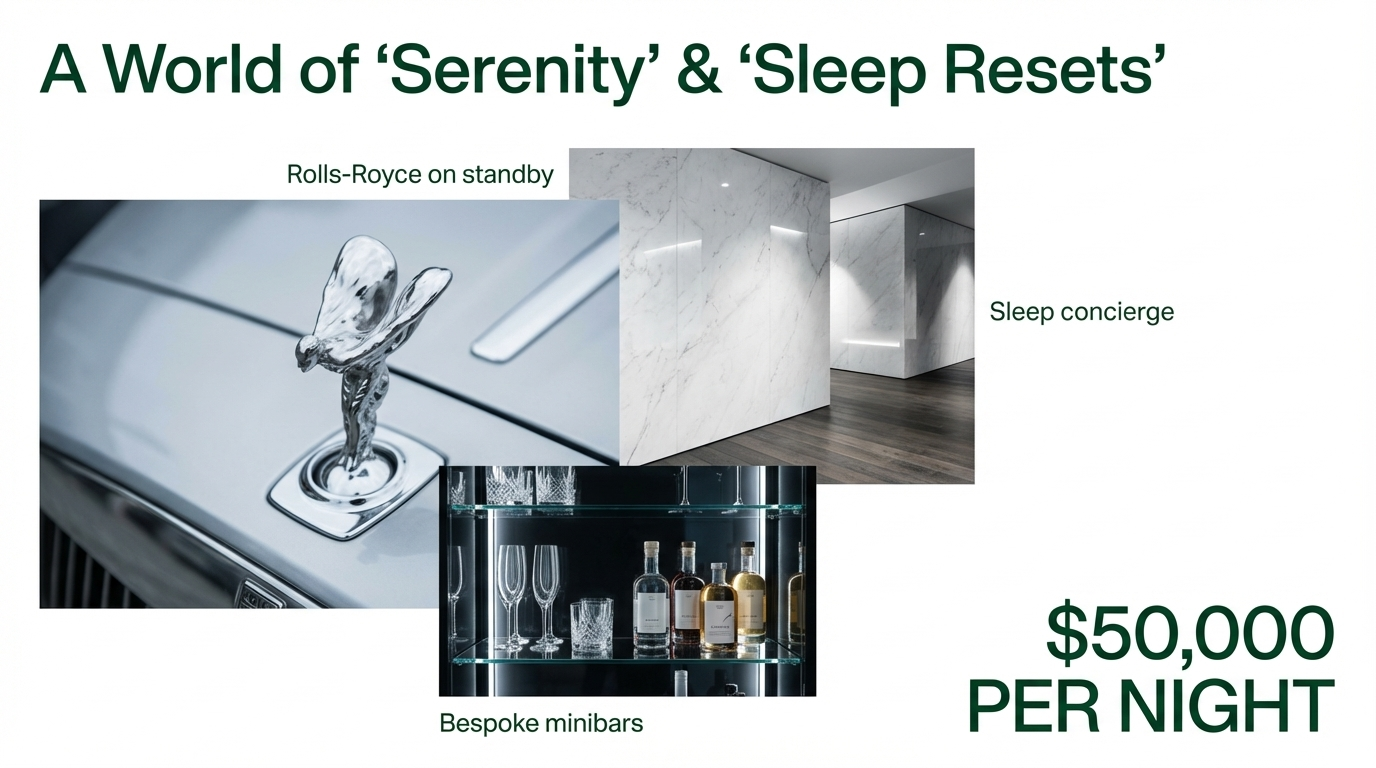
RNZ’s feature invites readers into the ROKI Collection, a new 15‑room “ultra‑luxury” hotel built on the former site of a backpackers’ hostel, where junior suites start at $2800 per night in the off‑season and the “Grand Roki Suite” is priced around $50,000 per night, with some guests hiring out the entire hotel, as described by RNZ.
ROKI is presented as a sanctuary of “serenity,” with bespoke minibars, interiors by designer Virginia Fisher, a Rolls‑Royce on standby, and a “sleep concierge” who performs “sleep resets” in guests’ rooms, all lovingly itemised by RNZ. The message is clear: this is aspirational, enviable, a marker of Queenstown’s successful “upgrading” as a destination.
Meanwhile, outside the article’s frame, the Queenstown Lakes District Council has been warning that the supply of long‑term rentals is shrinking, that more homes are being diverted into short‑term visitor accommodation, and that worker housing shortages are undermining the local economy, as detailed by Queenstown Lakes District Council.
That same council analysis describes staff living in overcrowded or makeshift situations, employers struggling to recruit, and an “increasingly constrained” rental market that is pricing out low‑ and middle‑income residents, observations echoed in regional news and housing data collated by the Otago Daily Times and MPA.
RNZ knows all of this – its own reporters have covered the rental crisis in depth, including the confirmation that Central Otago–Lakes now has the highest median rents in Aotearoa, as reported by RNZ. Yet in the Queenstown luxury feature there is not a single mention of homelessness, overcrowding, or stressed whānau.
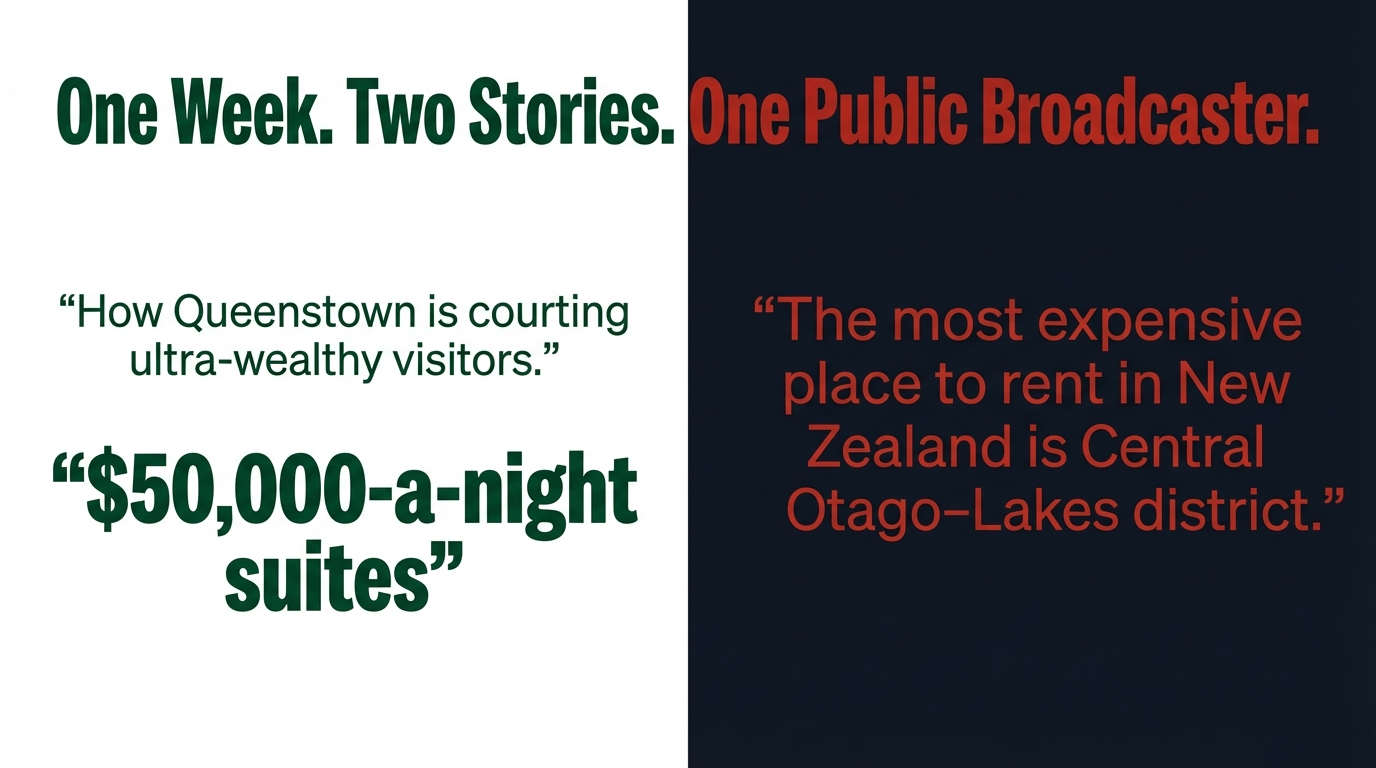
Instead, the only people whose sleeping arrangements matter are those who can drop the price of a small house deposit on a single night’s stay.
The Language of Luxury as a Weapon
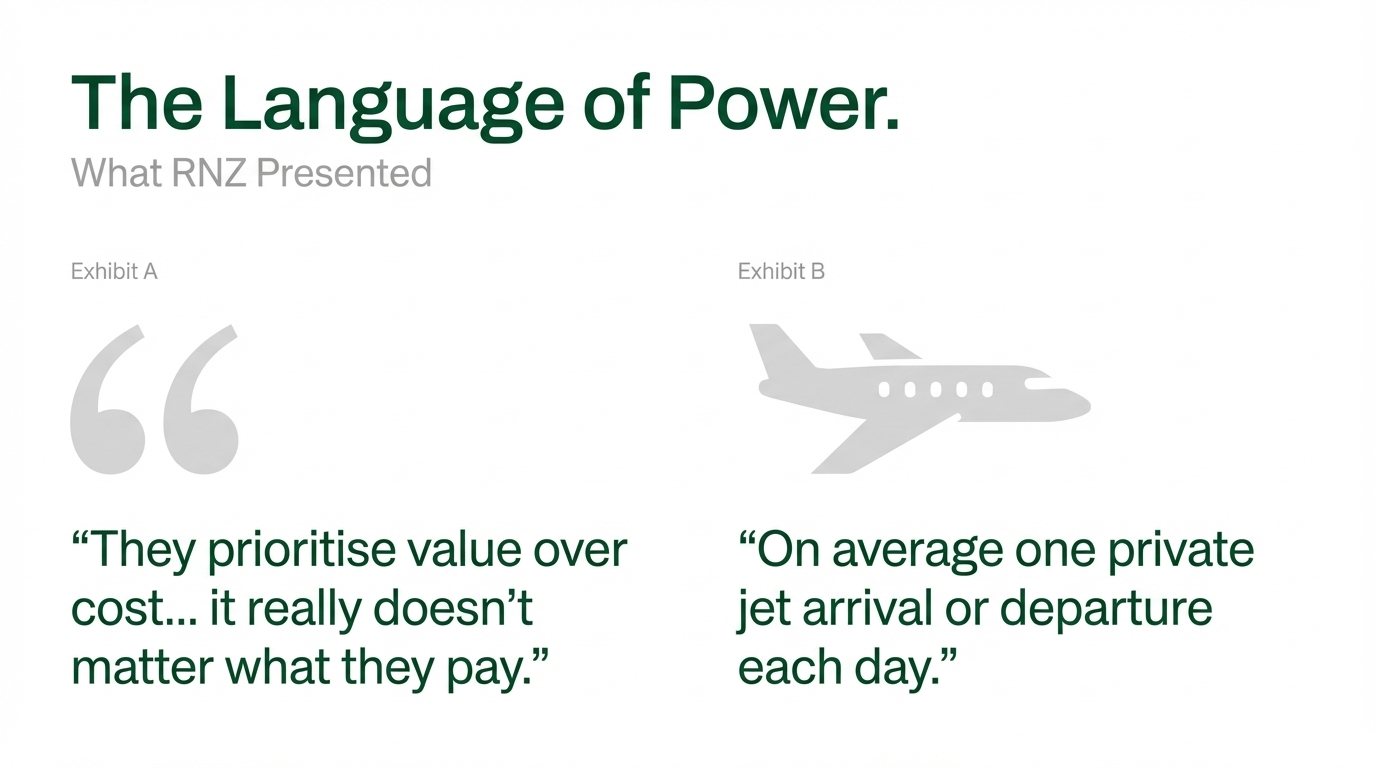
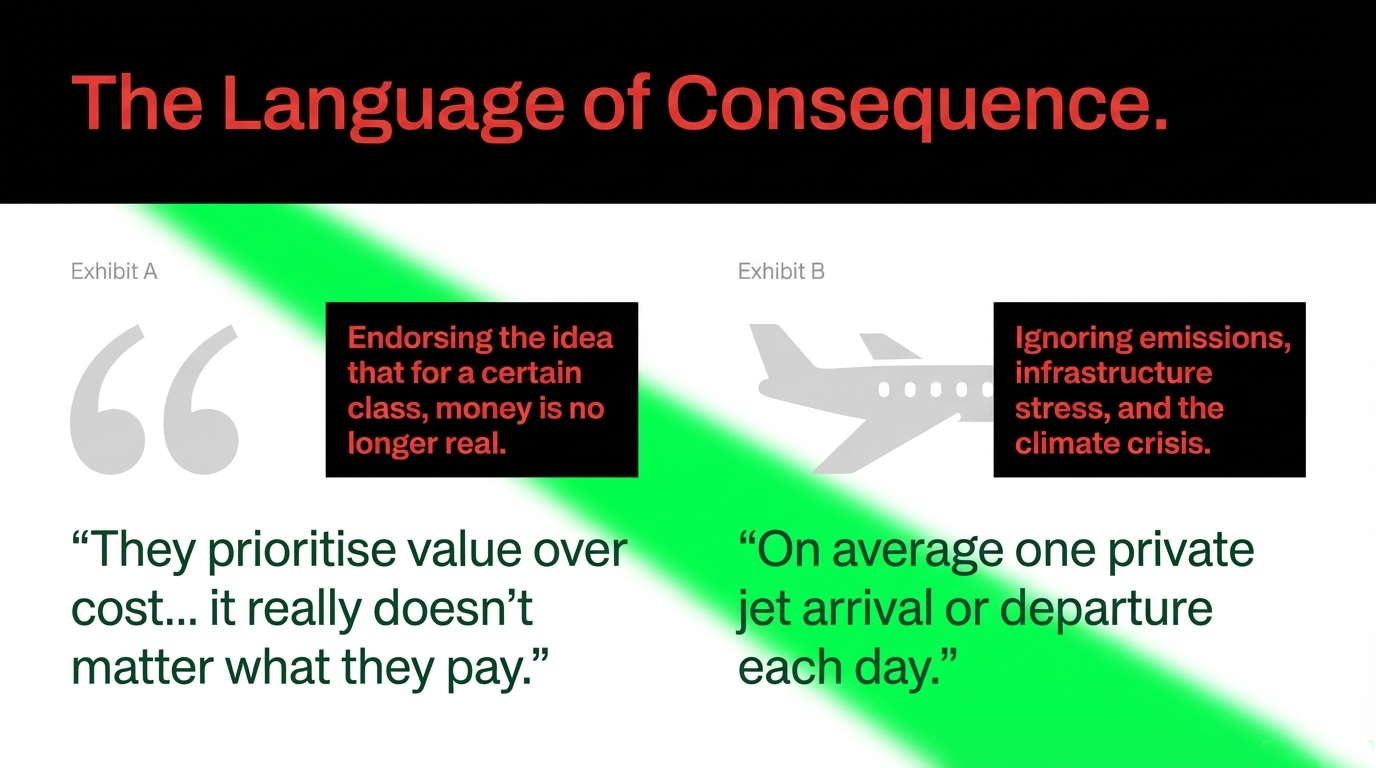
The ideological core of RNZ’s story is contained in one quote from ROKI’s general manager. He explains that the ultra‑rich “prioritise value over cost,” and that “as long as we’re providing that value…it really doesn’t matter what they pay,” a line presented without critique by RNZ.
When public media repeats this sentiment unchallenged, it is not simply reporting a business cliché; it is endorsing the idea that for a certain class of visitor, money is no longer real, and that the role of an entire district – its land, labour and infrastructure – is to supply them with “experiences and connections and memories” regardless of cost to everyone else.
The pattern continues with Destination Queenstown and Lake Wānaka Tourism’s chief executive, who declares that the organisation is “delighted to welcome these high-end products” and believes “there is a strong market for them,” a quote RNZ uses to frame the proliferation of luxury hotels, hot pools, floating saunas and heli‑ski festivals as a straightforward success story, as cited by RNZ.
Airport statistics are similarly weaponised. We’re told that Queenstown recorded 895,669 arrivals between January and November 2025 – nearly 40 percent higher than the same period in 2019 – and that there is on average one private jet arrival or departure each day, accounting for roughly a third of the country’s total private jet movements, all proudly reported by RNZ.
These numbers could have been a starting point for a serious conversation about emissions, infrastructure stress and the ethics of courting high‑emissions luxury travel in the middle of a climate crisis. Instead, they are served up as proof that Queenstown’s strategy of wooing the ultra‑rich is “working.”
Propaganda rarely announces itself. It arrives in glossy adjectives, selective statistics, and one‑sided quotes that all push readers toward the same conclusion: this is normal; this is desirable; this is success.
Workers and Mana Whenua: Present Only as Background
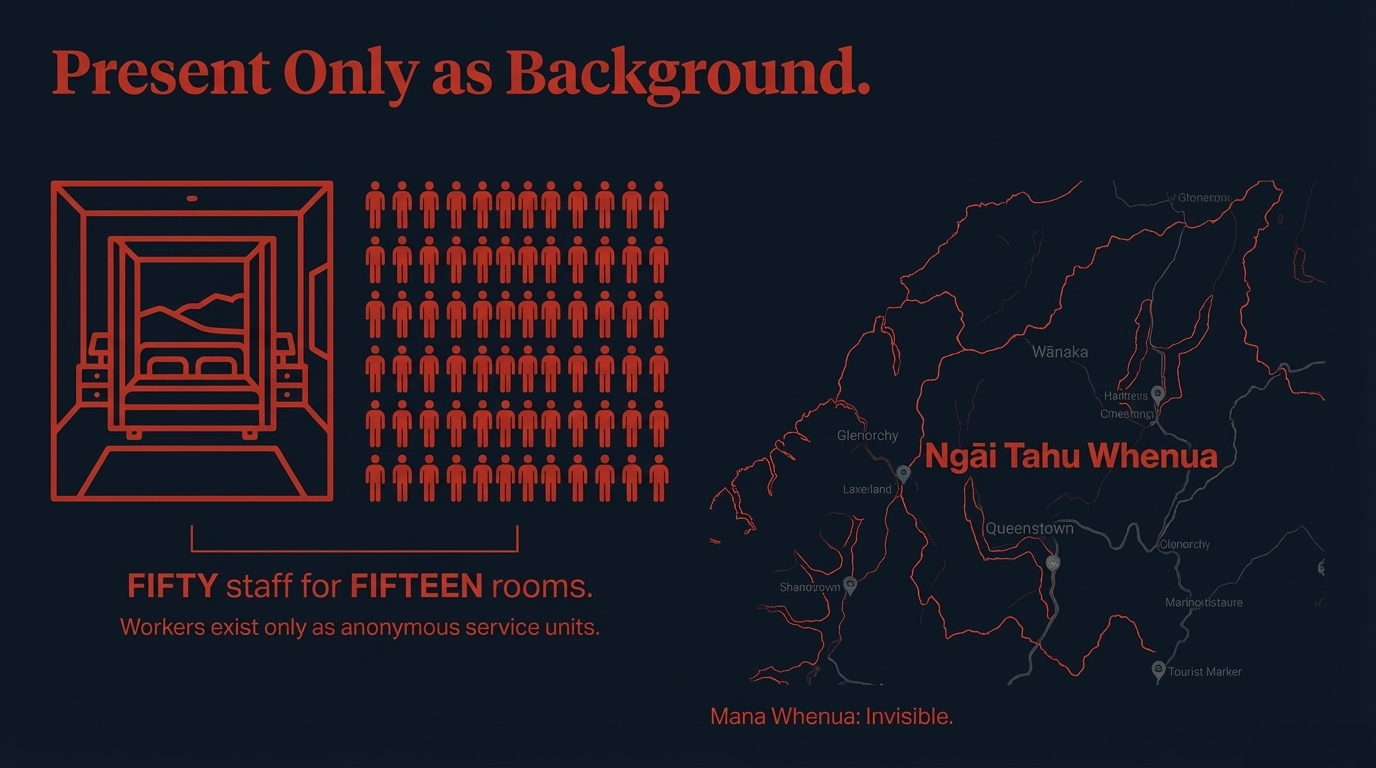
Buried halfway through the RNZ piece is a very revealing figure: ROKI employs nearly fifty staff for just fifteen rooms – drivers, chefs, butlers, concierge staff and spa workers, as outlined by RNZ. That staggering staff‑to‑room ratio is presented as a mark of distinction for guests seeking seamless service. Then the story moves on.
There is no attempt to ask those workers about their pay, conditions, or housing. This omission is stark when set against national analysis showing that hospitality and tourism jobs remain disproportionately low‑paid, insecure and seasonal, with the Ministry of Business, Innovation and Employment’s 2024 hospitality and tourism employment report highlighting persistent issues with low wages, variable hours and vulnerability to shocks, as documented by MBIE.
Regional economists have further warned that Queenstown’s dependence on “low-wage tourism” undermines productivity and entrenches inequality, arguing for structural changes that lift wages and reduce reliance on cheap labour, as examined in local economic commentary on tourism productivity in Queenstown by Crux.
The council‑commissioned study on the economic impacts of a dedicated worker accommodation complex makes the same point from another angle, modelling how purpose‑built housing for workers could ease pressure on the rental market and improve labour supply, as analysed by Benje Patterson.
RNZ’s story acknowledges none of this. Workers exist only as anonymous service units orbiting around the needs of guests. Their lives are not considered newsworthy.
Mana whenua are rendered even more invisible. Every helicopter landing on a golf course atop Cecil Peak, every “wow moment” on Lake Whakatipu or in the fiords, every secret mansion overlooking Wānaka is staged on Ngāi Tahu whenua and wai. Yet not a single iwi voice or perspective appears in the article by RNZ.
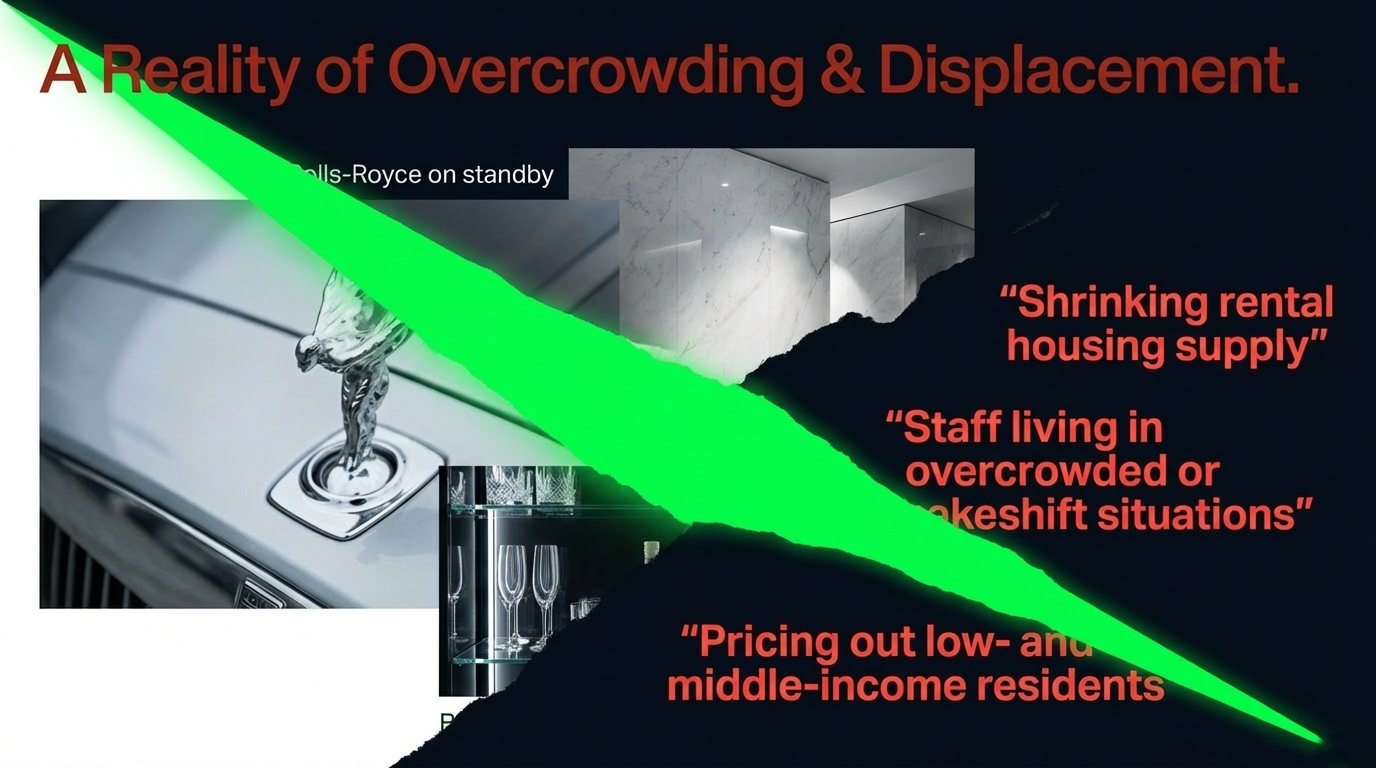
To erase workers and tangata whenua from a story that is literally about transforming their home into a playground for strangers is not neutral. It is a political act.
From Backpackers to Black‑Label Retreats: A Class Project
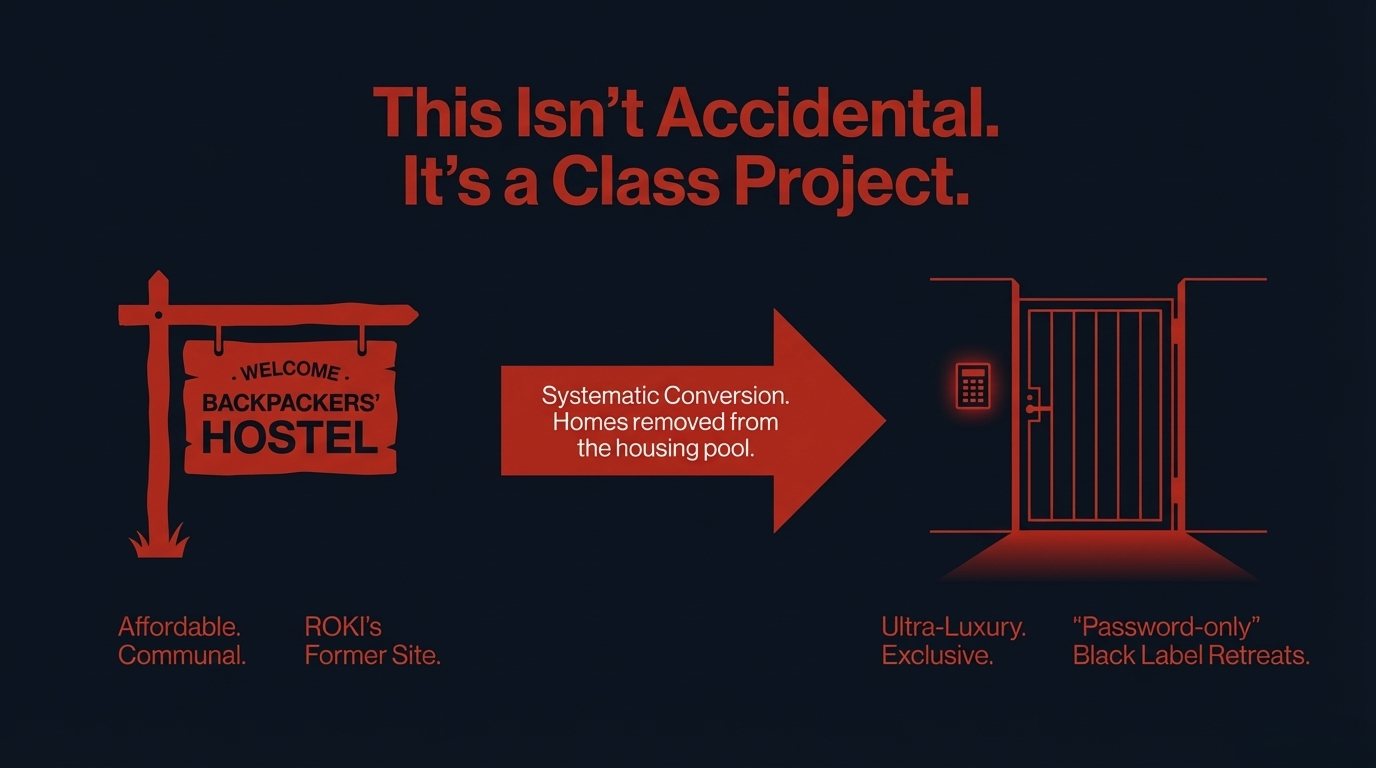
One seemingly minor detail in the RNZ piece tells the bigger story: ROKI stands on the former site of a backpackers’ hostel, a fact noted in passing by RNZ and then dropped.
This is not a random coincidence. It is how class geography is remade brick by brick: affordable, communal spaces where young travellers and low‑income workers could once stay are systematically converted into ultra‑luxury assets for the global rich, tightening the squeeze on anyone without a trust fund or a corporate expense account.
The Queenstown Lakes District Council’s warning about the “shrinking rental housing supply” and the diversion of homes into visitor accommodation makes clear that these shifts are central drivers of the current housing crisis, as set out by Queenstown Lakes District Council.
RNZ also profiles “Black Label Retreats,” a new offering in Wānaka where thoroughly vetted, ultra‑wealthy guests gain password‑only access to mansions that “cannot be browsed, booked or discovered anywhere else,” with minimum stays of a week and nightly rates in the five‑figure range, as promoted by RNZ.
The operator proudly recalls a large American family spending more than $400,000 on extras like helicopters to Milford and Dusky Sounds, tens of thousands of dollars on bikes, a wakeboard boat on standby and private chefs every day, holding this up as proof that money “spreads right through the community,” again unchallenged by RNZ.
But those properties are still homes removed from the long‑term housing pool. Those helicopters, boats and cars still sit on a climate ledger. And those hundreds of thousands of dollars still start from a position of obscene wealth that has to be generated somewhere – often through the same exploitative global systems that keep wages low and housing precarious elsewhere.
Even Destination Queenstown’s own strategic report, “Sustaining Tourism Growth in Queenstown,” warned that unmanaged tourism growth, pressure on infrastructure and housing, and over‑dependence on visitors threatened community wellbeing and required careful limits and diversification, as set out by Queenstown Lakes District Council.
RNZ could have used that report as a lens to interrogate whether Queenstown’s current turn to the ultra‑rich represents the worst‑case scenario that planners feared. Instead, it holds the door open and invites readers to marvel at the décor.
The Same Propaganda Pattern That Worships the Mowbrays
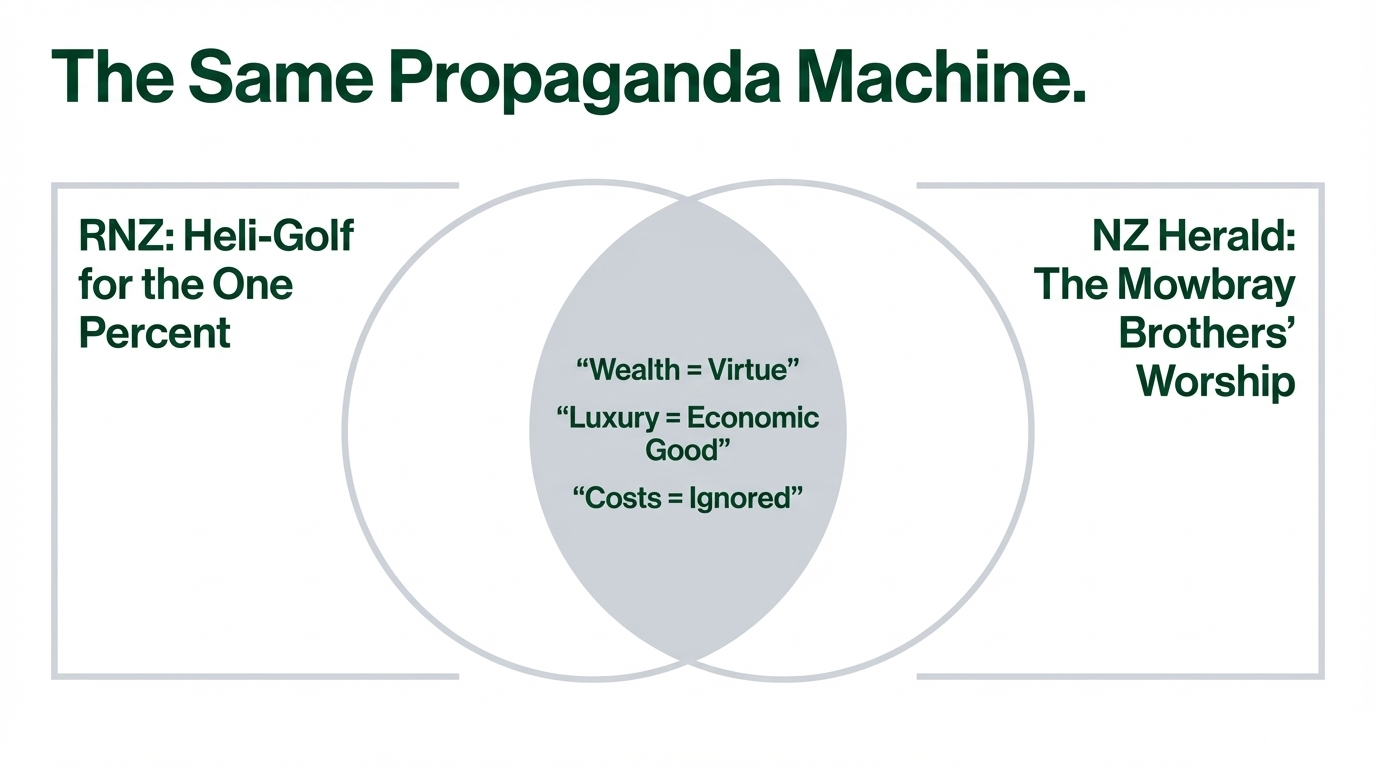
This Queenstown article is not a one‑off mistake. It sits inside a wider media pattern in Aotearoa where the ultra‑rich are consistently framed as visionary heroes while the structures that generate their wealth – and the harms those structures inflict – are downplayed or ignored.
The Māori Green Lantern has previously unpacked how the New Zealand Herald’s “Rich List” turned the Mowbray brothers of Zuru into objects of worship, celebrating their ascent to the top of the wealth rankings while glossing over aggressive legal tactics and allegations of exploitative practices, as analysed in the essay “The Herald’s propaganda machine worships the Mowbrays” on The Māori Green Lantern.
Mainstream outlets, including RNZ, have also profiled the Mowbrays as exemplary entrepreneurs whose success in toys and nappies supposedly proves the virtue of unfettered capitalism, as seen in rich‑list coverage by RNZ.
The pattern is identical in Queenstown:
- Enormous wealth is presented as a sign of character and innovation.
- Extreme luxury consumption is framed as good for “the economy.”
- The people who carry the costs – workers, renters, Māori communities, the climate – are treated as marginal footnotes or simply written out of the story.
RNZ is supposed to be different from commercial outlets because it is publicly funded and bound by a charter that emphasises independence and public interest. When it reproduces the same narratives as corporate media, it becomes part of the same propaganda machine.
What Real Public‑Interest Journalism Would Have Done
A genuinely public‑serving piece about “ultra‑wealthy visitors” in Queenstown would have flipped the frame.
It would have started from the housing crisis, drawing on the council’s evidence of shrinking rental supply and worker displacement from Queenstown Lakes District Council, and from rent data collated by RNZ, the Otago Daily Times and MPA.
It would have spoken directly to the fifty staff holding up ROKI’s fantasy, cross‑checking their pay and conditions against national hospitality data from MBIE and local analysis of low‑wage tourism by Crux.
It would have asked mana whenua whether turning their ancestral landscapes into heli‑golf courses and secret retreats for the global one percent is compatible with their kaitiaki responsibilities.
It would have interrogated whether “Black Label Retreats” – homes removed from the open market and hidden behind passwords for five‑figure‑per‑night guests – deepen the housing crisis flagged by Queenstown Lakes District Council, rather than accepting at face value the claim that such spending magically “spreads through the community,” as asserted in RNZ.
Instead, RNZ chose to centre Aston Martins, Rolls‑Royces, and the fantasies of guests for whom “it really doesn’t matter what they pay,” as described by RNZ.
That is not journalism speaking truth to power. It is power speaking through journalism.
Public‑interest media in Aotearoa cannot keep pretending that a helicopter landing on a mountaintop golf green for a $50,000‑a‑night guest is just “colourful tourism content.” It is the visible tip of a system that treats whenua, workers and entire communities as expendable scenery for the ultra‑rich.
If Crown‑funded outlets will not name that system, then Māori, workers and ordinary whānau will have to keep building and funding our own truth‑telling platforms – and shining a very bright, very green lantern on the propaganda masquerading as news.

Ivor Jones The Māori Green Lantern Fighting Misinformation And Disinformation From The Far Right