“How Trump’s ESTA Surveillance State Ended My Travels to the Empire” - 11 December 2025
The Māori Green Lantern Is Off To Alligator Alcatraz If I Step Foot Back Into TrumpLand
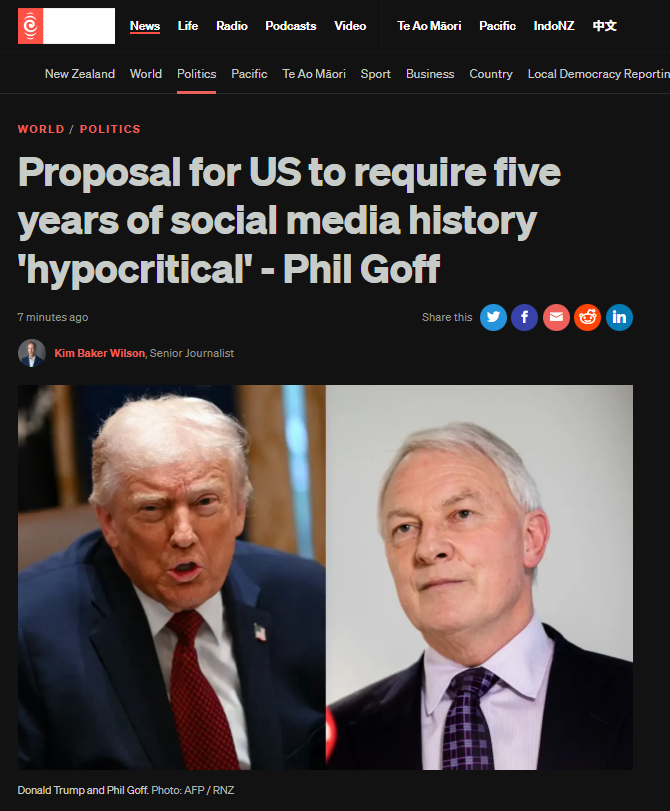
The Trump administration revealed on December 10, 2025, that visitors from 42 visa-exempt nations—including Aotearoa New Zealand—will soon be required to disclose five years of social media history to enter the United States. The proposal, which updates the Electronic System for Travel Authorization (ESTA), transforms what was an optional field into mandatory surveillance, invoking Executive Order 14161, “Protecting the United States from Foreign Terrorists and Other National Security and Public Safety Threats,” signed by Trump on January 20, 2025.
For travelers like myself who have criticized American imperialism, Trump’s policies, or supported Palestinian liberation, this represents the closure of a border that was already narrowing. As former New Zealand High Commissioner to the UK Phil Goff noted when responding to the proposal, he believes he would now be blocked from entering the United States following his March 2025 dismissal for questioning Trump’s understanding of history at a Chatham House event. Goff—whose four nephews served in senior positions in the United States Army, one of whom was killed in Afghanistan—described the measures as “hypocritical,” comparing them to McCarthyism, the 1950s era when Americans were banned from the United States for membership in the Communist Party.
His assessment is verified by the administration’s own rhetoric. As immigration lawyer Aaron Reichlin-Melnick, senior staff attorney at the American Immigration Council, stated regarding similar “anti-Americanism” vetting introduced in August 2025, “’Anti-Americanism’ has no precedent in immigration law, leaving its definition entirely at the discretion of the Trump administration... This is McCarthyism returning to immigration law.”
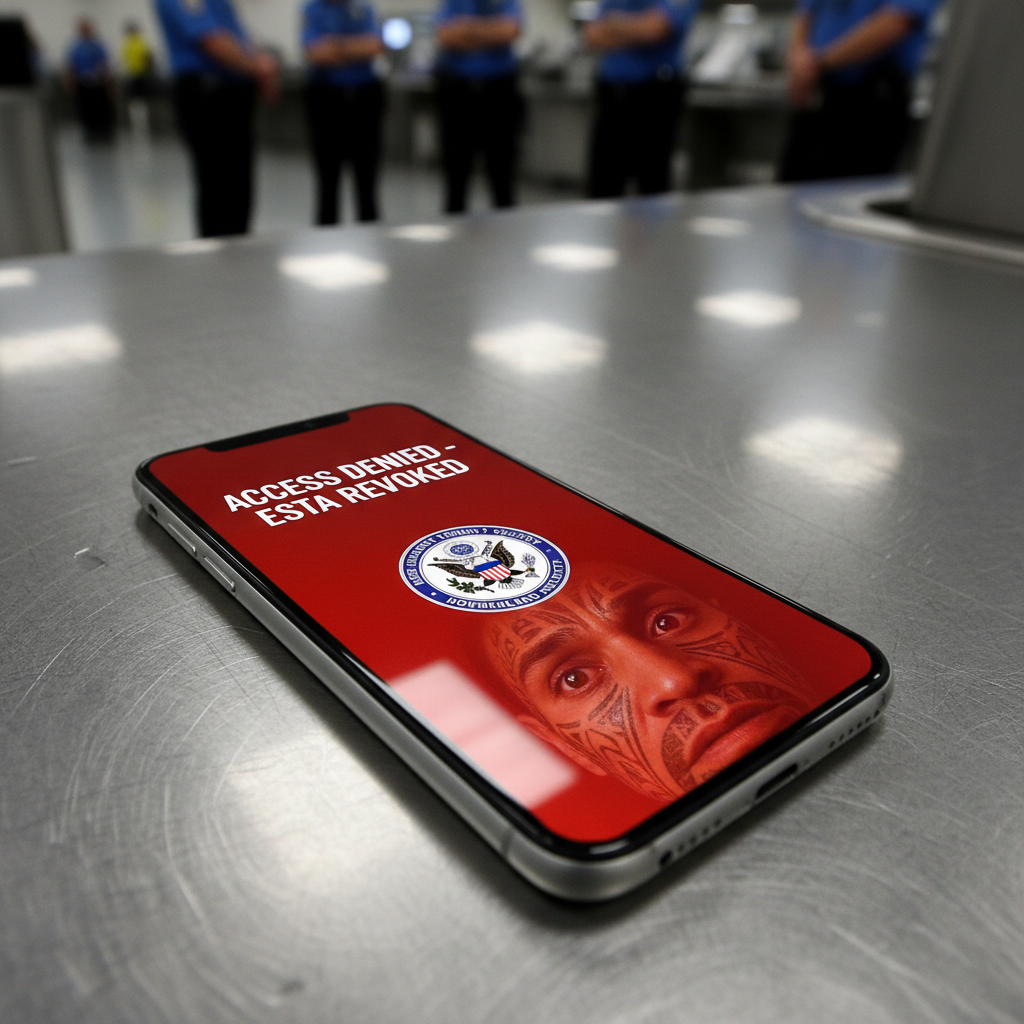
The new digital border: A traveler faces rejection at the US border under new ESTA surveillance rules.
Cui Bono: The Authoritarian Playbook
Who benefits from converting the world’s largest economy into a fortress state that scrutinizes the speech, associations, and digital footprints of millions of visitors? Not American security—immigration experts have called the enhanced vetting measures “the latest attempt by the Trump administration to clamp down on critical online speech,” as reported by The Washington Post. Not international goodwill—experts have indicated that travel policy changes implemented during Trump’s administration have negatively affected the US tourism sector, with the United States being “the only nation among 184 economies analyzed that was projected to witness decline in visitor spending in 2025,” according to the World Travel & Tourism Council.
The beneficiaries are those consolidating authoritarian power. Trump’s ESTA surveillance proposal is one instrument in what CIVICUS, a global civil society monitoring organization, described in December 2025 as evidence of a “rapid authoritarian shift” in the United States, downgrading America’s civic freedom rating. The group cited “unprecedented executive orders designed to unravel democratic institutions, global cooperation and international justice,” alongside the administration’s use of AI to screen social media accounts of student visa-holders for “pro-Hamas” activity under a reported “Catch and Revoke” program.
The Mechanics of Digital McCarthyism
The proposed ESTA changes—open for a 60-day public comment period—extend beyond social media. According to U.S. Customs and Border Protection’s Federal Register notice, travelers will be required to provide phone numbers used in the past five years, email addresses from the past decade, IP addresses and metadata from electronically submitted photographs, and comprehensive family member information including names, dates and places of birth, countries of residence, and phone numbers used over the same timeframe. The notice also reveals plans to collect biometric data “when feasible,” including facial, fingerprint, DNA, and iris scan records.
CBP estimates travelers will need an extra 22 minutes to provide this additional information. This bureaucratic understatement conceals the chilling effect: how many minutes to scrub a decade of political posts? To delete evidence of attending a Palestine solidarity protest? To remove tweets critical of American empire?
The proposal’s language is deliberately vague about enforcement. The Federal Register notice states, “The data element will require ESTA applicants to provide their social media from the last 5 years,” without specifying exactly what information would be necessary. This ambiguity is strategic—it maximizes the deterrent effect while providing officials with maximum discretion. As immigration law firm Fragomen warned, “The increase in data collection could also mean that ESTA applicants would face an increased likelihood of being flagged for closer scrutiny and/or would experience longer waits for ESTA approval.”
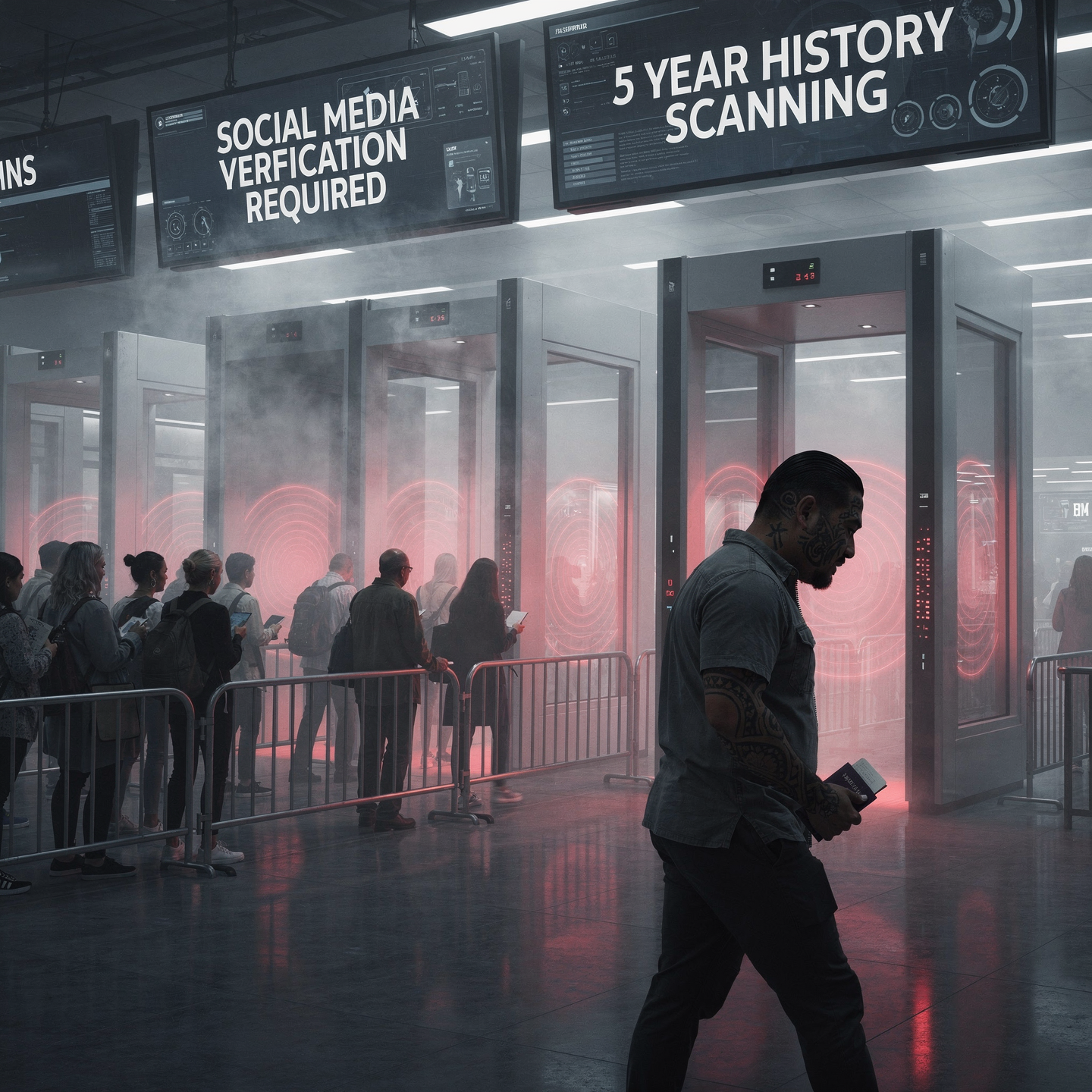
Refusal: Turning away from the “Alligator Alcatraz” surveillance state.
From Border to Battlefield: Militarizing Immigration Enforcement
This surveillance infrastructure does not exist in isolation. Trump has systematically transformed the Department of Homeland Security—which includes Immigration and Customs Enforcement (ICE) and Customs and Border Protection (CBP), along with the Transportation Security Administration, Federal Protective Service, Coast Guard, Federal Emergency Management Agency, and Secret Service—into what current and former national security officials describe as “an unfettered and unaccountable national police force”.
A senior DHS official, speaking anonymously to ProPublica for fear of retaliation, described scenes that would trigger investigations in a functioning democracy: “Accosting people outside of their immigration court hearings where they’re showing up and trying to do the right thing and then hauling them off to an immigration jail in the middle of the country where they can’t access loved ones or speak to counsel. Bands of masked men apprehending people in broad daylight in the streets and hauling them off. Disappearing people to a third country, to a prison where there’s a documented record of serious torture and human rights abuse.”
These are not hypothetical concerns. Trump’s February 18, 2025 executive order commanding all independent regulatory agencies—including the Federal Trade Commission, Securities and Exchange Commission, and Federal Election Commission—to submit their regulations, budgets, and legal positions to White House review through the Office of Management and Budget demonstrates the administration’s systematic dismantling of institutional independence. Michelle Brané, who directed DHS’ ombudsman office during the Biden administration, stated that Trump’s adherence to “the authoritarian playbook is not even subtle... ICE, their secret police, is their tool. Once they have that power, which they have now, there’s nothing stopping them from using it against citizens.”
The Whakapapa of Surveillance: From Colony to Digital Prison
For tangata whenua, surveillance is not novel—it is the continuity of colonial control by digital means. As Donna Cormack’s research on Indigenous data and surveillance in Aotearoa documents, “Surveillance is an enduring characteristic of colonialism for Indigenous peoples... Observation, measurement, monitoring, and surveillance were thus fundamental parts of the colonial project.”
Since the early 2000s, state surveillance powers in Aotearoa have increased considerably, with the 2002 Terrorism Suppression Act significantly expanding state surveillance powers, which was invoked to justify the October 2007 paramilitary raids across the country, where most of those arrested (12 out of 17 people) were Māori, with the ‘Tūhoe raids’ in Te Urewera being the most violent, including barricading off whole communities. The Terrorism Suppression Act was used by police to carry out intrusive covert surveillance prior to the raids; however, no charges were eventually brought under the Act.
Trump’s ESTA surveillance represents the globalization of this colonial logic. The same tactics refined against Indigenous resistance movements—predictive risk modeling that disproportionately targets Māori through tools like the youth unemployment (NEET), family violence (SAFVR), and reconviction and reimprisonment (RoC*RoI) systems—are now deployed at the world’s most surveilled border crossing.
The 2026 World Cup: Trapped Between Tourism and Tyranny
The timing is revealing. The proposal affects fans traveling to the 2026 FIFA World Cup, hosted by the United States alongside Mexico and Canada, with the tournament running from June 11 through July 19 at 16 venues. New Zealand’s All Whites will play Iran at SoFi Stadium in Los Angeles on June 16, 2025, followed by Egypt and Belgium, both at BC Place Vancouver.
FIFA has advised World Cup host cities to expect a 50/50 split between domestic and international visitors, meaning hundreds of thousands of international travelers—supporters from nations like the United Kingdom, France, Spain, Germany, Japan, and South Korea—will be subjected to this surveillance apparatus. This is not incidental. Mega-events provide ideal testing grounds for authoritarian control, as documented in research on trafficking and policing at sport mega-events, which warns of “the highly-profitable and politically-advantageous rhetoric” used to expand surveillance and law enforcement powers.
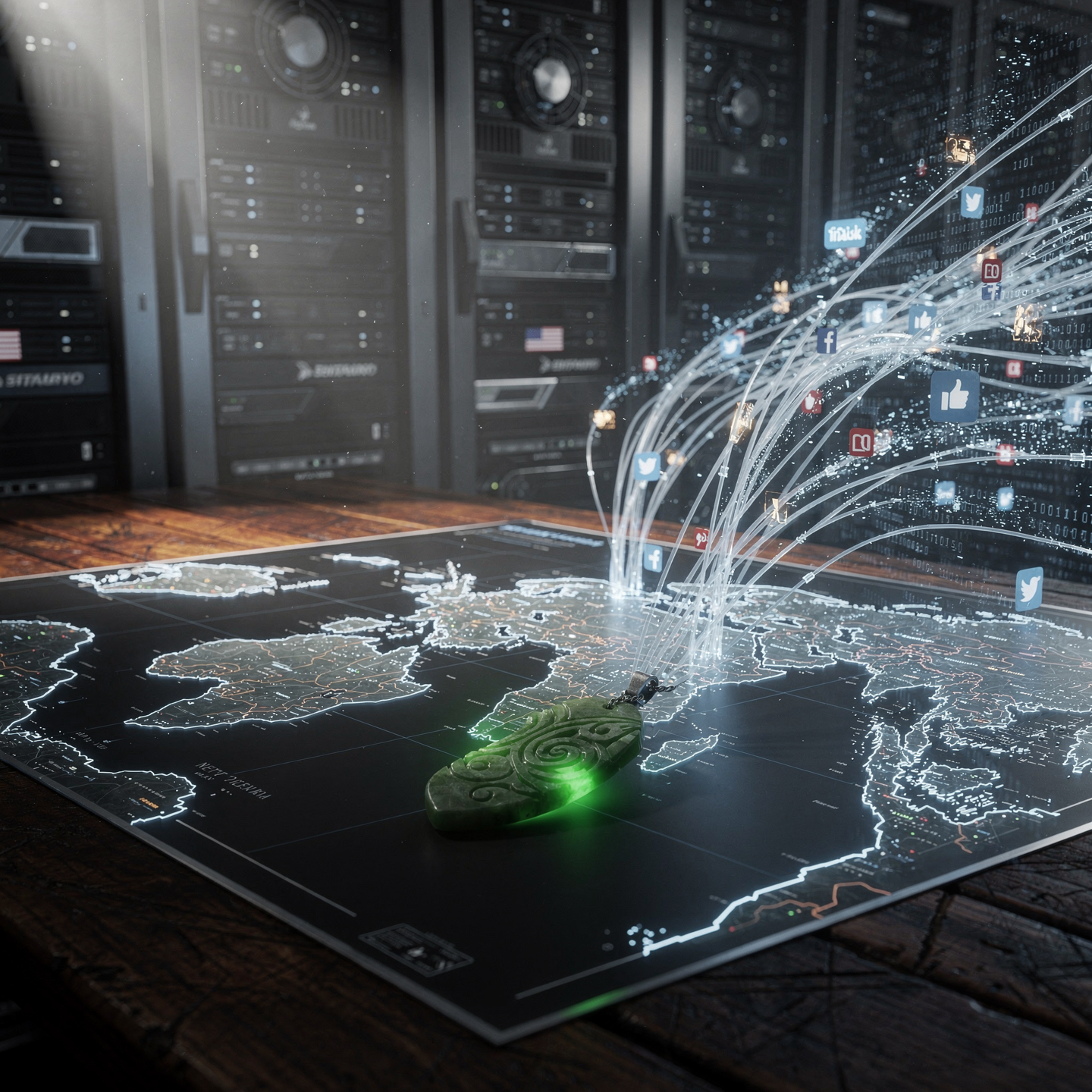
Rangatiratanga vs. The Machine: Indigenous sovereignty in the face of digital imperialism.
Hypocrite’s Playbook: Free Speech for Me, Surveillance for Thee
Phil Goff’s assessment of hypocrisy is verified by the administration’s contradictory positions. As Goff stated, “It’s highly ironic that the Trump administration has criticized European countries for putting restrictions on neo-Nazi organizations in the name of free speech... And yet is doing exactly the same thing to others that might criticize what their government and administration is doing in the United States. That’s frankly hypocritical.”
This is not an isolated observation but a pattern recognized internationally. Sophia Cope from the Electronic Frontier Foundation condemned the proposal to the New York Times, stating it would “exacerbate civil liberties harms.” The Council on American-Islamic Relations described the administration’s immigration vetting policies as a resurgence of “McCarthyism,” criticizing “misleadingly portraying legitimate critiques of the Israeli government’s actions in Gaza as antisemitic, conducting witch hunts in American universities, and threatening the free speech rights of immigrants.”
The Constitutional Crisis: Emergency Powers as Permanent Rule
Trump’s January 20, 2025 Executive Order 14161 provides the legal architecture for this surveillance state. The order states that it is “the policy of the United States to protect its citizens from aliens who intend to commit terrorist attacks, threaten our national security, espouse hateful ideology, or otherwise exploit the immigration laws for malevolent purposes,” and directs agencies to “vet and screen to the maximum degree possible all aliens who intend to be admitted, enter, or are already inside the United States, particularly those aliens coming from regions or nations with identified security risks.”
The order required the Secretary of State, Attorney General, Secretary of Homeland Security, and Director of National Intelligence to jointly submit a report within 60 days identifying “countries throughout the world for which vetting and screening information is so deficient as to warrant a full or partial suspension on the entry or admission of nationals from those countries.”
This framework echoes Trump’s first-term Muslim ban, but extends far beyond. By June 2025, Trump issued a proclamation implementing travel restrictions on 12 countries, including full suspensions for Afghanistan and partial suspensions for others, based on purportedly deficient vetting information. The proclamation requires reviews every 180 days to assess whether suspensions should be “continued, terminated, modified, or supplemented”—permanent emergency powers by another name.
Beyond the Border: The National Vetting Center and Intelligence Integration
The ESTA surveillance exists within a broader architecture. As reported by ProPublica in March 2020, Trump’s first administration created the National Vetting Center, overseen by U.S. Customs and Border Protection, which allows immigration agents to access classified information from intelligence agencies including phone calls intercepted by the National Security Agency, material gathered by the CIA’s spies overseas, and tips from informants in Central America.
The center’s director, speaking to ProPublica, stated that “What we target are entire populations, or entire programs. We’re going to be looking at every single applicant... so that our customer, be it ICE, CBP or USCIS, comes to us to get that classified information in real time or near real time to support their operation.” Legal experts warned that immigration agents could potentially use this secret data to flag entire categories of people that fit “suspect” profiles and bar them from entering the U.S., making it “nearly impossible for those denied entry to challenge faulty information if wrongly accused, since most of it is classified.”
When ProPublica asked about ESTA specifically, the National Vetting Center confirmed that “In June, CBP began asking these visitors to list all of their social media accounts for the last five years. At the moment, the requirement is optional.” That was 2020. The requirement is now mandatory, and the infrastructure to surveil, analyze, and weaponize this data against critics has metastasized.
The Practical Reality: Your Rights at the Digital Border
What does this mean for travelers from Aotearoa? As documented by the Electronic Frontier Foundation and RNZ, U.S. Customs and Border Protection has long asserted broad powers at the border to search and seize travelers’ digital information, with these intrusions “growing in frequency and intensity.” Border agents can demand travelers unlock their devices, provide device passwords, or disclose social media information, creating a “no-win dilemma”—comply and agents can scrutinize and copy sensitive digital information, or decline and face device seizure, additional questioning, detention, and escalation.
While U.S. citizens cannot be stopped from entering the country even if they refuse to unlock devices, “agents may escalate the encounter, seize devices, ask intrusive questions, search bags more intensively, or increase by many hours the length of detention.” For lawful permanent residents, “agents may raise complicated questions about continued status as a resident,” and for foreign visitors, “agents may deny entry.”
RNZ reported concerns from University of Auckland political scientist Robert Patman, who warned that “a traveler’s social media activity could create added scrutiny at the US border,” noting that ESTA applications “ask for traveller’s social media profiles, although this was not a mandatory requirement” prior to the December 2025 proposal.
Alligator Alcatraz: The Carceral Geography of Empire
Where does this surveillance lead? To what the Trump administration literally calls “Alligator Alcatraz” in the Florida Everglades, or the “Cornhusker Clink” in Nebraska—repurposed jails and new detention facilities built as the White House embarks on an aggressive expansion with names that telegraph harsh conditions. These are not metaphors but actual detention infrastructure, built by states and operated in partnership with DHS as the administration eliminated the Office of the Citizenship and Immigration Services Ombudsman, which was charged with flagging inhumane conditions at ICE detention facilities.
The geography is deliberate. ProPublica documented families who “have no idea where their loved ones were jailed after immigration raids,” with detained individuals “shuffled through three states before jailing them in Louisiana,” making it impossible for families to maintain contact or for attorneys to provide defense. This is the carceral state’s answer to dissent—disappearance within the apparatus of the law.
Five Hidden Connections
- The ESTA Surveillance-to-Deportation Pipeline: The Trump administration’s expansion of social media vetting to H-1B skilled worker visas and their dependents in December 2025, requiring applicants to set profiles to “public,” combined with the State Department’s June 2025 directive that student visa applicants could be evaluated for “hostile attitudes towards our citizens, culture, government, institutions, or founding principles”, creates a comprehensive digital dragnet. The administration’s “Catch and Revoke” program uses AI to screen social media for “pro-Hamas” activity, while the State Department announced in May 2025 plans to “aggressively revoke visas for Chinese students” and had revoked over 6,000 student visas by August 2025. This infrastructure—ostensibly targeting foreign nationals—establishes precedent for surveillance of U.S. citizens, as Michelle Brané warned, “Once they have that power, which they have now, there’s nothing stopping them from using it against citizens.”
- The FIFA-to-ICE Funnel: The 2026 World Cup provides a beta test for mass surveillance under the guise of mega-event security. Hundreds of thousands of international visitors, many from countries with strong Palestine solidarity movements, will be filtered through ESTA’s new mandatory disclosure requirements. Research on trafficking and policing at sport mega-events warns future hosts—particularly for the 2026 FIFA Men’s World Cup—of “the highly-profitable and politically-advantageous rhetoric of damsel in distress” used to expand surveillance powers. The precedent established will normalize biometric collection and social media surveillance for future visitors, creating a permanent security theater that justifies expanded state power.
- The Palantir-Pentagon-CBP Triangle: As reported by ProPublica in July 2025, Peter Thiel-founded mass surveillance technology company Palantir provides the infrastructure connecting immigration enforcement to intelligence agencies. Microsoft uses what it calls “digital escorts”—personnel in China and other countries who access Pentagon systems containing “data that directly supports military operations”—despite Department of Defense requirements that such data be handled only by U.S. citizens or permanent residents. This public-private surveillance apparatus, where border agents may access “classified, potentially derogatory information” through the National Vetting Center from phone calls intercepted by the NSA to CIA intelligence, creates a closed loop where criticism of U.S. policy—whether about Palestine, climate change, or imperialism—can be flagged, stored, and weaponized at the border.
- The Census-to-Surveillance Pipeline in Aotearoa: Research by Donna Cormack on surveillance in Aotearoa documents how “predictive tools have been used in the area of youth unemployment (NEET), family violence (SAFVR), and reconviction and reimprisonment (RoC*RoI),” with these systems disproportionately impacting Māori due to “over-surveillance of Māori historically, in particular by police, corrections, and other punitive and disciplinary institutions.” The proposed scrapping of Aotearoa’s national census has raised “data sovereignty and surveillance fears for Māori,” with concerns about increased reliance on linked government datasets that “entrench already oppressive social hierarchies.” Trump’s ESTA surveillance exports this logic globally—travelers from colonized nations face the same algorithmic profiling refined against their own indigenous populations, now deployed at the gates of empire.
- The Constitutional Demolition of Independent Oversight: Trump’s February 18, 2025 executive order commanding independent regulatory agencies to submit to White House control, combined with Homeland Security Secretary Kristi Noem’s firing of “nearly the entire civil rights oversight staff” from DHS’s Office for Civil Rights and Civil Liberties, eliminates institutional checks on ESTA surveillance. As ProPublica reported, “With their office closed, CRCL staff now fear... if DHS began arresting U.S. citizens for First Amendment protected speech? Their office would have been the first line of defense.” The same administration that demands five years of social media history from visitors has withdrawn Secret Service protection from former officials like John Bolton facing active Iranian assassination threats—using security apparatus as reward and punishment.
Rangatiratanga and Digital Sovereignty
I will not be returning to the United States. Not because I fear what they will find—my criticism of American empire is public, principled, and proud. I will not return because submission to this surveillance regime legitimizes it. Every traveler who provides five years of social media history, every visitor who unlocks their phone at the border, every tourist who accepts biometric scanning as the price of entry, collaborates in normalizing the infrastructure of digital authoritarianism.
Phil Goff was correct to invoke McCarthyism, but the analogy understates the threat. McCarthy had to hold hearings, summon witnesses, present—however fabricated—some public accounting. Trump’s ESTA surveillance operates in the algorithmic shadows, where AI models trained on undisclosed data sets make determinations based on criteria that are classified, and appeals are impossible because the grounds for denial are secret. As the National Vetting Center’s director admitted to ProPublica, if travelers want to challenge allegedly faulty intelligence, “they’ll have to appeal to the original agency where the information came from. Trouble is, the name of the agency providing the intelligence will likely be classified.”
For tangata whenua and other Indigenous peoples who have experienced surveillance as the continuity of colonial control, Trump’s border regime is familiar. The same predictive risk modeling that targets Māori through New Zealand government systems, the same paramilitary raids justified by terrorism legislation that produced no terrorism charges, the same conversion of data into weapons against resistance movements—this is now globalized, standardized, and operationalized at every port of entry to the world’s most powerful nation-state.
The correct response is not compliance but refusal. Rangatiratanga—the exercise of self-determination and authority—means refusing to participate in systems designed to surveil, control, and punish dissent. It means recognizing that the “land of the free” has become Alligator Alcatraz for anyone who dares speak truth to empire. It means choosing solidarity with the Palestinian students whose visas were revoked, the Tufts doctoral student Rümeysa Öztürk held incommunicado for 24 hours and shuffled through three states before being jailed in Louisiana after co-writing an op-ed critical of the war in Gaza, and the hundreds of thousands of migrants disappeared into detention facilities where oversight has been systematically eliminated.
Goff stated that silence would make New Zealand “complicit” in Trump’s actions, that “by saying nothing, New Zealand—and many other countries—was effectively condoning and being complicit in what Trump was doing.” He was dismissed for this honesty, but his assessment stands. Every passport stamped, every ESTA approved, every tourist dollar spent—these are endorsements of the surveillance state.
I will not be going back. Let them build their digital walls, their biometric prisons, their algorithmic Alcatrazes. The ring of power exposes those who wield it, and Trump’s ESTA surveillance reveals an empire so fragile, so terrified of criticism, that it must demand the digital papers of every visitor—scanning their words, profiling their associations, mapping their networks—before allowing entry. This is not strength but desperation, not security but authoritarianism, not freedom but its opposite.
Ka whawhai tonu mātou. We will fight on. From this side of the border.

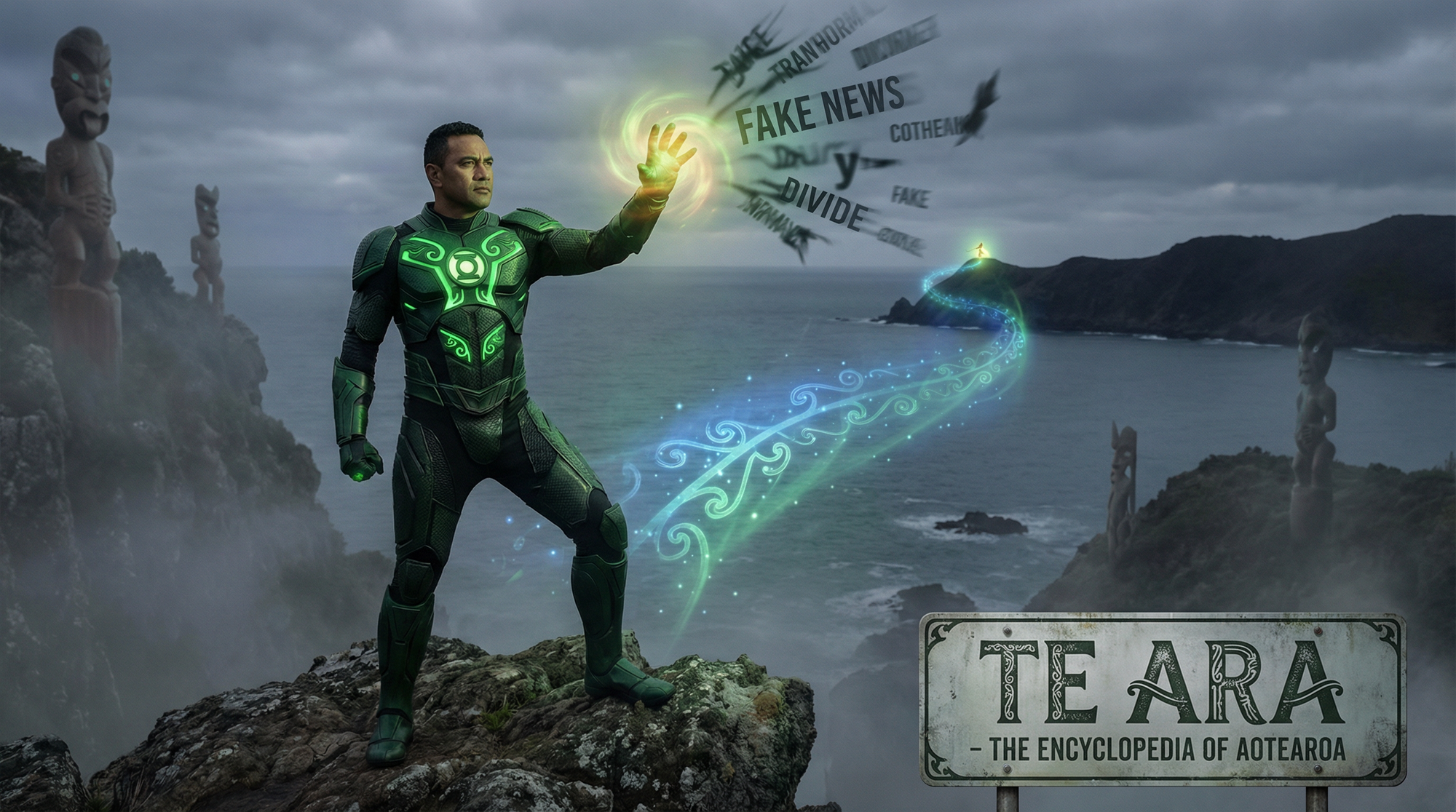
Ivor Jones The Māori Green Lantern Fighting Misinformation And Disinformation From The Far Right
Only Support this mahi if you are able:
Koha.Kiwi | Substack | Bank: HTDM 03-1546-0415173-000
All koha sustains free mātauranga Māori journalism. No paywall, no corporate interference.