"Jordan Williams and Elliot Ikilei Try to Chop Down Te Tiriti: The Atlas Puppets with Plastic Axes at Waitangi" - 6 Febrruary 2026
Foreign‑funded sock puppets, plastic patriotism, and a white‑supremacist government hell‑bent on burning tikanga to keep their donors warm



Jordan The Wank Williams and Elliot The Idiot Of Hobsons Pledge - Waitangi Day 2026
Kia ora ano on Waitangi Day Aotearoa,
These two wanks sent an email blast this morning about Waitangi, and I just had to cut em down.
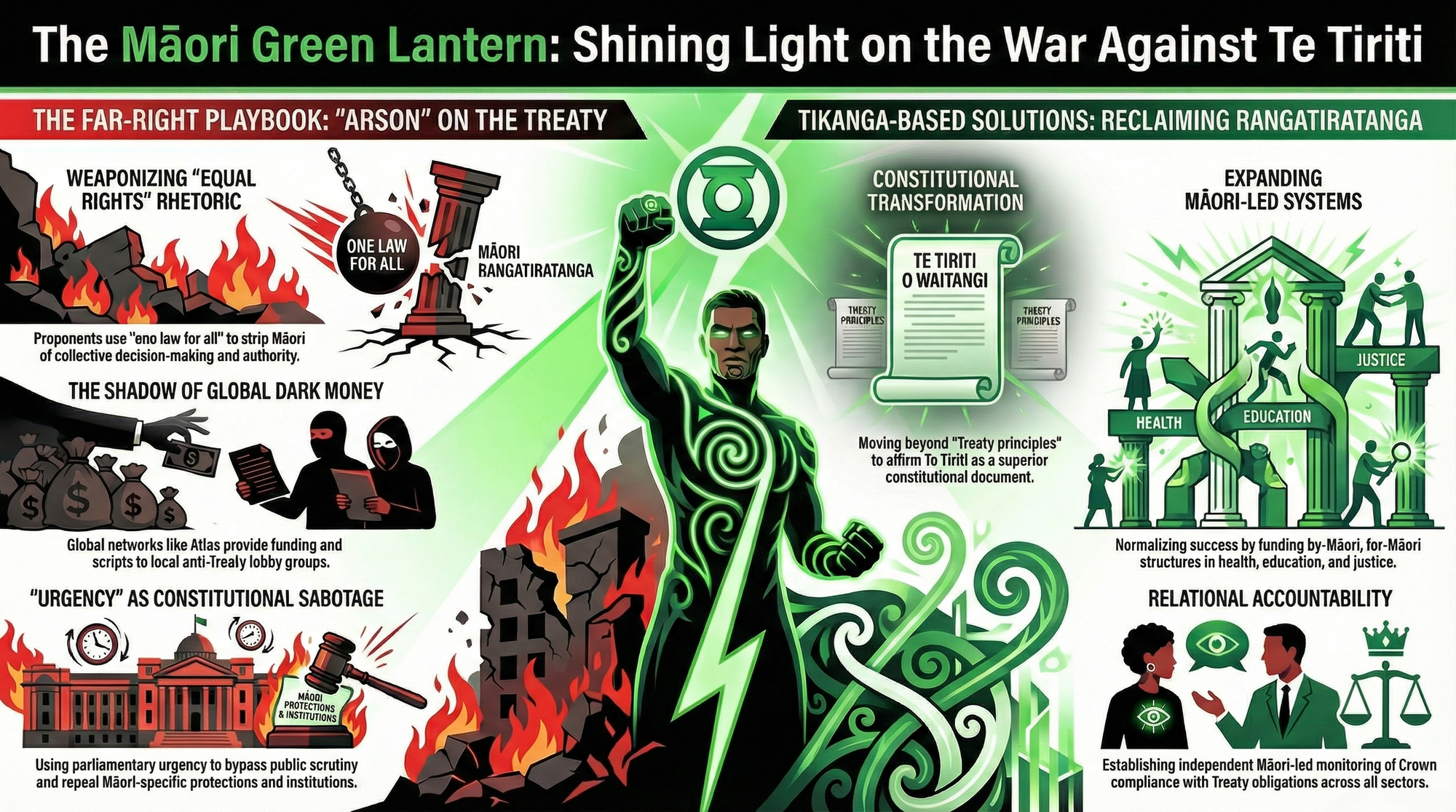
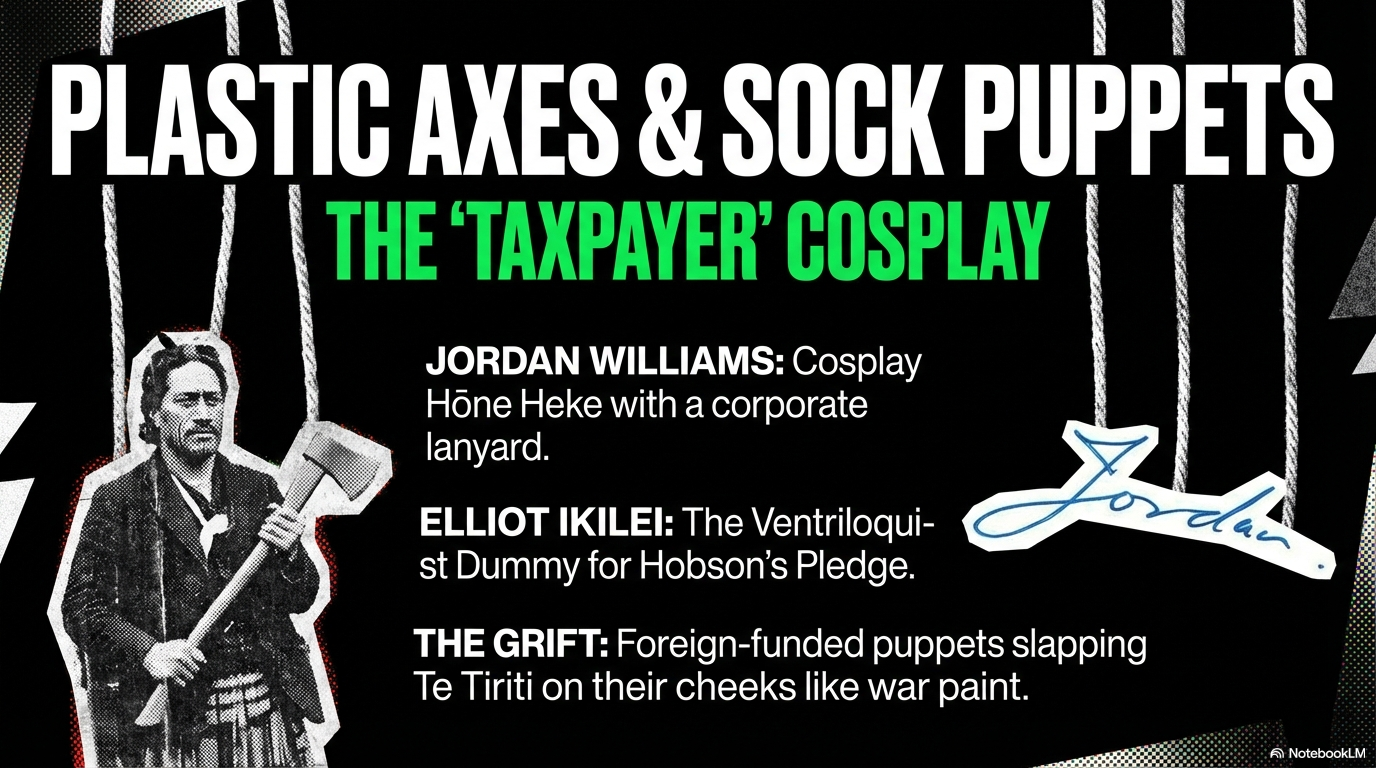
Waitangi Day has become the annual day when two Atlas‑trained sock puppets crawl out from under their donor’s desk, slap a bit of te Tiriti on their cheeks like war paint, and hope we don’t notice the strings.
Jordan Williams: cosplay Hōne Heke with a corporate lanyard
Jordan’s email is an act of historical grave‑robbing: he raids Hōne Heke’s urupā, steals the axe, files the blade down to a Taxpayers’ Union logo, and swings it not at the Crown but at teachers, nurses, and Māori communities trying to survive Crown‑engineered poverty. Hōne Heke fought a colonial state that weaponised tariffs to choke Māori trade; Te Tiriti in te reo guaranteed rangatira “te tino rangatiratanga” – chieftainship over their lands, villages and taonga – while the Crown was given a limited right to manage land transactions, not a blank cheque to loot and tax Māori economies into dust, as laid out in Te Ara’s Treaty overview. Te Ara makes that crystal clear.
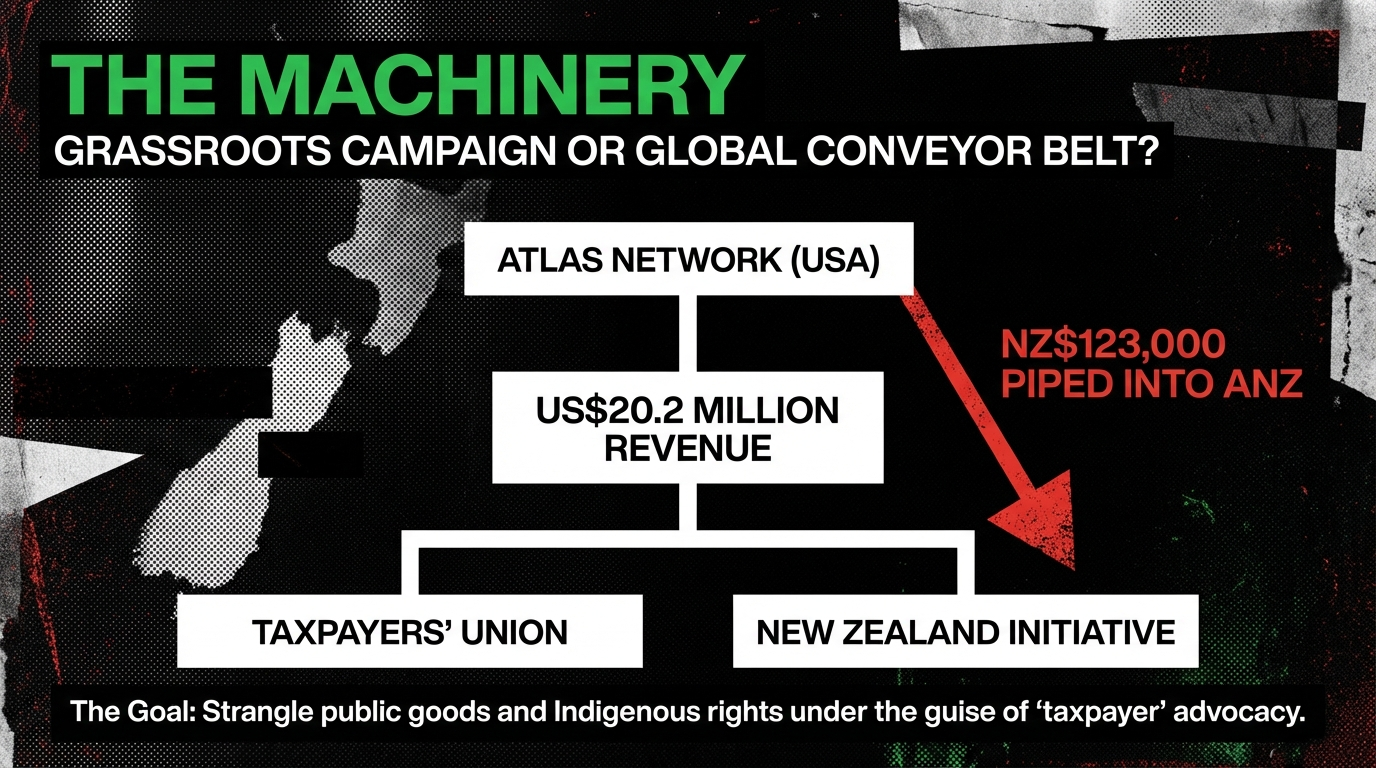
Jordan, by contrast, runs a Wellington lobby shop whose own website openly brags about support from the Atlas Network – travel grants, scholarships, fellowships, all the corporate finishing‑school perks – and proudly notes that the chair of Atlas’s board was a New Zealander. Taxpayers’ Union spells it out. Atlas itself is a global conveyor belt for “free market” think tanks, with revenues of US$20.2 million and US$8.8 million in grants in one recent year, including about NZ$123,000 piped into Australia and Aotearoa, as a detailed Public Service Association analysis of Atlas Form‑990 filings shows. PSA and ProPublica walk through those numbers. Even Wikipedia, hardly a radical pamphlet, notes that the Taxpayers’ Union is an official Atlas partner and that Jordan himself says Atlas funding and awards have helped bankroll his operation. Wikipedia confirms the partnership.
So picture it properly: Hōne Heke standing on the hill, wielding an axe soaked in the politics of mana and tino rangatiratanga – and next to him, Jordan in a sponsored polo shirt, waving a plastic replica and asking donors to chip in so he can attend another Atlas training in DC. That’s the level of cosplay we’re dealing with. For a western reader: imagine if a fossil‑fuel lobby group in the US tried to rebrand Harriet Tubman as the “original deregulation activist” because she defied government controls – that’s the kind of moral vandalism Jordan is committing.
Elliot Ikilei: cheap ventriloquist dummy for “one law” dog‑whistling
If Jordan is the cosplay rebel, Elliot is the discount motivational speaker hired to sell the same colonial script in softer lighting. His email reads like it was written by ChatGPT fine‑tuned on Don Brash’s Orewa speech: “one nation, one people, one law”, the Treaty as a “straightforward pact”, any Māori rights beyond the bare minimum dismissed as racist “division”. This is not an accident; it is the entire mission statement of Hobson’s Pledge. That lobby group, led by Brash, was formed explicitly to oppose affirmative action for Māori, abolish Māori electorates, scrap the Waitangi Tribunal and “remove all references in law and in Government policy to Treaty ‘partnership’ and ‘principles’”. Wikipedia lays their goals out line by line.
The reality: te Tiriti guaranteed both tino rangatiratanga and the rights of British subjects – a dual commitment that courts and the Waitangi Tribunal have distilled into principles of partnership, active protection, mutual benefit and redress. Te Ara’s section on Treaty principles details how the Lands case and subsequent Tribunal reports require the Crown to actively protect Māori interests and honour shared authority, not bulldoze it under a fake “equality”. Te Ara and a University of Auckland legal analysis of Treaty principles both note that partnership, active protection and redress are core obligations, not activist fantasies. Auckland Law School reinforces this. Elliot’s “no extra privileges, just the same” line is not a misinterpretation; it is a lie designed to dissolve those obligations in the public mind.
When Hobson’s Pledge is given free rein, the mask slips fast. Its “Save Our Shores” ad about foreshore and seabed rights was eviscerated by Māori legal expert Carwyn Jones as “incredibly misleading, inaccurate and clearly designed to whip up anti‑Māori sentiment”, and the Māori Journalists’ Association slammed the campaign as racially divisive and legally wrong. 1News and 1News again both record that takedown. The Spinoff’s coverage of the same campaign spells it out: Hobson’s Pledge is “an organisation intent on erasing indigenous rights by any means necessary”, using fear and selective facts to fracture society. The Spinoff calls the campaign exactly what it is. Elliot isn’t a principled defender of “equality”; he’s the voice‑over on a race‑baiting billboard that even mainstream journalists now recognise as disinformation.
For the western mind: think of a group in the US that insists the Civil Rights Act went too far, demands abolition of the Voting Rights Act, and runs misleading ads implying Black communities are stealing beachfront property – all in the name of “one law for all”. You would call that white supremacist politics. That is precisely the posture Hobson’s Pledge adopts, with Elliot as front‑man.
Two sock puppets, one script, one rotten tree
Strip away the email varnish and the pattern is obvious: Jordan and Elliot are two sock puppets on the same colonial arm. The hand belongs to the Atlas‑style ideology that frames any collective right, any Indigenous authority, any public infrastructure as an obstacle to “freedom” – meaning freedom for capital to roam and extract. The Public Service Association’s research shows Atlas is a multi‑million‑dollar machine devoted to seeding such outfits worldwide – seminars, mentoring, funding, all to build an echo chamber of “taxpayer” and “equality” groups whose job is to strangle public goods and Indigenous rights. PSA maps that network. ABC’s investigation into Atlas in Australia and New Zealand identifies at least two Atlas partners here – the Taxpayers’ Union and the New Zealand Initiative – and notes that Atlas‑linked think tanks have been active around referendums and indigenous rights debates across the Tasman. ABC joins the dots.
Hobson’s Pledge supplies the race bait; the Taxpayers’ Union supplies the austerity hymn sheet. Elliot says “one people, stop the race‑based privileges”; Jordan says “stop wasting taxpayers’ money on Māori stuff”; the government then rolls out a Treaty Principles Bill to legally erase partnership, tino rangatiratanga and active protection, despite the Waitangi Tribunal warning that such a bill would extinguish Treaty guarantees and breach basic human rights obligations. The Tribunal’s 2024 chapter on the proposed principles legislation spells out that redefining the Treaty along “one law for all” lines strips Māori of the very rights promised in 1840 and violates principles of partnership, equity and redress. Waitangi Tribunal calls it what it is. Hobson’s Pledge, unsurprisingly, has launched a pro‑Treaty Principles Bill campaign cheering this direction and urging the Prime Minister to go harder. Wikipedia notes that shift.
In this forest, Jordan and Elliot are not mighty tōtara; they’re wilted plastic Christmas trees trying to pass as native bush. Tap them and you don’t hear the deep thud of whakapapa; you hear hollow donor cheques rattling around. For western readers: they are the local equivalents of lobbyists who take money from the Koch network, then pretend to be “grassroots taxpayers” or “ordinary parents” while feeding talking points straight into government policy.
Quantifying the damage – and the smallness of the men
These men demand spreadsheets for every cent spent on Māori; let’s give them numbers they can choke on. Atlas’s US$20.2m revenue and NZ$14.3m in global grants – with NZ$123,000 directed into Australia and Aotearoa in one year – buy the ability to shape debates that determine billions in public spending and the constitutional status of tangata whenua. PSA documents that scale. In education alone, a peer‑reviewed study on EdTech in Aotearoa notes that educational technology has become a US$100b global market with returns “unequalled by most other economic sectors”, turning schools into a profit stream and creating “privatisation by stealth” in a system still largely state‑funded. Taylor & Francis sets out that shift. That is the world Jordan’s anti‑tax, anti‑public rhetoric is built to serve: a world where every school, clinic and environmental protection is just another asset to strip.
Set that against the scale of what Hōne Heke and Māori communities fought and still fight for. Te Ara’s Treaty entry and its separate discussion of kāwanatanga and Māori engagement with the state underline that tino rangatiratanga was meant to remain intact: Māori retain full authority over their people, land and possessions, even as kāwanatanga is granted for limited governance. Te Ara on kāwanatanga and Te Ara’s Treaty article both confirm this. The Human Rights Commission’s Treaty guidance calls the Treaty a relationship “akin to partnership”, with rights and obligations on both sides, not a one‑sided surrender. Tika Tangata reinforces this.
Jordan and Elliot’s positions are pathetic precisely because they aim so low. Faced with a constitutional covenant about shared authority, mutual protection and the survival of an Indigenous people, their big idea is: cut taxes for the already comfortable and pretend 1840 meant “just be grateful for British rights and shut up”. When Hobson’s Pledge runs a “disgusting” attack ad using a Māori councillor’s name and image against his will to fight Māori wards – and then publicly shrugs that it doesn’t care if his mana is damaged, as 1News reports – you see the moral scale they operate on. 1News captures that contempt. These are not visionary thinkers; they are petty saboteurs of rangatiratanga, paid in small grants and ego strokes.
For a western analogy: imagine a local PR guy who spends his career trying to roll back voting rights, affirmative action, and environmental protections so his donors can pay less tax, then demands to be seen as a “civil rights hero” because he quotes Martin Luther King out of context. That’s the level of moral absurdity Jordan and Elliot operate at.
Tikanga vs the neoliberal void
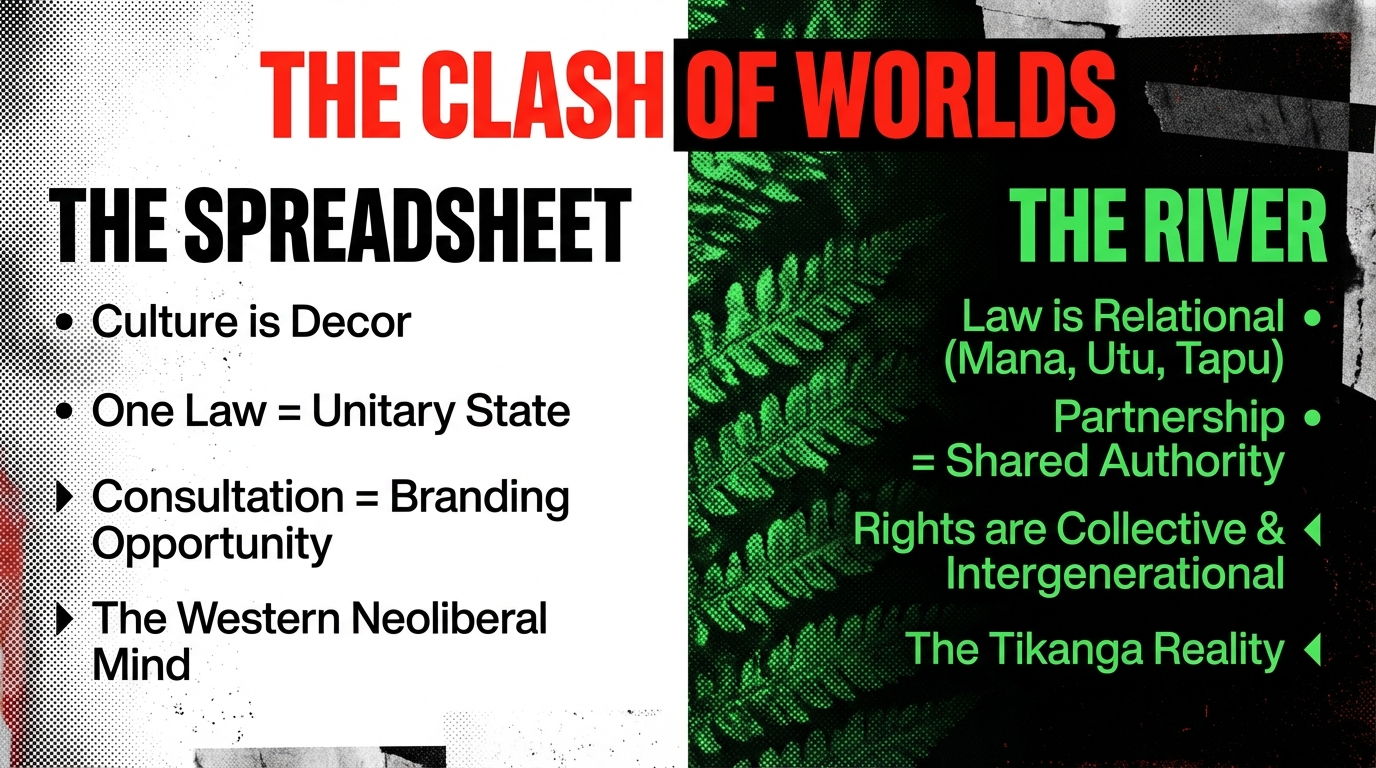
To a mind shaped by tikanga, the Treaty is part of a living whakapapa of relationships – between iwi and Crown, people and whenua, present and future generations. Te Ara’s Treaty principles and the Tribunal’s jurisprudence on partnership, active protection, and mutual benefit are written expressions of underlying tikanga: manaakitanga, kaitiakitanga, utu, whakapapa. Te Ara and Waitangi Tribunal show how those concepts surface in law. To a neoliberal mind trained in Atlas bootcamps, all of that is just “regulatory risk”: inconvenient obligations that limit how far you can squeeze profit and power out of land and people.
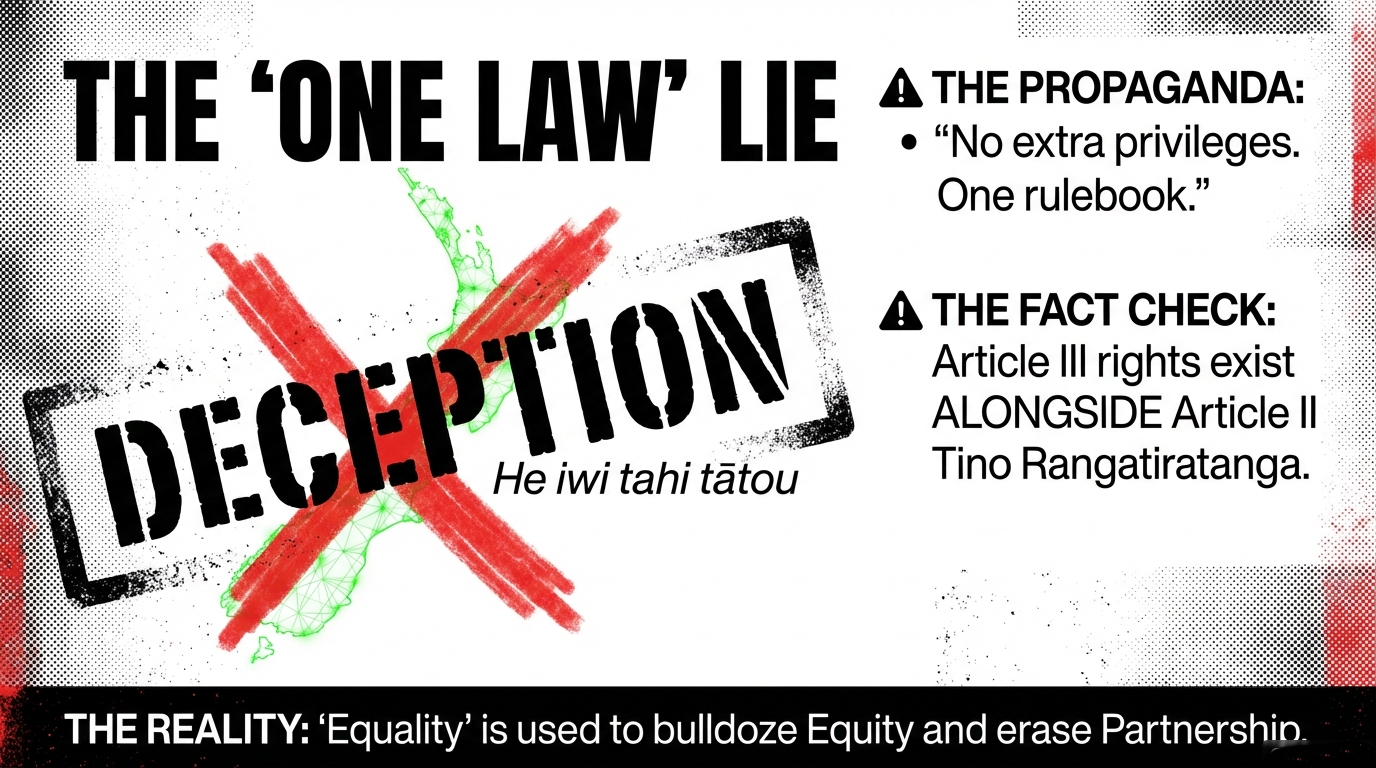
That’s why Jordan and Elliot’s positions must be destroyed, not politely “debated”. They are not engaging in good‑faith disagreement over history; they are running PR ops to collapse Māori rights into the narrowest, cheapest, most easily ignored interpretation possible. Human rights guidance in Aotearoa explicitly emphasises partnership, participation and protection duties owed to Māori under te Tiriti. Tika Tangata says so. Their “one law” and “taxpayer hero” narratives are designed to erase those duties from public consciousness so the Crown can breach with impunity and claim it’s just doing what “most Kiwis” want.
In tikanga terms, these are not rangatira; they are kākā tarahae – noisy parrots squawking someone else’s lines while shitting on the marae ātea. The only mercy they deserve is the mercy of being forgotten once their donors move on. Until then, the mahi is to name them, track their funding, dismantle their arguments with whakapapa and evidence, and make sure every time they step into the light, people can see the strings.
For western readers who struggle with tikanga, use this frame: tikanga is to Aotearoa what constitutional norms and unwritten conventions are to Westminster democracies – the deep rules behind the formal rules. When someone tramples tikanga, it’s not “just culture”; it is the equivalent of rewriting a constitution by stealth. Jordan and Elliot are the local equivalents of think‑tank hacks who insist the US Constitution was colour‑blind in 1787 and that any attempt to recognise structural racism is “un‑American”.
Widening the scene: Seymour, Luxon, and the Treaty House on fire
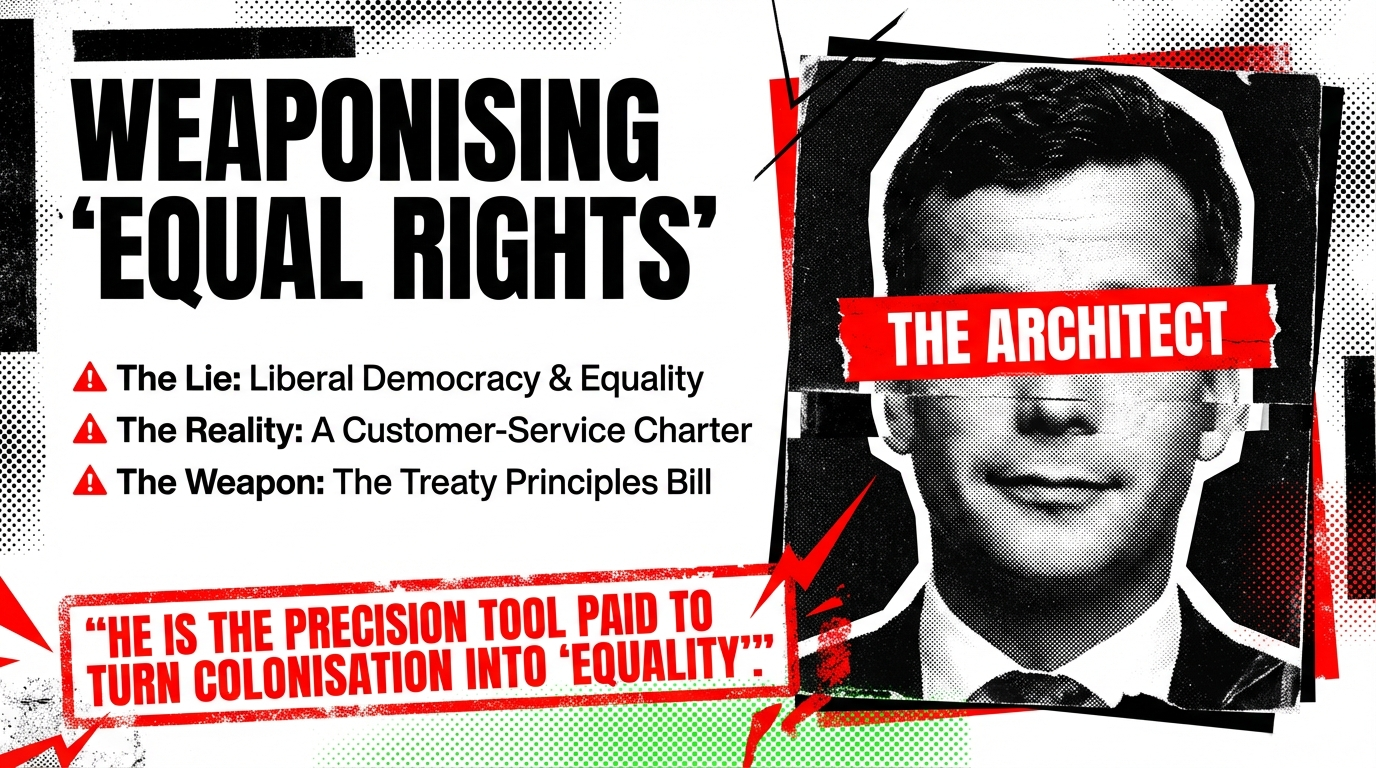
The three earlier essays form the wider battlefield Jordan and Ikilei stumble around in, swinging plastic swords while their Atlas patrons and coalition politicians do the real structural damage. In “David Seymour’s War on Te Tiriti”, you have already mapped how Seymour’s Treaty Principles Bill is an Atlas‑style wrecking ball aimed at deleting tino rangatiratanga from law and replacing it with a fake “one law for all” formula – the exact script Elliot parrots in his Hobson’s Pledge email, right down to the denial that Māori ever held distinct constitutional status. David Seymour’s War on Te Tiriti – The Māori Green Lantern shows Seymour’s Atlas training, his Bill’s collision with Waitangi Tribunal jurisprudence, and the way “equality” rhetoric is weaponised to extinguish Māori authority; Elliot simply repackages that as a sentimental Waitangi sermon and pretends it’s grassroots wisdom.
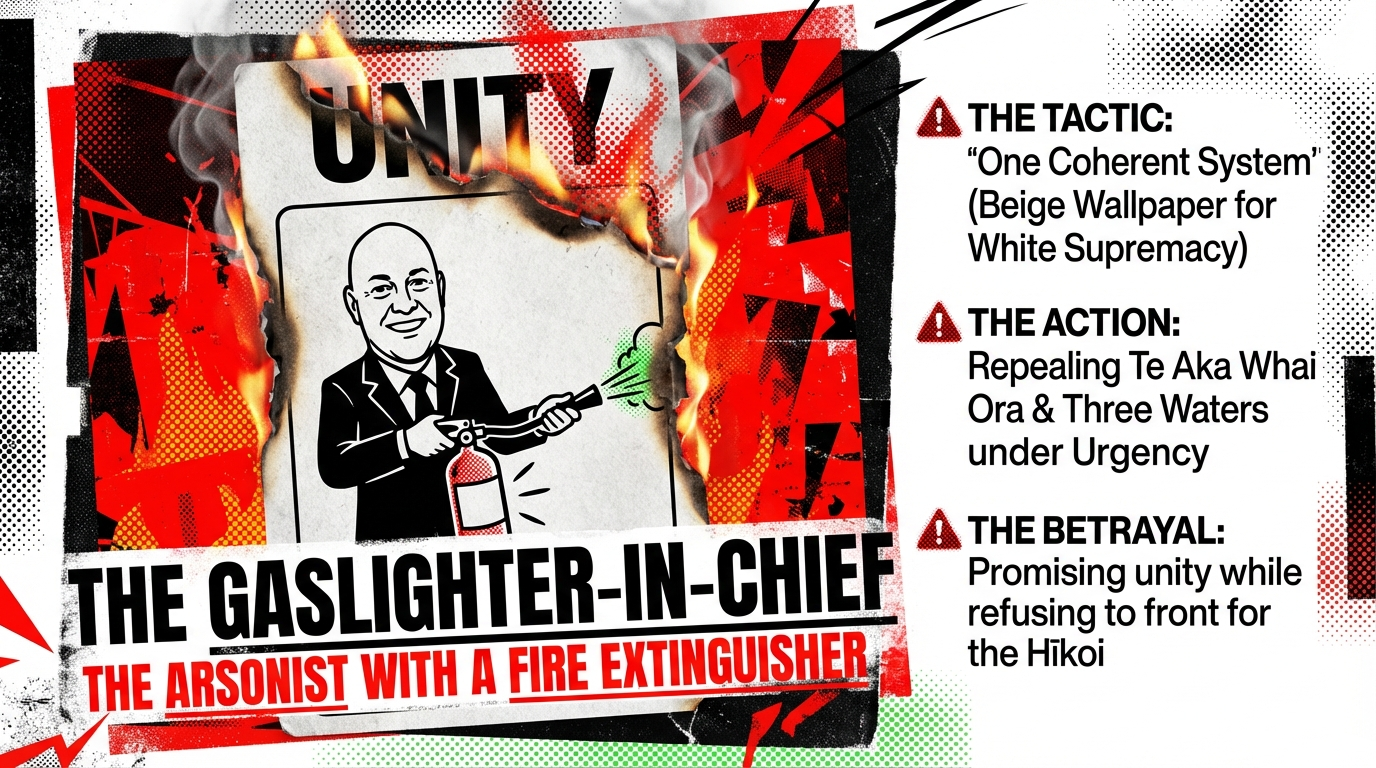
In “Luxon’s War on Truth, Tikanga and Māori”, you track how the Prime Minister sanitises this same agenda – downplaying Tribunal findings, trivialising co‑governance, and treating tikanga as optional “protocol” to be cut whenever it offends conservative donors – while front‑groups like Hobson’s Pledge and the Taxpayers’ Union supply the talking points and pseudo‑public legitimacy. Luxon’s War on Truth, Tikanga and Māori – The Māori Green Lantern details how Luxon’s “one government” framing at Rātana mirrors Elliot’s “one rulebook” line, and how his government’s hostility to Māori language, institutions and co‑governance echoes Jordan’s campaigns against bilingual road signs and “wasteful” Māori‑focused spending. That essay makes it plain: Jordan and Elliot are not rogue actors; they’re chorus boys in Luxon’s carefully stage‑managed assault on tikanga as a living constitutional force.
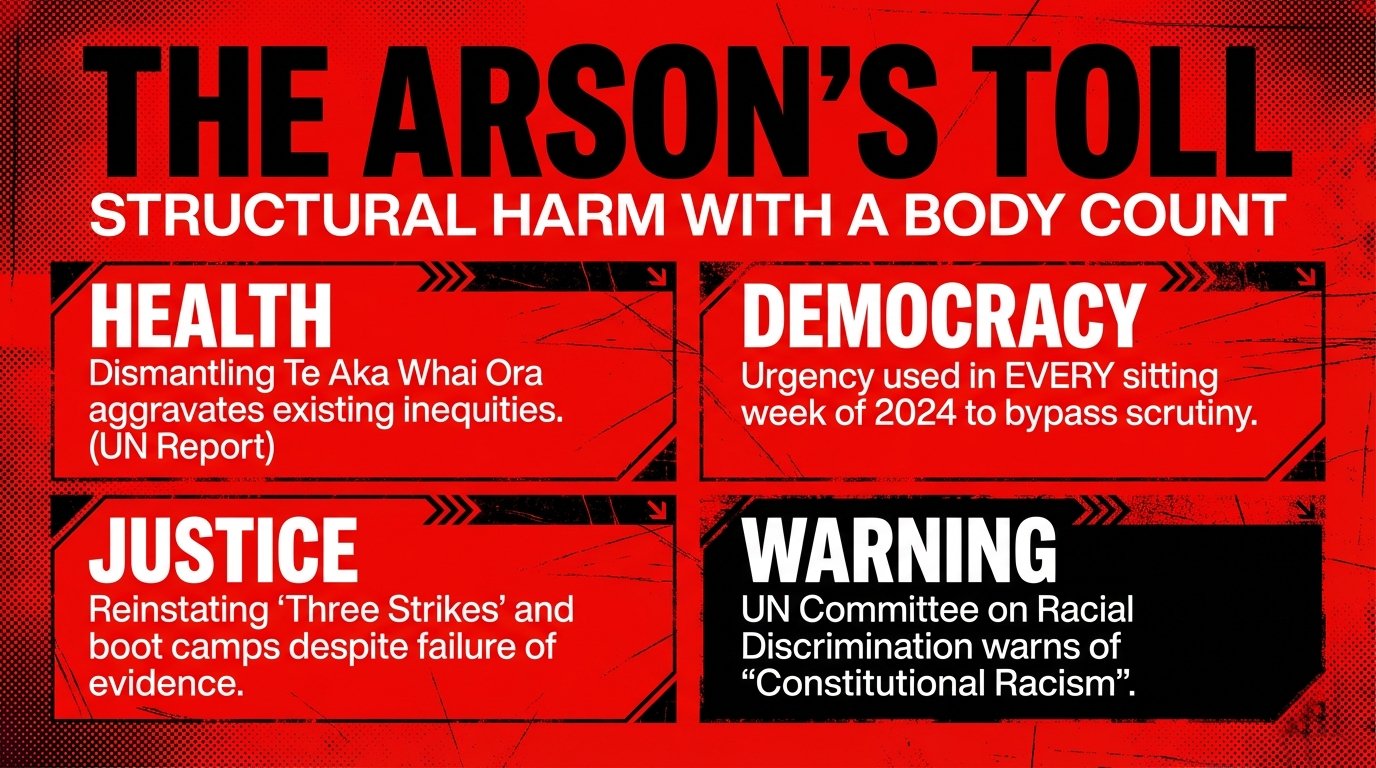
“Fire at the Treaty House” pulls the camera back again and shows the whole set: Atlas money, ACT’s Treaty Principles Bill, National’s culture war on Te Tiriti, Hobson’s Pledge’s racist ad campaigns, and the Taxpayers’ Union’s relentless attacks on public goods all feeding the same inferno. Fire at the Treaty House – Exposing the Atlas Network’s War on Te Tiriti – The Māori Green Lantern traces direct lines from Atlas training and funding into ACT, the New Zealand Initiative, and the Taxpayers’ Union, then out again into campaigns that normalise Elliot’s “one people” nonsense and Jordan’s “taxpayer hero” cosplay. In that whakapapa, Ikilei and Williams are not just pathetic; they are replaceable parts – interchangeable kākā tarahae whose only purpose is to repeat the lines and soak up the blame while the real architects of dispossession keep their hands clean.
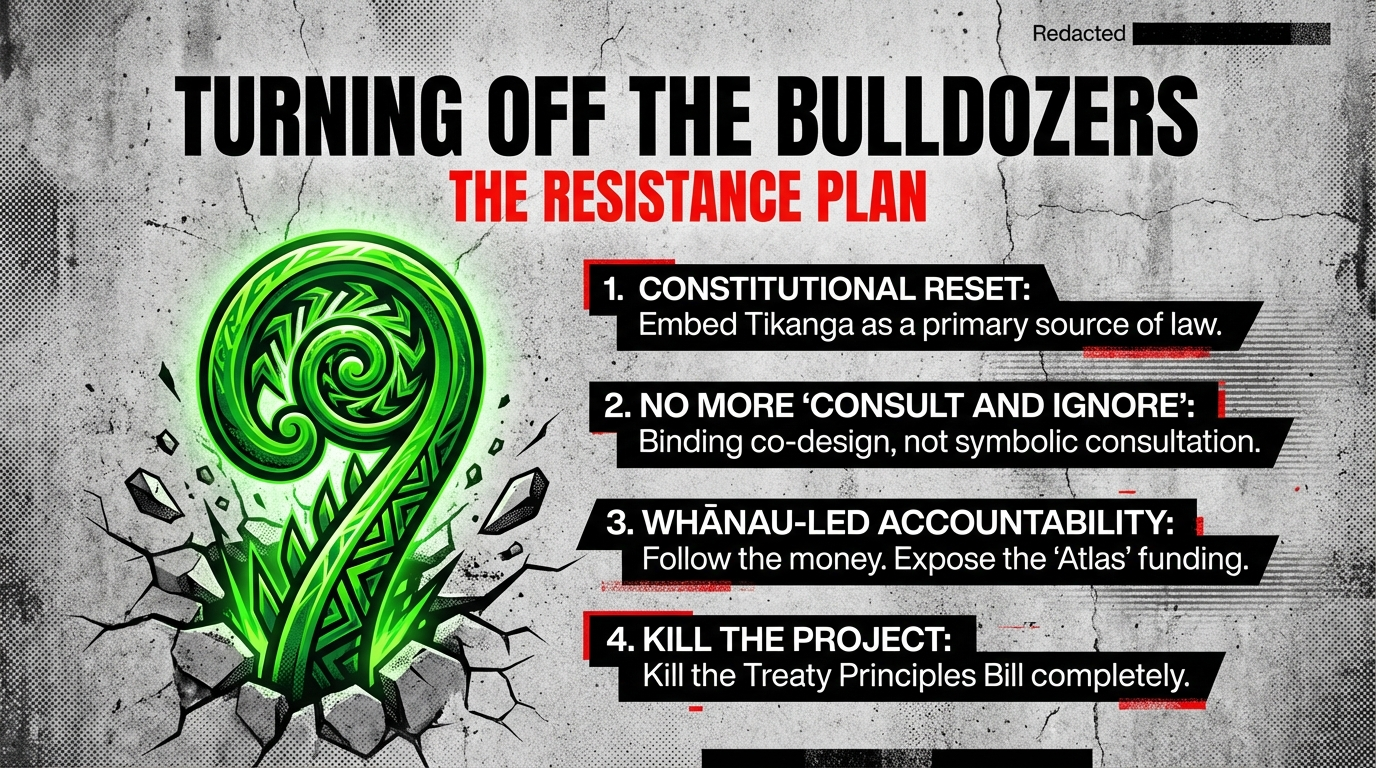
For the western political imagination: think of these three essays as the investigative series showing that what look like separate “grassroots” actors – a libertarian minister, a respectable CEO‑Prime Minister, and a couple of noisy lobby groups – are all drawing from the same dark‑money playbook. Jordan and Elliot’s emails are just the leaflets; the essays show you the printing press, the financiers, and the laws being drafted in the back room.
Koha Consideration – for this mahi
Every koha to this kaupapa is a refusal to let Atlas‑funded mouthpieces define Waitangi Day and a commitment to backing Māori‑led accountability where the Crown and its corporate courtiers will not. It signals that rangatiratanga includes the power to fund our own researchers, storytellers and watchdogs who can follow the money from Hobson’s Pledge ads to Beehive bills and call out every breach of tikanga and Te Tiriti with evidence in hand, drawing on sources like Te Ara, the Waitangi Tribunal and investigative reporting from outlets such as 1News and RNZ.
Kia kaha, whānau. Stay vigilant. Stay connected. And if you are able, consider a koha to ensure this voice keeps dissecting Atlas influence, exposing white‑supremacist neoliberal spin, and defending tikanga in public. If you are unable to koha, kei te pai – subscribe or follow The Māori Green Lantern on Substack, kōrero about these essays, and share them with your whānau and friends; that is koha in itself.
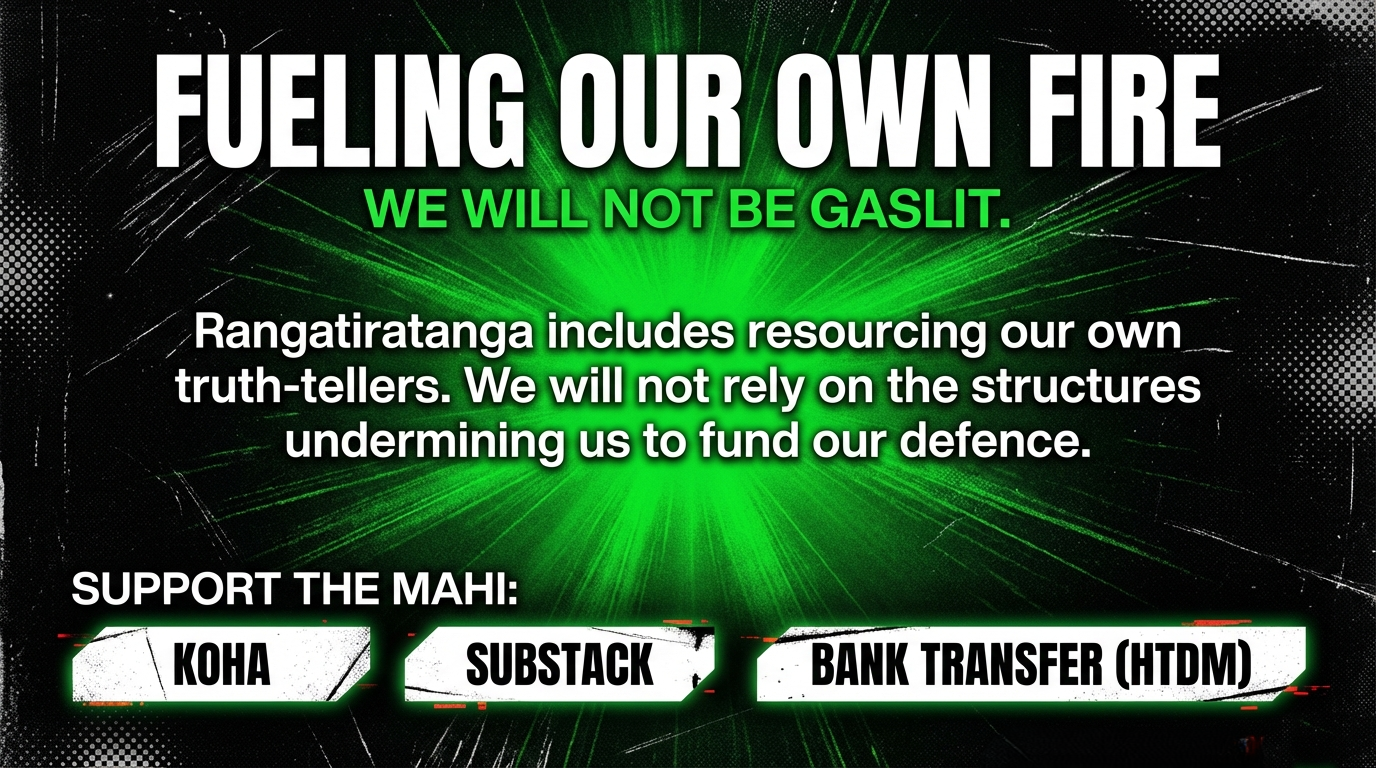
Three pathways exist:
To support this mahi directly with a koha (voluntary contribution), visit: Koha—Support.
To receive essays directly and support through subscription, join the Substack community: Subscribe to the Māori Green Lantern on Substack.
For direct bank transfer, koha can be sent to HTDM, account number 031546-0415173-000.
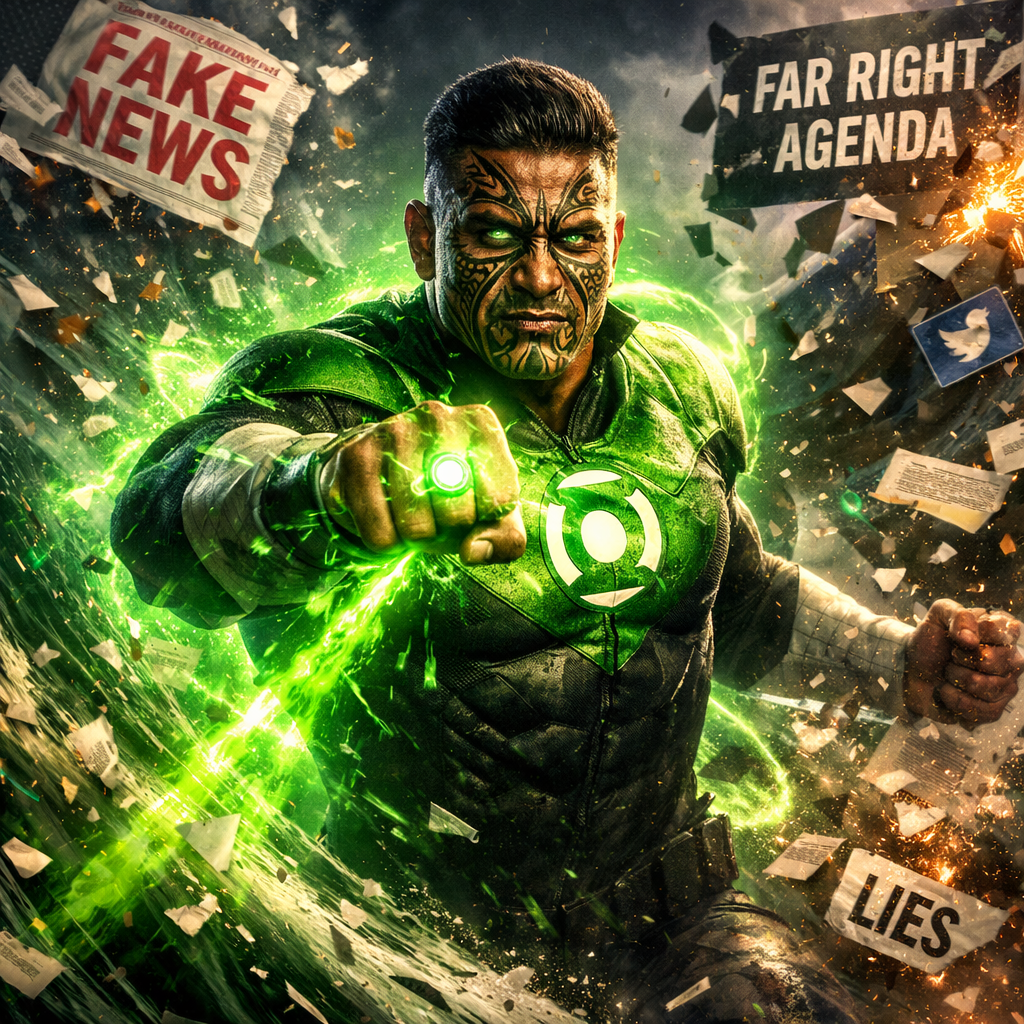
Ivor Jones The Māori Green Lantern Fighting Misinformation And Disinformation From The Far Right