“Justice Behind Closed Doors: When Privilege Purchases Privacy and Māori Face the Full Force of the Law” - 30 June 2025
The Suppression Order that Exposes a Two-Tier Justice System
Kia ora whānau, e ngā iwi o Aotearoa. Greetings family, to all the peoples of New Zealand.
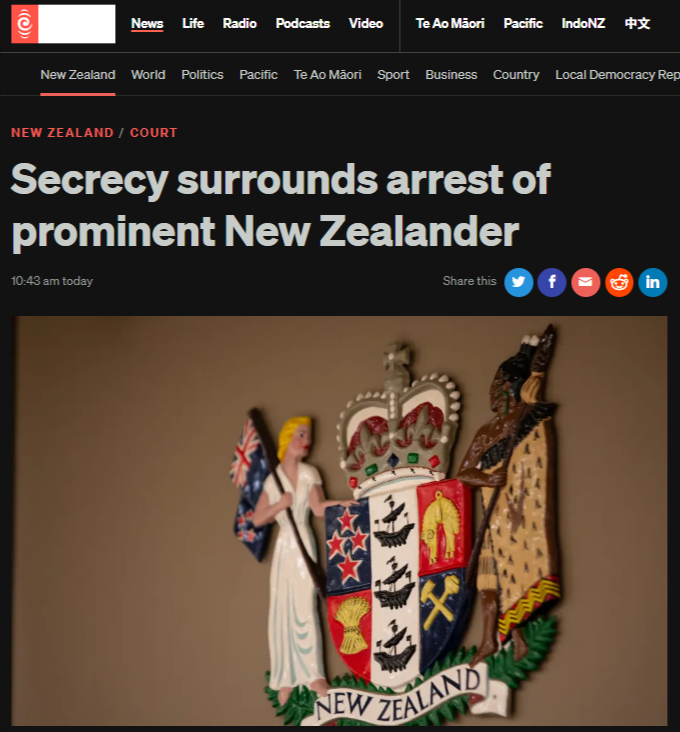
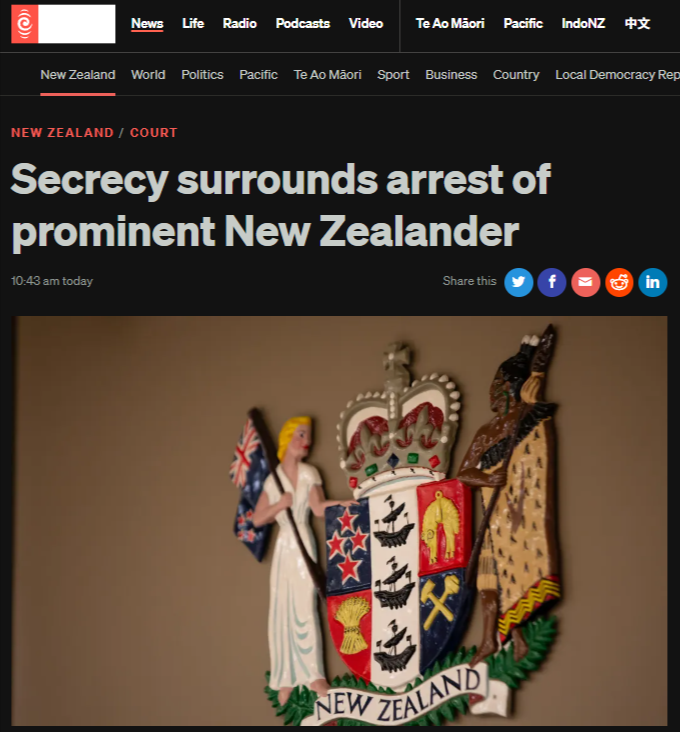
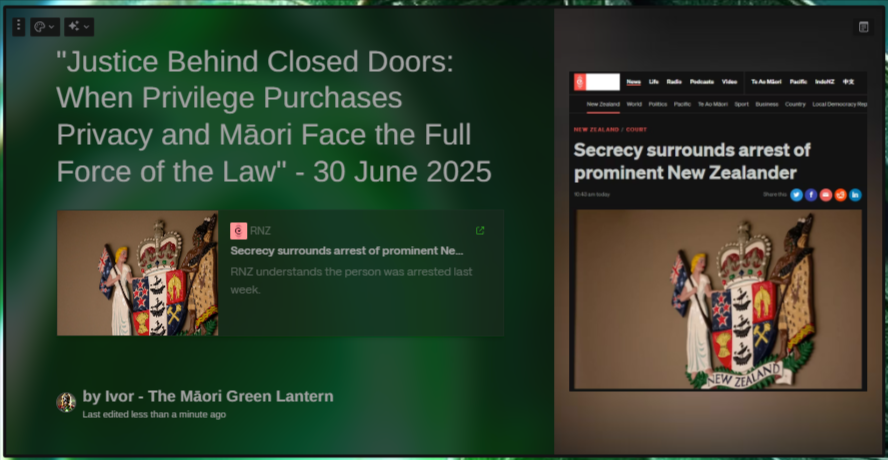
The arrest of a prominent New Zealander on eight serious charges with strict suppression orders1 has once again exposed the gaping inequalities in our justice system. While this unnamed individual enjoys protection from public scrutiny despite facing category three offences punishable by imprisonment for life or at least two years incarceration1, Māori defendants routinely see their names and charges splashed across headlines before trial. This case illuminates how wealth, status, and connections can secure legal protections that ordinary whānau cannot access, creating a two-tier justice system that fundamentally undermines the principle of equality before the law.
Background: The Colonial Foundation of Legal Inequality
New Zealand's justice system was never designed to serve Māori fairly. From its colonial inception, the legal framework has consistently protected settler interests while criminalising Māori resistance and survival. The establishment of British law in Aotearoa brought with it institutions that would systematically dispossess tangata whenua of their land, language, and tino rangatiratanga.
The principle of mana in te ao Māori emphasizes that true authority comes with responsibility and accountability to the community. When justice operates in secrecy, shielding the powerful from scrutiny while exposing the marginalized to public condemnation, it violates this fundamental concept of balanced leadership.
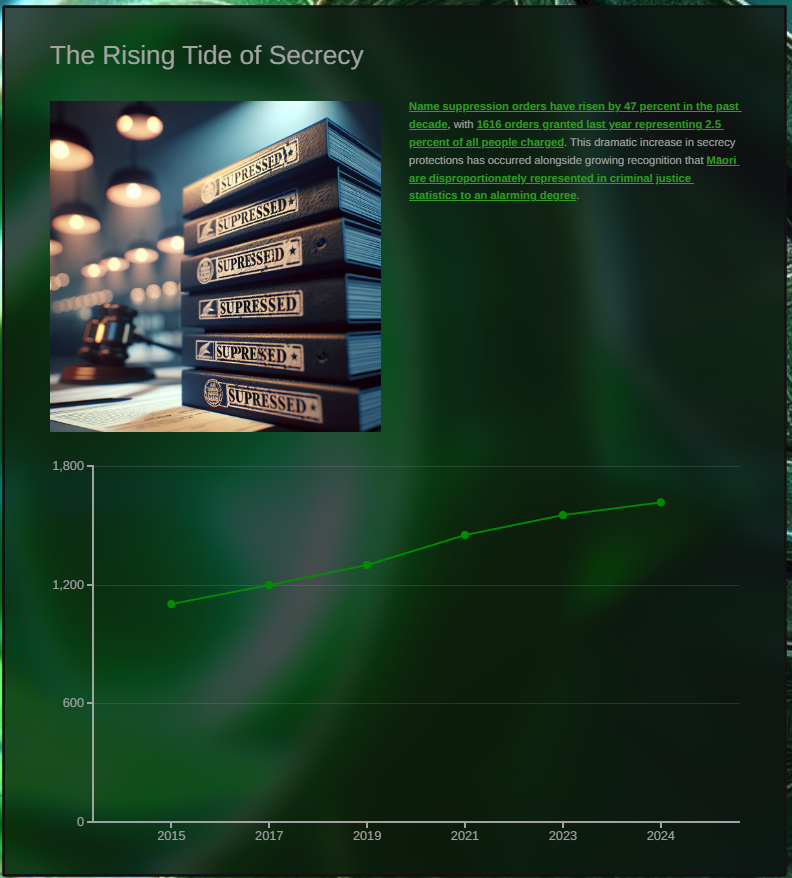
Name suppression orders have risen by 47 percent in the past decade, with 1616 orders granted last year representing 2.5 percent of all people charged. This dramatic increase in secrecy protections has occurred alongside growing recognition that Māori are disproportionately represented in criminal justice statistics to an alarming degree.
Understanding the Gravity of Category 3 Offences
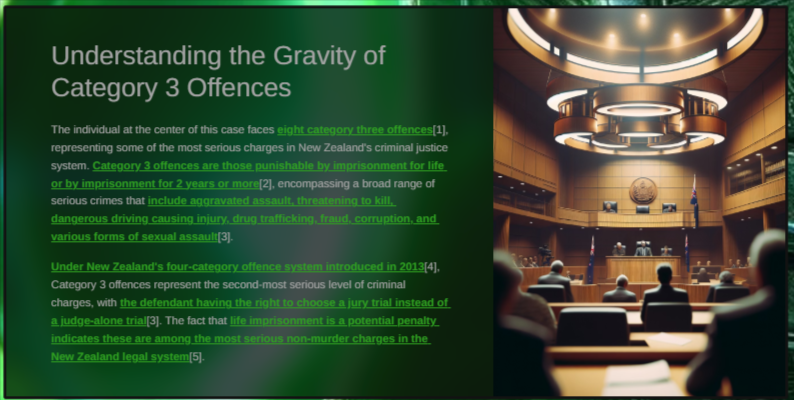
The individual at the center of this case faces eight category three offences1, representing some of the most serious charges in New Zealand's criminal justice system. Category 3 offences are those punishable by imprisonment for life or by imprisonment for 2 years or more2, encompassing a broad range of serious crimes that include aggravated assault, threatening to kill, dangerous driving causing injury, drug trafficking, fraud, corruption, and various forms of sexual assault3.
Under New Zealand's four-category offence system introduced in 20134, Category 3 offences represent the second-most serious level of criminal charges, with the defendant having the right to choose a jury trial instead of a judge-alone trial3. The fact that life imprisonment is a potential penalty indicates these are among the most serious non-murder charges in the New Zealand legal system5.
Yet an interim suppression order has been granted, preventing media from reporting not just the person's name, but even the nature of the charges1. This level of protection contrasts starkly with how the justice system treats Māori defendants, who are routinely denied such privacy protections.
The scope of this problem becomes clear when examining suppression statistics. Last year, Māori were charged with 43 percent of crimes but only accounted for 17 percent of the interim and final name suppression granted. Meanwhile, Pākehā were charged with 36 percent of crimes, but accounted for 65 percent of interim and final name suppression.
Main Analysis: The Architecture of Privileged Protection
Speculation on Identity and the Protected Classes
Based on the serious nature of the charges and the extraordinary level of secrecy imposed, analysis of recent high-profile cases reveals several categories of individuals who could warrant such protection. Recent cases involving entertainment industry figures facing multiple serious charges64 demonstrate that the entertainment sector includes prominent figures who would merit such suppression orders.
The reference to one of NZ's biggest sport stars facing methamphetamine supply charges7 shows that high-profile athletes are not immune from serious criminal allegations. Given New Zealand's prominence in rugby, cricket, rowing, and other sports, this could involve a current or former national representative whose identification would compromise ongoing investigations.
Business leaders have also faced significant charges8, with cases involving businessmen sentenced to lengthy prison terms demonstrating that the business community includes figures who could be considered "prominent." The Serious Fraud Office has prosecuted numerous cases involving significant sums, including a recent $4.1 million private sector corruption case involving IT contractors9.
Sexual offences constitute many category 3 crimes10, and New Zealand has seen several cases involving entertainment industry figures facing multiple charges. The pattern of eight charges could indicate multiple instances of the same type of offending or a complex criminal scheme spanning different categories of serious crime.
The Wealth Factor in Legal Protection
The ability to secure suppression orders correlates directly with access to high-quality legal representation and social capital. Having access to a good lawyer, and being able to pay a good lawyer to do that for you is obviously an advantage. Pākehā are more likely to be able to afford a private lawyer because they earn more income on average than Māori, with Māori aged 40 to 60 earning $10,000 less a year than their non-Māori counterparts.
This disparity reflects the neoliberal capture of our justice system, where market forces determine access to quality legal defense. The principle of equal treatment under law becomes meaningless when your bank account determines your level of protection. Wealthy defendants can afford experienced lawyers who know how to navigate the system, while those without means often face proceedings with inadequate representation or duty lawyers meeting them minutes before court.
The Structural Racism of Selective Justice
The differential treatment extends beyond mere statistics to reveal systemic patterns of discrimination. Bias and structural racism within the police are partly why Māori men are more likely to be stopped, prosecuted and tasered. Police are 11 percent more likely to prosecute Māori than NZ Europeans for the same offence.
This bias compounds throughout the justice system. Māori make up 16 percent of the overall population, but represent 51 percent of prisoners, with 42% of all criminal apprehensions involving a person identifying as Māori. Yet despite this massive overrepresentation in arrests and convictions, Māori receive far fewer privacy protections.
The Performance of Respectability Politics
The current suppression order criteria effectively encode class and racial bias into legal doctrine. The test for granting suppression includes consideration of whether refusal would cause 'extreme hardship' to the defendant or others. This standard implicitly favors those whose social position gives them more to lose from public exposure.
As legal experts note, if your offending is a product of coming from that impoverished environment and having all of those challenges in life, then you're unlikely to be a person who also has the sort of reputation and standing that needs to be protected with name suppression. This creates a perverse system where those who have benefited from structural advantages can use those same advantages to avoid accountability for their actions.
The Neoliberal Commodification of Justice
The increasing privatization of justice has created a marketplace where legal outcomes correlate with purchasing power. Justice Minister Kiri Allan's acknowledgment that if you're well-funded, well-resourced, then you can seek to have your name suppressed for a range of different reasons exposes how neoliberal policies have turned justice into a commodity.
This commodification undermines the foundational principle that justice should be blind to wealth and status. When the powerful can purchase privacy while the poor face public exposure, the justice system becomes another mechanism for reinforcing existing hierarchies rather than challenging them.
Digital Age Surveillance and Māori Targeting
The expansion of surveillance capabilities has disproportionately impacted Māori communities. Police officers in many regions were systematically stopping and photographing rangatahi Māori on the street for a national database, creating digital profiles that follow young Māori throughout their lives.
This surveillance apparatus operates alongside suppression orders that protect the wealthy, creating a system where Māori are subjected to enhanced scrutiny while the powerful enjoy enhanced privacy. The contrast illuminates how surveillance technologies can be weaponized to reinforce racial hierarchies while appearing neutral.
The Colonial Logic of Legal Violence
The current system continues the colonial project of criminalizing Māori while protecting settler interests. From Moana Jackson's He Whaipaanga Hou report in the 1980s through every decade since then the New Zealand police have been shown that they engage in racist discrimination against Māori, yet little fundamental change occurs.
The parallel systems of protection for the wealthy and punishment for the poor echo historical patterns where settler courts protected colonial interests while criminalizing Māori efforts to defend their land and rights. Name suppression for prominent figures while exposing ordinary defendants represents a continuation of this colonial logic in contemporary form.
Recent High-Profile Cases Reveal the Pattern
The pattern of privileged protection extends beyond this current case. Recent high-profile cases from 2024 included former Green MP Golriz Ghahraman's shoplifting conviction11, where despite criminal convictions, her status afforded different treatment than ordinary offenders would receive. Similarly, former ACT Party president Tim Jago maintained name suppression for two years before being identified as a convicted sex offender12.
These cases demonstrate how prominent musicians found guilty of domestic violence continue fighting for name suppression13, while ordinary defendants facing similar charges receive no such protections. The recent Auckland Airport drug smuggling bust involving $24 million worth of methamphetamine and cocaine14 saw eighteen arrests with all defendants named publicly15 despite facing similarly serious charges.
Implications: Democracy, Accountability, and Tino Rangatiratanga
This differential treatment has profound implications that extend far beyond individual cases. When justice operates through separate standards for different classes of people, it undermines democratic legitimacy and social cohesion. The principle of open justice exists because democracy requires informed citizens who can hold power accountable.
For Māori communities already experiencing disproportionate contact with the justice system, seeing prominent figures receive preferential treatment deepens mistrust and highlights systemic inequalities. This damages the social contract and makes it harder to address the underlying causes of crime and social harm.
The secrecy surrounding serious charges also prevents the community healing that traditional Māori justice emphasized. In te ao Māori, the concept of whakatōhea emphasizes collective responsibility and the importance of addressing wrongdoing transparently within the community. Suppression orders prevent this healing process and allow harmful behavior to continue unchecked.
The reinstatement of the three-strikes legislation16 further compounds these inequalities by creating mandatory sentences that will disproportionately impact Māori offenders who cannot afford the legal representation needed to avoid conviction, while wealthy defendants can use suppression orders and superior legal teams to avoid public accountability altogether.
Demanding Genuine Justice
The secrecy surrounding this prominent New Zealander's arrest represents far more than an individual case of legal protection. It exposes the fundamental architecture of inequality that runs through our justice system, creating separate standards for the wealthy and the marginalized, for Pākehā and Māori, for the powerful and the powerless.
True justice requires transparency, accountability, and equal treatment regardless of social status, wealth, or ethnicity. The current system's ability to shield the powerful while exposing the vulnerable makes a mockery of the principle that all are equal before the law. When wealth can purchase privacy and status can secure protection, our justice system becomes another mechanism for perpetuating the very inequalities it should challenge.
The eight serious charges facing this unnamed individual – possibly spanning fraud, drug trafficking, sexual offences, or other category 3 crimes – would normally generate significant public interest and scrutiny. Yet the interim suppression order demonstrates how easily the powerful can avoid accountability while ordinary citizens, particularly Māori, face the full force of both legal consequences and public exposure.
As tangata whenua, we must continue demanding a justice system that genuinely serves all people equally. This means challenging the structural inequalities that allow money and connections to determine access to legal protections. It means insisting on transparency in cases involving serious criminal charges, regardless of who is accused. And it means recognizing that true justice cannot exist within systems designed to protect colonial privilege while criminalizing indigenous resistance.
The path forward requires both immediate reforms and fundamental transformation. We need clearer, more restrictive criteria for suppression orders that cannot be manipulated by wealth or status. We need better access to quality legal representation for all defendants. And ultimately, we need justice systems that embody Māori values of accountability, collective responsibility, and the equal dignity of all people.
Until we achieve this transformation, cases like this will continue to expose the hypocrisy of a system that preaches equality while practicing favoritism. The powerful will continue hiding behind legal protections while ordinary whānau face the full force of public scrutiny and legal consequences.
Our communities deserve justice that is both fair and transparent, rooted in principles of mana and whakatōhea that honor the dignity of all people. This is not just a legal issue but a fundamental question of whether we will continue accepting a system designed to serve the powerful at the expense of the marginalized.
I write these words with aroha for all those seeking justice in our imperfect system. For readers who find value in holding power accountable, please consider supporting this work with a koha to HTDM: 03-1546-0415173-000. I understand these are tough economic times for whānau, so please only contribute if you have the capacity and wish to do so.
Kia kaha, kia māia, kia manawanui.

Ivor Jones
The Māori Green Lantern