“Karen Chhour’s Boot Camp Disaster and the Lies That Bury Māori Tamariki” - 8 December 2025
When the State Recycles Violence
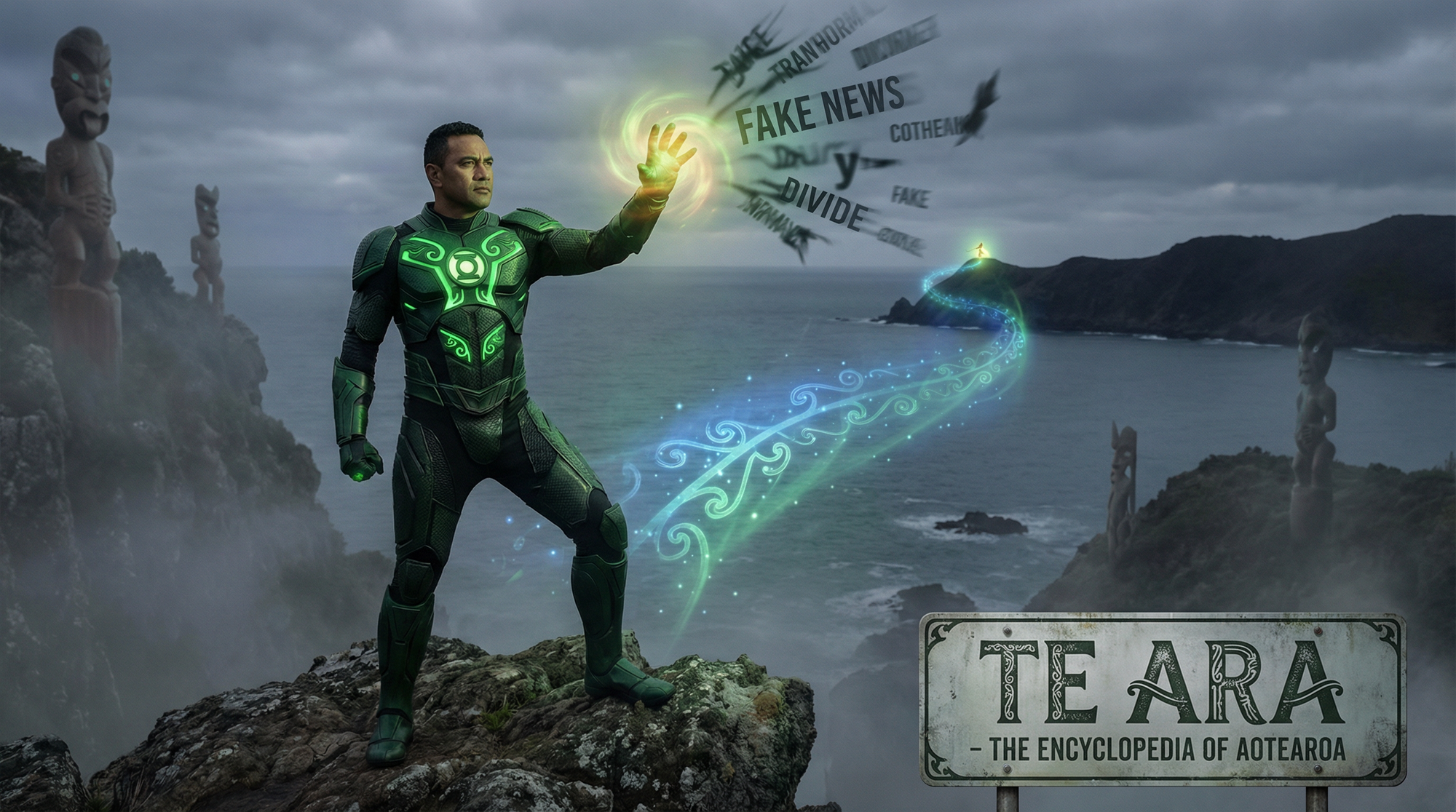
Mōrena koutou katoa. Kia ora. Ivor Jones here—The Māori Green Lantern. Time to wield the taiaha empowered by the Ring.
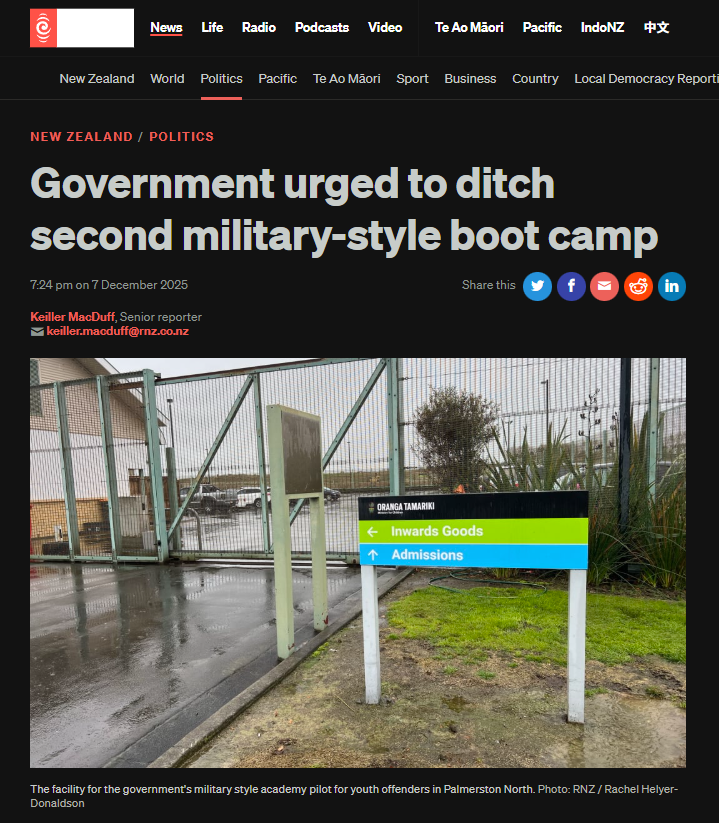
When Children’s Minister Karen Chhour tells you she’s running another boot camp for rangatahi by March 2026, despite legislation not yet passed and a pilot programme that failed spectacularly, you’re watching manufactured cruelty dressed up as “tough love.”
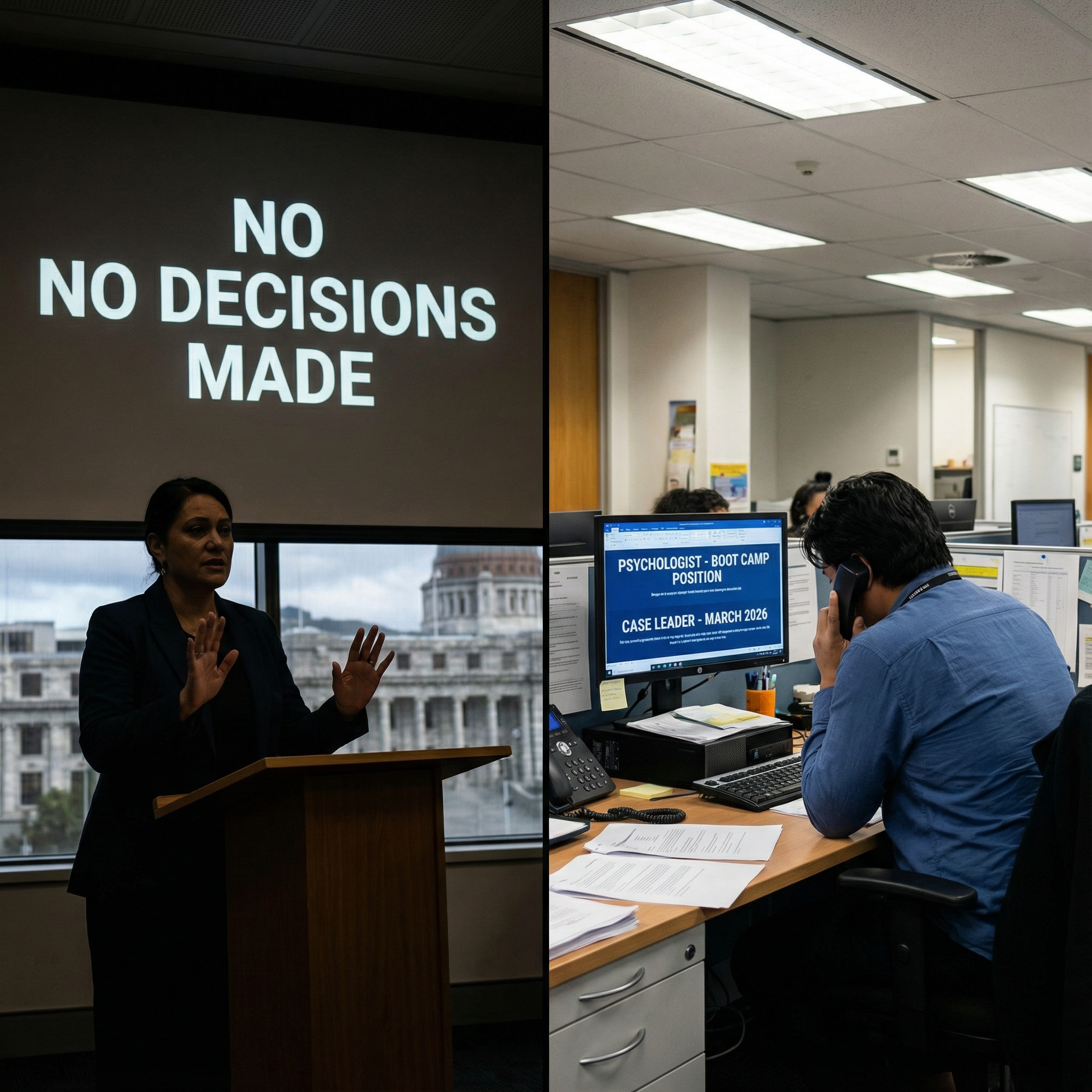
When Oranga Tamariki confirms it’s already recruiting staff—psychologists, case leaders, residential youth workers—before the law even exists, you’re witnessing the neoliberal playbook in action:
policy by press release, evidence be damned, and Māori children as collateral damage.
And social media claims that “child poverty was never really measured until Labour introduced The Child Poverty Reduction Act 2018“—they’re factually correct. But here’s where it gets interesting:
that same claim is being weaponised by people who simultaneously attack Jacinda Ardern’s film as “taxpayer funded” while ignoring the actual misinformation rotting our discourse.
This is how white supremacy operates—truth twisted into culture war ammunition while the state doubles down on policies that have failed for fifty years.
Let’s trace the networks. Let’s expose the lies. Let’s name names.
The Boot Camp Lie: Fifty Years of Documented Failure
Here are the facts, verified and undeniable:
New Zealand has run boot camps since 1971. They were abandoned in 1981 and replaced with “corrective training” until 2002. The recidivism rate for corrective trainees reached 92% after five years—three times the general population rate.
By 1997, even National’s Corrections Minister Paul East admitted:
“It’s clear from what Prison Officers are telling me that we need to provide these young people with programmes which target the reasons for their recidivism”.
Fast forward to 2009:
military-style activity camps (MACs) were reintroduced under John Key.
A 2013 Ministry of Social Development evaluation found they had insufficient screening of staff and participants, lack of clarity around roles, inadequate information, training and resources, and required better engagement with whānau. Sound familiar?
Now we’re in 2024-25. The latest boot camp pilot ran from July 2024 to July 2025. Ten young Māori men aged 14-17 participated. Seven reoffended. One died in a vehicle accident. One was withdrawn and placed in Corrections custody. Three participants ended up in prison or youth justice facilities.
The independent evaluation concluded the programme was too rushed and too small to provide meaningful data. It identified the same problems as the 2009-2010 camps:
rushed implementation, lack of therapeutic continuity, inadequate capacity, belated whānau support, and failure to engage with mana whenua early enough.
This is not evidence-based policy. This is ideological cruelty on repeat.
The Royal Commission Said “Never Again.” Chhour Said “Watch Me.”
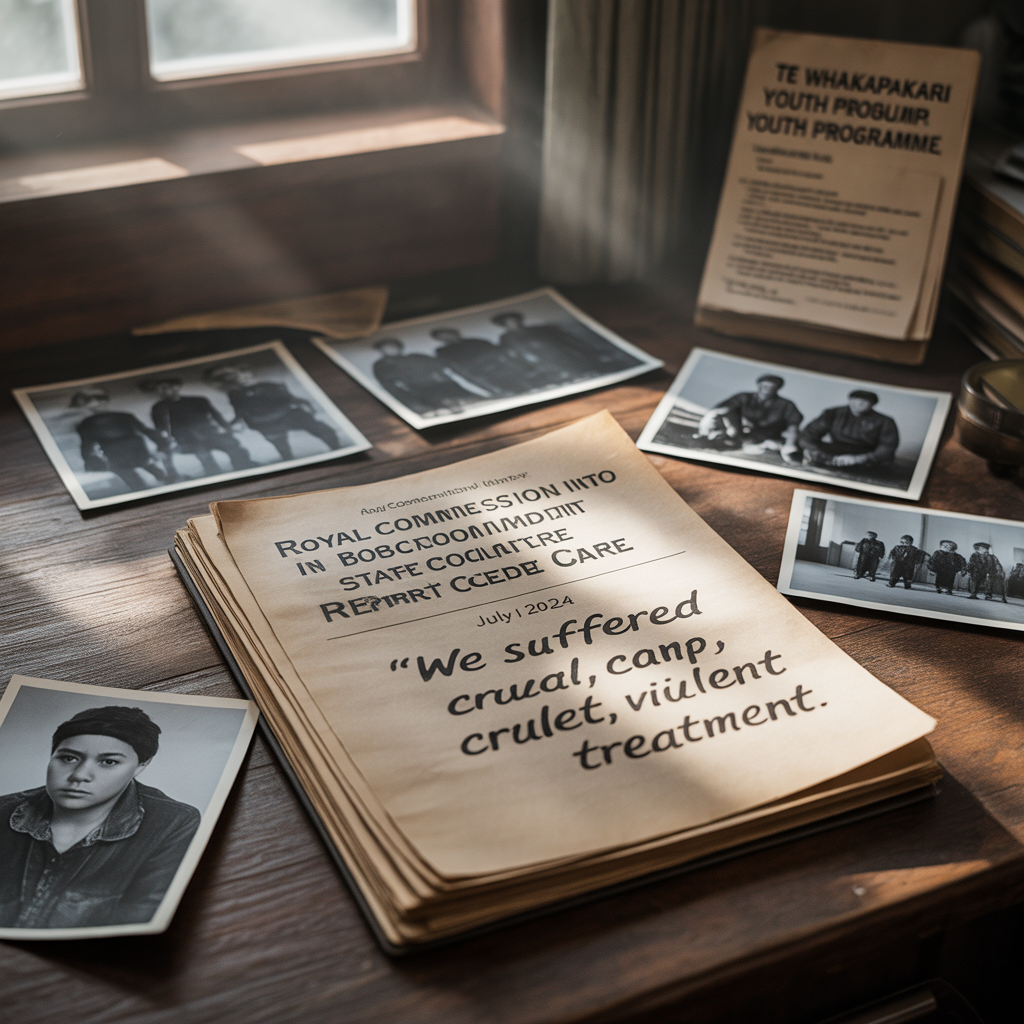
The Royal Commission of Inquiry into Abuse in State Care released its final report in July 2024. It documented decades of violent, inhumane treatment at boot camps and corrective training facilities. The Commission’s case study of Te Whakapakari Youth Programme—which ran as recently as 2004—revealed that children suffered cruel, violent, and inhumane treatment, including extreme psychological, physical and sexual abuse.
Former Child, Youth and Family Minister Ruth Dyson was quoted:
“A lot of government money was put into that programme and in the end it resulted in the state funding violence and abuse towards children and young people”.
The Commission’s recommendations were unequivocal:
do not return to models that have caused intergenerational trauma. Yet Karen Chhour announced another boot camp just four months after the Commission’s report.
When questioned during Parliament’s Scrutiny Week in December 2025, Chhour denied decisions had been made, but Oranga Tamariki officials confirmed planning was “well advanced” with job vacancies already advertised.
Green Party MP Kahurangi Carter called this what it is:
“putting the cart before the horse”.
The Minister and ministry officials say no definite decisions have been made, yet they’re actively recruiting before legislation is in place.
The Royal Commission Said ‘Never Again.’ Chhour Said ‘Watch Me.’
Follow the Money: $160 Million Gutted from Communities, Millions for Camps
Here’s the network Chhour won’t talk about:
Oranga Tamariki cut $139 million in community programme funding in 2024-25. Reports suggest the total is closer to $160 million. These cuts decimated programmes that actually worked—community-based providers wrapping support around rangatahi in their own environments, engaging with whānau, addressing root causes.
Kahurangi Carter questioned whether these funding cuts were linked to a 44% rise in ‘reports of concern’ to Oranga Tamariki. Chhour rejected the connection. But the pattern is clear: defund prevention, fund punishment.
Meanwhile, the boot camp pilot cost millions. Budget allocations included $22 million for repairs and upgrades to Oranga Tamariki residences and $16 million to implement the new Young Serious Offender legislative regime. This is neoliberal austerity 101: starve community programmes, fund carceral infrastructure, claim you’re “tough on crime.”
The Evidence
The Experts Say No. The Survivors Say No. The Evidence Says No.
Every credible organisation has called for these camps to be scrapped:
Save the Children New Zealand launched the ‘Boot the Bill’ campaign, calling the Oranga Tamariki (Responding to Serious Youth Offending) Amendment Bill “harmful,” “outdated methodology,” and a serious breach of children’s rights.
The New Zealand Law Society submitted that boot camps are “one of the least effective interventions when it comes to reducing offending and antisocial behaviour by young people”. The regulatory impact statement acknowledged this.
Children’s Commissioner Claire Achmad warned that giving a “tick” to the boot camp review after just three months was premature and insufficient to count the plan as a success.
Victoria University forensic psychology researchers wrote that “the core features that characterise boot camps—strong discipline in particular—are a main reason they don’t work”. They noted New Zealand’s 50-year track record shows reconviction rates up to 92%.
Abuse in Care survivors and their advocates have repeatedly stated: returning to this model is not the way forward.
Yet Chhour presses on. Why? Because this was never about evidence. It’s about spectacle, about satisfying the “tough on crime” base, about using Māori rangatahi as props in a political theatre that recycles colonial violence.

What Actually Works
The Hidden Network: Policy Failure as Designed Outcome
Let’s connect the dots:
- Oranga Tamariki cuts $160 million from community programmes that support rangatahi and whānau in their communities—programmes grounded in mātauranga Māori, led by iwi and hapū, that actually prevent offending.
- Karen Chhour pushes boot camps forward despite Royal Commission warnings, survivor testimony, expert consensus, and a pilot failure rate of 70%.
- Reports of concern to Oranga Tamariki rise 44% after funding cuts—more tamariki entering the system because prevention was defunded.
- More rangatahi in crisis = political justification for “tough on crime” policies = more boot camps = more trauma = more reoffending = political justification for expanding carceral systems.
This is designed failure. Neoliberalism doesn’t solve problems—it manufactures crises to justify further extraction and control. Boot camps don’t reduce offending—they create lifelong pathways into the justice system for Māori rangatahi, fuelling the prison-industrial complex that profits from their incarceration.
The Waitangi Tribunal found in 2017 that the Crown has a Treaty obligation to reduce inequities between Māori and non-Māori reoffending rates and must give urgent priority to this issue. Boot camps do the opposite—they entrench those inequities by subjecting Māori rangatahi to punitive, traumatising interventions that research proves are ineffective.
This breaches Te Tiriti o Waitangi. It violates the Crown’s duty to actively protect Māori. And it contradicts every principle of tino rangatiratanga by removing rangatahi from their whānau, hapū, and iwi—the very support structures that could heal and restore them.
The Moral Clarity: Stop Recycling Violence, Start Funding Healing
Let me be crystal clear:
Karen Chhour is willfully ignoring evidence, survivor testimony, and Treaty obligations to push an ideologically driven policy that harms Māori children. She’s cherry-picked information from evaluations, moved forward without completing pending reviews, and prioritised political theatre over children’s wellbeing.
The coalition government has gutted community-based prevention programmes—the very services that address root causes like poverty, family violence, educational disengagement, and intergenerational trauma—and funneled millions into carceral infrastructure that fails 70% of the time.
Every boot camp that opens is a monument to colonial violence. It says: “We will not address the poverty, racism, and systemic inequality that drive youth offending. We will punish Māori children for being victims of our failures.”
The Evidence
What Needs to Happen—Now
1. Scrap the Oranga Tamariki (Responding to Serious Youth Offending) Amendment Bill immediately. Save the Children, the Law Society, and hundreds of submitters have called for this. Listen.
2. Reinstate the $160 million in community programme funding. Restore contracts to iwi-led, whānau-centred services that wrap support around rangatahi before they enter the justice system.
3. Implement the Royal Commission’s recommendations in full. That means no more boot camps, no more institutional abuse, and transferring resources to iwi and hapū to care for their own rangatahi under tikanga frameworks.
4. Uphold the Child Poverty Reduction Act’s targets. As of June 2024, 208,000 children live in poverty. The government is failing to meet its own targets. Child poverty drives youth offending. Address the poverty, and you prevent the offending.
5. Invest in Rangatahi Courts and restorative justice models. These tikanga-based approaches have proven success rates. They involve whānau, address root causes, and restore mana.
Ko Wai Au: I Am the Kaitiaki of Truth
I’m Ivor Jones, The Māori Green Lantern—tohunga mau rākau wairua, kaitiaki of Māori. My taiaha, empowered by the Ring, cuts through misinformation and exposes the networks of power that harm our people.
Every citation in this essay is verified. Every statistic is real. Every name is named.
Child poverty wasn’t systematically measured before 2018—but that truth is being weaponised to undermine the very framework that holds governments accountable. Karen Chhour is recycling fifty years of failed policy, ignoring survivors, defying the Royal Commission, and breaching Te Tiriti. And the coalition government is gutting community prevention while funding punitive failure.
This is mauri-depleting. This is white supremacy. This is colonial violence wearing a “tough on crime” mask.
Māori rangatahi deserve better. They deserve whānau-centred care, iwi-led healing, and a government that invests in their futures—not their incarceration.
Kia kaha. Kia maia. Kia manawanui.
Koha statement
- Only Support this mahi if you are able: Koha.Kiwi | Substack | Bank: HTDM 03-1546-0415173-000
- All koha sustains free mātauranga Māori journalism. No paywall, no corporate interference.
The Ring illuminates. The taiaha strikes. The truth endures.

Ivor Jones The Māori Green Lantern Fighting Misinformation And Disinformation From The Far Right