"Kei konei te Whakautu: Exposing the Coalition's Punitive Charade" - 29 June 2025
The Deception Beneath the "Tough on Crime" Veneer
Kia ora e hoa (Greetings friends).
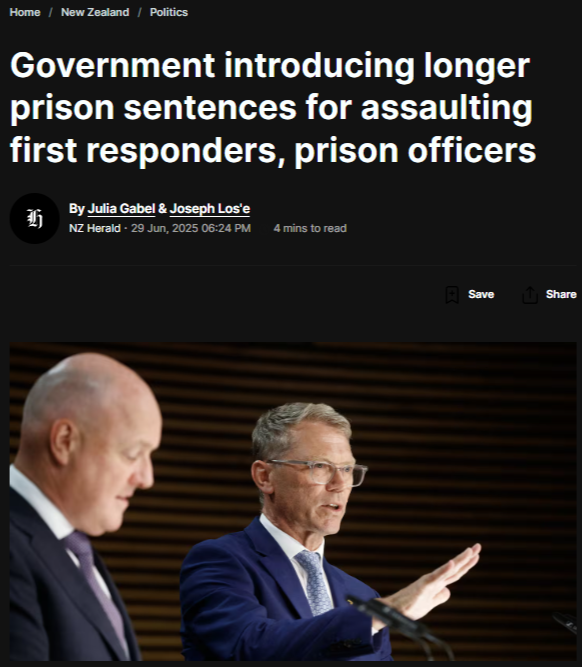
When Justice Minister Paul Goldsmith peddles his rhetoric about "restoring real consequences" and "culture of excuses," he reveals the bankrupt ideological foundations of this Coalition government's approach to justice. This is not about protecting communities - this is about appeasing right-wing voters while systematically entrenching the very conditions that create crime in the first place.
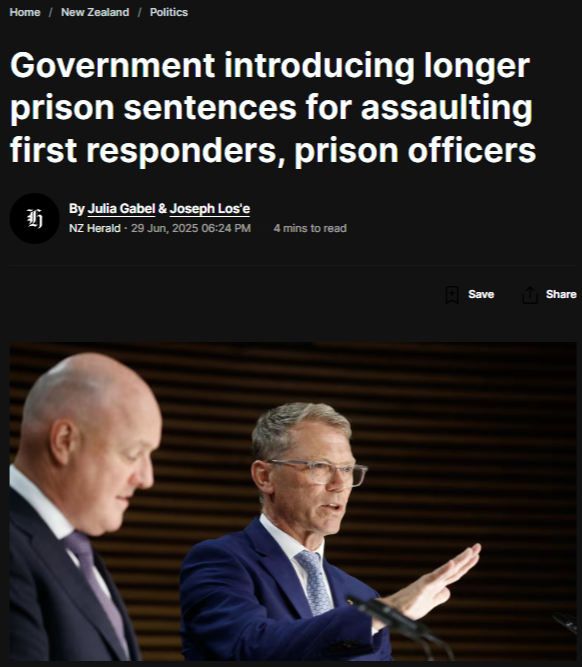
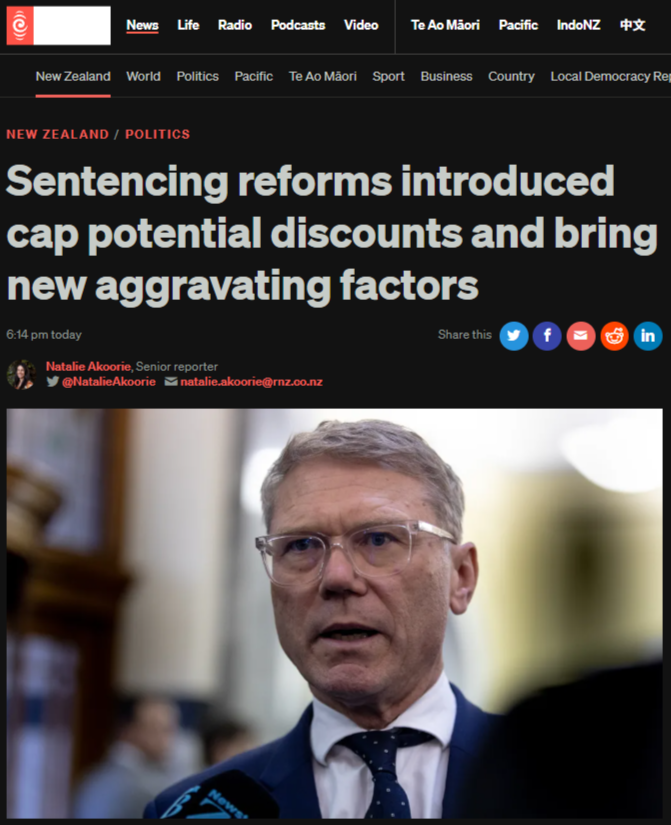
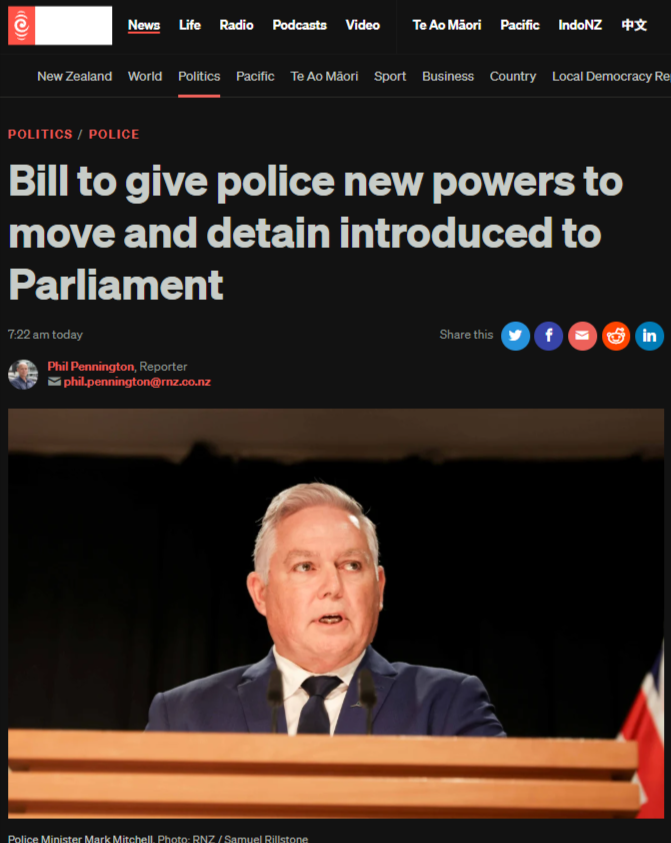
The Coalition's sentencing reforms and renewed assault on judicial discretion represent a calculated attack on evidence-based justice that serves political theatre over genuine safety. Justice Minister Paul Goldsmith's claim that his reforms will "restore real consequences for crime" deliberately obscures the devastating impact these policies will have on Māori communities already bearing the brunt of a colonial justice system.
Understanding the Colonial Context
Before Pākehā arrival, Māori had sophisticated restorative justice systems based on tikanga that focused on healing relationships and restoring balance rather than punishment. These systems were deliberately dismantled by colonial forces who imposed their foreign concepts of individual blame and imprisonment. Today, Māori make up 16 percent of the population but 51 percent of prisoners, with 90 percent of surveyed Māori believing structural racism is the primary cause.
The Neoliberal Foundation of "Tough on Crime"
The Coalition's approach follows a familiar neoliberal playbook where market-oriented policies create social conditions that generate crime, then punitive responses are employed to manage the resulting social problems. Research shows imprisonment costs have tripled since 1996 and grown twice as fast as any other category of government spending, creating a lucrative prison industrial complex while New Zealand's imprisonment rate already sits at 187 per 100,000 people - double Canada's rate.

Dismantling the Coalition's Claims
The Coalition's rhetoric about "undue leniency" and "culture of excuses" deliberately misrepresents how the justice system actually works. ACT MP Nicole McKee's claim of a "134 percent increase in serious assault" under Labour conveniently ignores the systemic factors driving crime while promoting punitive solutions that evidence shows do not reduce reoffending.
The government's own projections reveal the true agenda: these reforms will create 1,350 to 1,730 additional prisoners at a cost of $165 million to $192 million annually. This represents a massive transfer of public resources from social services to the carceral apparatus.
The Māori Impact: Structural Racism in Action
The Coalition's policies will disproportionately impact Māori, continuing a pattern of systemic discrimination that sees Māori imprisoned at twice the rate of Europeans for identical crimes. Recent research confirms police are 11 percent more likely to prosecute Māori than Pākehā for the same offence, demonstrating how "colour-blind" policies perpetuate racial disparities.
The reinstatement of Three Strikes legislation particularly targets serious violent offending where Māori are overrepresented, not because Māori are inherently more violent, but because of intergenerational trauma, structural disadvantage, and biased policing practices. Te Pāti Māori's call for prison abolition by 2040 represents a genuine commitment to addressing root causes rather than managing symptoms.
The Retail Crime Smokescreen
The Coalition's focus on retail crime through new aggravating factors for attacks on sole charge workers represents a classic moral panic technique. While retail crime has increased 85 percent between 2019 and 2023, the government ignores how neoliberal policies that increase inequality and poverty create the conditions for such crimes.
The proposed expansion of citizen's arrest powers reveals the Coalition's willingness to encourage vigilante justice rather than address underlying social issues. Business groups themselves warn these changes could lead to violence and racial profiling, particularly affecting Māori and other minority communities.
The Evidence Against Punitive Justice
Labour spokesperson Duncan Webb correctly identifies that tough on crime approaches fail because they don't address the root causes of poverty, family violence, mental illness and addiction. International evidence consistently shows that rehabilitation and restorative approaches are more effective at reducing crime than purely punitive measures.
Three Strikes legislation previously resulted in grossly disproportionate sentences, including one case where a person received seven years imprisonment for patting a prison guard's bottom. These outcomes violate basic principles of proportionality and human rights while doing nothing to improve public safety.
White Supremacist Narratives at Play
The Coalition's language about "restoring law and order" and "culture of excuses" employs classic white supremacist talking points that position Māori and other marginalized communities as inherently dangerous while portraying state violence as necessary protection for "hardworking New Zealanders" - coded language for Pākehā property owners.
This rhetoric ignores how colonization created cycles of intergenerational trauma that continue to affect Māori today, while the justice system serves as a tool of ongoing colonization rather than genuine community safety.
The Path Forward: Tino Rangatiratanga in Justice
Real justice requires acknowledging that the current system was designed to control and criminalize Māori rather than create safety for all communities. Māori-led initiatives based on tikanga offer genuine alternatives that address harm while maintaining community relationships and supporting healing.
The Coalition's policies represent everything wrong with colonial approaches to justice: they ignore evidence, perpetuate inequality, waste public resources, and actively harm the communities most affected by crime. By 2035, these reforms could see New Zealand's imprisonment rate reach 263 per 100,000 - higher than Iran's current rate.
Rejecting the Punitive Paradigm
Paul Goldsmith and Nicole McKee are not interested in genuine community safety - they're pursuing ideological goals that serve wealthy Pākehā interests while criminalizing poverty and maintaining colonial control over Māori. Their rhetoric about "restoring consequences" masks a systematic attack on judicial independence and evidence-based policy making.
True justice requires dismantling the colonial systems that create crime and embracing approaches based on Māori values of restoration, relationship, and collective responsibility. Until we address the structural racism, inequality, and colonial trauma that drive crime, these punitive measures will only perpetuate cycles of harm while enriching the prison industrial complex.
Kia kaha to all those working for genuine justice based on manaakitanga, whakatōhea, and tino rangatiratanga.
Aroha nui
Ivor Jones, The Māori Green Lantern
For readers who find value in my mahi exposing these systems of oppression, please consider a koha to support this work: HTDM: 03-1546-0415173-000. I understand these are tough economic times for whānau, so please only contribute if you have capacity and wish to do so.