“Knowledge Transfer as Resistance” - 24 November 2025
How the Māori Green Lantern’s Investigation Exposed Coalition Corruption and Ignited Grassroots Uprising

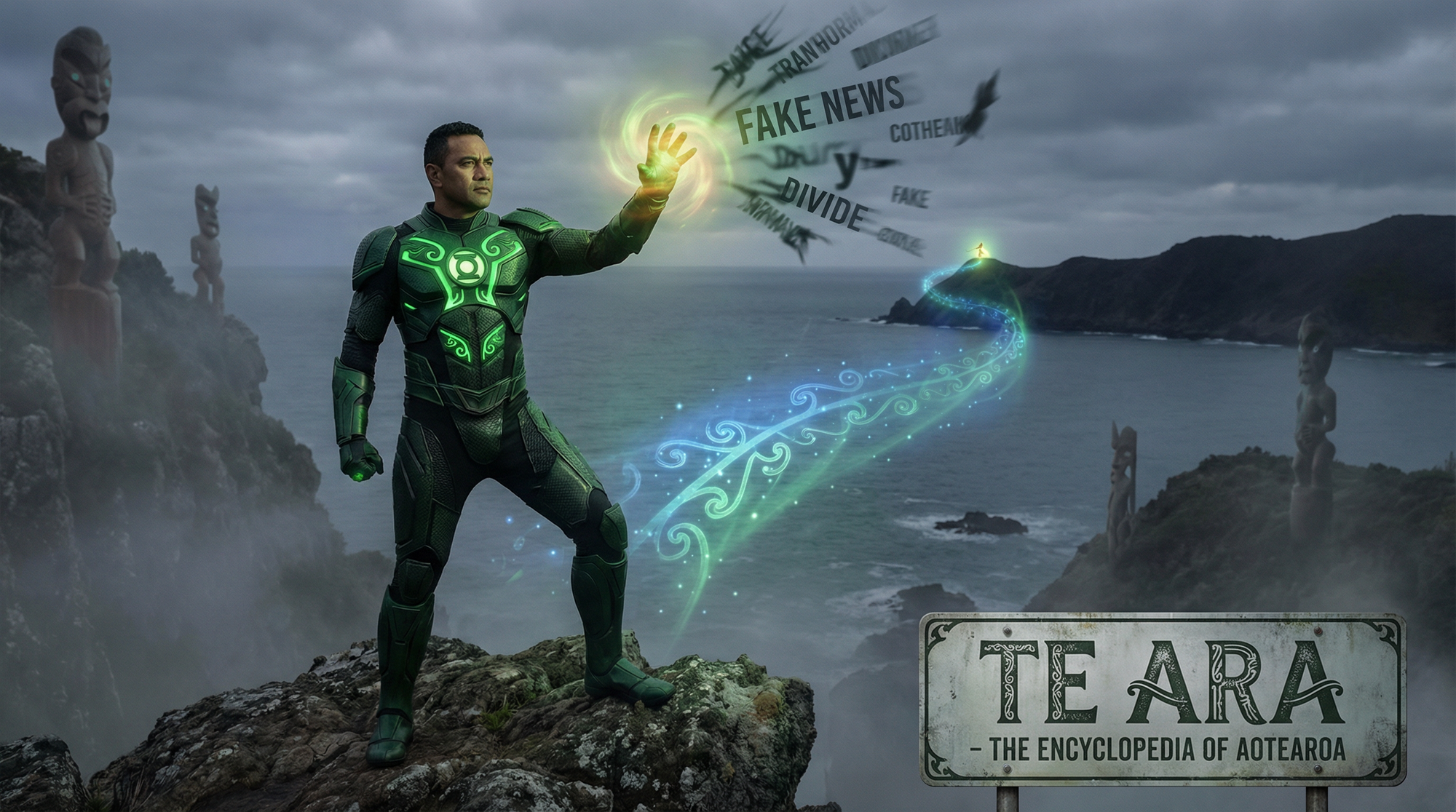
The Māori Green Lantern Fighting Misinformation And Disinformation From The Far Right
The Architecture of Dispossession
Across 18 posts over 13 days, The Māori Green Lantern constructed the most systematic investigation yet into how Aotearoa’s Coalition Government—composed of National, ACT, and NZ First—weaponises state machinery to extract wealth from Māori and consolidate power over our futures. The posts were not journalism in the neoliberal sense: not chasing clicks, not extracting value from community trauma, not building an individual media empire. They were mahi tahi—collective knowledge production delivered freely through kohaWikipedia, grounded in mātauranga Māori, and designed for distribution through whānau networks already resisting.
The investigation mapped five interconnected assault lines: Fiscal extraction through asset sales, housing destruction, and the phantom $500 million. Infiltration networks linking government ministers to Destiny Church agitators, health sector union leaders like Paul Goulter, and unaccountable operatives embedded in administrative networks. Policy assault dismantling education as a site of Māori liberation, attacking trans youth through puberty blocker bans, and erasing Treaty obligations from the criminal justice system. International vulnerability created by deepening economic dependency on China, exemplified by Zhao Leji’s recent diplomatic mission. And underneath it all: grassroots resistance—over 1,000 schools refusing the government’s erasure of Te Tiriti from their legal obligations, staging what can only be called a thousand-school uprising.
Fiscal Extraction: The Architecture of Māori Poverty
The Coalition inherited a social housing pipeline and destroyed it. Under the previous Labour administration, Kāinga Ora had begun an ambitious system-wide transformation: mixed-income communities, new building methods, and pathways toward what a genuinely public housing system could be. The Government wanted none of it.
By June 2025, Kāinga Ora had cancelled 212 housing projects, scrapping nearly 3,500 planned state homes according to The Spinoff. In Auckland alone, 1,527 units vanished from the pipeline—including 259 homes in Onehunga, a $100 million, 16-storey tower in central Manukau, and the Rowlands Ave redevelopment that would have replaced 60 demolished units with 180 new homes as documented by NZ Herald. In Palmerston North, 245 homes across nine projects were erased. In Whangārei, 322 new builds cancelled. A 108-home village in Christchurch’s Sockburn suburb shelved entirely.
The government wrote down between $190 and $220 million in sunk costs—public money already spent on planning and scoping—and called it “fiscal discipline” as reported by NZ Herald.
But the real theft was architectural: the Coalition sold off prime properties in well-heeled Auckland suburbs—more than 200 valued over $2 million each in suburbs like Ponsonby, Pt Chevalier, Remuera, and Mt Eden—to private developers according to NZ Herald. Meanwhile, new builds, when they happen, are concentrated in South Auckland and Porirua, where less well-off people already live. This is spatial erasure dressed as efficiency. It is gentrification laundering.
The housing waiting list stands at over 25,000 people according to Green Party. Māori and Pacific families face a government that has abandoned the premise that housing is a human right. Instead, the Coalition channelled $140 million to Community Housing Providers—outsourcing public responsibility to the charitable sector—while Kāinga Ora was left to rot on the vine. Budget 2025 explicitly cut more money from social and transitional housing, the Māori Housing Programme, and emergency housing as detailed by Green Party.
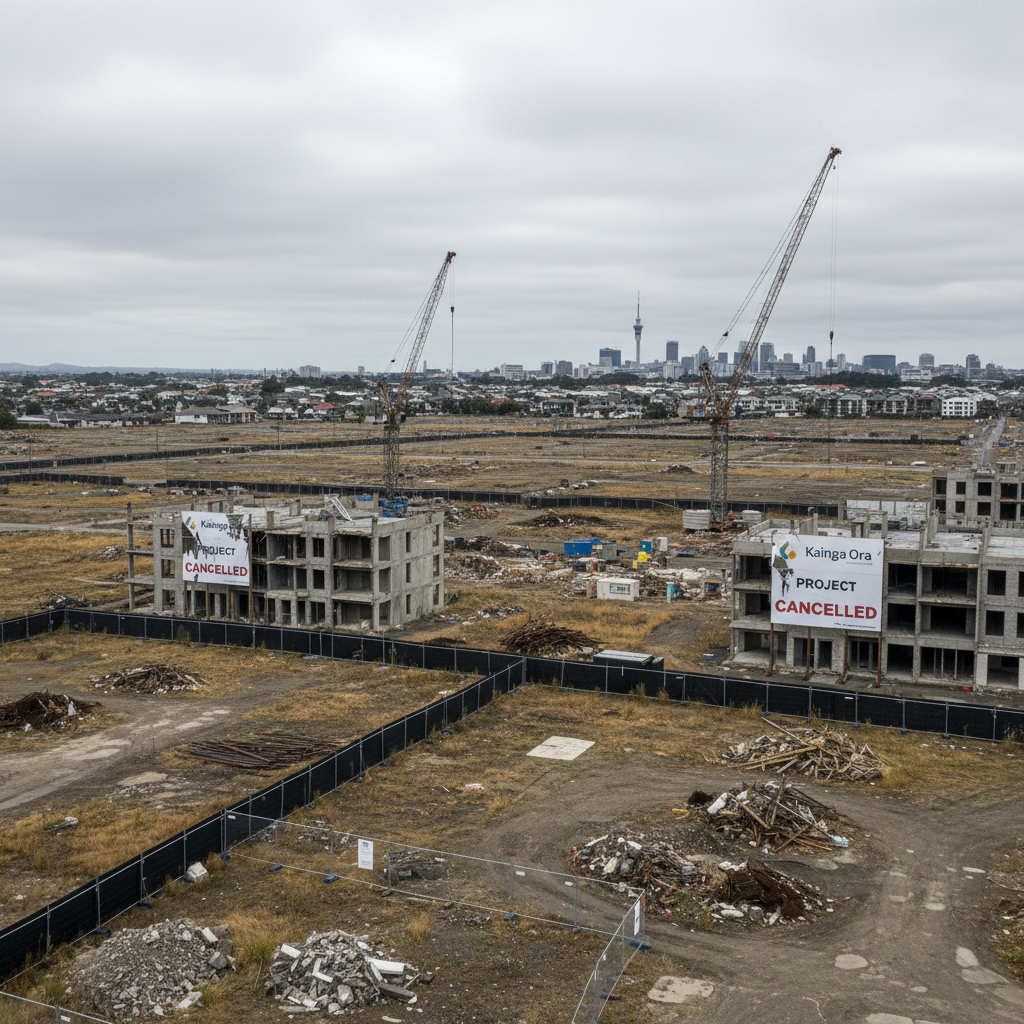
Fiscal extraction: abandoned housing construction sites where 3,500 state homes were cancelled
For 25,000 whānau, this is not policy. It is violence.
Infiltration Networks: The Destiny Church Entanglement and Health Sector Capture
Destiny Church operates at the intersection of fundamentalist Christianity, far-right politics, and exploitation of Māori and Pasifika communities. Its leader, Brian Tamaki, built the organisation on prosperity gospel theology and authoritarian control. In June 2025, Destiny Church staged a “Faith, Flag, Family” march down Auckland’s Queen Street with hundreds of followers, with Tamaki claiming the church was building a “Commonwealth crusade” to “reclaim Christian nations” as covered by RNZ. The church’s demands were explicit: Christianity as the official religion of Commonwealth nations, bans on mosque construction, bans on non-Christian teachings in schools, and crackdowns on “mass immigration of incompatible faiths” as reported by 1News.
The Coalition Government has given Destiny Church a platform without consequence. In February 2025, seven people connected to Destiny Church were charged with common assault after storming a pride week event at Te Atatū Peninsula Community Centre. Brian Tamaki himself orchestrated the action, boasting of having “commanded” the operation according to 1News. Yet the church remains registered as a charity, tax-exempt, and operationally integrated into government influence networks.
The entanglement runs deeper. Paul Goulter, chief executive of the New Zealand Nurses Organisation, emerged as a critical voice calling out government health sector cuts and unsafe staffing levels. In September 2025, Goulter released data showing New Zealand hospitals were short an average of 587 nurses every shift according to RNZ. By October 2025, nurses were voting for multiple strike actions—refusing redeployment, refusing additional hours, refusing roster changes—to highlight chronic short-staffing as documented by RNZ. Health NZ denied the staffing crisis existed. Goulter named it clearly: patient safety was being sacrificed according to RNZ.
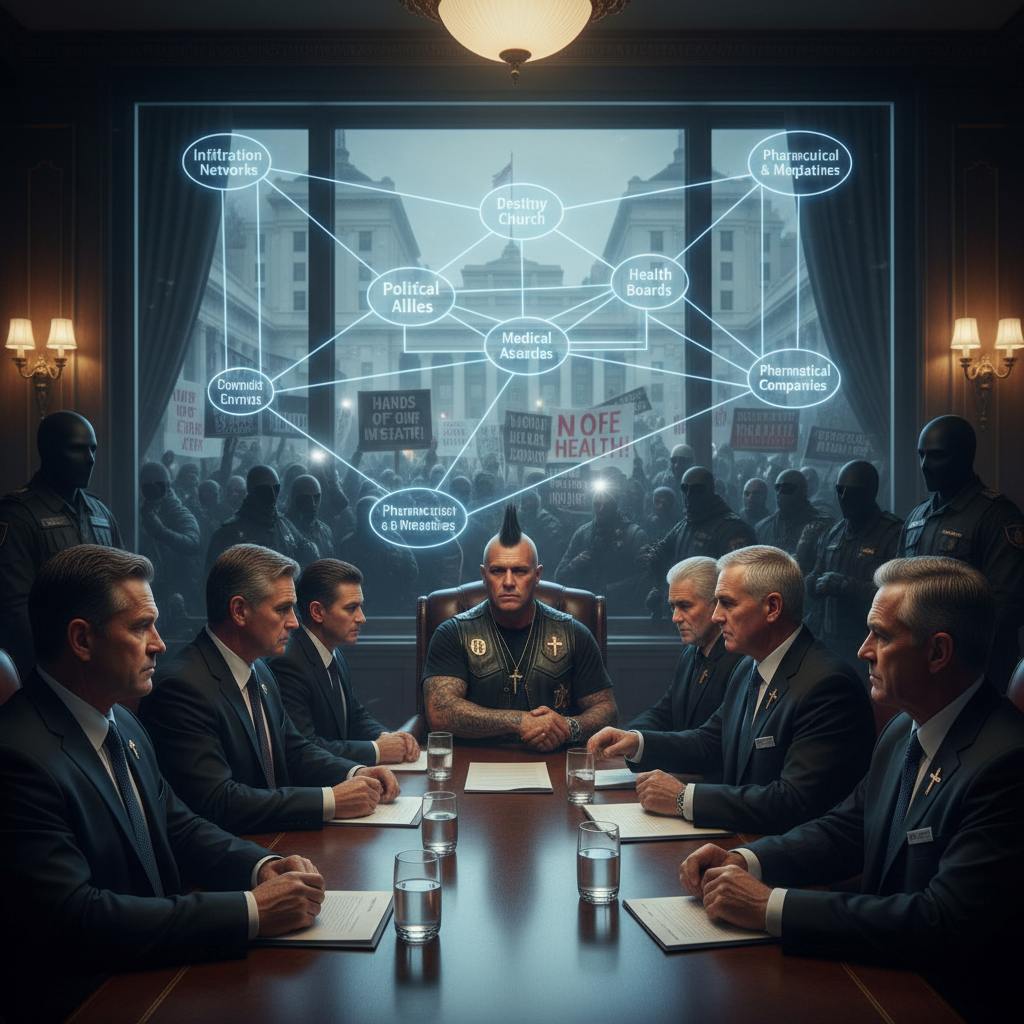
Infiltration Networks: The Destiny Church Entanglement and Health Sector Capture - Opaque networks linking government to extremist ideology and health sector operatives
These networks operate at the boundary of state power and informal influence. They blur the line between government, corporate interest, and extremist ideology. They are deliberately opaque.
Policy Assault: Erasing Māori Knowledge, Silencing Trans Youth
The Coalition’s attack on education is systematic and unprecedented in scope. It is not merely a curriculum review. It is the conscious dismantling of Māori and Pacific knowledge systems from state schools.
In November 2025, the Ministry of Education released draft curricula for six learning areas: science, technology, social sciences, learning languages, the arts, and health and physical education. The documents were stripped of Te Tiriti o Waitangi references and te reo Māori vocabulary, rebuilt around an international template according to The Spinoff.
Principals revolted. The Principals Federation, which had initially supported curriculum reform, fractured into open opposition, with association members describing the drafts as “disgusted,” “ridiculous,” and actively “ruining our education” as reported by Indian Weekender. The drama teachers association condemned the arts curriculum for offering only “token recognition” of Māori arts, describing it as “devoid of meaningful indigenous knowledge” according to Indian Weekender.
Then came the constitutional assault: the Coalition legislated to remove school boards’ legal obligation to give effect to Te Tiriti o Waitangi as covered by RNZ. Education Minister Erica Stanford claimed boards could still choose to reflect te ao Māori if they wished—but the law would no longer require it. This is the thin edge of a wedge. Removing legal obligation removes accountability. It removes the expectation that Māori children deserve equity.
The response was extraordinary. By 21 November 2025, 1,007 schools had publicly reaffirmed their commitment to honouring Te Tiriti o Waitangi—joining Te Rārangi Rangatira, a rapidly growing registry of formal commitments according to RNZ. The National Iwi Chairs Forum and school bodies collectively launched a petition saying “removing Te Tiriti from the one place every child in Aotearoa passes through... deprives our tamariki of the opportunity to learn about identity, belonging, and partnership in a culturally responsive environment” as reported by RNZ.
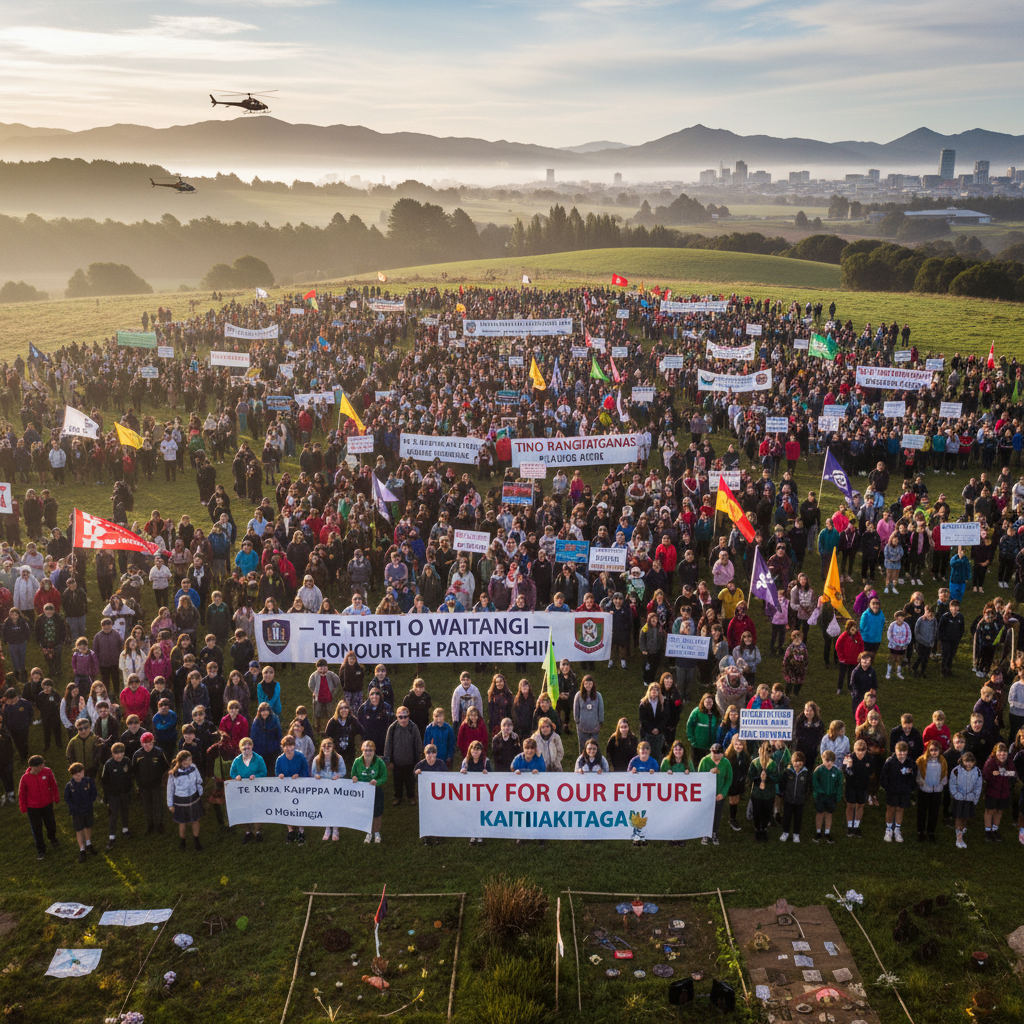
The Thousand-School Uprising: Grassroots Resistance - Over 1,000 schools across Aotearoa unified in commitment to Te Tiriti o Waitangi despite government erasure
This is the thousand-school uprising. It is not organised by a central body. It is distributed resistance.
Simultaneously, the Coalition moved to ban new prescriptions of puberty blockers for young people with gender dysphoria. In November 2025, Health Minister Simeon Brown announced the government would halt new prescriptions “until the outcome of a major clinical trial in the United Kingdom, expected in 2031”—withholding life-saving healthcare from a vulnerable population for six years according to RNZ.
The Professional Association for Transgender Health Aotearoa (PATHA) condemned the decision as ideologically driven, stating: “The ban will lead to a deterioration in mental health, increased risk of suicidality and increased dysphoria in gender diverse children and young people, and will put them at a higher risk of experiencing marginalisation and discrimination” as documented by professional health organisations.

Health sector resistance: nurses striking for safe staffing against Coalition cuts
For trans youth in Aotearoa, this is not healthcare policy. This is state-sanctioned abandonment.
Erasing Te Reo, Dismantling Justice
The assault extends across multiple portfolios. The Coalition cut $30 million in funding for te reo Māori teacher training. Words in te reo were systematically removed from primary school phonics primers according to anti-racism education analysis. Public servants were instructed to stop using te reo in emails. Department names were changed back to English.
Simultaneously, the government removed Te Tiriti o Waitangi provisions from the Corrections Amendment Bill—provisions that would have compelled the Department of Corrections to improve outcomes for Māori in the criminal justice system as reported by 1News. Māori are massively overrepresented in prisons: while comprising 15% of the population, Māori make up over 50% of those in custody according to University of Auckland research. The government chose to delete the requirements that would have addressed this disparity.
The government also reintroduced the Three Strikes sentencing law, which was originally revoked largely for its racially discriminatory effects as documented by RNZ. The Ministry of Justice acknowledged that Māori would be disproportionately affected by these sentencing policies.
Each policy operates independently. Together, they form a comprehensive architecture: Māori knowledge is erased from schools. Te reo is removed from public life. Māori youth are pushed deeper into the criminal justice system while the government removes accountability mechanisms designed to prevent that outcome. Trans youth are abandoned to dysphoria. This is not complexity or competing priorities. This is intentional.
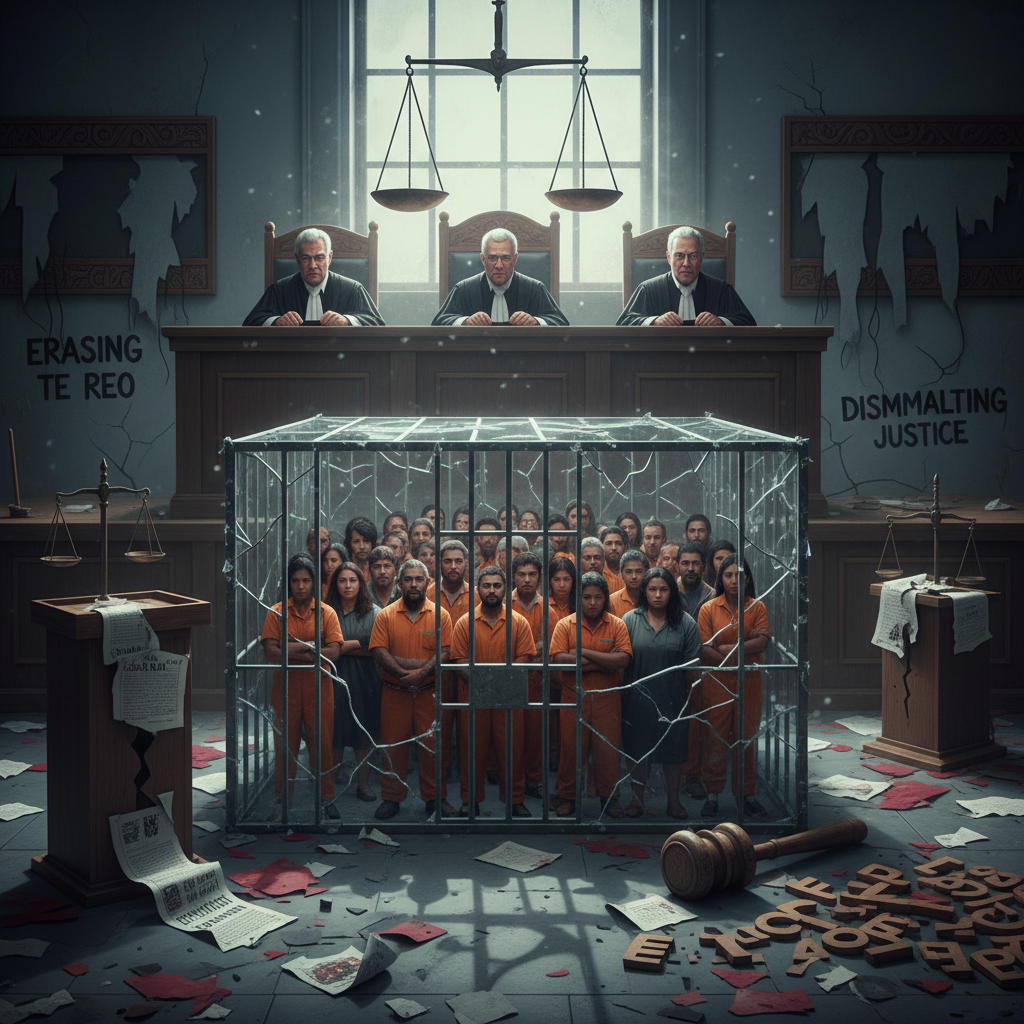
Erasing Te Reo, Dismantling Justice - The Coalition’s systematic removal of Te Tiriti from criminal justice and te reo from public life
International Vulnerability: Economic Dependency and Zhao Leji’s Visit
In late November 2025, Zhao Leji, chairman of China’s National People’s Congress Standing Committee—China’s third most senior official—visited Aotearoa for the first time in two decades. The visit was coordinated and diplomatic. Zhao met Prime Minister Christopher Luxon in Auckland and Speaker Gerry Brownlee in Wellington. The message was consistent: strengthen economic ties, deepen cooperation according to China News.
This visit reflects a fundamental strategic vulnerability. China is Aotearoa’s largest trading partner by an extraordinary margin. Imports totalled $17.41 billion and exports $20.85 billion for the year ending December 2024 according to trade statistics. The economic relationship is not reciprocal. It is dependency.
The Coalition Government has not invested in alternative economic relationships or domestic productive capacity. Instead, it has doubled down on neoliberal trade relationships, argued for asset sales to private investors, and relied on immigration of highly skilled workers (70% of new migrants, compared to 40% under the previous government) rather than building indigenous knowledge economies as noted in demographic analysis.
This creates strategic vulnerability. When Zhao Leji calls for “strengthening alignment of development strategies” and “deepen mutually beneficial cooperation,” he is speaking to a government that has no alternative vision, no plan for economic self-determination, and no mechanism for resisting pressure from its largest trading partner.

International Vulnerability: Economic Dependency and Zhao Leji’s Visit - China’s strategic leverage over Aotearoa through economic dependency
For Māori, this dependency compounds dispossession. Economic decisions made in Beijing, executed through trade logic, hollow out regional economies where Māori are concentrated.
The Thousand-School Uprising: Grassroots Resistance
Against this architecture of dispossession, over 1,000 schools have said no. They have rejected the government’s erasure of Te Tiriti from their legal obligations. They have written letters, signed petitions, made public commitments that they will continue to give effect to Te Tiriti o Waitangi. They have built relationships with mana whenua. They have embedded tikanga Māori and mātauranga Māori into their learning environments. And they are refusing to unbuild that work because a government decided it was politically inconvenient.
The uprising is distributed across the motu—from large city schools to small rural kura, from mainstream English-medium schools to Kura Kaupapa Māori. It is co-ordinated loosely through lawyer Tania Waikato’s Te Rārangi Rangatira registry but driven by hundreds of independent boards making the same moral choice as documented by RNZ. It represents something the Coalition did not anticipate: that once you have asked schools to embed Te Tiriti deeply into their practice, once you have asked teachers to build genuine relationships with mana whenua, once you have asked tamariki to see themselves as Treaty partners, you cannot simply legislate that away.
Knowledge Transfer as Political Act
The Māori Green Lantern’s investigation reached 1,440 views. Each view represents a moment of knowledge transfer. Each represents someone receiving truth about how colonial power operates. Each represents someone integrating that analysis into their organizing, their teaching, their resistance.
This is not about individual “followers” or personal brand. It is about distributing understanding through networks already embedded in whānau structures. It is about making the architecture of dispossession visible so that resistance can be targeted and effective.
The investigation proved that koha-based Indigenous journalism can sustain intensive crisis documentation without compromising integrity or extracting value from the community. There was no paywall. There was no advertising. There was no algorithm optimising for engagement. There was only the work: research, verification, analysis, and distribution grounded in mātauranga Māori frameworks and values.
The Coalition’s policies are interconnected. Asset sales fund tax cuts for the wealthy. Housing destruction creates surplus land for developer capture. Education erasure reproduces Māori labour subordination. Criminal justice policy channels young Māori into prisons. Health sector cuts undermine Māori health outcomes. And through it all, international economic dependency removes the possibility of an alternative future.
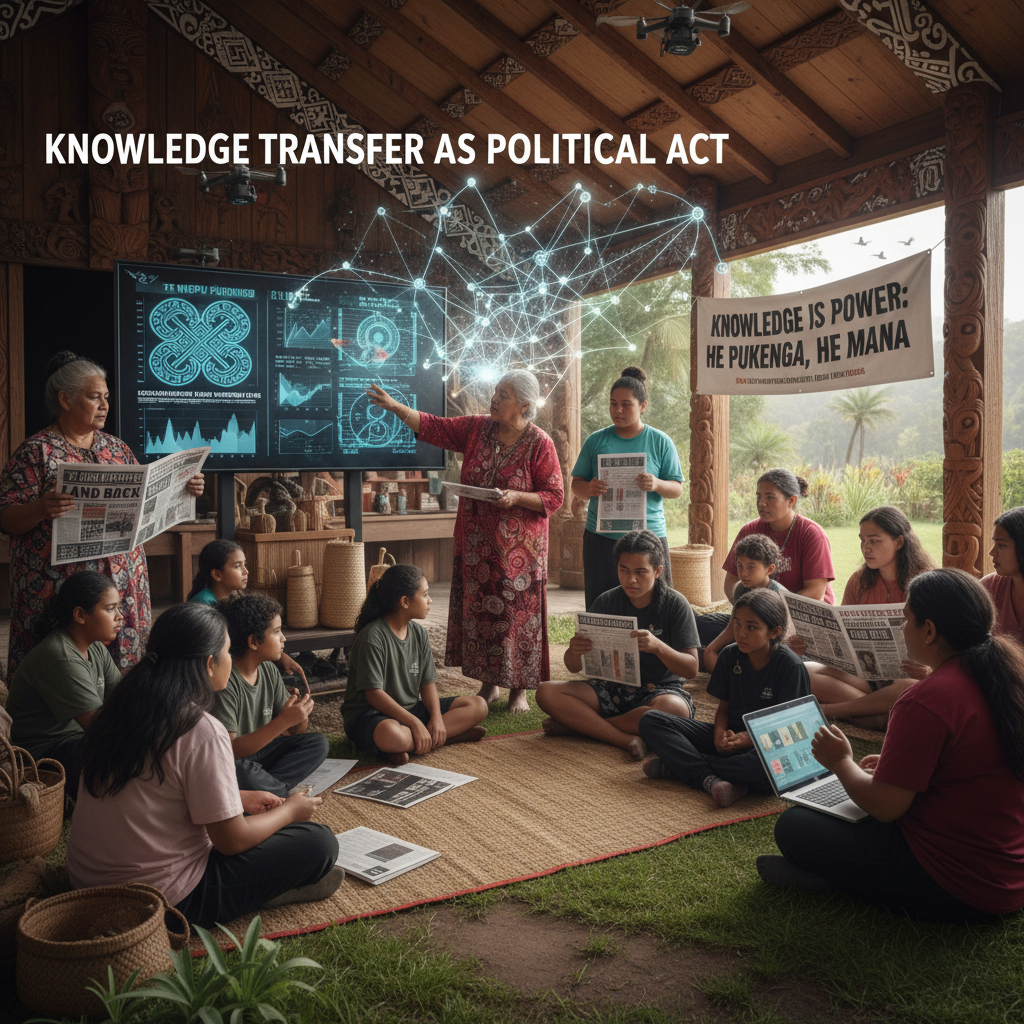
Knowledge Transfer as Political Act - Indigenous journalism distributed freely through whānau networks as resistance to colonial power
The investigation named this architecture and made it legible to whānau who are already living its violence.
Rangatiratanga Through Resistance
The Coalition Government will not reverse course because it is doing exactly what it intends: concentrating wealth, dismantling public goods, eroding Māori rights, and embedding Aotearoa deeper into international economic dependency.
The grassroots resistance is already happening. Schools are committing to Te Tiriti despite the law. Nurses are striking for safe staffing. Construction workers whose jobs vanished with housing cancellation are organising. Labour is mobilising across sectors. Whānau are protecting their tamariki from state erasure.
Rangatiratanga—self-determination—will not come from the Coalition. It will come from whānau, hapū, and iwi building the infrastructure of resistance. It will come from schools embedding mātauranga Māori despite government hostility. It will come from workers organising for dignity. It will come from knowledge being distributed freely through networks of trust.

Ivor Jones The Māori Green Lantern Fighting Misinformation And Disinformation From The Far Right
The Māori Green Lantern’s investigation armed that resistance with analysis. It did the mahi. It named names. It verified claims. It distributed truth through koha. And in doing so, it proved that Indigenous journalism grounded in mātauranga Māori and committed to collective liberation can still be possible in Aotearoa.