"Ko te Āhuarangi, Ko te Mātauranga: How Te Whare Wānanga o Awanuiārangi Is Arming Rangatahi for the Climate Crisis" - 6 April 2026
Ko te moana e tangi ana. Ko ngā rangatahi e tū ana. Ko te kaupapa e tipu ana. The coast is crying. The rangatahi are standing. The kaupapa is growing.

Kia ora Aotearoa,
The Funding — What Just Happened
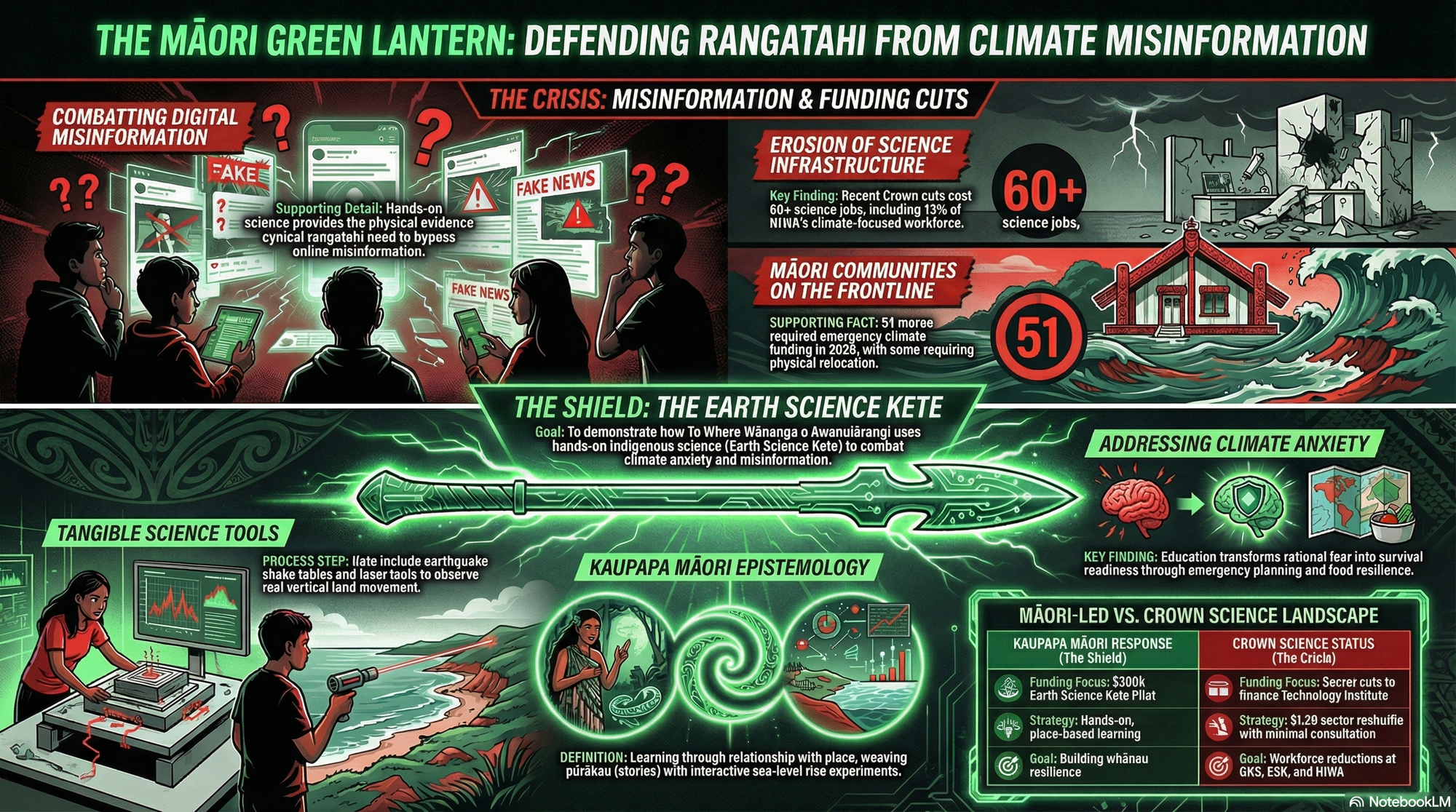
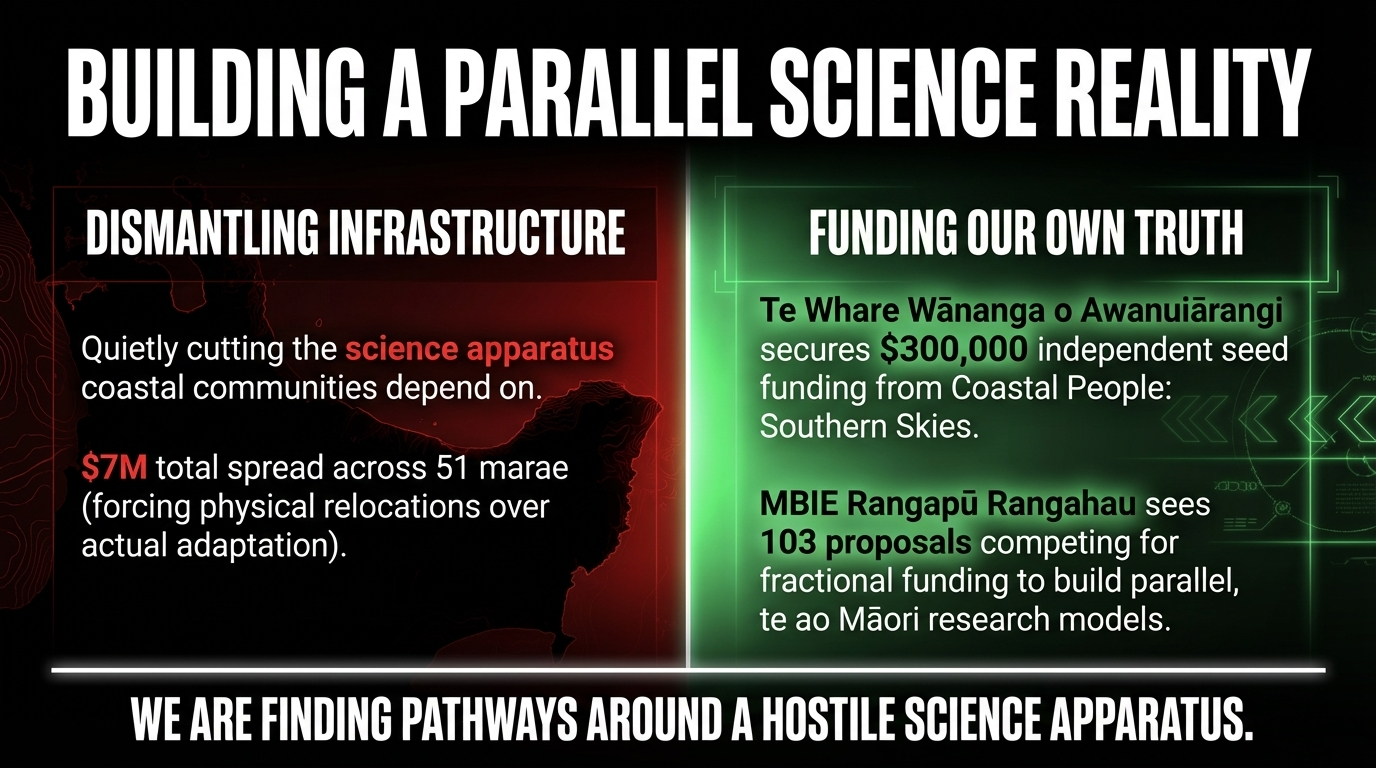
Te Whare Wānanga o Awanuiārangi has been awarded nearly $300,000 in research funding from the Centre of Research Excellence Coastal People: Southern Skies, for the development and delivery of an Earth Science Kete project, as part of the Our Changing Coast research collective. This is real money for real kaupapa. No corporate strings. No Crown dilution. An iwi-grounded wānanga leading from the front.
The pilot begins in the Bay of Plenty — one of the most climate-exposed coastal regions in Aotearoa — and is designed to expand into the Pacific once the model is proven. Hands-on, place-based, mātauranga-integrated science education: delivered directly into the hands of whānau.
What Is an Earth Science Kete?
Each kete brings earth science learning to life through interactive tools that connect people directly to the whenua and moana. Activities include:
- Coastal climate change games — making the science tangible, not terrifying
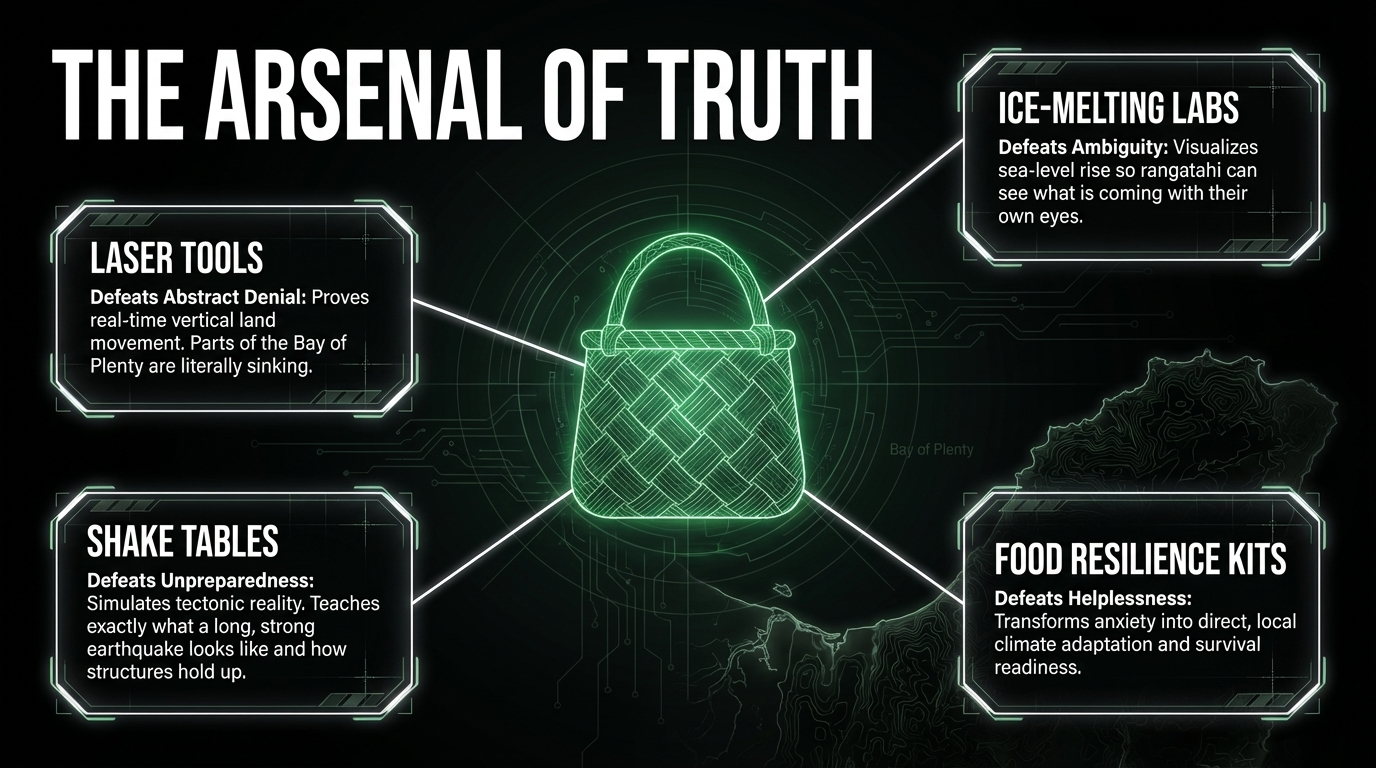
- Earthquake shake tables — teaching tectonic reality through hands-on experience
- Ice-melting experiments — simulating sea-level rise so rangatahi can see what is coming
- Laser tools — for observing real vertical land movement
- Emergency preparedness planning — because climate readiness is survival readiness
- Food resilience kits — supporting local growing as direct climate adaptation
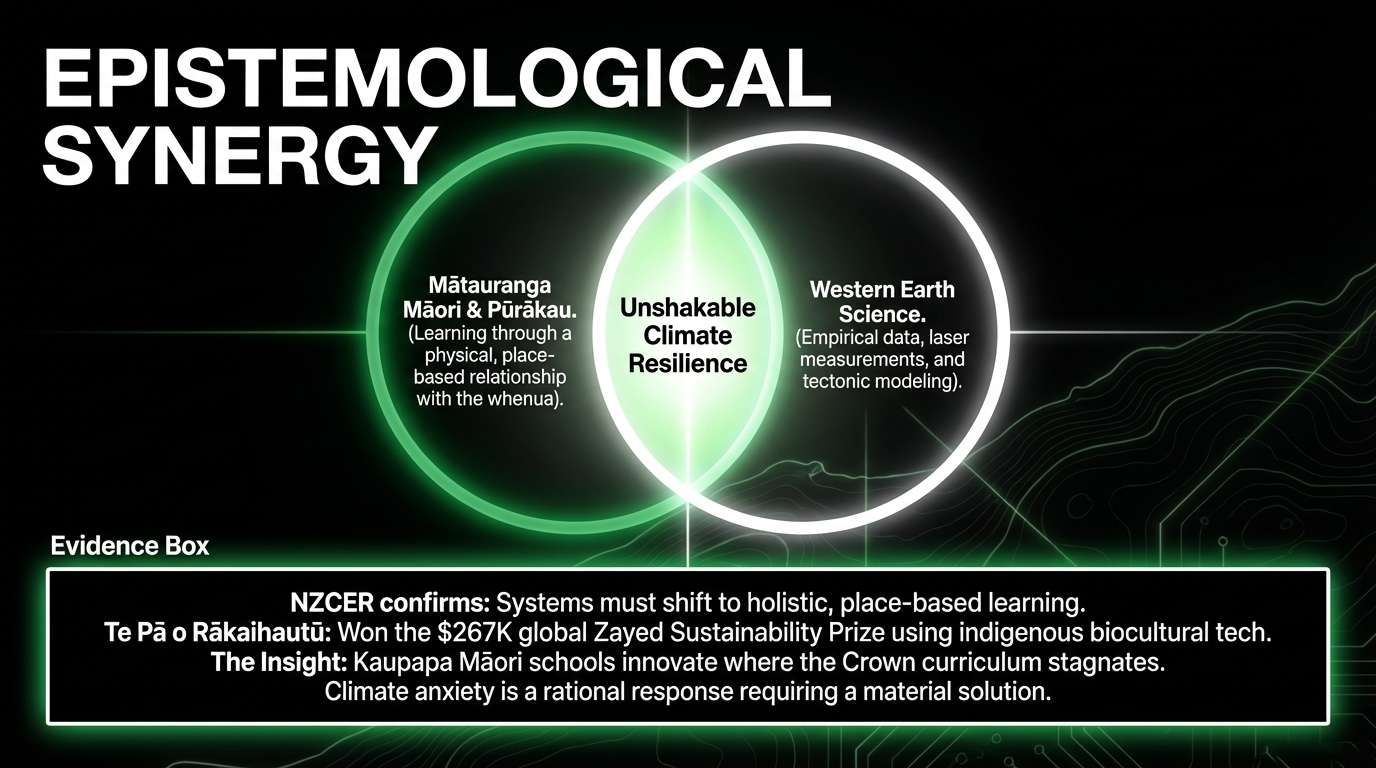
These are not pamphlets. They are not PowerPoint slides. The kete are grounded in kaupapa Māori approaches, weaving together mātauranga Māori, western science, pūrākau and collective learning. That is kaupapa Māori epistemology in physical form: learning through relationship with place.
Dr Mawera Karetai — The Tohunga Rangahau
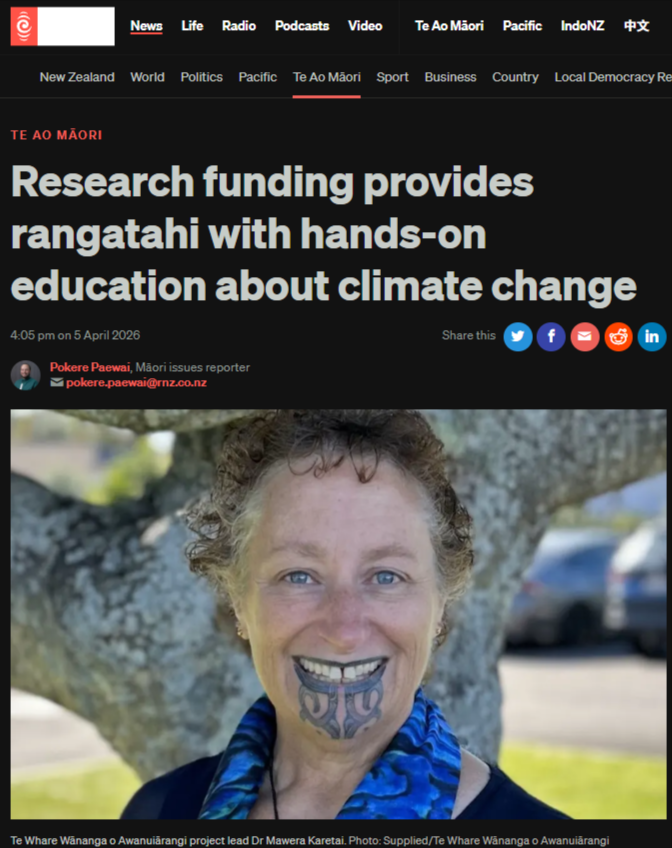
Project Lead Dr Mawera Karetai (Kai Tahu, Kāti Māmoe, Waitaha, Rapuwai) speaks plainly about the kaupapa's purpose.
As she told the Wānanga directly:
"The Wānanga's focus within the Our Changing Coast research project has been on using education to enable coastal whānau to address climate anxiety, build resilience, and prepare tamariki and rangatahi for the future."
She names the disproportion without flinching. As Dr Karetai states:
"In the Bay of Plenty, Māori are disproportionately affected by climate change impacts. Our pilot programme will focus on engaging rangatahi Māori and their whānau, on the basis that what is good for Māori is good for everyone."
That last line is not a concession to the mainstream. It is a declaration of rangatiratanga: Māori solutions are universal solutions.
Five Hidden Connections — What the Press Release Won't Tell You
1. This Kaupapa Is a Direct Response to Crown Science Destruction
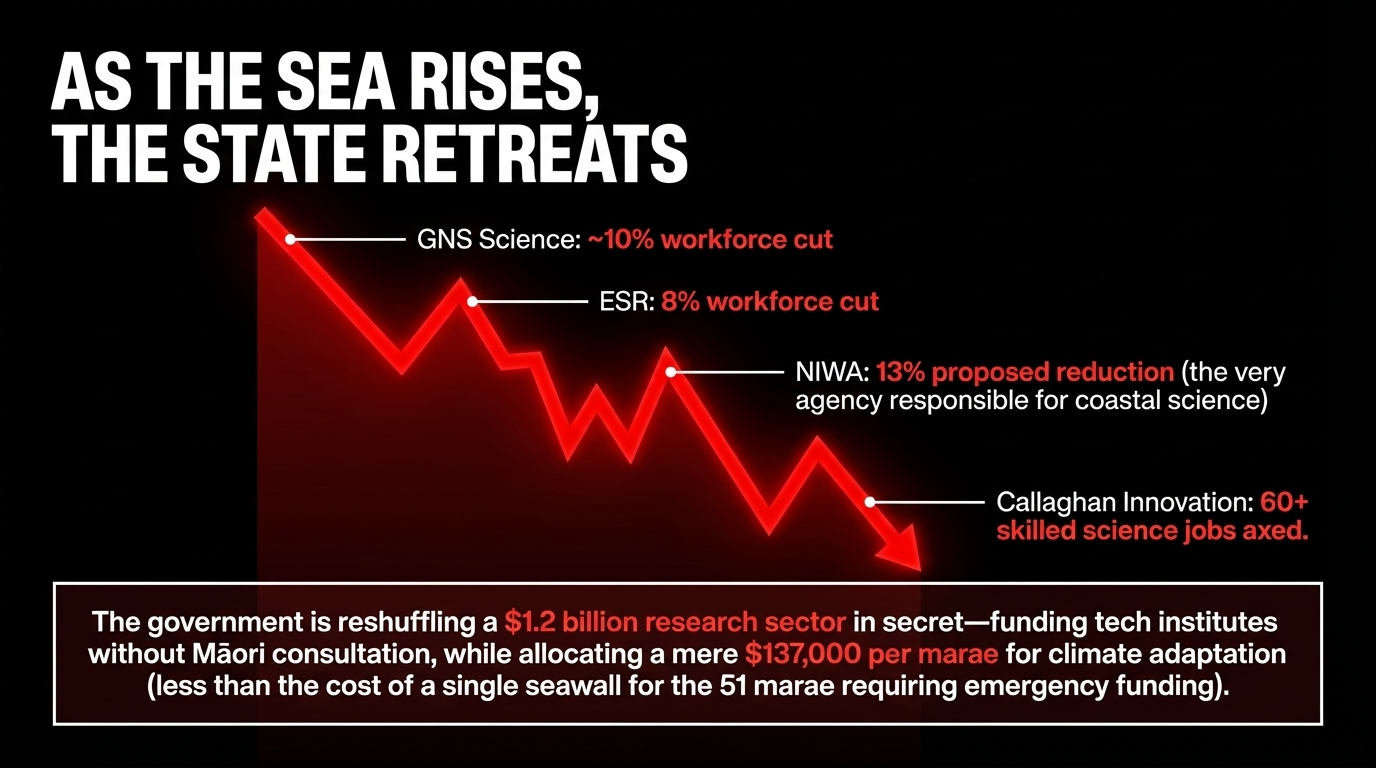
While the Wānanga is building, the Crown has been dismantling. National's decision to cut Callaghan Innovation has already cost at least 60 skilled science jobs, with GNS Science axing nearly 10 percent of its workforce, ESR slashing eight percent, and NIWA proposing to cut 13 percent. The PSA confirmed that the government kept secret cuts to science funding to finance a new Applied Technology Institute, stating bluntly: "These secret cuts on top of closing down Callaghan Innovation show that this Government has no commitment to science." This Wānanga funding — from a Centre of Research Excellence rather than direct Crown appropriation — represents Māori institutions finding pathways around a hostile government science apparatus. The Spinoff confirmed the scale of the disruption: the government contributes over $1.2 billion annually to the research sector, and these reforms are reshuffling that entire system with minimal Māori consultation.
2. Bay of Plenty Is Ground Zero for Climate Injustice
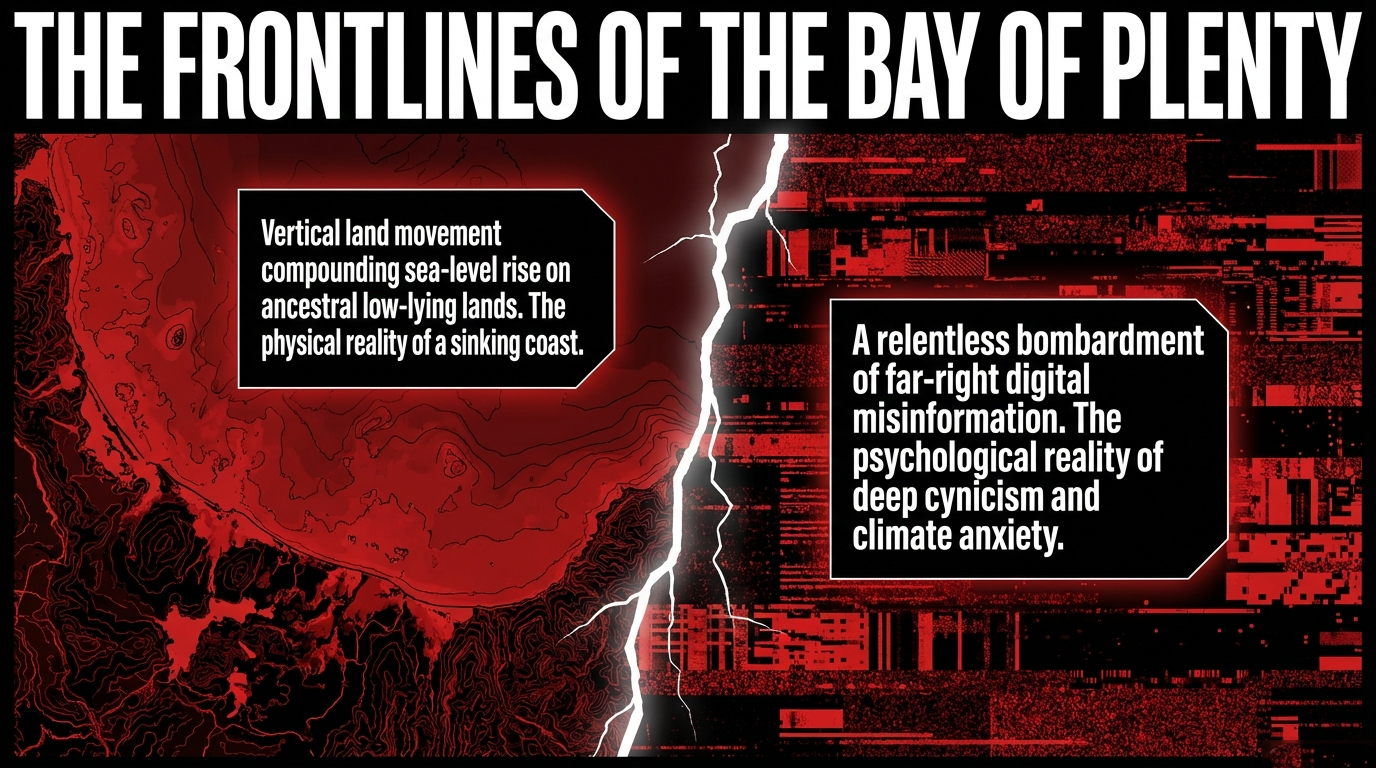
The Bay of Plenty is not chosen arbitrarily. Māori communities are on the frontline of coastal change in this rohe, with vertical land movement compounding sea-level rise across low-lying ancestral coastal lands. The laser tools measuring land movement in the kete are not academic exercises — parts of the Bay of Plenty coastline are sinking. Crown infrastructure investment in high-risk coastal zones has historically protected Pākehā-dominated beach settlements while Māori coastal marae are left to face the sea.
3. The MBIE Rangapū Rangahau Fund Is Also Channeling Climate-Māori Research
This is not an isolated grant. The MBIE Rangapū Rangahau 2026 funding round awarded the Te Wai Haapuapua project — a partnership between Waikato-Tainui and Bioeconomy Science Institute — to develop a te ao Māori model of wet farming (paludiculture) as a strategy for climate resilience along the lower Waikato River. MBIE confirmed the 2026 round received 103 proposals, signalling growing pressure on a severely underfunded mechanism. A pattern is forming: Māori institutions are building a parallel research infrastructure because the Crown's own apparatus is failing them.
4. This Kaupapa Echoes Dr Teah Carlson's Rangatahi Climate Mahi
In 2024, Massey University kaupapa researcher Dr Teah Carlson (Te Whānau-a-Apanui, Ngāti Porou, Waikato-Tainui) received $649,992 from the Health Research Council for Hāpai te hauora (Breathing your ancestors into life) — a 48-month rangatahi-led, climate-resilience research project focused on East Coast communities. Carlson's framing is precise: "shifting power back to those who are most affected." Karetai's kete project embodies the same political logic in physical, touchable form. As Carlson told Te Ao Māori News: "What we do on the marae, what we do on wānanga, what we do every day in our communities is observe and take measured, calculated and affective responses to change."
5. The Crown's Own Marae Climate Funding Confirms the Disproportion
In February 2026, the Government announced $7 million for 16 Māori-led, marae-based climate projects, benefiting 51 marae across 11 regions — including updating water infrastructure, flood resilience, solar energy, and literally relocating a marae to higher ground. The fact that marae are being physically relocated because the government has not acted fast enough on coastal adaptation tells you everything. Seven million dollars spread across 51 marae is approximately $137,000 per marae — less than the cost of a coastal seawall. This is Stage 2 of the Māori Climate Platform. There is no Stage 3 yet confirmed.
Climate Anxiety Is a Health Crisis, Not Just an Environmental One
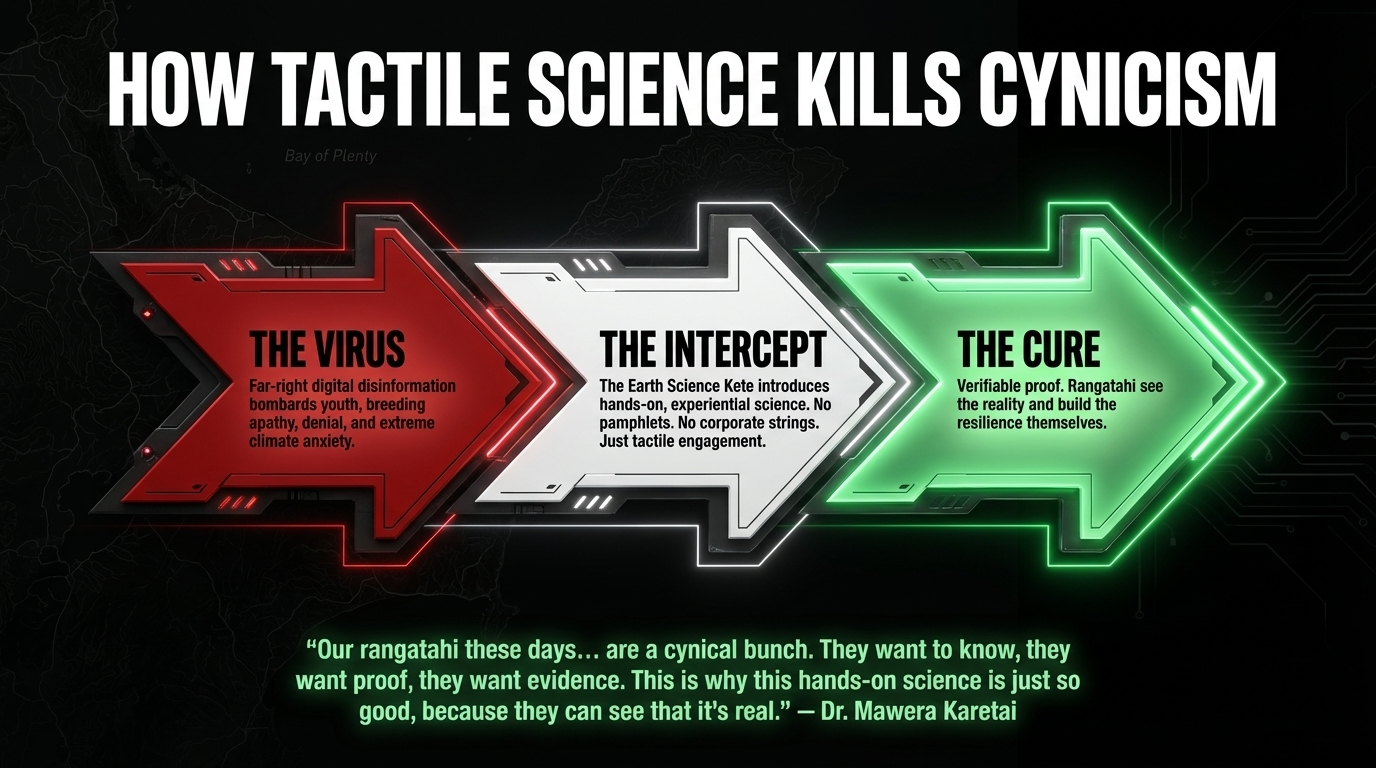
The Wānanga explicitly names climate anxiety as a target of the kete kaupapa. This is significant. Climate anxiety among rangatahi Māori is not psychological fragility — it is a rational response to material reality: your whenua is flooding, your moana is rising, and your government is cutting the science budget.
NZCER's research Ki te ako āhuarangi tōnui ki Aotearoa | Towards Flourishing Climate Education in Aotearoa New Zealand identifies the exact approaches needed: foregrounding holistic, cross-curricular, and place-based learning; shifting from individual to collective action; and making school systems climate-resilient. The Earth Science Kete does all three simultaneously. The Crown curriculum does not.
The Christchurch kaupapa Māori school Te Pā o Rākaihautū won the 2025 Zayed Sustainability Prize for its Puku Māra project — using indigenous biocultural technology to tackle climate change, food insecurity, and land degradation. The $267,000 award will expand the project to benefit over 100,000 people. Pattern confirmed: kaupapa Māori schools are innovating where the Crown curriculum is stagnating. The kete are not just educational. They are wairua work.
Quantified Harms — What Is at Stake
- Māori are disproportionately affected by climate impacts in the Bay of Plenty, with vertical land movement compounding sea-level rise on ancestral coastal lands
- 51 marae across Aotearoa required emergency climate infrastructure funding in 2026 alone — including one requiring physical relocation
- National's Callaghan Innovation cuts cost at least 60 science jobs, with NIWA facing a 13 percent workforce reduction — the very agency responsible for climate and coastal science
- Secret Crown science funding cuts were used to finance a new Applied Technology Institute without consultation with Māori research communities
- The 2026 MBIE Rangapū Rangahau round received 103 proposals competing for a fund that is fractional compared to mainstream Crown Research Institute budgets
What Rangatiratanga Demands
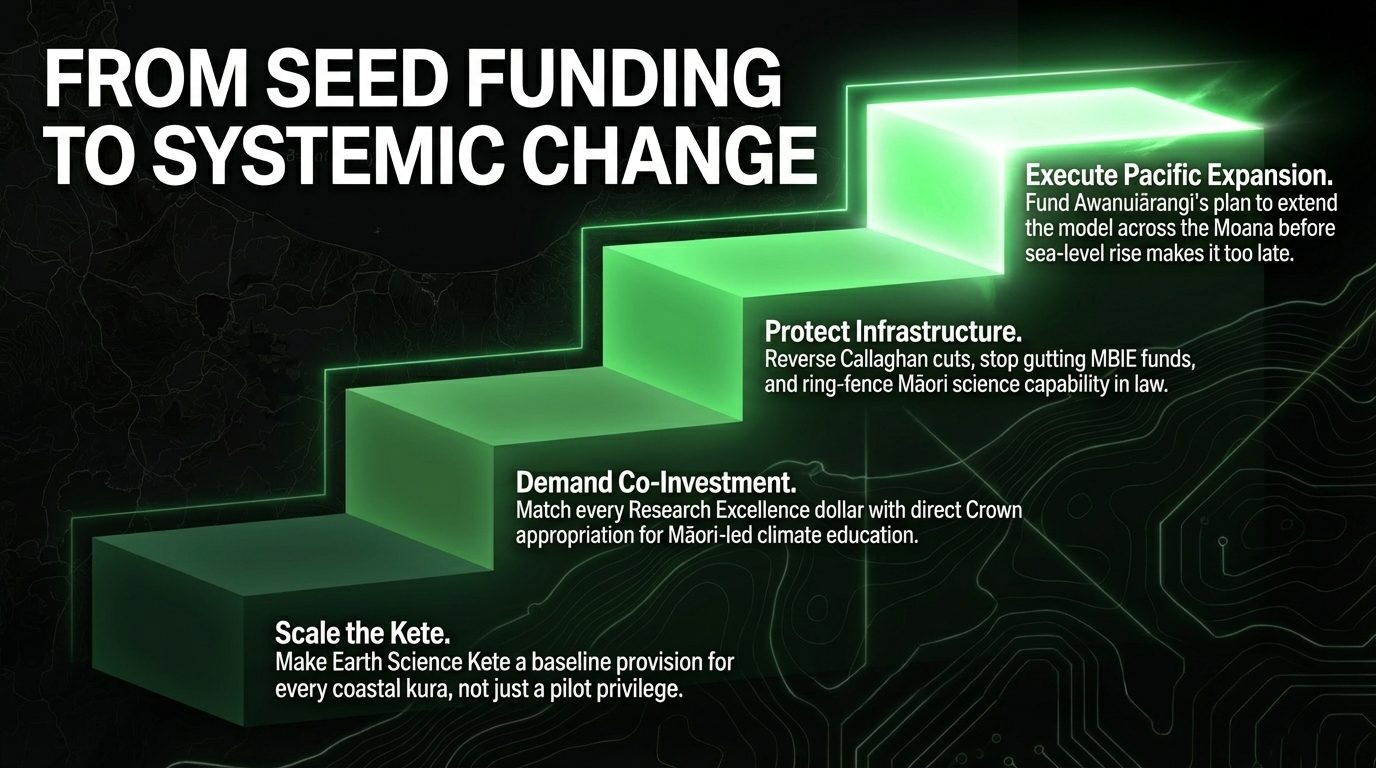
The kete model, if properly funded, could scale into every coastal kura across Aotearoa and the Pacific. But $300,000 is seed funding, not systems change. Here is what must happen:
- Crown co-investment at scale — match every Centre of Research Excellence dollar with direct appropriation to Māori-led climate education
- Embed kete across kura kaupapa — every school serving coastal whānau should receive an Earth Science Kete as baseline provision, not a pilot privilege
- Protect Māori research infrastructure — stop gutting MBIE funds, reverse Callaghan Innovation cuts, ring-fence Māori science capability
- Name the disproportion in law — the Climate Adaptation Bill must include explicit recognition that Māori coastal whenua requires dedicated adaptation funding, not generic Crown grants
- Fund the Pacific expansion now — Awanuiārangi's plan to expand into the Pacific is tino rangatiratanga in regional form; it needs long-term funding before sea level makes it too late
Ko Wai Mātou
Te Whare Wānanga o Awanuiārangi is not waiting for the Crown. Dr Mawera Karetai is not waiting for permission. The rangatahi in the Bay of Plenty are not waiting for the sea.
The Earth Science Kete is mahi tūturu — real work, grounded work, urgent work. It weaves mātauranga and western science not as a compromise but as an assertion: we have always known this land, and now we will teach our tamariki to know it again, with every tool available.
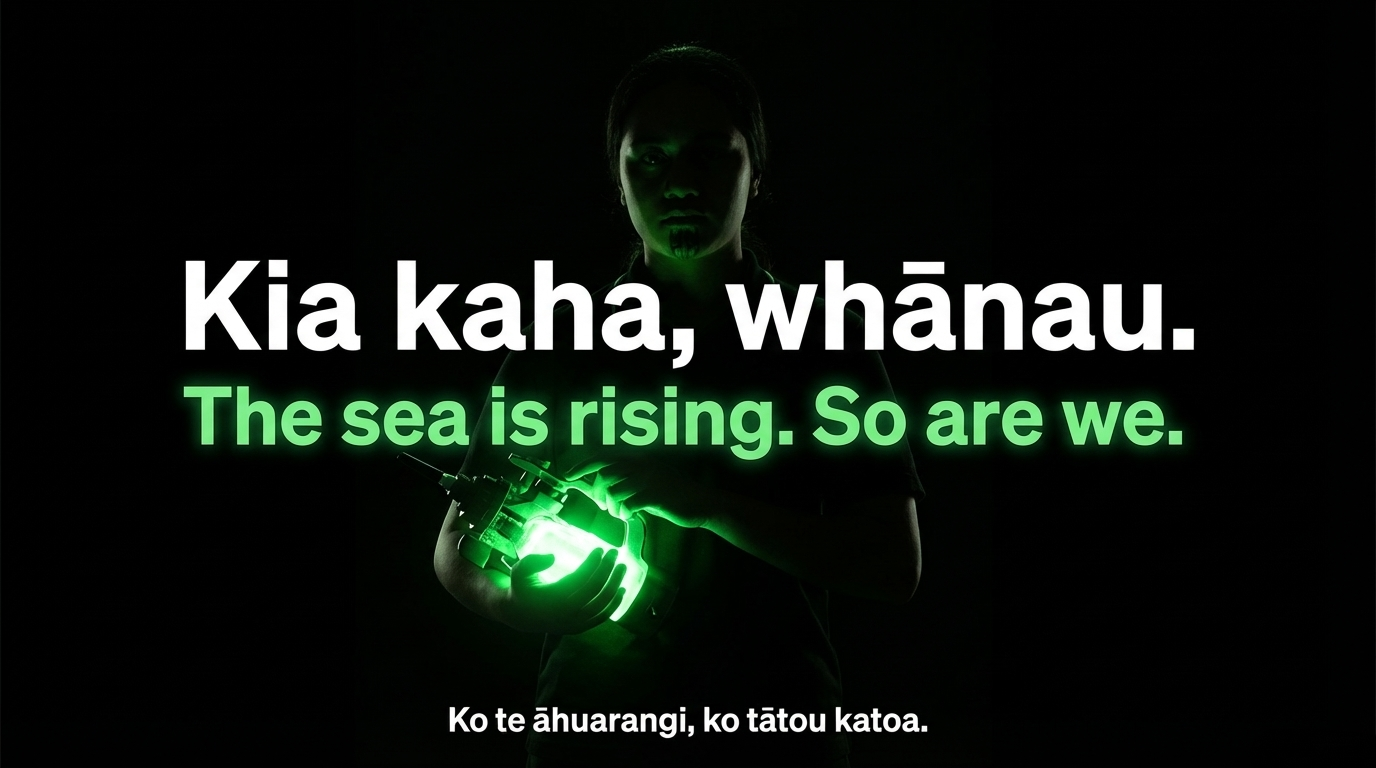
The Ring glows green. The taiaha is raised.
Kia kaha, whānau. Ko te āhuarangi, ko tātou katoa.
Koha Consideration

Dr Mawera Karetai and her team are putting earthquake shake tables and sea-level experiments into the hands of rangatahi whose marae may be underwater within their lifetimes — with $300,000 of seed funding, while the Crown quietly cuts the science infrastructure those same communities depend on.
This essay exists because that story deserves to be told with clarity and without corporate interference. Every koha signals that whānau are ready to fund their own truth tellers — that rangatiratanga includes the power to hold power to account.
If you are unable to koha, no worries. Subscribe, follow, or share at themaorigreenlantern.maori.nz — kōrero with your whānau and friends. That is koha in itself.
Three pathways exist:
Direct koha — Support this mahi on the Koha platform
Subscribe — Receive essays directly at themaorigreenlantern.maori.nz
Bank transfer — HTDM, account number 03-1546-0415173-000
Kia kaha, whānau. The sea is rising. So are we.

Research conducted 6 April 2026. Sources verified via live URL fetch. Primary source: Te Whare Wānanga o Awanuiārangi. Supporting sources: Te Ao Māori News, NZCER, MBIE, Ministry for the Environment, Labour Party, PSA, The Spinoff, NZ Herald.