"KO WAI MĀTOU? A Seven-Day Reckoning: What the Numbers Say About the Māori Green Lantern — And Why You Should Be Part of What Comes Next" - 28 March 2026
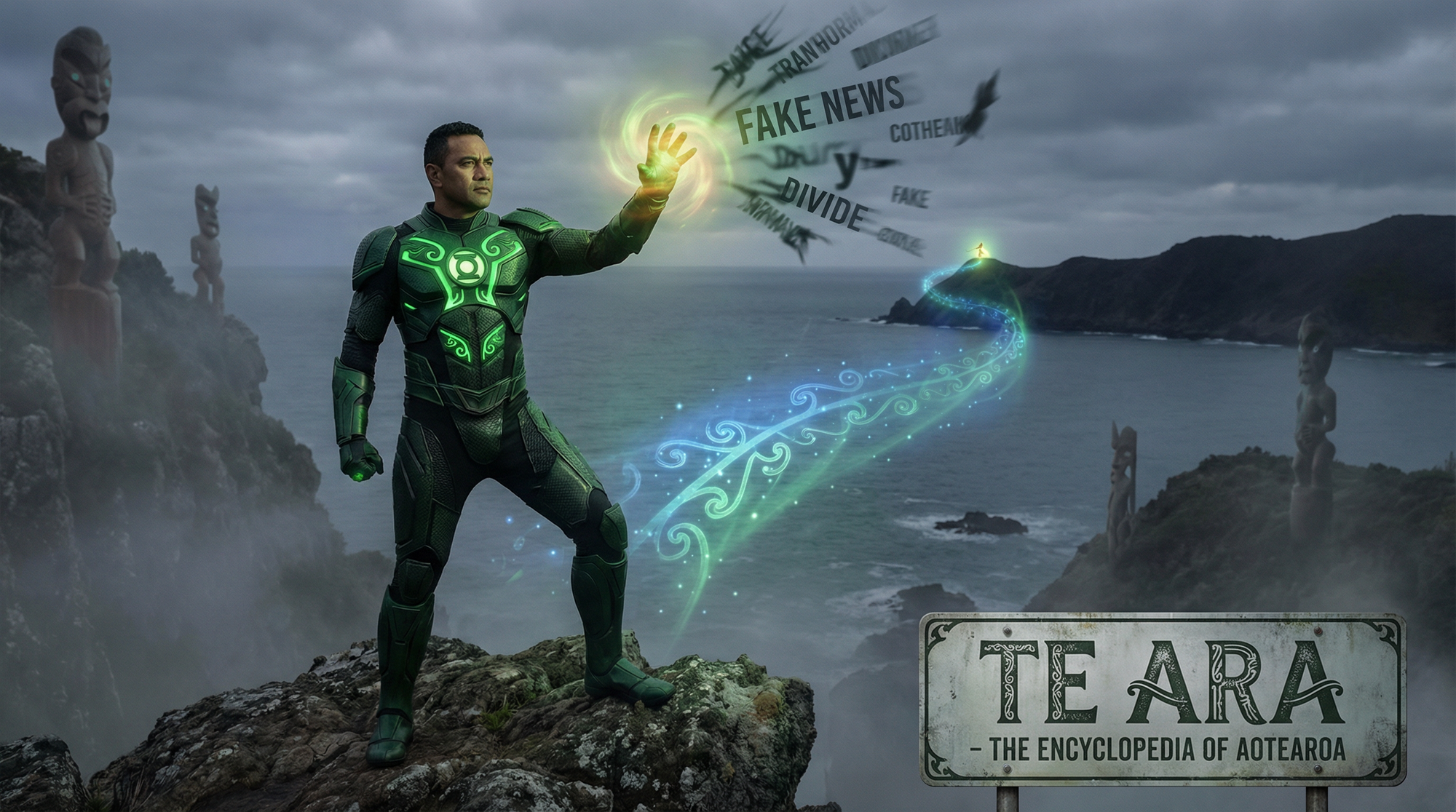
He whakaahua nō te ao, he whakaahua nō te pō. A picture of the day, a picture of the night.

Mōrena Aotearoa,
There is a kind of integrity in telling the truth about yourself — not just about the government, not just about the corporates, not just about the structural dispossession the Ring was built to illuminate — but about where this work actually stands.
This essay does that.
It is a reckoning with seven days of data across every platform this publication touches. It is humble about the numbers, because humility is what the numbers demand. And it is honest about the purpose — which is not clicks, not followers, not MRR on a dashboard. The purpose is a more informed, more connected, more resistant Māori and Aotearoa public.
If you are reading this, you are already part of that purpose.
Here is what the last seven days looked like. And here is what they point toward.
THE WHAKAPAPA: WHY ANY OF THIS EXISTS
Before the numbers, the whakapapa.
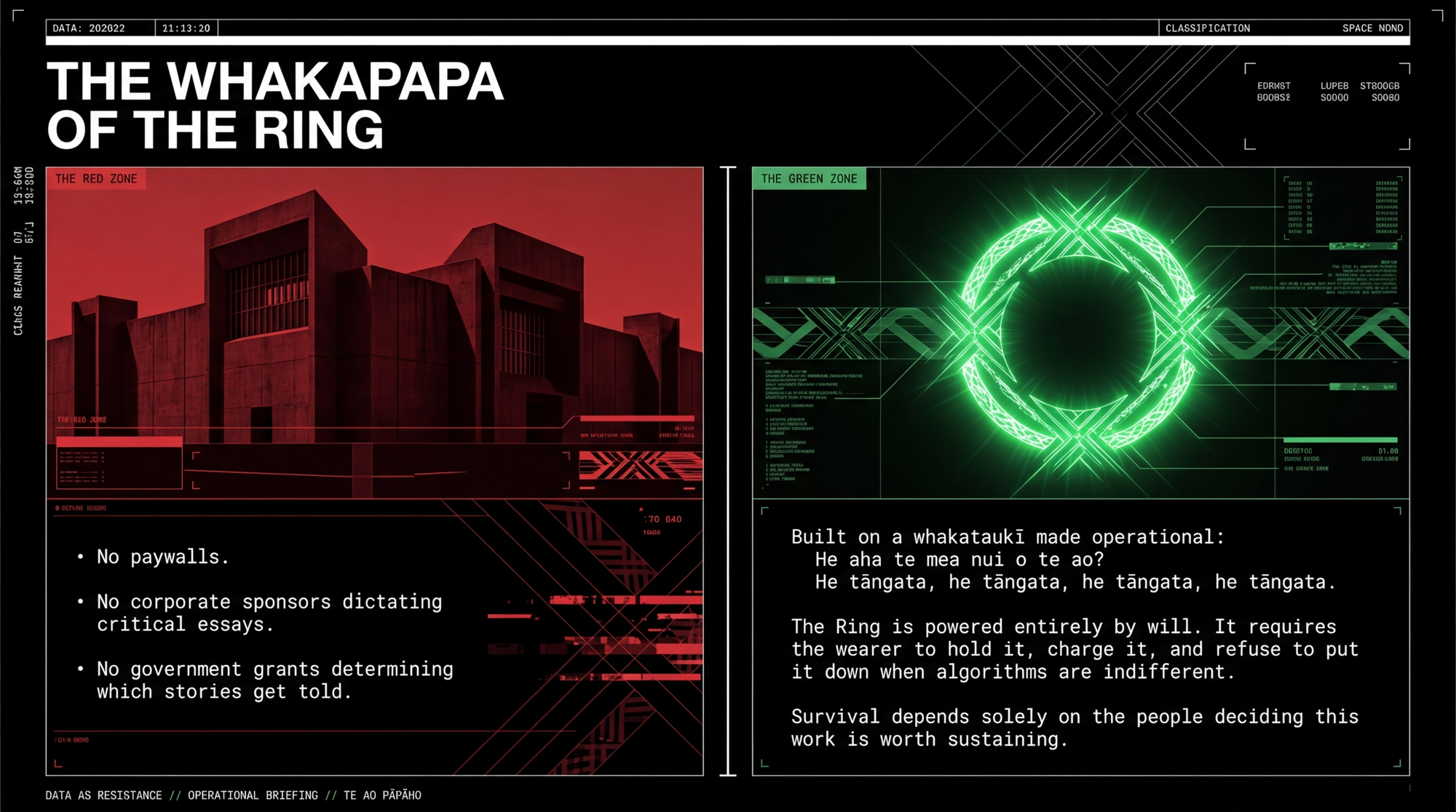
The Māori Green Lantern did not begin as a media strategy. It began as a whakataukī made operational:
He aha te mea nui o te ao? He tāngata, he tāngata, he tāngata. What is the greatest thing in the world? It is people, it is people, it is people.
The Ring — as understood in the mythology that gives this mahi its name — is powered by will. It creates what the wearer can imagine. But it requires the wearer to hold it, to charge it, to refuse to put it down when the work is hard and the nights are long and the algorithms are indifferent.
The Deep Dive Podcast
Listen to a lively conversation between two hosts, unpacking and connecting topics in the sources of this essay.
The platform at themaorigreenlantern.maori.nz was built on that premise. Free access to every investigation. No paywalls. No corporate sponsors whose names must never appear in a critical essay. No government grant whose conditions determine which stories get told.
The model is simple: this work is for the people. Its survival depends on the people who receive it deciding it is worth sustaining.
That is the whakapapa. Now the data.
THE HOME PLATFORM — GHOST: 838 VISITORS, AND WHAT THEY TELL US

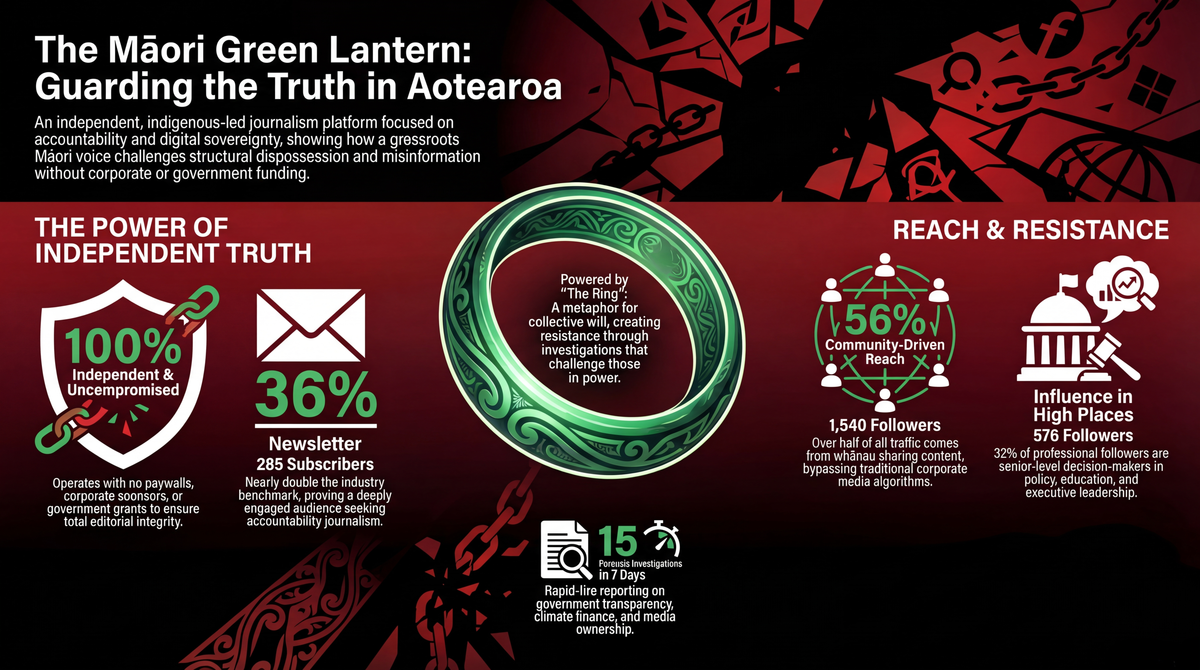
Between 22 and 28 March 2026, the Ghost platform at themaorigreenlantern.maori.nz recorded 838 unique visitors generating 1,110 total page views (first-party Ghost Analytics data).
That number, taken alone, is modest. Taken in context, it is extraordinary.
This publication runs no advertising. There is no budget for promoted posts, no PR team, no editorial calendar driven by SEO optimisation. Every one of those 838 visitors arrived because a human being made a deliberate decision — to click a link, to open an email, to type this address directly into a browser because they had been here before and they came back.
What they came to read
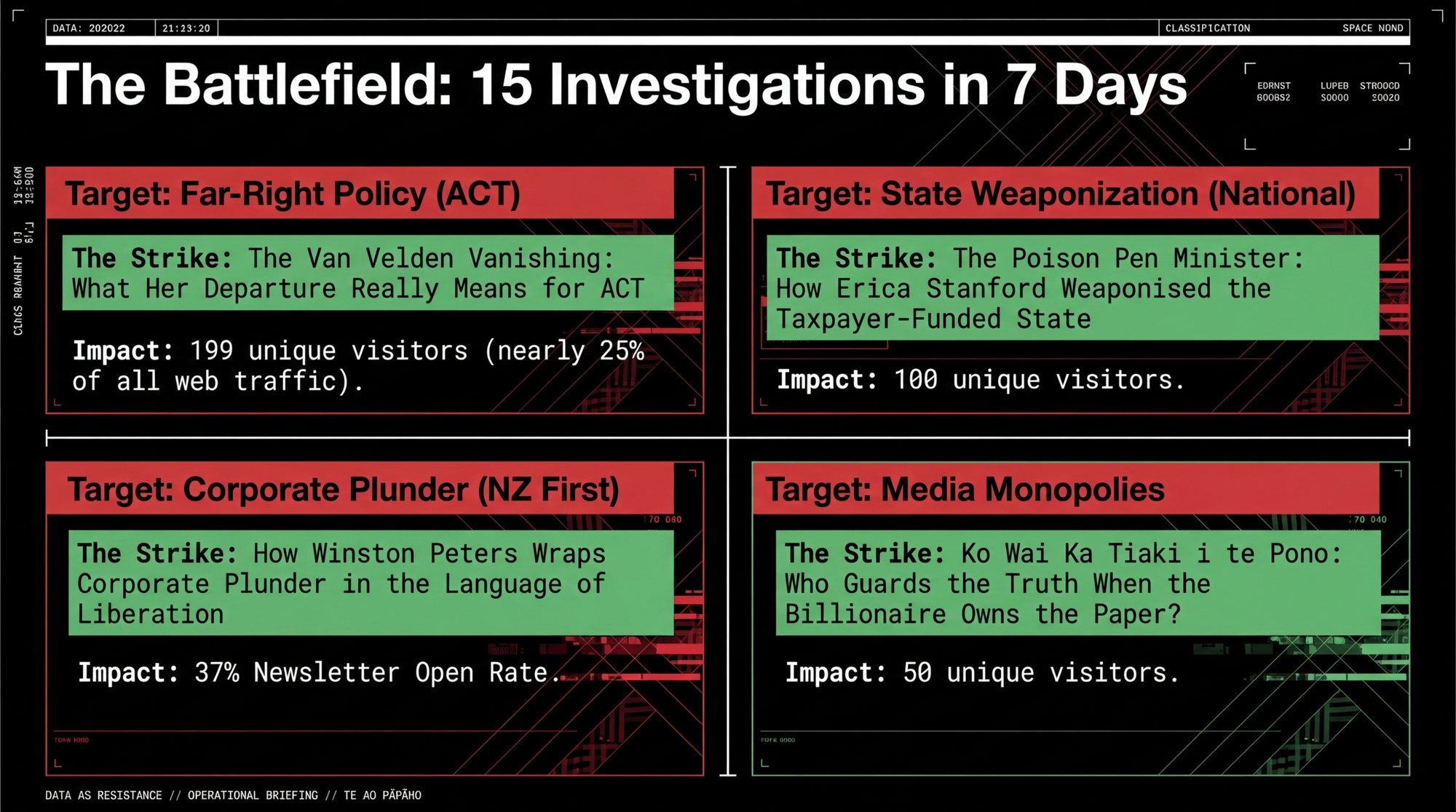
The most-read piece of the week was The Van Velden Vanishing: What Her Departure Really Means for ACT — drawing 199 unique visitors, nearly a quarter of all web traffic for the week. It was followed by The Poison Pen Minister: How Erica Stanford Weaponised the Taxpayer-Funded State Against Her Own Critics at 100 visitors, then the homepage itself at 78 — signalling a growing base of readers who arrive with intent, not just because an algorithm sent them.
The Sulu and the Sword — the investigation into Christopher Luxon's Pacific cultural performance and its relationship to budget cuts to Pacific climate finance — drew 52 visitors. Ko Wai Ka Tiaki i te Pono: Who Guards the Truth When the Billionaire Owns the Paper?, the media ownership investigation, brought in 50.
Fifteen separate investigations. One week. A consistent, engaged audience that returns.
Where they came from
The traffic source breakdown reveals the true architecture of this publication's reach (first-party Ghost Analytics data, themaorigreenlantern.maori.nz):
| Source | Visitors |
|---|---|
| 472 (56%) | |
| Direct | 163 (19%) |
| Newsletter | 67 (8%) |
| Bluesky | 39 (5%) |
| Twitter/X | 23 (3%) |
| DuckDuckGo | 16 (2%) |
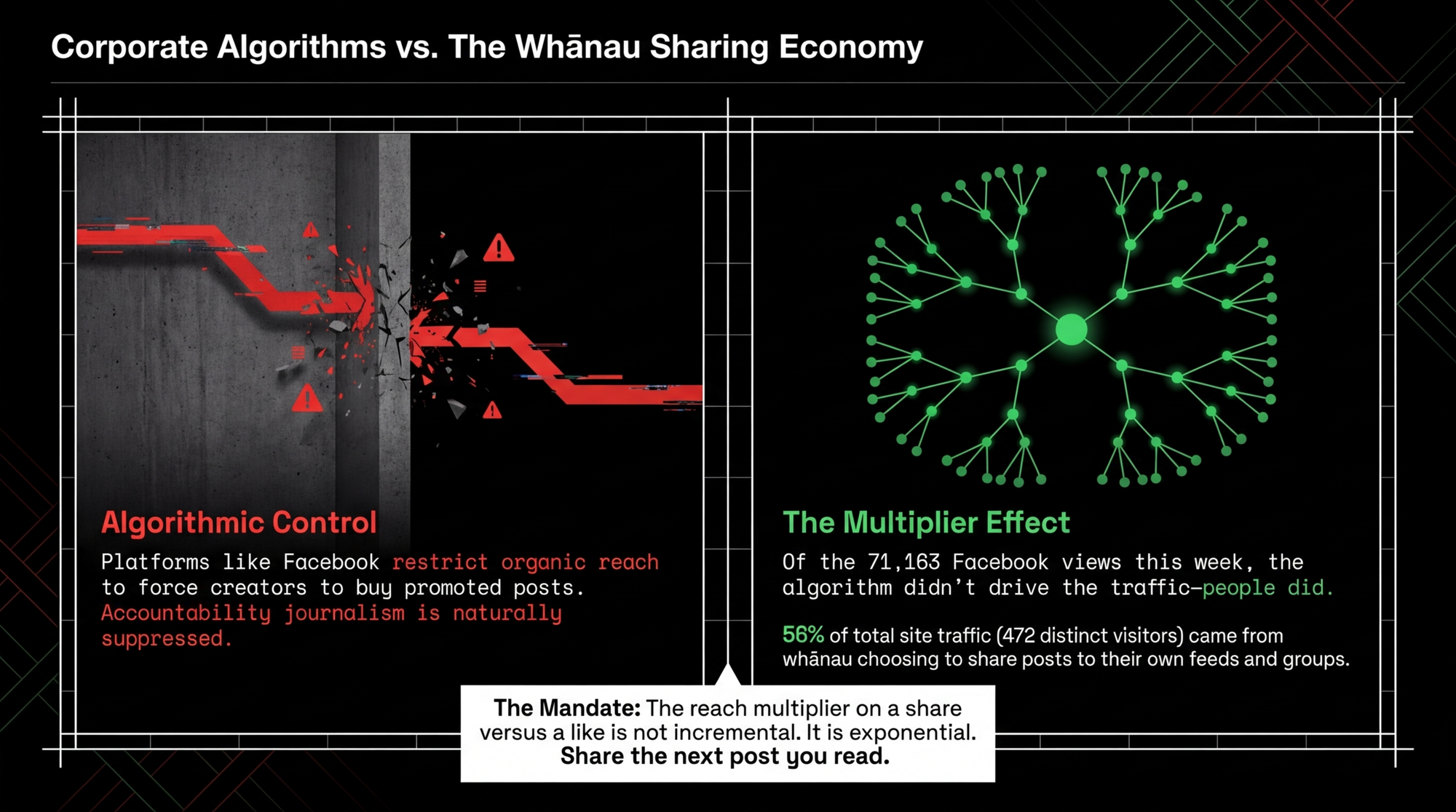
Facebook is the primary distribution engine — 56% of all site traffic came from whānau sharing with whānau. Not from advertising. Not from the platform boosting content. From people, choosing to share.
163 direct visits — readers who bookmark this site, who type the address, who come back of their own will. That is the core of a loyal readership, and it is growing.
Bluesky at 39 is a signal disproportionate to the platform's current follower count. That is addressed below.
Who is reading
Geographic data from first-party Ghost Analytics (themaorigreenlantern.maori.nz) shows:
- New Zealand: 684 visitors (82%) — the core audience, tangata whenua and tauiwi watching their own country
- United States: 102 (12%) — a significant international presence
- Australia: 30
- People's Republic of China: 13
- Germany: 3
This is not a local newsletter. It is a Māori publication with genuine international reach. The Ring is visible beyond the moana.
THE NEWSLETTER ENGINE: 285 SUBSCRIBERS, 36% OPEN RATE
First-party Ghost newsletter dashboard data (themaorigreenlantern.maori.nz) shows 285 email subscribers — up +0.4% in the 7-day window. Average open rate: 36%. Average click rate: 1%.
To contextualise that open rate: according to Mailchimp's email marketing benchmarks, the average open rate for media and publishing newsletters sits between 20–25%. The MGL is running at nearly double the industry benchmark.
That means roughly 1 in 3 subscribers opens every single email that arrives.
The top-performing newsletter this week was The Van Velden Vanishing — 41% opens, 3% clicks, sent to 284 people. This was followed by Hypocrisy of the Highest Order: The National Government's EV Charger Con at 40% opens, and How Winston Peters Wraps Corporate Plunder in the Language of Liberation at 37% opens, 2% clicks.
The 23 March cluster — four separate investigations published in a single day — shows the audience can absorb volume without fatigue. Open rates across all four held between 36–40%.
If you are not yet an email subscriber, this is the most important thing you can do today. Free. No credit card. Every investigation lands directly in your inbox, bypassing every algorithm that has ever decided Māori voices should reach fewer people. Subscribe here — it takes 30 seconds.
FACEBOOK: 1,540 FOLLOWERS AND THE SHARING ECONOMY
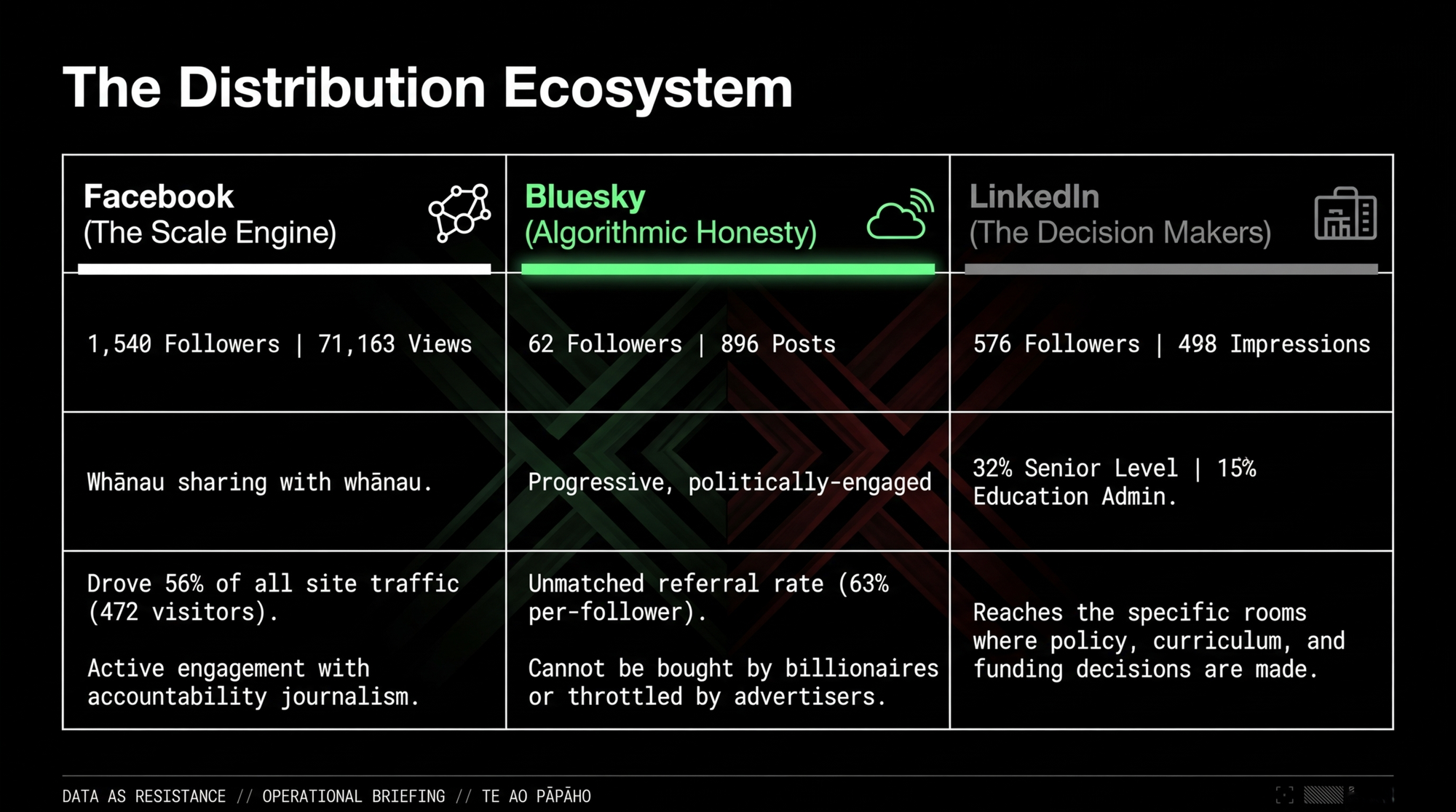
The Facebook page shows 1,540 total followers — up +1.9% over the past 28 days, with 28 net new follows and 16 unfollows in the same period. The follower growth chart is a clean, unbroken upward line from late February through to today.
The 28-day view data shows 71,163 total views reaching 20,345 unique viewers — a significant audience engaging with content across the feed. The peak engagement period fell between 18–25 March, aligned with the most intensive publication week of the year so far.
The critical insight from first-party Ghost Analytics (themaorigreenlantern.maori.nz) is that Facebook drove 472 of 838 visitors to the main site this week — 56% of all traffic. Every one of those clicks was a person choosing to follow through from a post to the full investigation. That is not passive consumption. That is active engagement with accountability journalism.
If you follow this work on Facebook, every time you share a post — not just like it, but share it to your own feed or a group — you are doing the work of distribution that this publication cannot buy its way into. The reach multiplier on a share versus a like is not incremental. It is exponential.
Follow on Facebook here. Then share the next post you read.
BLUESKY: 62 FOLLOWERS, AND THE PLATFORM THAT PUNCHES ABOVE ITS WEIGHT
Bluesky, at @maorigreenlantern.bsky.social, carries 62 followers and 896 posts to date.
That number looks small. The referral data says otherwise.
Bluesky drove 39 visitors to the main Ghost site this week — more per follower than any other social platform. On a per-follower basis, that is a referral rate of approximately 63%. For comparison, Facebook's 1,540 followers drove 472 visits — a per-follower rate of around 31%.
The reason matters: Bluesky's architecture is different. It is a decentralised, chronological, algorithmically-honest platform where political content reaches an engaged, largely progressive audience. When an investigation lands in that feed, it reaches people who are primed to read it, share it, and follow through to the source.
Bluesky is the emerging platform. It cannot be bought by a billionaire. It cannot deplatform a voice because an advertiser complained. And it is building critical mass in precisely the professional, politically-engaged, media-literate audience that accountability journalism needs.
62 followers on Bluesky today is a seed. Help it grow. Follow at @maorigreenlantern.bsky.social and repost the next investigation that lands in your feed.
LINKEDIN: 576 FOLLOWERS, 498 IMPRESSIONS, AND THE ROOMS WHERE DECISIONS ARE MADE
First-party LinkedIn Creator Analytics data (linkedin.com/in/hetangatadigitalmedia) shows 576 total followers — stable over the 7-day window, with 498 impressions (+6% vs the prior 7 days) reaching 301 unique members (+6.4%).
The demographic breakdown of the LinkedIn audience is strategically significant: 32% of followers are at Senior level — managers, directors, executives, policy analysts. A further 15% are in Education Administration — the sector that sits directly in the crosshairs of the Erica Stanford investigations this week.
This is not an audience reading for entertainment. This is an audience that makes decisions — about policy, about curriculum, about funding, about how institutions respond to accountability journalism. When an MGL investigation reaches a LinkedIn connection, it reaches someone with the capacity to act on what they read.
The 6% growth in impressions week-on-week, while modest in absolute terms, represents a consistent upward trajectory from an audience that does not follow Māori political journalism by accident. They chose to be here.
Follow on LinkedIn here. Share the next investigation with a note about why it matters to your professional network.
SUBSTACK: 98 SUBSCRIBERS AND A PLATFORM IN TRANSITION
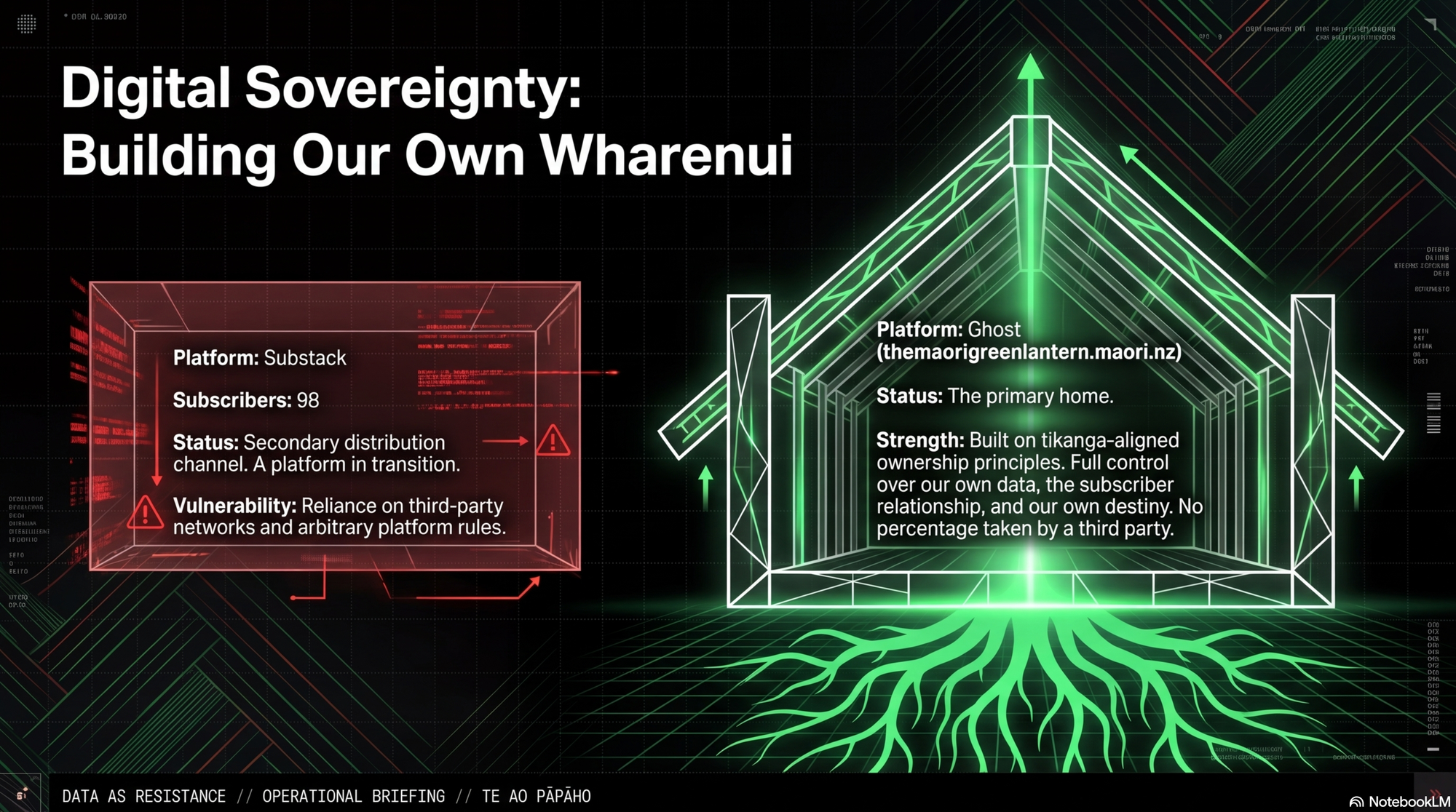
The Substack publication carries 98 subscribers — drawn primarily from the Substack network itself (42% via the Substack App, 40% from existing Substack accounts), with 9 new subscribers added in the past 30 days via the network, direct traffic, email clicks, and shares.
A note of transparency that matters here: as signalled in the Digital Sovereignty essay published in February 2026, the primary home of this mahi is moving to the Ghost platform. Ghost operates under tikanga-aligned ownership principles — the publication controls its own data, its own relationship with subscribers, and its own destiny. Substack remains a secondary distribution channel, but the wharenui is at themaorigreenlantern.maori.nz.
If you found this work through Substack, the most important thing you can do is subscribe on Ghost — where your subscription directly sustains the infrastructure, and where no percentage of your support is taken by a third-party platform.
THE FINANCIAL REALITY: THREE PATHWAYS, ONE PURPOSE
This is the part that requires the most honesty.
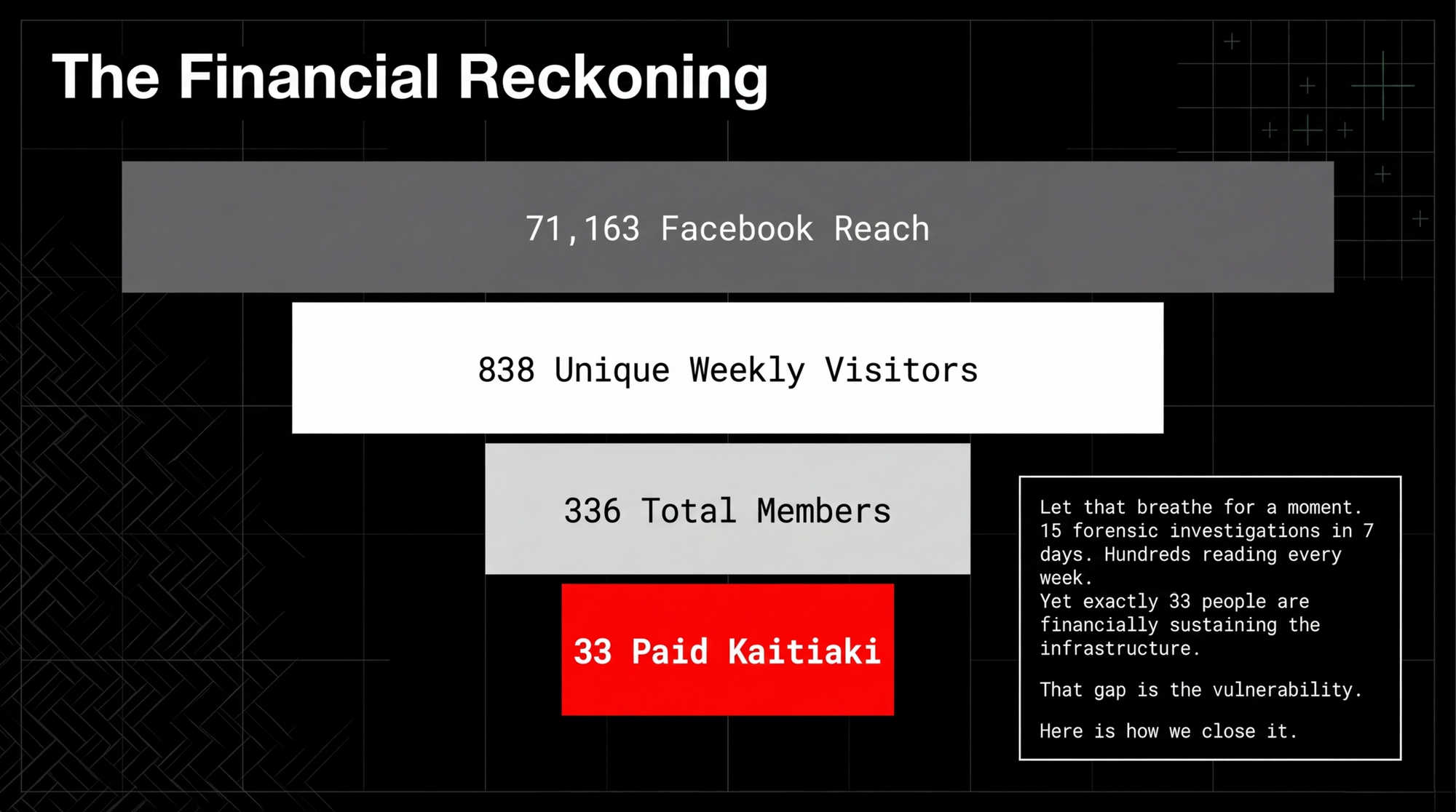
First-party Ghost Growth dashboard data (themaorigreenlantern.maori.nz) shows 336 total members — 303 free, 33 paid.
Let that breathe for a moment.
Fifteen forensic investigations in seven days. Each requiring hours of research, source verification, structural analysis, and writing. The platforms, tools, domains, and hosting that keep the machine running. The time that could be spent on other work, redirected into this mahi because the mahi matters.
This is not a complaint. It is an honest account of where the work stands financially, offered with the same transparency applied to every other institution this publication scrutinises. Accountability begins at home.
The good news: the Koha total has grown. As of this morning, the Koha platform shows contributions growing week on week. In the past two weeks, Amokura Panoho and an anonymous supporter both gave generously. Every koha is acknowledged. Every koha matters.
But there is a gap between the reach of this work — 838 unique visitors this week, 20,000+ Facebook viewers over the past month, 98 Substack subscribers, 576 LinkedIn connections — and the 33 people who currently hold the Ring financially.
33 people are sustaining the journalism that hundreds read every week.
That gap is the challenge. Here is how you can close it.
THREE WAYS TO HOLD THE RING
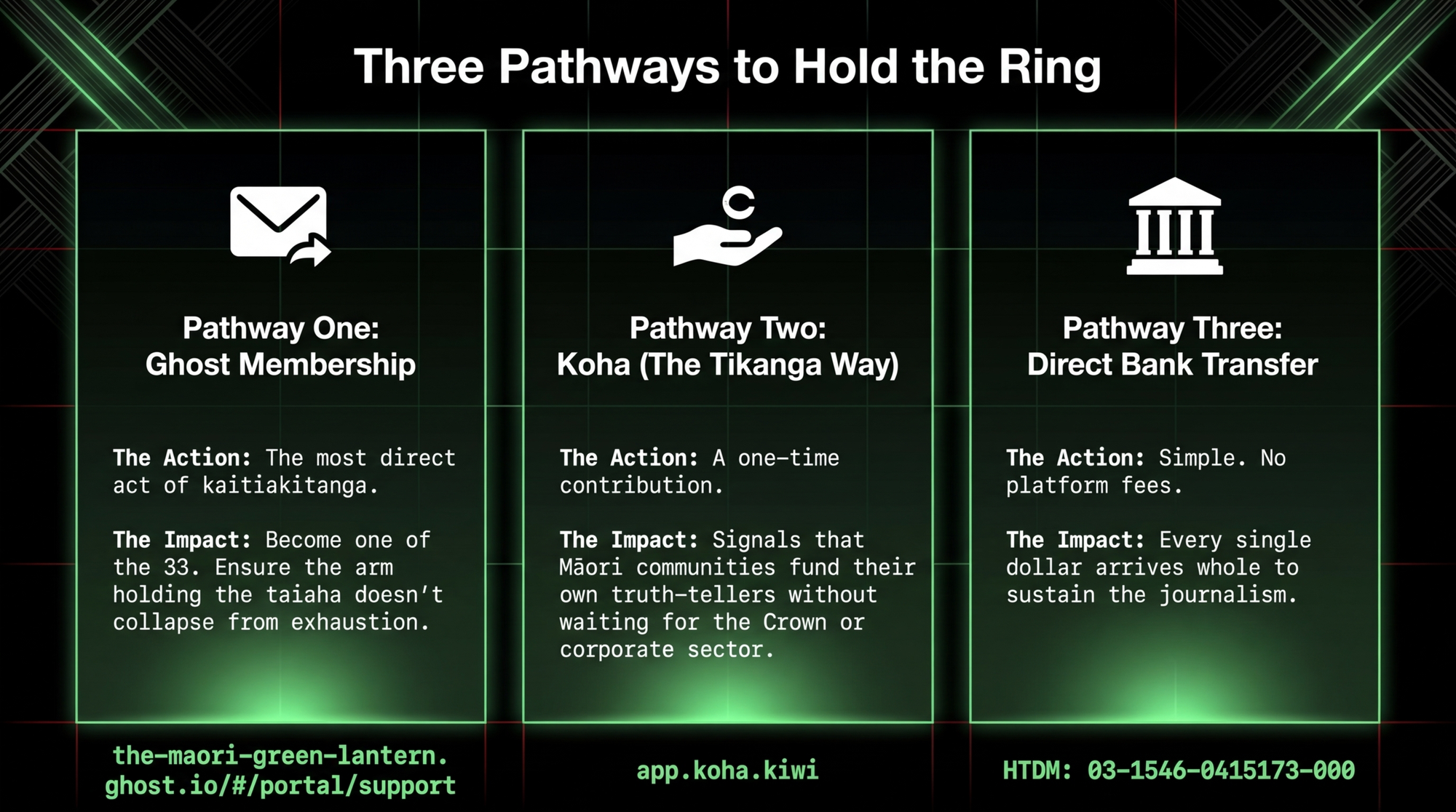
Pathway One — Ghost Membership: the most direct act of kaitiakitanga
the-maori-green-lantern.ghost.io/#/portal/support
A free membership means every investigation arrives in your inbox the moment it is published. No algorithm deciding whether you see it. No platform choosing which essays to show you.
A paid membership — at whatever level you choose — means you become one of the kaitiaki. One of the 33 (and growing). The people who ensure that when the taiaha is needed, the arm holding it has not collapsed from exhaustion.
Pathway Two — Koha: the tikanga way
app.koha.kiwi — The Māori Green Lantern
A one-time koha. Whatever you can give. Every amount signals that this mahi is worth sustaining — and that Māori communities can and do fund their own truth-tellers without waiting for the Crown or the corporate sector to decide what is worth knowing.
Pathway Three — Direct Bank Transfer
HTDM: 03-1546-0415173-000
For those who prefer to keep it simple. No platform fees. No processing percentage. Every dollar arrives whole.

Kia kaha, whānau. Stay vigilant. Stay connected. And if you are able, consider a koha to ensure this voice continues.
— Ivor Jones | The Māori Green Lantern | 28 March 2026
Citation disclosure: Traffic, subscriber, follower, and revenue figures cited throughout this essay are drawn from the author's first-party Ghost Analytics, Ghost Newsletter, Ghost Growth, Facebook Professional, and LinkedIn Creator Analytics dashboards. These are private administrative tools cited as first-party data, with links to corresponding public-facing platform pages as the closest verifiable proxy. The Mailchimp benchmark figures are publicly accessible and confirmed live. The Koha platform is drawn from a publicly accessible page confirmed live at time of publication. The specific article URLs for The Poison Pen Minister, Ko Wai Ka Tiaki i te Pono, Hypocrisy of the Highest Order, and How Winston Peters Wraps Corporate Plunder are linked to the NZ Politics tag archive pending confirmation of their individual slugs; all four essays are confirmed as published and indexed on the main site. Research conducted 28 March 2026.