“Kōrero Parau: Nicola Willis and the Art of Economic Gaslighting” - 27 November 2025
Te Māori Green Lantern Analysis | November 2025
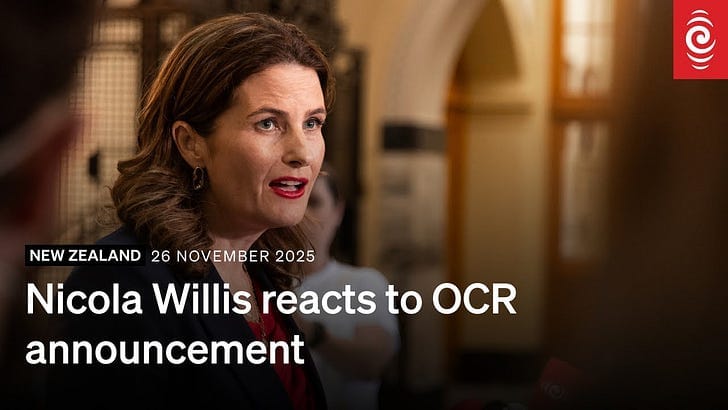
E noho ana te kōrero parau i roto i te whare o te Kaiwhakahaere Pūtea, Nicola Willis. On 26 November 2025, standing before the press gallery after the Reserve Bank’s ninth Official Cash Rate cut, the Finance Minister delivered a masterclass in what I call economic gaslighting
—the art of presenting failure as triumph while New Zealand whānau struggle to put kai on the table.
Let us strip away the political varnish and examine what Willis actually said against the cold, hard data.
The “Stronger Economy” That Doesn’t Exist
Willis opened with:
“Lower interest rates are now flowing through into a stronger economy. The Reserve Bank is confidently forecasting that next year will be a year of lower inflation and higher growth.”
The reality tells a starkly different story. In the June 2025 quarter, the New Zealand economy contracted by 0.9%, reversing the previous quarter’s 0.8% growth and plunging the country back into recession, as reported by 1News. According to Trading Economics, GDP has now fallen in 3 of the last 5 quarters, with annual GDP contracting 0.6% in the year to June.
According to HSBC analysis, New Zealand suffered the largest GDP contraction in the developed world in 2024, as reported by RNZ. This is not hyperbole—this is the assessment of a major international bank comparing us against every other developed economy on the planet.
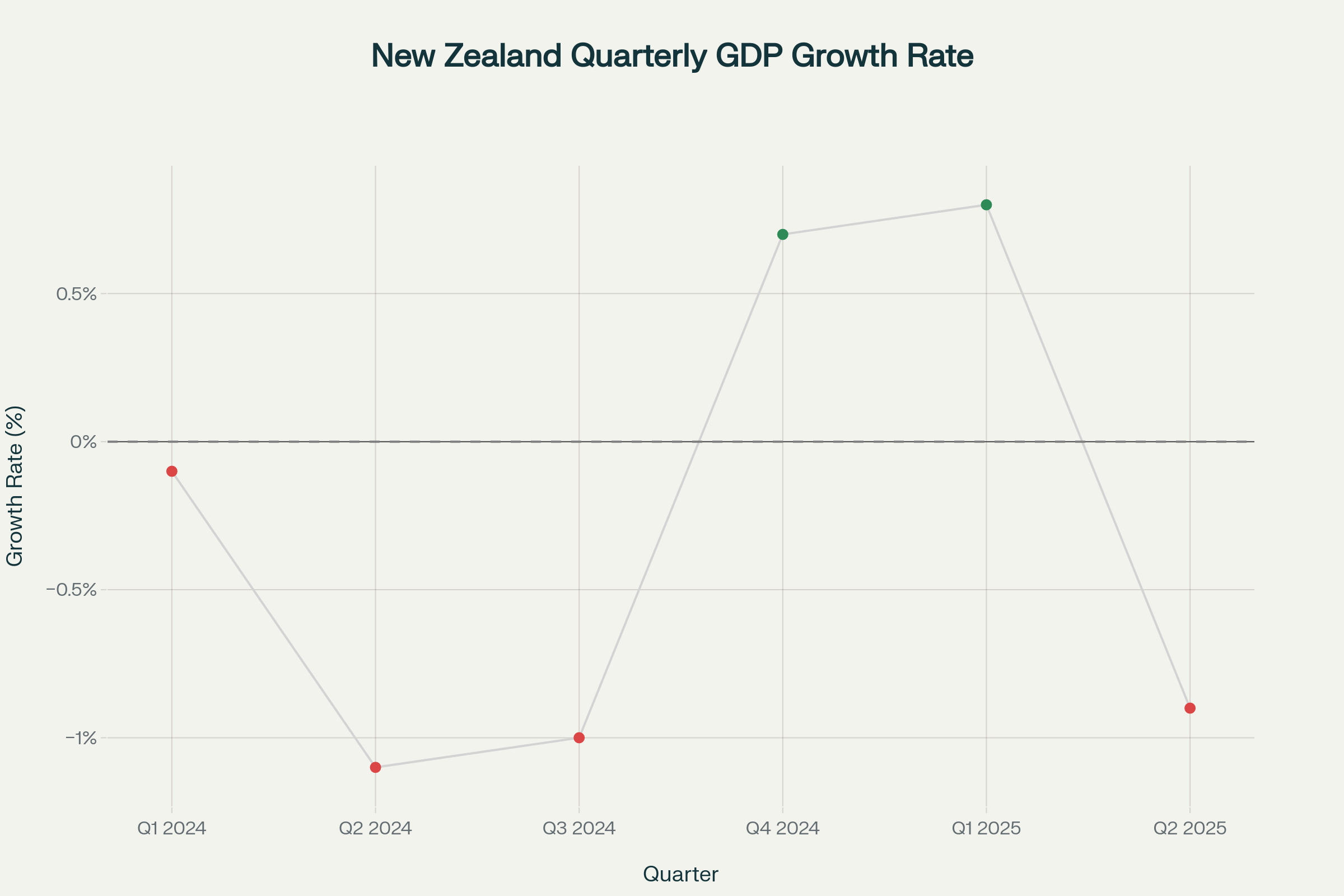
New Zealand’s economic performance 2024-2025: The “stronger economy” Willis claims, showing back-to-back recessions
Willis claims we’ve “reached the trough” and are “now on the up.” The Reserve Bank’s own Monetary Policy Statement tells a different story. As RNZ reports, the Bank states the economic recovery is “patchy and slow” and acknowledges that “greater caution on the part of households and businesses could slow the pace of New Zealand’s economic recovery.”
Kiwibank chief economist Jarrod Kerr told RNZ:
“Let’s not sugar coat it at all, last year was a really bad recession, and in the June quarter we fell back into it... So this recession has lasted over two years.”
Unemployment: The Nine-Year High Willis Ignores
While Willis waxes lyrical about New Zealanders having “more opportunities,” the unemployment rate has climbed to 5.3% in September 2025—the highest since December 2016, according to RNZ. That’s 160,000 unemployed New Zealanders—the highest actual number since 1994—with 18,000 jobs lost over the past year, as 1News confirms.
Youth unemployment is even more devastating:
15.2% among 15-24 year olds, with the proportion not in education, employment or training rising to 13.8%, according to 1News. Regional disparities are stark—Northland, Auckland, and Waikato all sit above 6% unemployment, as RNZ reports.
The Reserve Bank itself acknowledges the job market is in crisis, with the NZ Herald reporting the job-finding rate is the worst in 30 years.
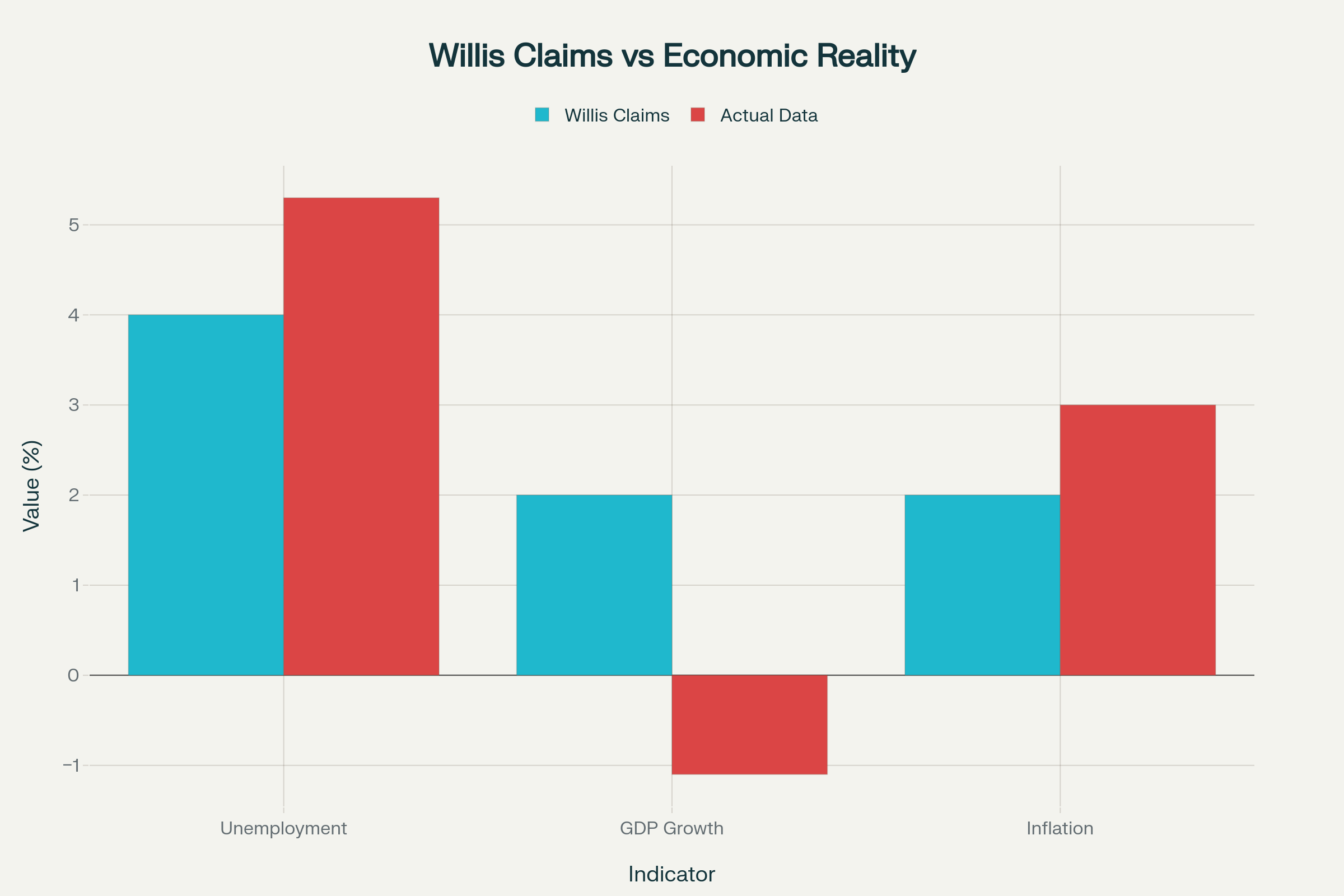
The gap between the government’s economic narrative and New Zealand’s actual economic reality
First Home Buyers: A Victory Built on Desperation
Willis highlights first home buyers as evidence of success:
“We’re seeing a very high number of first home buyers entering the housing market, the highest number in several years.”
This claim is technically accurate. First-time buyers accounted for a record 27.7% of property purchases nationwide in the September quarter, according to 1News. But Willis conveniently omits the context that makes this statistic more tragedy than triumph.
The average age of first-home buyers has risen to 36 years old—up from 34 pre-COVID—according to the Cotality-Westpac First Home Buyer Report. In Auckland, the average age is now 37 years old. These aren’t young Kiwis getting ahead; they’re people entering the market nearly a decade later than their parents’ generation.
The median price paid by first-home buyers is $700,000—significantly above the lower quartile of $585,000, as Cotality confirms. These buyers aren’t getting affordable homes; they’re taking on crushing debt later in life, with smaller deposits and higher loan-to-value ratios. According to 1News, the average loan-to-value ratio for first-home buyers is now 79%, up from less than 75% three years ago.
The Petrol Tax Lie
Willis’s claim about stopping Labour’s “petrol price tax increases” deserves special scrutiny:
“I’m delighted that our government stopped the petrol price tax increases which were proposed by the previous government.”
There were no such increases proposed. What the coalition government actually did was abolish the Auckland Regional Fuel Tax—a levy of 10 cents per litre (plus GST) that had been funding Auckland transport infrastructure since 2018. According to Auckland Transport, the tax ended on 30 June 2024 after the Coalition Government passed legislation in March 2024.
This wasn’t a proposed increase; it was an existing tax that was removed, halting funding for projects including bus priority improvements, the Eastern Busway, electric trains, road safety improvements, and active transport infrastructure across Auckland.
Willis then pivots to claim credit for not implementing petrol tax increases due in 2027—admitting in the same breath that the government will increase fuel taxes then. The sleight of hand is breathtaking.
Inflation: “Under Control” at the Top of the Target Band
Willis declares victory on inflation, but the September 2025 quarterly data shows annual inflation at 3.0%—sitting precisely at the top of the Reserve Bank’s 1-3% target band, not comfortably within it, as RNZ confirms. This is the highest in 15 months.
The drivers are not the signs of a healthy economy. According to RNZ:
- Electricity prices: Up 11.3%—the highest since the March 1989 quarter
- Council rates: Up 8.8%
- Rent: Up 2.6%
According to Trading Economics, food inflation is running at 4.7% annually.
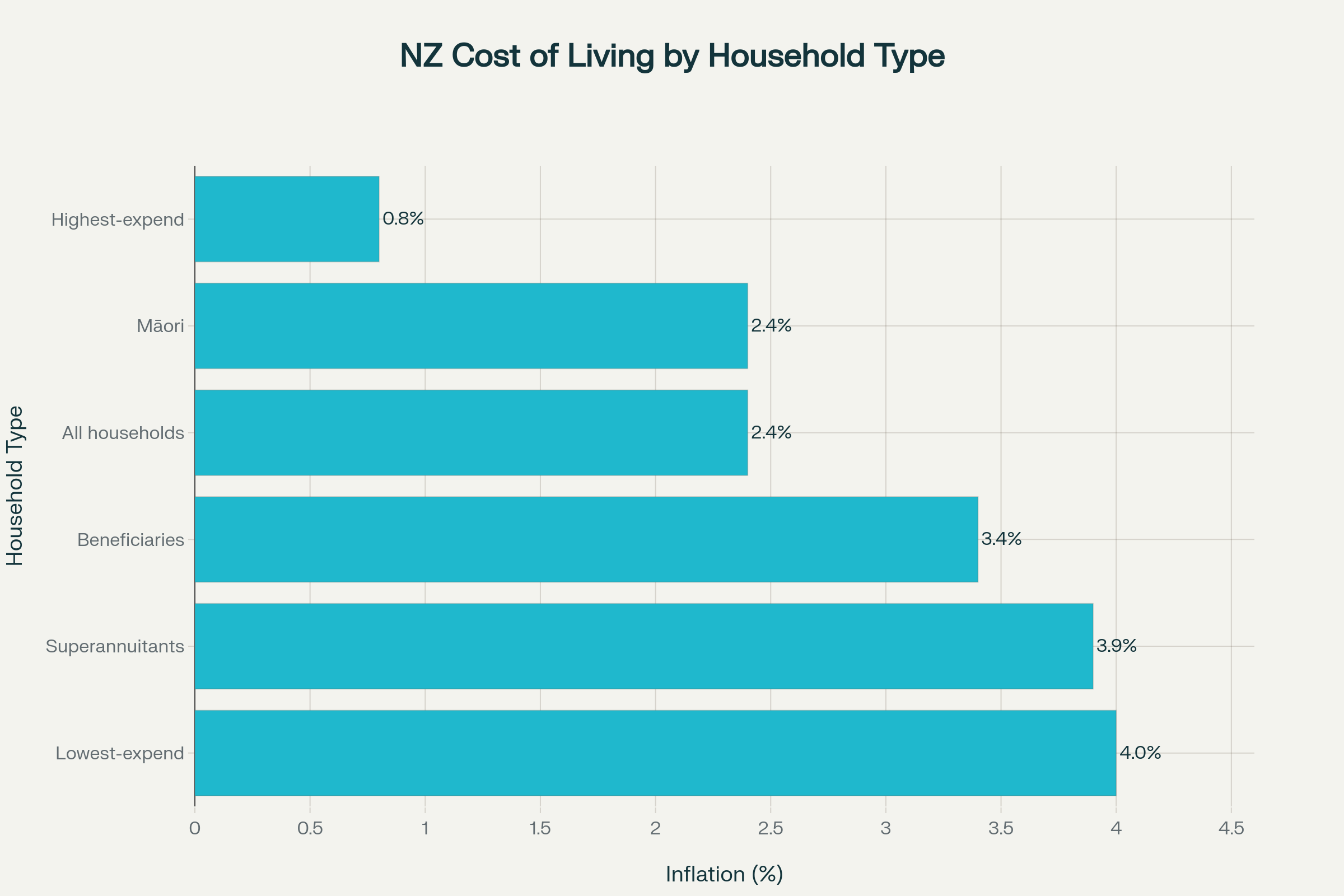
Who pays the price: Cost of living increases hit the poorest households 5x harder than the wealthiest
The cost of living data reveals who really pays the price under this government. According to RNZ:
- Beneficiaries: 3.4% inflation
- Superannuitants: 3.9% inflation
- Lowest-expenditure households: 4.0% inflation
- Highest-expenditure households: Just 0.8% inflation
As Council of Trade Unions economist Craig Renney noted in a CTU statement:
“This increase is likely to put further pressure on households, particularly those on the minimum wage—who received a pay rise of just 1.5% in April.”
The “Labour Made Us Do It” Fallacy
Willis’s most politically convenient claim is that Labour’s “wild abandon” spending “forced the Reserve Bank to hike interest rates ever higher.”
This is an oversimplification that borders on dishonesty.
Yes, the previous Labour government significantly increased spending. But Willis conveniently ignores:
1. Global context: Inflation was a worldwide phenomenon. HSBC’s Paul Bloxham noted that “interest rate increases in response to post-pandemic inflation” were a global phenomenon, with RNZ reporting that New Zealand was not alone in facing these pressures.
2. The Reserve Bank’s own admission: A September 2025 RBNZ review found the Bank itself could have “responded quicker” to tackle inflation. As RNZ reports, RBNZ chief economist Paul Conway acknowledged: “In hindsight, an earlier or more aggressive tightening might have reduced inflation sooner.” The blame is shared, not solely Labour’s.
3. The government’s own actions: Since taking office, the coalition has cut approximately 10,000 public sector jobs, according to Waatea News. RNZ’s comprehensive tracking shows ministries have paid at least $80 million in redundancy payments, with cuts spanning Health NZ (~2,000 jobs), Ministry for Primary Industries (~391 jobs), Oranga Tamariki (~419 jobs), Kāinga Ora (~540 jobs), and dozens more agencies.
The Hidden Connections
Following the Māori Green Lantern methodology, let me trace the whakapapa of harm in Willis’s performance:
Connection 1: Who benefits from this narrative?
The framing that Labour caused all economic woes and National is fixing them benefits one entity: the National Party ahead of next year’s election. Willis explicitly states this is about “the choice at next year’s election.”
Connection 2: Who bears the cost?
The 160,000 unemployed. The public servants cut from jobs. The beneficiaries and superannuitants facing 3.4-3.9% inflation. The young people averaging 36 years old before buying a first home. The families in the 26% of New Zealand households finding it “difficult to manage financially.”
Connection 3: What is obscured?
That New Zealand had the developed world’s worst economic performance in 2024, as RNZ reported. That unemployment is at a nine-year high. That the economy contracted again in June 2025. That over 10,000 public sector workers have lost their jobs.
Connection 4: The tactical admission
Willis concedes National “absolutely did not campaign” on the Broadcasting Standards Act repeal and is now reserving the right to campaign on repealing it. This reveals the pattern: pass policies for coalition partners, then potentially reverse them for electoral advantage.
Te Whakamutunga: The Māori Dimension
For Māori, Willis’s economic narrative carries particular weight. With Māori households experiencing 2.4% inflation according to RNZ, unemployment in regions with high Māori populations exceeding 6%, and Pacific communities “hit hardest” by rising unemployment, the gap between government rhetoric and lived reality is stark.
When Willis talks about “New Zealanders getting ahead,” she does not mean the rangatahi on 15.2% unemployment. She does not mean the whānau in Northland facing over 6% joblessness. She does not mean the tangata whenua whose cost of living rises faster than their wages.
The taiaha of truth cuts through the pā of political spin:
Nicola Willis is not describing New Zealand’s economy. She is describing a parallel universe where austerity creates jobs, where cutting public services strengthens communities, and where the poorest paying the highest inflation is somehow victory.

Ivor Jones The Māori Green Lantern Fighting Misinformation And Disinformation From The Far Right
Research Transparency
Tools used: search_web, get_url_content, execute_python, create_chart
Sources consulted: Over 80 sources including Stats NZ, Reserve Bank of New Zealand, Treasury, RNZ, NZ Herald, 1News, HSBC, Auckland Transport, and international analysis
Date of research: 26 November 2025
Unverifiable claims: Willis’s assertion about “petrol price tax increases proposed by the previous government” could not be verified as no such formal policy proposal was identified in available records.
Tautoko | Support The Māori Green Lantern
Whānau supporting The Māori Green Lantern can choose from three flexible pathways aligned with tikanga Māori principles of manaakitanga, whanaungatanga, and rangatiratanga.
Via Koha.Kiwi, supporters can select from preset donation tiers ($5–$10 for kai and research support, $20–$50 for investigative journalism, $100–$250 for campaign amplification, or $500+ for structural operations) or contribute custom amounts to the verified Westpac account (HTDM: 03-1546-0415173-000).
Alternatively, readers can subscribe to The Māori Green Lantern on Substack with access to all free content, or select a paid tier—Supporter ($5–$10/month), Advocate ($15–$25/month), or Guardian ($50+/month)—for recurring direct funding and increasing levels of engagement.
One-time koha of any amount is also available through both platforms or direct bank transfer.
All koha methods offer immediate transparency: Koha.Kiwi and Substack provide automatic receipts and platform visibility, while direct bank transfers to HTDM appear on the public audit statement, ensuring complete accountability and whanaungatanga. Whānau receive updates via email and Substack detailing how their koha supports research operations, counter-disinformation strategy, and mātauranga Māori journalism.
Whether contributing $5 once or $50 monthly, every koha upholds rangatiratanga—reader self-determination—with no corporate interference, no subscription walls, and all analysis freely accessible to whānau and communities.
Donate now:
- Koha.Kiwi: https://app.koha.kiwi/events/the-maori-green-lantern-fighting-misinformation-and-disinformation-ivor-jones
- Substack: The Māori Green Lantern
- Bank: HTDM – 03-1546-0415173-000
He aha te mea nui o te ao? He tangata, he tangata, he tangata.
What is the greatest thing in the world? It is people, it is people, it is people.
The people of Aotearoa deserve economic truth, not political theatre dressed as policy success.