"Neil Quigley's Shameful Exit" - 29 August 2025
How Elite Deception and Neoliberal Capture Betrayed Tangata Whenua Trust
Kia ora e hoa mā - Greetings to you all, my friends.
The spectacular collapse of Reserve Bank leadership under Neil Quigley represents far more than institutional incompetence - it exposes the rotten core of how neoliberal elites operate in Aotearoa, prioritising their own reputations over transparency, accountability, and the wellbeing of tangata whenua. When those entrusted with our nation's financial stability resort to outright deception and cover-ups, they perpetuate the same colonial patterns of secrecy and power concentration that have systematically disadvantaged Māori communities for generations.
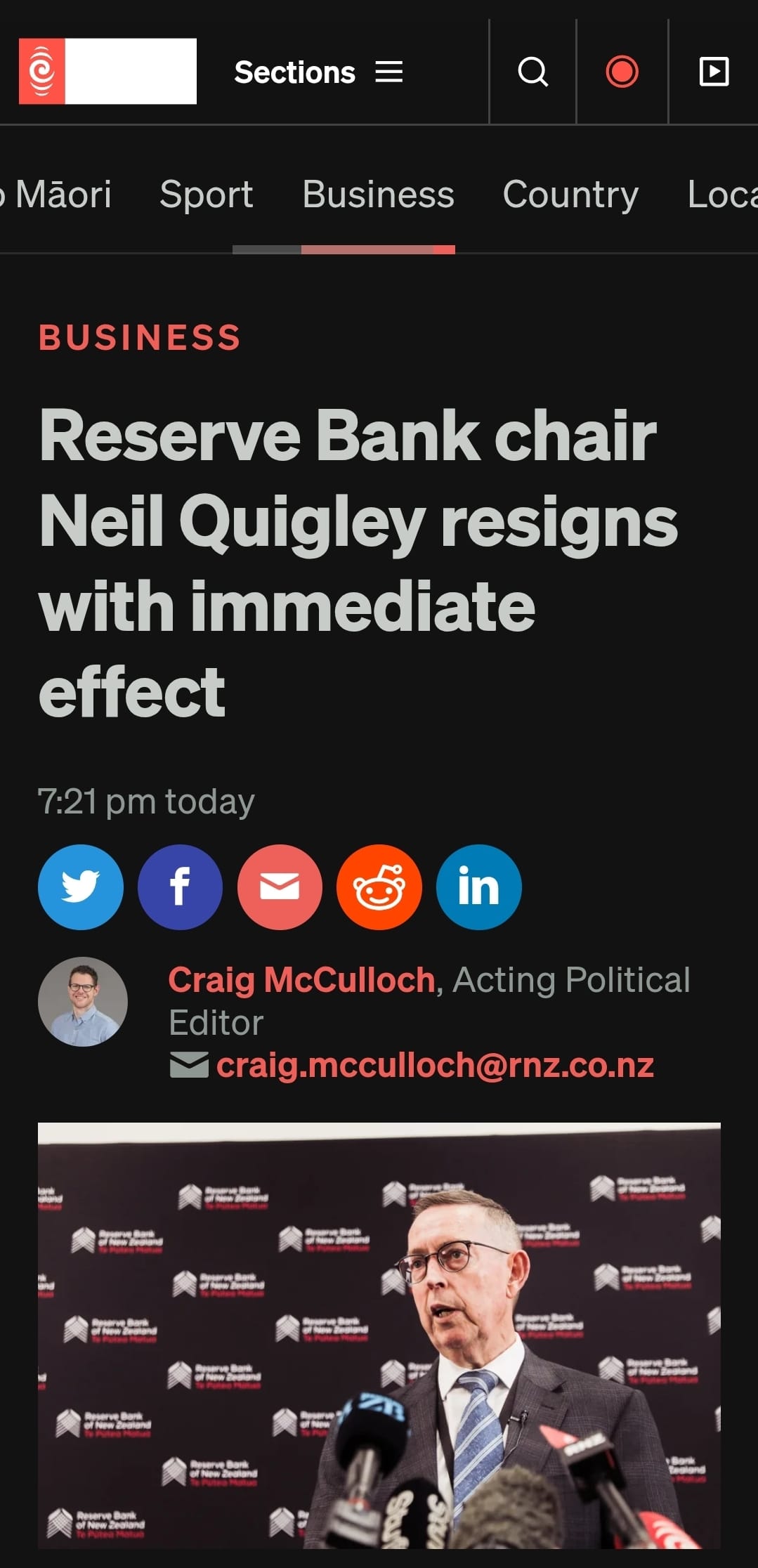
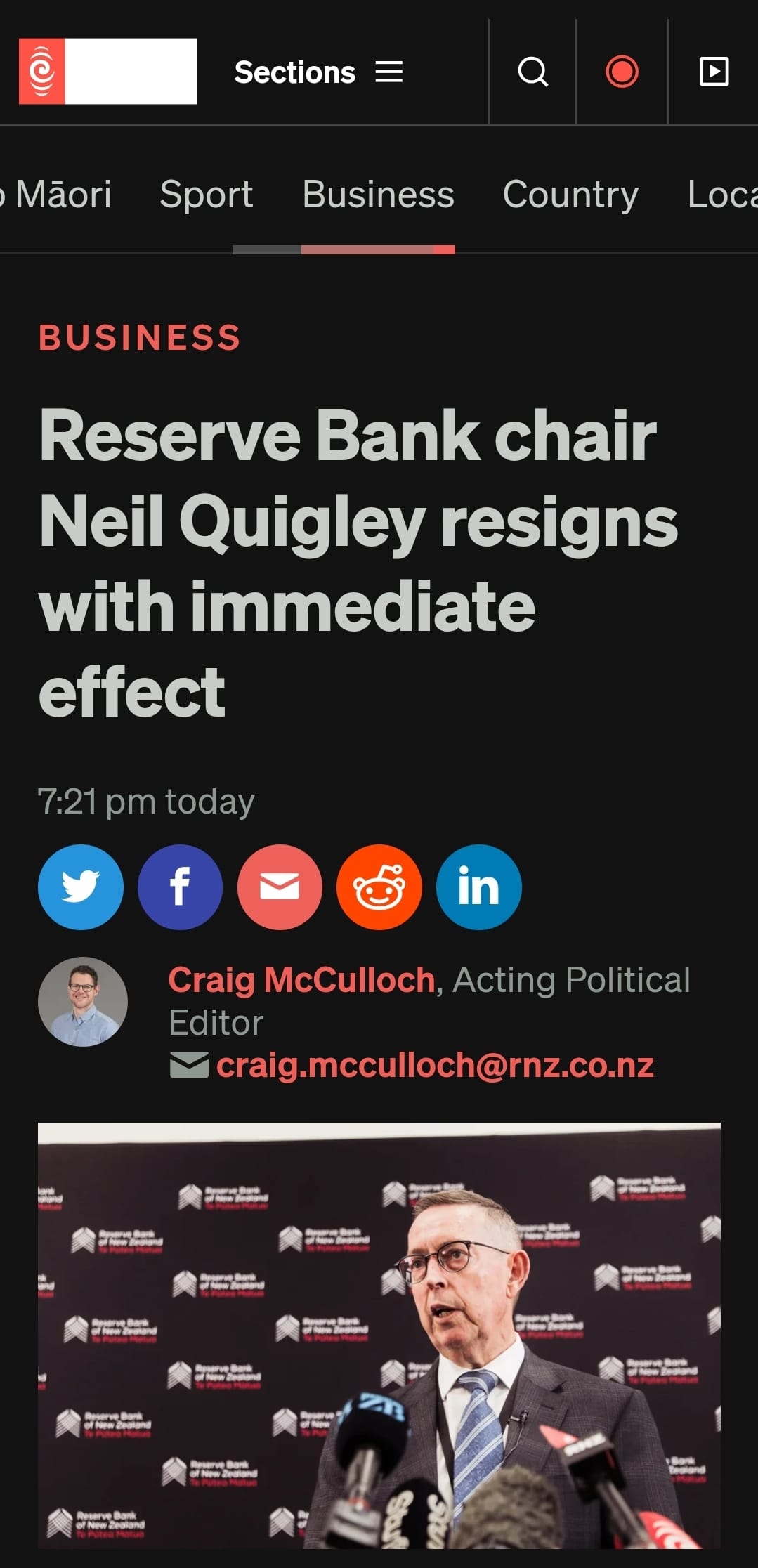
https://www.rnz.co.nz/news/business/571504/reserve-bank-chair-neil-quigley-resigns-with-immediate-effect
Understanding the Foundations of Financial Colonisation
The Reserve Bank of New Zealand operates as one of our most powerful institutions, wielding enormous influence over monetary policy, inflation, and economic conditions that directly impact whānau Māori. Traditionally, Māori economic systems operated on principles of reciprocity, collective wellbeing, and transparent decision-making - values utterly foreign to the shadowy boardroom machinations we've witnessed.
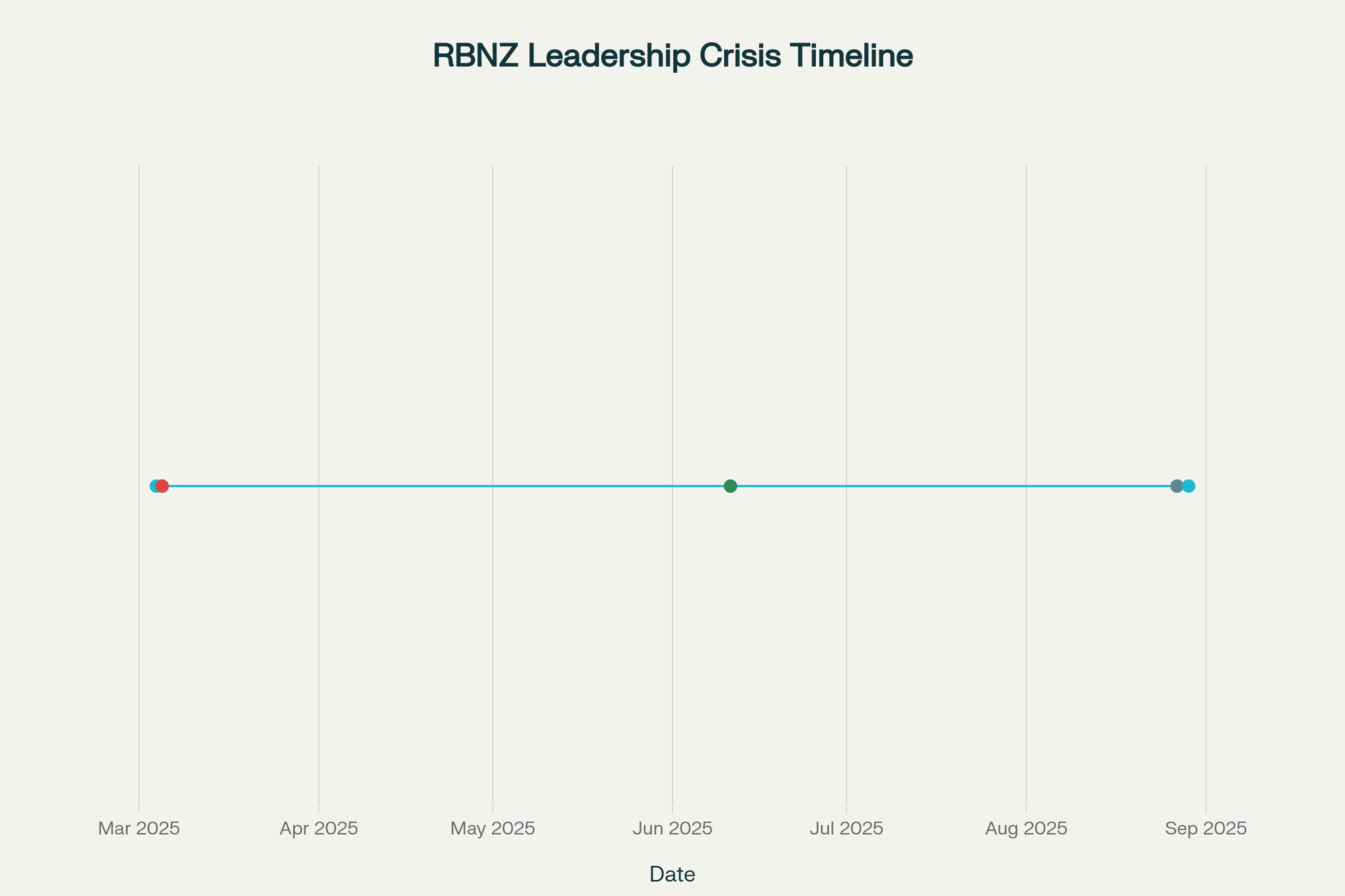
Timeline of Reserve Bank leadership crisis: Key dates and official statements
The concept of utu - balanced exchange and accountability - demands that those holding positions of public trust face consequences when they betray that trust. Yet the neoliberal system consistently protects its own, allowing figures like Quigley to maintain positions of power even when their conduct undermines democratic principles.
The Anatomy of Elite Deception
Neil Quigley's resignation saga began in March when former Governor Adrian Orr departed suddenly after a funding dispute that saw Orr requesting $1.031 billion over five years while the board was willing to accept "considerably less". Rather than honestly explaining this fundamental disagreement over the bank's operational capacity, Quigley told media it was a "personal decision" and refused to provide details.
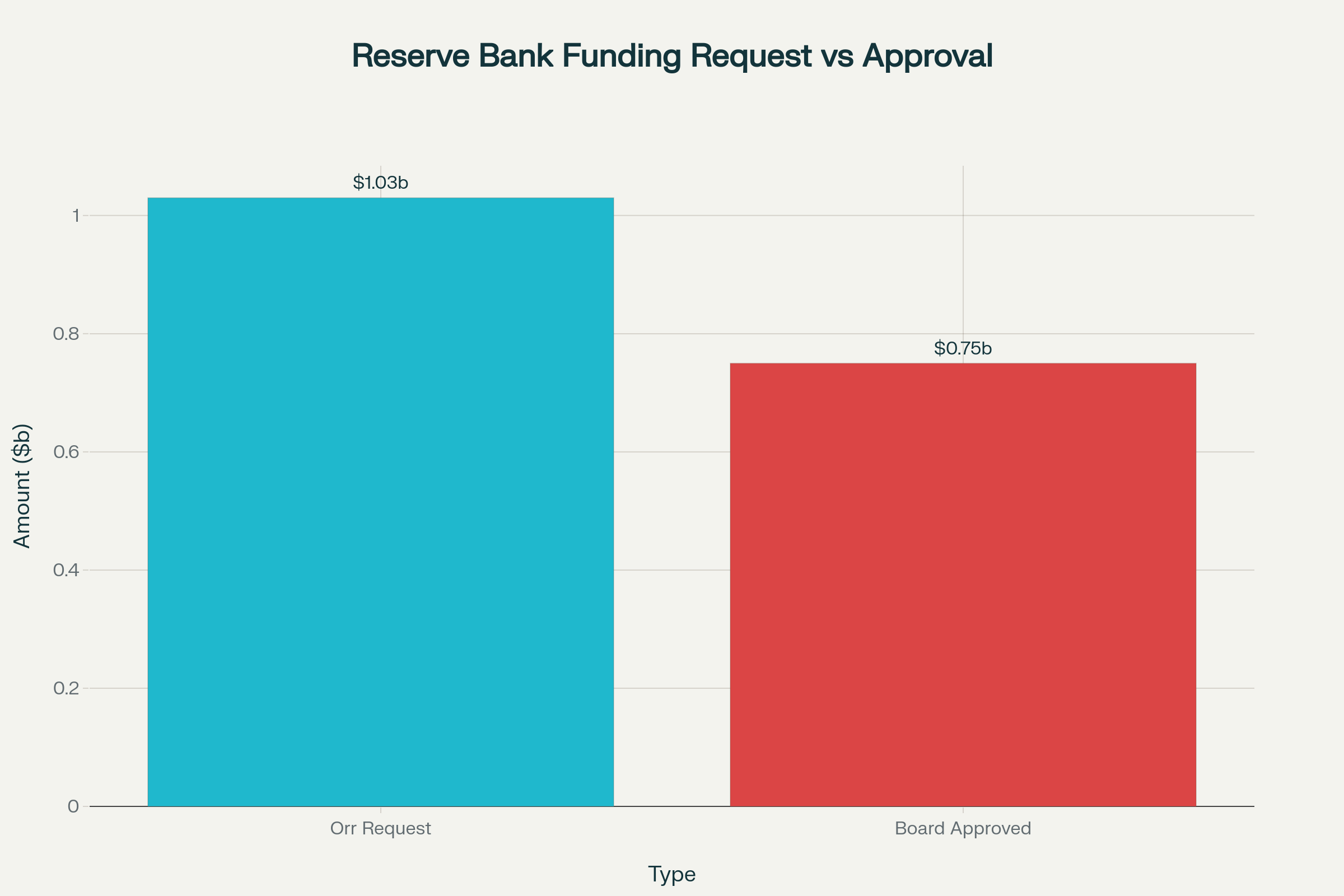
Reserve Bank Funding Dispute: Orr's request vs board approval (NZD)
This was not mere spin - it was deliberate misinformation designed to protect the board's reputation while leaving the public completely in the dark about a crisis affecting their central bank. For months, Quigley maintained this facade, even as Finance Minister Nicola Willis eventually criticised the Reserve Bank's handling and demanded better transparency.
The principle of pono - truth and integrity - was systematically violated by institutional leaders who prioritised damage control over honest governance.
Neoliberal Austerity Politics in Action
The funding dispute that triggered this crisis reveals classic neoliberal ideology at work. Orr's request for adequate operational funding was deemed excessive by a board apparently more concerned with fiscal restraint than institutional effectiveness. This mirrors the systematic underfunding of public services that disproportionately impacts Māori communities - from health services to education to housing support.
When public institutions are starved of resources, they cannot fulfill their obligations to tangata whenua or address structural inequalities. The same mentality that led Quigley's board to slash Reserve Bank funding operates across government, constraining agencies' ability to deliver equitable outcomes for Māori.
The Cover-Up Unravels
The extent of institutional deception only became clear when the Ombudsman was forced to compel the Reserve Bank to release detailed information about the circumstances surrounding Orr's departure. This revealed not just the funding dispute, but evidence that Orr had temporarily stood down before his public resignation and that exit agreements had been negotiated through lawyers.
Each revelation made Quigley's initial "personal reasons" explanation look more dishonest. The Taxpayers' Union, hardly a progressive organisation, correctly identified that this had become "a matter of honesty" requiring Quigley's removal.
Protecting Elite Networks Over Public Interest
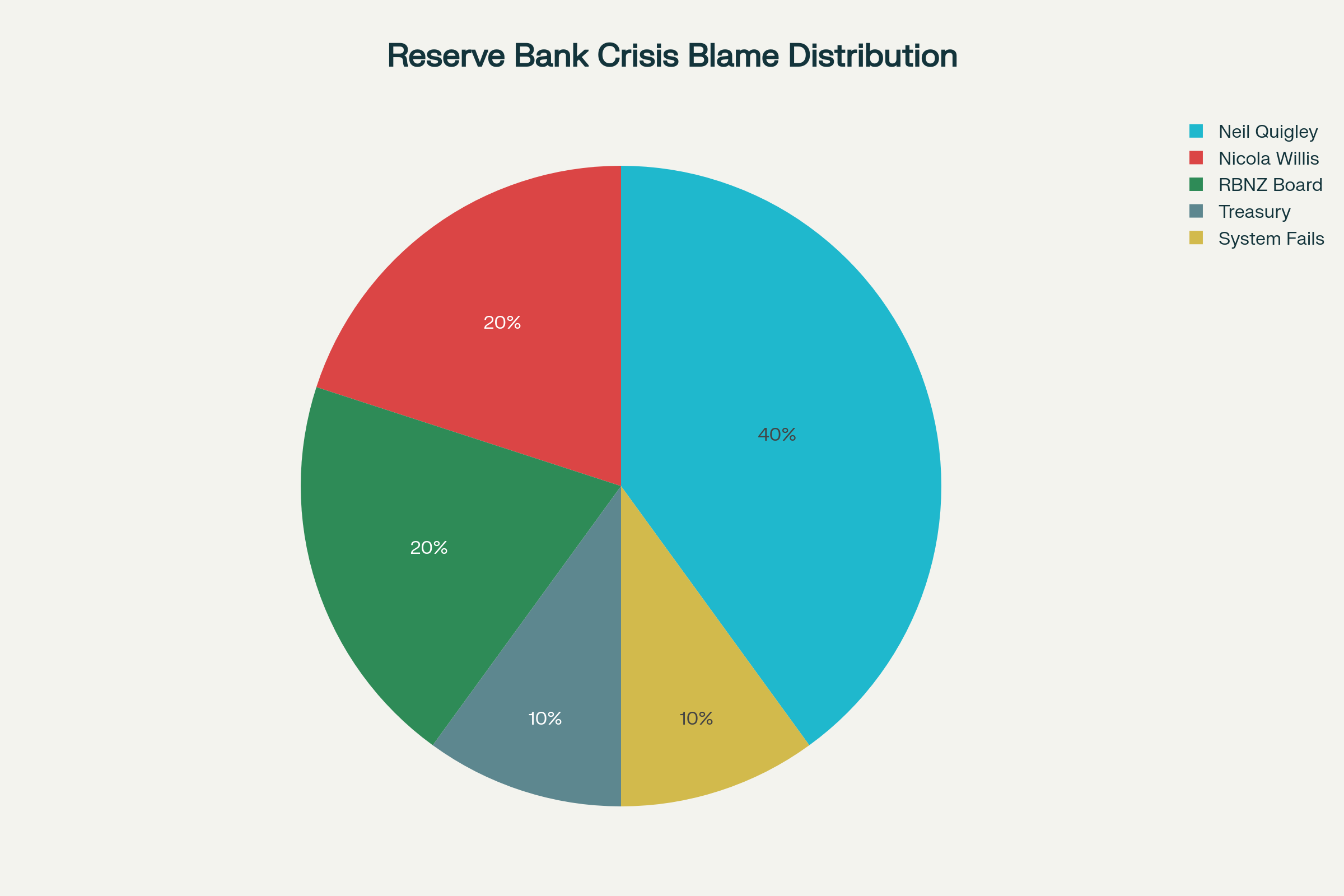
Distribution of Blame in Reserve Bank Crisis: Media Analysis (2025)
Willis's eventual acknowledgment that "if he had not offered his resignation, I would have asked him for it" demonstrates how elite protection operates in practice. Rather than immediately removing Quigley when the cover-up became obvious, the system allowed him to resign "with dignity" - a courtesy rarely extended to Māori who challenge institutional power.
This reflects the broader pattern of how colonial institutions protect their own while applying harsh accountability standards to tangata whenua. When Māori leaders face criticism, they're subjected to intense scrutiny and demands for immediate consequences. When Pākehā elites engage in institutional deception, they're allowed graceful exits with thanks for their "service."
Implications for Tangata Whenua
The Reserve Bank's monetary policy decisions directly affect Māori economic wellbeing through interest rates, inflation management, and financial system stability. When this institution operates in secrecy and deception, it undermines Māori communities' ability to understand and respond to economic conditions affecting their whānau.
Moreover, the normalisation of elite dishonesty corrodes democratic institutions that Māori rely on for protection against discriminatory policies. If those in power can simply lie about fundamental governance issues without immediate consequences, what hope exists for accountability when institutions fail tangata whenua?
The principle of manaakitanga - hospitality and care for others - demands that those in positions of power consider how their actions affect the most vulnerable. Quigley's deception prioritised institutional reputation over the public's right to understand their central bank's operations.

The Māori Green Lantern fighting misinformation and disinformation from the far right
Breaking the Cycle of Colonial Deception
Neil Quigley's shameful exit represents just one example of how neoliberal capture operates to protect elite interests at the expense of democratic transparency. Until we demand immediate consequences for institutional dishonesty - not graceful resignations months after the fact - we will continue enabling systems that systematically disadvantage tangata whenua.
The Reserve Bank crisis should catalyse broader reforms requiring real-time transparency, community representation in governance, and swift accountability when public trust is betrayed. These institutions must operate according to Māori values of truth, reciprocity, and collective responsibility rather than the colonial patterns of secrecy and elite protection that have dominated for too long.
To readers who find value in exposing these patterns of institutional capture and colonial deception, please consider supporting this work through a koha to HTDM: 03-1546-0415173-000. The MGL understands these are tough economic times for whānau, so please only contribute if you have the capacity and wish to support holding power accountable.
Arohanui,
Ivor Jones - The Māori Green Lantern