“Pākehā Politicians Playing Political Puppets: Coalition Cronies and Their Contempt for Māori in Tāmaki Makaurau” - 24 August 2025
Colonisers Cosplaying as Caring While Crushing Māori Dreams

Kia ora, ngā tamariki mā
The Tāmaki Makaurau by-election debate between Peeni Henare (Labour) and Oriini Kaipara (Te Pāti Māori) exposes the brutal reality of how our colonised political system forces even our strongest Māori voices into compromising positions. This conversation, triggered by the tragic death of Te Pāti Māori MP Takutai Tarsh Kemp, reveals the deep contradictions facing Māori politicians operating within a white supremacist parliamentary structure designed to undermine our tino rangatiratanga.
Background: Death Spawns Democracy Theatre
Takutai Tarsh Kemp died suddenly at age 50 while battling kidney disease, just two years after winning the Tāmaki Makaurau seat by a mere 42 votes over Peeni Henare. Her passing forces another electoral contest in September 2025, creating this nauseating spectacle where two fundamentally decent Māori politicians must compete while the Coalition Government of Neocolonial Nightmares systematically dismantles everything their ancestors fought to build.
Henare, who held the seat from 2014 to 2023, represents Labour's colonial compromise position, while Kaipara, the groundbreaking broadcaster with moko kauae, stands for Te Pāti Māori's uncompromising Māori-first approach. Both candidates acknowledge the horrific assault this coalition government has unleashed upon tangata whenua, yet they remain trapped within a system designed to crush indigenous resistance.
The Coalition's Comprehensive Campaign Against Māori
The Christopher Luxon-David Seymour-Winston Peters triumvirate represents the most coordinated attack on Māori rights in decades. These political parasites have orchestrated a systematic dismantling of Māori progress with surgical precision and colonial cruelty.
Healthcare Apartheid
The coalition's destruction of Te Aka Whai Ora (Māori Health Authority) within months of taking power represents genocidal policy-making disguised as efficiency. Health Minister Shane Reti rushed the disestablishment through Parliament under urgency, obliterating decades of Māori health advocacy with the callousness of colonial governors confiscating tribal land. This wasn't administrative reform—it was calculated cultural violence designed to force Māori back into a healthcare system that has consistently failed us for 180 years.
Treaty Terrorism
David Seymour's Treaty Principles Bill represents the most brazen attempt at legal colonisation since the Native Land Court. The Waitangi Tribunal correctly identified this legislation as "little more than a politically motivated attack on perceived 'Māori privilege'" that would "drastically alter" the Treaty's meaning. Even the government's own lawyers warned that the bill would undermine Māori rights, expecting courts to prevent its worst excesses. This legislative terrorism aims to complete the colonial project by legally erasing our status as tangata whenua through parliamentary sleight-of-hand.
Cultural Erasure Campaign
The coalition's assault on te reo Māori reveals their white supremacist agenda in stark relief. From mandating English-first in government communications to removing Māori words from children's reading books, these policies embody the colonial mentality that views our language as a threat to Pākehā supremacy. Winston Peters' refusal to even say "Aotearoa" in Parliament demonstrates the pathetic insecurity of colonisers who fear indigenous names might remind people whose country this really is.
The Sovereignty Question That Exposes Colonial Lies
Both candidates acknowledge the Waitangi Tribunal's finding that Māori never ceded sovereignty in 1840, yet continue participating in the Crown's parliamentary charade. This contradiction reveals the impossible position facing Māori politicians: how do you represent your people's interests within a system whose very existence depends on denying your people's fundamental rights?
Henare's justification—that he performed haka in Parliament without apologising for the haka itself, only for breaking parliamentary rules—captures this tragic compromise perfectly. Meanwhile, Kaipara's assertion that being Māori "is not a choice" while becoming an MP "is a choice" highlights the strategic calculations our people must make under colonial occupation.
The Waitangi Tribunal's unequivocal finding that chiefs never handed over their tino rangatiratanga in 1840 makes every Parliamentary session an exercise in institutional gaslighting. These politicians operate within a system that has no legitimate authority over Māori, yet they're forced to work within it because the alternative—complete political exile—would abandon their communities to colonial policies designed for our destruction.
Gang Patch Performance Politics Versus Real Solutions
The coalition's gang patch ban represents ideological posturing masquerading as policy. Academic research confirms these measures fail to reduce gang membership while pushing criminal activity underground. Even more damning, gang numbers have actually increased under this government's "tough on crime" approach, with over 10,000 patched members and prospects now recorded—an increase of 700 since the 2023 election.
Both candidates recognise these policies as counterproductive theatre. Henare correctly notes the measures have "shown no measurement other than ones that take us backwards," while demanding evidence of their effectiveness. This evidence-based approach stands in stark contrast to the coalition's ideology-driven policy process focused on "winning votes" rather than genuine crime reduction.
Economic Warfare Disguised as Fiscal Responsibility
The coalition's dismantling of Three Waters co-governance reforms after Labour invested $1.2 billion represents economic warfare against Māori participation in resource management. By forcing councils to manage water infrastructure through debt-laden council-controlled organisations without central government support, they've engineered a financial crisis that will inevitably lead to privatisation—the very outcome Three Waters was designed to prevent.
This isn't fiscal conservatism; it's strategic sabotage designed to exclude Māori from decisions about our most sacred taonga. The coalition understands that financial pressure will eventually force councils to sell water assets to private interests, permanently removing them from any form of indigenous oversight or protection.
The Whakapapa Networks of Colonial Collaboration
The debate reveals uncomfortable whakapapa connections between Māori politicians and coalition leaders that demonstrate how colonisation corrupts even our most intimate relationships. Kaipara acknowledges her uncle Shane Reti's role in dismantling Māori health infrastructure, while Henare admits family ties to coalition figures who are actively attacking Māori rights.
These personal connections illustrate how colonial systems operate through indigenous collaborators who provide legitimacy to white supremacist policies. When Kaipara says "you've got to push back on your own" and "say uncle kati that's just not good enough," she's describing the painful reality of decolonisation—it requires challenging the rangatira who have accommodated themselves to colonial power structures.
Uncle Shane's Medical Malpractice
Shane Reti's position as Health Minister overseeing the destruction of Te Aka Whai Ora while simultaneously being Kaipara's uncle reveals the personal cost of colonial collaboration. Reti, as a Māori doctor, understands better than anyone the health disparities his policies will entrench, yet he chose career advancement over community wellbeing. This makes him more dangerous than openly racist politicians because his Māori identity provides cover for genocidal health policies.
Labour's Liberal Tokenism Versus Te Pāti Māori's Revolutionary Potential
The fundamental difference between these candidates lies in their party's relationship to colonial power structures. Henare represents Labour's strategy of incremental change within colonial institutions, arguing that "whether you are a senior minister, a junior minister, or a member of a government party, it is difficult" to achieve transformation. This defeatist position accepts the system's constraints as immutable rather than challenging its legitimacy.
Kaipara embodies Te Pāti Māori's recognition that "transformation requires courage, requires boldness and requires a stoic ability and a real faka puno." Her reference to Dame Whina Cooper and other revolutionary ancestors signals an understanding that meaningful change requires confronting rather than accommodating colonial power structures.
The Statistical Reality of Māori Suffering
Kaipara's citation that "68.8% of all New Zealanders earning $60,000 or less are Māori" exposes the economic apartheid this coalition perpetuates. When the majority of low-income earners are Māori in a country where we comprise only 17% of the population, this isn't coincidence—it's the deliberate outcome of policies designed to maintain Pākehā economic supremacy.
Labour's "all boats rise with the tide" rhetoric ignores this structural reality. You cannot address Māori poverty through policies that benefit everyone equally when the system is specifically designed to concentrate disadvantage among indigenous people. This is why Te Pāti Māori's Māori-first approach represents revolutionary politics while Labour's universal approach maintains colonial economic relationships.
The Parliamentary Theatre of Colonial Democracy
Both candidates participate in the absurd performance of Crown parliamentary democracy while acknowledging its illegitimacy. They discuss coalition building between Labour, Greens, and Te Pāti Māori as if these arrangements could somehow transform a system designed for our subjugation. This "left bloc" strategy ignores the fundamental reality that Parliament itself exists to legitimise ongoing colonial occupation.
The candidates' admission that they "agree to disagree on a lot of things" while finding "certain things that you can clearly see that the left block... are all in alignment" reveals the limits of reformist politics. These politicians must focus on areas of agreement precisely because addressing the fundamental questions—like the Crown's illegitimate claim to sovereignty—would expose the impossibility of their position.
Cultural Performance Versus Political Substance
The debate's conclusion, featuring waiata and cultural exchange, represents everything wrong with contemporary Māori politics. While these candidates perform cultural authenticity for the cameras, the colonial system they participate in continues its systematic destruction of the culture they're celebrating. This is the nauseating spectacle of neocolonialism—indigenous politicians forced to provide cultural legitimacy to their own oppression.
The hosts' focus on "theme songs" and regional preferences reduces serious political discussion to entertainment, mirroring how mainstream media trivialises Māori political aspirations. When the interviewer asks candidates to sing rather than explain policy solutions, it reinforces stereotypes about Māori politicians as cultural performers rather than serious political actors.
Implications for Māori Liberation
This by-election represents a choice between accommodation and resistance, between reformist hope and revolutionary clarity. While both candidates genuinely want to serve their people, they operate within a system designed to transform indigenous resistance into manageable opposition.
Henare's experience in government demonstrates the limits of working within colonial institutions. Despite years as a senior minister, he acknowledges the difficulty of achieving transformation from within the system. His hope that returning to Parliament with a clear mandate will somehow change these dynamics reveals the dangerous delusion that electoral success can overcome structural oppression.
Kaipara's outsider position offers the possibility of more radical approaches, but her inexperience with parliamentary politics may limit her effectiveness in immediate practical terms. However, her commitment to prioritising Māori needs over colonial expectations suggests greater potential for challenging rather than accommodating the system's constraints.

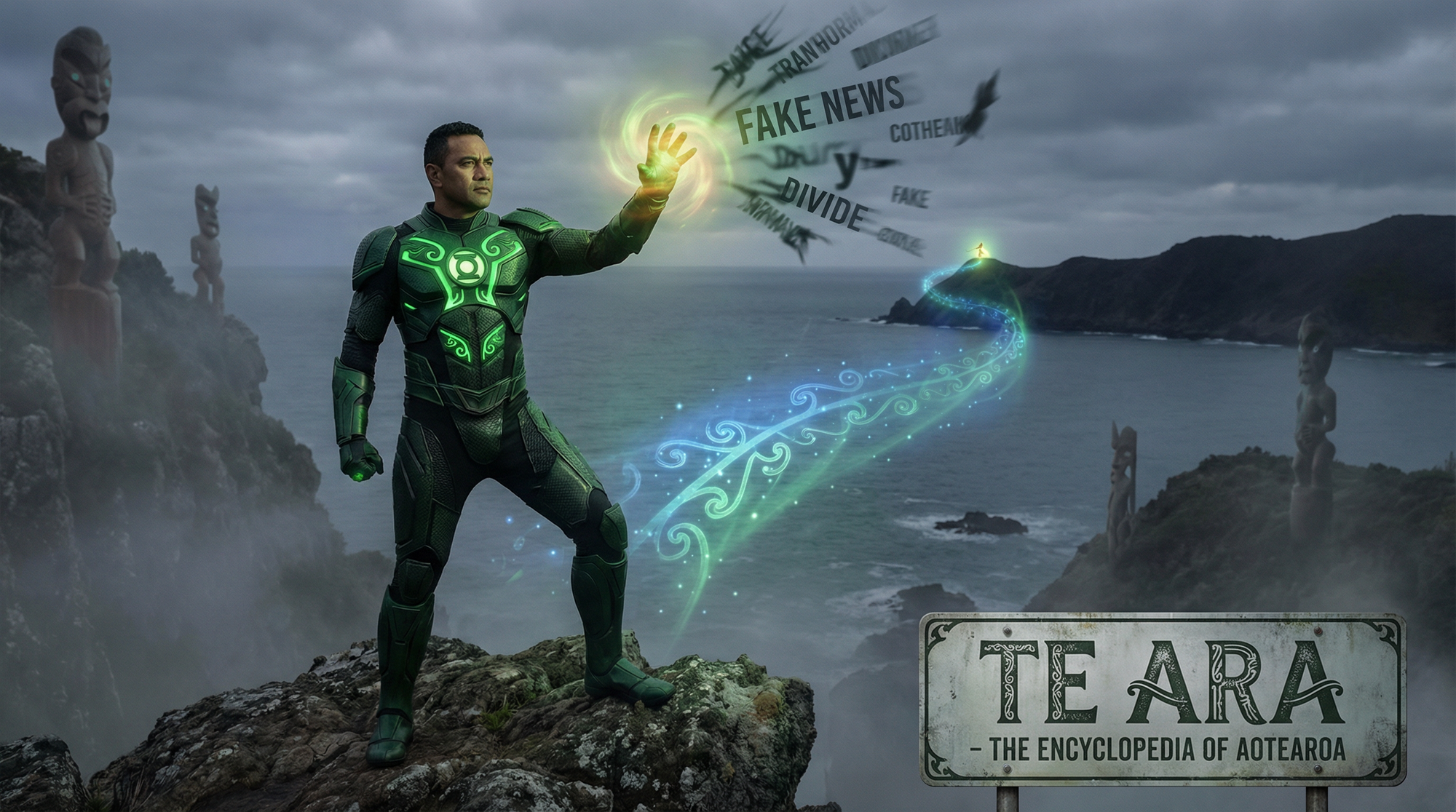
The Māori Green Lantern fighting misinformation and disinformation from the far right
The Coming Reckoning
The September 2025 by-election will determine whether Tāmaki Makaurau chooses incremental reform or revolutionary potential. But regardless of who wins, the fundamental problem remains: both candidates will represent their people within a system that has no legitimate authority over us and actively works to destroy our culture, our language, our health, and our future.
The coalition's assault on Māori rights represents colonial capitalism's final solution to the "Māori problem"—complete assimilation through legal, cultural, and economic warfare. Their policies aim to eliminate us as a distinct people by destroying every institution, every right, and every protection our ancestors secured through decades of struggle.
This debate reveals Māori politicians trapped between their people's needs and a system designed to crush indigenous resistance. Until we address the fundamental illegitimacy of Crown sovereignty over Māori, we'll continue watching our best leaders compromise their principles while our people suffer under policies designed for our destruction.
The true tragedy isn't that these politicians disagree on strategy—it's that they're forced to operate within a system whose very existence depends on denying their people's fundamental rights to self-determination. The Coalition Government of Colonial Cronies understands this perfectly, which is why they can afford to allow this debate while continuing their systematic assault on everything these politicians claim to represent.
Both candidates acknowledge we're under relentless attack from a government that wants to drag us back to colonial darkness. The question facing Tāmaki Makaurau voters isn't which candidate can work more effectively within this illegitimate system—it's which approach offers the best hope of eventually dismantling it entirely.
Readers who find value in this analysis and wish to support the ongoing fight against colonial misinformation can contribute koha to HTDM: 03-1546-0415173-000. The MGL understands these are tough economic times for whānau, so please only contribute if you have capacity and wish to support this vital mahi.
Kia kaha, kia maia, kia manawanui
Ivor Jones
The Māori Green Lantern
Kaitiaki of Truth in the Digital Realm