“RMA Reform Suspension - Corporate Capture in Plain Sight” - 17 July 2025
The Coloniser's Playbook Exposed
Kia ora whanau, iwi, hapu, and all tangata whenua fighting for tino rangatiratanga. This is Ivor Jones, The Maori Green Lantern, bringing you another urgent analysis of the neoliberal assault on our whenua and our people.
When a former tobacco lobbyist tells councils to stop planning for their communities' future, you know the corporate capture of our government has reached a dangerous new level. This is not just about bureaucratic efficiency - this is about silencing local voices and steamrolling community participation to benefit corporate interests.
Background - The Tobacco Lobbyist's War on Democracy
The suspension of council planning work under the Resource Management Act represents a deliberate assault on democratic participation and environmental protection. Chris Bishop, the former Philip Morris tobacco lobbyist1 now serving as RMA Reform Minister, announced at the Local Government New Zealand conference in Christchurch that councils must halt all district and regional plan work until his new corporate-friendly legislation takes effect in 2027.
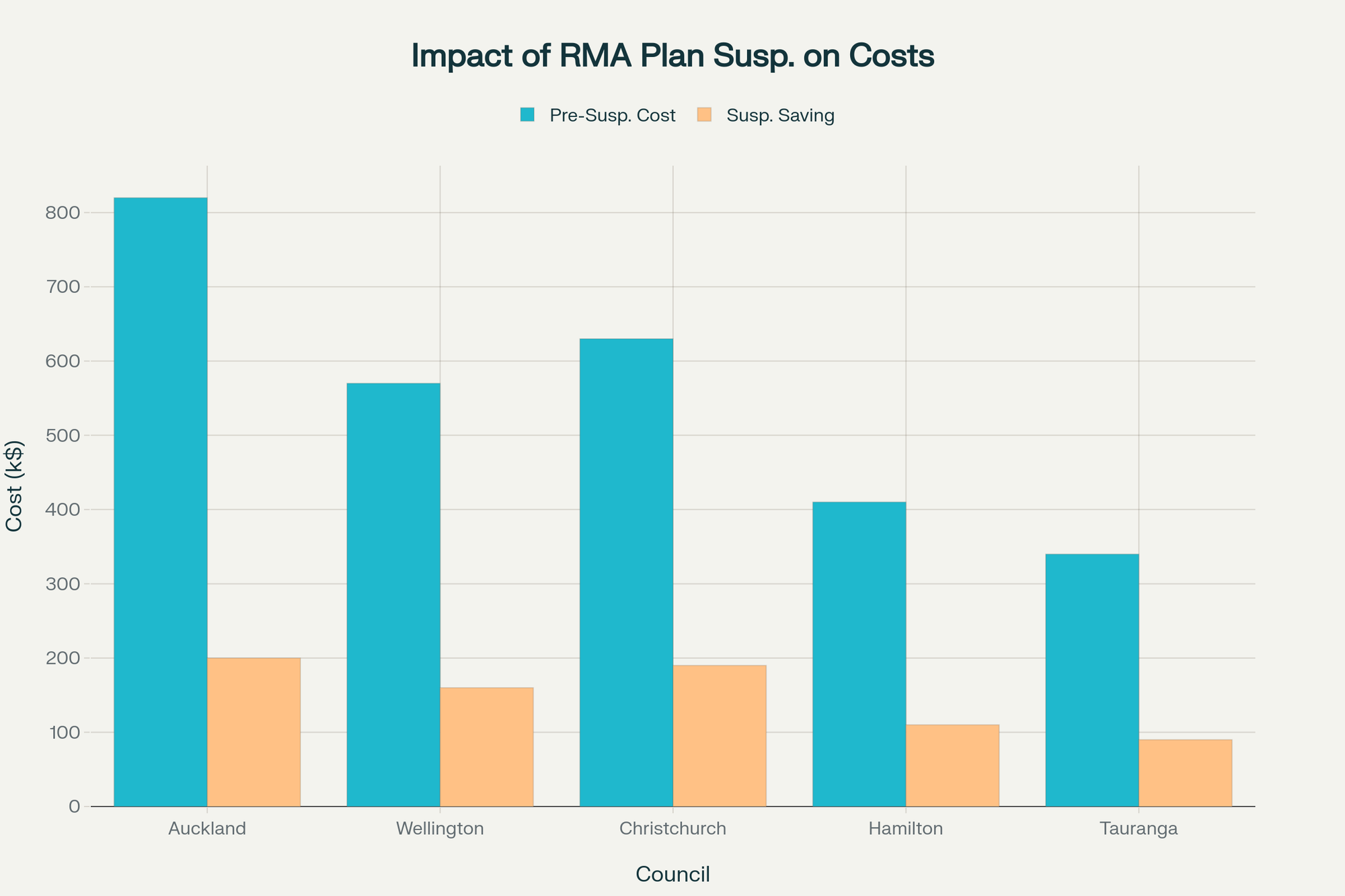
Impact of RMA Planning Work Suspension on Council Costs - showing pre-suspension planning costs versus projected savings from halting planning work
This is the same Chris Bishop who worked as a corporate affairs manager for Philip Morris from 2011-20132, lobbying against plain packaging for cigarettes and tobacco tax increases. The tobacco company has a documented history of targeting Maori communities3 with predatory marketing tactics. Now Bishop brings that same corporate-first ideology to environmental law.
The Resource Management Act, flawed as it is, provides the primary legal framework for protecting our whenua, wai, and taiao. It requires councils to review their district plans every 10 years and implement national planning standards. Bishop's suspension removes these mandatory requirements4, leaving communities without updated protections while his government prepares legislation that will exclude Treaty principles entirely5.
Silencing Communities to Serve Corporations
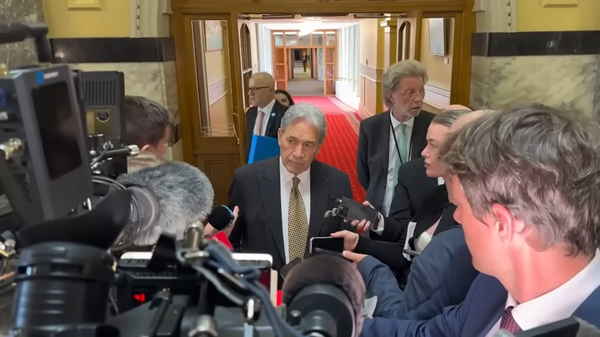
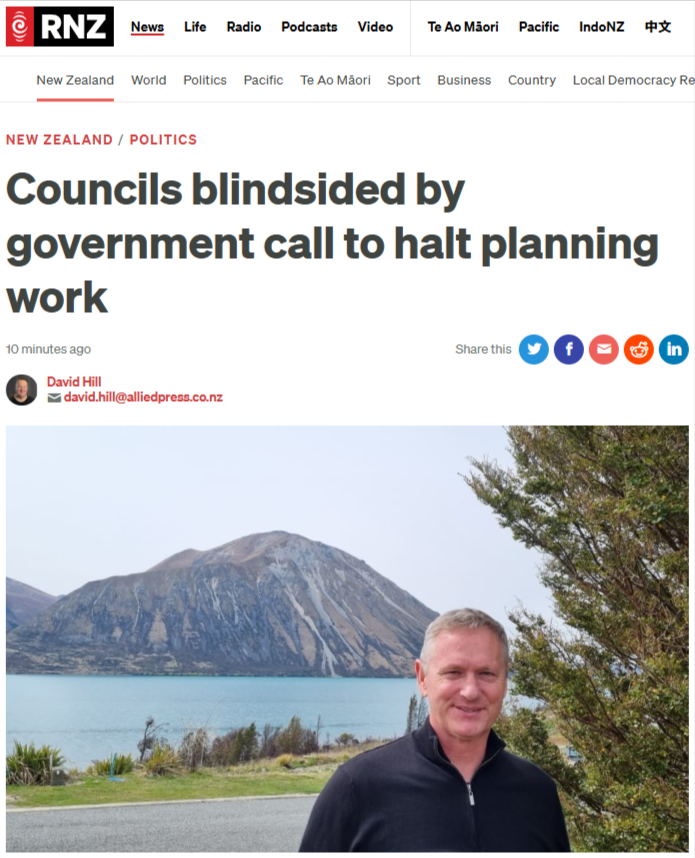
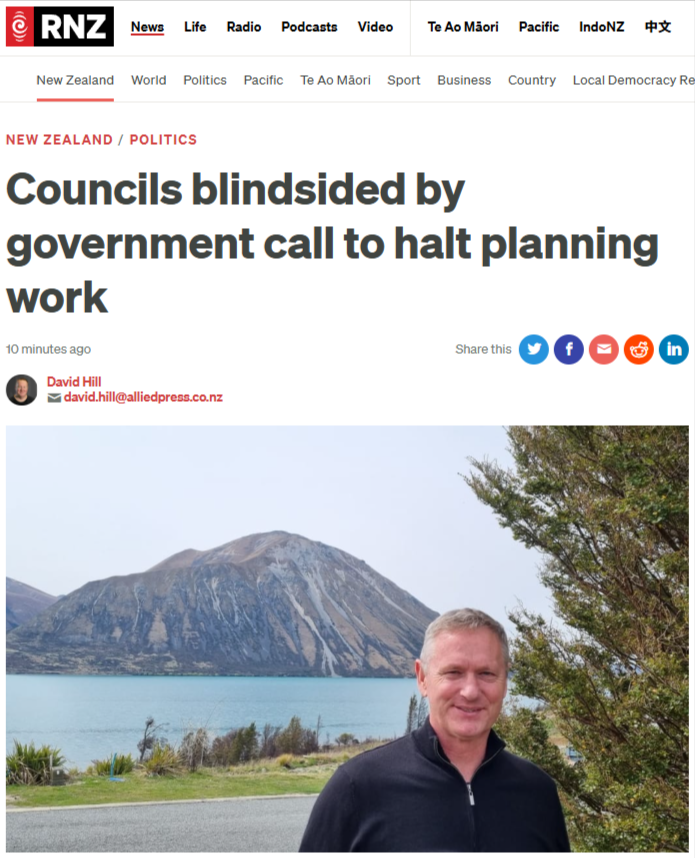
Bishop's announcement has "blindsided" councils across the country, according to Local Democracy Reporting6. The suspension affects ongoing planning work worth millions of dollars and years of community consultation.
Kaikoura District Council has been working through a review of its District Plan adopted in 20087, with chief executive Will Doughty stating the announcement will "stifle the council's attempts to make changes to benefit the community." Christchurch city councillor Sara Templeton said her council's work on a plan change regarding noise in the central city7 - aimed at "finding a balance between people living in town and the need for a vibrant nightlife" - could be placed under threat.
The financial impact is staggering. The West Coast's combined district plan has already cost over $8 million8, with contractors and consultants' costs blowing out beyond budget. Hutt City District Plan changes require a $13,500 deposit just to start the process9, with actual costs including officer time at $270 per hour for planners.
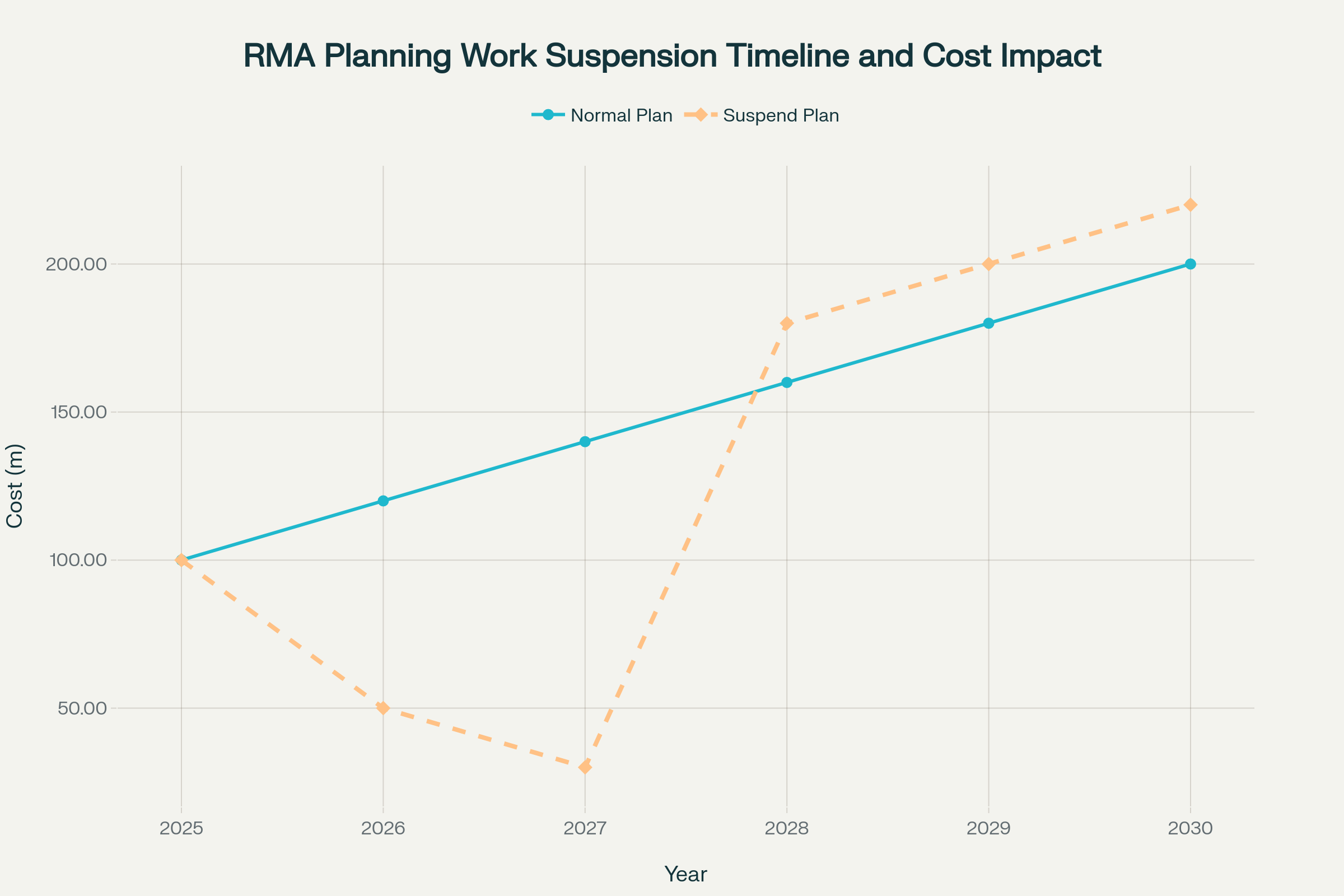
RMA Planning Work Suspension Timeline showing the disruption to normal planning costs and the transition to new RMA system
This matters to tangata whenua because district plans determine how our wahi tapu, urupa, and culturally significant sites are protected. They control resource consent processes that affect our waterways, ancestral lands, and traditional food sources. The suspension prevents councils from updating protections for Maori cultural values10 that should be embedded in planning documents.
The Corporate Capture Exposed
Bishop's Tobacco Company Training
Bishop's time at Philip Morris11 taught him how to frame corporate interests as public benefits. He lobbied against plain packaging for cigarettes12, arguing it violated tobacco companies' "property rights" - the same neoliberal rhetoric he now uses to justify gutting environmental protections.
Philip Morris has a documented pattern of targeting Maori communities3 with predatory marketing, selling IQOS devices at half price at marae and rugby league clubs in South Auckland. The company funded research through the Centre for Research Excellence that focused on Indigenous smoking13, with the World Health Organisation blacklisting the foundation as a PR strategy for the tobacco industry.
The Neoliberal Assault on Democratic Participation
Bishop's language reveals the true agenda. He calls community planning processes "pricey, pointless" and describes his suspension as a "kind intervention." This is classic neoliberal framing - repackaging corporate capture as efficiency and presenting the removal of democratic safeguards as helping communities.
The government's RMA reforms explicitly exclude Treaty principles5, with Bishop stating the new laws will be "strongly focused on the rights of property-owners." Te Runanga o Ngati Ruanui kaiwhakahaere Rachel Arnott5 correctly identified this as "an open attack on Maoridom," noting it breaches the iwi's Treaty settlement and the Crown's Treaty obligations.
The Fast-track Approvals Act14 removes public consultation for major infrastructure projects, with expert panels making decisions in 25 days15 and no public hearings. This eliminates the ability of tangata whenua to protect wahi tapu and culturally significant sites from development.
The Pattern of Anti-Maori Policies
This planning suspension forms part of a broader pattern of anti-Maori policies. The government has dismantled the Maori Health Authority16 despite over 700 doctors signing a letter expressing devastation17 at the decision. The Waitangi Tribunal found the government's approach to Maori wards breaches Treaty principles18.
Multiple iwi have filed urgent claims with the Waitangi Tribunal19 alleging the government's policies breach Treaty obligations. The government plans to review and potentially repeal all references to Treaty principles in legislation20, with law lecturer Luke Fitzmaurice-Brown20 warning this represents "a wider pattern of the Government essentially hoping to ignore or diminish its Te Tiriti responsibilities."

Implications for Tangata Whenua
The suspension of planning work has immediate and long-term implications for Maori communities:
Immediate Impacts:
- Councils cannot update protections for wahi tapu and culturally significant sites
- Existing plans from 2008 or earlier remain in force without contemporary Maori input
- Community consultation processes that include tangata whenua are halted
- Resource consent processes continue under outdated frameworks
Long-term Consequences:
- The new RMA system will exclude Treaty principles entirely5
- Property rights will take precedence over environmental and cultural protection
- Fast-track consenting will bypass public consultation14 for major projects
- Corporate interests will have streamlined access to environmental approvals
The Waitangi Tribunal has repeatedly found the RMA fails to deliver for Maori21, with one report stating it "has delivered Maori scarcely a shadow of its original promise." The tribunal found the RMA's participatory arrangements are not consistent with Treaty partnership21 and that "Maori have been significantly prejudiced because they have been unable to exercise kaitiakitanga effectively."
Rather than address these fundamental flaws, Bishop's government is making them worse by removing what limited protections exist and excluding Treaty principles from the replacement legislation.
The Corporate Agenda Revealed
Bishop's Fast-track Approvals Act22 explicitly aims to "make it easier to consent quarries and mines" and deliver projects with "regional or nationally significant benefits." The definition of "benefits" will inevitably favour corporate profits over community wellbeing and environmental protection.
The government's discussion documents23 propose the biggest changes to national direction in New Zealand's history, with consultation closing on 27 July 202524 and amendments expected to be in effect by the end of 2025.
Philip Morris continues its global campaign to subvert anti-smoking treaties25, with internal documents revealing plans to target politicians and healthcare industries26 with lobbying campaigns. The company has hired former ministers and No 10 advisers27 to seek access to officials and public health experts.
Bishop learned these corporate capture techniques during his time at Philip Morris, and now applies them to environmental law. The suspension of planning work serves corporate interests by eliminating community opposition and streamlining approval processes for extractive industries.
Call to Action
Whanau, this is a critical moment for protecting our whenua and our democratic rights. The suspension of planning work is not about efficiency - it's about silencing communities to serve corporate interests.
Immediate Actions:
- Contact your local councillors and demand they speak out against the suspension
- Make submissions on the RMA reform discussion documents before the July 27 deadline
- Support iwi taking urgent claims to the Waitangi Tribunal
- Attend council meetings and public forums to voice opposition
Long-term Resistance:
- Document and protect wahi tapu and culturally significant sites in your area
- Build coalitions between environmental groups and tangata whenua
- Support political parties and candidates who will restore Treaty principles to environmental law
- Educate your communities about the corporate capture of environmental policy
The planning suspension exposes the corporate agenda behind this government's environmental policies. A former tobacco lobbyist is using the same tactics that targeted Maori communities with predatory marketing to now strip away environmental protections and democratic participation.
We must resist this assault on our whenua, our wai, and our democratic rights. The time for passive resistance is over - we need active protection of our taonga for future generations.
Readers who find value in this content and wish to support the cause can contribute a koha to HTDM: 03-1546-0415173-000. The MGL understands these tough economic times for whanau, so please only contribute if you have capacity and wish to do so.
Kia kaha, kia maia, kia manawanui.
Ivor Jones, The Maori Green Lantern