“ROADSIDE DRUG TESTING” - 25 November 2025
A SCATTERGUN APPROACH THAT TARGETS THE WRONG PEOPLE
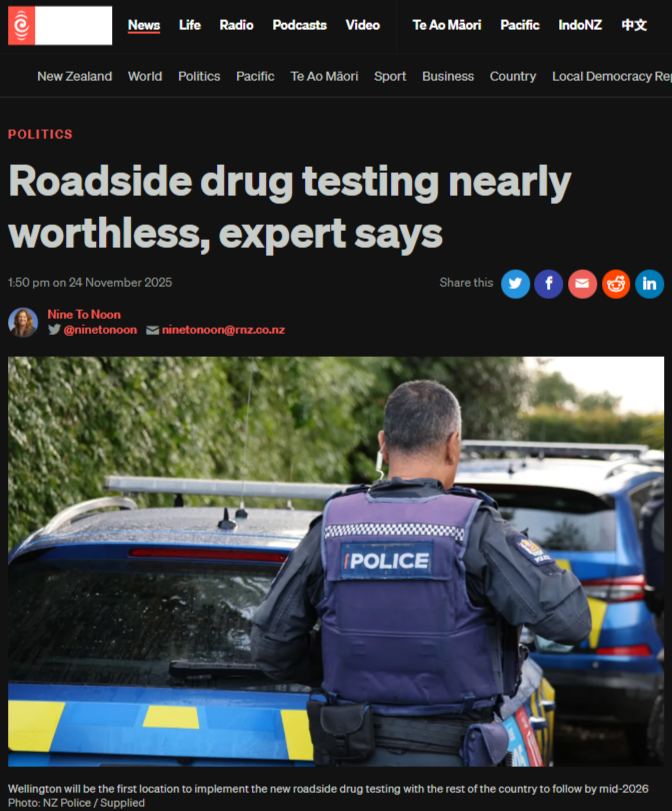
New Zealand is rolling out roadside drug testing devices that researchers say fail at their core purpose—detecting actual impairment—while potentially criminalising thousands of legally-medicated Māori rangatahi and regular cannabis users who aren’t impaired. The government’s claim that 30% of road deaths involve drugs masks a critical omission:
prescription benzodiazepines and opioids kill more drivers than cannabis, yet police won’t test for them at the roadside. Meanwhile, Attorney-General Judith Collins formally warned the regime breaches the Bill of Rights Act by allowing police to detain and physically search drivers without any suspicion of wrongdoing. The Securetec DrugWipe 3S device selected for deployment has documented accuracy problems, including false negatives for cannabis and false positives from everyday substances—creating perfect conditions for unjust prosecution of the vulnerable.
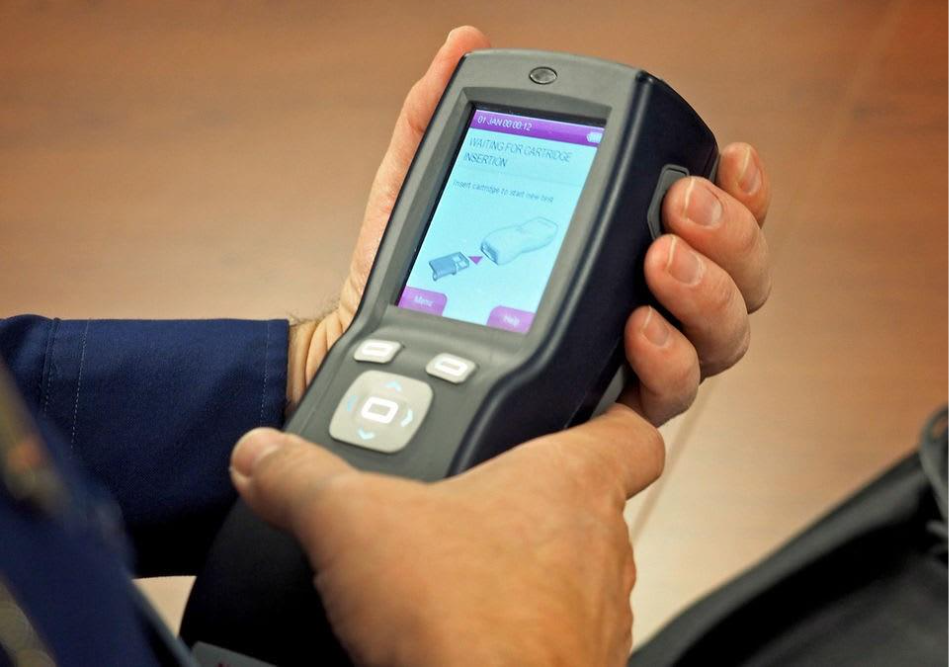
ROADSIDE DRUG TESTS TO CHECK FOR MARIJUANA, COCAINE, OPIATES ...
THE 30% CLAIM: HALF THE STORY, TOLD STRATEGICALLY
Transport Minister Chris Bishop asserts that “around 30 percent of all road deaths now involve an impairing drug,” justifying the government’s half-billion-dollar bet on roadside testing. This claim echoes across all official announcements and appears designed to suggest drug-impaired driving is an urgent, escalating crisis requiring random testing of any driver, at any time.
The problem is not that the 30% figure is false—it’s that it was constructed to obscure inconvenient truths. In 2019, an alcohol and drug counsellor named Roger Brooking exposed the statistical sleight of hand: the Automobile Association had counted all drivers with drugs present, but only counted alcohol-impaired drivers over the legal limit, ignoring those under the limit. When drivers impaired by alcohol below the legal limit were included, alcohol accounted for 154 deaths against 79 for drugs. Brooking stated plainly: “They completely forgot to ask, or didn’t realise that drivers under the legal limit cause just as many deaths as those over the limit, so they missed half the information.”
The government knows this. Yet it packages the 30% figure as proof that roadside testing will save lives—a leap unsupported by evidence from countries that already use these devices.
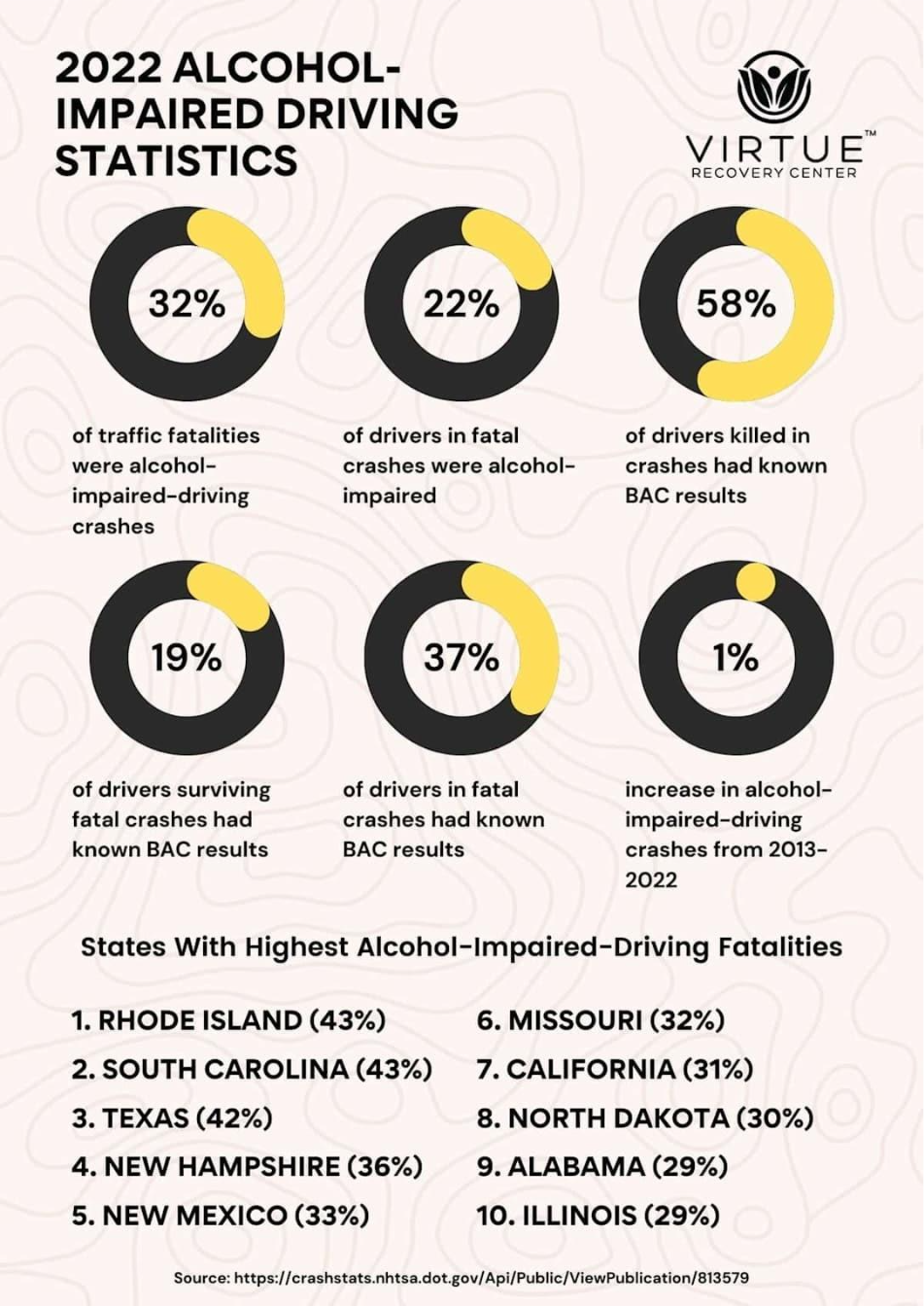
Cost of Driving Under the Influence: A Statistical Overview
THE TESTS DON’T MEASURE IMPAIRMENT: THEY MEASURE PRESENCE
Dr Michael White, an adjunct senior fellow at the School of Psychology at the University of Adelaide who has researched road accidents involving cannabis, delivered the most devastating critique in his submission to Australia’s National Road Safety Strategy. White documented that 46% of cannabis users who exceeded the conventional per se THC limit of 5 ng/ml in whole blood were nonetheless judged to be “not impaired” on standardised driving tests.
The impairment window matters. Research by McCartney et al. (2021) and Eadie et al. (2021) shows cannabis impairment lasts between 4 and 7 hours depending on use patterns, but THC can be detected in oral fluid for up to 24 hours. A driver testing positive at roadside could have used cannabis yesterday evening—experiencing no impairment whatsoever while attempting to commute to work.
In public comments to New Zealand media, Dr White stated plainly: “It is a scattergun approach, many people who are regular users won’t be impaired even if they test positive.” He noted that Australia has never conducted a rigorous evaluation showing roadside drug testing actually reduces crashes—making the approach what he called “negligent.”
Crash risk varies dramatically by drug. White explained: “The crash risk from cannabis is relatively low its less than for a BAC of 0.5. So cannabis might increase your risk of crashing by up to 50 percent, alcohol at a BAC of 0.5 doubles your risk so it increases it by 100 percent.” A rational drug-driving policy would target higher-risk substances, not carpet-bomb test every driver regardless of behaviour or impairment signs.
LEGAL DRUGS KILL MORE DRIVERS—AND POLICE WON’T TEST FOR THEM
Here lies a cui bono moment—a question about who benefits from this policy’s selective blindness.
The data supports him. Australian roads research records that
“benzodiazepines were found in 8.2 per cent of fatalities and 12 per cent of injured drivers,” and in a culpability study, “100 per cent of drivers who had a benzodiazepine at any level with alcohol at any level were responsible for the collision.”
The Securetec DrugWipe 3S does not screen for benzodiazepines or opioids. It screens for THC, methamphetamine, MDMA, and cocaine—drugs that are either less prevalent in fatal crashes or affect a smaller proportion of drivers than prescription medicines. Waka Kotahi research noted:
A DEVICE THAT FAILS ITS PURPOSE—AND DOES SO PREDICTABLY
The Securetec DrugWipe 3S has a documented track record of failure with cannabis, the primary drug being targeted.
A 2016 Italian study testing the DrugWipe 5A (the earlier generation) found sensitivity and accuracy of only 29% and 53% respectively for cannabis, compared to 80% for amphetamines. The study concluded:
A 2019 University of Sydney study published in Drug Testing and Analysis tested the Securetec DrugWipe against actual users and found false negative rates of 9% (missing actual THC) and false positive rates of 5% (flagging THC when none was present or concentrations were negligible). Lead researcher Thomas Arkell stated:
Academic Iain McGregor noted the comparison to breathalysers:
Yet New Zealand is rolling this device nationwide.
THE CROSS-REACTIVITY TRAP: CRIMINALISING PEOPLE WITH ADHD AND AUTISM
“We know that some of the tests that are out there in the community do cause some cross reactivity.”
The issue is chemical. Both methamphetamine and MDMA (ecstasy) are amphetamines. So is dexamphetamine, a prescription ADHD medication. The DrugWipe tests cannot distinguish between them.
About 50% of New Zealand’s ADHD population—estimated at tens of thousands of people—take dexamphetamine or lisdexamfetamine, with the proportion rising as methylphenidate shortages worsen. A person legally prescribed dexamphetamine who drives to work faces a 12-hour stand-down and potential criminal charges if they trigger a roadside test. Crofts warned: “But we haven’t seen anything about what the police are going to do or how it is going to be managed when somebody who is cross reacts, who is legally on these medicines.”

Our first reo Māori road safety video! — Students Against ...
THE BILL OF RIGHTS BREACH THE GOVERNMENT ACCEPTED AND PARLIAMENT IGNORED
In July 2024, Attorney-General Judith Collins formally reported to Parliament that the drug-testing regime was inconsistent with the Bill of Rights Act 1990. Specifically, she found it violated the right to be secure against unreasonable search and seizure, and the right not to be arbitrarily detained.
The government—composed of National, ACT, NZ First, and Labour—heard this warning and voted for the bill anyway. Only the Greens and Te Pāti Māori opposed legislation that the Attorney-General flagged as a human rights violation. Te Pāti Māori noted explicitly that the bill would disproportionately impact rangatahi Māori.
WHY MĀORI AND DISABLED PEOPLE WILL BEAR THE BURDEN
Three hidden connections emerge when we trace who gets caught by these tests.
- First, drug-testing inequality. Māori already experience disproportionate police contact. Road traffic mortality rates are estimated at between 60% and 200% higher for Māori compared to non-Māori, driven partly by vehicle quality and road infrastructure—but also by over-policing. Between 2017 and 2019, Māori males had the highest traffic injury mortality rate of any ethnic group (21.1 per 100,000). Random roadside drug testing, requiring no suspicion of impairment, will multiply contact-points with police—each one a chance to trigger false positives from the unreliable device.
- Second, medication criminalisation. Autistic and ADHD communities in Aotearoa are already underdiagnosed in Māori and Pacific populations due to systemic barriers to healthcare. Those who access diagnosis and dexamphetamine prescriptions will now face roadside testing traps. The “medical defence” carved into the legislation requires a “current and valid” prescription and proof of following doctor’s instructions—a burden of proof that places power in police hands to interpret medical propriety at the roadside.
- Third, cannabis use patterns. Regular cannabis users are less impaired than occasional users, yet they’re more likely to test positive on the DrugWipe due to longer THC detection windows. White’s analysis suggests 70% of cannabis-positive drivers arrested under per se laws in Australia were not actually impaired. If New Zealand mirrors Australian patterns, Māori communities—which already experience higher rates of cannabis use and economic criminalisation—will disproportionately populate the roadside-test queues.
THE ROLLOUT: DECEMBER 2025 IN WELLINGTON, NATIONWIDE BY MID-2026
Police will deploy the Securetec DrugWipe 3S in the Wellington District from mid-December 2025, scaling up from April 2026 to nationwide coverage by mid-2026. The government targets 50,000 oral fluid tests annually. Each test will proceed without suspicion, without impairment assessment, and with a device that fails its own purpose.
WHAT A RATIONAL POLICY WOULD LOOK LIKE
The research points toward alternatives Australia and New Zealand have refused to implement.
- Impairment-based testing. Most jurisdictions worldwide require police to have cause to suspect impairment—poor driving, erratic behaviour, obvious signs—before conducting chemical tests. This protects civil liberties and targets actual road danger rather than drug presence.
- Roadside impairment assessment. Some research suggests validated reaction-time and coordination tests (despite White’s reservations about their reliability) would better identify impaired drivers than saliva-chemistry matching.
- Comprehensive drug targeting. A rational policy would prioritise benzodiazepines and opioids, which kill more drivers than cannabis. Prescription-monitoring and pharmacist warnings—already within government power—could reduce medication-impaired driving without criminalising legal medicine use.
- Māori-led road safety. Waka Kotahi’s own research identifies deprivation, vehicle quality, road infrastructure, and licensing barriers as drivers of Māori road trauma. Genuine investment in these areas—co-designed with iwi—would save more lives than random saliva tests.
RINGFENCING INJUSTICE
This roadside drug-testing regime will generate a form of controlled injustice: predictable, documented, and—because the Attorney-General warned Parliament in writing—undertaken with full knowledge of its human-rights implications.
The devices are unreliable. The targets are wrong (ignoring prescription drugs that kill more drivers). The beneficiaries are pharmaceutical companies and law-enforcement agencies. The burden falls on Māori, disabled people, and those who use cannabis without impairment. And the government has a written record from its own Attorney-General stating that citizens can be detained and physically searched without suspicion.
In Māori epistemology, this is mauri-depletion—a policy that diminishes the life-force of whānau by creating jeopardy where none existed before. A person driving to work legally medicated, or a regular cannabis user commuting to employment, now faces 12-hour stand-downs and criminal charges not because they’ve driven unsafely, but because they exist in a body that chemistry will misread.
The question is not whether roadside drug testing will reduce crashes. Evidence from Australia suggests it won’t. The question is:
who will pay the price for a policy designed to appear tough rather than effective?
The answer is already written in the data:
Māori rangatahi, disabled people, and the economically precarious—those least able to absorb the friction of false positives and arbitrary detention.
That is not road safety. That is surveillance infrastructure, dressed in the language of harm reduction.

Ivor Jones The Māori Green Lantern Fighting Misinformation And Disinformation From The Far Right
- https://www.rnz.co.nz/news/top/579836/roadside-drug-testing-nearly-worthless-expert-says
- https://www.roadsafety.gov.au/sites/default/files/documents/78-nrss-submission-michael-white.pdf
- https://www.police.govt.nz/news/release/detection-device-selected-drug-impaired-driver-screening
- https://www.phfscience.nz/digital-library/the-culpability-of-drivers-killed-in-new-zealand-road-crashes-and-their-use-of-alcohol-and-other-drugs/
- https://www.drugscience.org.uk/driving-performance-and-cannabis-users-perception-of-safety-review
- https://www.nzherald.co.nz/nz/auckland/police-select-new-roadside-drug-testing-device-securetec-drugwipe-3-s-for-rollout-in-wellington/GG6ZEMZ7JZG7ZHBTLPCYPJCQUU/
- https://www.rnz.co.nz/news/national/382839/aa-drug-driving-stats-they-missed-half-the-information
- https://www.rnz.co.nz/news/alert-top/579836/roadside-drug-testing-nearly-worthless-expert-says
- https://www.1news.co.nz/2025/11/17/will-drug-testing-drivers-really-make-nz-roads-safer/
- https://www.rnz.co.nz/news/national/526700/three-people-die-each-week-from-preventable-overdoses-report
- https://www.rnz.co.nz/national/programmes/ninetonoon
- https://www.mdpi.com/1420-3049/26/11/3291/pdf
- https://www.1news.co.nz/2025/11/11/roadside-screening-for-these-four-drugs-to-begin-from-next-month/
- https://www.nzherald.co.nz/nz/booze-learner-licences-and-police-checkpoints-factors-in-road-toll-rise-study/FYFNKORSX6GJSRHNOG7X5H4YJA/
- https://www.rnz.co.nz/sitemap/sitemap10.xml.gz
- https://www.rnz.co.nz/news/political/578512/police-poised-to-roll-out-new-roadside-drug-test
- https://journals.sagepub.com/doi/10.1177/20503245221119046
- https://onlinelibrary.wiley.com/doi/10.1002/jppr.1952
- https://onlinelibrary.wiley.com/doi/10.1111/j.1465-3362.2011.00311.x
- http://ijmr.org.in/implementation-of-stroke-care-road-safety-in-india-lessons-from-australia/
- https://www.semanticscholar.org/paper/1ccb4ed959eea5a8c3e575b2ca8f68b9a881a84b
- https://www.semanticscholar.org/paper/ca37db7ac042186b09edeedf906fc1fc6add489c
- https://pmc.ncbi.nlm.nih.gov/articles/PMC10252652/
- http://doi.wiley.com/10.1002/14651858.CD006252.pub4
- https://www.semanticscholar.org/paper/9f686e5b5d7585dbf84a7dba97acc2d1c0aba70d
- https://ieeexplore.ieee.org/document/9735114/
- https://www.semanticscholar.org/paper/0885eaf593f5d0400d8661f491065161d1c6a24b
- https://www.semanticscholar.org/paper/e22a1e924c3644f9d78442bebaec052cd309276d
- https://pmc.ncbi.nlm.nih.gov/articles/PMC9796078/
- https://pmc.ncbi.nlm.nih.gov/articles/PMC9044141/
- https://pmc.ncbi.nlm.nih.gov/articles/PMC11100075/
- https://pmc.ncbi.nlm.nih.gov/articles/PMC6286479/
- /content/files/articles/10-3389/fpubh-2022-900733/pdf.pdf
- https://pubs.acs.org/doi/10.1021/acs.analchem.3c01844
- https://pmc.ncbi.nlm.nih.gov/articles/PMC9922235/
- https://pmc.ncbi.nlm.nih.gov/articles/PMC8929365/
- https://pmc.ncbi.nlm.nih.gov/articles/PMC8126264/
- https://academic.oup.com/painmedicine/article/17/2/304/2460630
- https://nzccl.org.nz/submission-land-transport-drug-driving-amendment-bill/
- https://www.rnz.co.nz/news/national/478649/maori-disproportionately-impacted-by-drug-overdoses-report
- https://www.nzta.govt.nz/assets/resources/research/reports/597/597-The-prevalence-and-impairment-effects-of-drugged-driving-in-NZ.pdf
- https://www.rnz.co.nz/news/national/547547/drug-driving-testing-legislation-passes-despite-concerns
- https://www.teaonews.co.nz/2022/05/27/sixty-per-cent-of-fatal-crashes-involve-drugs-alcohol/
- https://www.rnz.co.nz/news/political/579836/roadside-drug-testing-nearly-worthless-expert-says
- https://franklintimes.co.nz/new-roadside-drug-testing-device-selected-as-police-prepare-nationwide-rollout/
- /content/files/assets/Law-Reform-Submissions/land-transport-drug-driving-amendment-bill-v2.pdf
- https://www.nzherald.co.nz/kahu/maori-three-times-more-likely-to-die-from-drug-overdose-report-reveals/5UT4NGT7KYWN2TQBBGTM4Y3JYQ/
- https://pmc.ncbi.nlm.nih.gov/articles/PMC2780583/
- https://www.1news.co.nz/2025/03/26/roadside-drug-testing-legislation-passes-third-reading/
- https://www.1news.co.nz/2024/01/02/provisional-toll-of-340-road-deaths-in-2023-too-many-people/
- https://www.nzherald.co.nz/nz/drug-driving-testing-legislation-passes-in-parliament-despite-concerns/TILP3GAV7NCBXLOXNHVEI3YGPI/
- https://www.nzherald.co.nz/nz/politics/mother-of-man-killed-by-drugged-driver-pleads-for-mps-to-support-roadside-testing-but-concerns-raised-about-technology/OXWVTYNUX5GKLJMMFF5V7WCRGQ/
- https://www.rnz.co.nz/news/national/359568/drugged-driving-fatalities-outnumber-drink-driving-deaths
- https://www.tandfonline.com/doi/full/10.1080/09687637.2023.2224497
- https://pmc.ncbi.nlm.nih.gov/articles/PMC10956294/
- https://www.nzta.govt.nz/assets/About-us/docs/oia-2024/oia-14334-attachment-1.pdf
- https://europepmc.org/articles/pmc4662098?pdf=render
- https://austroads.gov.au/publications/assessing-fitness-to-drive/ap-g56/substance-misuse/relevance-to-the-driving-task-9
- https://pmc.ncbi.nlm.nih.gov/articles/PMC5005587/
- https://pmc.ncbi.nlm.nih.gov/articles/PMC11743211/
- https://www.sydney.edu.au/news-opinion/news/2019/09/12/study-casts-doubt-on-accuracy-of-mobile-drug-testing-devices-.html
- https://norml.org.nz/drug-driving-law-passed-by-all-mps-except-greens-and-te-pati-maori/
- https://www.abs.gov.au/ausstats/abs@.nsf/Lookup/by Subject/3303.02016Main%20FeaturesDrug%20Induced%20Deaths%20in%20Australia6
- /content/files/sites/stpp/files/2024-12/stpp-oral-fluid-drug-testing.pdf
- https://www.nzherald.co.nz/nz/drug-overdose-deaths-rising-amid-nz-drug-foundation-calls-for-more-opioid-medicine-testing/QHRKXBYLH5DPTO7JRM4PROACYQ/
- https://www.propublica.org/article/vivitrol-opiate-crisis-and-criminal-justice
- https://researchers.adelaide.edu.au/profile/michael.white
- https://www.1news.co.nz/2024/07/28/opinion-why-anti-gang-patch-policies-fail-and-what-works-instead/
- https://www.nzherald.co.nz/nz/new-zealand-not-immune-to-new-fentanyl-sweeping-europe-the-front-page/M6C6EY5L3VCKNLKTQE4AQ7G6PY/
- /content/files/podcasts/acast/focusonpolitics.xml
- https://www.nzherald.co.nz/nz/n-desethyletonitazene-found-in-second-fake-tablet-this-time-in-tauranga/JRRMPSFJ6BFQNKCDGSA4WL4KKE/
- https://www.semanticscholar.org/paper/7a341efa0738e1adba8ba2b4557203b65791eb30
- https://pmc.ncbi.nlm.nih.gov/articles/PMC9420525/
- https://www.onlinelibrary.wiley.com/doi/pdfdirect/10.1111/1753-6405.12228
- https://pmc.ncbi.nlm.nih.gov/articles/PMC7658519/
- https://www.mdpi.com/1660-4601/13/1/61/pdf
- https://pmc.ncbi.nlm.nih.gov/articles/PMC8005803/
- https://www.national.org.nz/news/20251111-hon-chris-bishop-government-cracks-down-on-drug-drivers
- https://www.mdpi.com/1660-4601/19/4/2032/pdf
- https://onlinelibrary.wiley.com/doi/pdfdirect/10.1111/ajag.13279
- https://onlinelibrary.wiley.com/doi/pdfdirect/10.1111/ans.18948
- https://www.odt.co.nz/news/national/expert-questions-roadside-drug-testing-rnz
- https://www.abc.net.au/news/2019-09-12/police-roadside-cannabis-drug-testing-devices-questioned/11502436
- https://kaitiaki.org.nz/article/driving-under-the-influence-of-prescribed-medication/
- https://www.nzta.govt.nz/assets/resources/maori-road-safety-outcomes-report/maori-road-safety-outcomes-full-report.pdf
- https://www.rnz.co.nz/news/national/556311/concerns-new-drug-driving-testing-could-detect-medication
- https://vanessaash.com.au/roadside-cannabis-drug-tests-false-results/
- /content/files/assets/Surveillance-reports/Released_2024/2024-transport-injury-mortality-final.pdf
- https://www.beehive.govt.nz/release/government-cracks-down-drug-drivers
- https://www.nzherald.co.nz/kahu/maori-psychologists-pen-an-open-letter-to-luxon-over-boot-camp-policy/E5RDUG36VRBYNDHBNOZE45AKJY/
- https://www.nzherald.co.nz/nz/breaking-bad-youth-crime-at-crisis-point-is-there-a-silver-bullet/IC4BR3GPE5C33O3R5F44NADWOM/
- https://www.nzherald.co.nz/nz/the-big-read-from-wagging-school-to-robbing-dairies-morrocco-tais-life-of-crime/SQMS7ZYNKQHMW74WHO4VWRHHZI/
- https://www.rnz.co.nz/programmes/in-depth-special-projects/story/2018909865/the-parental-puzzle-for-the-mother-of-a-teenage-girl-off-the-tracks
- https://www.rnz.co.nz/video/matangireia
- https://www.rnz.co.nz/video/the-haka-party-incident