“Selling Aotearoa to the Highest Bidder” - 16 August 2025
The neoliberal auction house is open for business, and Māori whenua is still on the chopping block.
Kia ora koutou katoa (greetings to you all).
Golden Visas, Golden Lies: How the Coalition Government Perfects the Art of Colonial Commerce
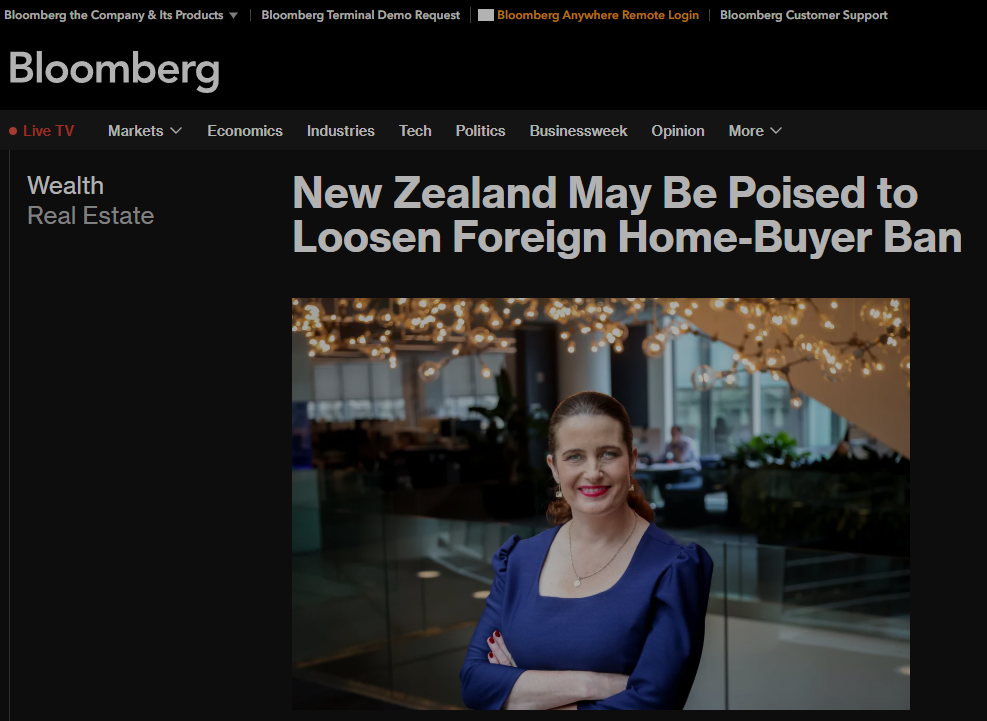
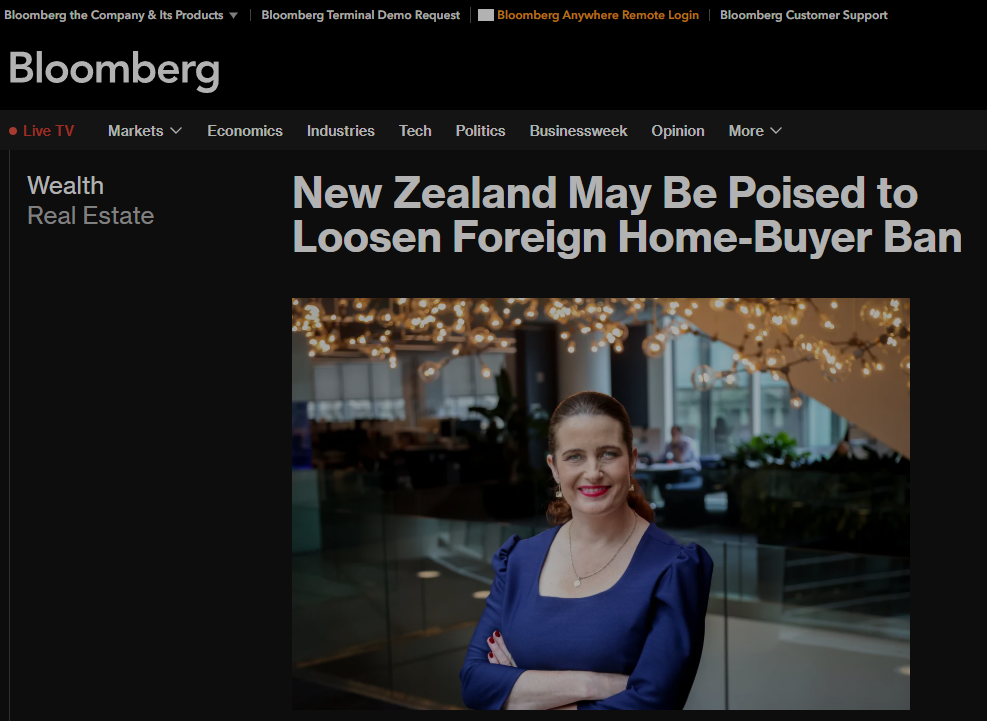
This Bloomberg report isn't just another piece of financial journalism—it's a blueprint for the systematic commodification of Aotearoa that would make our colonial ancestors blush with pride. Finance Minister Nicola Willis, grinning like a used car salesman at a billionaires' convention, has just announced that New Zealand may be "weeks away" from further loosening restrictions on foreign property purchases. But this isn't about housing policy; it's about completing what colonization started: turning Māori whenua into an international marketplace where the highest bidder wins and tangata whenua lose.
Background: The Historical Context of Land Commodification
The transformation of land from whenua—a living, breathing entity that connects Māori to our tipuna and mokopuna—into "property" represents one of colonization's most violent acts. When European settlers arrived, they brought with them an alien concept: land as commodity. This wasn't merely a different way of thinking about land; it was a weapon of mass dispossession.bbc
The Native Land Court, established in 1865, was explicitly designed to "destroy, if it were possible, the principle of communism upon which [Māori] social system is based and which stands as a barrier in the way of all attempts to amalgamate the Māori race into our social and political system". This wasn't hidden racism—it was the stated policy of the colonial government.nzherald
Today's "golden visa" scheme and the pressure to lift foreign buyer restrictions represent the latest evolution of this same colonial project. The language has been sanitized, the methods refined, but the goal remains unchanged: convert Indigenous relationship to land into profit for the wealthy few.
The Peter Thiel Precedent: How Citizenship Became a Commodity
Before we examine the current golden visa bonanza, we must understand how we arrived here. The Peter Thiel citizenship scandal of 2011 wasn't an aberration—it was a preview of coming attractions. This PayPal co-founder and Trump loyalist received New Zealand citizenship after spending just 12 days in the country over five years, compared to the normal requirement of 1,350 days.scoop+1
The justification? That Thiel would be a "great ambassador and salesperson" for New Zealand. Instead, he has systematically wound down his New Zealand business interests, extracted millions through questionable investment fund arrangements with the taxpayer-funded New Zealand Venture Investment Fund, and used his Queenstown properties as personal "apocalypse insurance".nzherald+2
This citizenship-for-sale model established the template: offer wealthy foreigners New Zealand residency or citizenship in exchange for investment promises, then turn a blind eye when those promises evaporate and the profits flow offshore.
The Current Golden Visa Gold Rush
The current "Active Investor Plus" visa scheme, revamped in April 2025, has already attracted 267 applications covering 862 people, representing a potential NZ$1.63 billion in investment. More than 40 percent of these applications come from the United States.businesstimes
Willis boasts that hundreds of people have applied within the first few months, pledging over a billion dollars. But let's examine what this really means:beehive+1
The visa offers two categories: the "Growth" category requiring NZ$5 million investment over three years, and the "Balanced" category requiring NZ$10 million over five years. Crucially, the English language requirement has been removed, and investors need spend only 21 days in New Zealand over three years for the Growth category.fragomen+1
This is residency without residence, citizenship without commitment, investment without integration.
The Māori Housing Crisis: A Tale of Two Realities
While Willis celebrates attracting foreign millionaires, Māori home ownership continues its devastating decline. The latest Census data shows just 27.5% of Māori owned or partly owned their own house in 2023—down from 31.2% a decade earlier.nzherald+1
Compare this to European New Zealanders' 56.8% home ownership rate in 2013, and the pattern becomes clear: while foreign millionaires are being courted with red-carpet treatment, tangata whenua are being systematically excluded from housing security in their own land.teara
Research by Houkamau and Sibley found that self-reported appearance as Māori significantly predicted decreased rates of home ownership, leading them to conclude there is "institutional racism against Māori in New Zealand's home lending industry based on merely appearing more Māori". This isn't historical discrimination—this is happening now, while golden visa holders are fast-tracked to residency.plos
The housing data reveals a stark truth: KiwiBuild failed Māori and Pasifika, with just 4.8% of buyers being Māori and 4.4% Pasifika, despite Māori representing 16.5% and Pasifika 8% of the population. Meanwhile, Asian New Zealanders purchased 39% of KiwiBuild homes while representing about 15% of the population.1news
The Neoliberal Logic of Dispossession
Willis's enthusiasm for foreign investment represents classic neoliberal ideology: the belief that market forces, left to their own devices, will somehow produce equitable outcomes. This is the same logic that justified the wholesale privatization of the 1980s and 1990s, which decimated Māori communities and accelerated land alienation.e-tangata
The Coalition Government's approach combines several toxic elements:
Market Fundamentalism: The belief that foreign capital investment automatically equals economic growth and prosperity for all New Zealanders. This ignores how such investment often extracts wealth rather than creating it locally.rnz
Trickle-Down Economics: The discredited theory that benefits for the wealthy eventually flow down to everyone else. Four decades of neoliberalism have proven this false, yet Willis continues to peddle this myth.
Regulatory Capture: The government has already sped up overseas investment approvals, with processing times reduced from 71 working days to 28 working days. This prioritizes foreign investors' convenience over New Zealand's national interest.rnz
The Coalition's Broader Attack on Indigenous Rights
The push to lift foreign buyer restrictions isn't happening in isolation. It's part of a systematic assault on Treaty rights and Indigenous sovereignty that includes:
Resource Management Act Repeal: The Coalition plans to replace the RMA with legislation "based on the enjoyment of private property rights", further entrenching colonial property concepts over Māori relationships to whenua.ojs.victoria
Overseas Investment Liberalization: Associate Finance Minister David Seymour is advancing legislation to significantly reduce oversight of foreign investments, with minimal public scrutiny.theconversation
Te Pāti Māori Demonization: The government consistently portrays Māori political representation as "divisive" while rolling out red carpets for foreign millionaires.
The Racial Politics of Investment
The demographics of golden visa applicants reveal uncomfortable truths about which foreign buyers are welcome and which face restrictions. While Chinese nationals were the majority of overseas buyers under previous schemes, the new applications are predominantly from the United States.bbc+1
This shift reflects broader geopolitical considerations and, arguably, racial preferences in immigration policy. Willis and her colleagues are comfortable courting American millionaires while maintaining restrictions that disproportionately impact Chinese investment.
Meanwhile, Pacific peoples experience severe housing deprivation at four times the rate of Pākehā, but receive minimal government attention. The Pacific housing crisis has been documented for decades, yet remains largely invisible in mainstream political discourse.journal.mai
The Treaty Violation
What Willis is proposing isn't just bad economic policy—it's a direct violation of Te Tiriti o Waitangi. Article Two of the Treaty guarantees Māori tino rangatiratanga over their taonga, including whenua. The systematic exclusion of Māori from home ownership while prioritizing foreign investment represents a fundamental breach of this guarantee.
Moana Jackson explained how true constitutional transformation requires moving beyond neoliberal frameworks to honor Treaty obligations. Instead, we're moving in the opposite direction—accelerating the commodification of land and prioritizing foreign capital over Indigenous rights.e-tangata
The Treaty promised a partnership between Māori and the Crown. What we have instead is the Crown auctioning off the partnership to the highest international bidder.
Implications: The Future of Aotearoa
If Willis succeeds in lifting foreign buyer restrictions for golden visa holders, the implications extend far beyond housing policy:
Accelerated Gentrification: Foreign investment will drive up property prices, making home ownership even more unattainable for Māori and working-class New Zealanders.
Democratic Deficit: Major economic decisions are being made without meaningful public consultation, especially with Māori communities who are most affected.
Sovereignty Erosion: Each foreign land purchase represents a further erosion of tino rangatiratanga and Indigenous self-determination.
Cultural Loss: As Māori are displaced from urban areas and ancestral lands, cultural practices and intergenerational knowledge transmission are disrupted.
The Path Forward: Reclaiming Economic Tino Rangatiratanga

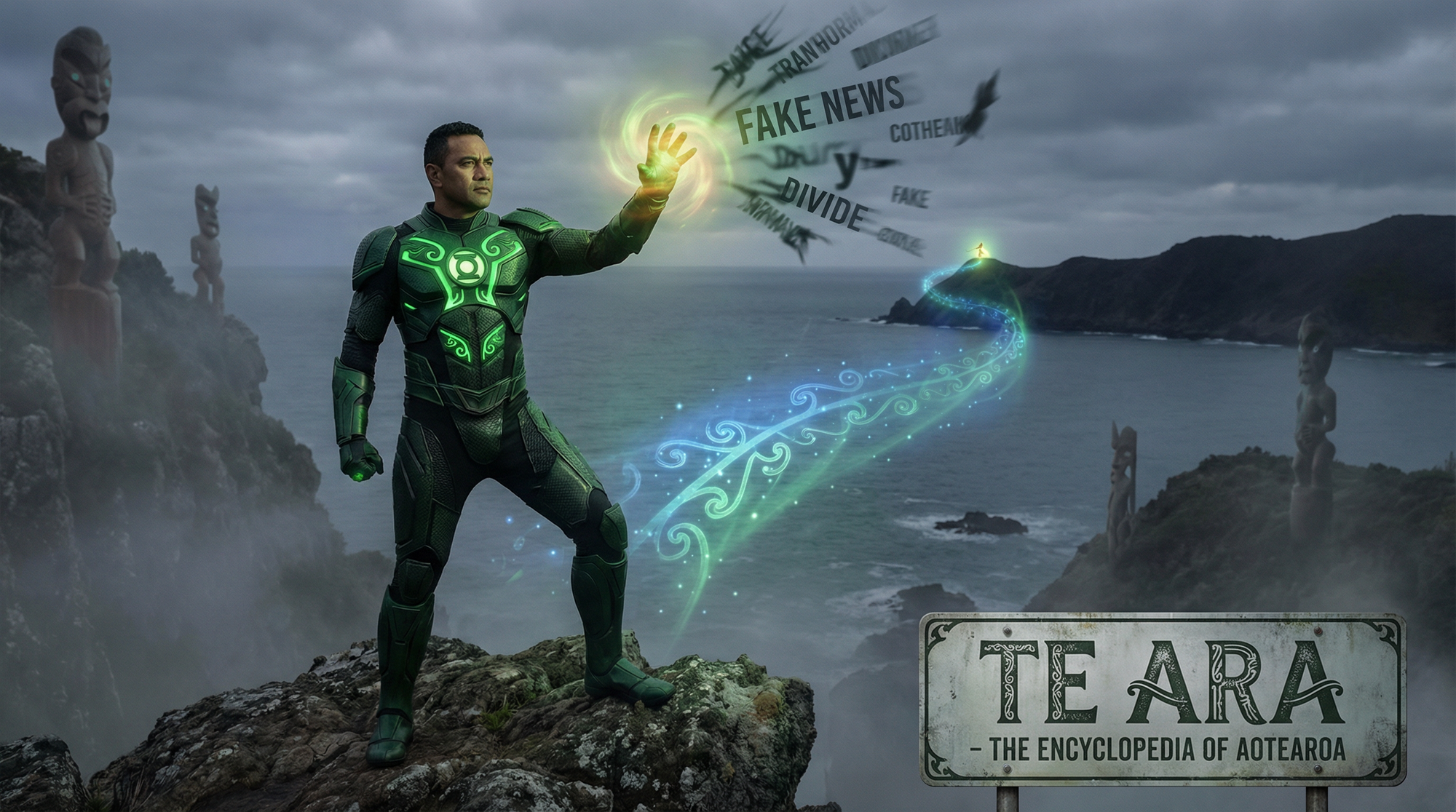
The Māori Green Lantern fighting misinformation and disinformation from the far right
The solution isn't to demonize all foreign investment or retreat into nationalism. Instead, we need economic policies grounded in Māori values and Treaty partnership:
Prioritize Māori Housing Development: Massive investment in papakāinga (Māori housing developments) on ancestral lands, removing bureaucratic barriers that currently impede such development.nzherald+1
Community-Controlled Investment: Foreign investment should serve community needs rather than extract wealth. This requires genuine partnership with iwi and hapū in investment decisions.
Land Back Mechanisms: Policies that actively return alienated Māori land and provide pathways for collective ownership and control.
Anti-Speculation Measures: Policies that discourage land speculation while supporting genuine housing development and community building.
The coalition government's golden visa bonanza represents everything wrong with neoliberal capitalism: it prioritizes profit over people, foreign wealth over local wellbeing, and individual greed over collective responsibility. While Nicola Willis celebrates attracting foreign millionaires, Māori families remain locked out of housing security in their own homeland.
This isn't economic policy—it's economic colonization with a corporate smile and a Bloomberg interview. The same logic that justified the Native Land Court now wears a business suit and speaks in investment jargon, but the outcome remains the same: the systematic dispossession of tangata whenua for the benefit of global capital.
We must reject this false choice between foreign investment and economic stagnation. Real prosperity comes from economic sovereignty, not economic subjugation. It comes from honoring Treaty obligations, not auctioning them off to the highest bidder.
Te Tiriti promised partnership. What we're getting instead is a liquidation sale of our future, with Māori locked out of the auction while foreign millionaires browse the catalog of our whenua.
The auction house is open, but it's not too late to withdraw the lots from sale. Economic tino rangatiratanga remains possible, but only if we have the courage to challenge the auctioneers and reclaim our economic future.
Aroha nui,
Ivor Jones (The Māori Green Lantern)