"Seymour's Fire Sale: When Foreign Capital Buys Your Country While You Sleep" - 23 June 2025
The neoliberal puppet master strikes again

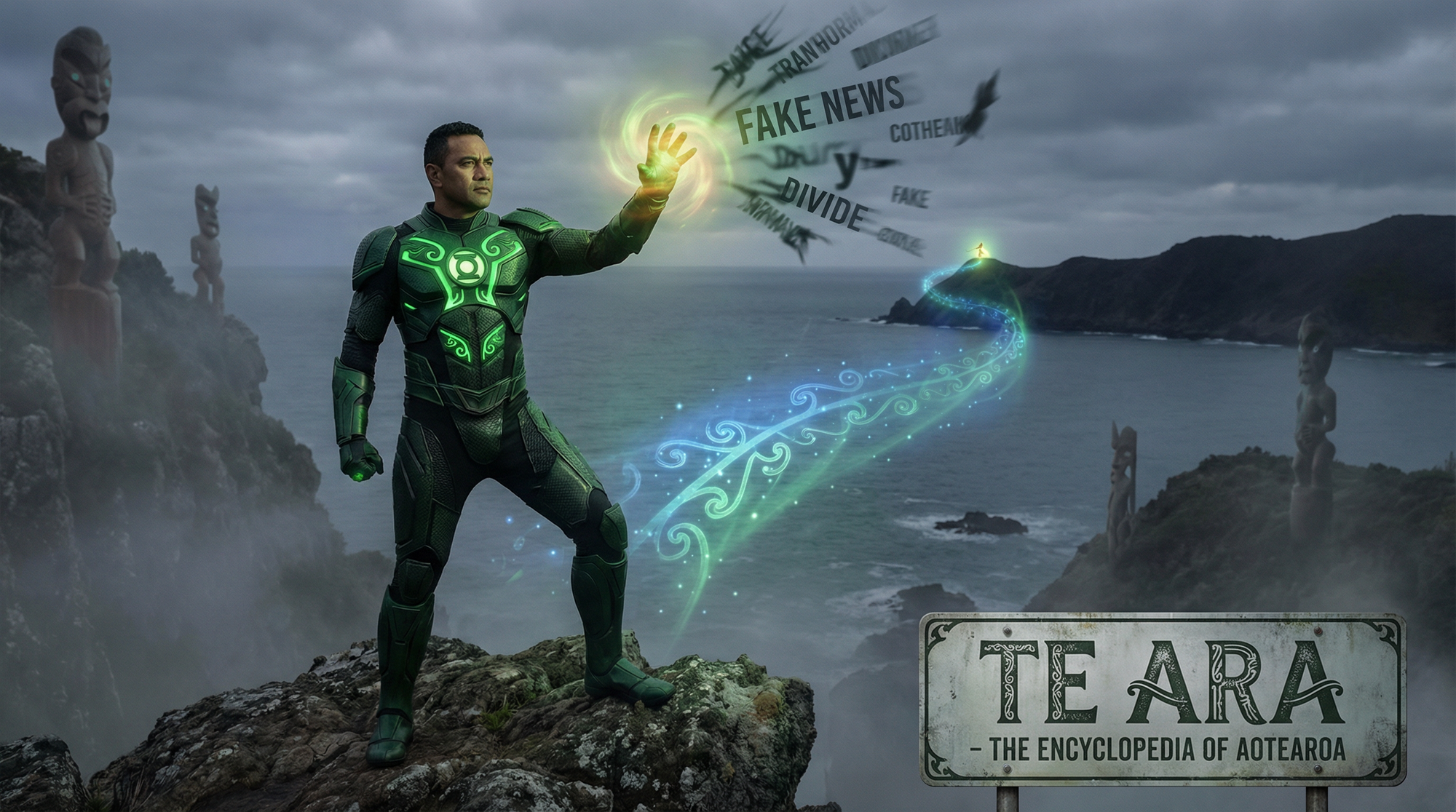
Kia ora whānau, greetings from Te Māori Green Lantern
The neoliberal puppet master strikes again – David Seymour's latest scheme to fast-track overseas investment decisions is nothing short of a calculated assault on our sovereignty and a betrayal of tangata whenua.
This analysis will expose how Seymour's overseas investment reforms represent the culmination of far-right neoliberal ideology, white supremacist policy-making, and corporate capture of our democratic institutions. We'll examine how this latest manoeuvre connects to his broader attack on Te Tiriti o Waitangi and Māori rights, while revealing the true beneficiaries of his policies – wealthy foreign investors and his own political donors.
Background
Understanding David Seymour's Political Project
David Seymour leads the ACT Party, a far-right neoliberal organisation described as representing "the most open expression to the class-war agenda of the ruling class" \[1]. Despite receiving only 8.6 percent of votes in 2023, ACT wields disproportionate influence in the coalition government \[2]\[3]. Seymour has openly boasted that ACT contributes half the Cabinet's ideas, despite having just one-sixth of government MPs \[4].
The overseas investment announcement follows Seymour's broader assault on Te Tiriti o Waitangi via his defeated Treaty Principles Bill – legislation legal experts deemed “the worst, most comprehensive breach of the Treaty/te Tiriti in modern times” \[5]. Professor Margaret Mutu has stated Seymour's agenda is fundamentally driven by “white supremacy” and a goal to “completely strip Māori of their Treaty rights” \[6].
Seymour's political philosophy mirrors international far-right movements. His recent “State of the Nation” speech echoed the rhetoric of Argentina’s Javier Milei, whose radical austerity programme drove Argentina’s poverty rate from 42% to 53% in a single year \[2]\[3]. Like Milei, Seymour champions mass privatisation, deregulation, militarisation, and fear-mongering against “the hard left” \[3].

The Fire Sale of Aotearoa’s Assets
On Monday, Seymour unveiled major reforms to the Overseas Investment Act, claiming New Zealand suffers from “woeful productivity growth” and is “one of the hardest countries in the developed world for overseas people to invest in businesses” \[7]. His proposed changes reverse the current presumption that foreign investment must benefit New Zealand – defaulting instead to automatic approval unless a national security risk is found \[7]\[8].
Decisions on most applications will now be made in just 15 days, and investors no longer need to demonstrate benefits to New Zealand \[7]. Labour’s Barbara Edmonds said the policy interprets the government's "Everyone Must Go" slogan as “Everything Must Go,” including our essential assets \[8]\[9].
Crucially, these reforms were announced just days after Seymour met with British billionaire Peter de Putron, a hedge fund magnate with links to offshore tax havens and a New Zealand Investor Plus visa \[10]. Two days after this meeting was arranged, Seymour declared our investment settings “the worst in the developed world” \[10].
According to Infrastructure NZ’s Nick Leggett, these changes will particularly appeal to infrastructure investors – despite no provisions to protect jobs, incomes, or Māori interests \[11]\[8].

Neoliberal Ideology Driving Asset Stripping
These reforms are a textbook example of neoliberal ideology – privileging market fundamentalism over democratic control \[12]. Academic Neal Curtis explains that Seymour subscribes to a neoliberal ethos valuing “freedom of the individual” (as consumer, not citizen) and the “rolling back of the state” \[12].
Curtis argues that the deeper neoliberal aim is to privatise everything the state administers or owns \[12]. Seymour’s reforms – slashing regulation and fast-tracking foreign investment – amount to a state-sanctioned asset transfer to global capital.
This violates the Māori value of kaitiakitanga, or guardianship of the environment and resources for future generations \[13]\[14]\[15]. Where Māori see land and taonga as sacred, Seymour sees them as up for grabs to the highest bidder.
The reforms also trample on **manaakitanga** – the ethic of care and responsibility to others \[16]\[17]. No care has been shown for how foreign ownership will impact communities or tangata whenua. Instead, the focus is on removing all barriers for offshore profiteers.
White Supremacist Framework of Foreign Investment
These changes must be understood in the context of Seymour's broader white supremacist agenda. As Professor Margaret Mutu explained, Seymour is working to build “a white supremacist country – where only Pākehā can have a say” \[6].
The legislation excludes any Treaty clause, any requirement for Māori consultation, and any acknowledgment that investment decisions affect whenua Māori. This echoes colonial patterns where foreign interests enrich themselves off indigenous land and resources \[18].
Scholars call this economic colonialism – the use of investment regimes to extract wealth while suppressing indigenous autonomy \[19]. The Waitangi Tribunal has already described Seymour’s strategy as a systematic effort to dismantle Māori rights under the guise of fighting “Māori privilege” \[5].
Ramming this law through Parliament with minimal consultation before the end of the year is not democratic – it's authoritarian \[8]. Seymour is fast-tracking foreign investor access at the expense of whānau Māori and the wider public.

Corporate Capture and Wealthy Donor Influence
Seymour’s reforms don't serve ordinary New Zealanders – they serve his political donors \[21]. ACT declared \$850,000 in donations from wealthy elites last year, including \$100,000 from billionaire Graeme Hart \[21].
The link to British billionaire Peter de Putron – who met with Seymour right before the policy announcement – reveals how easily foreign money shapes public policy when lobbyists get access to ministers \[10].
This is classic inverted totalitarianism, where democracy remains in name only while policy is crafted behind closed doors for elite interests \[22]. Seymour cloaks these reforms in “economic growth” rhetoric, but the real agenda is enrichment of foreign investors and ACT’s donor class \[1]\[3].
ACT doesn’t represent everyday Kiwis struggling with inflation and rent – it represents the wealthy few looking to buy up Aotearoa on the cheap.
Dismantling Democratic Sovereignty
Seymour’s reforms are not just economic – they’re constitutional. They transfer sovereignty from the people of Aotearoa to unaccountable global capital \[7].
By reversing the presumption that investment must prove public benefit, Seymour undermines tino rangatiratanga – the Māori principle of self-determination \[23]. Instead of empowering communities to make decisions about their land and future, the law empowers investors with the deepest pockets.
A 15-day review window offers no time for proper environmental, social, or Treaty impact assessments \[7]. It’s a deliberate effort to shut out democratic input while opening the floodgates to speculative capital.
The erosion of environmental protections under this reform also attacks the kaitiakitanga provisions of the Resource Management Act \[15]. This is legislative colonialism – using state power to further dispossess tangata whenua.
Implications
Broader Consequences for Aotearoa
These reforms accelerate Aotearoa’s slide into a **colonial economy** – where raw resources are exported, profits extracted by foreign owners, and local communities left with the fallout \[24].
For Māori, this reinforces the white supremacist marginalisation of tangata whenua from the economic life of our own whenua \[25]. Consultation is erased. Treaty protections ignored. Whānau voices silenced.
The reforms also attack whakawhanaungatanga – the building of reciprocal relationships that characterise Māori approaches to economic development \[26]. Seymour’s model builds one-sided relationships where only offshore investors win.
This policy is not a local aberration – it's part of a global far-right movement to dismantle democratic institutions and enrich the 1% \[2]\[3]. Seymour's alignment with Milei, Trump, and global libertarian billionaires shows exactly who ACT serves – and it’s not the people of Aotearoa.
By rushing this legislation through with little scrutiny or debate, Seymour sets a precedent for authoritarian governance where democracy is bypassed for profit \[3].
David Seymour’s overseas investment reforms are not economic policy – they’re a political weapon in a far-right, neoliberal war on sovereignty \[7]\[12]. This is the fire sale of Aotearoa – our whenua, our taonga, our rangatiratanga – to foreign capital and corporate elites.
These reforms violate the values of kaitiakitanga, manaakitanga, and tino rangatiratanga, while advancing a white supremacist vision of New Zealand where Māori are erased from decision-making \[6]\[14]\[23].
This is not economic growth. It’s economic colonialism – designed to extract, dispossess, and enrich Seymour’s political patrons \[1]\[10]\[21].
We must resist. Through political mobilisation, economic sovereignty, and the assertion of tino rangatiratanga, we can reject this dystopian vision and fight for a future rooted in kaupapa Māori and genuine democracy \[24].
Kia kaha, kia māia, kia manawanui – stay strong, be brave, be steadfast.
Ivor Jones - The Māori Green Lantern.