"Shining Light on Lies, Protecting Truth" - 24 June 2025
Māori analysis cutting through corporate spin, racist rhetoric, and political manipulation in Aotearoa
Kia ora koutou, greetings to all.
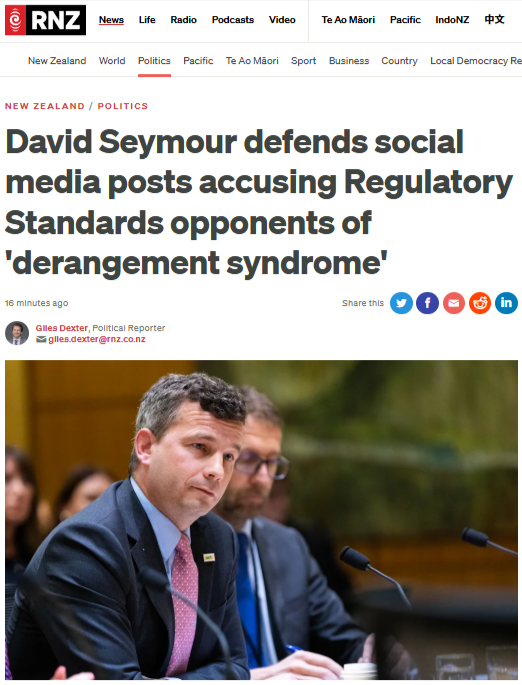
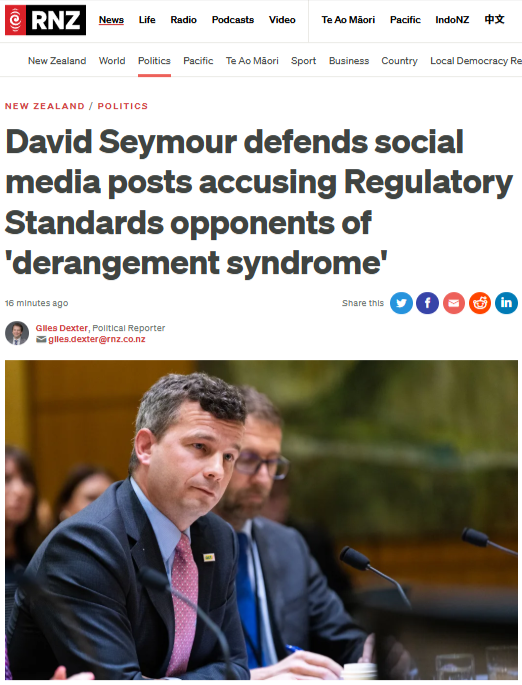
Deputy Prime Minister and ACT Party leader David Seymour has come under fire for a series of social media posts targeting opponents of his Regulatory Standards Bill. In these posts, Seymour accused critics—many of whom are respected academics and Māori leaders—of suffering from “Regulatory Standards Derangement Syndrome” (RNZ link). This move has sparked widespread concern over ministerial conduct, democratic norms, and the future direction of lawmaking in Aotearoa.
The Regulatory Standards Bill itself is highly controversial. While Seymour claims it will ensure “good law-making and economic efficiency,” critics argue it is a Trojan horse for corporate interests, undermining collective rights, environmental protections, and Te Tiriti o Waitangi (Tuesday Club, Greenpeace Aotearoa).

Seymour’s posts singled out prominent figures such as Dame Anne Salmond, Dr George Laking, Metiria Turei, and Labour MP Willie Jackson, labelling them as “Victim of the Day” and dismissing their arguments as conspiratorial or irrational (PDF, RNZ). Wellington Mayor Tory Whanau formally complained to the Prime Minister, describing Seymour’s campaign as “online harassment and intimidation” and a breach of the Cabinet Manual’s ethical standards for ministers.
Labour leader Chris Hipkins condemned the behaviour as “inconsistent” with what is expected of MPs, especially Ministers of the Crown, and called it “online harassment” (PDF, RNZ). Dame Anne Salmond, in her Newsroom column, described the bill as “dangerous” and “inspired by libertarian ideals,” warning it prioritises private property and individual rights over collective wellbeing and environmental protection.

Weaponising Social Media to Silence Dissent
Seymour’s rhetoric—branding critics as suffering from a “syndrome”—is a classic tactic to delegitimize and ridicule opposition, rather than engage with substantive concerns (PDF, RNZ). This approach is particularly chilling when wielded by a senior government minister, as it can incite further online harassment and discourage public participation in democratic debate.
Undermining Māori Rights and Te Tiriti
The Regulatory Standards Bill is widely criticised for excluding Te Tiriti o Waitangi from its principles, effectively erasing Māori rights from the lawmaking process (Greenpeace, Tuesday Club). Greenpeace Aotearoa and Dame Anne Salmond both highlight that the bill would make it harder for future governments to protect the environment, uphold Indigenous rights, or introduce progressive reforms—locking in a culture of deregulation and corporate privilege.
A Power Grab Disguised as Reform
The bill proposes the creation of a “Regulatory Standards Board,” an unelected body selected by the Minister for Regulation (currently Seymour himself), with sweeping powers to challenge any law not aligned with the bill’s ideological principles (Greenpeace, Tuesday Club). Critics like Salmond and Greenpeace argue this is a “naked power grab” that undermines parliamentary democracy and accountability.
Ministerial Conduct and Democratic Norms
Sections 2.53 and 2.56 of the Cabinet Manual require ministers to uphold the highest ethical standards and exercise professional judgment in all communications (PDF, RNZ). Seymour’s actions, described as “irresponsible” by Mayor Whanau, risk setting a precedent where ministers use their platforms to bully and intimidate critics, eroding public trust and potentially inciting real-world harm.
Broader Neoliberal and Anti-Māori Agenda
The bill fits a pattern of ACT Party initiatives that seek to entrench market fundamentalism, weaken collective protections, and diminish Māori representation and rights (Listener, Greenpeace, Scoop). Critics argue that Seymour’s approach advances a radical libertarian ideology at the expense of social cohesion, environmental stewardship, and Indigenous justice.
Implications
Seymour’s campaign signals a dangerous shift in New Zealand politics, where dissent is pathologised and critics are targeted by those in power. For Māori, this is a direct threat to tino rangatiratanga and kaitiakitanga, as the bill would sideline Te Tiriti and collective rights in favour of corporate interests (Greenpeace, Tuesday Club). The broader community should be alarmed by the erosion of democratic norms and the chilling effect on public debate.

David Seymour’s online attacks on opponents of the Regulatory Standards Bill exemplify how far-right and neoliberal actors weaponise rhetoric and ministerial power to silence dissent, undermine Māori rights, and entrench corporate privilege. This is not just “playful” politics—it’s a calculated assault on democracy, Te Tiriti, and our collective future (PDF, RNZ, Listener, Greenpeace).
If you value truth, justice, and the wellbeing of all in Aotearoa, now is the time to speak up and resist this dangerous agenda.
If you find value in my work, please consider a koha to support the kaupapa: HTDM: 03-1546-0415173-000. Only contribute if you have the capacity and wish to do so.
Kia kaha, kia māia, kia manawanui.
Ivor Jones – The Māori Green Lantern