"Silencing the Voice of Truth" - 30 June 2025
Digital Colonialism and the Targeting of Māori Analysis
Kia ora whānau, e ngā iwi o Aotearoa, tēnā koutou katoa. He mihi nui ki a koutou katoa - greetings to all the peoples of Aotearoa, great acknowledgements to you all.
The surveillance state has come home to roost, and it is targeting those who dare to speak truth to power. Welcome to the digital frontier of colonisation, where the algorithms of oppression silently police the voices of tangata whenua and all who stand with us.
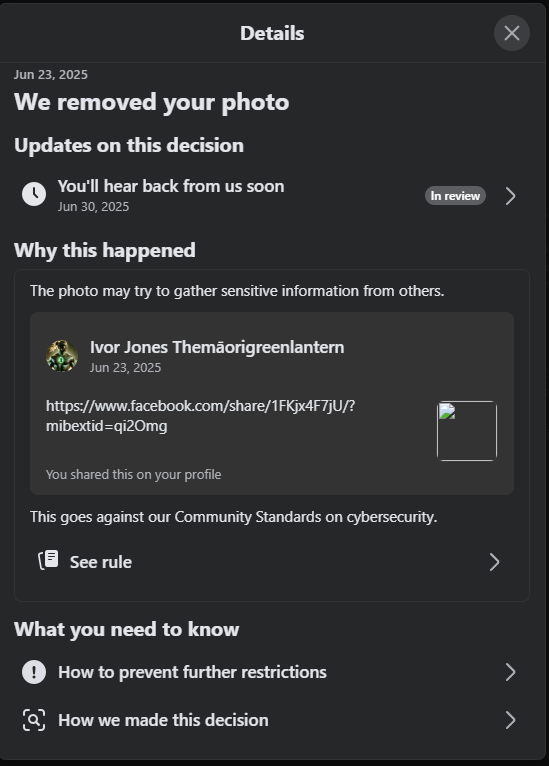
Facebook's suspension of The Māori Green Lantern's profile from June 23-26, 2025, represents more than just another "community standards violation" - it exposes the weaponisation of digital platforms to silence Indigenous voices and protect the status quo. When challenging the privileged position of neoliberal mouthpieces becomes grounds for censorship, we must ask ourselves: who truly holds power in our supposedly democratic society?
This essay will examine how Facebook's opaque content moderation systems function as tools of digital colonialism, perpetuating the same patterns of silencing and suppression that have defined settler colonial strategies for centuries. Through analyzing the targeting of Māori Green Lantern's critical analysis and exploring the broader implications for Indigenous voices in digital spaces, we will expose the racist underpinnings of social media governance and its role in maintaining white supremacist power structures.
Background: The Digital Colonisation of Indigenous Voices
Facebook's community standards operate under the guise of protecting users from harmful content, but research reveals a systematic bias against Indigenous voices and marginalized communities[1]. These algorithms, designed primarily by Western perspectives, amplify power relations and perpetuate historical injustices[2] by centering colonial worldviews as the universal standard.
The targeting of Māori voices is not accidental but systematic. A Broadcasting Standards Authority report found that social media was the most cited platform for offensive material[3] experienced by Māori, Pacific, Asian and Muslim communities in New Zealand. When Indigenous voices speak truth about colonisation, neoliberalism, and white supremacy, they face algorithmic bias that can categorize them as offensive or even terrorist[1].
The very concept of "community standards" reflects a colonial imposition of singular cultural norms across diverse communities. For Māori, where korero (speech) holds sacred power and "He tao kōrero, e kore e taea te karo" - words cut straight to the heart - the platform's inability to understand tikanga Māori creates a fundamental disconnect. Research shows that content moderation systems lack the cultural context necessary[4] to fairly evaluate Indigenous expressions and reclaimed language.
The Targeting of Truth-Tellers
The suspension of The Māori Green Lantern's profile following criticism of individuals like Endell Johnstone reveals a disturbing pattern. While specific details about Johnstone remain limited in public records[5], the targeting of those who challenge established power structures is well-documented across digital platforms.
This form of digital silencing represents what Tania Waikato experienced when she was banned from Facebook for promoting legal education about the Regulatory Standards Bill[6]. Her content was described as "civil, polite and factual," yet it was removed following what appeared to be coordinated reporting by anti-Māori groups who viewed truth-telling as threatening[6].
The Māori Green Lantern's experience of aggressive attacks following analysis of Chris Hipkins and Labour's current political positioning[7] demonstrates how Indigenous voices face harassment when they provide critical analysis that challenges both left and right wing political narratives. The fact that this led to withdrawal from community groups reflects the chilling effect of digital suppression on Indigenous political discourse.
Algorithms of Oppression in Action
Facebook's content moderation operates through what scholars term "algorithms of oppression"[1] - systems that reinforce existing power structures while appearing neutral. The platform's reliance on AI systems that flag content without cultural context[4] creates a perfect storm for suppressing Indigenous voices.
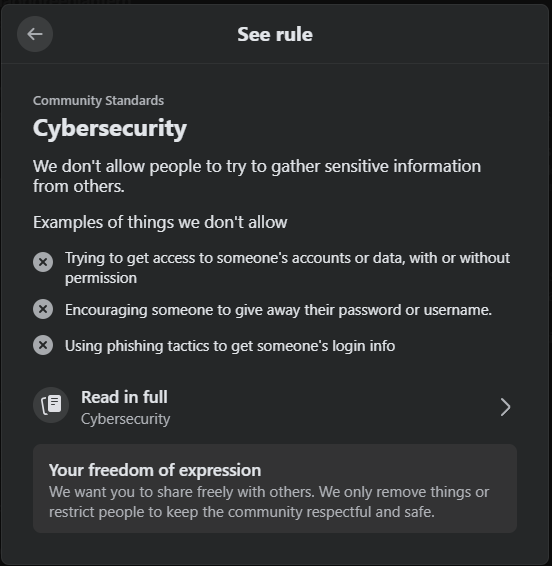
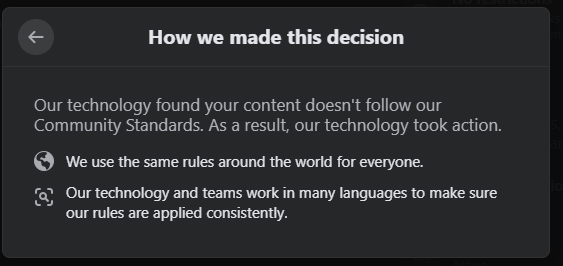
The cybersecurity violation cited in The Māori Green Lantern's case - "trying to gather sensitive information from others" - appears to be a catchall accusation that Facebook uses when its technology flags content it cannot properly categorize[8]. Research shows that Facebook's algorithms misclassify content 77% of the time in non-Western contexts[4], with particular bias against voices that challenge dominant narratives.
The three-day suspension followed by aggressive community attacks represents a sophisticated form of digital suppression. First, the algorithm removes the voice from the platform during peak engagement periods. Then, when the voice returns, coordinated harassment from opposition groups creates a hostile environment that effectively silences further participation. This mirrors the coordinated strategy used against Tania Waikato[6], where anti-Māori groups collectively reported factual legal content as violations.
The lack of transparency in Facebook's moderation process - where few platforms disclose their precise procedural steps[9] - makes it impossible for affected users to understand why they were targeted or to effectively appeal decisions. This opacity serves the interests of those who benefit from suppressing Indigenous voices while maintaining plausible deniability.
From a Māori values perspective, this violates core principles of tikanga:
Manaakitanga - The platform fails to show respect and care for Indigenous voices Whakapapa - Connections between people and communities are severed through algorithmic targeting Whakatōhea - The courage to speak truth is punished rather than protected Kotahitanga - Unity is undermined when voices seeking justice are silenced
The broader implications extend to how digital platforms serve as gatekeepers of public discourse. When Indigenous voices providing critical analysis face systematic suppression while hate speech against Indigenous people remains inadequately addressed[10], the platforms effectively become tools of white supremacist control.

Implications: Digital Sovereignty and Indigenous Resistance
The targeting of The Māori Green Lantern represents a broader assault on Indigenous sovereignty in digital spaces. When platforms owned by American corporations can silence Indigenous voices in Aotearoa, it raises fundamental questions about digital sovereignty and self-determination.
Research demonstrates that social media censorship particularly impacts marginalized communities[1], with Indigenous voices facing disproportionate targeting. This digital colonialism operates by imposing Western cultural norms as universal standards while suppressing Indigenous worldviews and analysis.
The chilling effect extends beyond individual cases. When prominent Indigenous voices like The Māori Green Lantern are forced to retreat from community engagement, it sends a message to other Māori voices that speaking truth comes with consequences. This creates a form of digital assimilation where Indigenous voices must either self-censor or face systematic suppression.
The withdrawal to alternative platforms - the Māori Green Lantern's website, Substack, and Bluesky - represents both resistance and retreat. While these platforms offer greater editorial control, they also result in reduced reach and engagement with the broader community that needs to hear Indigenous perspectives.
For whānau and communities, this targeting demonstrates the urgency of developing Indigenous-controlled digital infrastructure. The reliance on colonial platforms leaves Indigenous voices vulnerable to algorithmic bias and coordinated suppression campaigns.
The Path Forward: Reclaiming Digital Tino Rangatiratanga
The silencing of The Māori Green Lantern is not just about one voice - it represents a systematic attack on Indigenous truth-telling in the digital age. We must recognize that Facebook's community standards are not neutral arbiters of acceptable speech but tools of cultural imperialism designed to maintain existing power structures.
The solution lies not in appealing to colonial platforms for fairness but in building Indigenous digital sovereignty. This means supporting Indigenous voices wherever they choose to platform, whether on themaorigreenlantern.maori.nz, through Substack at themaorigreenlantern.substack.com, or on alternative social platforms like Bluesky at maorigreenlantern.bsky.social.
We must also recognize that every share, every engagement, every subscription to Indigenous content creators is an act of resistance against digital colonialism. When platforms suppress our voices, we amplify them through our networks.
The courage to continue speaking truth despite algorithmic oppression exemplifies the spirit of resistance that has sustained our people through centuries of colonisation. The Māori Green Lantern's commitment to continue the work across multiple platforms demonstrates that Indigenous voices cannot be silenced - they can only be redirected.
As we navigate this digital landscape, we must remember that our ancestors faced similar attempts at suppression through colonial laws, missionary schools, and government policies. They survived by maintaining their values, protecting their communities, and finding new ways to resist. Today's digital resistance requires the same commitment to truth, community, and tino rangatiratanga.
The platforms may control the algorithms, but they cannot control the whakapapa of resistance that flows through Indigenous communities. Every time we support Indigenous voices, share their content, and challenge colonial narratives, we are participating in the ongoing struggle for justice and self-determination.
Kia kaha, kia māia, kia manawanui. Be strong, be brave, be steadfast. The truth cannot be permanently silenced, and Indigenous voices will continue to rise.
Follow The Māori Green Lantern's continuing work at themaorigreenlantern.maori.nz, subscribe to the Substack at themaorigreenlantern.substack.com, and connect on Bluesky at maorigreenlantern.bsky.social.
For those who find value in this mahi and wish to support the continuation of Indigenous truth-telling in our digital age, koha can be made to HTDM: 03-1546-0415173-000. Please only contribute if you have the capacity and desire to do so, especially given these challenging economic times for whānau.
Tihei mauri ora - may there be life! The voice of truth will not be silenced.