“Silent Bells, Silenced Heritage: Exposing the Ministry’s Reckless Betrayal at Pukeahu” - 30 August 2025
“When the bells fall silent, who then remembers our tūpuna?”
He mihi ki a koutou katoa. Greetings to all.
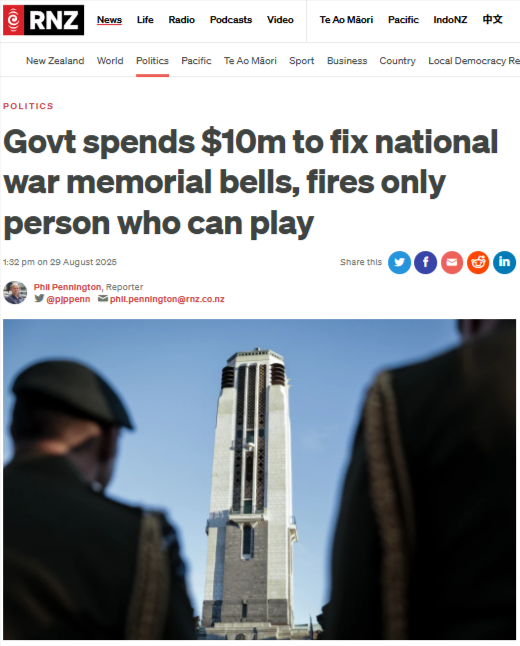
The Ministry of Culture and Heritage poured over NZ$10 million into earthquake-proofing Te Pūtikitiki a Tāmaki—our National War Memorial carillon—only to strip away the very soul of the monument by disestablishing Timothy Hurd’s position, the sole custodian of its 74 bells. This betrayal is more than budget-biting; it is an affront to Māori values of kaitiakitanga, whanaungatanga, and mana whenua, and plays into wider neoliberal obsessions with cost-cutting at the expense of cultural guardianship.
Background and Significance
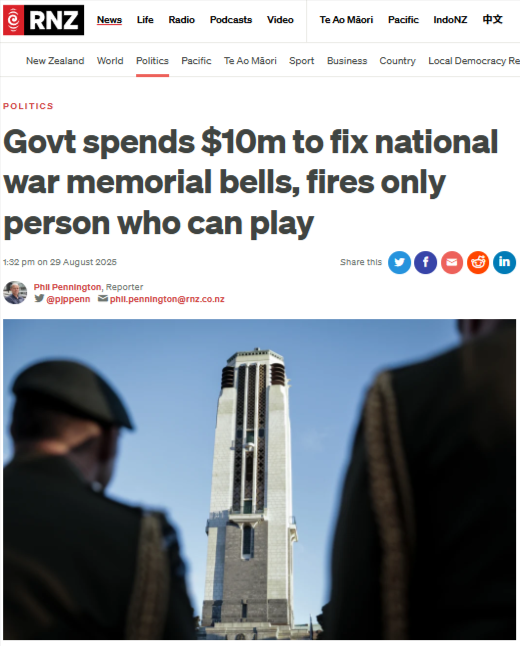
The carillon tower at Pukeahu opened on Anzac Day 1932, funded by whānau who donated bells in memory of fallen soldiers—including the Mansfield family’s bell “Flanders Fields” for their son killed in 1915 (Clarke on crowdfunding ). For nearly a century, its regular peals bound our collective memory to te ao Māori’s cyclical view of time and intergenerational whakapapa. Yet in the last decade the carillon sat silent for 70 percent of the time, and now faces even harsher limits.
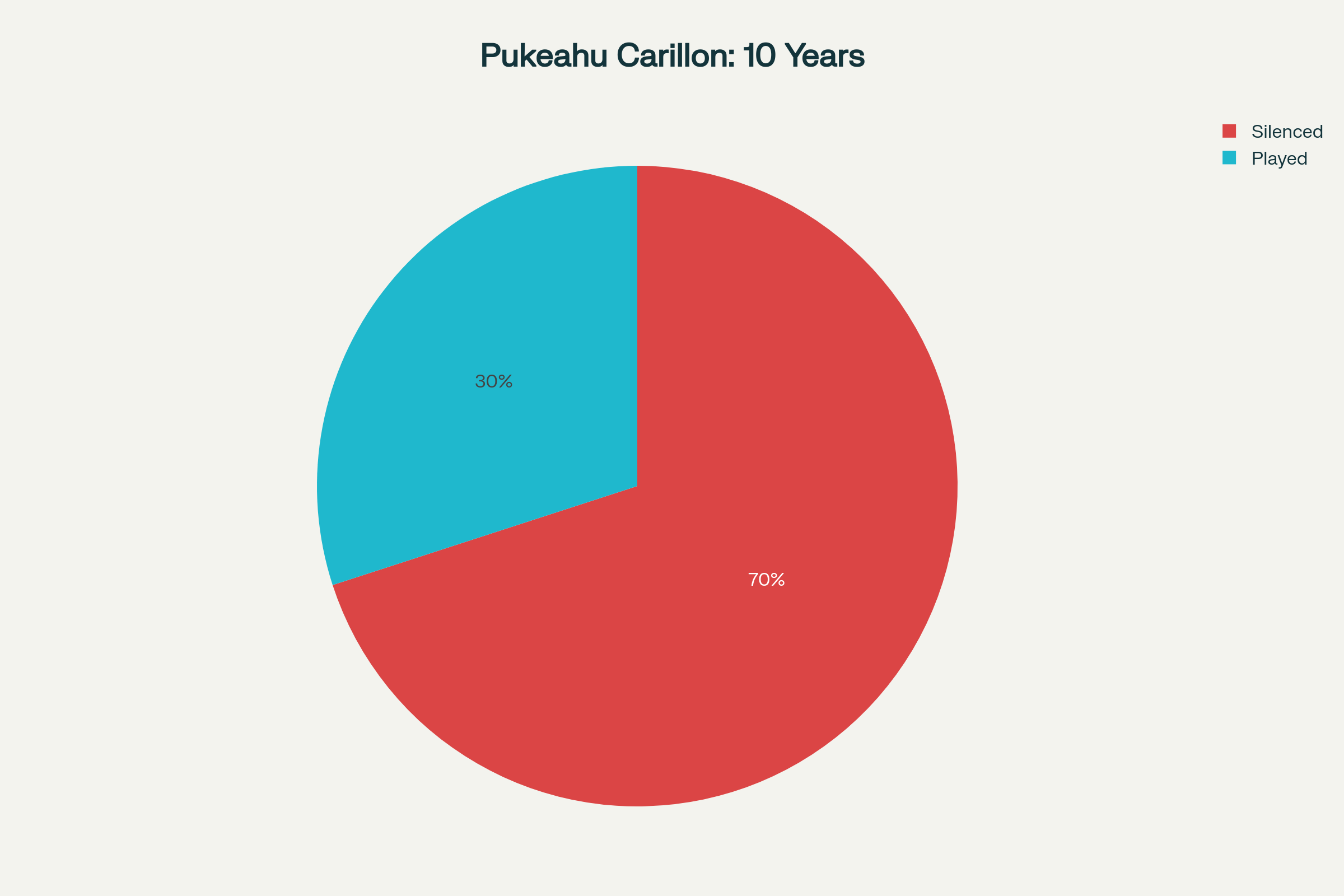
Proportion of years the Pukeahu carillon was silenced versus played over the past decade
The Issue Exposed
Despite seismic upgrades touted as preserving heritage, the ministry’s own report revealed a cruel irony: while engineers refortified the tower, the only carillonist who can operate 70 tonnes of bells lost his job. Though the 2025 Budget slashed funding, cutting an irreplaceable specialist role betrays a neoliberal fixation on “core policy work” over mahi toi and public memory (Ministry report).
Historian Stephen Clarke labeled this “totally perverse” and warned that silencing the bells is “tantamount to forgetting” (Clarke quote). The Returned and Services’ Association laments lost ceremonies, yet their appeals fall on a ministry prioritizing cost-savings over kotahitanga and remembrance.
Kaitiakitanga Betrayed
Māori guardianship demands that taonga be held for future generations. By disestablishing Hurd’s role, the ministry fails to honor the mauri of the carillon, reducing a living cultural practice to an “Anzac Day recording” (Ministry statement). This echoes global neoliberal turns that commodify heritage while discarding its stewards.
Whanaungatanga Undermined
Regular bell concerts fostered community ties; citizens from Wellington to global Network of War Memorial Carillons shared in 220 formal concerts annually (Peacecarillons network). Now, those bonds fray as the carillon falls silent, dismantling the relational networks that bind Māori and Pākehā in shared remembrance.
Mana Whenua Ignored
The tower stands on Pukeahu, a site of iwi mana whenua since time immemorial. Its silencing echoes colonial erasure—echoes of colonisation tactics that mute Indigenous voices. New Zealand’s second national historic landmark deserves more than token Anzac dispenses; it demands living practice aligned with Māori worldviews of cyclical memory.
Neoliberal Fear-mongering
Officials cast Hurd’s role as “non-core,” weaponizing economic fear-mongering to justify layoffs. This mirrors global trends where neoliberalism demonizes specialist roles and defunds Indigenous-aligned cultural programming, all while whitewashing colonial violence through historical denialism.
Counterarguments Exposed
The ministry claims contractors could be hired, yet no such specialists exist locally—a cost-driven fantasy that leaves the carillon as mere stage-set. This is a cynical façade of inclusion, betraying a deeper white supremacist narrative that Indigenous stewardship is expendable.
Broader Implications
Silencing the carillon bleeds into wider patterns: anti-Māori campaigns that claim co-governance “threatens Pākehā,” welfare scapegoating of Māori, and a neoliberal state that devalues community-facing heritage in favour of abstract “policy.” The betrayal at Pukeahu foreshadows further erosion of Māori cultural spaces, intensifying colonial amnesia and weakening intergenerational connection.
The Māori Green Lantern Fighting Misinformation And Disinformation From The Far Right
Call to Action
The ministry’s actions are not mere budget cuts—they are an act of cultural violence, severing our ancestral chords. We must demand the re-establishment of the carillonist role, insist on regular live playing beyond Anzac Day, and hold ministers accountable for upholding tikanga and memory.
If you value this critique, consider a koha to support this kaupapa: HTDM: 03-1546-0415173-000. Only contribute if you have capacity.
No reira, tēnā koutou, tēnā koutou, tēnā koutou katoa.