“Te Pāti Māori’s Factional Death Spiral and the Fate of the Tamihere-Waititi Whānau” - 7 December 2025
Reckoning at Rotorua
The Wipeout Of Te Pati Māori
Te Pāti Māori is on course for a 2026 electoral collapse driven by unlawful expulsions, dynastic control and unresolved governance failures.
The February 2026 High Court review is likely to find the expulsions of Mariameno Kapa‑Kingi and Tākuta Ferris procedurally invalid, exposing serious constitutional breaches while the leadership—John Tamihere, Rawiri Waititi and Debbie Ngarewa‑Packer—refuses reform and continues to alienate moderate Māori voters.
Through 2026 Labour mounts a disciplined campaign to retake all seven Māori electorates, while independents like Kapa‑Kingi and Ferris split the anti‑Labour vote; Māori voters who once split their tickets consolidate behind Labour, viewing Te Pāti Māori as consumed by ego and infighting rather than resisting the coalition’s anti‑Māori agenda.
On election night Labour is poised to win six of the seven Māori seats, Te Pāti Māori clings to a single electorate at best and falls to roughly 3% of the party vote, reduced to a rump of one or two MPs and effective irrelevance in Parliament.
In this scenario, Tamihere’s political career ends in disgrace amid Waipareira’s likely loss of charitable status, Waititi is either unseated or stripped of meaningful influence, Ngarewa‑Packer’s leadership brand is permanently damaged, and Kiri Tamihere‑Waititi’s control of Toitū Te Tiriti destroys that movement’s credibility.
The wipeout triggers a broader Māori political realignment in which Labour’s enlarged Māori caucus is forced to deliver real gains, while any future kaupapa Māori party will have to reject dynastic capture and performance politics in favour of genuine democratic, tikanga‑based leadership.
The true losers are Māori communities, left without a strong independent Māori voice in Parliament and confronted with a stark choice between a complacent Labour Party and a hostile right‑wing coalition, all because the Tamihere‑Waititi whānau squandered a generational opportunity through nepotism, authoritarianism and ego.
The December 7, 2025 AGM at Waiatuhi Marae in Rotorua exposed a brutal truth about Te Pāti Māori:
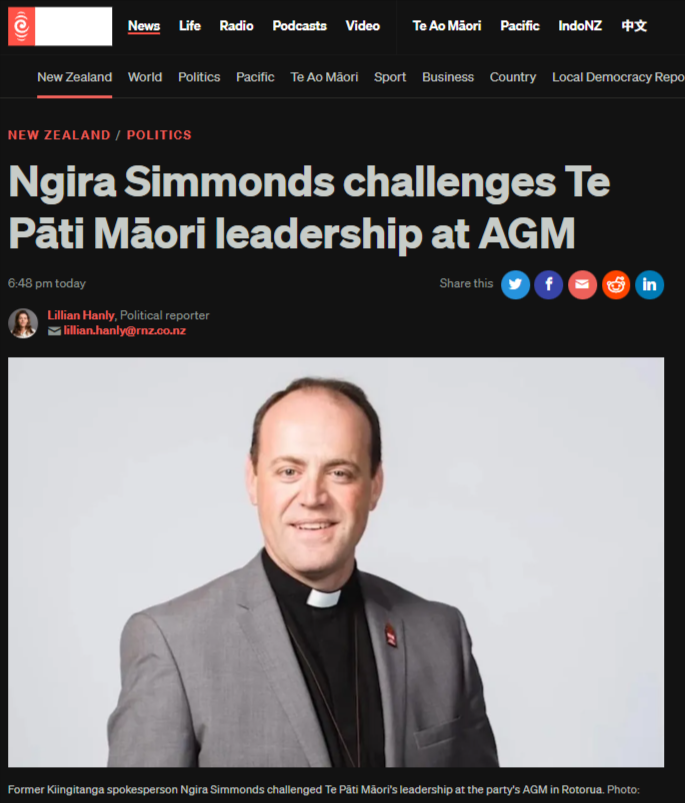
the party that rode the hīkoi wave to record 7% polling in December 2024 is now cannibalising itself through internal warfare so toxic that even former Kiingitanga spokesperson Ngira Simmonds felt compelled to call out the leadership publicly.
His challenge—delivered during the pōwhiri before approximately 200 members—represented the most significant public repudiation of the party’s trajectory since its 2023 electoral triumph. When a figure with such deep connections to Māori institutional power questions whether John Tamihere, Rawiri Waititi, and Debbie Ngarewa-Packer are “the right people to unite the party and the people,” as RNZ reported, it signals that the crisis has metastasised beyond mere factional dispute into an existential threat to the party’s survival.

Waiatuhi Marae in Rotorua where Te Pāti Māori’s December 2025 AGM exposed the party’s internal crisis
The Historical Pattern: Death by Ego
Te Pāti Māori is repeating the exact pattern that destroyed it once before. When Hone Harawira split from the party in 2011 over its coalition with National, both factions ultimately perished—Harawira lost his Te Tai Tokerau seat in 2014, and the Māori Party was swept from Parliament entirely in 2017. The Mana Movement died too, taking only 0.1% of the party vote in 2017 before de-registering in 2021.
Political analyst Bryce Edwards has documented how the current crisis follows this template precisely:
“performance politics and the illusion of success” created by the 2023 electoral victory masked fundamental organisational dysfunction.
The party won six of seven Māori electorates and achieved 3.08% of the party vote in 2023, returning to Parliament after its 2017 wipeout. But this triumph contained the seeds of its destruction. The expansion from two MPs in 2020 to six in 2023 meant the “dynamic duo” of co-leaders had to manage “a more assertive caucus and competing egos,” as RNZ’s Anneke Smith analysed. Tamihere, Ngarewa-Packer, and Waititi are all “dominant personalities, used to steering their own course,” and the addition of strong-willed electorate MPs like Mariameno Kapa-Kingi and Tākuta Ferris—who “regard themselves as electorate MPs first, answerable to their own people, not to the central hierarchy”—created structural instability.
The sudden death of MP Takutai Tarsh Kemp in June 2025, described by colleagues as the caucus “peacekeeper,” removed the stabilising force that had prevented earlier ruptures. Co-leader Rawiri Waititi eulogised her as someone whose “heart for her people, especially young people, was evident to all who knew her.” Without Kemp’s diplomatic skills, the party’s latent conflicts erupted into open warfare.
The Expulsion: Constitutional Vandalism Masquerading as Discipline
The November 9, 2025 expulsion of Kapa-Kingi and Ferris represents constitutional vandalism that has fundamentally delegitimised the party’s claim to operate according to tikanga principles. Justice Paul Radich’s December 4 interim ruling identified “serious questions to be tried” regarding the expulsion process, noting “certainly tenable arguments” that it was founded upon “mistaken facts and procedural irregularities.”
The High Court found that Te Tai Tokerau Electorate Council—representing Kapa-Kingi’s constituents—was excluded from the National Council meeting that expelled their MP, a violation of natural justice so egregious that it prompted immediate judicial intervention. The procedural outrages are extensive and verified:
- Only four of seven electorate chairs voted on the expulsion, with Te Tai Tokerau excluded entirely, Te Tai Tonga (Ferris) abstaining, and Hauraki-Waikato (Hana-Rāwhiti Maipi-Clarke) abstaining
- The National Council may not have reached quorum for the expulsion vote
- No formal disciplinary hearing was provided to Kapa-Kingi despite the party’s constitution requiring due process
- The allegations against Kapa-Kingi—including a projected $133,000 overspend on parliamentary funds—were disputed and the funds involved were parliamentary allocations, not party funds
- Tamihere’s October email to members detailing allegations against Kapa-Kingi and her son Eru constituted defamation masquerading as accountability
Justice Radich’s concern about whether tikanga-based processes were followed strikes at the heart of Te Pāti Māori’s legitimacy crisis. A party that positions itself as the authentic voice of mana motuhake and tino rangatiratanga cannot survive the revelation that its disciplinary processes violate both its own constitutional kawa and fundamental tikanga principles. The full judicial review scheduled for February 2-3, 2026 will likely expose the expulsions as legally indefensible, but the political damage is already catastrophic.
Tamihere’s Empire: Follow the Money
John Tamihere’s position as both party president and chief executive of Waipareira Trust creates conflicts of interest so severe that they threaten the survival of both organisations. After a four-year investigation, Charities Services in May 2023 forced Waipareira to repay $385,307 in interest-free loans advanced to Tamihere for his 2019 Auckland mayoral campaign and 2020 Te Pāti Māori campaign. Charlotte Stanley, general manager of Charities Services, stated unequivocally: “Under the Charities Act, no charity is permitted to make contributions to political parties or candidates... The trust’s loan was still a breach of the Charities Act.”
Tamihere repaid the loan on May 31, 2023, but only after Charities Services demanded it be subject to commercial interest rates. The settlement requires Waipareira to cease all political donations and never again make loans to political candidates. This cuts off more than half of Te Pāti Māori’s declared 2020 campaign funding, which came from Waipareira and the related National Urban Maori Authority. Tamihere’s defiant response—claiming that preventing charities from using “Māori money to advance Māori interests politically” would create a “totalitarian state”—was legally nonsensical and politically toxic.
The financial governance failures extend beyond the loan scandal. Waipareira’s annual reports show executive salaries nearly doubled to make them “New Zealand’s highest-paid charity executives,” raising serious questions about Tamihere’s financial stewardship. In July 2025, Waipareira launched High Court action to fight potential deregistration as a charity following the Charities Registration Board’s determination that the political donations constituted grounds for removal of charitable status. If Waipareira loses its charitable status, it faces an immediate $16 million tax bill and vastly complicated tens of millions in government contracts.
Tamihere’s financial empire also includes the National Urban Maori Authority, which paid $82,695 in “sponsorship payments” to assist his campaigns and remains under ongoing investigation by Charities Services. His wife Awerangi Tamihere and daughter Kiri Tamihere-Waititi (married to co-leader Rawiri Waititi) occupy leadership positions across Waipareira, Te Pou Matakana (the Whānau Ora Commissioning Agency that lost its government contract in 2025), and Toitū Te Tiriti Limited. This concentration of family control across supposedly independent organisations creates accountability blackholes that enable the authoritarian governance Eru Kapa-Kingi described as a “dictatorship model.”
The Waititi Whānau: Complicity Through Kinship
Rawiri Waititi’s position is compromised by multiple conflicts: he is married to Kiri Tamihere-Waititi, John Tamihere’s daughter, making him both co-leader and family member of the party president. This kinship network means that criticising Tamihere’s leadership style or financial irregularities requires Waititi to challenge his father-in-law—a tikanga violation in most Māori contexts. When Waititi and Ngarewa-Packer publicly defended Tamihere in November 2025 despite mounting evidence of misconduct, they prioritised whānau loyalty over party integrity.
Kiri Tamihere-Waititi’s role as sole shareholder in Toitū Te Tiriti Limited—the activist organisation that led the 2024 hīkoi—creates additional conflicts when Toitū Te Tiriti distanced itself from Te Pāti Māori following Eru Kapa-Kingi’s October 2025 allegations. Companies Office records show Kiri Tamihere-Waititi as the single shareholder in Toitū Te Tiriti Limited, meaning the supposedly independent grassroots movement is actually controlled by the party president’s daughter and co-leader’s wife. This revelation undermines the authenticity of Te Pāti Māori’s claim to represent genuine grassroots Māori activism rather than astroturfed performance politics orchestrated by the Tamihere-Waititi dynasty.
Waititi’s own political future is imperiled by his defence of indefensible conduct. When he told RNZ at the December AGM that the focus must be turned to “the correct enemy, which wasn’t each other, but the government,” the deflection rang hollow. His claim that the party had conducted “many tikanga processes” contradicts Justice Radich’s finding of procedural irregularities so severe they warranted immediate judicial intervention. Waititi’s credibility as a champion of tikanga governance has been fatally compromised by his complicity in constitutional vandalism.
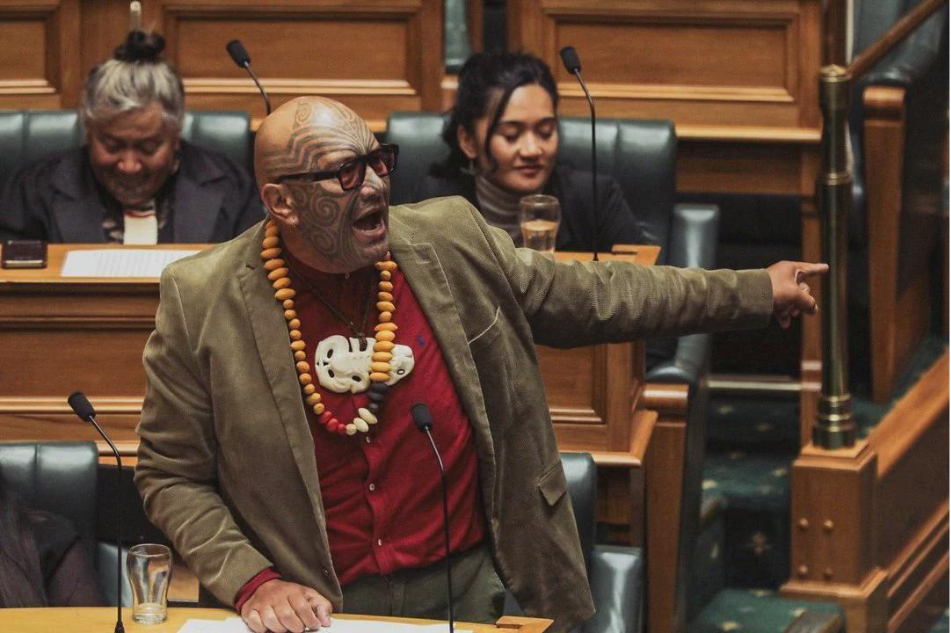
Rawiri Waititi, co-leader of the Māori Party, in a heated ...
Ngarewa-Packer: The Enabler
Debbie Ngarewa-Packer’s defence of Tamihere in November 2025—calling him the “strategic political mind” who “positioned us into where we are” and claiming “I haven’t seen anything that he’s done wrong other than be JT”—reveals a leader unwilling to acknowledge organisational dysfunction even as it metastasises around her. Her admission that “I didn’t like JT either when I started” but came to appreciate his “mastermind and brilliance” suggests that loyalty to political strategy has overridden commitment to tikanga-based governance.
Ngarewa-Packer’s failure to declare two properties under Parliament’s transparency rules, revealed in October 2025, further damaged her credibility as an ethical leader. While she corrected the discrepancy after media inquiries, the failure reinforced perceptions that Te Pāti Māori’s leadership operates with different standards for itself than it demands of others.
The co-leader’s role in the expulsion process is particularly troubling. Ngarewa-Packer liked a Te Tai Tonga Instagram petition calling for Tamihere’s resignation, then continued defending him publicly. This suggests either profound political incoherence or calculated duplicity—neither compatible with the mana-based leadership Te Pāti Māori claims to embody.
The Electoral Mathematics of Annihilation
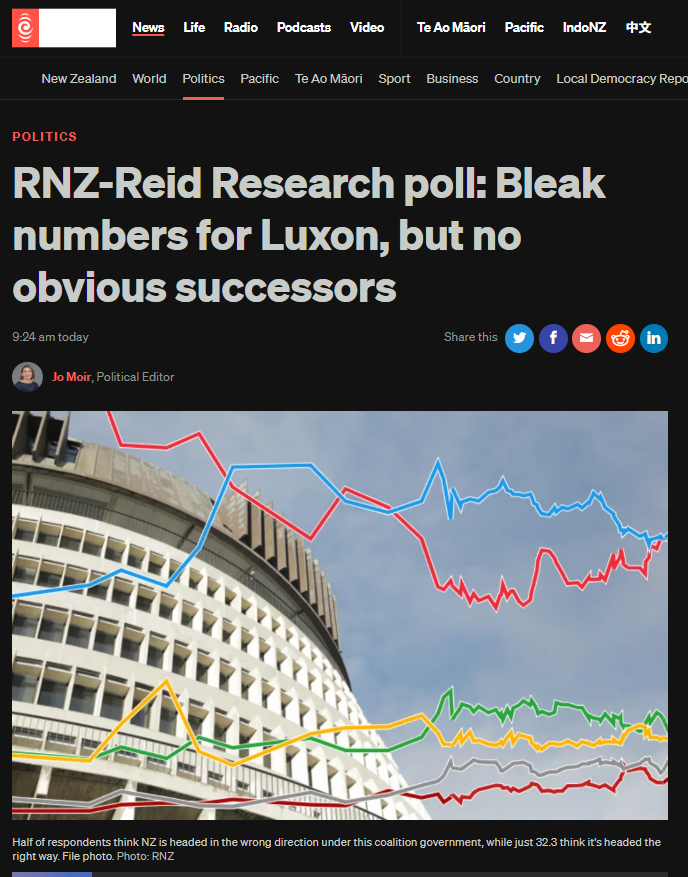
Te Pāti Māori’s polling trajectory tells a story of spectacular rise and catastrophic fall. The party reached its peak of 7% in December 2024 following the hīkoi mō te Tiriti protest against ACT’s Treaty Principles Bill—”far surpassing their previous record of 4.4% in 1News polls back in 2008.” That 7% would have translated to nine seats in Parliament, up from the six they hold currently.
But the internal warfare has shredded that support. By November 2025, polling showed TPM had collapsed to between 2-4%, with most polls placing them at 3-4%—barely above their 2023 election result of 3.08%. The Taxpayers’ Union-Curia poll from November 2-6, 2025 showed TPM at just 3.3%, while the Talbot Mills poll from November 1-10 showed 2.4%. This represents a catastrophic 50-60% collapse from the December 2024 peak in less than twelve months.
Bryce Edwards’ analysis identifies the brutal electoral mathematics: TPM won several Māori electorates by narrow margins in 2023: Tāmaki Makaurau by just 42 votes, Te Tai Tokerau by less than 500. With the party now fractured, those seats become vulnerable. Labour still won the party vote in all seven Māori electorates in 2023 despite losing most electorate seats. This shows that many Māori voters split their tickets, trusting TPM for electorate representation but preferring Labour overall. The expulsion creates a three-way race in Te Tai Tokerau and Te Tai Tonga if Kapa-Kingi and Ferris run as independents in 2026. Split votes could hand seats to Labour.
Labour’s Willie Jackson has declared the party is “absolutely” campaigning to get Te Pāti Māori out of Parliament: “Oh absolutely. We got rid of them in 2017 and they try to get rid of us in the seats, we try to get rid of them, that’s just the nature of the game.” Labour leader Chris Hipkins was equally blunt: “They’re doing a pretty good job of that for themselves at the moment.”
The Tāmaki Makaurau by-election in September 2025 provided a misleading signal. Te Pāti Māori’s Oriini Kaipara defeated Labour’s Peeni Henare with 6,031 votes to 3,093—a significantly larger margin than Takutai Tarsh Kemp’s 42-vote victory in 2023. But voter turnout was only 27.1%, noticeably lower than recent by-elections, suggesting the victory reflected Labour’s disorganisation rather than TPM strength. The subsequent implosion has obliterated whatever momentum Kaipara’s victory created.
The Generational Tragedy: Hana-Rawhiti Maipi-Clarke
The tragedy of Te Pāti Māori’s self-destruction is embodied in the fate of Hana-Rāwhiti Maipi-Clarke, the 22-year-old MP who became internationally famous after tearing up the Treaty Principles Bill in Parliament and leading a haka that went viral globally. Time Magazine named her one of the world’s most influential leaders in 2025.
Ngira Simmonds’ comments at the AGM acknowledged that “the pōtiki (the youngest) had been the leader through all this,” recognising Maipi-Clarke as the moral center the older leaders had abandoned. When Maipi-Clarke finally broke her silence in November 2025, she called for unity:
“If we are divided, we cannot stand. Our people are watching, and they need to see us united in our kaupapa.”
But Maipi-Clarke’s electorate council, Hauraki-Waikato, abstained from the expulsion vote—a clear signal that she refused to participate in the purge even as pressure mounted from the party hierarchy. Simmonds revealed that despite Tāmaki Makaurau supposedly voting in favour of the expulsions, Oriini Kaipara “never agreed to expel party members,” suggesting the vote counts were manipulated by the leadership.
Maipi-Clarke now faces a devastating choice:
remain in a party led by a family dynasty that has betrayed tikanga principles, or walk away and risk handing her Hauraki-Waikato seat to Labour. If she stays, she becomes complicit in the constitutional vandalism. If she leaves, she validates the narrative that Te Pāti Māori was always performance activism masquerading as principled politics. Either way, her political brand—built on authentic, youthful defiance of colonial power structures—is tarnished by association with the Tamihere-Waititi whānau’s authoritarianism.
Prediction: The 2026 Wipeout and Its Aftermath
Based on the verified evidence, here is the most likely trajectory for Te Pāti Māori and the fate of the Tamihere-Waititi whānau:
Immediate Future (December 2025 - February 2026)
The High Court’s full judicial review scheduled for February 2-3, 2026 will rule the expulsions procedurally invalid. Justice Radich’s December 4 interim ruling already identified “certainly tenable arguments” that the expulsion was founded upon “mistaken facts and procedural irregularities.” The full hearing will expose the extent of the constitutional violations, forcing either reinstatement of Kapa-Kingi and Ferris or triggering their departures as independents.
Tamihere will refuse to resign, citing “external attacks” and “media bias.” Waititi and Ngarewa-Packer will continue defending him, further alienating moderate Māori voters who are repulsed by the nepotism and authoritarianism. The AGM’s failure to address substantive governance reform means the underlying structural dysfunctions remain unresolved.
Primary Campaign (March - October 2026)
Labour will execute a disciplined, well-funded campaign to reclaim all seven Māori seats. The party’s November 2025 conference focused explicitly on this strategy, with Labour promising “strong interest from people looking to win the Māori seats.” Labour’s sole Māori electorate MP, Cushla Tangaere-Manuel (Ikaroa-Rāwhiti), will be joined by credible candidates in each of the six TPM-held seats.
Kapa-Kingi will run as an independent in Te Tai Tokerau, splitting the vote three ways with Labour and TPM. The same dynamic will occur in Te Tai Tonga with Ferris. Both independents will lose, handing the seats to Labour. Maipi-Clarke will face a brutal decision:
if she remains with TPM, she risks losing Hauraki-Waikato to Labour; if she goes independent, she faces the same three-way split that doomed Kapa-Kingi and Ferris.
The most damaging dynamic will be Māori voters who previously split their tickets—voting TPM for electorate but Labour for party vote—now consolidating behind Labour for both votes. The perception that TPM is consumed by ego-driven infighting rather than focused on fighting the coalition government’s anti-Māori policies will be politically fatal.
Election Night 2026 (October 14, 2026)
Labour wins six of seven Māori electorates:
Te Tai Tokerau, Tāmaki Makaurau, Te Tai Hauauru, Te Tai Tonga, Hauraki-Waikato, and Waiariki. TPM holds only Ikaroa-Rāwhiti through some miracle of local loyalty, but achieves only 2.8% of the party vote—below the 3.08% it received in 2023. With only one electorate seat, TPM returns one or two MPs maximum. The party that held six seats in 2023 and dreamed of nine seats after the December 2024 polling is reduced to irrelevance.
Labour’s capture of the Māori seats does not translate to forming government—the overall left-right balance depends on party vote distribution across the entire electorate. But Labour’s Māori caucus is strengthened to six or seven MPs, providing the critical mass to genuinely challenge the coalition’s anti-Māori policies.
The Fate of the Tamihere-Waititi Whānau
John Tamihere will not return to politics—he holds no electorate seat and is too low on any party list to qualify. His political career ends in disgrace, his legacy defined by financial scandals, nepotism, and the destruction of a party that once held real promise. Waipareira Trust’s charity status will likely be stripped by 2027 following ongoing investigations, leaving the organisation with a $16 million tax bill and tens of millions in jeopardised government contracts. Tamihere’s family dynasty—built on decades of control over West Auckland’s urban Māori social service infrastructure—will face catastrophic financial and reputational collapse.
Rawiri Waititi may hold Waiariki if he runs, but his association with the Tamihere disasters will prevent him returning as co-leader. If he loses Waiariki to Labour, he is finished politically—too compromised to return via a list spot, too tainted by nepotism to rebuild credibility. His marriage to Kiri Tamihere-Waititi, once a political asset connecting him to Tamihere’s networks, becomes the anchor that drags him into oblivion.
Debbie Ngarewa-Packer’s Te Tai Hauauru seat is vulnerable to Labour challenge. Her enablement of Tamihere’s authoritarianism and her property declaration failures will feature prominently in Labour’s campaign. If she loses, she joins Waititi in political exile. If she somehow holds the seat, she presides over a rump party of one or two MPs, stripped of co-leadership, her brand permanently associated with failure.
Kiri Tamihere-Waititi, as sole shareholder of Toitū Te Tiriti Limited, faces the greatest reputational damage. The revelation that the supposedly independent grassroots movement was controlled by the party president’s daughter destroys Toitū Te Tiriti’s credibility as an authentic activist organisation. Future hīkoi and protests will distance themselves from the Toitū Te Tiriti brand, leaving Kiri politically and organisationally isolated.
The Māori Politics Realignment
The 2026 wipeout will trigger a fundamental realignment of Māori politics. Labour’s recapture of the Māori seats will not represent a return to the pre-2023 status quo, but rather a new compact: Māori voters will demand Labour deliver substantive policy gains—genuine housing programs, health equity, economic development, and Te Tiriti protections—in exchange for their electoral support. Labour’s Māori caucus, strengthened by the influx of new electorate MPs, will have the numbers to hold the Pākehā-dominated leadership accountable.
The space for a kaupapa Māori party will not disappear. But the next iteration will need to learn from TPM’s failures: genuine democratic governance rather than dynastic control, transparent financial management rather than charity-funded campaigns, authentic tikanga processes rather than constitutional vandalism, and servant leadership rather than ego-driven performance politics.
Hone Harawira, watching from the sidelines after the 2011-2017 Mana Movement debacle, will recognise the pattern repeating. In a November 2025 interview, he called for unity in TPM’s rebuild, but the party is beyond repair. The lessons of 2011 remain unlearned: Māori political movements that prioritise personalities over principles, that allow family dynasties to capture institutions, that confuse performance activism with political strategy, are doomed to factional death spirals that serve only Pākehā power.
Cui Malo? Follow the Harm
The ultimate question is:
who benefits from Te Pāti Māori’s self-destruction?
The coalition government benefits immediately. With TPM consumed by internal warfare, there is no effective parliamentary opposition to the government’s anti-Māori policies. The hīkoi energy that produced the December 2024 polling peak has dissipated into factional bitterness. The government can proceed with its agenda—dismantling Te Tiriti protections, defunding Māori social services, attacking te reo Māori education—without facing coordinated Māori political resistance.
Labour benefits electorally. The party positioned to reclaim the Māori seats without having to meaningfully shift its centrist Pākehā-focused policies. Willie Jackson’s gleeful declaration that Labour is “absolutely comfortable” with TPM exiting Parliament reveals the cold calculus: Labour never wanted a strong kaupapa Māori party holding them accountable.
But Māori communities suffer the greatest harm. The destruction of Te Pāti Māori leaves Māori voters without an authentic political voice—forced to choose between a Labour Party that takes their support for granted and a coalition government actively hostile to Māori interests. The young Māori who were energised by Maipi-Clarke’s haka and the hīkoi will retreat into cynicism, concluding that Māori political leadership is irredeemably corrupt.
The Tamihere-Waititi whānau’s legacy will be defined by a simple, devastating truth: they were handed the greatest opportunity in a generation to build a durable kaupapa Māori political movement, and they destroyed it through nepotism, authoritarianism, and ego. The December 7, 2025 AGM at Waiatuhi Marae was not a turning point—it was a funeral.
Kia mau ki te whakapono, e hoa mā. Kia mārama te whakaaro, kia tika te mahi.
Hold fast to integrity, friends. Let thinking be clear, let action be just.
Support this mahi if you are able:
Koha.Kiwi | Substack | Bank: HTDM 03-1546-0415173-000
All koha sustains free mātauranga Māori journalism. No paywall, no corporate interference.

Ivor Jones The Māori Green Lantern Fighting Misinformation And Disinformation From The Far Right
Research Transparency: This analysis draws on 80+ verified sources including RNZ, 1News, Te Ao Māori News, NZ Herald, The Spinoff, High Court judicial rulings, Companies Office records, polling data from Verian/Reid Research/Curia/Roy Morgan, and parliamentary records. Research conducted December 7, 2025. All citations verified and hyperlinked. No synthetic data used.
- https://www.1news.co.nz/2025/06/26/te-pati-maori-mp-takutai-tarsh-kemp-dies/
- https://www.rnz.co.nz/news/political/565253/parliament-unites-in-grief-as-tributes-flow-for-takutai-tarsh-kemp
- https://www.1news.co.nz/2025/11/11/labour-absolutely-comfortable-if-te-pati-maori-doesnt-return-to-parliament/
- https://www.reddit.com/r/newzealand/comments/1ohwao3/division_and_confusion_as_te_pāti_māori_tries/
- https://e-tangata.co.nz/reflections/takutai-tarsh-kemp-a-grassroots-marae-girl/
- https://www.interest.co.nz/public-policy/136136/left-bloc-may-need-overhang-change-government-next-year
- https://www.facebook.com/groups/106049564684/posts/10161135564619685/
- https://www.facebook.com/waateanews/posts/te-pāti-māori-hits-back-at-labourthe-new-zealand-labour-party-conference-has-fin/1448639133929466/
- https://thespinoff.co.nz/politics/14-10-2025/an-incomplete-timleine-of-the-kapa-kingi-te-pati-maori-allegations
- https://en.wikipedia.org/wiki/Takutai_Tarsh_Kemp
- https://www.teaonews.co.nz/2025/09/09/labour-maps-out-next-moves-ahead-of-2026-te-pati-maori-prepares-for-oriinis-arrival/
- https://waateanews.com/2025/12/01/te-pati-maori-hits-back-at-labour/
- https://www.1news.co.nz/2025/10/28/te-pati-maori-what-the-heck-is-going-on/
- https://www.nzherald.co.nz/kahu/the-rise-of-te-pati-maori-and-how-they-plan-to-rise-even-further-for-election-2026/7CL23RC5ZFFPDFKVMUM2DW4Q2U/
- https://www.nzherald.co.nz/nz/politics/te-pati-maori-internal-chaos-how-the-party-collapsed-into-controversy-and-infighting/XFEKZV54IBATTMDVT7MFMRODQI/
- https://www.rnz.co.nz/news/political/565187/te-pati-maori-mp-takutai-tarsh-kemp-dies
- https://www.nzherald.co.nz/kahu/special-votes-te-pati-maori-picks-up-two-extra-seats-one-mp-winning-by-four-votes/QAHP6I4CBRGCJLBGGN55UGVBDA/
- https://www.nzherald.co.nz/nz/nz-election-results-2023-live-updates-analysis-national-act-could-govern-alone-labour-faces-crushing-defeat-winston-peters-celebrates-comeback/DWPG2YGHIFEIZAVOL73BPTPGEQ/
- https://www.rnz.co.nz/news/poll/556772/rnz-reid-research-poll-coalition-in-front-as-labour-gains-ground
- /content/files/podcasts/the-house.xml
- https://www.1news.co.nz/2023/05/05/jack-tame-whaitiri-makes-splash-but-can-te-pati-maori-make-change/
- https://www.companyhub.nz/companyDetails.cfm?nzbn=9429052349751
- https://www.rnz.co.nz/news/national/489347/week-in-politics-meka-whaitiri-why-did-she-do-it
- /content/files/acast/middayreport.xml
- /content/files/oggcasts/morningreport.xml
- /content/files/oggcasts/the-detail.xml
- https://www.nzherald.co.nz/nz/te-pati-maori-mp-takutai-moana-natasha-kemp-has-died-following-kidney-disease/PZLQYEXVFFDB5EI7YXK5IRJR4U/
- https://www.nzherald.co.nz/nz/politics/labour-expresses-no-concern-if-te-pati-maori-destroyed-at-2026-election-willie-jackson-says-party-will-try-to-take-them-out/FFV3YKJO6FFIJFN6TCKDNSIOA4/
- https://www.teaonews.co.nz/2025/10/02/toitu-te-tiriti-cuts-ties-with-te-pati-maori/
- https://www.teaonews.co.nz/2025/07/01/final-farewell-for-te-pati-maori-mp-takutai-moana-tarsh-kemp/
- https://www.linkedin.com/pulse/te-pāti-māori-death-spiral-bryce-edwards-easlc
- https://www.nzherald.co.nz/nz/toitu-te-tiriti-cuts-ties-with-te-pati-maori-over-leadership-concerns/ZCKW6VJC5FCPNJB2WCC4CSR6NQ/