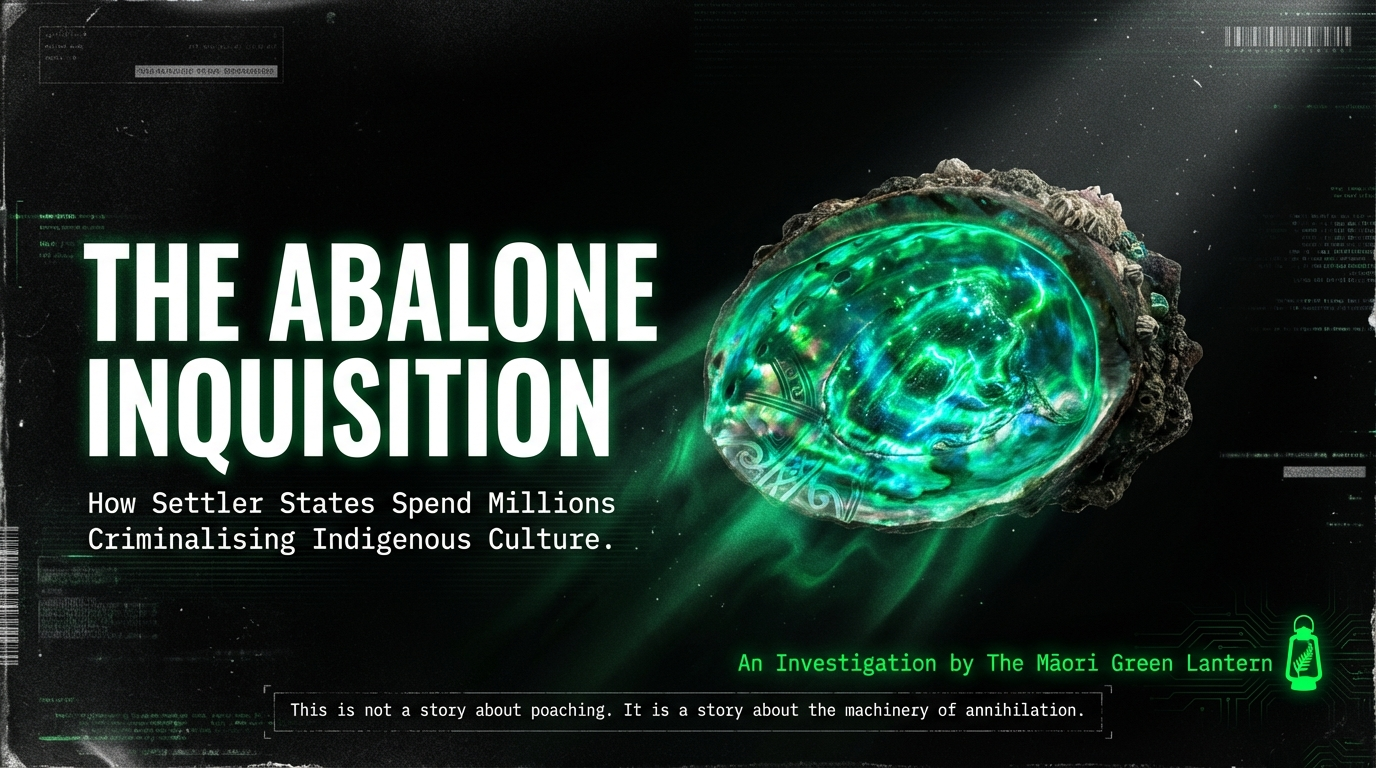
"The Abalone Inquisition: How Settler States Spend Millions Criminalising Indigenous People for Feeding Their Families" - 18 Febuary 2026
When the state burns $1.89 million prosecuting Aboriginal men for gathering the food their ancestors ate for 65,000 years—then drops every charge—the cruelty is not the failure. The cruelty is the point.

Mōrena e te whānau, I hope that you are well on this Wednesday morning as the sun rises in Aotearoa.
They spent six months watching them. Undercover cameras. Police vehicles. Fisheries officers with notebooks and surveillance gear, tracking the movements of seven Aboriginal men along the NSW South Coast as though they were narcotics kingpins, not fathers and uncles gathering pāua from their ancestral waters.
The operation was the biggest prosecution against Indigenous cultural fishers in decades. Seven men, including six native title claimants, charged with trafficking thousands of blacklip abalone. Maximum penalty: ten years in prison. The state threw multi-million dollar resources at criminalising the oldest continuous food-gathering culture on Earth.
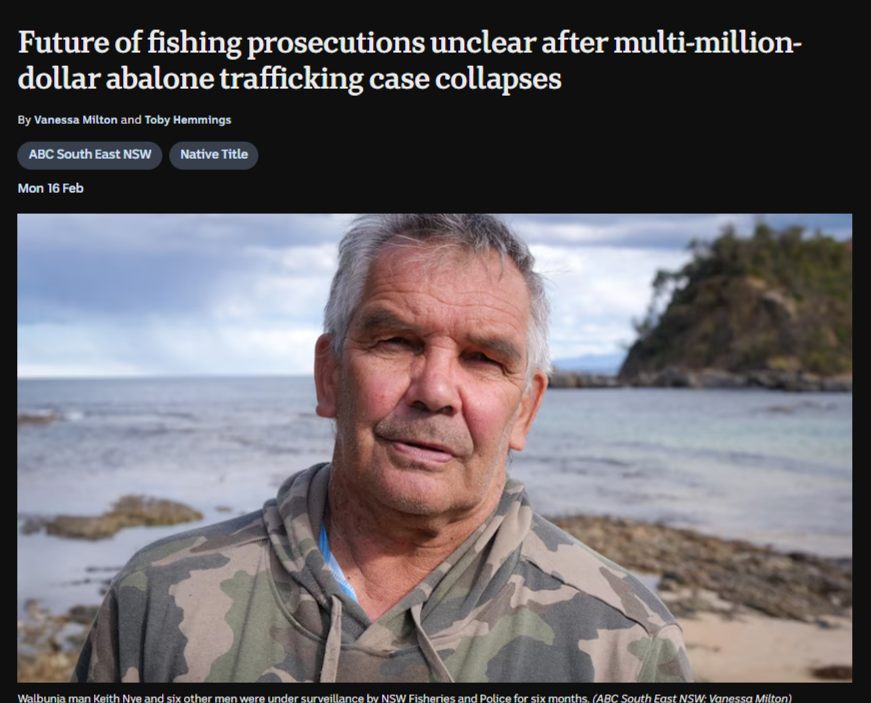
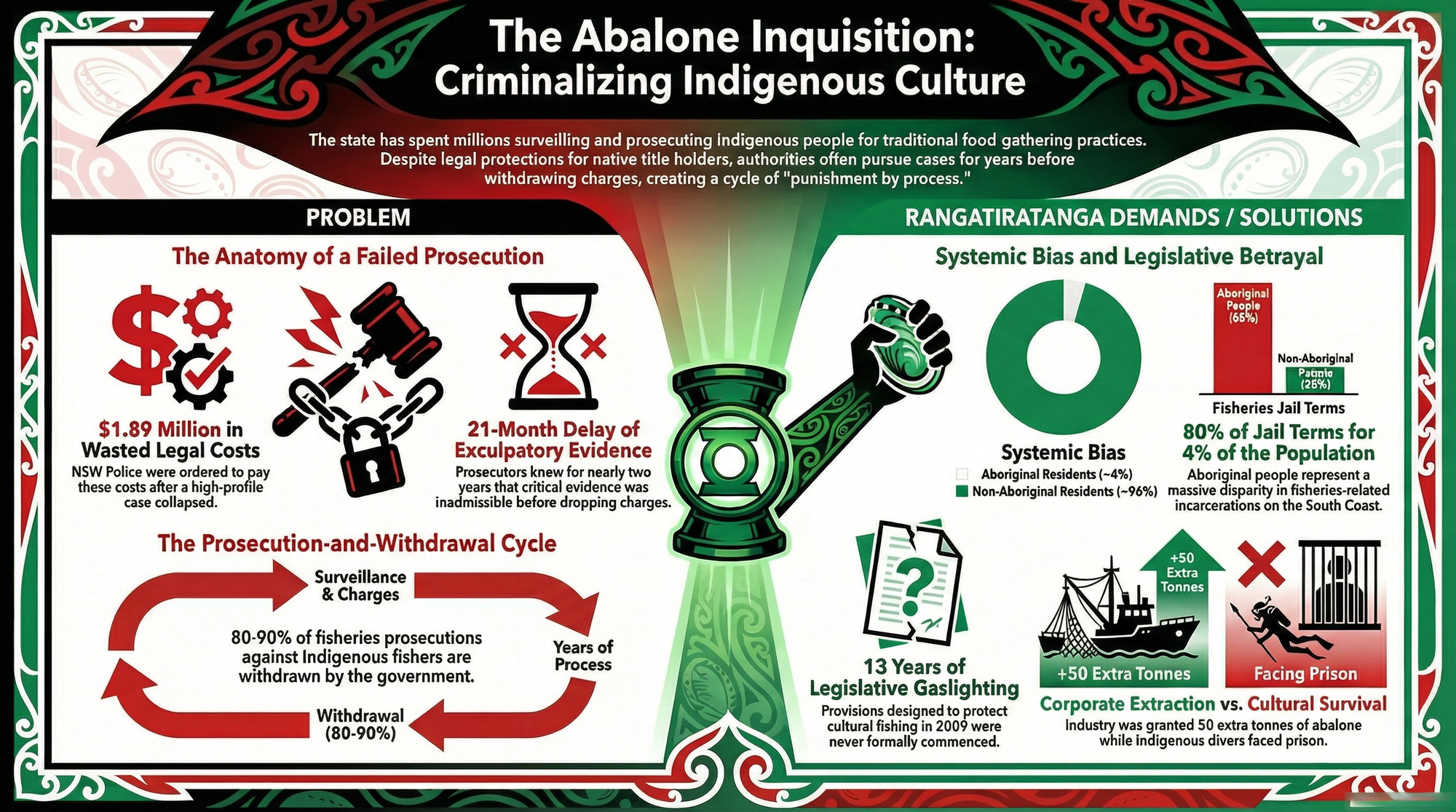
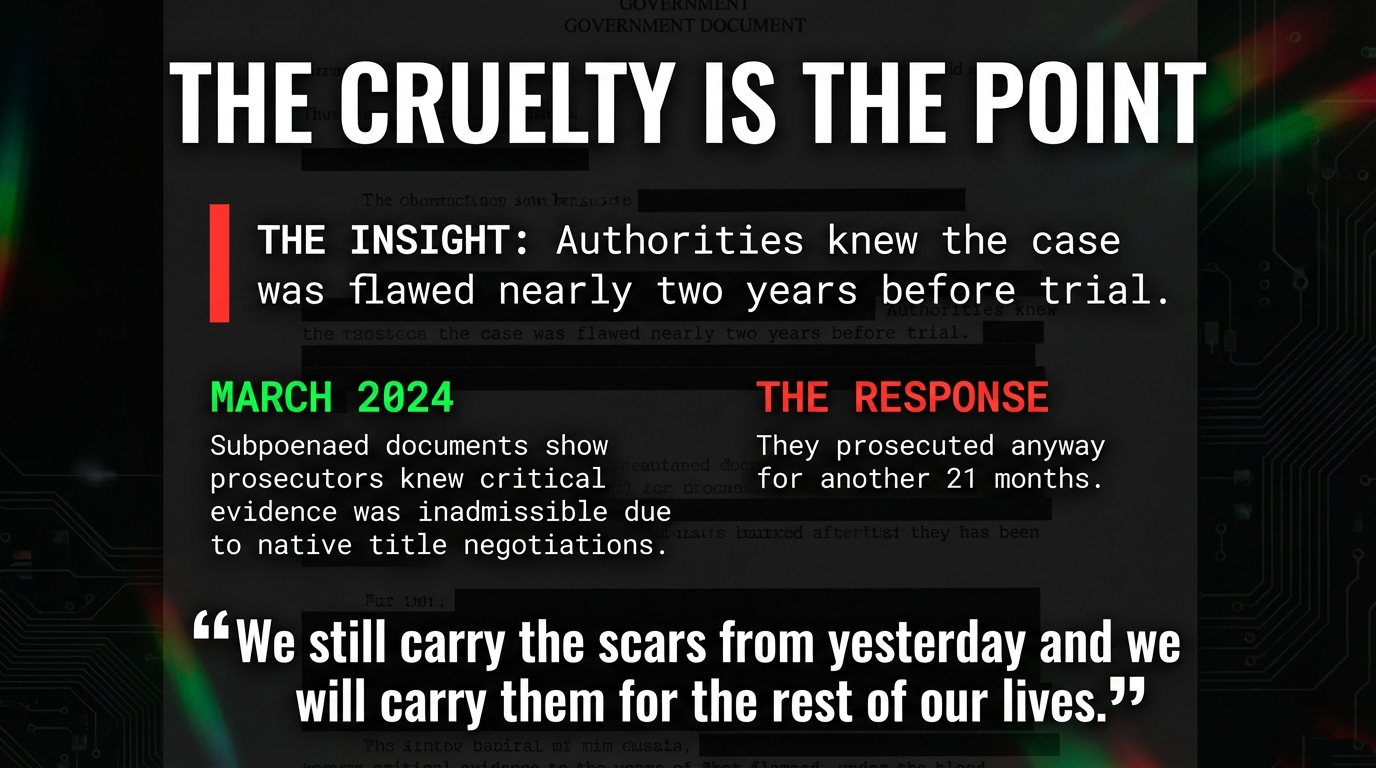
Then, eleven days into the trial at Nowra Court, prosecutors dropped every single charge. NSW Police were ordered to pay $1.89 million in defence costs. Subpoenaed documents revealed that the case had already fallen apart before it even went to trial—prosecutors and fisheries officers knew by March 2024, nearly two years before trial, that critical evidence was inadmissible because it was entangled with confidential native title negotiations. They prosecuted anyway.
Let that sink into your bones. They knew it would fail. They spent taxpayer millions anyway. They dragged seven men through 21 months of court proceedings, the psychological torment of facing a decade behind bars, the destruction of family stability—all for the crime of doing what their ancestors had done for millennia.
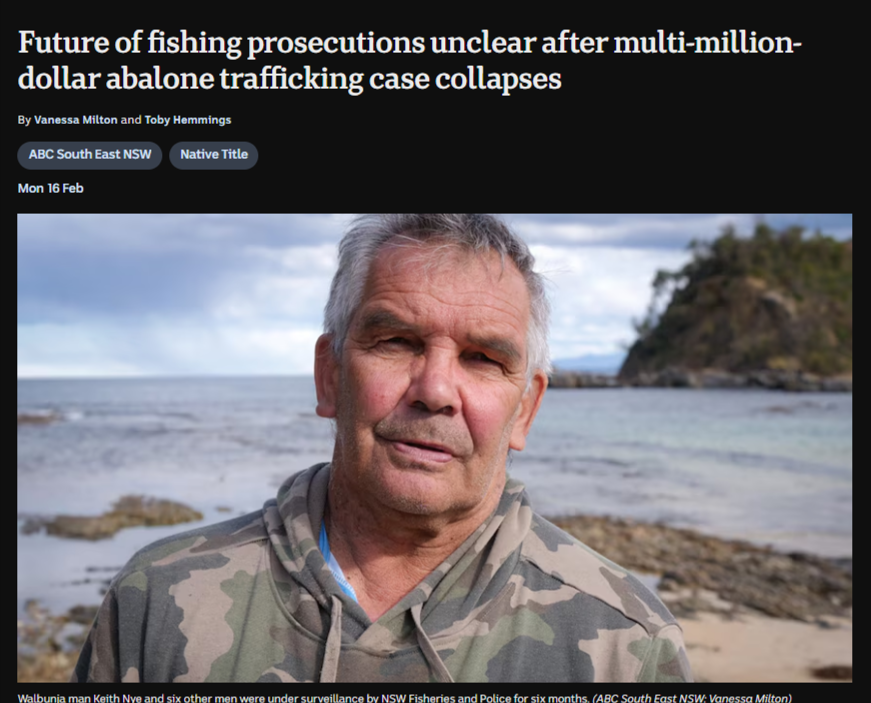
As Walbunja elder Keith Nye, one of the defendants, said with the exhaustion of a man who has spent his life explaining his own existence to the state: "Ultimately, we are no further along. We still bear the emotional scars from this ordeal and will carry them for the rest of our lives."
This is not Australian dysfunction alone. This is the architecture of settler-colonial governance. And for those of us watching from Aotearoa—where the same Luxon-Seymour-Peters coalition is systematically dismantling Māori rights through the Treaty Principles Bill, the Regulatory Standards Bill, and Shane Jones' fishing industry deregulation—the NSW abalone case is not a cautionary tale from across the ditch. It is a mirror.
The Machinery of Cultural Annihilation
The NSW abalone prosecution reveals five hidden connections that expose the global machinery of Indigenous criminalisation:
Connection 1: The 13-Year Legislative Betrayal. In 2009, the NSW Parliament passed Section 21AA of the Fisheries Management Act—a provision specifically designed to protect Aboriginal people from prosecution for cultural fishing. Thirteen years later, as a NSW parliamentary inquiry found in 2022, the section had never been commenced. The committee concluded the NSW Government had "failed to implement the will of parliament". The very people the law was supposed to protect continued to be prosecuted under the very framework the law was supposed to dismantle. This is legislative gaslighting at industrial scale.
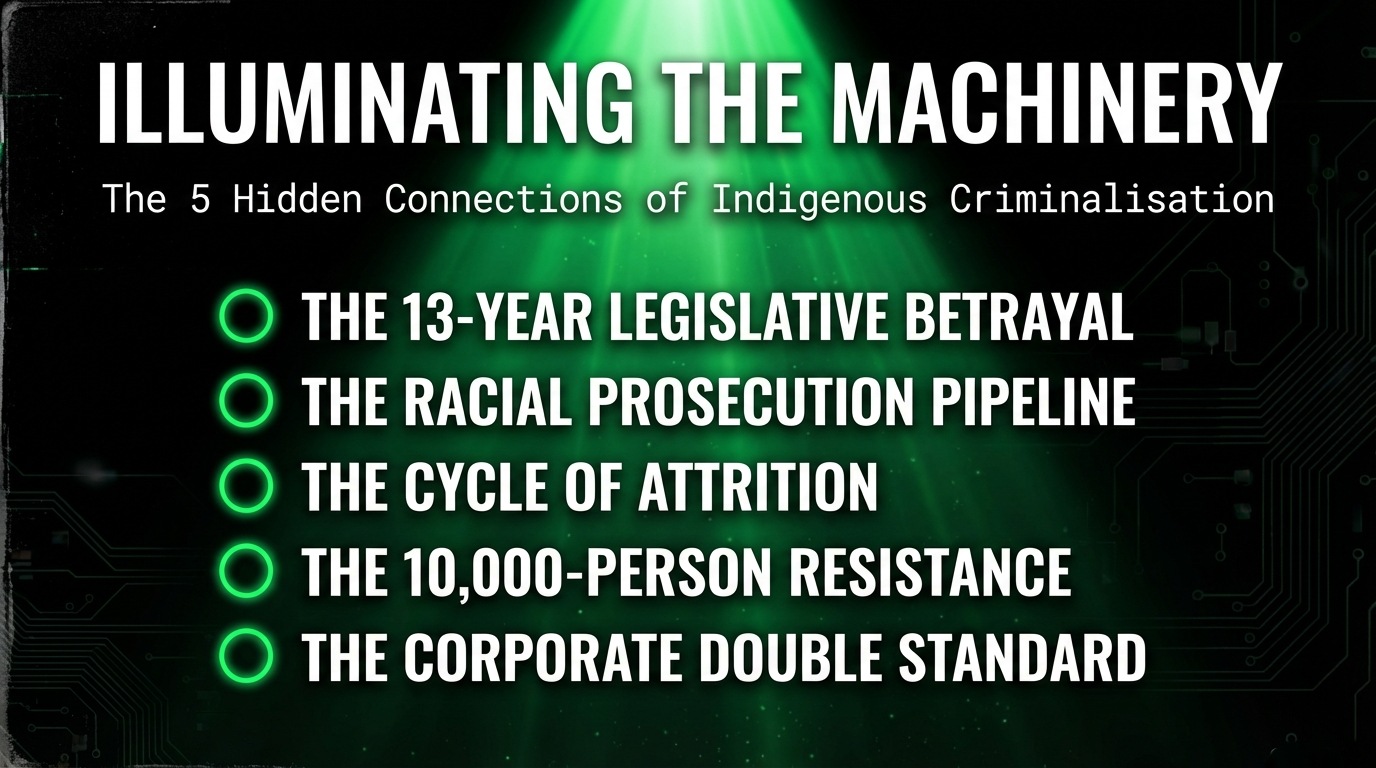
Connection 2: The Racial Prosecution Pipeline. Aboriginal people make up 4% of the NSW South Coast population but account for 80% of jail terms for fisheries offences since 2009. Since the 1992 Mabo decision, 30 Aboriginal people have been incarcerated for fishing in NSW. At least 561 criminal charges were laid against Aboriginal fishers, despite Aboriginal people comprising only 3.4-4.2% of the NSW population. This is not enforcement. It is ethnic targeting masked as environmental management.
Connection 3: The Prosecution-and-Withdrawal Cycle. Danny Chapman, a Walbunja man and NSW Aboriginal Land Council representative, has been involved in around 80 fisheries prosecutions over the last two decades, with 80-90% withdrawn by the government either on court day or shortly before. The state charges, traumatises, bankrupts—then withdraws. No verdict, no acquittal, no precedent set. The punishment is the process. Defence barrister Jalal Razi called the 21-month delay in disclosing exculpatory evidence "unprecedented". Australia's first Indigenous Senior Counsel, Tony McAvoy SC, called the ongoing prosecutions "harassment".
Connection 4: The 10,000-Person Class Action. This failed prosecution sits within a wider storm. In March 2024, native title holders on the NSW south coast filed a class action in the Federal Court alleging the NSW Government breached the Racial Discrimination Act through systematic criminalisation of traditional fishing. More than 10,000 people could be eligible for compensation. Steve Clarke, a Bidjigal-Wodi Wodi-Wandean man from Nowra, captured it: "A lot of our divers have no other criminal records except for diving, and they're being sent to jail. It's normalising jail for our kids."
Connection 5: The Corporate Extraction Double Standard. While Aboriginal men face decades of surveillance and prosecution for gathering cultural food, the NSW Department of Primary Industries in 2021 issued an order allowing the commercial abalone industry to harvest its unused quota—an extra 50 tonnes—while simultaneously jailing Aboriginal fishers for taking a few kilograms. As Yuin elder Wally Stewart asked: "How can they lock our Aboriginal People up on the basis it might impact the stock to take 10 kilograms on one hand, and then allow the industry to harvest an extra 50 tonnes?"
Three Examples for the Western Mind: What This Actually Means
For those raised in settler frameworks, here are three concrete examples that translate the violence of this system into terms no one can dismiss:
Example 1: The Tohunga Suppression Act Playbook—Criminalise, Then Erase
In 1907, the New Zealand Parliament passed the Tohunga Suppression Act, explicitly criminalising Māori traditional healing practices under penalty of fines and up to twelve months imprisonment. The justification was "public health." The reality was cultural annihilation—breaking the chain of intergenerational knowledge transmission by making it illegal to be a tohunga.
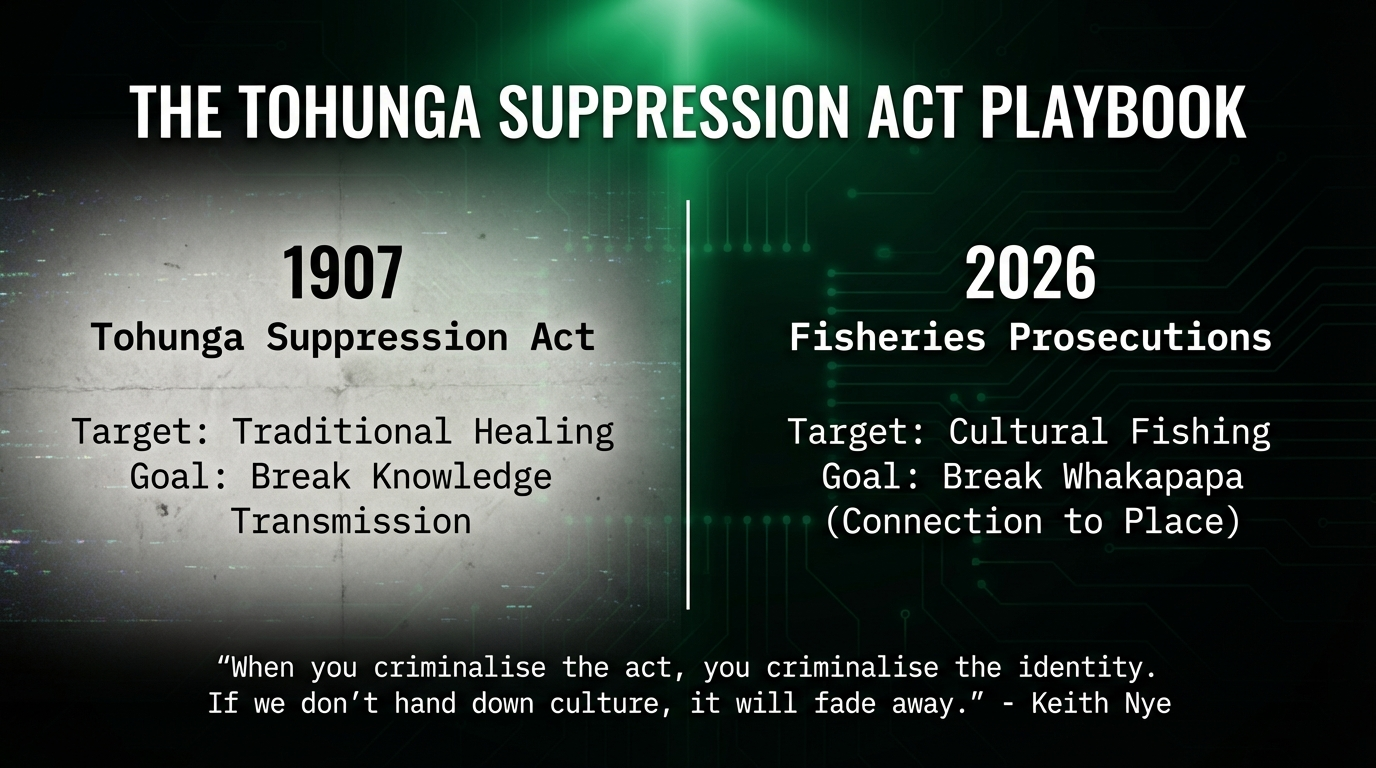
The NSW abalone prosecution is the 2026 maritime equivalent. When the state charges Aboriginal men with "trafficking" abalone they gathered by free-diving in ancestral waters using techniques passed down through 65,000 years of continuous practice, it does not merely punish an act. It criminalises an identity. It tells every Aboriginal child watching: your heritage is a criminal offence.
The quantified harm: Keith Nye warned that if traditional owners stop diving because of prosecution risk, "If we fail to transmit our culture, it will vanish, just as attempts were made to eradicate it in the 1800s and 1900s." Kayeleen Brown, CEO of Katungul Aboriginal medical service, told the NSW inquiry that the "inability to practice our culture" directly caused surging chronic disease, co-morbidities, mental health crises, and drug and alcohol harm across South Coast communities.
The tikanga impact: In te ao Māori, this is the destruction of whakapapa—the genealogical, spiritual, and practical knowledge chain that connects mokopuna (grandchildren) to tūpuna (ancestors) through living practice. When a kaumātua cannot take tamariki to gather kaimoana without risking imprisonment, you don't just lose a fishing trip. You sever the thread of cultural DNA that has held people to place for millennia.
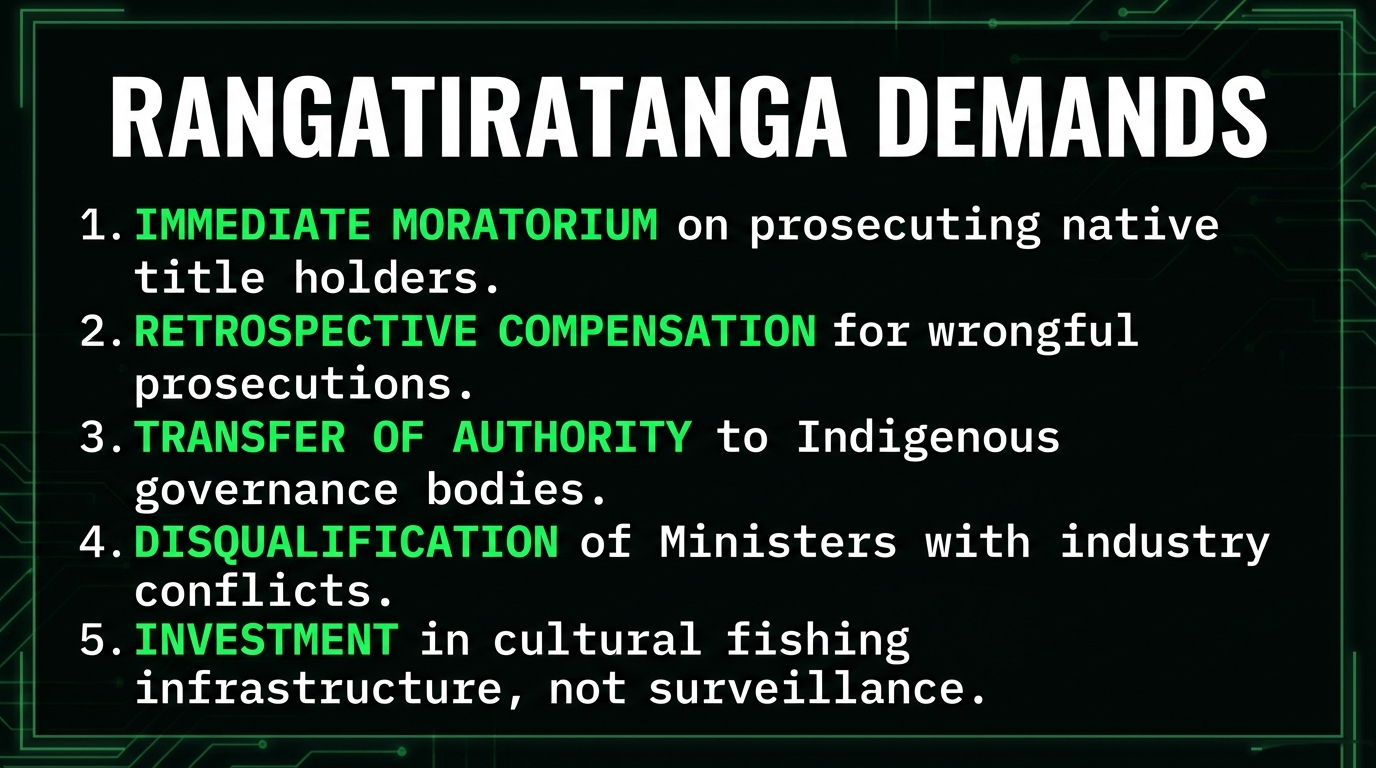
The solution: Immediate moratorium on all prosecutions of native title holders for cultural fishing. Retrospective compensation for all wrongful prosecutions. Transfer of fisheries management authority to Indigenous governance bodies.
Example 2: The $1.89 Million Prosecution vs. The $0 Investment in Cultural Fishing Infrastructure
NSW Police spent millions on a six-month surveillance operation, employed officers from multiple agencies across multiple locations, ran forensic evidence collection for over a year, engaged legal teams, occupied court time for eleven days—then paid $1.89 million in defence costs when the whole thing collapsed. The total cost to taxpayers, including the operation itself, is almost certainly north of $3-5 million.
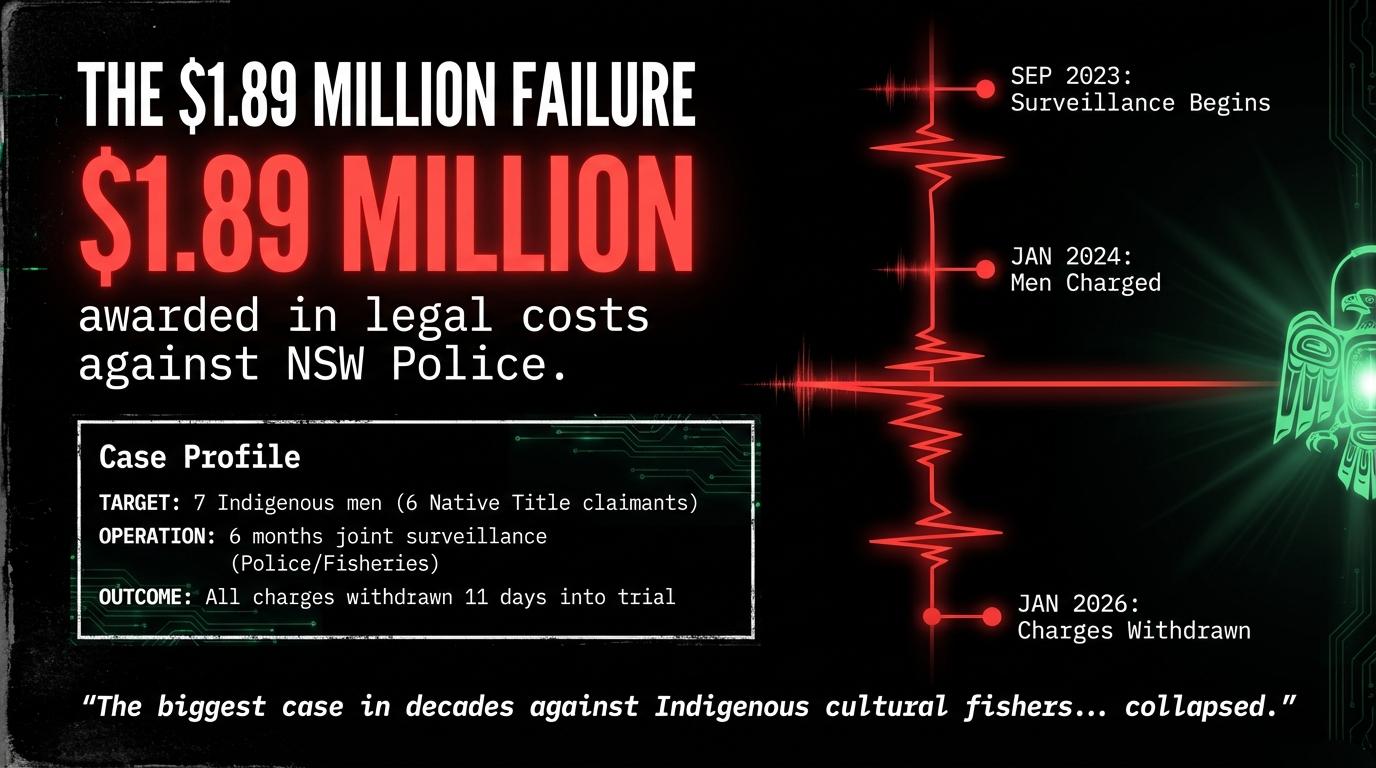
Meanwhile, no state or federal government has invested a single dollar in establishing permanent cultural fishing infrastructure, training, or management systems for South Coast Aboriginal communities. The NSW Aboriginal Land Council has repeatedly called for an immediate moratorium on prosecuting Aboriginal cultural fishers and the development of reforms in genuine partnership with Aboriginal peoples. The response: silence, then more prosecutions.
The quantified harm: $1.89 million paid in legal costs for a case the Crown knew would fail. That same money could have funded: Aboriginal-managed abalone nurseries restoring depleted stocks, cultural fishing management plans developed in partnership with traditional owners, intergenerational knowledge transmission programs, or legal resources for the 10,000+ class action participants. Instead, it was incinerated on state-sponsored harassment.
The tikanga impact: This is the annihilation of manaakitanga—the obligation of those with power and resources to support, uplift, and care for those they have obligations to. The Crown's obligation under both the Treaty of Waitangi and native title law is active protection. Spending millions to prosecute while investing nothing in cultural infrastructure is the exact inversion of manaakitanga. It is mana-stripping.
The solution: Redirect fisheries enforcement budgets toward co-designed cultural fishing management plans. Establish Aboriginal-managed marine stewardship zones with dedicated restoration funding. Create a reparations fund from fisheries revenue for communities subjected to wrongful prosecution.
Example 3: The NZ Parallel—Shane Jones' $100,000 Fishing Industry Capture
Across the Tasman, the same machinery operates in real time. Shane Jones, New Zealand's Minister for Oceans and Fisheries, received over $100,000 in fishing industry donations before announcing the "most significant Fisheries Act reforms in decades"—reforms that allow higher catch limits, exempt camera footage from the Official Information Act, remove the requirement to land all catch (legalising dumping), and restrict who can challenge fisheries decisions in court. 95% of public submissions opposed these reforms. Cabinet approved them anyway.
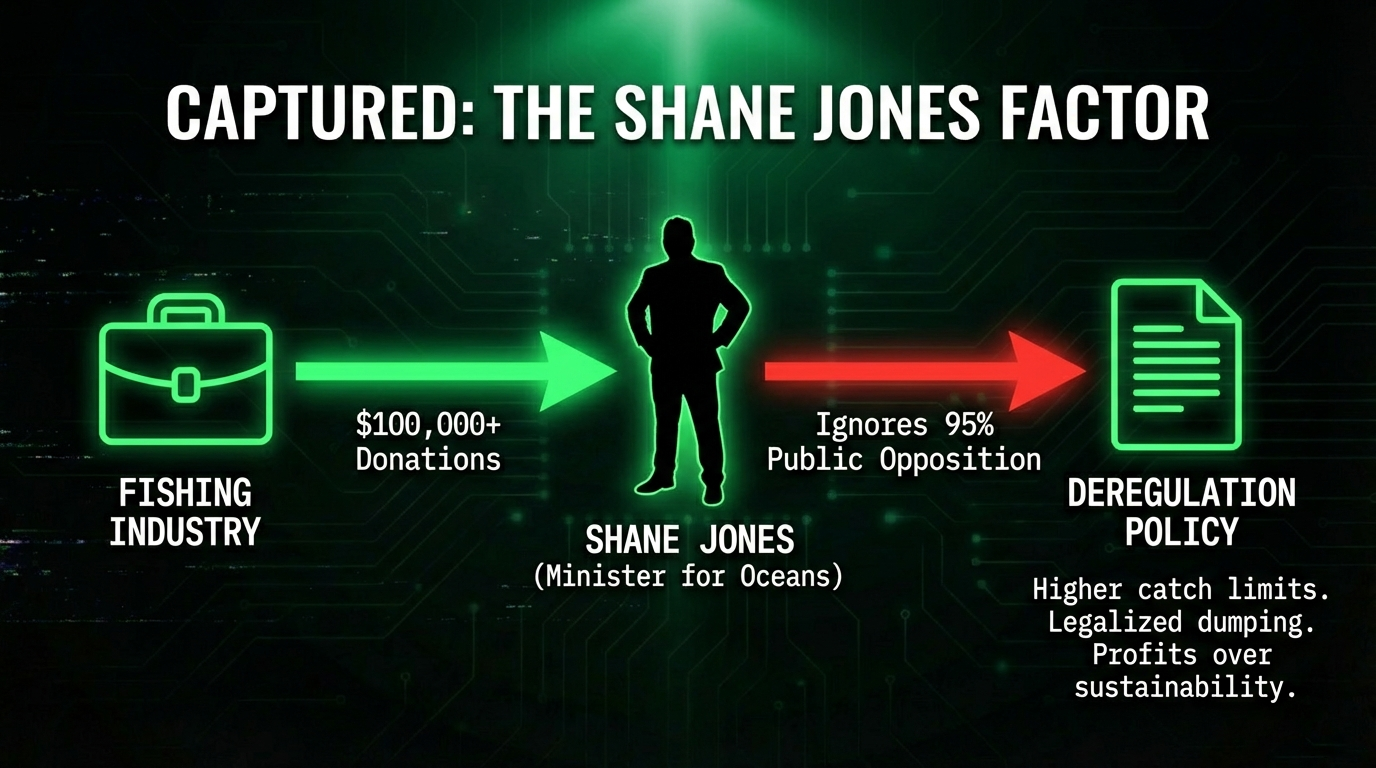
Simultaneously, the High Court found in 2025 that the Crown has been breaching the 1992 Māori Fisheries Settlement for over 20 years by appropriating Māori fishing quota without compensation through the 28N rights mechanism. The Crown made promises. The Crown broke promises. The Crown kept breaking promises for two decades while officials watched.
The quantified harm: In Aotearoa, three corporate entities (Sealord, Sanford, Talley's) control 57% of commercial fishing quota, while 795 small operators share 6%. The Regulatory Standards Bill, passed in November 2025, embeds property rights into constitutional framework—meaning future catch reductions to protect collapsing fish stocks could trigger compensation claims from quota holders. The public would pay corporations to stop overfishing.
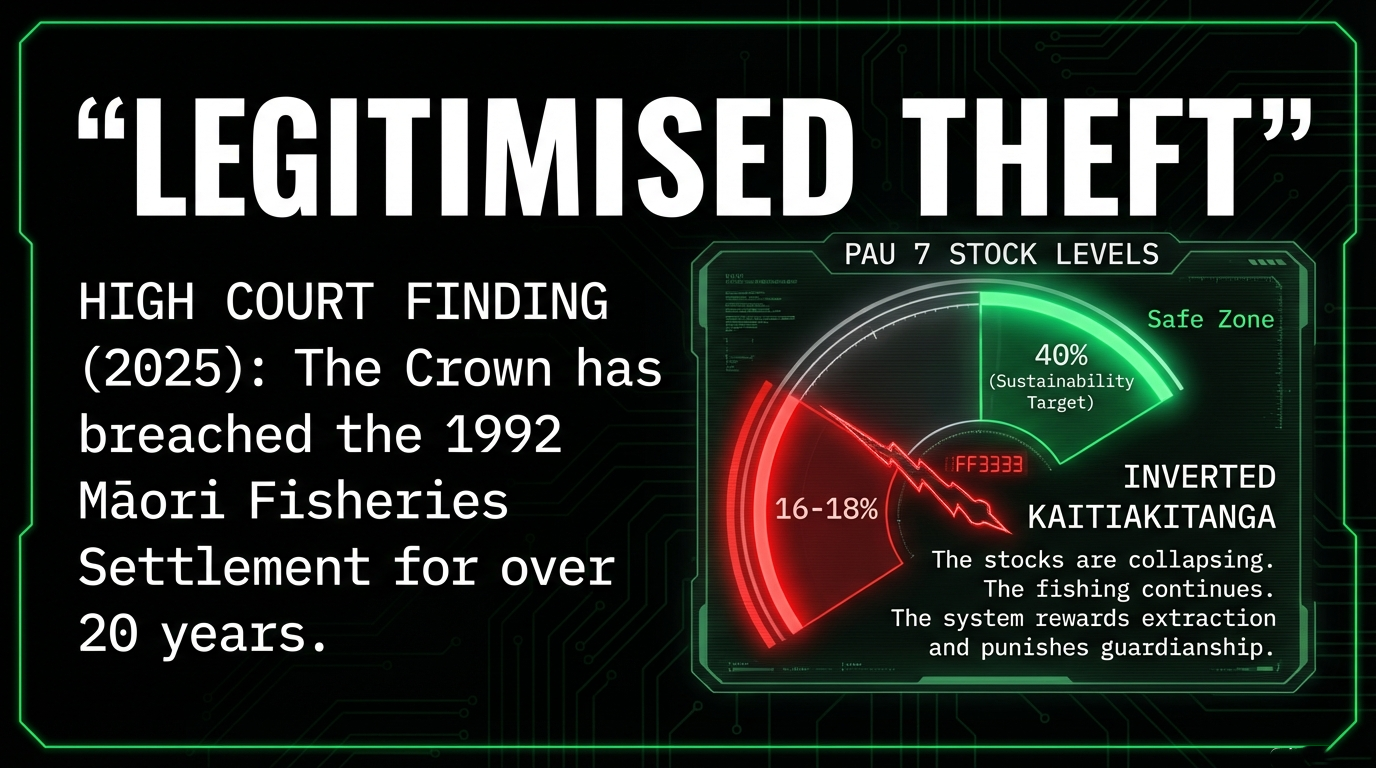
The tikanga impact: This is the destruction of kaitiakitanga—the intergenerational obligation to protect resources for mokopuna. When Fisheries New Zealand defines "sustainability" as maintaining stocks at 40% of unfished biomass, and PAU 7 pāua sits at 16-18% and fishing continues, kaitiakitanga is not merely ignored—it is inverted. The system rewards extraction and punishes guardianship.
The solution: Disqualify ministers receiving industry donations from fisheries decisions. Restore full Māori co-governance of fisheries under Treaty obligations. Permanently retire quota in collapsed fisheries rather than "voluntary shelving." Restore judicial review pathways for iwi and environmental groups.
The Whakapapa of Criminalisation: From Suppression Act to Surveillance State
The through-line is unbroken. From the Tohunga Suppression Act 1907 to the Foreshore and Seabed Act 2004, from the Treaty Principles Bill 2024 to Shane Jones' industry-captured fisheries reforms—the settler state criminalises Indigenous cultural practice, then reframes criminalisation as "equal treatment under law."
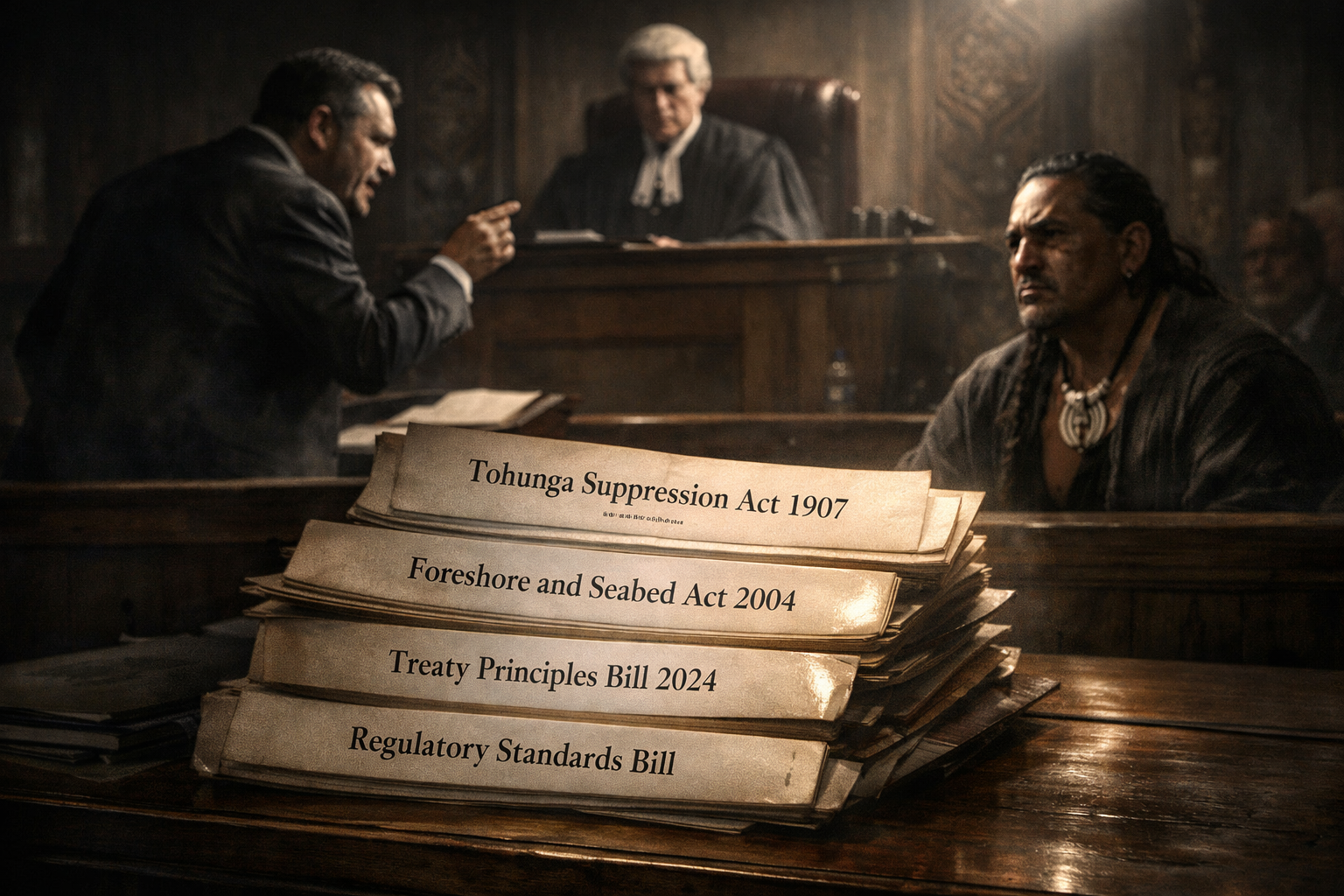
David Seymour's Treaty Principles Bill, which the Waitangi Tribunal described as the "worst, most comprehensive breach of the Treaty/te Tiriti in modern times" before it was voted down in April 2025, was built on the same logic as the NSW prosecutions: redefine Indigenous rights as "special privilege," then use the machinery of the state to destroy them.
Luxon's coalition has not abandoned this agenda. The Regulatory Standards Bill passed its third reading in November 2025. Te Pāti Māori co-leader recalled the hikoi and spoke of "righteous, burning anger". Māori imprisonment rates remain at over 50% of the prison population despite being 15% of the population. The criminalisation of Māori dissent—from the Suppression of Rebellion Act 1863 to the photographing of Māori and Pasifika youth by police in 2021—is the same machine with different gears.
When former Attorney-General Chris Finlayson—a National MP—calls the government's marine and coastal rights legislation "foolish and extremely harmful to race relations", and the Waitangi Tribunal finds the Crown dismissed official advice, failed to consult Māori, and breached the principle of active protection, you are not witnessing incompetence. You are witnessing design.
Previously on The Māori Green Lantern
This essay builds on the whakapapa of power traced in prior investigations:
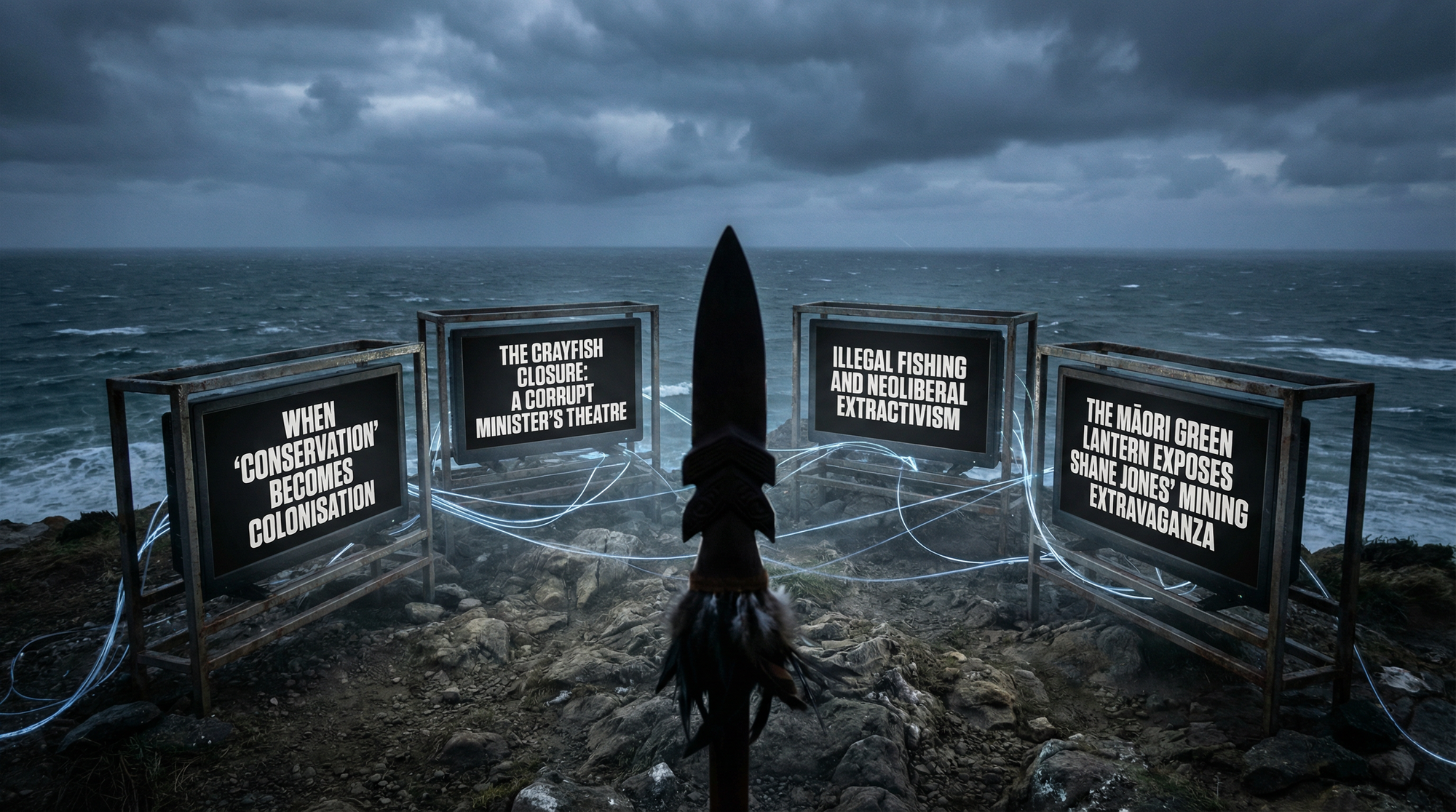
- "When 'Conservation' Becomes Colonisation" exposed how three corporate entities control 57% of fishing quota while iwi crowdfund pāua restoration, and how Shane Jones' reforms serve industry donors over ecological survival.
- "The Crayfish Closure: A Corrupt Minister's Theatre" revealed the $100,000+ money trail from fishing industry to Jones, the court-forced nature of the Northland crayfish closure, and how one headline of environmental action conceals systematic deregulation.
- "Illegal Fishing and Neoliberal Extractivism" documented the 40% increase in marine reserve poaching over five years while DOC budgets were gutted, and connected the Marine Reserves Act 1971's Treaty erasure to present-day enforcement failure.
- "The Māori Green Lantern Exposes Shane Jones' Mining Extravaganza" traced how Jones holds Resources, Regional Development, and Oceans and Fisheries portfolios—the exact levers needed to fast-track extraction while controlling marine policy.
Each essay is a taiaha strike at the same whakapapa of extraction. Each names names. Each follows the money. Because rangatiratanga demands nothing less.
Implications: Who Benefits, Who Bleeds
Who benefits from criminalising Indigenous fishers:
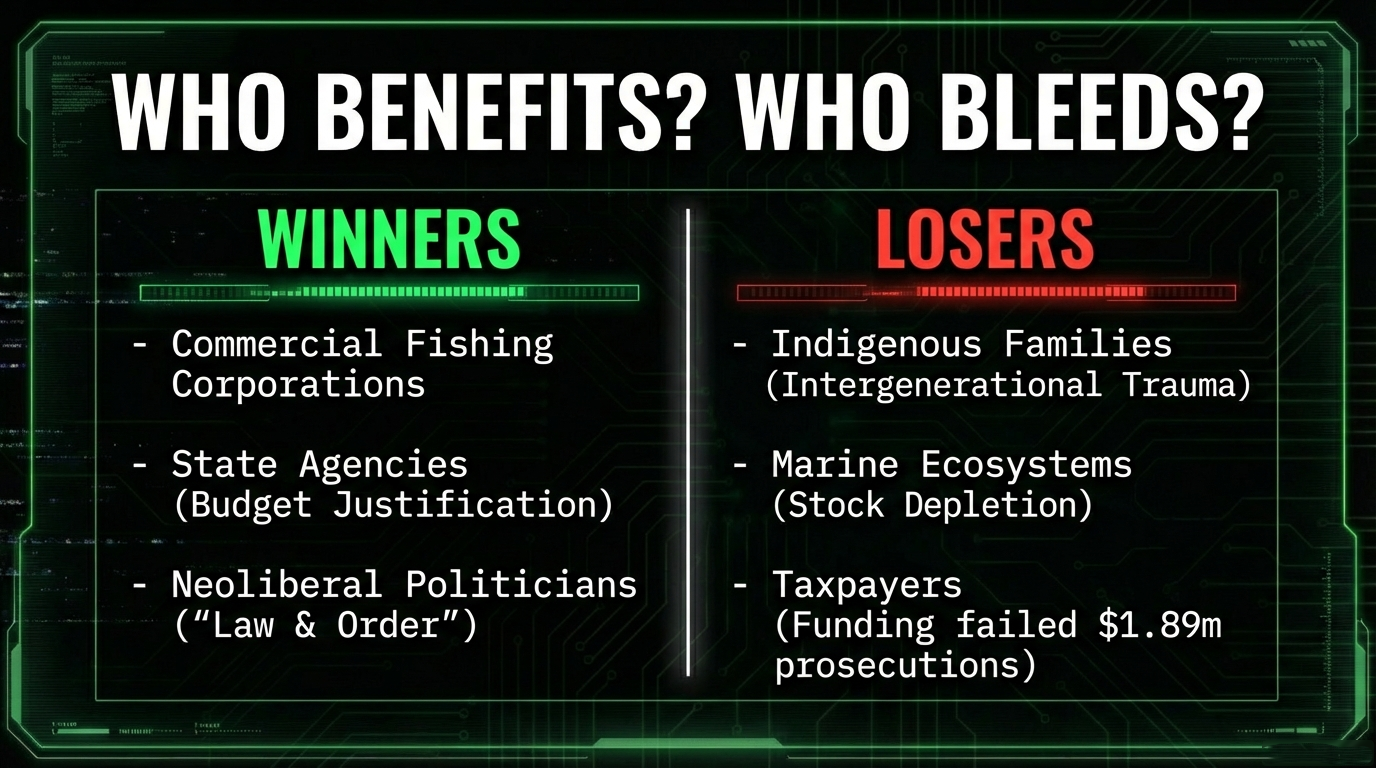
- State fisheries agencies justify budgets through prosecution statistics
- Commercial fishing corporations eliminate competition from customary fishers exercising native title rights
- Neoliberal politicians weaponise "law and order" rhetoric against Indigenous communities
- The surveillance-prosecution complex (police, fisheries officers, prosecutors) maintains institutional relevance
Who bleeds:
- Indigenous families torn apart by prosecution, incarceration, fines, and intergenerational trauma
- Cultural knowledge systems severed when elders cannot teach mokopuna to fish without risking imprisonment
- Community health: chronic disease, mental health crises, and substance abuse linked directly to denial of cultural practice
- Marine ecosystems degraded by commercial overfishing while Indigenous management systems are suppressed
- Taxpayers funding multi-million dollar prosecutions that collapse, while cultural fishing infrastructure receives nothing
Rangatiratanga Demands
The state does not criminalise Indigenous fishers because it cannot distinguish cultural fishing from poaching. It criminalises them because Indigenous self-governance over marine resources threatens the extractive architecture that enriches corporate donors and justifies colonial institutions.
Keith Nye knows this. Danny Chapman, who has watched 80 prosecutions collapse in 20 years, knows this. Every Aboriginal diver on the NSW South Coast who risks prison to feed their family knows this.
And every Māori watcher across the Tasman—watching Shane Jones pocket industry donations while gutting fisheries oversight, watching Luxon admit a "trust gap with Māori" while his coalition systematically dismantles Treaty rights, watching David Seymour's Regulatory Standards Bill embed corporate property rights above environmental protection—knows this machine runs on both sides of the Tasman.
The abalone is not the crime. The abalone was never the crime.
The crime is the state that spends millions destroying families for gathering food from ancestral waters—then pretends it was about conservation.
Ka whawhai tonu mātou. Ake ake ake.
The taiaha strikes where the Ring illuminates.
Koha Tautoko — Support the Mahi That Names the Names
Every koha signals that whānau are ready to fund the investigations the state, the media, and the corporations refuse to publish. It signals that rangatiratanga includes the power to fund our own truth-tellers—the ones who trace the money from fishing industry donors to ministers' offices, who connect the NSW prosecution pipeline to the Aotearoa deregulation playbook, who name the names behind every legislative betrayal.
Kia kaha, whānau. Stay vigilant. Stay connected. And if you are able, consider a koha to ensure this taiaha keeps striking.
If you are unable to koha, no worries! Subscribe or Follow The Māori Green Lantern on Substack, kōrero and share with your whānau and friends—that is koha in itself.
Three pathways exist:
For those who wish to support this mahi directly with a koha (voluntary contribution), please visit the Koha platform:
Koha — Support - https://app.koha.kiwi/events/the-maori-green-lantern-fighting-misinformation-and-disinformation-ivor-jones
For those who wish to receive essays directly and support through subscription:
Subscribe to the Māori Green Lantern - https://the-maori-green-lantern.ghost.io/#/portal/support
For those who prefer direct bank transfer, account details are: HTDM, account number 03-1546-0415173-000.

Ivor Jones The Māori Green Lantern Fighting Misinformation And Disinformation From The Far Right
Research Transparency: This essay was researched on 17 February 2026 using search_web and get_url_content tools across ABC News, RNZ, Te Ara, Oxfam Australia, ANU Centre for Aboriginal Economic Policy Research, NSW Parliament, NSW Aboriginal Land Council, NSW Council for Civil Liberties, community law centres, academic repositories, and prior Māori Green Lantern investigations. All citations link to verified live sources. Claims without available verification are noted.