"The "Bad Advice" Excuse - Chris Hipkins Dodges Responsibility for Labour's Emergency Housing Disaster" - 30 June 2025
Hipkins Tries to Rewrite History While Rotorua Still Suffers
Mōrena koutou katoa,
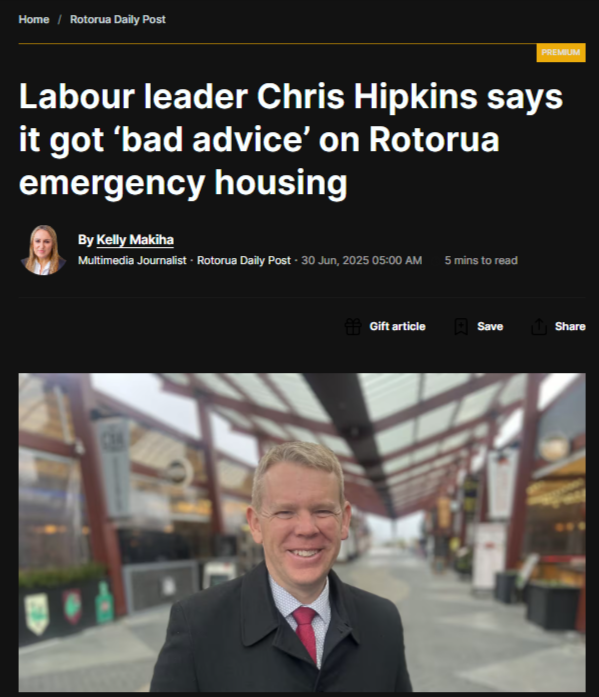
Chris Hipkins claims Labour received "bad advice" about emergency housing in Rotorua. This is the same Chris Hipkins who was part of a government that spent over a billion dollars putting people in motels[1] while turning a blind eye to the obvious damage being done to vulnerable communities and the town's reputation. Now he wants us to believe they were simply misled by their own agencies rather than admit they prioritised quick fixes over proper solutions that would serve tangata whenua and local communities.
Background: When Political Convenience Trumped Proper Planning
The emergency housing crisis in Rotorua represents one of the clearest examples of how neoliberal policy-making fails Māori and working-class communities. What began as a COVID-19 response quickly became a permanent arrangement that devastated Rotorua's reputation as a tourism destination[2] while creating unsafe conditions for the most vulnerable people in society.
The scale of this policy disaster cannot be understated. At its peak, 62 motels and hotels were being used for emergency housing in Rotorua[3], with the government spending more than a million dollars per day[4] on what was supposed to be temporary accommodation. This represents the triumph of market-based solutions over proper state housing provision that could have provided dignity and stability for whānau in need.
The Excuse-Making Begins
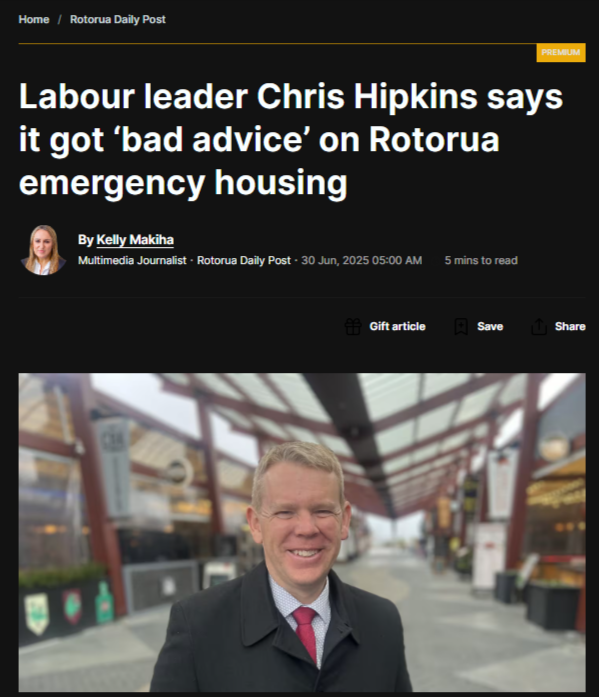
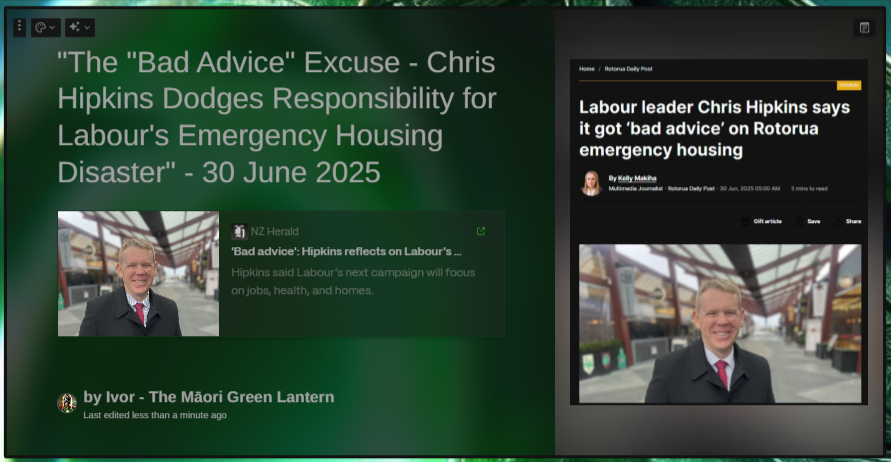
In his recent interview with the Rotorua Daily Post, Hipkins attempts to deflect responsibility by claiming Labour received "bad advice" from agencies that out-of-town homeless weren't flocking to Rotorua[5]. This excuse falls apart under the slightest scrutiny. Government agencies don't operate in a vacuum - they respond to the political direction set by ministers and the broader ideological framework within which they work.
The reality is that Rotorua was the only city where contracted emergency housing was provided through 13 motels whose units were used exclusively by the Ministry of Housing[6]. This concentration wasn't an accident or the result of bad advice - it was the predictable outcome of a government that chose to outsource social responsibility to private motel owners rather than build proper state housing.
Hipkins also admits that Labour built houses at a faster rate than any other government but concedes it was not quick enough for Rotorua[5]. This reveals the fundamental flaw in Labour's approach - treating housing as a market commodity rather than a human right that requires massive state intervention to ensure everyone has access to warm, dry, stable homes.
Unpacking the Neoliberal Housing Disaster
The Commodification of Human Shelter
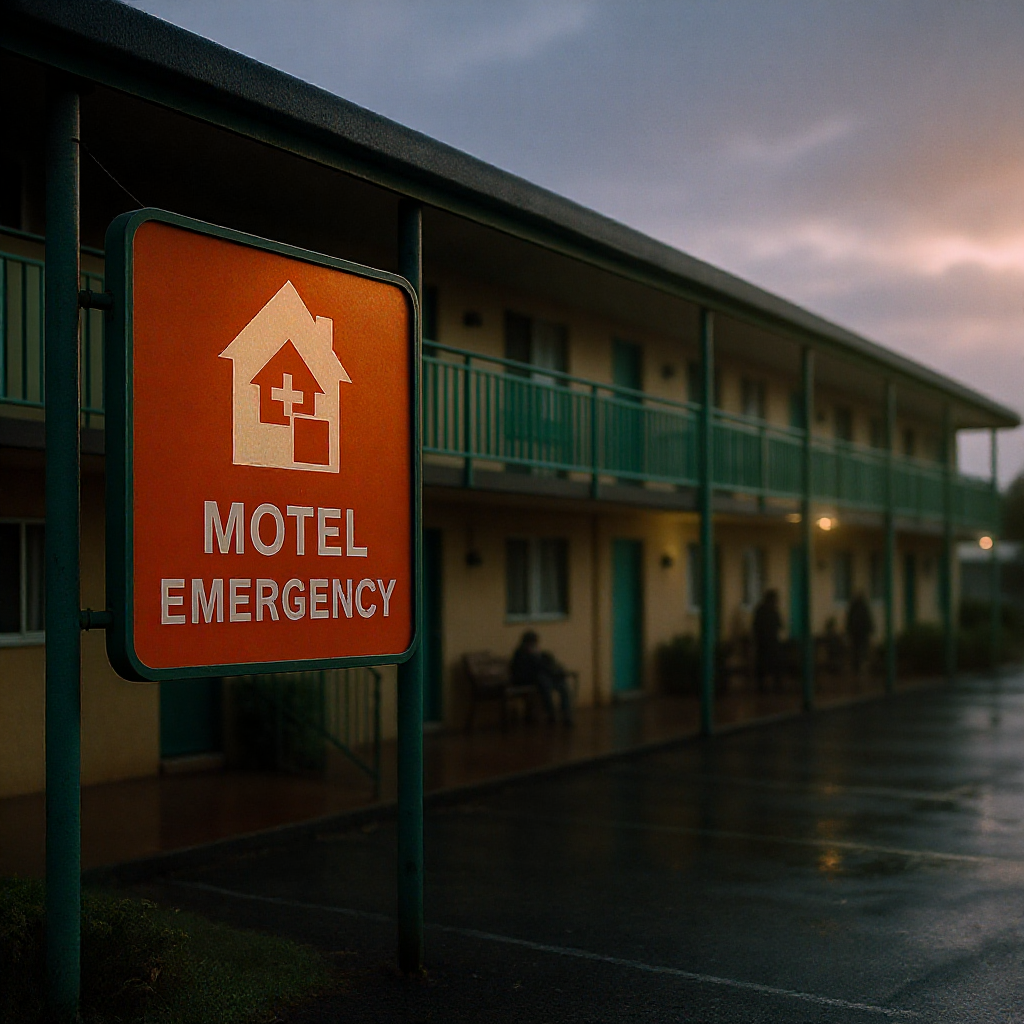
The emergency housing model represents the ultimate expression of neoliberal thinking about social problems. Rather than building the state housing that was desperately needed, Labour chose to pump taxpayer money into private motels. This approach created perverse incentives where motel owners made millions[1] while families lived in substandard accommodation that was never designed for long-term housing.
The average stay in emergency housing increased from three weeks in 2018 to more than 20 weeks[7] under Labour's watch. Some residents lived in motels for two years or longer[7]. This isn't a housing solution - it's a wealth transfer from taxpayers to property owners that perpetuates homelessness rather than solving it.
Māori Bear the Brunt of Housing Failure
The housing crisis disproportionately impacts Māori, who make up 33.4 percent of those who are severely housing deprived and more than half of the applicants on the public housing waitlist[8]. This disparity reflects centuries of colonial policy designed to separate Māori from their land and wealth.
Historical housing policies explicitly excluded Māori from mainstream state housing until the 1940s, with separate and more limited provision for Māori housing[9]. Even when Māori gained access to state housing, they were subject to discriminatory "pepper-potting" policies[10] designed to force assimilation rather than support Māori cultural values and whānau structures.
The Rotorua emergency housing crisis must be understood within this broader context of systematic housing discrimination. Māori homeownership rates have fallen to just 50% compared to the national rate of 65%[11], reflecting ongoing barriers to accessing finance and suitable housing options.
The Tourism Red Herring
Hipkins and his defenders often point to the negative impact on Rotorua's tourism industry as if this justifies the emergency housing policy. This argument reveals the racist priorities that underpin neoliberal policy-making - concern for tourist comfort trumps the basic human rights of predominantly Māori and working-class whānau who needed housing.
The real scandal isn't that emergency housing affected tourism - it's that the government chose a housing model that was guaranteed to create unsafe and unstable conditions for vulnerable people. Reports of deliberately-lit fires, wilful damage, burglaries, stabbing, and domestic disturbances[12] weren't caused by the people needing housing - they were the predictable result of concentrating people with complex needs in inappropriate accommodation without adequate support services.
The "Bad Advice" Defence Falls Apart
Hipkins' claim that agencies gave "bad advice" about out-of-town homeless coming to Rotorua is contradicted by clear evidence that the Government may have paid for out-of-town people to move to Rotorua for emergency housing[13]. Ministry of Social Development grants allowed people to relocate to access emergency housing, with the ministry admitting they "may support them with costs for transportation when they are eligible for support."
This isn't bad advice - it's the natural consequence of creating a centralised emergency housing hub without considering the impact on local communities or the people being housed. The policy was designed in Wellington offices by people who would never have to live with the consequences of their decisions.
The Deeper Pattern of Colonial Policy-Making
The emergency housing disaster reflects deeper patterns of colonial policy-making that treat Māori and working-class communities as problems to be managed rather than people with rights to be upheld. The same government that could spend over a billion dollars on motels[1] consistently claimed there wasn't enough money for the massive state house building programme that could have prevented the crisis.
This pattern repeats throughout New Zealand's history - from the Native Land Court's destruction of collective ownership to the neoliberal housing policies that created today's crisis. Each time, the solution involves transferring wealth and power away from Māori and working people toward private interests who profit from social problems.
The government's approach to Rotorua also reflects the ongoing colonial attitude that sees provincial towns as suitable dumping grounds for problems that might embarrass the government if they were visible in major cities. The concentration of emergency housing in Rotorua wasn't accidental - it reflected a calculated decision to hide the housing crisis away from media and political attention in the main centres.
Implications: What This Means for Housing Justice
The Failure of Market-Based Solutions
The Rotorua emergency housing disaster proves that market-based solutions cannot solve the housing crisis. When governments rely on private providers rather than building public housing, they create perverse incentives that perpetuate rather than solve homelessness. The billion dollars spent on motels could have built thousands of state houses that would have provided permanent solutions rather than temporary band-aids.
The Need for Truth-Telling About Policy Failures
Hipkins' attempt to blame "bad advice" rather than acknowledge fundamental flaws in Labour's approach represents the kind of political dishonesty that prevents real solutions. Until politicians admit that their ideological commitment to market solutions created this crisis, they cannot be trusted to fix it.
The housing crisis requires massive state intervention to build public housing on a scale not seen since the 1940s. This means abandoning neoliberal orthodoxy about fiscal restraint and market efficiency in favour of policies that prioritise human needs over private profit.
Impact on Māori Housing Rights
The Rotorua crisis has particular implications for Māori housing rights, which remain largely unrecognised despite clear Treaty obligations. The government's failure to address Māori housing needs reflects the ongoing refusal to acknowledge that housing is a taonga that must be protected under Te Tiriti o Waitangi.
Real progress requires not just more houses but a fundamental shift toward supporting Māori-led housing solutions[14] that reflect Māori values and support whānau structures. This means moving beyond the individualistic homeownership model toward collective approaches that recognise Māori relationships to land and community.
Time for Accountability, Not Excuses
Chris Hipkins' "bad advice" excuse represents everything wrong with contemporary politics - the refusal to take responsibility for policy failures that cause real harm to vulnerable communities. The Rotorua emergency housing disaster wasn't caused by bureaucratic incompetence but by ideological choices that prioritised private profit over public good.
The billion dollars wasted on motels represents money stolen from the proper solution - a massive state house building programme that could have housed everyone with dignity and stability. Instead, Labour chose to subsidise private motel owners while forcing whānau to live in substandard accommodation that was never designed for families.
This crisis will not be solved by better advice or minor policy tweaks. It requires a fundamental rejection of the neoliberal orthodoxy that created the housing crisis in the first place. Housing is a human right that must be guaranteed by the state, not left to the mercy of private markets that profit from artificial scarcity.
The people of Rotorua deserve better than excuses from politicians who created this mess. They deserve truth-telling about how we got here and genuine commitment to the massive public investment needed to ensure everyone has access to warm, dry, stable housing that supports their wellbeing and cultural identity.
Readers who find value in exposing these kinds of political failures and holding power accountable might consider supporting this mahi with a koha to HTDM: 03-1546-0415173-000. The MGL understands these are tough economic times for whānau, so please only contribute if you have capacity and wish to support independent analysis that challenges the colonial status quo.
Kia kaha, kia māia, kia mana motuhake.