“The Bourbon Street Bootlickers and Their Government Lackeys” - 20 August 2025
Exposing the Sickening Alliance Between Big Alcohol and Our So-Called Health Officials
Kia ora, this is Ivor Jones, your Māori Green Lantern, and I am absolutely seething.
What I'm about to expose will make your blood boil - a web of corruption so brazen, so utterly contemptuous of our people's wellbeing, that it reads like something from the worst days of colonial exploitation. The Ministry of Health, the very institution tasked with protecting our health, has been caught red-handed in bed with the alcohol industry, literally handing over the keys to policies meant to save our babies from brain damage.
This is not just bureaucratic incompetence - this is active betrayal of te tangata whenua, our tamariki, and every whānau destroyed by alcohol harm. The evidence, dragged kicking and screaming from these officials through an Ombudsman ruling, reveals a system so corrupted by industry influence that it makes a mockery of any pretense of public health protection.
Background - The Whakapapa of This Betrayal
To understand the full depravity of what's been exposed, we need to understand what should have been happening. New Zealand has some of the most harmful drinking patterns globally, with Māori bearing a disproportionate burden of alcohol-related death and disease. Māori are more than twice as likely to die from alcohol-related causes compared to non-Māori, and Māori women have significantly higher rates of drinking during pregnancy, leading to higher estimated rates of Fetal Alcohol Spectrum Disorder.
FASD is a completely preventable disability that affects an estimated 1800 to 3000 babies born each year in New Zealand. For Māori, FASD prevalence is significantly higher than for other ethnic groups, representing a crushing burden that costs our economy $4.8 billion annually and devastates whānau for generations.
The World Health Organization's SAFER initiatives provide clear, evidence-based strategies to reduce alcohol harm: Strengthen restrictions on alcohol availability, Advance drink-driving countermeasures, Facilitate access to treatment, Enforce advertising bans, and Raise prices through taxation. These aren't radical propositions - they're basic public health measures that save lives.
The Scope of This Systematic Betrayal
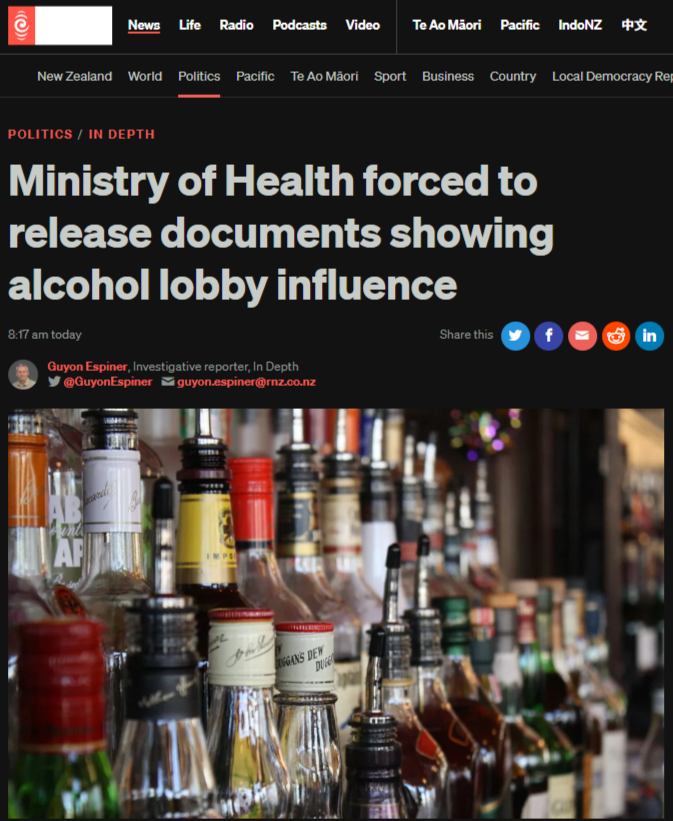
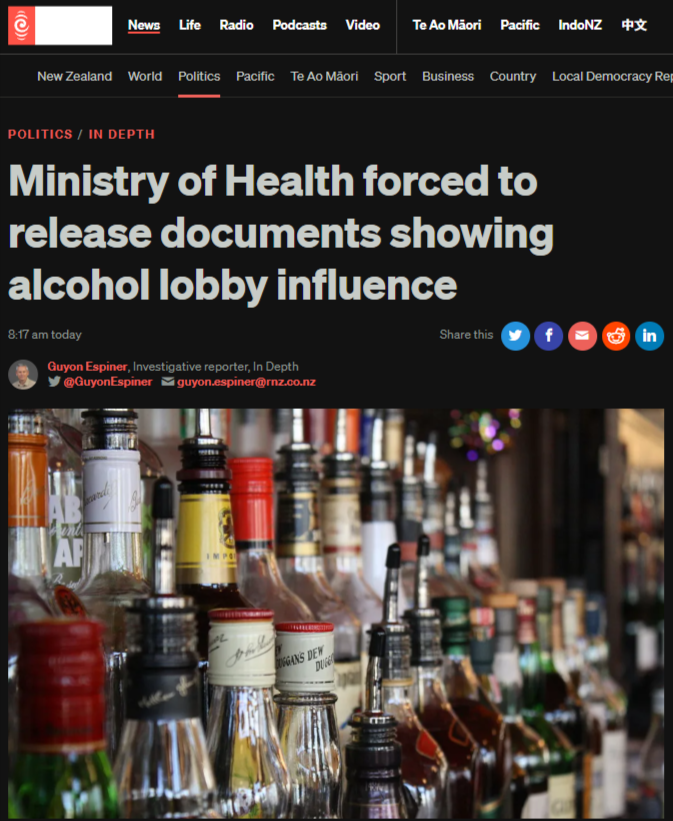
What Guyon Espiner's investigation has uncovered through his tenacious journalism is nothing short of a systematic handover of public health policy to the very industries profiting from our people's suffering. The Ministry of Health was forced by the Ombudsman to release documents showing alcohol lobbyists pushed health officials not to raise taxes, curb supply, or cut industry sponsorship of sport - despite these being WHO-endorsed measures.
The ministry tried to hide these documents using Official Information Act protections designed for ministerial advice, only releasing them after RNZ successfully appealed to the Ombudsman. That in itself tells you everything about their consciousness of guilt.
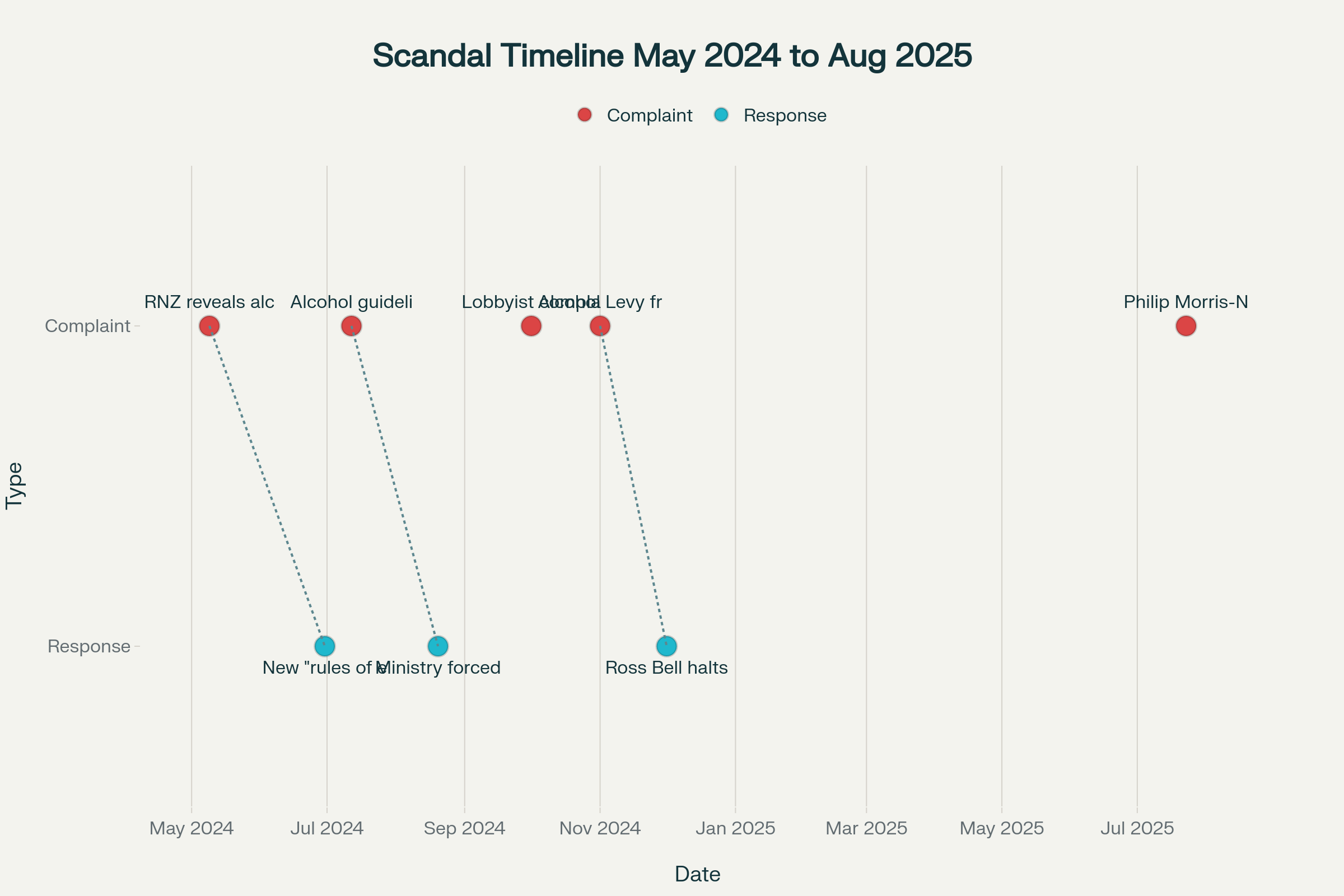
Timeline of Alcohol Industry Influence Scandal in New Zealand (2024-2025)
The Cast of Characters in This Corporate Colonization
Ross Bell - The Inside Man
At the center of this scandal sits Ross Bell, a Ministry of Health Public Health Agency manager who appears to have forgotten which side he's supposed to be on. Bell was described by senior colleague Dr Claire Mills as being "way too friendly" with alcohol lobbyists, and the evidence backs up her concern.
Bell actively shared confidential policy frameworks with industry lobbyists, including the Alcohol Levy investment strategy, essentially giving them a roadmap for how $16.6 million in public money would be spent on alcohol harm reduction. The brazen audacity is staggering - it's like inviting burglars to help design your security system.
When alcohol industry lobbyists complained about references to safe drinking guidelines being reviewed on a Health New Zealand website, Bell immediately capitulated, ordering the removal of the references and halting the review work. This wasn't just accommodation - it was submission.
Robert Brewer - The Spirits Industry Attack Dog
Leading the charge for Spirits New Zealand is CEO Robert Brewer, a man who has turned corporate doublespeak into an art form. Brewer's organization represents global alcohol giants including Asahi, Bacardi, Diageo, Lion, Moet-Hennessy and Pernod Ricard - companies whose profits depend entirely on New Zealanders consuming their poison.
Brewer's Spirits NZ dismissed expert estimates that 1800-3000 babies are born with FASD annually as "simply not credible", demanding that no action be taken until they were satisfied with the data. This is the same cynical playbook used by tobacco companies for decades - manufacture doubt, demand impossible standards of proof, delay action while the harm continues.
The organization even attacked the award-winning "Pre-Testie Bestie" campaign, which reached 38% of women aged 18-30 and successfully delivered the message "Don't drink if you are or might be pregnant" to 70% of viewers. Their complaint? The audience was "impossible to communicate with" - apparently preferring that pregnant women receive no warning about alcohol's dangers rather than an effective one.
Andrew Old - The Bureaucratic Enabler
Deputy Director-General Andrew Old has provided the institutional cover for this corruption, defending the cozy relationship with industry as "deliberate, structured" engagement. Old insisted companies had "no special access" while simultaneously admitting to "quarterly meetings with the team" - a level of access that most public health advocates could only dream of.
Old's claim that there is "no veto power" for industry is laughable given the documented evidence of immediate government responses to industry complaints. When the Brewers Association complained about drinking guidelines reviews, Bell halted the work within days. That's not consultation - that's capitulation.
The Māori Dimension - Colonial Harm in Modern Dress
What makes this betrayal particularly sickening is how it perpetuates colonial patterns of harm against Māori. Māori experience disproportionate alcohol harm, with death rates more than twice that of non-Māori, and around one in three Māori adults have hazardous drinking patterns compared to one in five Europeans.
This isn't accidental. Māori and Pacific children experience higher exposure to alcohol marketing in their neighborhoods than New Zealand European children, and have higher availability of alcohol outlets in their communities. This is targeted harm, systematic and deliberate.
Under Te Tiriti o Waitangi, the Crown has clear obligations to achieve equitable health outcomes for Māori. Instead, we have government officials conspiring with the very industries that profit from our suffering, ensuring that effective harm reduction measures are watered down or abandoned entirely.
The alcohol industry's influence over FASD policy is particularly cruel given that Māori women have significantly higher rates of drinking during pregnancy, leading to higher estimated rates of FASD. Every day this policy capture continues, more Māori babies are born with preventable brain damage while industry executives count their profits.
The Network of Influence Exposed
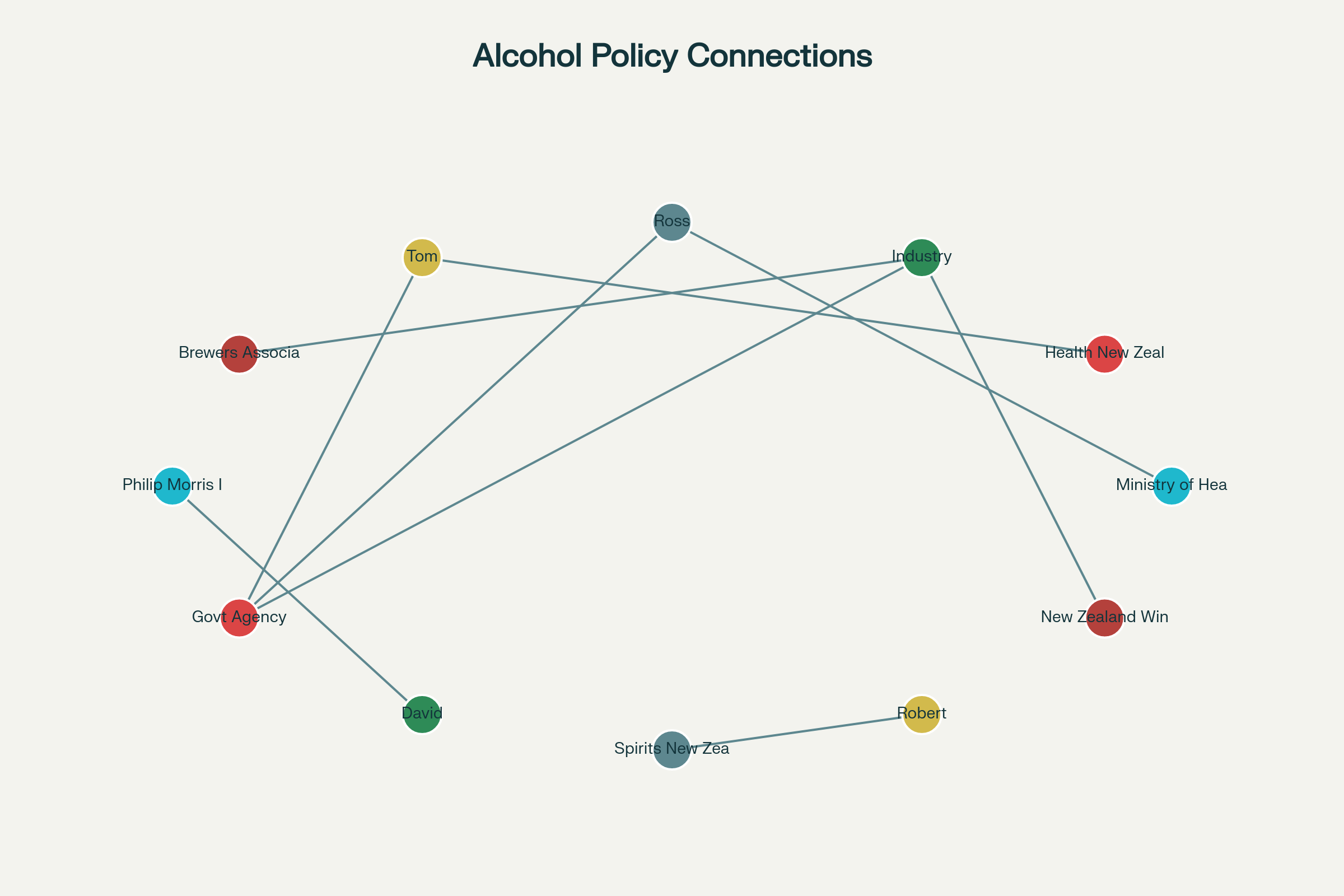
Network of Alcohol Industry Influence in New Zealand Government Health Policy
The documents reveal a sophisticated network of influence that goes well beyond simple lobbying. Industry representatives secured meetings on "the development of New Zealand's position" at United Nations meetings on alcohol policy, essentially giving them a seat at the table for international negotiations that should be guided by public health evidence, not corporate interests.
An email from Spirits NZ boasted that "members with global links are seeking advice from their HQs from London to Louisville, Kentucky - yes, this is how important this matter is to them". This wasn't New Zealand companies having their say - this was a coordinated international campaign by global alcohol giants to shape our domestic policy.
The connections run deeper still. The controversy over tobacco policy has revealed alleged ties between Philip Morris International and New Zealand First, with documents claiming PMI "reached out to NZ First to try and secure regulation to advantage IQOS". Two senior Philip Morris positions are held by former NZ First staff members, creating a revolving door between party politics and corporate power.
Corporate Strategies Straight from the Tobacco Playbook
The alcohol industry's tactics are lifted directly from Big Tobacco's playbook. Research shows how alcohol and tobacco industries collaborate to advance shared interests, and both industries are involved in efforts to undermine global health policy through venues like the Brussels Declaration.
The Brewers Association's submission reveals the strategy clearly: oppose "broad based initiatives" that reduce consumption overall, instead pushing for "collaborative, education-based harm reduction approaches" - code for ineffective measures that don't threaten their bottom line. They specifically warned against "controversial" programmes including "research with little application," "legal support for opposition of licences" and "replacing sponsorship arrangements in sport organizations".
This is corporate gaslighting at its finest - portraying evidence-based policy as "controversial" while presenting industry-friendly alternatives as reasonable compromise. It's the same script tobacco companies used to delay action on smoking for decades while millions died.
The Complicit Media and Academic Silence
Where has the outrage been from our supposed public health champions? A poll commissioned by Health Coalition Aotearoa and the Cancer Society showed 71 percent of New Zealanders felt the alcohol industry should not be involved in developing alcohol policy, yet this clear public mandate has been ignored by officials who prefer cozy industry relationships.
The academic establishment's silence has been deafening. Where are the public health schools demanding accountability? Where are the medical associations calling for heads to roll? Their silence makes them complicit in this betrayal of fundamental public health principles.
The Wider Implications for Democratic Governance
This scandal represents more than policy failure - it's evidence of corporate capture of democratic institutions. When industry lobbyists have quarterly meetings with officials while public health advocates struggle for basic access, we no longer have representative government - we have government by and for corporate interests.
The WHO Framework for Engagement with Non-State Actors specifically warns about conflicts of interest in policy development, recognizing that there is an "irreconcilable conflict between industry interests and public health policy interests." New Zealand officials have ignored these international standards, creating a system where those profiting from harm get to write the rules.

The Māori Green Lantern fighting misinformation and disinformation from the far right
The Path Forward - Reclaiming Our Sovereignty
The evidence is clear, the connections are documented, and the betrayal is complete. What's needed now is not more "rules of engagement" - those are just bureaucratic fig leaves to cover continued corruption. What's needed is a complete cleanout of officials who have proven they cannot be trusted to put public health before corporate profits.
Every official who participated in this industry capture should be removed from their positions immediately. Ross Bell, Andrew Old, and anyone else who thought it appropriate to hand over public health policy to alcohol executives have shown they are unfit for public service.
We need new legislation explicitly prohibiting industry involvement in the development of alcohol policy, following the tobacco control model. No meetings, no consultations, no "input" - just evidence-based policy developed in the public interest.
Most importantly, we need Māori leadership in alcohol policy that recognizes the colonial nature of alcohol harm and centers tino rangatiratanga in solutions. The Wai 2624 claim challenging the lack of Māori consultation in alcohol legislation points the way forward - real partnership that puts Māori voices at the center of policies affecting Māori health.
The Corporate Colonizers Must Go
This is not a scandal about poor judgment or bureaucratic failure. This is evidence of systematic betrayal by officials who have chosen corporate profits over the lives of our people. Every day this system continues, more Māori babies are born with preventable brain damage, more whānau are destroyed by alcohol harm, and more profits flow to global corporations that see our suffering as their success.
The alcohol industry and their government enablers have shown their true colors - they are enemies of public health, opponents of Māori wellbeing, and servants of global capital before the people of Aotearoa. They must be removed from positions of power and replaced with people who understand that health policy should serve health, not corporate profits.
Kia kaha, whānau. This fight is not over - it's just beginning. But now we know exactly who our enemies are and how they operate. That knowledge is power, and power is what we need to reclaim our right to health and life free from corporate manipulation.
The time for compromise with these corporate colonizers is over. It's time to choose sides - and the side of our people, our tamariki, and our future must win.
Noho ora mai
Ivor Jones
Te Māori Green Lantern
For those who find value in this mahi and wish to support the cause, koha can be made to: HTDM: 03-1546-0415173-000. These are tough economic times for many whānau, so please only contribute if you have capacity and wish to do so.