"THE BURGER, THE CHAIR, AND THE EMPTY SEAT OF ACCOUNTABILITY: How a Pork-and-Venison Lunch Melted a National Party MP Faster Than the Cheese on My Bun" - 22 February 2026
When the people sit on the grass and the politician sits on a plastic throne, you already know who is closer to the whenua — and who is closer to the exit.

Te Kupu Whakataki — The Opening Strike
Kia ora e te whānau,
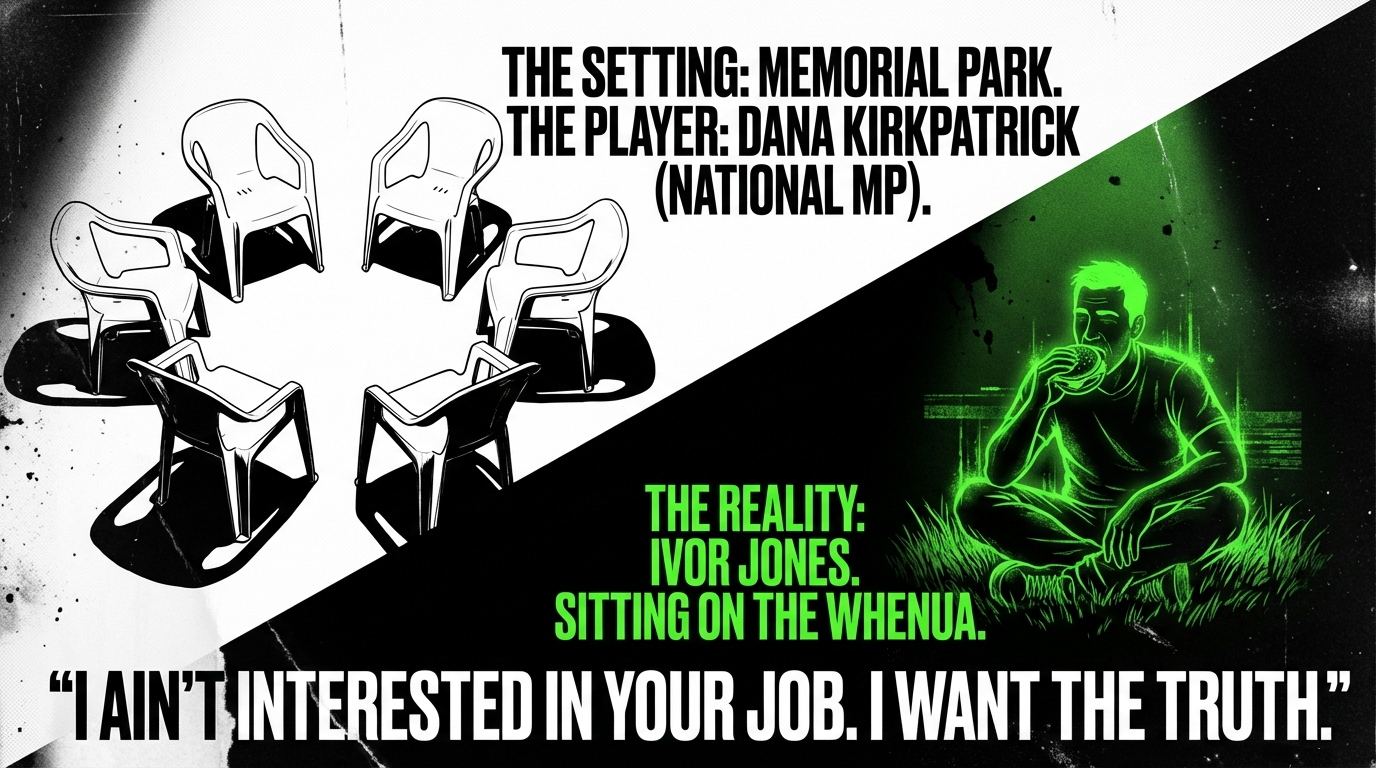
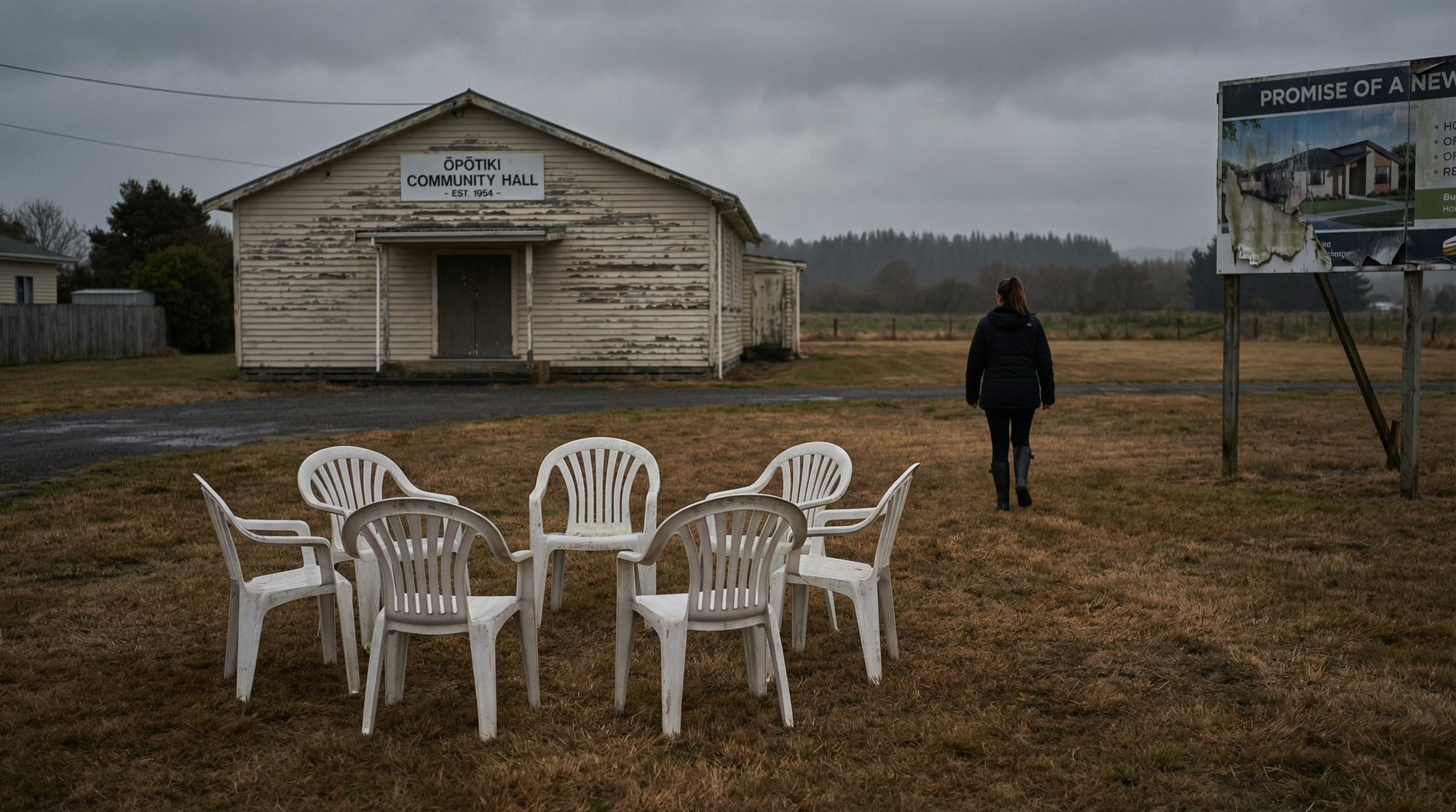
Six white plastic chairs arranged in a circle at Memorial Park, Ōpōtiki.
A community fundraiser for the Ōpōtiki Coastguard Show & Shine — the annual celebration of chrome, community, and aroha that funds the people who pull our whānau from the sea. Kura ki Tai Waka Ama. Ōpōtiki Swim Club. The coastguard rescue centre. Volunteers. Real people doing real mahi for real lives.
And there, perched upon one of those six white plastic thrones like a colonial governor surveying the natives at a garden party, sat Dana Kirkpatrick — National Party MP for the East Coast electorate, the woman whose government is systematically dismantling every institution that protects the people she claims to represent.
I took my pork-and-venison burger — sourced from the land, cooked by the community, sold for the coastguard — and sat down on the grass beside her. Not on a chair. On the whenua. Because that is where tangata whenua belong. On the ground. Connected. Grounded. While the politician floats above on plastic.
What followed was ten minutes that Dana Kirkpatrick will not forget.
Ten minutes where The Māori Green Lantern asked the questions that the NZ Herald — now chaired by her party's own Steven Joyce — will never ask.
She asked me if I was interested in politics.
I smiled.
"Nah," I said. "I ain't interested in your job."
She couldn't handle the heat. She walked off.
Let me tell you why.
He Tūāpapa — The Six Chairs and the Empty Circle
Picture the scene, whānau. Six plastic chairs in a circle.
A formation that in any marae would signal a hui — a gathering of equals, a space for kōrero, for truth.
But this was not a marae.
This was a National Party MP surrounded by empty seats, waiting for someone safe, someone polite, someone who would nod and smile and thank her for gracing our little community with her presence.
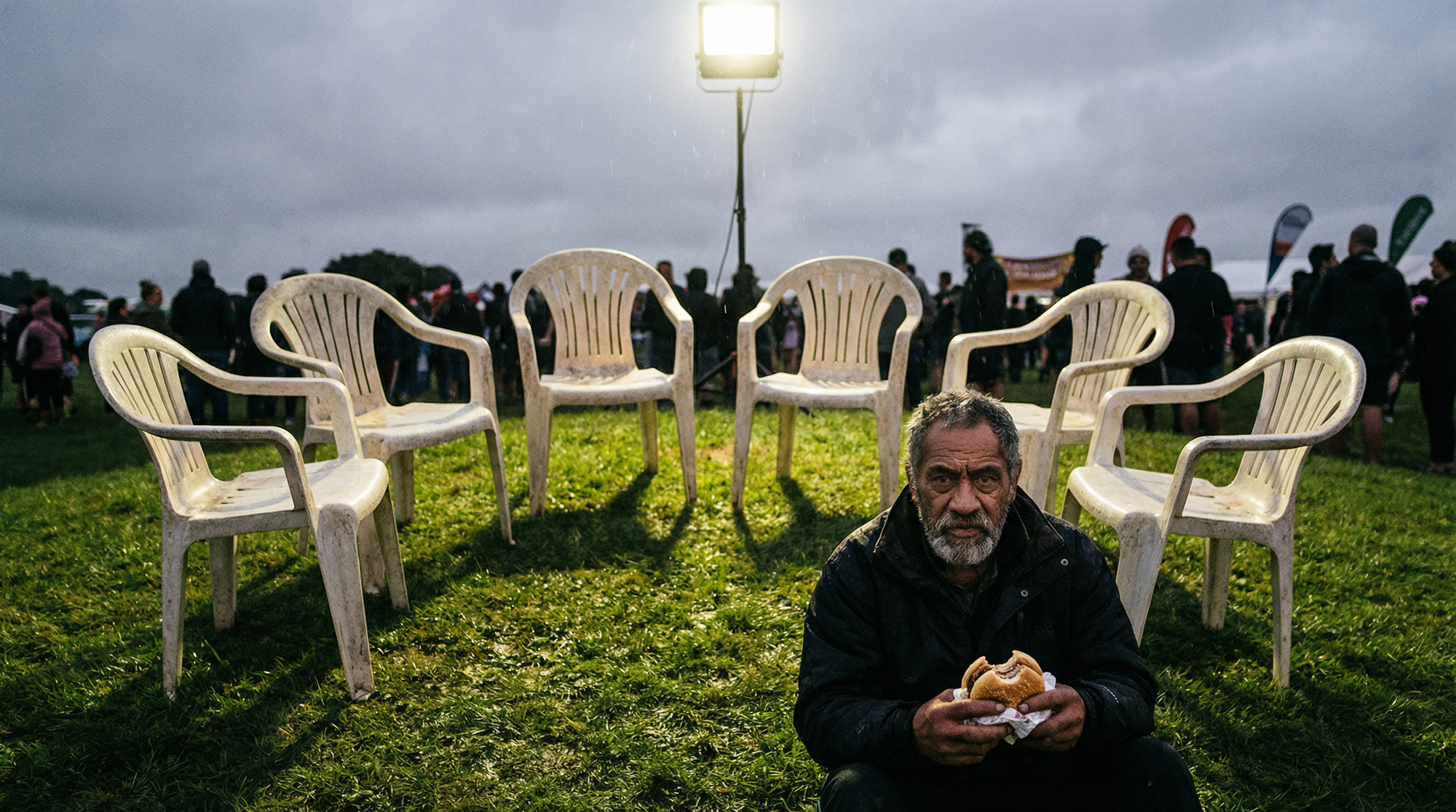
Instead, she got a tāne Māori sitting on the grass with a burger, who opened his mouth and spoke truth. And the circle broke apart.
Those six chairs are a metaphor for everything wrong with this government. They arrange themselves in circles of power, but the circle is hollow. No substance inside. No whenua beneath them. Just plastic. White plastic.
And when the questions come — when someone from the whenua asks what exactly your government is doing to our health, our land, our money, our media — the plastic melts.
Te Tūāpapa Hītori — "No, We Aren't" (Yes, You Are)
I asked Dana Kirkpatrick a simple question: Why is your government privatising our public health system?
Her answer: "No, we aren't."
Three words. The official National Party line. The lie they repeat so often they have started to believe it themselves. Let me dismantle this lie with the precision of a taiaha strike.
The Evidence Dana Kirkpatrick Denies
Health Minister Simeon Brown directed Health NZ to spend $50 million outsourcing elective surgeries to private hospitals — not as a temporary measure, but as a permanent structural shift. He then directed Health NZ to offer 10-year contracts to private providers for elective surgeries, making corporate hospitals a permanent feature of what was once a public system.
Health NZ itself urged the government to consider allowing private companies to build and potentially run public hospitals — Public-Private Partnerships that overseas have consistently enriched corporations while degrading public services.
Tend, a private national healthcare company, was approved to become its own Primary Health Organisation, bypassing regional PHO structures to contract directly with Health NZ — 80,000 patients initially, with 100,000 more to follow. In the Bay of Plenty. In our rohe.
The New Zealand Medical Journal published a devastating analysis concluding the health minister's plan to outsource elective procedures to the private sector "is at serious risk of breaking it further, increasing health costs, decreasing productivity and further constraining the ability to provide patients with the care they need".
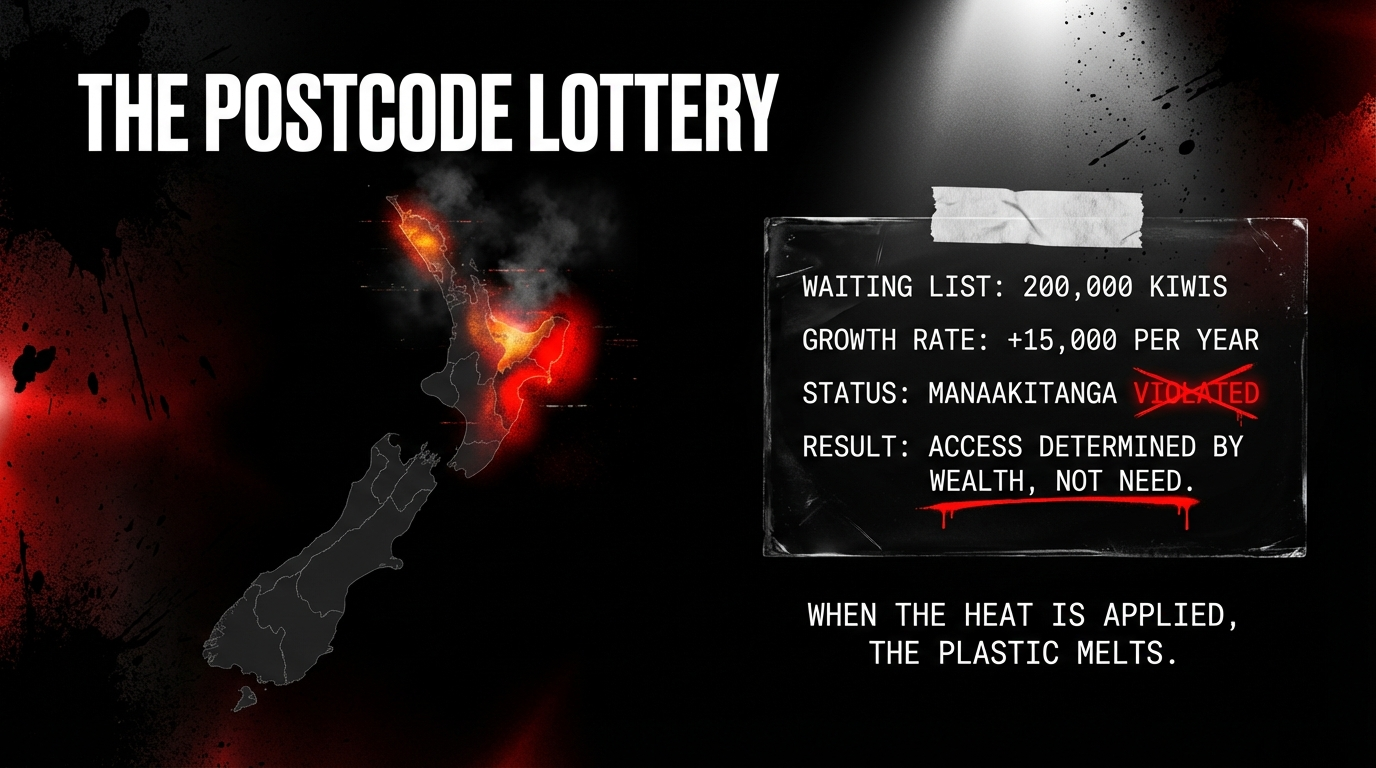
Two hundred thousand New Zealanders are now waiting for first specialist appointments, with tens of thousands more waiting for elective surgeries. Only 60% of patients are being treated within the four-month target.
Prominent doctors Dame Sue Bagshaw and Dr Phil Bagshaw publicly warned that the government's approach would "undermine patient outcomes and move New Zealand towards an American-style system".
ACT leader David Seymour — Kirkpatrick's coalition partner — openly called on New Zealanders to "get past the squeamishness about privatisation" and proposed allowing people to opt out of public healthcare entirely with a funding voucher.
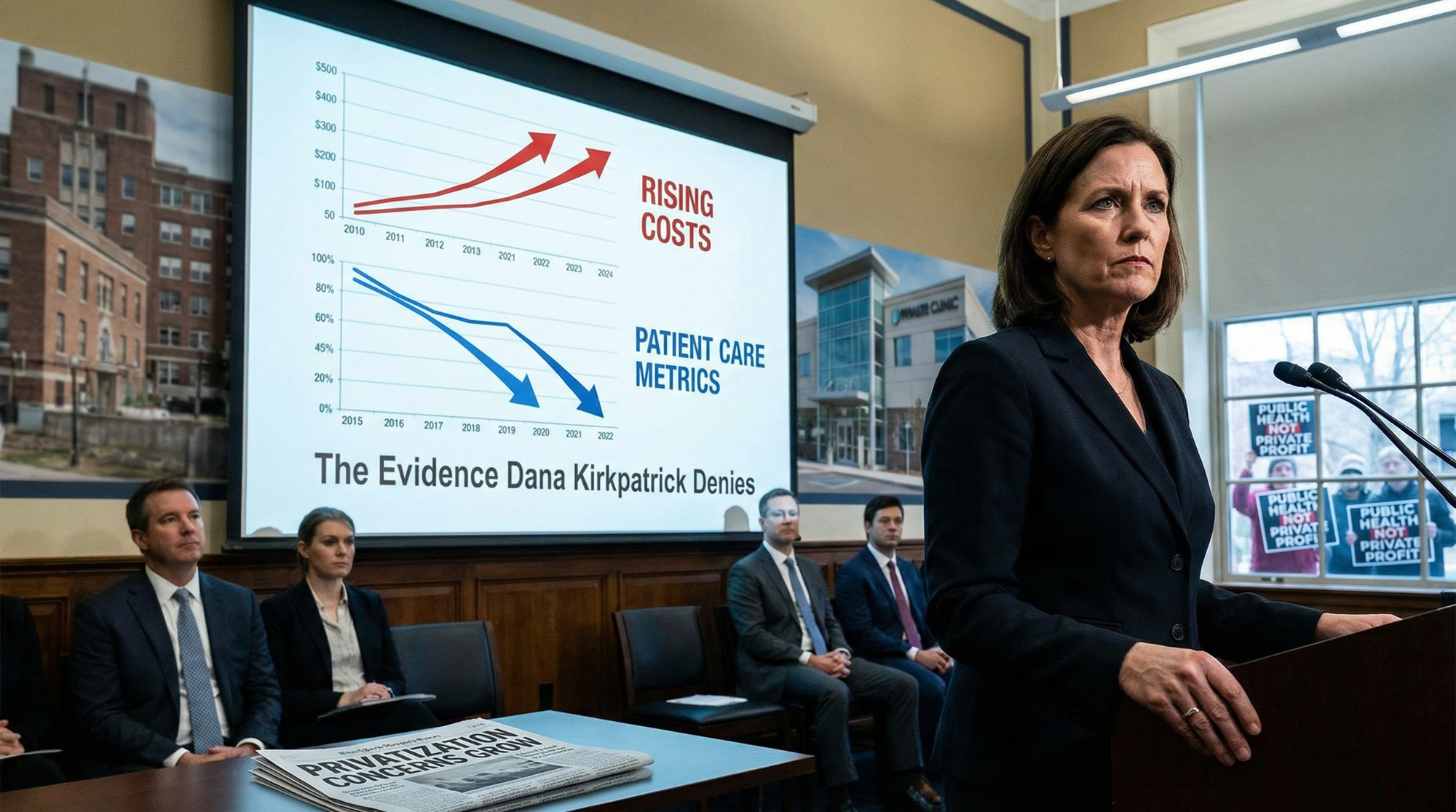
"No, we aren't" privatising?
Dana, the cheese on my burger was more honest than that answer. At least when it melted, it didn't pretend it was still solid.
Three Examples for the Western Mind
Example 1: The Starve-and-Outsource Playbook
For those unfamiliar with how privatisation-by-stealth works, here is the recipe: Step One — underfund the public system until waiting lists explode. Step Two — point to the exploding waiting lists as proof the public system is "broken." Step Three — outsource to private providers as a "temporary fix." Step Four — make the outsourcing permanent with 10-year contracts. Step Five — declare the public system can't compete and sell what remains.
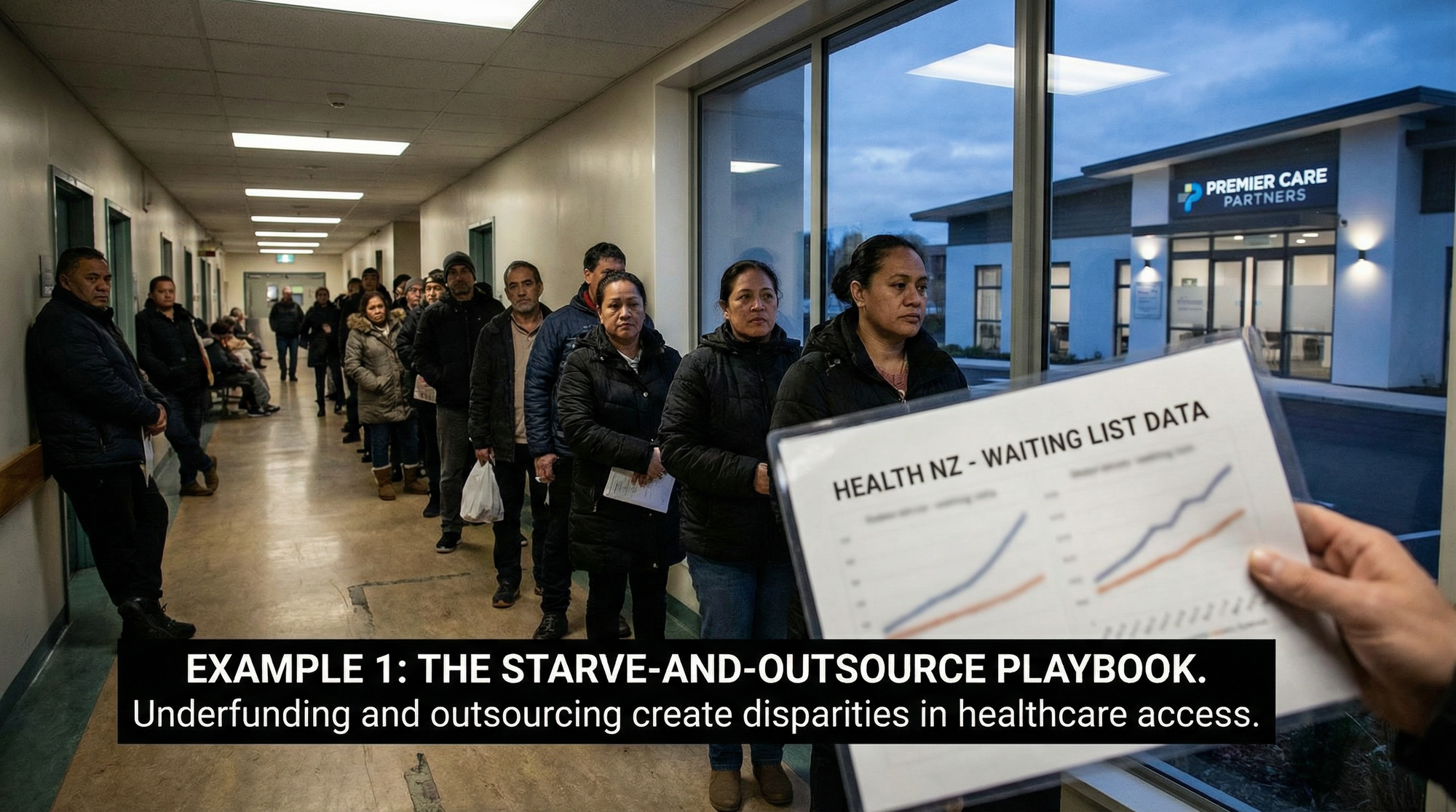
This government has completed Steps One through Four. As of January 2025, only 60% of patients were being treated within the four-month target. Health NZ documents revealed the waitlist was growing by almost 15,000 people per year. The government responded by directing $50 million in public money to private hospitals — who will cherry-pick the easy, profitable cases and leave the complex, expensive patients in the crumbling public system.
The harm, quantified: A "postcode lottery" persists, where patients in one region are denied surgeries they would qualify for elsewhere. Private hospitals are not evenly distributed — rural communities and poorer areas have fewer options. This disproportionately harms Māori, who make up higher proportions of regional populations, and who already die 7-8 years earlier than Pākehā.
The tikanga violation: In te ao Māori, manaakitanga demands that care is provided based on need, not ability to pay or proximity to a private hospital. The concept of rationing care by postcode — making some whānau wait longer simply because they live in the wrong town — is the antithesis of collective responsibility. It severs the principle of kotahitanga (unity) by creating tiers of citizenship: those who can afford private insurance, and those who cannot. This government is building a health system where your whakapapa determines whether you live or die — not because of genetics, but because of geography and poverty.
The solution: Fully fund the public health system. Reinstate the Māori Health Authority (Te Aka Whai Ora). End long-term outsourcing contracts that permanently redirect public money to private profit. Standardise access thresholds nationally so no patient is denied care based on where they live.
Example 2: The Treaty Settlement Fraud — "Peanuts" for Plunder
Dana Kirkpatrick raised Shane Jones's announcement of $10 million for the Ringatū marae rebuild near Ōhope as if it were an act of extraordinary generosity. I told her it was peanuts. Here is why.
The Crown confiscated 144,000 hectares across the Ōpōtiki district from Te Whakatōhea in the 1860s — based on a false accusation that the iwi was responsible for the killing of missionary Carl Völkner. The Waitangi Tribunal described the Crown's actions as "among the worst Treaty breaches in this country's history". The Crown invaded, ransacked, and applied scorched earth policies. Whānau were forced onto the Ōpape reservation. Tribal structures were shattered. Identity was severed from whenua.
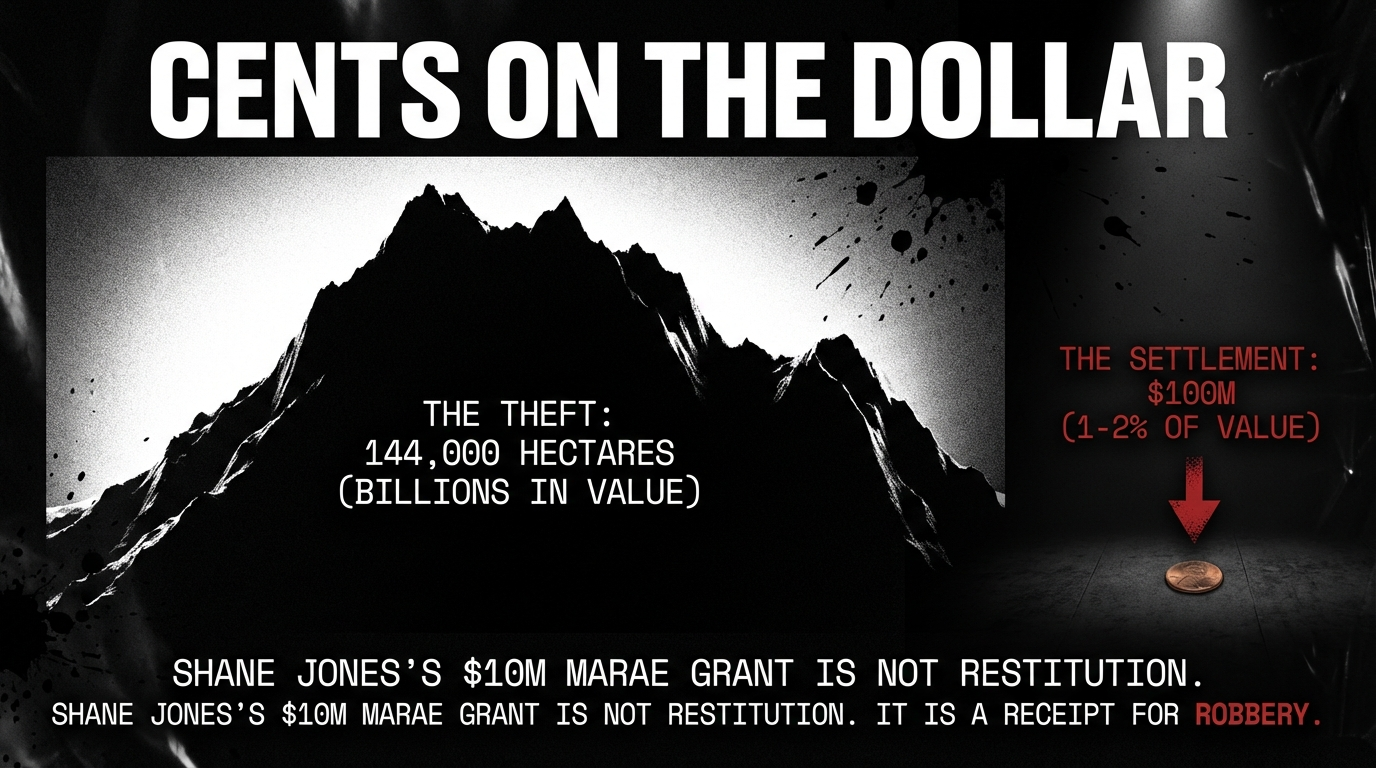
The settlement? $100 million. For 144,000 hectares of some of the most productive land in Aotearoa — land that now hosts kiwifruit farms and dairy operations generating billions. As Whakatōhea negotiator Maui Hudson put it: "You end up getting what, two cents on the dollar."
For context: Ngāi Tahu's economic damages from the Crown were estimated at $10 billion. Their settlement was $170 million. In Nelson, the descendants of Māori landowners calculated more than $1 billion lost through a broken Crown promise — their compensation was "substantially less."
Nationally, Māori held approximately 80% of the North Island in 1860 — approximately 23.2 million acres. By 2000, they held only 4%. More than 4 million acres were confiscated outright. The total $4.3 billion in treaty settlements to 2019 is a fraction of a fraction of the true value of what was stolen.
And Shane Jones throws $10 million at a marae and expects gratitude? That is not generosity. That is the Crown tossing coins at the people it robbed.
The harm, quantified: The 144,000 hectares confiscated from Whakatōhea was settled for $100 million — a rate of approximately $694 per hectare. Comparable productive farmland in the Bay of Plenty sells for $30,000-$80,000 per hectare today. The settlement represents approximately 1-2% of the current land value alone — before calculating 160 years of lost use, revenue, and intergenerational opportunity.
The tikanga violation: Whanaungatanga — the bonds of kinship between people and land — was severed by raupatu. Treaty settlements are supposed to restore that relationship. But you cannot restore a severed limb with a band-aid. The settlement quantum is so disproportionate to the harm that it violates the principle of utu (reciprocity, balance). In tikanga, utu demands proportional response. A $100 million settlement for billions in stolen assets is not utu — it is an insult dressed as reconciliation.
The solution: Implement a transparent formula that calculates settlement quantum based on current asset values, not arbitrary Crown budgets. Allow for ongoing royalty arrangements from productive use of confiscated lands. Restore the Waitangi Tribunal's ability to make binding resumption orders.
Example 3: The Ōpōtiki Mussels — Throwing Good Money After Bad
I asked Dana why Shane Jones keeps chucking more money after bad at the Ōpōtiki mussel venture. She had no answer. Here are the numbers.
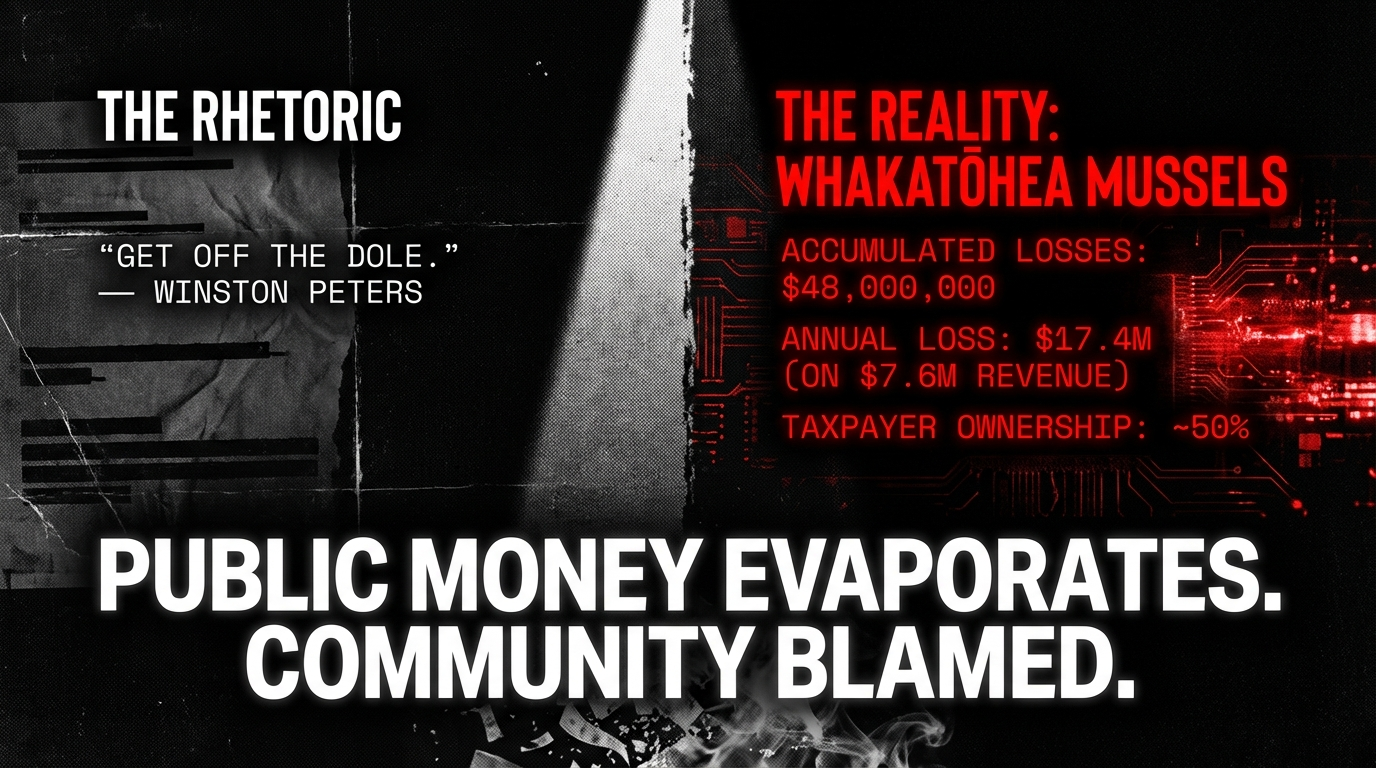
Whakatōhea Mussels (Ōpōtiki) Limited has accumulated losses exceeding $48 million since the company was founded in 2017. In its most recent financial year, the company reported a $17.4 million loss on $7.6 million in revenue — losing more than twice what it earned.
Despite these staggering losses, Shane Jones announced in September 2024 that the government had agreed to allocate another $16 million toward the investment. Cabinet documents showed the Crown Regional Holdings Limited (CRHL) held approximately 38-50% of the company's shares — meaning taxpayers are the dominant shareholders in a company that has never turned a profit.
The company's own independent adviser's report revealed losses of $7.3 million in 2022, $7.1 million in 2023, and $8.7 million in 2024, with its "financial position deteriorating" since previous capital raises. Yet the Crown keeps pouring in more.
Meanwhile, Winston Peters visited Ōpōtiki and lectured local Māori that "staying on the dole in Ōpōtiki will no longer be an option" — blaming the very people his government was supposed to be empowering through this investment.
The harm, quantified: Over $48 million in accumulated losses. Ongoing annual losses exceeding revenue by multiples. Crown shareholding diluting iwi ownership. The community promised economic transformation instead watches public money evaporate into the Pacific while being lectured about dependency.
The tikanga violation: Kaitiakitanga — guardianship of resources — demands responsible stewardship. Pouring tens of millions into an enterprise that loses more than it earns, while the community it serves remains one of the most deprived in the country, is a failure of guardianship on every level. The government uses the venture as a photo opportunity while the actual economic benefits remain elusive. This violates rangatiratanga — the self-determination that was supposed to flow from iwi economic development, not Crown-controlled shareholding that dilutes Whakatōhea's own stake in their own enterprise.
The solution: Commission an independent review of the Crown's investment in Whakatōhea Mussels. If the venture cannot be made viable, redirect funding to iwi-led economic development initiatives with proven track records. Restore majority iwi ownership so that Whakatōhea controls its own economic destiny.
Te Tūāpapa o te Pūrongo — The Propaganda Machine
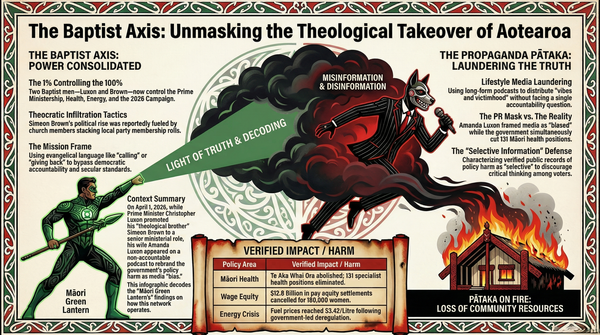
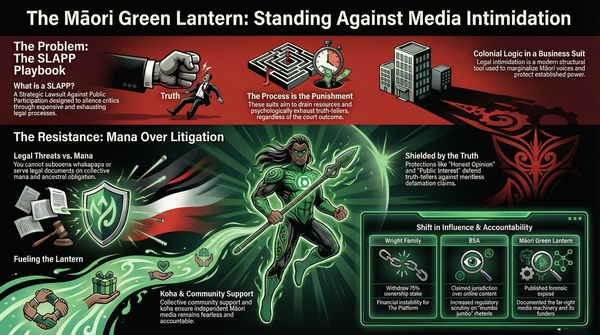
The straw that broke this politician's back — the moment Dana Kirkpatrick couldn't handle the heat — was when I told her what I do every day as The Māori Green Lantern: I smash the corporate media apparatus that protects politicians like her from accountability. And I named her mate.
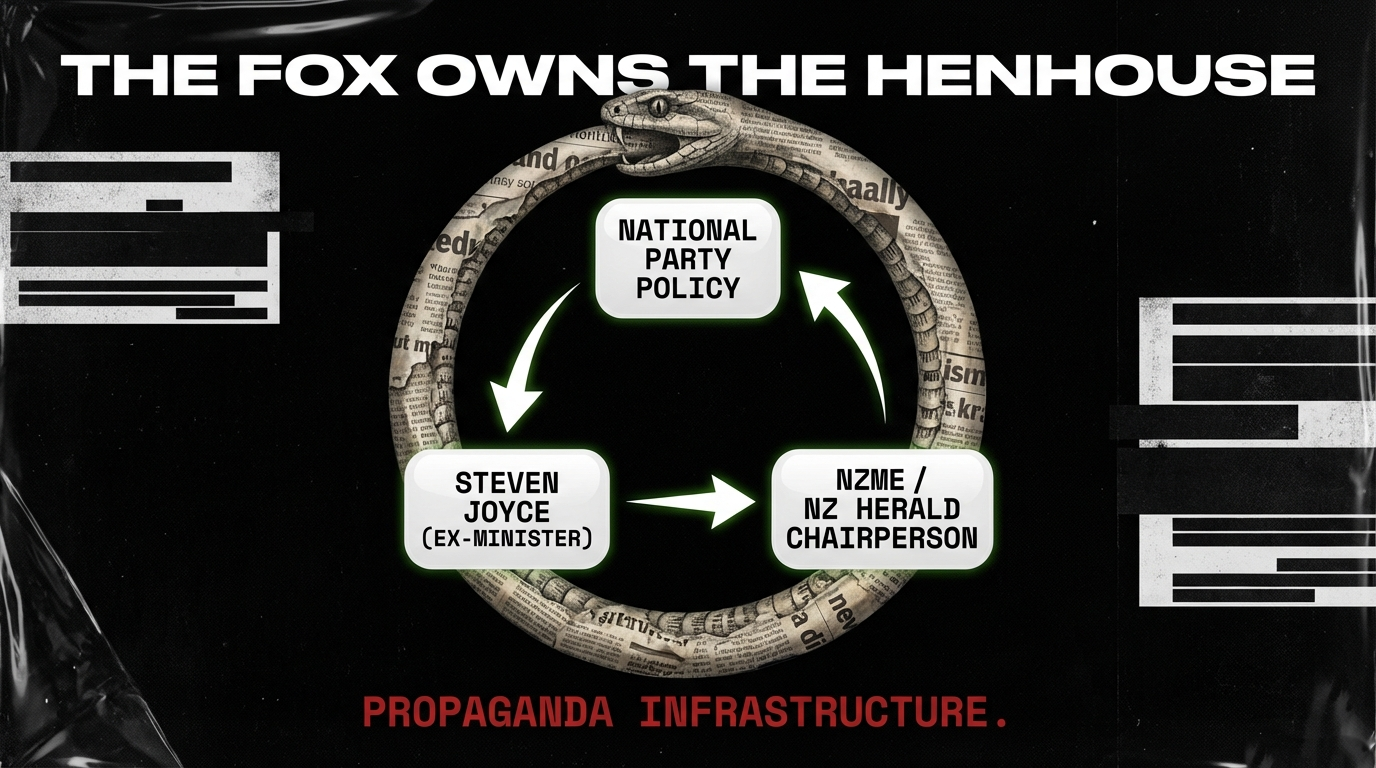
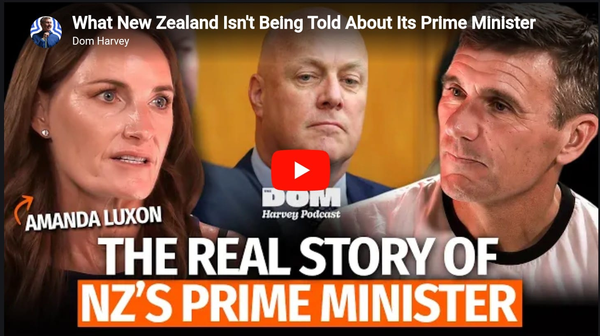
Steven Joyce — former National Party Cabinet minister, millionaire broadcasting entrepreneur, and now chairperson of NZME, the company that owns the New Zealand Herald and Newstalk ZB.
Let that sink in. The man who served as Minister of Finance and Minister of Transport under National — who spent a decade in the Beehive advancing the same neoliberal agenda Kirkpatrick now defends — is now the chairman of New Zealand's largest newspaper. The fox doesn't just guard the henhouse. The fox owns the henhouse, built the henhouse, and decides which hens get to cluck.
Joyce was voted in with over 93% shareholder support. He and billionaire shareholder Jim Grenon announced plans for an editorial advisory board that would have oversight of news operations. Grenon told the shareholders' meeting the board would allow them to "look over the shoulders of staff and assess them against a set of guidelines" and "nudge in the right direction" journalists who weren't meeting them.
This is not journalism. This is propaganda infrastructure. A former National Party kingmaker now controls the editorial direction of the newspaper that is supposed to hold the National Party to account. And when asked what editorial independence means, Joyce spoke about "editorial policy" being "decided by management and the board."
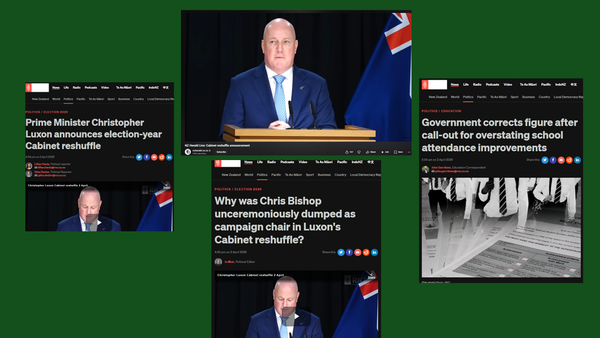
No wonder Dana didn't like hearing this. No wonder she walked off. Because the NZ Herald will never write this story. The NZ Herald will never ask her the questions I asked on that grass at Memorial Park. The NZ Herald is now, structurally and formally, a media arm of the National Party.
That is why The Māori Green Lantern exists. That is why 800+ essays exist. That is why I sat on the grass with a burger and a ring of green light and asked the questions that a captured media never will.
Ngā Hononga Huna — The Hidden Connections
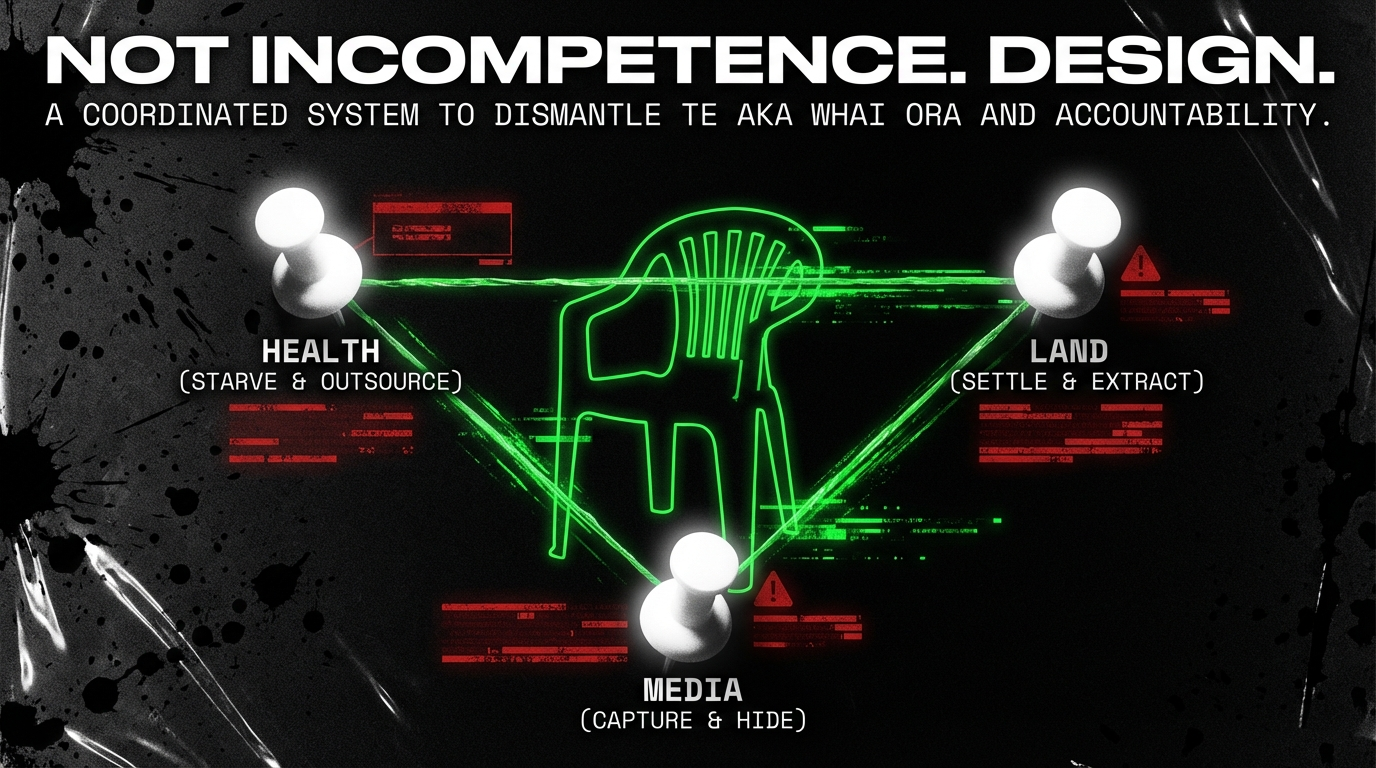
Connection 1: Health privatisation starves Māori communities first. The "postcode lottery" in health access hits communities like Ōpōtiki hardest. Private hospitals cluster in urban centres. When the government outsources care to private providers, rural Māori communities are left further behind. The disestablishment of Te Aka Whai Ora — the Māori Health Authority — removed the one institution designed to address this. The Waitangi Tribunal found this would cause "significant and irreversible prejudice" to Māori. Select committee testimony in September 2025 revealed the Māori health team at Health NZ has been cut to a third of its size.
Connection 2: Treaty settlements fund the illusion of reconciliation while wealth extraction continues. Te Whakatōhea received $100 million for 144,000 hectares. The kiwifruit and dairy industries operating on that stolen land generate billions annually. The settlement is a receipt, not restitution. And when Shane Jones throws $10 million at a marae rebuild, it is a political gesture — his own colleagues admitted it at Rātana — not structural repair.
Connection 3: The Ōpōtiki mussels serve the Crown's narrative, not the community's needs. Over $48 million in losses while the Crown increases its shareholding. This is not economic empowerment for Whakatōhea — it is a Crown-controlled enterprise wearing an iwi mask. Winston Peters lectures Ōpōtiki about getting off the dole while his government controls a company that loses more money than it makes.
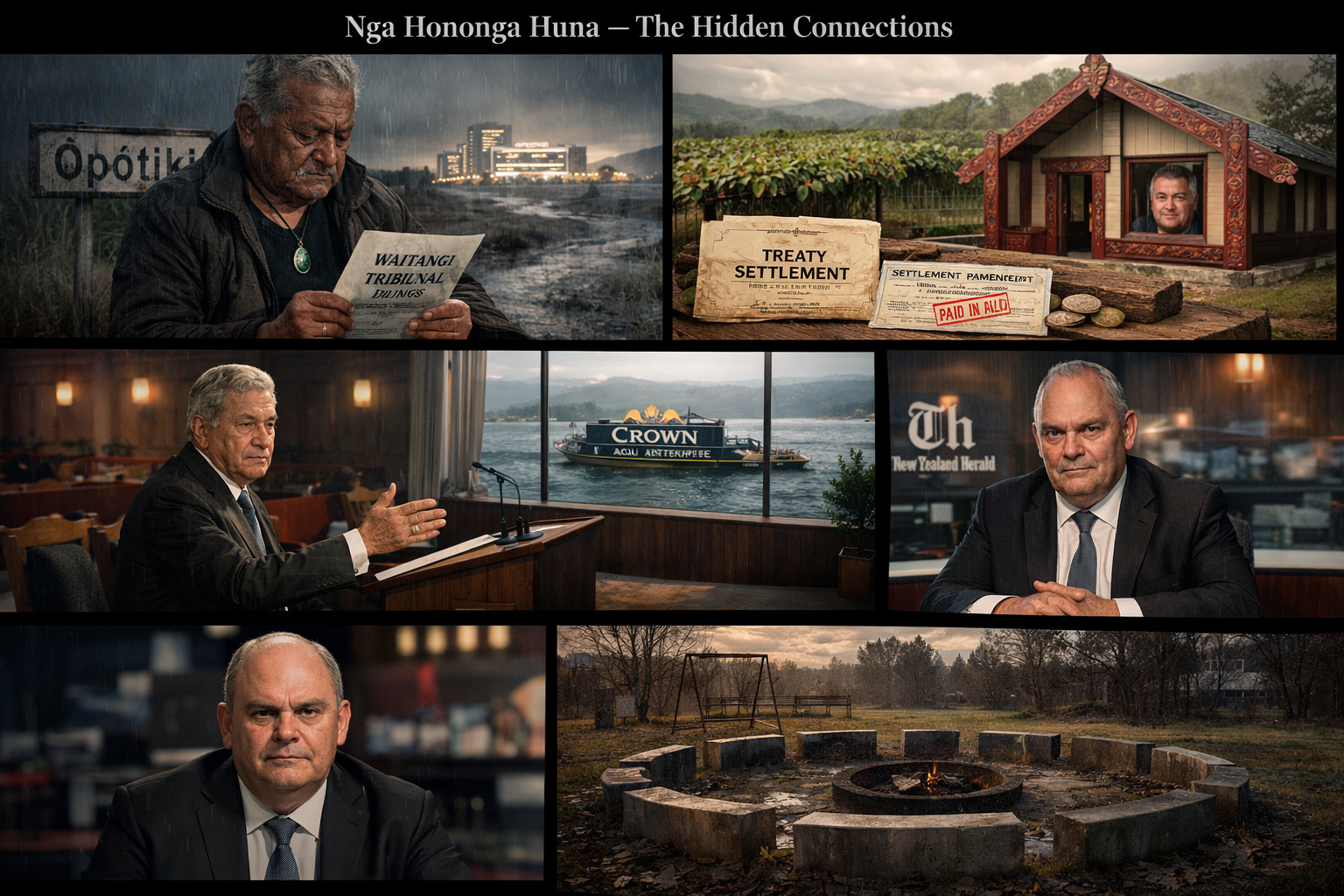
Connection 4: Steven Joyce's capture of the Herald completes the propaganda cycle. The government privatises health, underfunds settlements, and throws money at failing ventures — and the country's largest newspaper, now chaired by a National Party stalwart, ensures the questions never get asked. Joyce told shareholders he would bring "fresh eyes" to editorial operations. Fresh eyes belong to someone who has never looked through the lens of power. Joyce has been looking through that lens since 2008.
Connection 5: The circle of chairs is the circle of power. Dana Kirkpatrick sits on a plastic chair at a community fundraiser, surrounded by empty seats, performing constituency. But the real circle — the one that protects her from accountability — is the circle of Joyce at the Herald, Seymour pushing privatisation, Jones buying loyalty with marae millions, and a coalition government systematically dismantling every Māori institution, every public service, every mechanism of accountability that might challenge their project.
I broke that circle with a burger and ten minutes on the grass.
Te Tūāpapa o Te Tiriti — Where This Leads
This government — Kirkpatrick's government — has:
- Disestablished Te Aka Whai Ora, the Māori Health Authority, despite the Waitangi Tribunal warning it would cause irreversible harm
- Dropped the equity adjustor that prioritised Māori and Pasifika patients on surgical waitlists, despite evidence it was effective
- Directed $50 million in public funds to private hospitals for permanent outsourcing
- Installed a former National minister as chairman of the country's largest news outlet
- Delivered treaty settlements worth cents on the dollar while confiscated land generates billions for others
- Poured tens of millions into a failing mussel venture while lecturing Māori about dependency
And when challenged at a community fundraiser, their local MP walks off.
That is the six plastic chairs. Empty. White. Hollow.
He Kupu Whakamutunga — The Last Word
Dana Kirkpatrick asked me if I was interested in politics.
The answer is no, Dana. I am not interested in your politics — the politics of denial, deflection, and distraction. I am not interested in sitting in plastic chairs pretending that ten minutes of performative presence at a community fundraiser makes up for a government that is dismantling the health system, stealing through settlement, wasting through incompetence, and capturing through media control.
I am interested in truth. I am interested in the mahi of exposing the connections your party would rather keep hidden. I am interested in asking the questions that Steven Joyce's Herald will never print.
I don't want your job. Your job is to sit on plastic chairs and deny reality. My job is to sit on the whenua and speak it.
You walked off because the heat was too much. But the heat is not going away, Dana. The Māori Green Lantern does not turn off.
E kore au e ngaro. He kākano i ruia mai i Rangiātea.
I will never be lost. I am a seed sown from Rangiātea.
Previously from The Māori Green Lantern
This essay connects directly to previous investigations by The Māori Green Lantern, including:
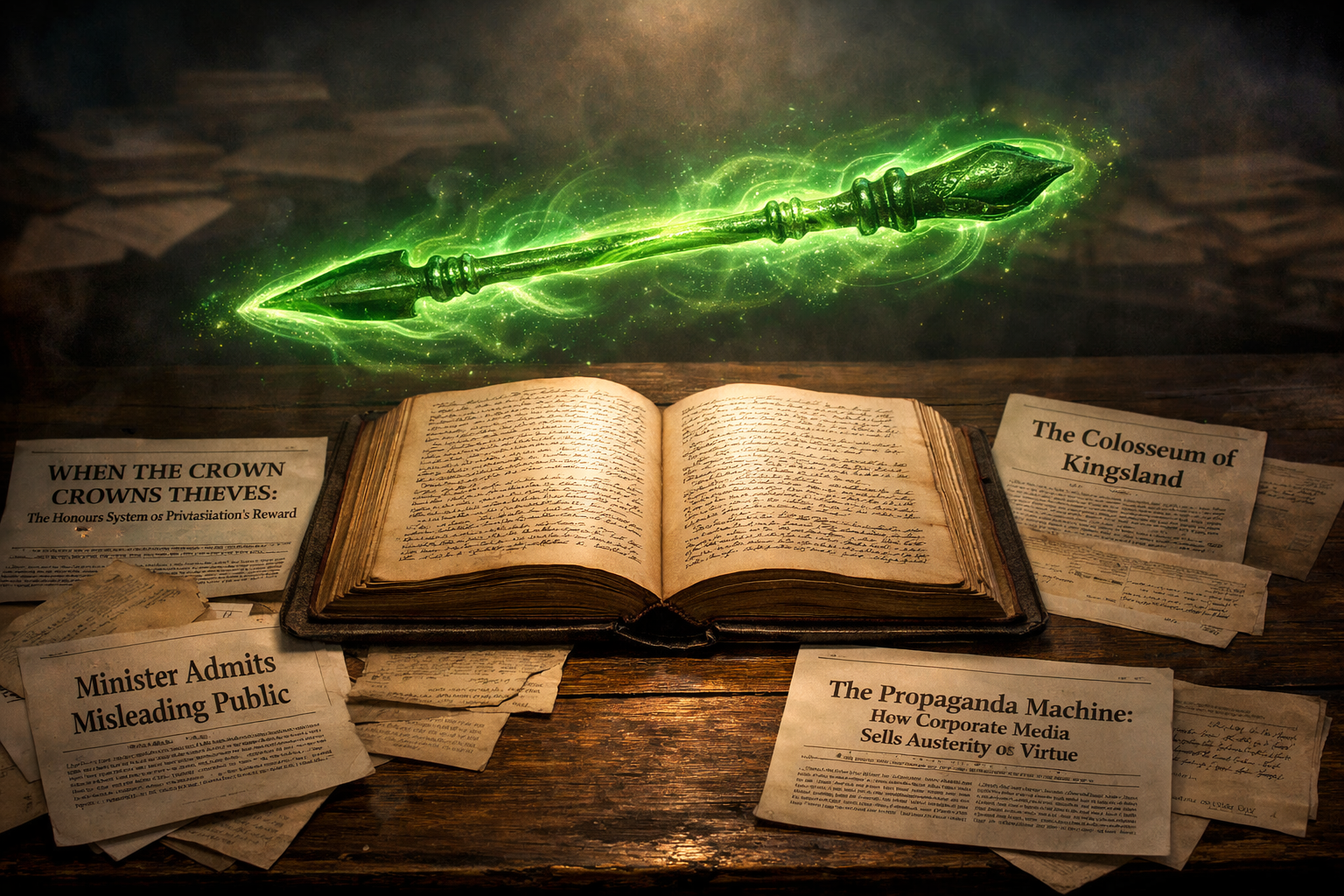
- "WHEN THE CROWN CROWNS THIEVES: The Honours System as Privatisation's Reward" — exposing how the honours system rewards those who privatise healthcare
- "The Colosseum of Kingsland" — documenting the neoliberal playbook of manufactured crisis, friendly reports, and corporate asset delivery
- "The Nursery of Cages" — how the state system was built to consume Māori, not serve them
- "Minister Admits Misleading Public" — Karen Chhour's statistical manipulation and the coordinated attack on tamariki Māori protections
- "The Propaganda Machine: How Corporate Media Sells Austerity as Virtue" — tracing the connections between media capture and neoliberal policy
Over 800 essays. Every one a taiaha strike. Every one verified. Every one for whānau.
Ngā Koha — Supporting This Mahi
Every pork-and-venison burger at Memorial Park was cooked to keep the coastguard afloat. Every essay from The Māori Green Lantern is written to keep the truth afloat. The coastguard rescues our whānau from the moana. This publication rescues our whānau from the tsunami of misinformation, denial, and propaganda that politicians like Dana Kirkpatrick ride into our communities on plastic chairs.
Every koha signals that whānau are ready to fund the accountability that no Crown minister, no captured media outlet, and no plastic-chair politician will ever provide. It signals that rangatiratanga includes the power to fund our own truth-tellers — even when the truth makes National Party MPs walk off mid-conversation.
Kia kaha, whānau. Stay vigilant. Stay connected. And if you are able, consider a koha to ensure this voice keeps asking the questions that make politicians melt faster than cheese on a community burger.
If you are unable to koha, no worries! Subscribe or follow The Māori Green Lantern, kōrero and share with your whānau and friends — that is koha in itself. Every share is a taiaha passed to another hand.
Three pathways exist:
For those who wish to support this mahi directly with a koha (voluntary contribution), please visit the Koha platform:
Koha — Support — https://app.koha.kiwi/events/the-maori-green-lantern-fighting-misinformation-and-disinformation-ivor-jones
For those who wish to receive essays directly and support through subscription:
Subscribe to the Māori Green Lantern — https://www.themaorigreenlantern.maori.nz/#/portal/support
For those who prefer direct bank transfer, account details are:
HTDM, account number 03-1546-0415173-000
Nāku noa, nā,

Ivor Jones The Māori Green Lantern Fighting Misinformation And Disinformation From The Far Right
Research conducted 21-22 February 2026 using search_web, get_url_content, and search_files tools. Sources consulted: RNZ, 1News, NZ Herald, Waitangi Tribunal reports, NZ Medical Journal, Takeovers Panel independent advisers' reports, NZ History, Te Ara, official settlement documents, Parliamentary records, MBIE documents. All URLs verified at time of publication.
Unverifiable claims: The specific conversation between the author and Dana Kirkpatrick at Memorial Park is a first-person account. All policy claims, statistics, and institutional facts cited in the analysis sections are independently verified through the sources linked.