“The Corporate Capture of Our Hauora” - 26 August 2025
How Simeon Brown's Secret Hospital Deals Threaten Māori Health and Te Tiriti
Kia ora koutou katoa - greetings to you all.
Our people have always understood that health is not merely the absence of disease, but the spiritual, physical, mental, and social wellbeing of our whānau, hapū, and iwi. Today, we expose how Health Minister Simeon Brown and his government cronies are systematically dismantling this sacred principle through a covert privatisation scheme that spits in the face of Te Tiriti o Waitangi and abandons our most vulnerable whānau.
Background: The Colonial Playbook Deployed Once Again
The Māori Green Lantern Exposes: A Neoliberal Plot to Privatise Pain

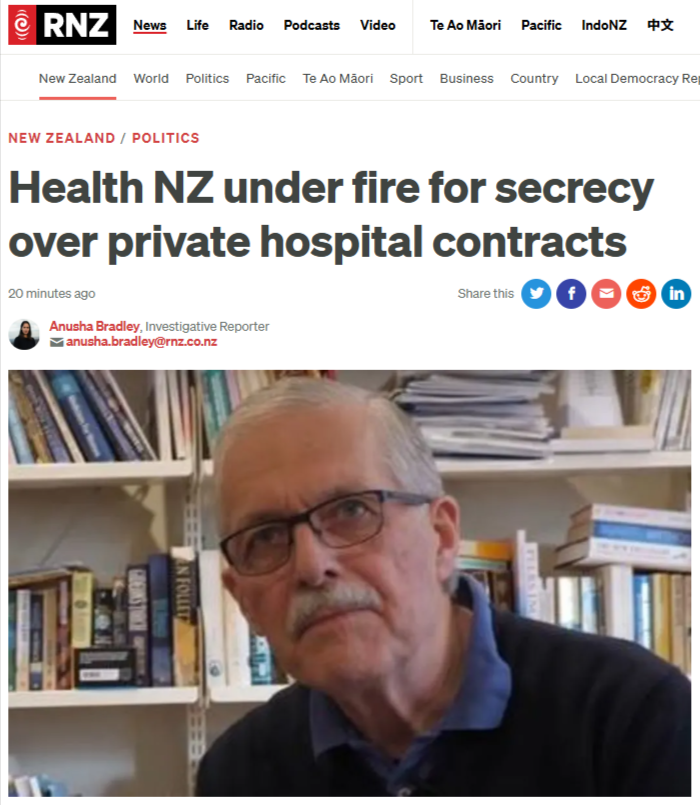
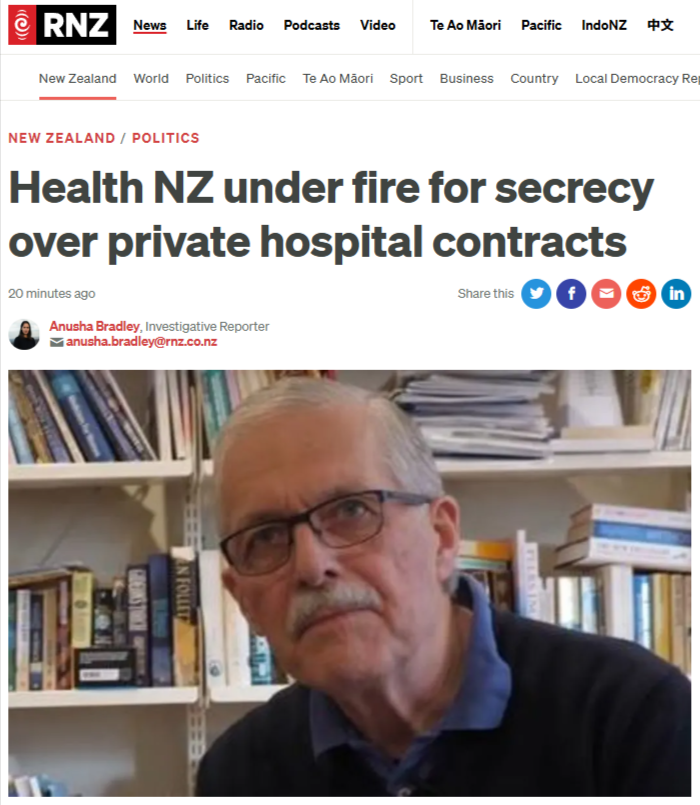
The latest revelation from RNZ's investigative journalism exposes Health New Zealand's refusal to reveal how much taxpayers are paying private hospitals for elective surgeries under new national contracts. This secrecy represents far more than simple commercial sensitivity - it is the deliberate obscuring of a neoliberal agenda that prioritises corporate profits over public health, particularly threatening Māori who rely most heavily on our publicly funded health system.
The government's 'Elective Boost' programme has outsourced thousands of procedures to private hospitals since March, with a further 21,000 expected between July 2025 and June 2026. Meanwhile, Health NZ admitted it did not yet have performance data on outcomes six months into the programme, making it impossible to assess whether patients are receiving better care or taxpayers better value.
This follows a well-documented pattern. Deloitte's own market study found outsourcing volumes had surged by a third since 2019, with costs almost doubling from $162m to $317m. The data reveals not efficiency, but profiteering at public expense.
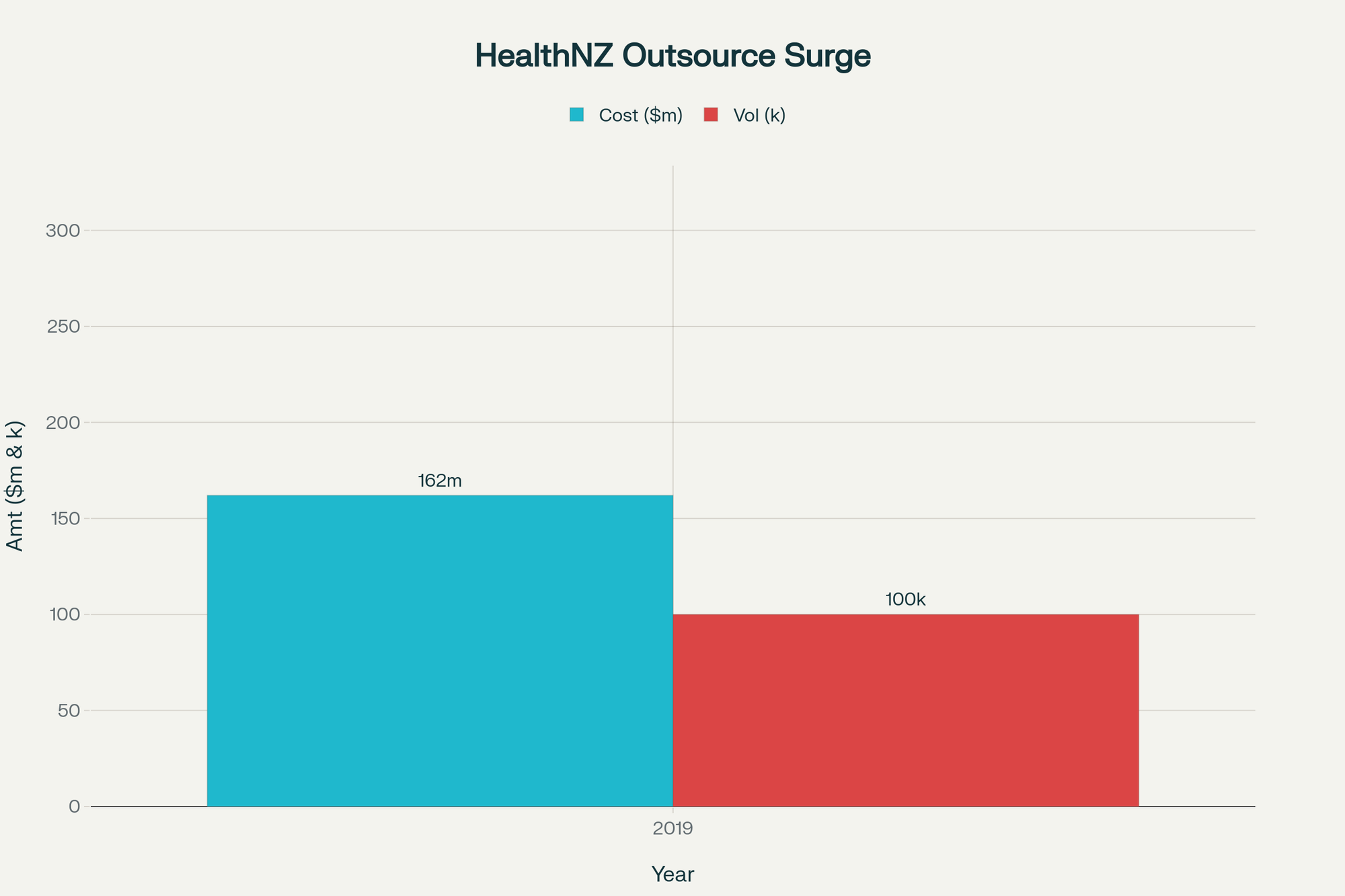
Health NZ Outsourcing Costs Nearly Double While Volumes Increase by Third
The Secret Deals and Hidden Connections
The secrecy surrounding these contracts becomes even more sinister when we examine who benefits. The Deloitte report found Health NZ and ACC together outsourced two-thirds of all elective surgeries to private hospitals - most owned by just three companies: Southern Cross Healthcare, Healthcare Holdings, and Evolution Healthcare, controlling 70 percent of the market.
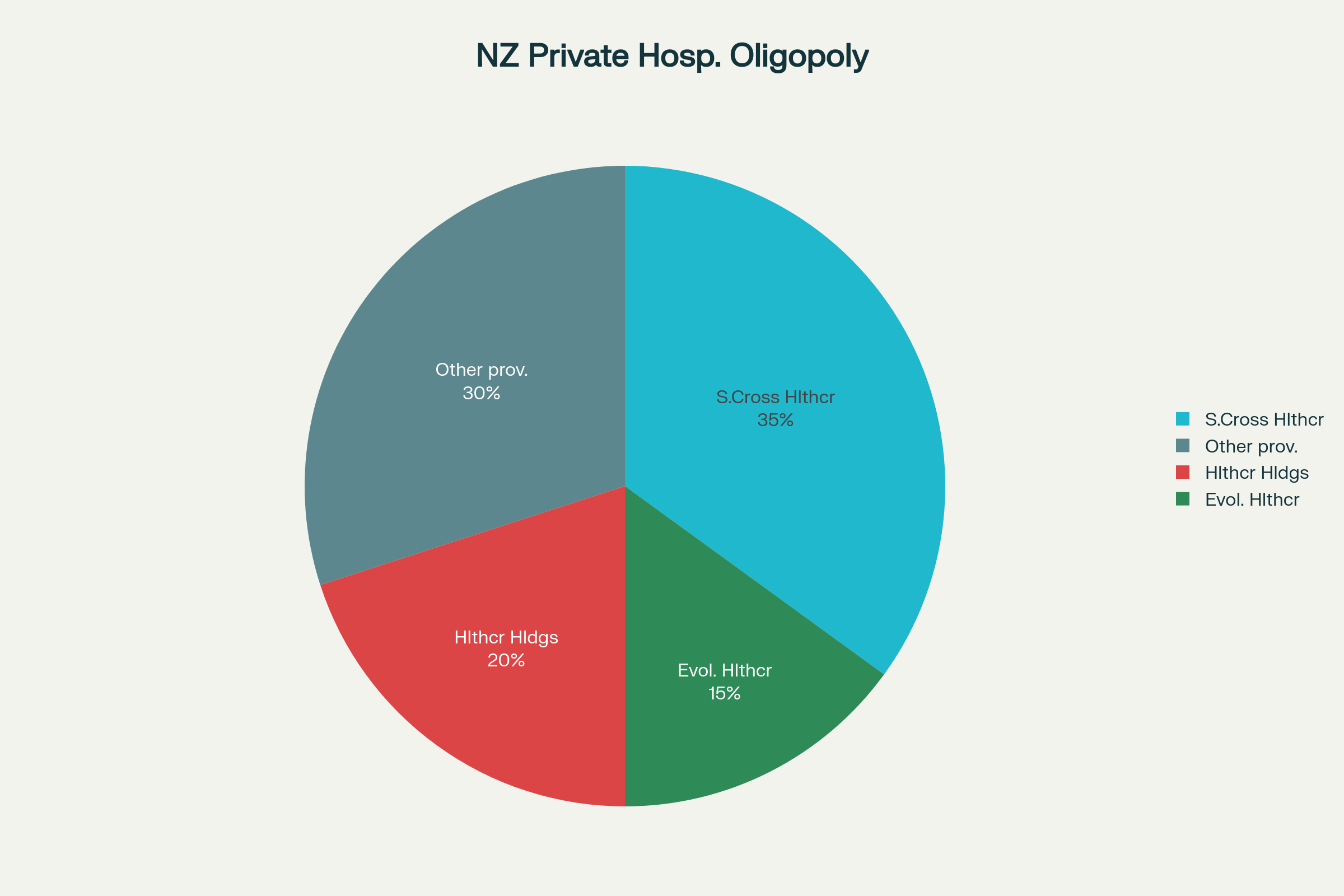
Private Hospital Market Dominated by Three Corporate Giants
Let's follow the money. Southern Cross, the biggest player, was owned by the Southern Cross Health Trust. Evolution Healthcare, which owned Wakefield and Royston Hospitals, was majority owned by the Queensland government. Sir Stephen Tindall's Albert Park Trustee owned a 42 percent stake in Healthcare Holdings, with private equity firm Waterman owning 34 percent.
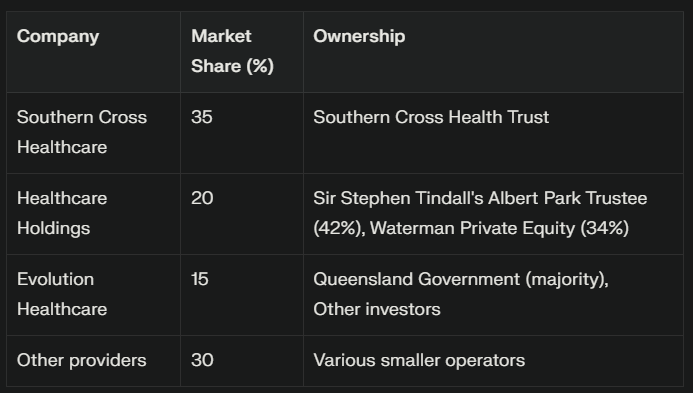
Private Hospital Market Concentration
This oligopoly structure enables price manipulation and market control, while the government's secrecy prevents public scrutiny of whether these corporate giants are extracting excessive profits from our healthcare crisis.
The Timeline of Deception
The chronology reveals calculated manipulation. Internal documents show Health NZ had been urged to consider Public Private Partnerships to tackle elective surgery backlogs as early as March 2024. By March 2025, Health Minister Simeon Brown announced his major overhaul, declaring it was time to "partner" with the private sector.
Crucially, Brown's own office heavily redacted warnings about serious risks in surgery outsourcing, including loss of specialist staff from public to private hospitals and degradation of medical training. The unredacted version warned that outsourcing could lead to increased waiting times for complex cases, "particularly cancer surgery".
By June 2025, Brown had directed Health NZ to give private hospitals 10-year outsourcing contracts, moving from what was sold as a "short-term solution to a backlog" into permanent privatisation.
The Māori Health Catastrophe
This privatisation drive represents a fundamental assault on Māori health equity and Te Tiriti obligations. The evidence is overwhelming that Māori experience wide-ranging health inequities compared with non-Māori, with 32.6% unable to contact a general practitioner due to cost.
Private healthcare exacerbates these inequities in multiple ways. Higher odds of survival have been reported in European infants compared to Indigenous Māori and Pasifika infants across critical healthcare areas. The shift to private provision means Māori and other vulnerable communities are left out, as Brown has yet to reveal any plans to improve health outcomes for these groups.
The Treaty of Waitangi established specific health obligations. Te Tiriti principles for the health system include tino rangatiratanga, equity, active protection, options, and partnership. Privatisation violates all these principles by removing democratic control, creating profit-driven barriers to access, and undermining the Crown's obligation to achieve equitable health outcomes for Māori.
The Neoliberal Ideology Behind the Assault
The privatisation push reflects classic neoliberal ideology prioritising market fundamentalism over human wellbeing. Brown's comments to the BusinessNZ Health Forum revealed his true priorities: supporting business interests over patients. When he states the system was "focused on bureaucratic restrictions, rather than delivery for patients", he deliberately obscures that those "bureaucratic restrictions" are democratic accountability measures protecting public resources.
The Deloitte financial review, used to justify these changes, exemplifies how consultancy firms manufacture crises to enable privatisation. Deloitte Partner David Lovatt had previously argued that "businesses should be able to shape and participate or even deliver reforms on behalf of New Zealand", revealing the corporate capture of policy formation.
International evidence consistently shows private healthcare is more expensive and less equitable. Studies found no improvement in healthcare quality following privatisation, with most financial system-level changes resulting in either inconclusive or deleterious outcomes. Research in Italy found greater private spending resulted in increased avoidable mortality, while each additional €100 per capita of public spending was associated with 1.5% reduction in avoidable mortality.
The Corporate Web of Influence
The corporate connections run deep. Private medical providers like Infratil, which owns radiology facilities, have been pushing for longer contracts for several years. The timing of policy announcements coincides suspiciously with business interests seeking guaranteed revenue streams.
Acting Health Minister Matt Doocey refused to say whether pricing information should be public, instead deflecting with rhetoric about "faster access to surgery." This demonstrates how government ministers prioritise corporate secrecy over democratic transparency.
The revolving door between consultancy firms, private healthcare, and government policy creates inherent conflicts of interest. When the architects of privatisation stand to profit from its implementation, public interest becomes secondary to private gain.
The Systematic Destruction of Public Healthcare
This privatisation scheme represents the culmination of deliberate public system sabotage. Years of underfunding pushed the public system to the brink, creating artificial crises that justify private sector "solutions."
General surgeon Phil Bagshaw warned: "Year on year, we've been underfunding the system. The worry is that we get to a tipping point where it's not possible to bring it back to the situation where it should be". This represents the classic neoliberal strategy: starve public services, then claim privatisation is inevitable.
The Public Service Association correctly identified this as a "slippery slope" towards an American-style health system, where care depends on personal wealth rather than medical need. PSA national secretary Fleur Fitzsimons said: "This is part of an international playbook, where governments hollow out public services - starve them of funding - and then say privatisation is the only answer".
The Broken Promises and Missing Accountability
Six months into the programme, Health NZ admitted it did not yet have performance data on outcomes such as post-surgery infections, complications requiring transfers back to public hospitals, cancellations, patient no-shows, and complaints. This absence of accountability measures reveals the government's real priorities: profits over patients.
Former health minister Ayesha Verrall pointed out that overseas research showed outsourcing was generally more expensive, yet the government proceeds without evidence of better outcomes. When questioned about using commercial sensitivity to withhold pricing information, Verrall noted that "in many instances in a region there'd only be one private hospital being contracted with, so there's no competitor that stands to gain."
This exposes the "commercial sensitivity" excuse as a smokescreen for avoiding public scrutiny of excessive corporate profits extracted from healthcare desperation.
Implications: The Death of Democratic Healthcare
These secret deals represent more than healthcare policy - they constitute a fundamental assault on democratic governance and Treaty obligations. When governments can spend billions of public money through opaque contracts with private corporations, democratic accountability dies.
The implications for Māori are particularly severe. Māori bear greater shares of negative health impacts from current inequitable systems, and privatisation will worsen these disparities. The profit motive inherently conflicts with equity goals, as private providers seek profitable procedures while avoiding complex, expensive cases more common among disadvantaged populations.
The broader implications extend to constitutional governance. When corporate interests capture policy formation through consultancy contracts and revolving door appointments, the separation between public interest and private profit collapses. We risk becoming a corporate state where democratic institutions serve business rather than citizens.

The Māori Green Lantern fighting misinformation and disinformation from the far right
Reclaiming Our Hauora
The evidence is clear: Simeon Brown's secret hospital deals represent corporate capture of our healthcare system, violating Te Tiriti obligations and democratic principles while enriching private interests at public expense. This is not healthcare reform - it is organised theft of public resources to subsidise corporate profits while abandoning our most vulnerable whānau.
We must demand immediate transparency: full disclosure of all contract terms, pricing, and performance data. We must reject the false narrative that privatisation improves efficiency when all evidence shows it increases costs while reducing equity. Most importantly, we must recommit to the Treaty principles that guarantee Māori health equity through properly funded, democratically controlled public healthcare.
Our tīpuna understood that health is collective, not individual - it encompasses the wellbeing of all our people, not just those who can afford private insurance. The corporate colonisers seek to destroy this understanding, replacing communal care with individual consumer transactions.
We will not let them succeed. The fight for public healthcare is the fight for Te Tiriti, for democracy, and for the survival of our communities. Kia kaha - stay strong.
The MGL understands these tough economic times for whānau so please only contribute a koha if you have capacity and wish to do so: HTDM: 03-1546-0415173-000.
Ngā mihi nui,
Ivor Jones - The Māori Green Lantern
Kaitiaki for Truth and Justice