“The Corporate Water Grab Disguised as "Local Solutions"“ - 23 August 2025
Neoliberalism's Latest Smokescreen: Making Ratepayers Pay for Private Profit
Mōrena ano,
When I read about Ōpōtiki District Council being forced to fork out seventy million dollars over ten years for water infrastructure under the government's "Local Water Done Well" legislation, my blood boiled. Here we have another classic example of neoliberal doublespeak - packaging corporate welfare as community empowerment while loading ordinary whānau with crushing debt.
This is not about giving communities control. This is about asset stripping, rate hiking, and setting up water infrastructure for eventual privatisation. The Māori Green Lantern calls out this con job for what it truly represents: another step toward commodifying our most sacred taonga - wai.
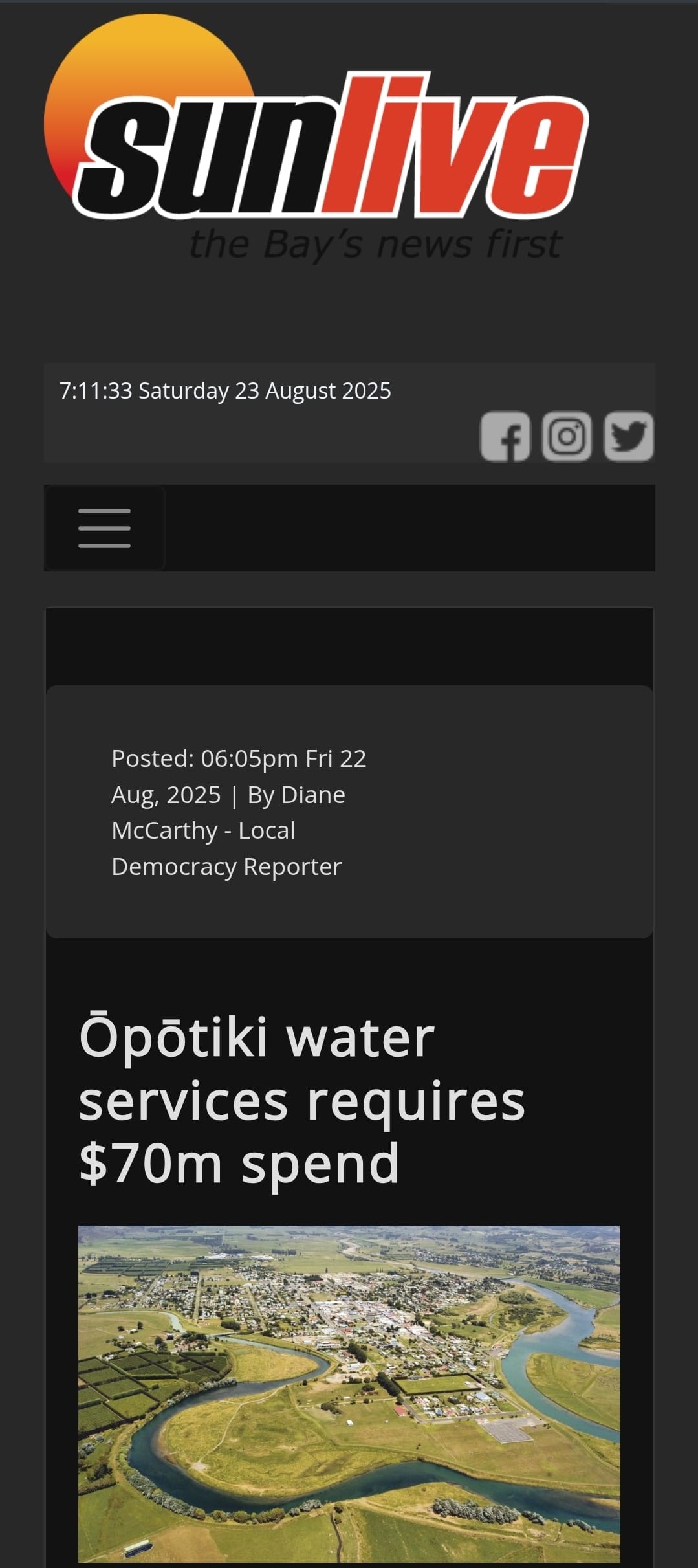
https://www.sunlive.co.nz/news/370518---p--tiki-water-services-requires--70m-spend.html
Background: From Three Waters Resistance to Corporate Capture
The coalition government's dismantling of Labour's Three Waters reform was never about protecting local democracy. National and ACT opposed the reforms not because they cared about Māori co-governance or community ownership, but because the reforms included explicit protections against privatisation.
The far-right orchestrated a vicious campaign against Three Waters, weaponising anti-co-governance rhetoric to mask their real agenda: opening New Zealand's water infrastructure to private capital. As one academic analysis noted, "Public discourse on the Three Waters reforms has been dominated by anti-co-governance rhetoric, concerns around privatisation and loss of local control" - exactly the smokescreen needed to distract from corporate interests.
Now with their "Local Water Done Well" replacement, they've achieved their objectives: eliminated Indigenous rights in water governance while creating structures that facilitate private sector involvement. ACT has been completely transparent about this, explicitly proposing "public-private partnerships to attract investment from financial entities such as KiwiSaver funds and ACC".
Ōpōtiki's Impossible Choice
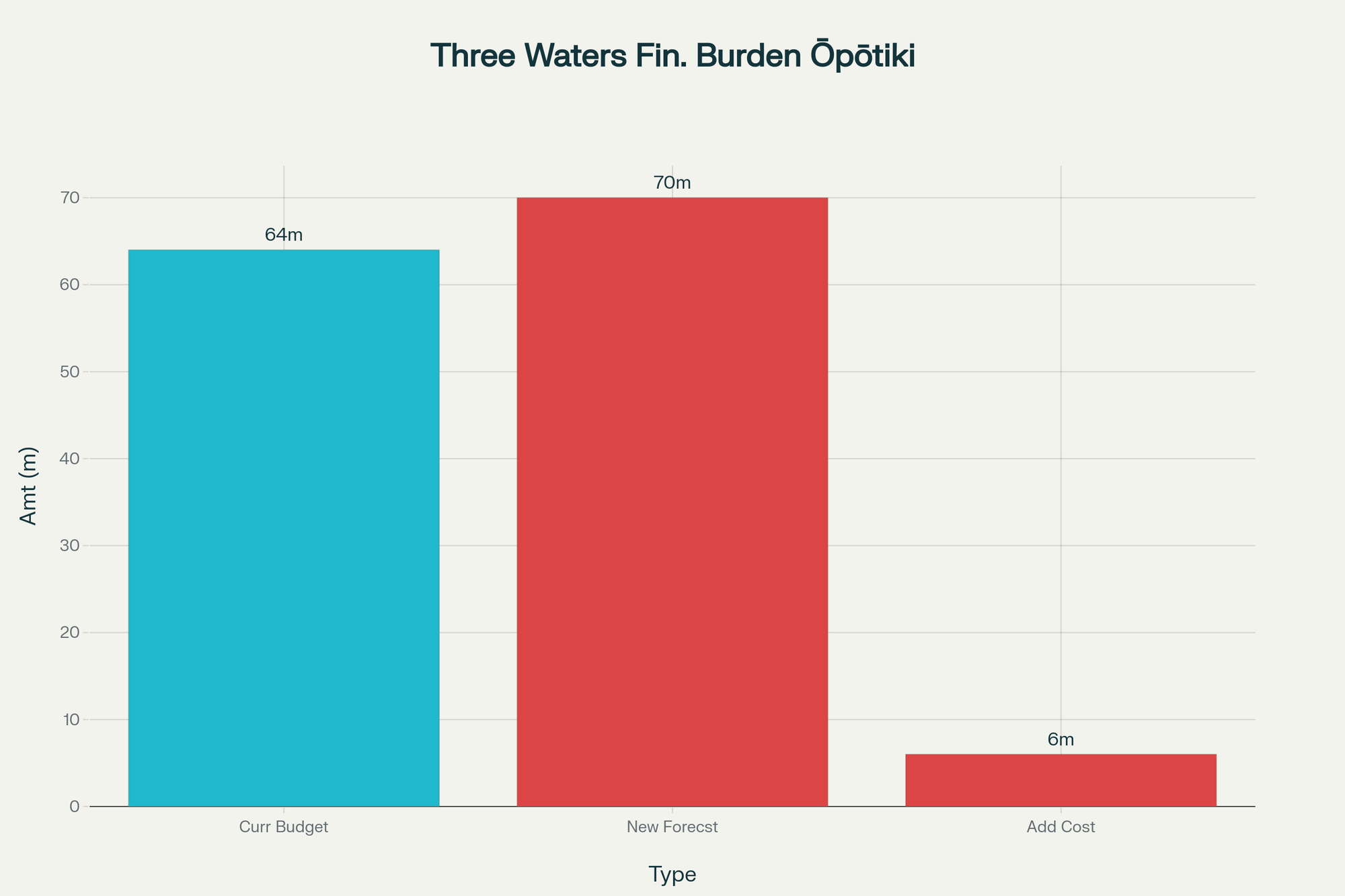
Financial impact of three waters reform on Ōpōtiki District showing $6 million additional burden
The Ōpōtiki situation perfectly illustrates the neoliberal trap now snaring communities nationwide. With a population of roughly 9,200 people across 3,500 households, this Eastern Bay of Plenty community faces a crushing $70 million bill over the next decade - $6 million more than originally budgeted. That works out to approximately $2,000 per household per year just for water compliance.
The council adopted its Water Services Delivery Plan "yesterday" according to the Sun Live report, rushing through a plan that must demonstrate how they'll meet future regulatory requirements under the government's Local Water Done Well framework. Despite 71 percent community support for council control, the financial reality creates impossible choices.
Councillor Tom Brooks captured the bind perfectly: "You've got to do something because legislation means we've been told we've got to do it. It's going to be painful one way or another". This isn't local choice - it's policy coercion disguised as community autonomy.
Analysis: The Neoliberal Water Con Exposed
Manufacturing Consent Through Financial Coercion
The government's "Local Water Done Well" framework is a masterclass in manufacturing consent through economic pressure. By imposing expensive regulatory requirements while limiting funding options, they force communities to choose between unaffordable rate increases or surrendering control to private entities with greater borrowing capacity.
This follows the classic neoliberal playbook: starve public services of resources, create crisis conditions, then present privatisation as the "rational" solution. Ian Morton, the consultant who prepared Ōpōtiki's plan, warned of "long-term risks around affordability" - setting up exactly the crisis that justifies private sector "rescue."
Hidden Connections: The Consultant-Government Revolving Door
The corporate capture runs deeper than policy frameworks. Three Waters reforms proved "particularly lucrative for management consultants" with "Three of the Big Four" consulting firms being employed. These same firms now profit from implementing the replacement system, creating Financial Services Delivery Plans that coincidentally recommend exactly the structures most beneficial to private capital.
The revolving door between government departments and private consulting firms ensures policy development serves corporate interests over community needs. These consultants don't work for free - their hefty fees become part of the compliance burden loading communities with debt.
International Water Grab Precedents
This isn't happening in isolation. Globally, water privatisation has led to "massive increases in the amount households are charged" while residents "lose input into decision-making about water as well as information about water supply".
International experience shows councils eventually face "budget overruns, sloppy service, erosion of environmental standards, public health crises and corruption" under privatised systems. The UK provides a perfect case study - ten regional water authorities formed in 1974 were sold to the private sector in 1989, creating the dysfunctional system that has left British waterways polluted with sewage.
Eliminating Indigenous Rights Through Economic Pressure
The shift from Three Waters to Local Water Done Well wasn't just about privatisation - it was about eliminating Indigenous rights in water governance. The previous reforms included "robust mechanisms to provide for iwi/Māori interests" which the coalition government systematically removed.
By forcing communities to focus on affordability rather than partnership, the new framework sidelines Māori completely. As Te Pāti Māori noted, "the reality is they fell short" in recognising what was promised under Te Tiriti. This economic coercion becomes a tool for removing Indigenous rights - communities struggling with compliance costs have no bandwidth to negotiate genuine partnership.
The Rating Cap Deception
Councillor Barry Howe asked how the plan would be affected by government plans to create a rating cap, revealing another layer of the neoliberal trap. The consultant's response that "any future rating cap would not include core services such as three waters delivery" exposes the cynical calculus.
The government will cap rates for most services, forcing councils to cut community programmes and public services, while exempting water infrastructure to ensure private contractors get paid. This drives a wedge between water compliance and community wellbeing - exactly what's needed to make privatisation seem reasonable.
Implications: The Corporate Endgame Revealed
Setting Up Privatisation Through Unsustainable Debt
The $70 million Ōpōtiki burden isn't unique - it's being replicated across the country as councils must submit water plans by September 2025 under Local Water Done Well. With 90 percent of Gisborne submitters favouring council control and 87 percent of Selwyn submissions opposing council-controlled organisations, communities overwhelmingly want to keep water public.
But community preferences don't matter when debt servicing becomes impossible. The real agenda reveals itself when councils like Selwyn ignore 87 percent opposition to establish Selwyn Water Limited - the first council to create a separate company for water management. This company structure makes future privatisation much easier.
Foreign Investment and Water Infrastructure
The coalition government's broader agenda includes relaxing foreign investment rules through David Seymour's Overseas Investment Amendment Bill. This would "significantly reduce effective scrutiny of foreign investments" while creating fast-track approval processes.
Combined with unsustainable water infrastructure debt, this opens the door for international water corporations to acquire New Zealand assets. The same global companies that have commodified water worldwide will present themselves as the solution to council debt crises.
Impact on Tangata Whenua and Environmental Protection
The elimination of co-governance removes the last substantial protection for water as a taonga. Without Māori voices in governance structures, there's nothing preventing water management decisions that prioritise profit over environmental and spiritual values.
As iwi leaders warned, they didn't want "the concept of co-governance to be used to stoke fear" while National and ACT "fan the flames of racism and anti-Māori sentiments". The far-right successfully weaponised racism to eliminate Indigenous environmental protection.
Defending Wai as Taonga
The Ōpōtiki water crisis isn't an isolated problem requiring a technical solution - it's the intended outcome of a system designed to transfer public assets to private control while eliminating Indigenous rights. The $70 million burden represents corporate welfare disguised as community responsibility.
Every dollar extracted from Ōpōtiki ratepayers flows to consultants, contractors, and compliance systems that serve capital rather than community. The same pattern plays out across the country as Local Water Done Well creates unsustainable financial pressure that will justify privatisation.
We must recognise this for what it is: economic colonisation through water commodification. The coalition government eliminated Māori co-governance, loaded communities with debt, and created structures that facilitate private sector takeover. They call it "local control" while systematically removing genuine local power.
The solution isn't better policy tweaks within the neoliberal framework - it's rejecting the entire premise. Water is a taonga, not a commodity. Community wellbeing matters more than corporate profit. Indigenous rights in water governance aren't negotiable.
Ōpōtiki's struggle represents every community's struggle against the corporate water grab. We must stand together in protecting wai for future generations, not shareholders' dividends.
E hoa ma, if you find value in The Māori Green Lantern's mahi exposing these corporate cons, please consider a koha to support this work: HTDM: 03-1546-0415173-000. Times are tough for whānau right now, so only contribute if you have capacity and wish to support the cause of truth-telling in our communities.
Kia kaha, kia maia, kia manawanui
The Māori Green Lantern