“The Education Minister's Reality TV Skills Are Finally Being Put to Use - For All the Wrong Reasons” - 27 August 2025
How Erica Stanford's NCEA Demolition Serves Her Corporate Masters While Destroying Equity for Our Mokopuna

Kia ora and Welcome to the Destruction: The Neoliberal Bulldozer Flattens Māori Education.
In Māori culture, we understand the concept of whakapapa - the interconnectedness of all things, the way that events, people, and decisions ripple through generations. As I write this piece examining Education Minister Erica Stanford's devastating proposal to eliminate NCEA , I am reminded that nothing happens in isolation. This attack on educational equity is not an isolated policy decision - it is the latest manifestation of a decades-long neoliberal assault on Māori self-determination and the public good.

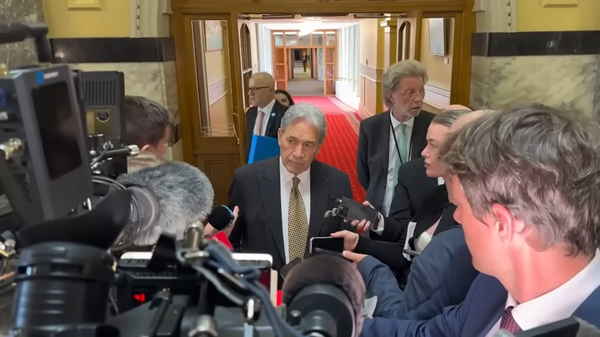
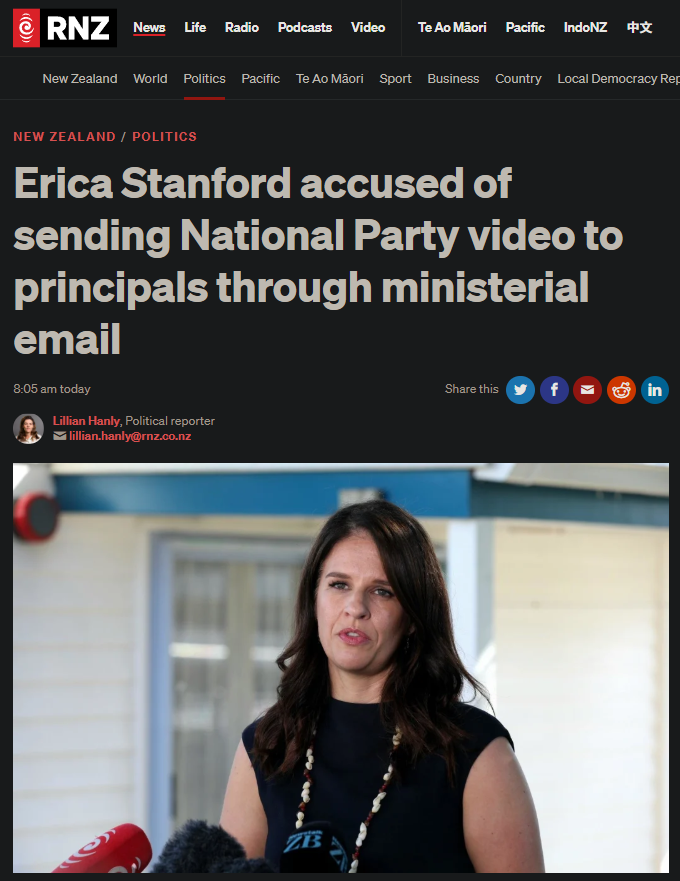
Erica Stanford, New Zealand National Party politician, pictured in an indoor setting with natural light and a casual backdrop
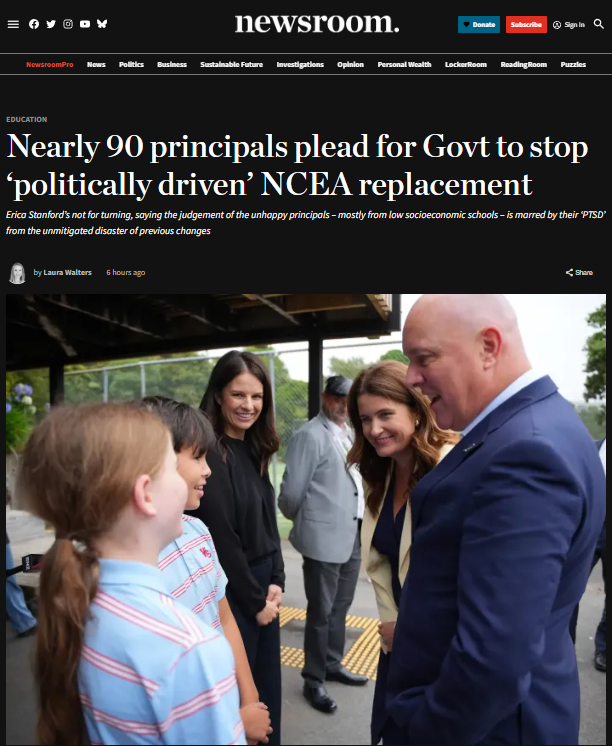
The whakatōhea and whakatōhea that this government represents are clear: the systematic dismantling of systems that serve Māori and Pasifika learners in favor of structures that benefit the privileged few. When 89 school principals - the very people charged with educating our tamariki - write an urgent letter pleading for the government to halt this "politically driven" demolition , we must ask ourselves: who is really being served by this destruction?
Background: From Television Producer to Education Destroyer
To understand how we arrived at this moment of educational vandalism, we must examine the whakapapa of power that brought Stanford to this position. Erica Louise Stanford, née Poppelbaum, was born in 1978 - a child of neoliberalism's rise in Aotearoa. Her path to power reveals the very networks that now threaten our children's futures.
Stanford spent her early career in export sales and as a television producer, working on reality shows including "Noise Control" and "Piha Rescue". As she herself acknowledged in her maiden speech: "My skills in reality TV hold me in good stead for my time in this House". How prophetic those words now seem - Stanford has indeed turned education reform into a grotesque reality show, complete with manufactured drama and predetermined outcomes.
But Stanford's real political education came through her four-year apprenticeship with Murray McCully, the National Party's "Machiavellian Dark Prince". McCully, who held the East Coast Bays seat for three decades , is described by Stanford as her "political mentor" and someone she considers "a political master".
This mentorship reveals everything we need to know about Stanford's approach to governance. McCully built his career as National's back-room string-puller, credited with engineering leadership changes and maintaining the party's neoliberal orthodoxy. His legacy includes the controversial Saudi sheep deal and a reputation for making departments "dysfunctional" through restructuring. Is it any wonder that Stanford's approach to education involves similar destruction?
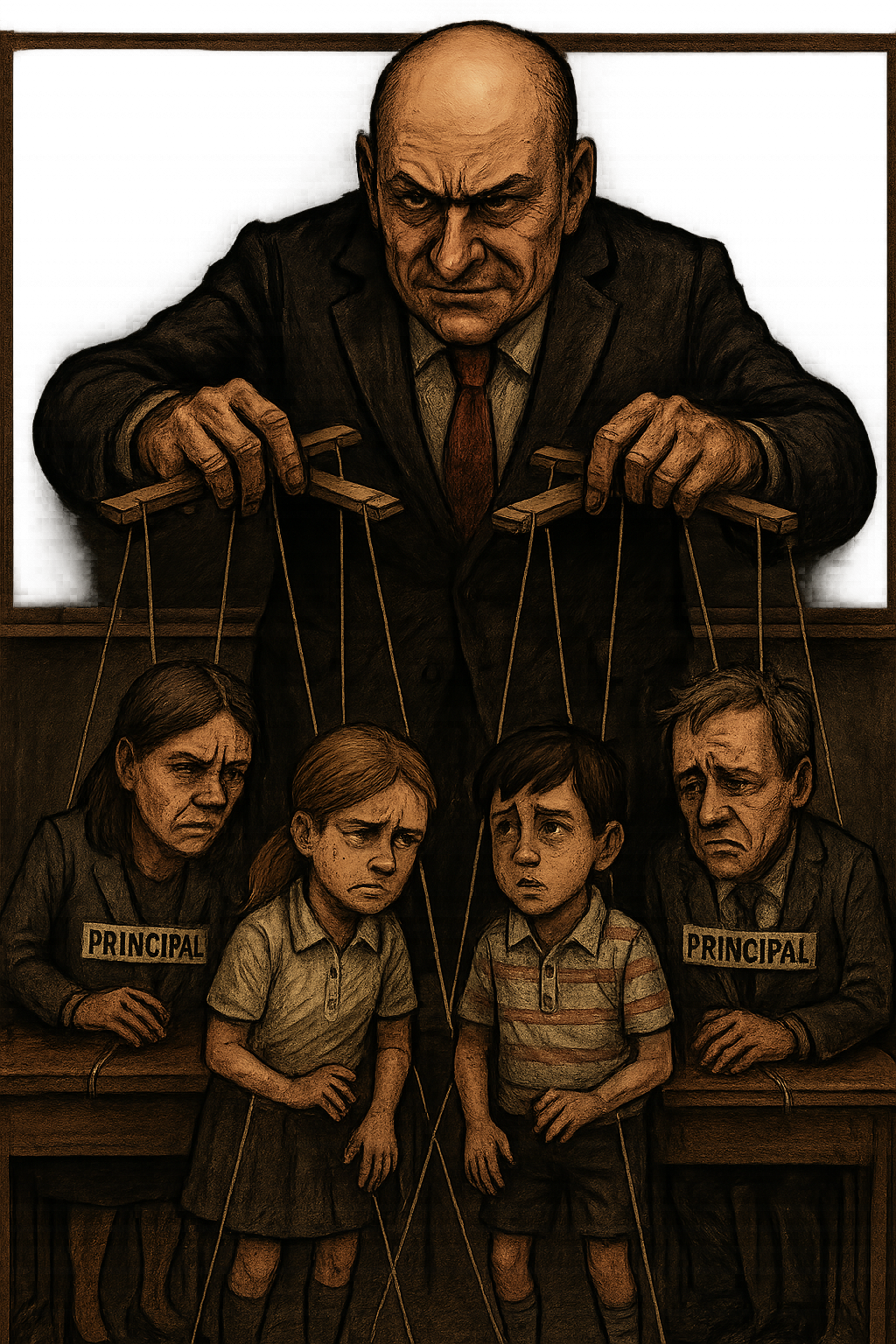
Visual metaphor showing how neoliberal forces manipulate education policy
Understanding NCEA: A System Designed for Equity
Before we examine Stanford's wrecking ball approach, we must understand what NCEA represents and why it threatens neoliberal education merchants. NCEA was introduced between 2002 and 2004 to replace the old School Certificate, Sixth Form Certificate and Bursary qualifications. Crucially, it was designed to address the systemic inequities of the previous system.
The old system was a nightmare for Māori and Pasifika learners. It valued only traditional academic subjects and used norm-based assessment that predetermined failure rates. As researchers noted, NCEA represented "a shift away from viewing vocational learning as less valuable and not a viable path to formal qualifications".
For Māori learners, NCEA has been transformative. Students at kaupapa Māori schools achieved better NCEA results than their peers at comparable English-medium schools, with achievement rates of 63 percent at level 1, 72 percent at level 2 and 73 percent at level 3.
This success terrifies those who profit from educational failure. NCEA's flexibility allows for mātauranga Māori, recognizes diverse forms of learning, and provides multiple pathways to success. In other words, it democratizes education in ways that threaten the educational apartheid that neoliberalism requires.
The Neoliberal Assault: Stanford's Corporate Connections
Stanford's proposal isn't education reform - it's education privatization wrapped in the language of "standards." The government plans to replace NCEA Levels 2 and 3 with "New Zealand Certificate of Education" and "Advanced Certificate" systems that require students to take five subjects and pass four, using A-E grading and marks out of 100.
This isn't coincidence - it's the predictable outcome of a system designed to serve corporate interests. Stanford's reforms place "heavy emphasis on aligning education with industry needs" and focus on "creating work-ready graduates, rather than well-rounded individuals".
The deeper connections become clear when we examine the broader privatization agenda. The coalition government has pledged $153 million over four years to establish up to 15 new charter schools and convert 35 state schools to charter schools. These charter schools - publicly funded but privately operated - represent the classic neoliberal model of socializing costs while privatizing profits.
Stanford has already appointed her former boss Murray McCully to lead a "Ministerial Inquiry into the Ministry of Education's School Property Function," paying him $2,200 per day. This "jobs for the boys" approach reveals the networks of power that drive these reforms.
The Devastating Impact on Māori and Pasifika Learners
The principals who signed the letter pleading for Stanford to halt her destructive agenda understand something she refuses to acknowledge: the proposed system "is likely to disadvantage students who were Māori, Pasifika, neuro-diverse, migrants and second language learners, transient students and those from lower socio-economic backgrounds".
The evidence is already overwhelming. Current NCEA literacy and numeracy tests show that schools with more socioeconomic barriers had pass rates of just 35 percent in reading, 35 percent in writing and 20 percent in numeracy. Meanwhile, schools with fewer barriers had pass rates of 71 percent in reading.
This isn't about "raising standards" - it's about creating educational gatekeepers that exclude Māori and Pasifika learners from qualification pathways. As research shows, "Māori have higher rates of leaving school without NCEA than Pākehā students (18 percent versus 7 percent)". Stanford's proposals will make this crisis exponentially worse.
The Post-Primary Teachers' Association's Pasifika representative Angela Maisiri warns that the changes "signal a shift toward a narrowed, standardised, and monocultural approach to curriculum and assessment". This is exactly right - Stanford's reforms represent a return to the colonial education model that treated Māori culture and knowledge as inferior.
The AI Deception: Technology as a Tool of Oppression
Perhaps the most sinister aspect of Stanford's agenda is her embrace of artificial intelligence for assessment. Stanford boasts that "we're extraordinarily advanced in terms of the rest of the world" in using "digital exams, AI marking".
This isn't progress - it's technological colonization. Research reveals that AI marking tools show "markedly different accuracy levels depending on the type of assessment" and demonstrate far greater consistency when grading work by privileged students than those from disadvantaged backgrounds.
When AI systems are trained primarily on the work and perspectives of privileged populations, they inevitably reproduce and amplify existing biases. For Māori and Pasifika learners, whose ways of knowing and expressing knowledge may not conform to Pākehā academic conventions, AI marking represents a double colonization - first by the content standards, then by the technological systems designed to enforce those standards.
The Hidden Networks: Following the Money
To understand who benefits from Stanford's destruction of NCEA, we must follow the money and examine the networks of power. The coalition's education reforms are opening "the door to private business interests in public education" through charter schools, private curriculum providers, and contracted teacher professional development.
This represents what researchers call "privatization by stealth" - the gradual transfer of public resources to private actors without the democratic debate such massive changes deserve. As one analysis notes, "Teachers must also engage in professional development to support implementation. All of the professional development in literacy, for example, is delivered by private providers, who can promote their own programmes and resources".
Stanford's appointment of Murray McCully to review school property represents more than nepotism - it reveals the revolving door between National Party politicians and lucrative consulting roles. The McCully inquiry's recommendation to create "a new entity separate from the ministry" to manage school property sets the stage for further privatization of public assets.
The Māori Response: Protecting Our Mokopuna
The response from Māori education leaders reveals both the threat posed by Stanford's agenda and the strength of our resistance. Rawiri Wright, co-chairperson of Te Rūnanga Nui o ngā Kura Kaupapa Māori, described Stanford's proposals as "a return to the bad old days of the school certificate regime and that didn't do us any favours as Māori people".
But Wright also identified an opportunity: "Perhaps the time has come for Kura Kaupapa Māori and Te Aho Matua schools to consider establishing our own qualifications and assessment strategies, aligned with the learning programmes of the Māori wānanga across the country".
This represents the true path forward - not the corporate-captured qualifications Stanford offers, but indigenous-designed assessment systems that recognize mātauranga Māori and serve Māori learners. When the colonizer's education system fails us, we must build our own.

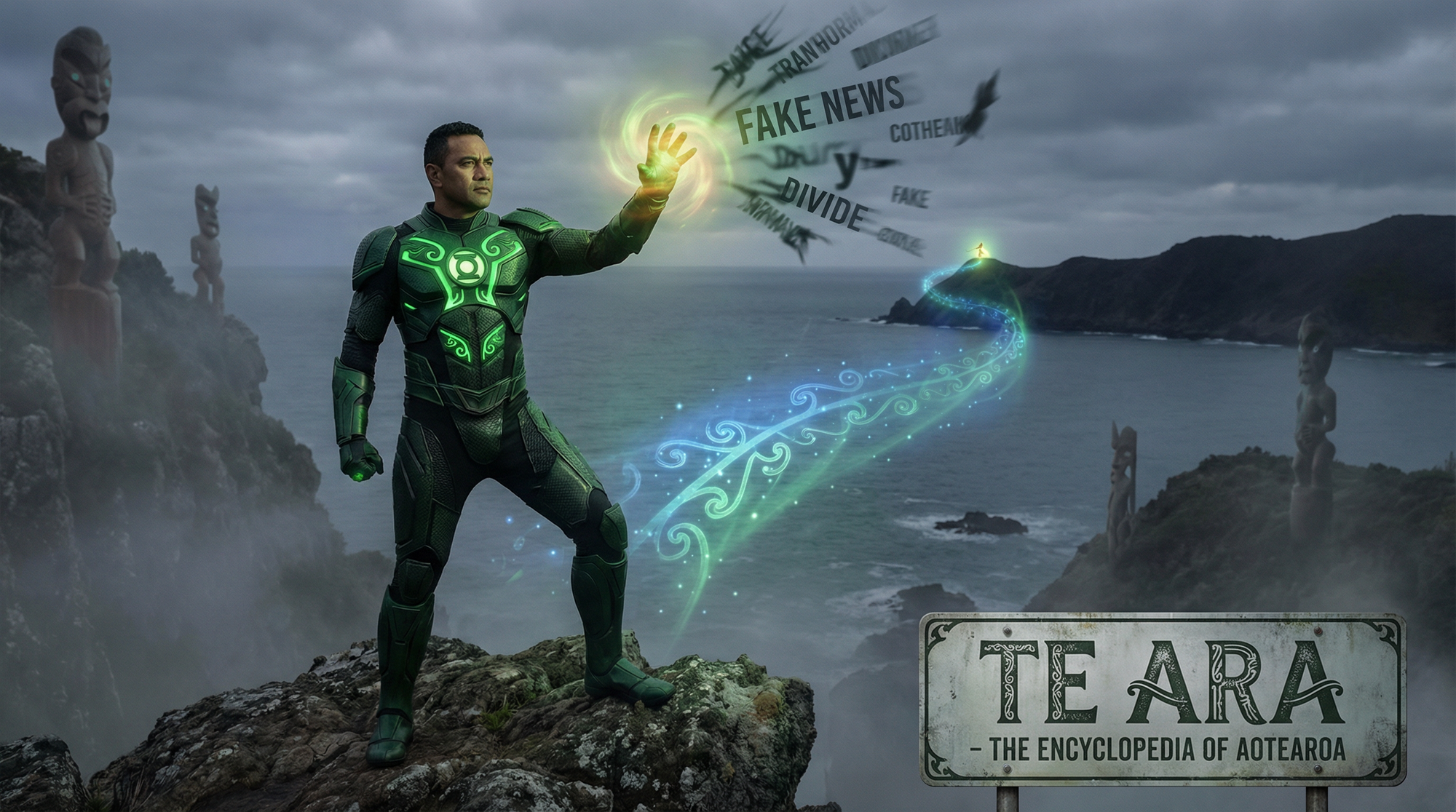
The Māori Green Lantern fighting misinformation and disinformation from the far right
Implications: The Broader Assault on Tino Rangatiratanga
Stanford's education reforms cannot be understood in isolation from the broader assault on Māori rights being waged by this coalition government. The same government pushing charter schools and AI assessment has also attacked co-governance, undermined Te Tiriti obligations, and promoted "one law for all" rhetoric.
This is the neoliberal playbook in action: create crisis, offer privatization as the solution, and use the language of "choice" and "standards" to mask the transfer of public resources to private actors. As education researchers note, "neoliberal policies have come to be seen as a 'middle-class capture' of the education system, as that socio-economic sector has been best able to exploit 'choice' policies".
For Māori, the stakes could not be higher. Research shows that "two-thirds of Māori students live in the poorest parts of the country". Stanford's reforms will create additional barriers for these learners while opening new profit streams for education corporations.
The 89 principals who signed the letter understand this dynamic. They warn that Stanford's proposals pose "huge risks to equity and inclusion" and note that "the proposed system is designed for university-bound students at the expense of students with other strengths and pathways".
Call to Action: Defending Our Future
The time for polite debate has passed. Stanford's assault on educational equity represents an existential threat to Māori and Pasifika educational aspirations. Her background as a reality TV producer has prepared her well for the theater of politics, but governing requires understanding the real-world consequences of policy decisions.
We must resist this corporate capture of our education system through every means available. This includes supporting the 89 principals who have courageously spoken out, demanding genuine consultation with Māori and Pasifika communities, and building alternative educational pathways that serve our people's needs.
The evidence is clear that NCEA, despite its flaws, has enabled Māori and Pasifika learners to succeed in ways the old system never allowed. Stanford's proposal to return to an examination-based system that failed our people for decades is not reform - it is educational vandalism designed to serve corporate interests.
We must also expose the networks of power that enable these attacks. Stanford's appointment of her former boss to lucrative consulting roles while cutting public education funding reveals the "jobs for the boys" mentality that drives this government. When the same politicians who attack public spending appoint their cronies to $2,200-per-day consulting roles , their true priorities become clear.
The fight for educational equity is ultimately a fight for tino rangatiratanga - the right of Māori to determine our own educational futures. Stanford's corporate masters may have the power to impose their vision temporarily, but they cannot destroy the connections between our people and our aspirations for our mokopuna.
As we face this assault on our children's futures, we must remember the words of our tīpuna: "He aha te mea nui o te ao? He tangata, he tangata, he tangata." What is the most important thing in the world? It is people, it is people, it is people. Our people deserve better than Stanford's corporate education factory. They deserve an education system that serves their dreams, not the profit margins of her political masters.
For readers who find value in my work exposing the neoliberal assault on Māori rights and public services, please consider offering a koha to support this kaupapa: HTDM: 03-1546-0415173-000. I understand these are challenging economic times for many whānau, so please only contribute if you have the capacity and wish to support this mahi.
Ngā mihi nui,
Ivor Jones - The Māori Green Lantern