“The Far-Right Attack on Māori Democracy” - 26 July 2025
When Waikato Regional Council's anti-LGNZ rhetoric reveals deeper colonial violence
Mōrena ano.
The Waikato Regional Council's dramatic flip-flop over Local Government New Zealand membership represents far more than bureaucratic politicking - it exposes the insidious ways far-right rhetoric infiltrates local government to undermine Māori representation and democracy itself. This pseudo-democratic circus reveals how white supremacist narratives dress themselves in cost-cutting rhetoric while targeting Indigenous voices at the council table.
Background: The Colonial Foundation of Local Government
Local government in Aotearoa operates as a continuing instrument of colonisation, designed to extract resources from Māori land while denying tangata whenua meaningful participation in decision-making processes1. The establishment of Local Government New Zealand (LGNZ) as the advocacy body for councils created a centralised voice for predominantly Pākehā- historically excluded Māori perspectives.
The current system perpetuates what researchers describe as "liminal local government democracy" - a half-hearted attempt at inclusion that maintains colonial power structures while offering tokenistic representation to Māori communities. This context is essential for understanding how attacks on LGNZ function as proxy attacks on any attempt to decolonise local governance.
The Orchestrated Campaign Against LGNZ
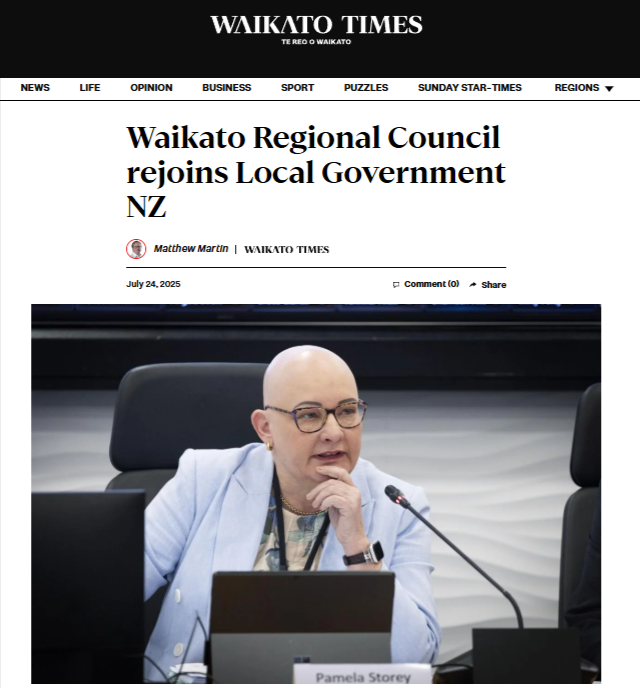
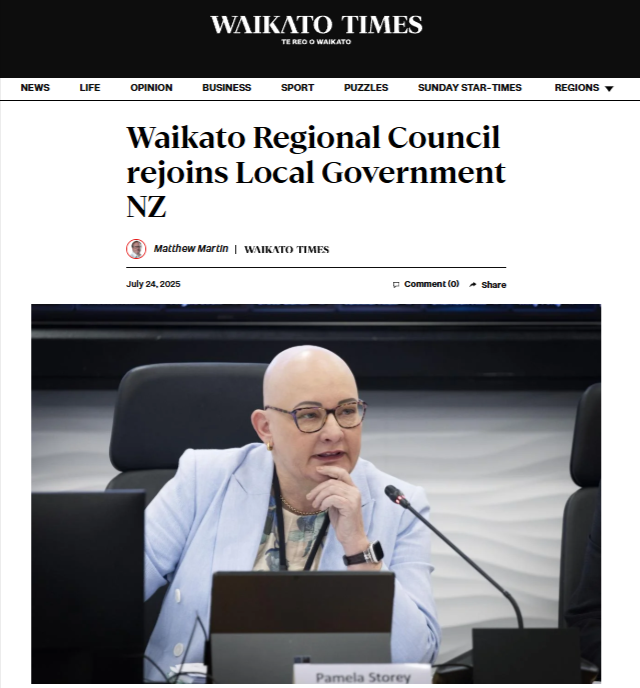
The Waikato Regional Council controversy follows a predictable pattern. Initially voting 6-5 to leave LGNZ, councillors cited the organisation's alleged "left-leaning" bias and excessive costs. When the decision was reversed by chairperson Pamela Storey's casting vote after a tied 7-7 result, the rhetoric intensified.
Councillor Chris Hughes exemplified the far-right playbook, claiming LGNZ had become "extremely political" and "swung far-left". Warren Maher deployed classic neoliberal talking points about "money management" concerns and "unnecessary expenditure" to an "increasingly pro-left organisation."
This campaign extends far beyond Waikato. Eight councils have now left LGNZ, with the Taxpayers Union celebrating each departure as a victory against what they falsely characterise as left-wing activism.
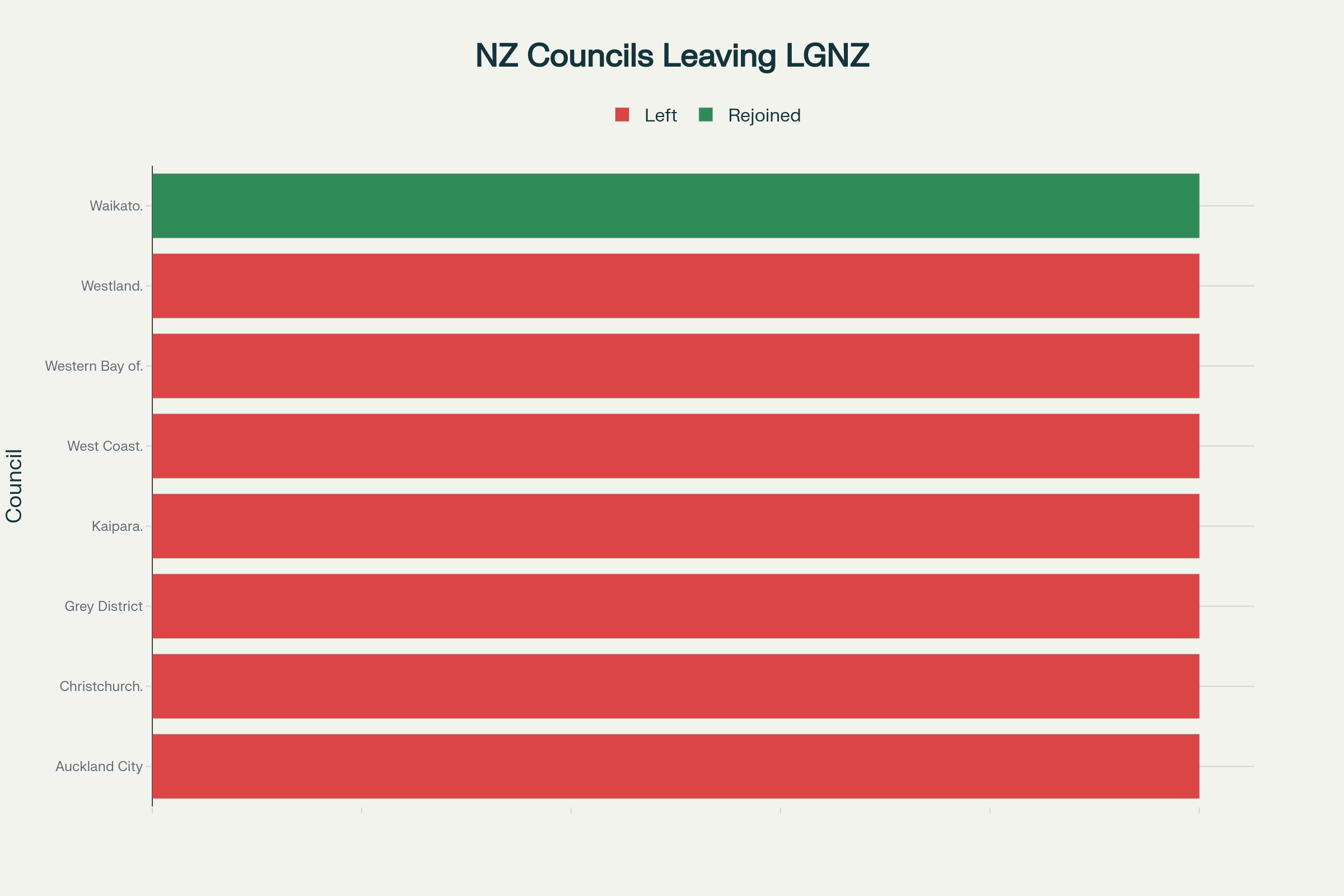
Councils that have left or changed their Local Government New Zealand (LGNZ) membership status, showing the pattern of exits from the national advocacy body
Analysis: Decoding the Far-Right Playbook
The Language of Racial Resentment
The attack on LGNZ as "far-left" reveals the white supremacist logic underlying these complaints. What councillors actually object to is LGNZ's support for Māori ward representation and opposition to the coalition government's rollback of Indigenous rights. When Chris Hughes claims LGNZ is "not in touch with reality", he's articulating the colonial mindset that views Māori political participation as unrealistic or excessive.
The timing is not coincidental. These attacks intensified after LGNZ opposed the government's Māori ward referendum legislation, calling it "complete overreach." For far-right councillors, any defence of Māori democratic rights becomes evidence of dangerous political bias.
The Taxpayers Union's Orchestrated Campaign
The Taxpayers Union operates as a 200,000-member pressure group that channels white grievance through fiscal conservatism. Their executive director Jordan Williams has branded LGNZ as "nothing but a left-wing Labour Party political campaign", revealing how they weaponise partisan rhetoric against Indigenous representation.
The Union's secret campaign documents expose their strategy to portray LGNZ as attacking ratepayers with their own money - classic far-right messaging that presents support for Indigenous rights as theft from white taxpayers. This echoes the replacement theory narratives identified in academic research on New Zealand's far-right networks.
Neoliberal Democracy Versus Indigenous Rights
The councillors' rhetoric reveals neoliberalism's fundamental hostility to collective Indigenous rights. Warren Maher's emphasis on "financial acumen" and market-based efficiency reflects what scholars describe as neoliberalism's erosion of democratic participation. Under this logic, Māori representation becomes an expensive luxury rather than a fundamental right.
This mirrors broader patterns of neoliberal governance that undermines local democracy by privileging market efficiency over Indigenous sovereignty. The $122,000 LGNZ membership fee becomes a talking point to disguise ideological opposition to Māori political participation.
The Broader Pattern of Anti-Māori Mobilisation
Targeting Democratic Representation
These attacks on LGNZ connect directly to the coalition government's assault on Māori wards. Research shows that 70-80% of referenda reject Māori wards, creating what advocates call "an almost insurmountable barrier" to Indigenous representation.
The Taxpayers Union and aligned councillors celebrate these rejections as democratic victories, but they represent the tyranny of the settler majority over Indigenous rights. As Te Pāti Māori noted, having 5% of voters determine representation for everyone else is "like Te Pāti Māori making all the decisions for the nation."
White Supremacist Networks
The rhetoric used against LGNZ mirrors language from New Zealand's documented far-right networks. Groups like Action Zealandia have promoted anti-Māori narratives that deny Indigenous status and promote white settler nationalism. While mainstream councillors may not explicitly align with these groups, they deploy the same rhetorical strategies.
The focus on LGNZ's alleged political bias deflects from the real issue - these organisations' opposition to any challenge to white political dominance. Academic research shows how far-right networks mobilise around perceived threats to settler privilege, using language of equality to target Indigenous rights.
Implications: The Assault on Indigenous Democracy
Undermining Rangatiratanga
The attack on LGNZ represents a broader assault on rangatiratanga - Māori chiefly authority and self-determination guaranteed under Te Tiriti. By characterising support for Māori representation as political extremism, these councillors seek to delegitimise Indigenous political participation entirely.
This connects to what researchers identify as the "colonial legacy of local government" that continues to marginalise Māori voices. When councils withdraw from LGNZ over its Indigenous advocacy, they're choosing colonial isolation over Treaty partnership.
The Neoliberal-Supremacist Alliance
The Waikato controversy exposes how neoliberal fiscal rhetoric provides cover for white supremacist politics. The focus on membership costs and efficiency deflects from the real agenda - preventing Māori from achieving meaningful political representation.
This alliance between market fundamentalism and racial resentment reflects global patterns of far-right mobilisation against Indigenous rights. By framing Indigenous representation as expensive waste, these networks make white supremacy appear fiscally responsible.
Defending Māori Democracy
The Waikato Regional Council's anti-LGNZ campaign reveals the sophisticated ways far-right ideology infiltrates local government. Behind the rhetoric of fiscal responsibility and democratic reform lies a coordinated assault on Māori political participation and Indigenous rights.
Chairperson Pamela Storey's decisive vote to maintain LGNZ membership represents more than procedural politics - it's a defence of Māori democracy against settler supremacist backlash. Her recognition that LGNZ provides "better access to government ministers" acknowledges Indigenous communities' need for collective political voice.
The fight over LGNZ membership exposes the fault lines in Aotearoa's incomplete decolonisation. As more councils choose fiscal populism over Indigenous partnership, they reveal local government's continuing role as an instrument of colonial control.
We must recognise these attacks for what they are - not legitimate democratic debate, but white supremacist mobilisation against Māori political rights. Only by naming and confronting this reality can we defend the democratic space needed for genuine Treaty partnership.
Readers who find value in my work exposing these colonial networks are invited to consider a donation to support this crucial analysis. In these challenging economic times, please only contribute what you can afford: HTDM: 03-1546-0415173-000.
Kia kaha, kia māia, kia manawanui.
Ivor Jones
The Māori Green Lantern