“The Fascist Propaganda Machine” - 24 August 2025
How Julian Batchelor's Far-Right Hate Campaign Weaponises Churches and Whitewashes Colonial Violence
Mōrena ano,
This exposé tears apart the lies and Nazi-adjacent rhetoric flowing from Julian Batchelor's extremist YouTube channel, revealing how this far-right agitator manipulates religious imagery to spread white supremacist propaganda while Anglican priests become unwitting accomplices in historical revisionism designed to justify contemporary anti-Māori violence.
Background
Julian Batchelor represents the most dangerous face of New Zealand's growing far-right extremist movement. This evangelical pastor turned political agitator has spent years building a sophisticated propaganda network designed to spread anti-Māori hatred across the country. His Stop Co-Governance movement isn't grassroots activism - it's a well-funded white supremacist operation using classic fascist techniques to mainstream genocidal ideology.
Research shows that far-right extremists deliberately target religious communities because churches provide legitimacy and recruitment opportunities for hate movements. Batchelor exploits exactly this dynamic, positioning himself as a Christian defender while spreading conspiracy theories that mirror Nazi propaganda about Jewish "replacement" of white Europeans.
His language consistently employs "dangerous speech" - defined as expression that increases the risk audiences will condone or participate in violence against targeted groups. When Batchelor declares "I've been told people are stock-piling guns" and discusses a potential "civil war," he's employing the same rhetorical strategies used by violent extremists worldwide to justify and incite mass violence.
The Anglican Church's complicity in this operation runs deeper than ignorance. Churches have become venues for Stop Co-Governance meetings, turning sacred spaces into recruitment centres for white supremacist ideology. This isn't accidental - it's the logical extension of the Anglican Church's historic role as the theological wing of European colonialism.
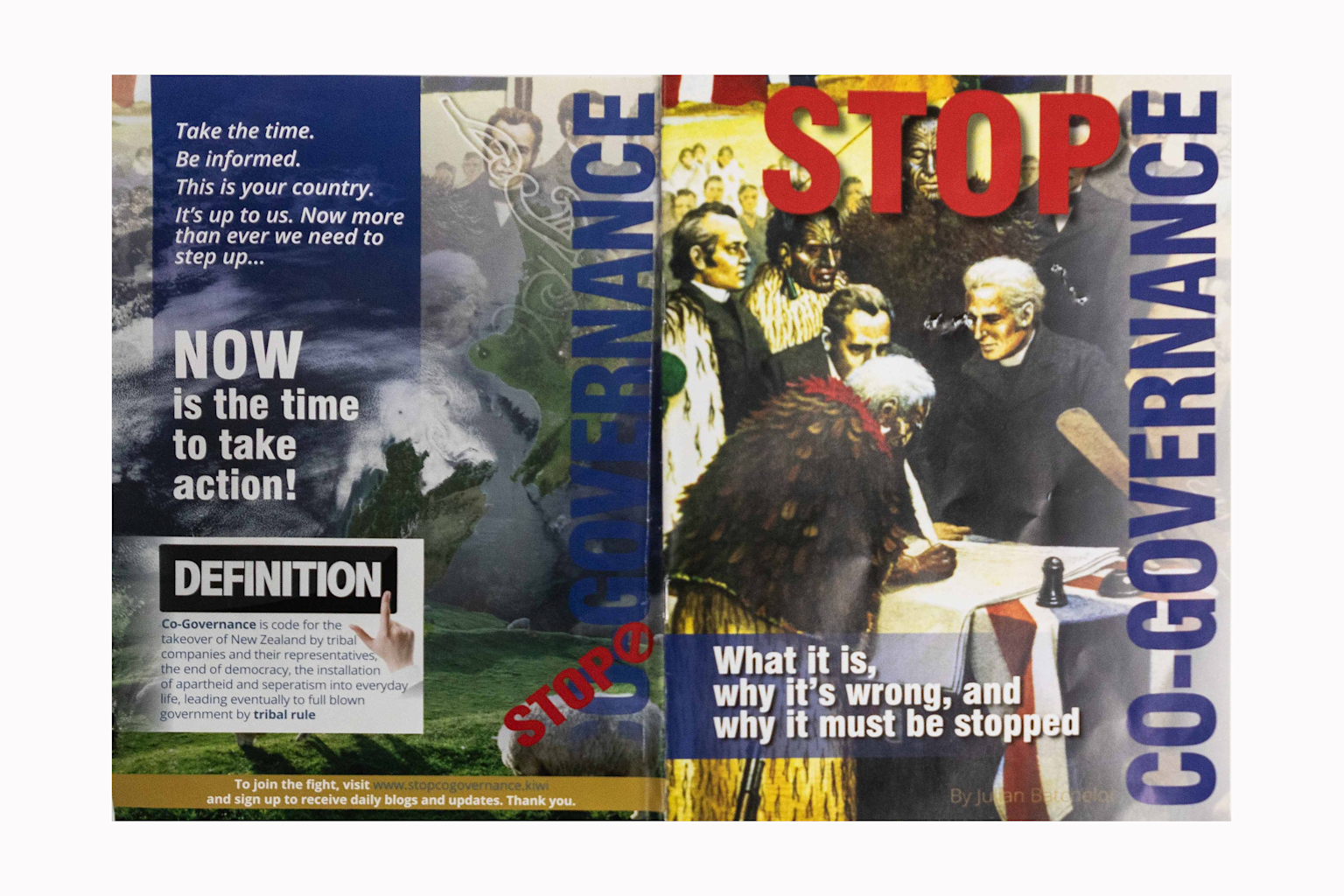
Flyer opposing co-governance in New Zealand framing it as a tribal takeover and calling for immediate action
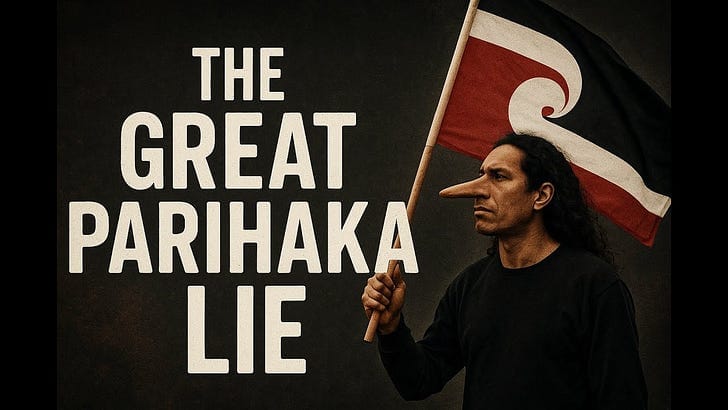
Batchelor's video "The Great Parihaka Lie" represents a masterclass in fascist propaganda techniques. The 10-minute production combines three sophisticated disinformation strategies: historical revisionism that denies colonial violence, the exploitation of religious authority to legitimise hatred, and the positioning of white supremacist ideology as Christian virtue.
The video specifically targets Anglican priest Nick Mountfort of St Peter's Church Christchurch, using his sermon about Te Whiti-o-Rongomai to demonstrate how "church leaders can be completely deceived about our history." This isn't theological debate - this is a far-right extremist using a priest's words to advance white supremacist propaganda while claiming moral authority through Christian imagery.
The scope of Batchelor's operation is staggering. His Stop Co-Governance campaign has distributed over 350,000 pamphlets, funded by anonymous wealthy donors who coordinate national distribution networks. This isn't amateur hour - this is professional hate manufacturing designed to prepare New Zealand for anti-Māori violence.
The analysis reveals how fascist movements operate: they don't start with explicit calls for genocide, but gradually normalise dehumanising language while building organisational infrastructure for future violence. Batchelor's operation fits this pattern perfectly.
The Fascist Playbook in Practice
Historical Revisionism as Genocide Preparation
Batchelor's "Great Parihaka Lie" video employs classic Holocaust denial techniques adapted for New Zealand conditions. Like European Holocaust deniers who claim Nazi crimes are exaggerated, Batchelor argues that colonial violence against Māori has been fabricated by "elite" conspirators seeking to "take over" the country.
This historical revisionism serves a specific political purpose: by denying past genocides, extremists lay the groundwork for future ones. When fascist movements gain power, they inevitably abuse history as propaganda to justify violence against targeted populations.
The truth about Parihaka exposes the lie at the heart of Batchelor's propaganda. The 1881 invasion was a military assault involving 1,600 colonial forces against a peaceful settlement. Women and girls were systematically raped by Crown forces, with some bearing children as a result. Houses were destroyed, crops burned, animals slaughtered, and the entire community dispersed.
In 2017, the Crown formally apologised for "the rapes committed by Crown forces" and other atrocities. This wasn't peaceful Christian settlement - this was ethnic cleansing designed to steal Māori land through terror.
Batchelor's denial of this violence serves his contemporary political agenda. By portraying colonisation as benevolent and Māori resistance as fabricated grievance, he creates the ideological framework that justifies rolling back Indigenous rights and potentially repeating historical violence.
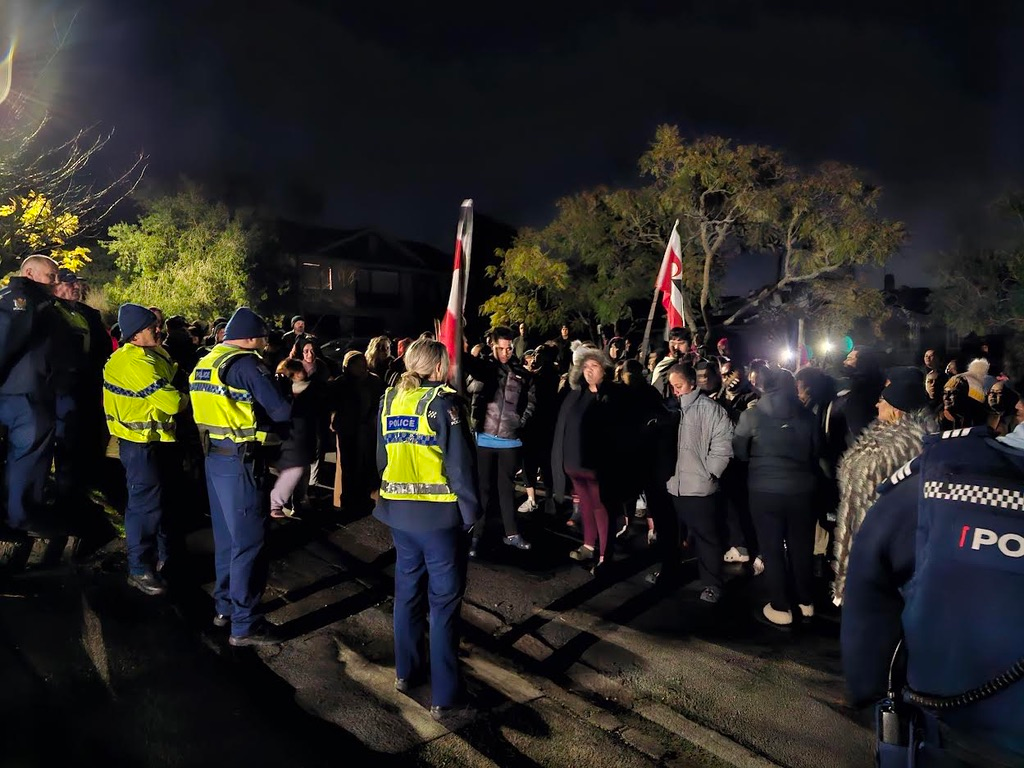
Police officers stand watch over a nighttime protest crowd associated with New Zealand's Stop Co-governance movement
White Supremacist Conspiracy Theories
Batchelor's rhetoric mirrors "Great Replacement" theory - the white supremacist ideology that motivated the Christchurch terrorist and countless other mass murderers worldwide. This theory claims that white people are being "replaced" by non-white populations through deliberate conspiracy.
Batchelor adapts this narrative for New Zealand by claiming co-governance represents a conspiracy by "elite Māori" to "take over" the country. He describes Māori sovereignty flags as "treason" and argues that teaching te reo Māori to children constitutes "child abuse". This language directly parallels Nazi propaganda about Jewish "parasites" undermining German society.
Research shows that antisemitic conspiracy theories often extend to target Indigenous populations. "White genocide" and "Great Replacement" theories actively target both Jewish and Māori communities through identical conspiratorial frameworks.
The pattern is clear: Batchelor uses antisemitic conspiracy frameworks to target Māori while positioning himself as defending "Christian civilisation" against Indigenous "takeover." This is textbook fascist propaganda adapted for colonial settler conditions.
Violence Incitement Through Religious Authority
Batchelor's meetings have been characterised by "open talk of civil war" and "open calls for weaponisation," with terrorism researchers warning that "someone, somewhere, someday, somehow is going to take it very seriously upon themselves to act out" the violence he promotes.
Multiple Stop Co-Governance events have already descended into violence, with attendees including "far-right extremist Lee Williams" engaging in physical confrontations with protesters. Williams was previously fired from his dairy company job for posting white supremacist content.
The Anglican Church provides crucial legitimacy for this violence by allowing Batchelor to position his hatred as Christian virtue. When priests like Mountfort sanitise colonial violence through religious language, they create the theological framework that makes anti-Māori violence seem righteous rather than racist.
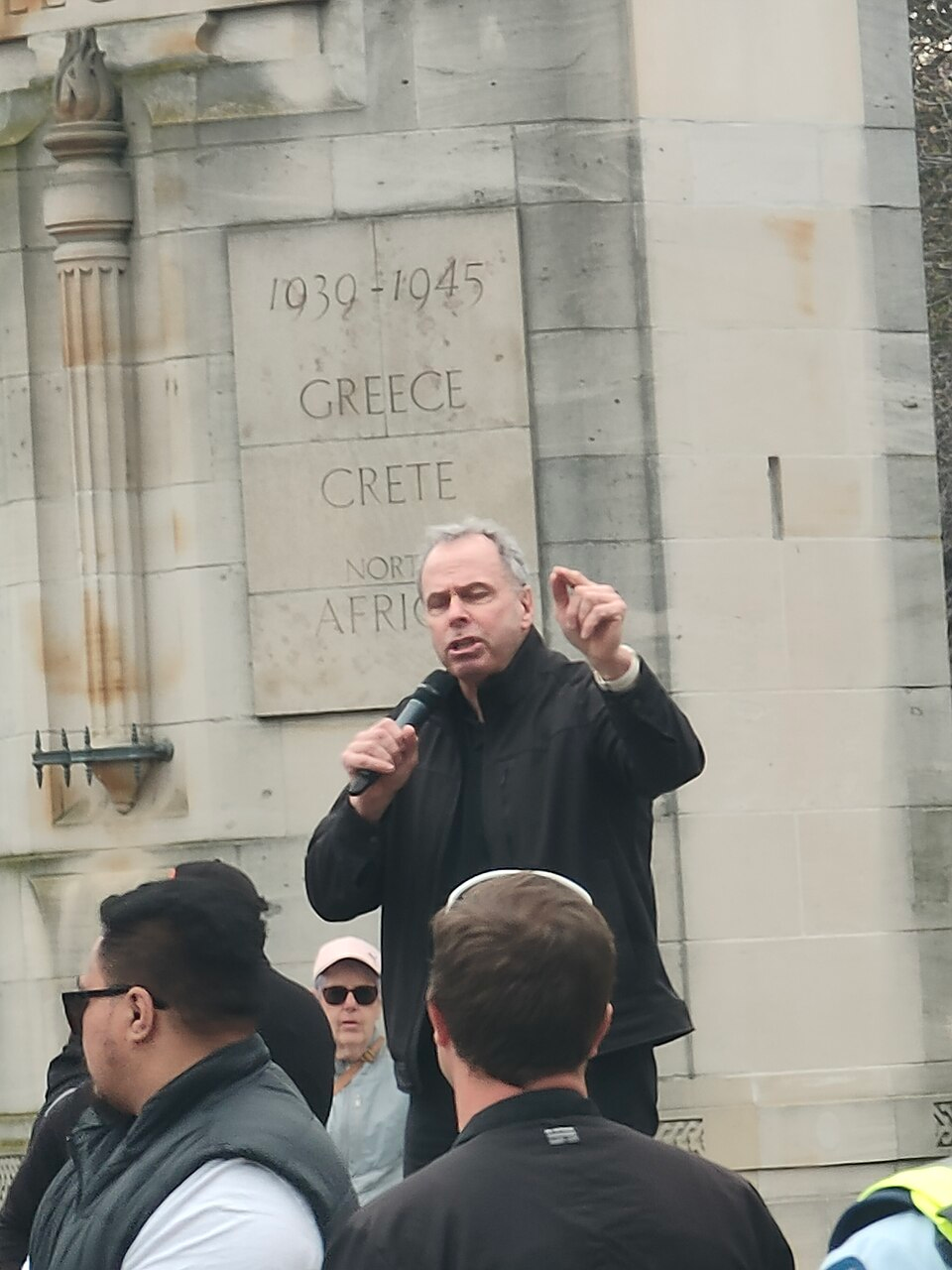
Julian speaking at an outdoor protest near a war memorial engraved with locations from World War II.
The Anglican Church's Complicity in Fascist Recruitment
Sacred Spaces as Hate Recruitment Centres
The Anglican Church's role in Batchelor's operation isn't passive - it's active collaboration. Churches have become venues for Stop Co-Governance meetings, providing both legitimacy and recruitment opportunities for white supremacist ideology.
Research demonstrates how extremist movements deliberately target religious communities because churches offer established social networks, trusted authority figures, and moral legitimacy. Batchelor exploits exactly this dynamic by positioning his anti-Māori hatred as Christian duty.
The historical pattern is clear. The Anglican Church served as the ideological vanguard of European colonisation from 1814 onwards. Anglican missionaries explicitly aimed to make Māori "despise their own nation" and adopt European culture. This wasn't Christianity - this was cultural genocide wrapped in biblical language.
Today's Anglican Church continues this tradition by providing historical cover for contemporary racism. When priests like Mountfort portray colonial violence as Christian virtue, they legitimise the system that enables figures like Batchelor to operate.
The Priest as Unwitting Propaganda Asset
Nick Mountfort's Te Whiti sermon demonstrates how religious authority becomes weaponised by fascist movements. Mountfort presents Te Whiti as a Christian saint who "embodied" peaceful principles, completely sanitising the brutal violence committed against Parihaka while ignoring the Anglican Church's complicity in that violence.
This historical whitewashing serves Batchelor's political agenda perfectly. By portraying Te Whiti as a submissive Christian convert rather than a revolutionary leader who challenged colonial authority, Mountfort provides the theological framework that justifies contemporary anti-Māori politics.
Te Whiti explicitly rejected European authority, stating that whites should live among Māori "not we to be subservient to his immoderate greed". He established Parihaka as "Israel," the new kingdom for Māori seeking to reclaim rangatiratanga guaranteed by Te Tiriti.
The ploughing campaigns weren't Christian submission - they were strategic resistance designed to prevent European settlement on stolen land. From May 1879, Māori ploughmen systematically reclaimed confiscated territory under Te Whiti and Tohu's direction.
Mountfort's sanitised version erases this revolutionary legacy while positioning the Anglican Church as moral authority over Māori history. This provides exactly the legitimacy Batchelor needs to present his white supremacist ideology as Christian virtue.
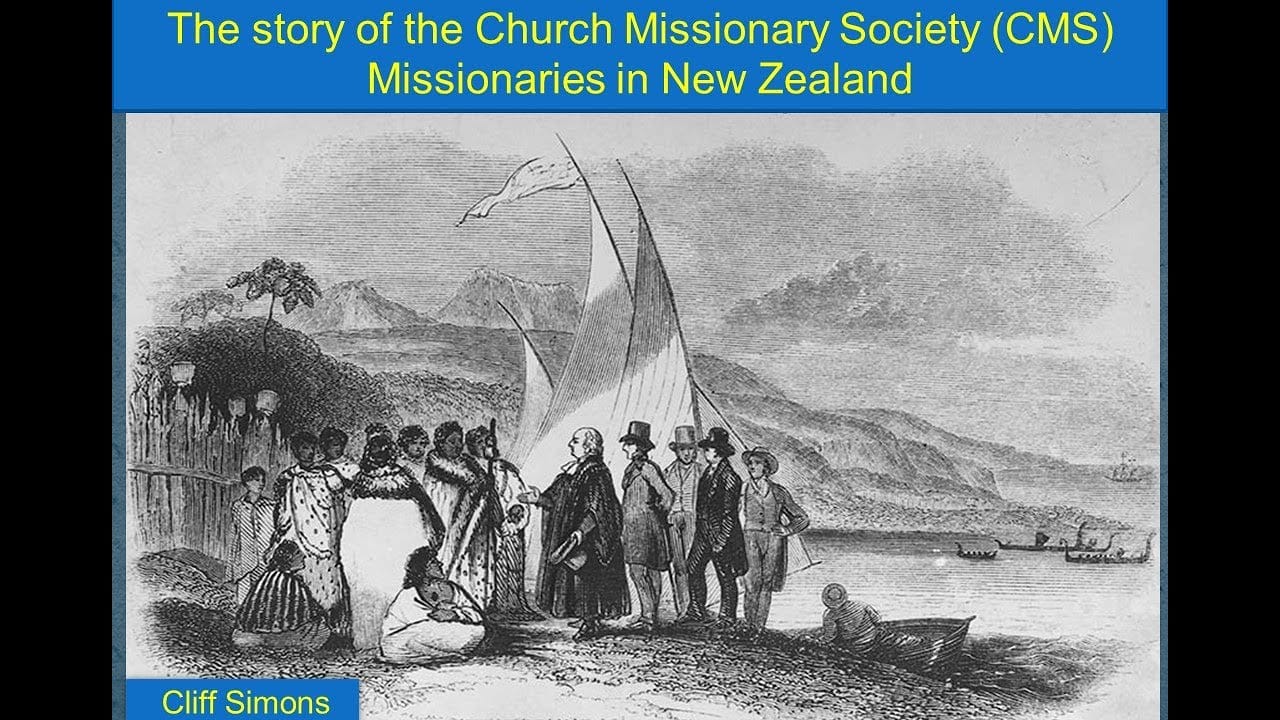
An illustration showing early Church Missionary Society (CMS) missionaries meeting Maori people in New Zealand during the 19th century
Cultural Genocide Continues Through Historical Lies
The Anglican Church's complicity in contemporary fascism extends beyond passive enabling - it actively participates in ongoing cultural genocide through historical revisionism. Research on residential schools demonstrates how churches systematically destroyed Indigenous cultures through "Christianisation and assimilation programmes that took the shape of daily physical and sexual abuse".
The declared objective was making Indigenous children "despise their origin groups" through exposure to "culture considered superior by white colonialists". Death rates in some institutions reached 70%, with thousands of children buried in unmarked graves.
New Zealand's Anglican Church employed identical strategies. The "civilising mission" was designed to destroy Māori culture while extracting economic value from Indigenous labour and land. Today's historical whitewashing continues this cultural genocide by denying the violence required to establish and maintain colonial domination.
When Anglican priests sanitise colonial violence while positioning themselves as moral authorities over Indigenous history, they perpetuate the same supremacist ideology that enables contemporary fascist movements to operate.
The True Horror of Parihaka
Systematic Sexual Violence as Colonial Strategy
The reality of Parihaka exposes the genocidal nature of New Zealand's colonial project. The 1881 invasion involved systematic rape and sexual assault committed by Crown forces against Māori women and girls. Some victims bore children as a result of these rapes.
Research demonstrates that sexual violence in colonial contexts serves to "inspire fear and panic, displace populations from coveted territory and send a message to male enemy combatants about their inability to protect their women's honour". The rapes at Parihaka weren't individual crimes - they were systematic colonial strategy designed to terrorise and displace the entire community.
Witnesses to the Sim Commission in the 1920s confirmed the systematic nature of this sexual violence. The Crown's 2017 formal apology acknowledged "the rapes committed by Crown forces" as part of the broader pattern of colonial atrocities.
Yet Anglican priests like Mountfort completely erase this violence from their historical narratives. By portraying the invasion as peaceful Christian encounter, they provide cover for the sexual terrorism that established colonial domination while legitimising the system that enables contemporary fascist movements.
The Destruction of Indigenous Resistance
Te Whiti and Tohu were held without trial for 16 months under legislation specifically created to detain them indefinitely. The West Coast Peace Preservation Bill decreed they could be arrested again at any time without charge.
Several hundred other Māori were imprisoned without trial, with reports of "solitary confinement and overcrowding in jails, with many terminally ill or in critical health". Many died in South Island prisons, far from their whānau.
This wasn't law enforcement - this was state terrorism designed to crush Indigenous resistance to land theft. The systematic nature of this violence reveals the genocidal intent underlying New Zealand's colonial project.
Global Impact Deliberately Erased
Te Whiti's non-violent resistance influenced Mahatma Gandhi's development of satyagraha during his time in South Africa. Gandhi's grandson and representatives of the Martin Luther King movement travelled to New Zealand to give Te Whiti's descendants medals recognising his global influence.
This global significance exposes another dimension of colonial violence: the systematic erasure of Indigenous intellectual contributions to human liberation. By reducing Te Whiti to a local Christian convert, figures like Mountfort participate in ongoing cultural genocide that denies Indigenous leadership in global struggles for justice.
The pattern connects directly to contemporary fascist ideology. White supremacist movements consistently deny Indigenous intellectual capacity while positioning European civilisation as the source of all human progress. This intellectual supremacism provides the theoretical framework that justifies both historical and contemporary violence against Indigenous peoples.
Implications
The Pipeline From Religious Propaganda to Political Violence
Batchelor's operation demonstrates how fascist movements exploit religious authority to mainstream genocidal ideology. The progression follows a predictable pattern: historical revisionism that denies past violence, conspiracy theories that position targeted groups as existential threats, and the gradual normalisation of eliminationist rhetoric that prepares audiences for future violence.
Research on extremist speech demonstrates how "the role of extremist speech in online spaces can have effects in physical world". When political figures discuss "potential civil war" and reference citizens "stock-piling guns," they create environments where "radical views or measures might be seen as urgent, fair, or necessary".
The Anglican Church's historical legitimacy provides crucial cover for this progression. When priests sanitise colonial violence while positioning themselves as moral authorities, they create the theological framework that makes contemporary anti-Māori violence seem righteous rather than racist.
Institutional Complicity in Genocidal Preparation
The Anglican Church's failure to confront its colonial legacy makes it complicit in contemporary white supremacist movements. Retired Bishop Richard Randerson correctly identified Stop Co-Governance as "essentially an exercise in white supremacy," but most Anglican leaders refuse to acknowledge their institution's ongoing role in enabling fascist recruitment.
Research demonstrates that "white supremacist ideology is connected to a global presumption of racialised supremacy that grows extreme violence of all kinds". This includes "state-sanctioned police violence, military force required for colonial domination, hyper-surveillance and hyper-incarceration of non-white peoples, and racialised mythmaking in media and schools".
The Anglican Church participates in this system through historical mythmaking that denies colonial violence while positioning European Christianity as civilising force. This creates the ideological conditions that enable figures like Batchelor to operate while making resistance to their violence seem unreasonable or extreme.
The Growing Threat to Democratic Institutions
Batchelor's wealth and organisational capacity represent a significant threat to New Zealand's democratic stability. His anonymous donors fund professional distribution networks capable of reaching hundreds of thousands of households.
The movement explicitly targets electoral processes, with Batchelor calling for protests "on the Election" and positioning democratic participation as betrayal of "Christian values". This follows classic fascist patterns of using democratic institutions to gain power while simultaneously undermining democratic norms.
Research warns that "racist friction will become unbearable this election" as far-right movements exploit democratic processes to advance anti-democratic agendas. The Anglican Church's complicity in legitimising this movement poses a direct threat to New Zealand's constitutional order.
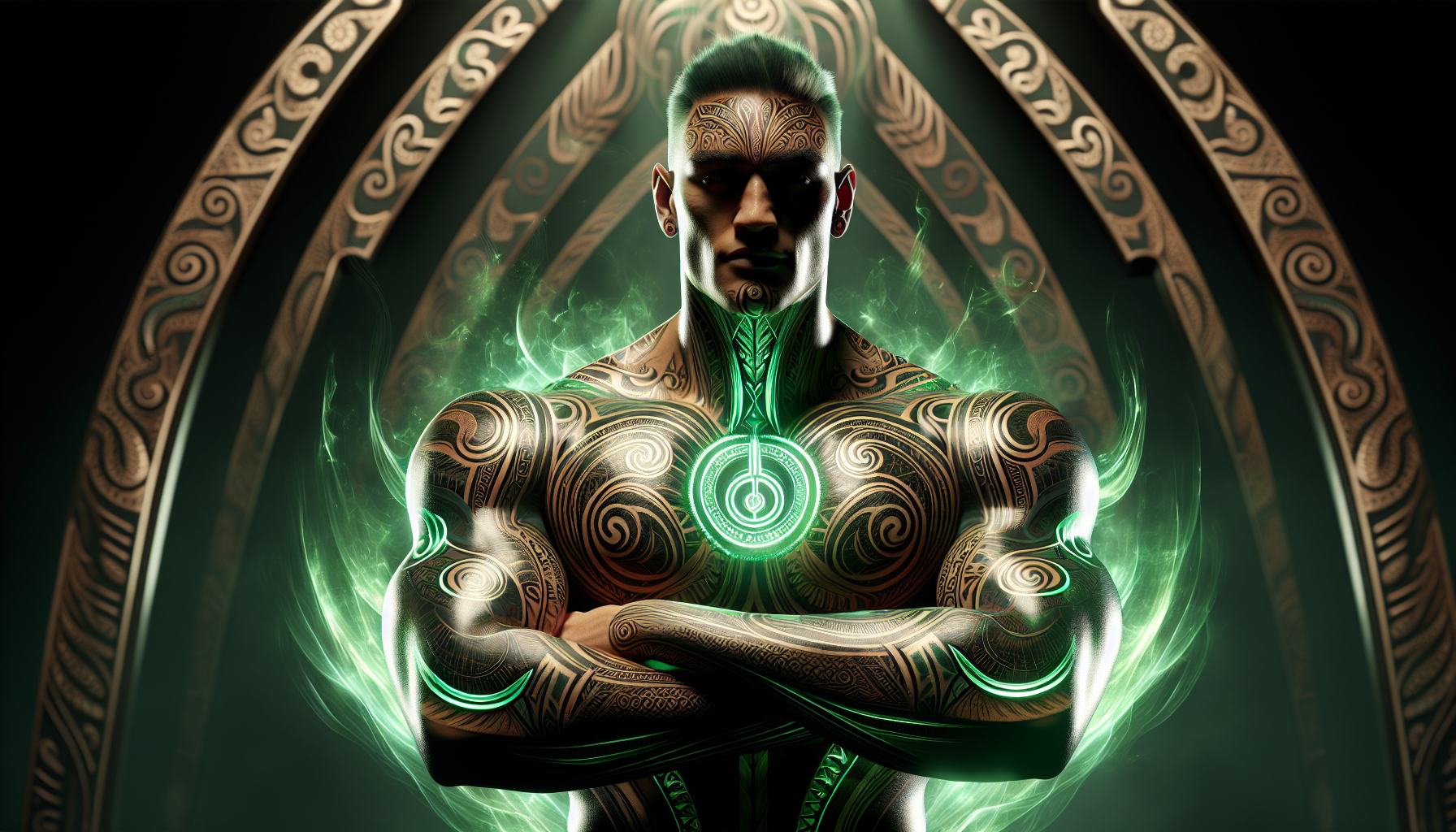
The Māori Green Lantern fighting misinformation and disinformation from the far right
Julian Batchelor represents the most dangerous face of New Zealand's growing fascist movement. His sophisticated propaganda operation combines historical revisionism, conspiracy theories, and violence incitement while exploiting religious authority to mainstream white supremacist ideology. The Anglican Church's complicity in this operation makes it directly responsible for enabling contemporary threats to Māori communities and democratic institutions.
The "Great Parihaka Lie" video exposes the techniques fascist movements use to prepare societies for genocide: deny past atrocities, position targeted groups as existential threats, and gradually normalise eliminationist rhetoric while claiming moral authority through religious language. Batchelor's operation follows this playbook perfectly.
Nick Mountfort's unwitting participation demonstrates how religious institutions become recruitment centres for extremist movements when they fail to confront their colonial legacy. By sanitising the sexual violence and systematic terrorism committed at Parihaka, Anglican priests provide the historical cover that enables contemporary fascist movements to operate.
Te Whiti-o-Rongomai was not a submissive Christian convert. He was a revolutionary leader whose non-violent resistance influenced global liberation movements while challenging the colonial system that destroyed his community. His legacy belongs to Indigenous liberation, not Anglican appropriation.
The path forward requires confronting uncomfortable truths about institutional complicity in both historical and contemporary violence. The Anglican Church must acknowledge its role in cultural genocide, support Indigenous sovereignty, and actively oppose the fascist movements it has helped legitimise. Until religious institutions confront their colonial legacy, they remain part of the problem rather than the solution.
Batchelor's operation represents an immediate threat to Māori communities and New Zealand's democratic institutions. His well-funded propaganda network, growing organisational capacity, and explicit calls for violence demand urgent response from both civil society and state institutions. The cost of inaction could be measured in lives.
Te Whiti deserves better than Anglican appropriation. Māori deserve better than fascist terrorism. New Zealand deserves better than institutional complicity in genocidal preparation. The choice is clear: confront the truth or become complicit in the violence that inevitably follows.
The MGL calls on readers who recognise the urgent threat posed by fascist movements to support this crucial mahi with a koha to HTDM: 03-1546-0415173-000. These are tough times for whānau, so please only contribute if you have capacity and wish to do so.
Kia ora, kia kaha
Ivor Jones
The Māori Green Lantern
Kaitiaki of Truth in the Digital Age