“The Ghost Debate: How Corporate Ventriloquism Shields Austerity While Greens Challenge the System” - 19 December 2025
Hidden Connections: Follow the Money, Name the Names
When Nicola Willis challenged Ruth Richardson to debate “anytime, anywhere” in December 2025, she wasn’t just responding to criticism from a former finance minister—she was engaging with a carefully choreographed pressure campaign orchestrated by the Taxpayers’ Union, with Richardson as its chair. The campaign featured branded fudge packages bearing Willis’s image and the slogan
“A treat today—A tax tomorrow,” designed to make Willis appear moderate by comparison to Richardson’s 1991 “Mother of All Budgets” that doubled poverty overnight.
This theatrical circus served a singular purpose:
to narrow acceptable fiscal discourse to a choice between two flavors of austerity—Richardson’s brutal cuts versus Willis’s “disciplined approach”—while erasing from view the Green Party’s alternative Budget that proposed $88.8 billion in new revenue through wealth taxes, inheritance taxes, and progressive taxation.
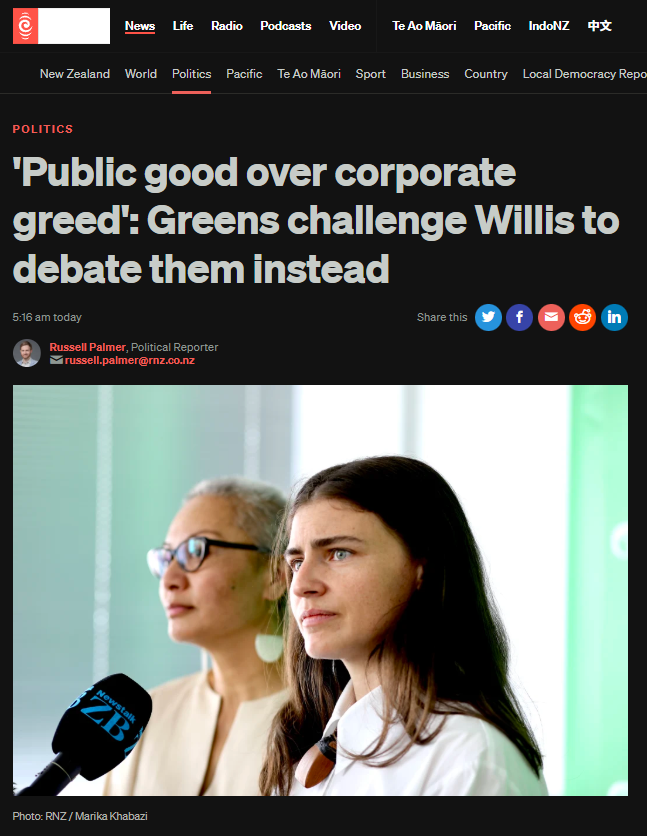
As Chlöe Swarbrick stepped forward to challenge Willis directly
—”I’ve been challenging her on the tiles for the last week”—she exposed the fundamental question: cui bono? Who benefits when the debate over Aotearoa’s fiscal future is framed exclusively by those committed to protecting corporate wealth?
The answer traces directly through institutional networks designed to manufacture consent for neoliberal orthodoxy. The Taxpayers’ Union, founded by Jordan Williams and David Farrar—a National Party pollster—functions as a lobby group advancing the interests of wealth concentration while claiming to represent “taxpayers.” Richardson’s appointment as chair in 2025 provided the campaign with the veneer of fiscal credibility, allowing the organization to position itself as holding the government accountable while actually pushing for deeper cuts to social services that protect corporate profits from taxation.
The debate that never happened reveals more than the one that might have occurred. When Richardson backed out after disputes over venue and moderator, she exposed the campaign’s true purpose:
not genuine fiscal reckoning, but political theater designed to move the Overton window rightward. As the Public Service Association noted, the stunt aimed “to make Willis look relatively benign” compared to Richardson’s extremism.
Meanwhile, Swarbrick and Marama Davidson centered the question Richardson and Willis refused to ask:
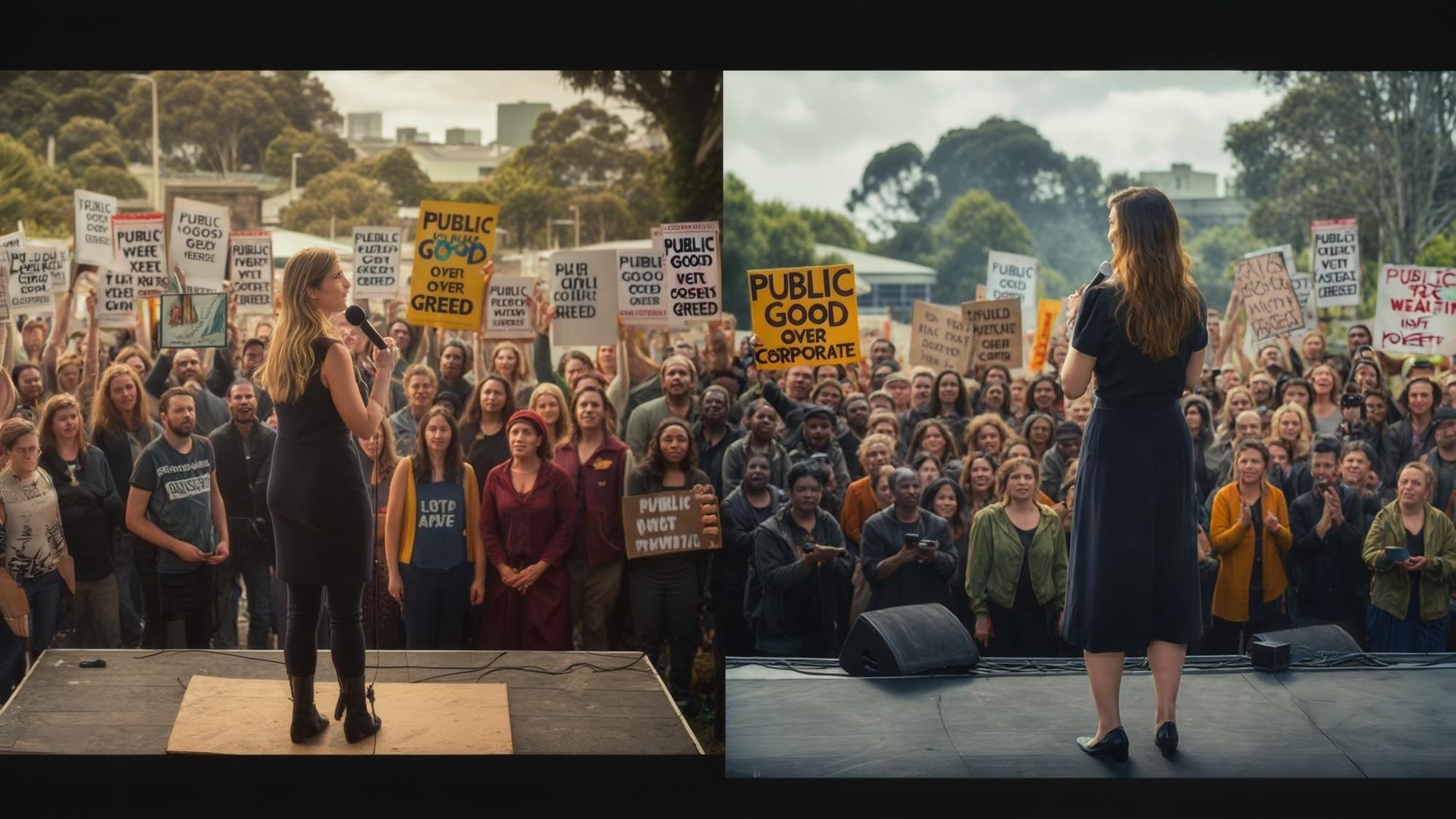
cui malo? Who suffers? The Greens’ challenge crystallized around the principle of “public good over corporate greed”—a direct confrontation with the neoliberal consensus that has governed Aotearoa since the 1980s.

Confrontation in a legislative chamber
Whakapapa of Harm: Richardson’s Legacy and the Manufacturing of Poverty
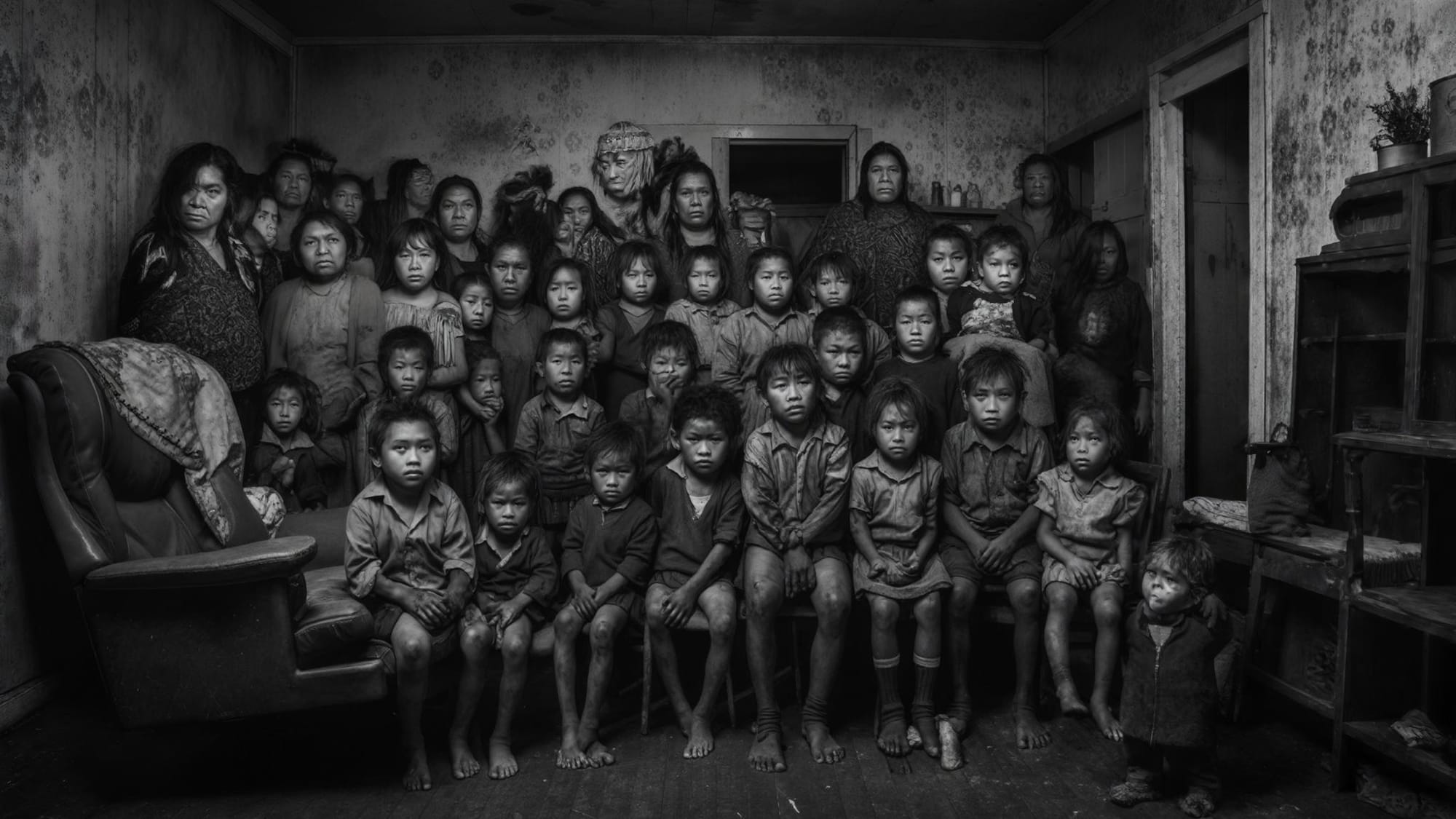
To understand Richardson’s 2025 resurrection requires tracing the whakapapa of harm she initiated. The “Mother of All Budgets” in 1991 cut the unemployment benefit by $14 per week, sickness benefit by $27.04, and abolished universal family benefits while introducing user-pays requirements in hospitals and schools previously free to the public. The immediate result: the number living in extreme poverty (below 40% of median income) doubled from 4% to 8% within two years.
For Māori, the impact proved catastrophic. Prior to neoliberal restructuring, Māori home ownership exceeded 50% by 1991 despite 25% unemployment. Following Richardson’s budget, Māori home ownership plummeted to 37% by 2013—a decline of nearly one-third. The dismantling of the welfare state that Richardson championed coincided with the corporatization and privatization of government departments under Roger Douglas’s reforms, eliminating stable employment in Māori communities. The Gisborne freezing works and Wattie’s company that provided income for whānau disappeared, triggering what community leader Te Hurinui Ngarimu describes as “an ongoing war to survive.”
Richardson’s budgetary violence extended beyond immediate material deprivation to create long-term health catastrophes. Unable to afford heating or rent, multiple families crowded into single homes. Mould and damp proliferated. Diseases like rheumatic fever, eliminated in other developed nations, flourished in these conditions, wrecking childhoods and ending lives prematurely. Child hospitalizations for medical conditions surged from 50 per 1,000 to 70 per 1,000 beginning in 1992, immediately after Richardson’s budget.
The annual cost of child poverty in Aotearoa is now estimated between $12 billion and $21 billion—dwarfing any claimed fiscal savings from Richardson’s austerity. This represents the deepest irony of Richardson’s legacy: the architect of the Fiscal Responsibility Act 1994 created structural deficits far exceeding the costs of maintaining the social safety net she demolished.
When Richardson received a state honor in the King’s Birthday 2025 honours, the coalition government signaled its ideological alignment with her legacy of calculated cruelty toward the poor. Yet Richardson’s 2025 advocacy reveals a fundamental hypocrisy: she now calls for raising the superannuation age, asset sales including state-owned power companies, and deeper spending cuts—while defending her 1990s record by claiming opponents aren’t showing “statistics that showed the rise in growth, the rise in employment, the halving of the debt.” This deflection ignores that growth and employment gains came at the direct cost of poverty, health crises, and intergenerational trauma disproportionately borne by Māori.
Whakapapa of Harm
Willis’s Fiscal Theater: Continuity Disguised as Pragmatism
Nicola Willis’s challenge to Richardson functioned as performative differentiation masking substantive continuity. While Willis rejects being compared to Richardson—questioning whether such comparisons would occur if they weren’t both women holding the finance portfolio—her fiscal framework embodies Richardson’s core principles:
restrained government spending, debt reduction as paramount, and resistance to progressive taxation.
The fiscal trajectory under Willis confirms Richardson’s assessment that the two pursue the same model with different branding. Treasury’s Half Year Economic and Fiscal Update (HYEFU) released December 2025 projects the operating balance deficit will deteriorate to $13.9 billion in 2025/26—$1.8 billion worse than forecast in May. Net core Crown debt will peak at 46.9% of GDP in 2027/28, with return to surplus now pushed to 2029/30 under the government’s preferred OBEGALx measure (which excludes ACC).
Willis’s response mirrors the rhetorical strategy Richardson pioneered:
frame austerity as fiscal responsibility while shifting burden onto those least able to bear it.
Willis claims the government has delivered $11 billion annually in savings, asserting “without this disciplined approach, this year’s deficit would be $25 billion.” Yet this calculation, conducted by Willis’s office rather than Treasury, functions as counterfactual justification for cuts that include canceling pay equity for over 150,000 women—a decision prompting Andrea Vance’s controversial “girl math” column linking Willis to Richardson.
The structural deficit—where government spends more than it earns even accounting for economic cycles—emerged not from Labour’s “sugar-rush economics” as Willis claims, but from tax cuts and business subsidies the coalition prioritized. The government gave away $20 billion in tax cuts and handouts to landlords, big tobacco, and businesses while underfunding health, laying off over 600 scientists and researchers, and leaving Budget 2026 with only $1 billion available for new spending after pre-committed health costs.
Willis’s claim that Aotearoa will return to surplus “faster than Australia, the United Kingdom, Canada and many other advanced economies” obscures that New Zealand’s government debt remains relatively low at 43.3% of GDP compared to Australia (49.7%), Canada (104.7%), and the UK (101.8%). The “crisis” Richardson and the Taxpayers’ Union manufactured serves political rather than economic imperatives—justifying cuts to social services that protect corporate profits from progressive taxation.
The Green Alternative: Transformative Economics vs. Doom Loop
The Greens’ alternative Budget released May 2025 exposes the falsity of the “there is no alternative” narrative that Richardson pioneered and Willis perpetuates. Swarbrick and Davidson propose a fundamental restructuring: $88.8 billion in new revenue over four years generated through a 2.5% wealth tax on net assets over $2 million for individuals ($4 million for couples), a 33% inheritance tax after a $1 million lifetime threshold, increased corporate tax to 33%, new top income tax rates of 39% over $120,000 and 45% over $180,000, and a private jet tax.
Public Good Over Corporate Greed
This revenue would fund transformative investments:
free GP visits and dental care, free childcare, an Income Guarantee of $395 weekly plus $140 for sole parents, 35,000 new public homes over six years, regional rail and light rail in Auckland, Wellington and Christchurch, restoration of Jobs for Nature, and a Ministry of Green Works creating 40,000 jobs in sustainable infrastructure. The plan includes a tax-free threshold on income below $10,000, ensuring 91% of New Zealanders pay less income tax while only the wealthiest 3% pay the wealth tax.
Critics claim the plan is fiscally irresponsible, with net debt climbing from 45% to 53% of GDP by 2028/29. But as Swarbrick argues, this investment breaks the “doom loop” of high unemployment and low growth leading to lower tax take and requiring more borrowing for the same services. Strategic government debt invested in productivity-enhancing infrastructure and human capital generates returns exceeding borrowing costs—the opposite of austerity’s false economy that creates larger long-term costs through poverty, health crises, and lost economic potential.
The Greens’ economic framework draws from Swarbrick’s December 2025 European tour meeting with left economists and political leaders including UK Greens leader Adrian Ramsay, eco-populist Sian Berry, former Greek finance minister Yanis Varoufakis, economist Thomas Piketty, and economist Mariana Mazzucato.
The synthesis:
economic transformation requires mass organization and building trust that government can serve public good rather than corporate interests. As Swarbrick identified, “the gap that we have to bridge is trust.”
This trust-building directly confronts neoliberal multiculturalism that recognizes Māori cultural rights while limiting how such recognition challenges corporate priorities. The Green Budget centers Te Tiriti, with Davidson stating their bottom lines for coalition negotiations include “climate, protecting nature, and ensuring everyone is taken care of” alongside “upholding the wellbeing of people, tangata, the wellbeing of environment, taiao, and that that is only possible through upholding Te Tiriti.”
Climate Crisis as Fiscal Crisis: The $23.7 Billion Liability Willis Won’t Acknowledge
The fiscal debate’s most catastrophic omission concerns climate change—a crisis both Richardson and Willis treat as peripheral to “real” economic management. Yet Treasury’s Climate Economic and Fiscal Assessment estimates meeting New Zealand’s Nationally Determined Contribution (NDC) under the Paris Agreement will cost $3.7 billion to $23.7 billion depending on overseas carbon credit prices and domestic mitigation success.
Willis cast doubt on whether New Zealand will honor this commitment, telling reporters that
“New Zealanders who are struggling to put food on the table are not going to thank us for having a performative awards ceremony after we write billion dollar cheques to other countries.”
This framing positions climate action as luxury competing with immediate needs—the false choice that ignores how climate inaction multiplies costs through extreme weather, insurance retreat, food insecurity, and refugee crises.
The government’s climate policy trajectory confirms Willis’s implicit abandonment of Paris commitments. The coalition weakened the 2050 methane target from 24-47% reduction to 14-24% reduction, ditched agricultural emissions pricing, eased clean car standards, and amended climate legislation to remove the Climate Change Commission’s requirement to evaluate emissions plans while delinking the Emissions Trading Scheme from NDC obligations. These changes concentrate power in ministerial hands while eliminating independent oversight and public consultation.
Ministry for the Environment analysis shows that even with previous climate policies, New Zealand would miss the 2030 target by 84 million tonnes—a full year’s worth of emissions. Without offshore carbon credit purchases or dramatically accelerated domestic mitigation, meeting the Paris commitment is mathematically impossible. As Swarbrick noted in select committee, “We are potentially on the hook for tens of billions of dollars, and all [Willis] can say is we’re not going to send those tens of billions of dollars offshore, which then begs the question of how we’re going to meet our [commitment].”
The Greens’ climate framework integrates economic transformation with emissions reduction through excluding forestry from the ETS, requiring farming in the ETS immediately, investing in regional rail and light rail, phasing out fossil fuel electricity generation, and revoking fast-track consents for seven mining projects including seabed mining, hardrock gold mining, and coal mining. Davidson announced, “Your fast-track consents are not safe, and they are not secure”—a direct challenge to corporate extraction prioritized through the Fast-Track Approvals Act that 95% of submitters opposed.
The Fast-Track Act epitomizes corporate greed over public good: ministers can designate projects as nationally significant, influencing supposedly independent panels, while limiting iwi, hapū, and Treaty settlement entities’ ability to meaningfully engage. The rushed consultation process—11 days instead of the standard month—and passage under urgency demonstrate the government’s contempt for democratic participation when corporate interests demand speed.

Tax Wealth Not Poverty
Neoliberalism’s War on Māori Knowledge and Collective Rights
The fiscal debate’s exclusion of Māori perspectives and te ao Māori frameworks reveals neoliberalism’s systematic marginalization of indigenous knowledge systems that threaten corporate priorities. As research on the National Science Challenges demonstrates, the New Zealand government in 2013 recognized Māori knowledge while practically excluding Māori researchers by framing “Māori” and “science” as fundamentally distinct domains—what scholars term “neoliberal multiculturalism.”
This pattern pervades economic policy. The Ministry of Education’s refusal to mandate te reo Māori and land wars history in state schools, despite Waitangi Tribunal findings on te reo marginalization, exemplifies how Crown agents perpetuate institutional racism while claiming Treaty partnership. The coalition government’s 2025 dismantling of Te Aka Whai Ora (Māori Health Authority), restrictions on te reo in public service, and attacks on mātauranga Māori signal renewed assault on Māori self-determination under neoliberal “efficiency” rhetoric.
Neoliberal economic restructuring that Richardson championed targeted Māori with particular severity because Māori communities relied disproportionately on state sector employment, state housing, and welfare support—all systematically dismantled. The privatization and corporatization of the 1980s-90s eliminated stable employment in regions like Gisborne, Northland, and the East Coast, converting what had been working-class Māori communities into zones of structural unemployment and poverty.
Treaty settlements post-1991 provided partial compensation—Ngāi Tahu transformed its $170 million 1998 settlement into $2 billion assets—but as critics note,
“while many acknowledge this capitalist accumulation as a success, others argue that the model has financialized aspects of Māori land, bodies, lifeways and self-determining authority.”
The settlement process itself exemplifies neoliberal multiculturalism:
recognize historical injustice through monetary compensation while foreclosing challenges to the economic system that continues generating inequality.
As Te Hurinui Ngarimu observed about South Canterbury Finance receiving a $1.7 billion government bailout while Treaty settlements barely exceeded $1 billion total:
“The government put in money to compensate these poor people, these financially smart, literate people, who lost their savings. We have agreed to settle for a fraction of what should have been settled for to allow us to move on.”
This calculation exposes whose interests the state prioritizes when crises demand intervention.
Te Pāti Māori’s Crisis and the Limits of Parliamentary Reformism
The Greens’ challenge to Willis occurs against the backdrop of Te Pāti Māori’s internal crisis, with support crashing to 1% in December 2025 polls following months of internal conflict. The expulsion of MPs Mariameno Kapa-Kingi and Tākuta Ferris, accusations of authoritarian leadership against president John Tamihere and co-leaders Rawiri Waititi and Debbie Ngarewa-Packer, and the severing of ties with Toitū Te Tiriti reveal profound tensions within Māori political organizing.
Davidson noted the Greens “hoped Te Pāti Māori could sort out their problems with leadership”, emphasizing “that’s absolutely for them to do.” This diplomatic distance reflects both respect for Te Pāti Māori’s autonomy and recognition that Green-TPM coalition dynamics remain uncertain heading into the 2026 election. Yet the underlying question—whether parliamentary politics can deliver transformative change for Māori—haunts both parties.
The crisis at Waiatuhi marae during Te Pāti Māori’s December AGM, where Ngira Simmonds challenged leadership to heal the party’s turmoil, crystallized around the principle of kotahitanga (unity) that Kiingi Tuheitia called for. Simmonds’s challenge—asking whether Tamihere, Waititi, and Ngarewa-Packer were “the right people to unite the party and the people”—exposes how personality-driven parliamentary politics can fragment movements built on collective principles.
For the Greens, this offers both warning and opportunity. Swarbrick’s European tour connecting with left movements that have never held power raises the question she acknowledged with characteristic honesty:
“I think nobody so far has done what we want to do.”
The challenge ahead involves building organizational capacity and trust at community level—what Swarbrick identified as “the big missing piece”—rather than relying on parliamentary maneuvering alone.
Implications: Quantifying Harm, Demanding Transformation
The fiscal choices before Aotearoa carry quantifiable consequences measured in lives destroyed or enhanced. Richardson’s 1991 budget doubled extreme poverty, generated $12-21 billion in annual child poverty costs, and devastated Māori communities through employment elimination and welfare cuts. Willis’s continuation of this framework—$11 billion in cuts, canceled pay equity for 150,000+ women, 600+ scientists laid off—perpetuates structural violence against those with least capacity to absorb shock.
The Green alternative quantifies benefits:
91% of New Zealanders receiving tax cuts, 40,000 jobs created through the Ministry of Green Works, 35,000 new public homes addressing the housing crisis, free healthcare and childcare reducing family costs, and climate infrastructure preventing the worst impacts of global heating.
Critics dismiss this as unrealistic, yet neoliberal “realism” has delivered structural deficits, worsening inequality, and potential $23.7 billion climate liability that the government refuses to budget for.
The choice is not between fiscal responsibility and recklessness—it is between economic systems designed to concentrate wealth upward versus redistribute prosperity downward.
As Swarbrick articulated:
“The public good over corporate greed, it’s as simple as that. We’re not only interested in changing the government but... a government of change.”
Tino Rangatiratanga Economics and the Courage to Transform
The ghost debate between Willis and Richardson exposed the poverty of neoliberal imagination:
a fiscal discourse constrained to arguing over degrees of austerity while corporate wealth remains sacrosanct.
The Greens’ intervention—demanding actual policy debate rather than theatrical posturing—reveals that alternatives exist if we possess courage to challenge the “there is no alternative” lie that Richardson pioneered and Willis perpetuates.
Tino rangatiratanga in economic terms means communities controlling resources that serve collective wellbeing rather than private accumulation. It means taxing wealth, not poverty. It means public investment in productive infrastructure, not privatization of public goods. It means climate action as economic opportunity, not cost to avoid. It means Treaty partnership in practice, not performative acknowledgment while gutting Māori institutions.
As Davidson stated, the Greens hope to form “the first Green government”—an ambition requiring the mass organization and trust-building that Swarbrick identified as essential. This demands more than electoral success; it requires confronting how deeply neoliberal logic has colonized our collective imagination, convincing millions that we cannot afford to house everyone, feed everyone, or heal everyone, while billions flow upward to wealth holders who contribute least.
The debate that matters is not Willis versus Richardson—both architects of austerity with different public relations strategies. The debate that matters is public good versus corporate greed, collective flourishing versus individual accumulation, tino rangatiratanga versus neoliberal multiculturalism that recognizes rights while denying resources.
When Swarbrick challenged Willis to debate “anytime, anywhere,” she issued an invitation to honesty about whose interests the state serves. Willis’s silence speaks volumes: those committed to protecting corporate wealth cannot afford honest reckoning with how fiscal “responsibility” manufactures poverty, destroys health, and accelerates climate catastrophe.
The choice before Aotearoa in 2026 will be presented as pragmatic centrism versus ideological extremism. Reject this framing. The extremism is normalizing child poverty, homelessness, and climate inaction while wealth concentrates upward. The pragmatism is taxing wealth to fund collective thriving.
Richardson’s ghost haunts our fiscal debates because we never exorcised the ideology she embodied: the belief that markets serve humanity better than democracy, that individual responsibility trumps collective care, that economic growth measured in GDP matters more than wellbeing measured in lives flourishing. Willis channels this ghost while claiming moderation.
The Greens offer a different whakapapa: one connecting to the First Labour Government’s 1938 creation of the welfare state that Richardson demolished, to the pre-neoliberal consensus that government exists to serve public good, to te ao Māori principles of collective responsibility and environmental guardianship. This lineage terrifies those whose power depends on manufactured scarcity justifying inequality.
As Swarbrick noted, debating a “ghost of this place” reveals more than debating present ministers: it exposes how thoroughly neoliberal assumptions structure acceptable discourse. When the “radical” position becomes arguing for taxing wealth to fund healthcare, education, and climate action—all standard practice in the social democratic era—we measure how far rightward the Overton window has shifted.
The mahi ahead requires rebuilding the institutions of collective power that neoliberalism deliberately dismantled:
unions, community organizations, cooperative enterprises, public services that serve rather than profit. It requires reconnecting economic policy to tikanga principles of kaitiakitanga, manaakitanga, and whanaungatanga. It requires naming the fallacy that claims we lack resources when we merely lack political will to claim resources from those hoarding them.
Richardson’s 1991 budget represented a declaration of class war against the poor. Willis’s 2025 budgets continue that war with different rhetoric.
The Greens’ alternative represents not just different policies but different values:
that everyone deserves dignity, that the planet requires protection, that Te Tiriti demands partnership in practice not just principle.
The debate New Zealand needs is not about debt-to-GDP ratios or OBEGAL versus OBEGALx. The debate New Zealand needs is about what kind of society we choose to build:
one serving corporate interests that concentrate wealth upward, or one serving collective flourishing that distributes prosperity downward.
When Swarbrick stepped forward to take Richardson’s place in debating Willis, she embodied the courage required:
to confront power directly, to name corporate greed rather than euphemize it as “fiscal discipline,” to center those harmed rather than those profiting. This is the taiaha work of political organizing—not theater, but genuine reckoning with who holds power and who suffers its consequences.
The ghost debate revealed that those committed to austerity fear honest debate most. They require the theater of false alternatives, the performance of fiscal responsibility, the spectacle of personalities clashing—anything to avoid the substantive question of whose interests the economy serves.
Reject the theater. Demand the substance. Public good over corporate greed. Not as slogan, but as organizing principle for economic transformation. Not as aspiration, but as immediate necessity for collective survival.
The 2026 election will test whether Aotearoa possesses the courage to break from neoliberal consensus or will continue sleepwalking toward climate catastrophe and inequality crisis while wealth concentrates upward. The Greens’ challenge to the ghost debate offers a pathway: honest reckoning with power, clear articulation of alternatives, and commitment to organizing the mass movements that make transformation possible.
As Swarbrick learned from her European tour, “nobody so far has done what we want to do.” This means the work ahead is genuinely unprecedented—building a political-economic system that serves people and planet rather than profit and power. The difficulty of this mahi does not excuse retreat into false pragmatism that accepts austerity as inevitable.
Richardson’s ghost will continue haunting New Zealand politics until we exorcise the ideology she embodied. Willis channels this ghost while claiming moderation. The Greens offer the exorcism: genuine alternatives, honest debate, and courage to transform systems rather than tinker at margins.
The choice is ours. The time is now. Ko te wā. Ko tātou.
Koha Statement
Only Support this mahi if you are able: Koha.Kiwi | Substack | Bank: HTDM 03-1546-0415173-000
All koha sustains free mātauranga Māori journalism. No paywall, no corporate interference.

Ivor Jones The Māori Green Lantern Fighitng Misinformation And Disinformation From The Far Right
- https://ppl-ai-file-upload.s3.amazonaws.com/web/direct-files/attachments/images/2123776/e9200027-aafe-4fe4-8ec4-34f0e051233b/Public-good-over-corporate-greed-Greens-challenge-Willis-to-debate-them-instead-RNZ-News-12-19-2025_06_29_AM.jpg?AWSAccessKeyId=ASIA2F3EMEYEQAPGPWO3&Signature=qmRop%2BZsXboDlaUZkT3%2BX4C6gGA%3D&x-amz-security-token=IQoJb3JpZ2luX2VjENL%2F%2F%2F%2F%2F%2F%2F%2F%2F%2FwEaCXVzLWVhc3QtMSJIMEYCIQCcdU34p5uruK4j6WfS6OUBAz%2F6UhCcXwhYLi%2BuZnCw8wIhAMNw0nySfzsoI0YRZPGqivjojYOBECs%2FvsuM1X63dHrDKvwECJr%2F%2F%2F%2F%2F%2F%2F%2F%2F%2FwEQARoMNjk5NzUzMzA5NzA1Igw1HYHUwPnf69KWoJcq0ATr8AsjlyfA7JFpSlqeO%2F48AzPoyjhCGSSlvO8%2FjHpVETeroJRL3Gk47OFwpxVy4yQ%2B5roIyJ4BWX7lZtU7%2F%2BVRHbj3B9BAfaRCAKZl0HtpBLjTgPhH7wtsZDXo1s%2BayaWRJ3eMIuM%2FylxLK1uRe7fOvn9q95m4%2BRpJt5GxOmSlhSfzYRtItKTN8Nc%2F8Y9HWrTM%2FBHEFwQsDDXuv76LmARDbE%2ByAqYjPwM3hRRDrtAr1xtWl51RYhgM8CK4iYbfIkfCpf%2BqxO7wQf%2BX1LCvTeTR%2BB5qOOe9%2BY0nevcGq8RIWoUTfnaJT%2FIYUFHC6HzPUDfu19EdOtREqCKKPqLKy%2FALWkcKu1rvjvfmiB%2FiZ1i9%2Bshjmivix5Ez2NS42sSu%2FkAElppEE0N5AQmFg986%2BUo2Ih6qxNJgFwynCqhmRJm1Giak5Ra6Kv2miL52Ympe1fSByW%2FWKQDbU6JZM0PcQ3W6NsGCy11bkUMaC19t%2FRvULj48UVO%2FHljCAYfBFBif%2FBJJ7AzDHOrjwraA7mspHk5Nk9UltNUtKc799IFmMv5uSFxWD3o02N2FEHAY7nWvW%2FfYpd%2F3oABvjsa%2BkzBatzGy8s8QJAx7BjnqW1VJ9w40ROu3FNiv3pGs%2FVxIbuKExv0HVuqn9VpKDyU9OiXj0u%2FL9bRs0rHmanVKYp4to9PY6DKbaSDyW8l2HSTHYyXO0FrxOdZkD%2BxHxfAc2chvf0qnUricjIWlCL1LZiqZMN%2F24x9559Jg7mPat9KLBZMq%2Bl2yKztcD%2BFAGtdBiDasVly1MJjukMoGOpcB4FD3PlYy8aRORFQyBllO04le7tnrTaa3IkZR%2BuIhMJONqTUfIlwcQ%2BCJ7zExM5GljnNw1Foi8TdXNWJau8EF0Qwq7iYq5Y6IPDmP20Z70YzO4l2Bx3xAIhKi%2BsheIwqyST%2BfuXmZlq1HbZetJacoBFmEywfS8Ybg7kakFk9nqlAXhL%2FIcdCSalw6QfZVMOT5khvdOGipZQ%3D%3D&Expires=1766079959
- https://www.rnz.co.nz/news/political/582242/public-good-over-corporate-greed-greens-challenge-willis-to-debate-them-instead
- https://www.elgaronline.com/view/edcoll/9781800881082/9781800881082.00013.xml
- https://journals.sagepub.com/doi/pdf/10.1177/02690942231170135
- https://www.mdpi.com/2071-1050/15/3/2356/pdf?version=1675472844
- https://www.tandfonline.com/doi/full/10.1080/14702541.2023.2175369
- https://pmc.ncbi.nlm.nih.gov/articles/PMC11839457/
- https://pmc.ncbi.nlm.nih.gov/articles/PMC9971655/
- https://www.tandfonline.com/doi/pdf/10.1080/10455752.2022.2062675?needAccess=true
- https://www.ncbi.nlm.nih.gov/pmc/articles/PMC9902802
- https://www.tandfonline.com/doi/pdf/10.1080/23311975.2024.2378922?needAccess=true
- https://en.wikipedia.org/wiki/Chl%C3%B6e_Swarbrick
- https://www.1news.co.nz/2025/12/09/anytime-anywhere-willis-challenges-richardson-to-debate/
- https://www.nzherald.co.nz/nz/politics/greens-promise-88b-taxes-including-33-inheritance-tax-for-massive-social-safety-net-expansion/W23VKAKZ5VBJLCIQTNIYAB2JDU/
- https://thespinoff.co.nz/politics/18-12-2025/when-chloe-met-corbyn-and-varoufakis-and-piketty-and-polanski-and-mazzucato-and
- https://www.nzherald.co.nz/nz/politics/ruth-richardson-backs-out-of-debate-with-nicola-willis/B6IYD7JG2ZGELLR3AIKBO2M3NY/
- https://www.rnz.co.nz/news/political/560942/greens-promise-free-doctor-visits-childcare-but-new-taxes-higher-borrowing
- https://www.greens.org.nz/chloe_swarbrick
- https://thespinoff.co.nz/politics/10-12-2025/ruth-richardson-v-nicola-willis-the-mother-of-all-epochal-debates
- https://www.nzinitiative.org.nz/reports-and-media/media/the-platform-dr-oliver-hartwich-breaks-down-the-green-partys-alternative-budget/
- https://www.rnz.co.nz/news/political/569863/green-party-co-leader-chloe-swarbrick-named-for-refusing-to-leave-parliament
- https://www.rnz.co.nz/news/political/581996/willis-v-richardson-debate-unlikely-to-go-ahead
- /content/files/budgets/summary-initiatives/b25-sum-initiatives.pdf
- https://www.nzherald.co.nz/nz/politics/chloe-swarbrick-a-demagogue-says-david-seymour/premium/MT4NQLVRTZH4HACOJ3PUUMIQJM/
- https://www.taxpayers.org.nz/update_on_moad
- https://www.greens.org.nz/green_budget_2025
- https://www.facebook.com/chloeNZgreens/
- https://www.facebook.com/RadioNewZealand/posts/nicola-willis-has-challenged-former-national-party-finance-minister-ruth-richard/1319809703518308/
- https://www.greens.org.nz/fiscal_strategy
- https://www.greens.org.nz/greens_elect_new_co_leader
- https://www.facebook.com/DuncanGarnerPodcast/videos/nicola-willis-challenged-ruth-richardson-to-a-debate-why-nzpol-nzpolitics-politi/826902836813241/
- https://www.rnz.co.nz/news/political/581282/anytime-anywhere-nicola-willis-challenges-ruth-richardson-to-debate
- https://www.nzherald.co.nz/nz/politics/chloe-swarbrick-reckons-green-party-leading-opposition-only-party-offering-tax-ideas/23VK67JATNA5JOXSQWMBSAEAKM/
- https://www.nzherald.co.nz/nz/politics/chloe-swarbrick-booted-from-house-during-palestine-speech/I4DXHM5GGRDKJBXJ6MNTNFOGWA/
- https://www.rnz.co.nz/news/political/581707/ruth-richardson-still-willing-to-debate-nicola-willis-after-dispute-over-venue
- https://www.1news.co.nz/2025/05/19/not-a-gotcha-swarbrick-pushed-on-details-over-green-budget/
- https://www.1news.co.nz/2025/08/12/swarbrick-removed-from-parliament-amid-palestine-debate/
- https://www.rnz.co.nz/news/national/561832/opposition-slams-budget-austerity-cuts-luxon-attacks-greens-alternative
- https://www.nzherald.co.nz/nz/chloe-swarbrick-and-green-economics-the-lost-monopoly-lessons-simon-wilson/3RHCBIIL7BHLZAYCYXLCUGYLGQ/
- https://www.rnz.co.nz/news/business/581968/willis-working-on-disciplined-plan-for-returning-books-to-surplus
- https://www.rnz.co.nz/news/business/562101/greens-claim-700m-uncosted-hole-in-budget
- https://www.rnz.co.nz/news/political/581555/clowns-to-the-left-jokers-to-the-right-willis-richardson-debate-in-doubt-after-ultimatum
- https://www.rnz.co.nz/news/thehouse/572995/the-budget-finale-politics-vs-governance
- https://www.nzherald.co.nz/nz/politics/ruth-richardson-v-nicola-willis-the-facts-behind-the-argument/premium/W3P7SXWNJFAR5P5URQBOSU6FGE/
- https://www.tandfonline.com/doi/full/10.1080/07293682.2025.2475914
- https://www.tandfonline.com/doi/full/10.1080/07036337.2025.2456617
- https://journals.sagepub.com/doi/pdf/10.1177/22779760211030864
- /content/files/core/services/aop-cambridge-core/content/view/EBF49A4FA1E8D4705361A93CC5C8BC41/S0260210524000251a/div-class-title-reproducing-socio-ecological-life-from-below-towards-a-planetary-political-economy-of-the-global-majority-div.pdf
- https://pmc.ncbi.nlm.nih.gov/articles/PMC9190409
- https://www.womensvoicesnow.org/marama-davidson
- https://www.nzherald.co.nz/nz/politics/former-green-mp-kevin-hague-becomes-partys-new-chief-of-staff/KLM4EZUJE5G7XHYY7YGROMRBOQ/
- https://www.taxpayers.org.nz/news
- https://en.wikipedia.org/wiki/Marama_Davidson
- https://www.nzherald.co.nz/nz/politics/green-party-co-leaders-gear-up-for-2026-election-after-major-changes-to-selection-process/2ORL5K7BJRERHFFVUKGZDSAMIY/
- https://en.wikipedia.org/wiki/Kevin_Hague
- https://www.greens.org.nz/marama_davidson
- https://www.rnz.co.nz/news/political/578037/former-green-mp-kevin-hague-returns-as-party-s-new-chief-of-staff
- https://www.facebook.com/maramadavidsonmp/
- https://www.facebook.com/nzherald.co.nz/posts/the-party-has-been-without-a-permanent-chief-of-staff-since-september-/1272983221533665/
- https://www.taxpayers.org.nz/willis_failure
- https://waateanews.com/2025/12/15/marama-davidson-co-leader-of-the-green-party-nz-23/
- https://www.kiwiblog.co.nz/2025/11/a_very_smart_move_by_the_greens.html
- https://www.greens.org.nz/our_people
- https://www.reddit.com/r/nzpolitics/comments/1opkakn/former_green_mp_kevin_hague_returns_as_partys_new/
- https://www.nzherald.co.nz/nz/politics/waitangi-day-2025-marama-davidson-marks-return-with-visit-to-waitangi/LZQJFJ7YORBPJIRIPA2TIM23SE/
- https://www.1news.co.nz/2025/09/22/greens-chief-of-staff-resign-citing-health-wellbeing-and-whanau/
- https://www.rnz.co.nz/authors/craig-mcculloch
- https://www.rnz.co.nz/news/political/581466/taxpayers-union-releases-fudge-taking-swipe-at-finance-minister-nicola-willis
- https://www.1news.co.nz/tags/marama-davidson/
- https://www.rnz.co.nz/search/results?page=5&q=RNZ+news
- https://www.nzherald.co.nz/nz/politics/green-party-co-leader-marama-davidson-apologises-after-her-right-to-repair-bill-dismissed-as-she-was-late-to-show-up/R52UXZGN5RF65FLQXWHIY22AQ4/
- https://www.rnz.co.nz/tags/Kevin%20Hague
- https://www.rnz.co.nz/news/political/581968/willis-working-on-disciplined-plan-for-returning-books-to-surplus
- https://www.rnz.co.nz/national/programmes/checkpoint?page=2374&wptouch_preview_theme=enabled
- https://www.nzherald.co.nz/nz/taxpayers-union-releases-fudge-taking-swipe-at-finance-minister-nicola-willis/QK2PJ5MDXJE2FNZKCT5N25BRZ4/
- https://www.rnz.co.nz/news/political/576727/right-to-repair-bill-greens-marama-davidson-apologises-after-missing-member-s-bill-speaking-slot
- https://www.rnz.co.nz/news/political/108137/parties-differ-on-whether-acc-minister-should-go
- https://ojs.victoria.ac.nz/nzaroe/article/view/823
- https://www.semanticscholar.org/paper/c9025bdaa9b7adeb94499dc23f83486e25ea90ec
- /content/files/record/2467239/files/article.pdf
- https://journals.sagepub.com/doi/pdf/10.1177/03091325211065118
- /content/files/bitstream/11244/25075/1/10-1177-027507407701100302.pdf
- https://press.umich.edu/isbn/9780472067473
- /content/files/core/services/aop-cambridge-core/content/view/18C5DC0BF9ED353CE8A2A7F7B5E5D535/S0018268023000298a/div-class-title-more-business-and-less-politics-schooling-fiscal-structure-and-the-1923-california-state-budget-div.pdf
- https://en.wikipedia.org/wiki/Mother_of_all_Budgets
- /content/files/sites/default/files/2025-12/hyefu25.pdf
- https://teara.govt.nz/en/photograph/33885/the-mother-of-all-budgets
- https://www.interest.co.nz/public-policy/136619/delay-economic-recovery-has-led-%E2%80%98small-deterioration-fiscal-forecasts%E2%80%99
- https://corporatejusticecoalition.org/news/uk-general-election-2019-corporate-accountability-commitments/
- https://en.wikipedia.org/wiki/Ruth_Richardson
- https://www.beehive.govt.nz/release/hyefu-2025-economic-and-fiscal-repair-job-continues
- https://www.greens.org.nz/green_budget_for_a_country_worth_fighting_for
- https://thespinoff.co.nz/politics/05-06-2025/ruth-richardsons-state-honour-is-a-slap-in-the-face-for-the-poor
- https://www.treasury.govt.nz/publications/efu/budget-economic-and-fiscal-update-2025
- https://www.nzherald.co.nz/nz/budget-2025-govt-spending-needs-to-fund-communities-not-corporate-greed-marama-davidson/WZ33I6BMFZFNPEOEH2YLW3CTLI/
- https://theconversation.com/the-ghosts-of-budgets-past-haunt-new-zealands-shot-at-economic-recovery-138290
- https://www.nzherald.co.nz/business/economy/treasury-update-shows-there-is-still-no-surplus-in-sight-for-the-government-as-debt-pile-grows/UA7S77WVFJFKPIBEXPHZ3ZA26U/
- https://greens.org.au/platform
- https://thespinoff.co.nz/atea/28-09-2019/how-ruth-richardsons-mother-of-all-budgets-is-still-fcking-us-today
- https://www.treasury.govt.nz/publications/efu/half-year-economic-and-fiscal-update-2025
- https://www.facebook.com/nhyira104.5fm/posts/cdm-slams-goldbod-budget-as-greed-over-green-in-galamsey-fight/1174412148062624/
- https://waateanews.com/2025/06/15/motrher-of-all-budgets-more-like-mother-of-poverty/
- https://www.rnz.co.nz/news/political/581998/finance-minister-must-take-responsibility-for-state-of-books-say-labour-taxpayer-union
- https://www.rnz.co.nz/news/political/561442/nz-budget-2025-economic-forecasting-is-notoriously-difficult-but-global-uncertainty-is-making-it-harder
- https://www.1news.co.nz/2025/06/15/ruth-richardson-calls-for-super-age-hike-warns-of-fiscal-crisis/
- https://www.rnz.co.nz/news/business/575459/government-deficit-of-9-point-3b-shows-progress-finance-minister-nicola-willis-says
- https://www.nzherald.co.nz/nz/politics/finance-minister-nicola-willis-says-shes-no-ruth-richardson-hints-at-budgets-likely-winners-in-slow-and-steady-approach-claire-trevett/C6NGW5YIANC7ZM5LVYH3K6QFHI/
- https://www.rnz.co.nz/news/political/578793/controversial-regulatory-standards-bill-passes-third-reading
- https://www.rnz.co.nz/news/mediawatch/581769/media-in-the-middle-of-fudge-stunts-debate-drama-and-right-v-left-rows
- https://www.nzherald.co.nz/nz/budget-2025-economic-forecasting-is-notoriously-difficult-but-global-uncertainty-is-making-it-harder-opinion/XNGVTZTWQ5EXTG3VH6MUJ2BZM4/
- https://www.nzherald.co.nz/nz/politics/controversial-regulatory-standards-bill-passes-third-reading/GUVTHRVKYRCGVIDAJVYIDLIUNI/
- https://www.nzherald.co.nz/nz/politics/labours-barbara-edmonds-says-government-lost-control-of-the-economy-but-wont-say-what-her-party-would-do-differently-just-yet/LJ7P7OEBHBGTFMW24SYP2TCHVU/
- https://www.nzherald.co.nz/nz/politics/critics-slam-government-move-to-remove-ece-cultural-obligations/OU2QQMPJ75BGDNPZJF7443LJWE/
- https://www.nzherald.co.nz/nz/a-budget-for-the-kids-and-for-their-parents-votes/VVLF5ZW432ACTOD77YPGIFRFZE/
- https://www.nzherald.co.nz/nz/politics/first-warnings-of-structural-deficit-came-the-day-government-was-sworn-in-labour-warned-credit-rating-could-be-at-risk/ZATEZYM23JH47CNAOVFPPASSDM/
- https://www.rnz.co.nz/news/political
- https://www.nzherald.co.nz/kahu/job-cuts-what-happens-when-you-look-in-the-mirror-and-see-ruth-richardson-staring-back/TCFNUXRLOBH2NOXSLQ34KSWU5M/
- https://www.nzherald.co.nz/nz/politics/more-tax-less-services-treasurys-forecasts-a-grim-warning-to-mps-and-new-zealanders/CZUELOHSHNDKLBBIUF5UR2HCEE/
- /content/files/kotare/article/download/602/414.pdf
- /content/files/ethnographic-edge/article/download/249/232.pdf
- /content/files/ethnographic-edge/article/download/259/242.pdf
- https://www.mdpi.com/1660-4601/21/4/445/pdf?version=1712308942
- https://en.wikipedia.org/wiki/Te_P%C4%81ti_M%C4%81ori
- https://www.greens.org.nz/overwhelming_opposition_to_fast_track_legislation_luxon_s_government_will_ignore_again
- https://inzvest.co.nz/economic-and-tax-update-new-zealand-in-global-context-2025/
- https://thespinoff.co.nz/atea/08-12-2025/te-pati-maori-its-agm-and-what-happens-from-here
- https://www.rnz.co.nz/news/political/580921/95-percent-of-fast-track-amendment-bill-submitters-opposed-to-changes
- https://www.ceicdata.com/en/indicator/new-zealand/consolidated-fiscal-balance--of-nominal-gdp
- https://www.1news.co.nz/2025/11/24/exclusive-former-te-pati-maori-leaders-not-prepared-to-walk-away/
- https://www.nzherald.co.nz/nz/politics/auckland-council-opposes-fast-track-bill-citing-insufficient-evidence-and-poor-consultation-processes/ULM5FFBZDVE2TF6ZUOY4YHHRBQ/
- /content/files/sites/default/files/2025-10/fsgnz-2025.pdf
- https://www.teaonews.co.nz/2025/12/10/te-pati-maori-high-performing-despite-dismal-poll-result-co-leaders/
- https://www.rnz.co.nz/news/political/581500/fast-track-amendment-passes-under-urgency-backtracks-on-controversial-proposals
- https://budget.govt.nz/budget/2025/fiscal-strategy-report/fiscal-context.htm
- https://www.rnz.co.nz/news/political/581137/questions-remain-on-unity-in-te-pati-maori-following-long-awaited-agm
- https://www.greens.org.nz/fast_track_off_the_rails_submitters_show_strong_opposition_to_bill
- https://waateanews.com/2025/12/15/john-tamihere-president-of-te-pati-maori-65/
- https://thespinoff.co.nz/politics/12-12-2025/echo-chamber-the-week-parliament-pushed-away-the-public
- https://www.elibrary.imf.org/downloadpdf/view/journals/002/2025/114/article-A001-en.pdf
- https://www.nzherald.co.nz/nz/politics/former-te-pati-maori-lawyer-tania-waikato-to-stand-for-green-party-in-2026-general-election/CLOBZRE5LNG6XMIXIFHNDRBSMA/
- https://www.facebook.com/forestandbird/posts/-fast-track-act-could-get-even-worse-the-governments-new-fast-track-approvals-am/1230118432477830/
- https://www.1news.co.nz/2025/12/16/govt-pushes-out-surplus-expectations-again/
- https://www.1news.co.nz/2025/11/18/the-seven-fast-track-projects-the-greens-would-revoke/
- https://www.rnz.co.nz/news/political/582012/economists-forecast-tough-calls-to-get-books-back-to-black
- https://www.rnz.co.nz/news/national/581120/ngira-simmonds-challenges-te-pati-maori-leadership-at-agm
- https://www.rnz.co.nz/news/business/573802/how-nz-economy-is-tracking-after-gloomy-gdp-figures
- https://www.rnz.co.nz/news/political/581307/te-pati-maori-high-performing-despite-dismal-poll-result-co-leaders
- https://www.rnz.co.nz/news/thehouse/579225/how-a-loophole-resulted-in-11-day-submission-period-on-fast-track-amendments-law
- https://www.nzherald.co.nz/business/budget-2025-upbeat-treasury-predicts-rising-house-prices-and-gdp-growth/WSB5EAOBURD5FDN2L3KRAHX364/
- https://www.1news.co.nz/2025/12/07/te-pati-maori-tensions-expected-to-loom-as-party-agm-goes-ahead/
- https://www.rnz.co.nz/news/national/582204/councillors-vote-to-oppose-plans-for-fast-tracked-sand-mining-at-northland-s-bream-bay
- https://www.nzherald.co.nz/business/oecd-cuts-world-growth-outlook-just-as-nz-starts-to-recover/45GZ2X7ZLNFIFG3HYVAHA7BFUE/
- https://www.1news.co.nz/2025/12/08/poll-te-pati-maori-support-crashes-after-weeks-of-in-fighting/
- https://www.rnz.co.nz/news/political/581193/too-many-laws-passing-without-proper-scrutiny-geoffrey-palmer-says
- https://www.rnz.co.nz/news/political/579685/ngapuhi-insulted-te-pati-maori-leadership-refusing-to-participate-in-hui
- https://www.rnz.co.nz/news/political/520218/fast-track-bill-has-more-supporters-than-opponents-taxpayers-union-curia-poll
- https://f1000research.com/articles/14-410/v1
- https://dl.acm.org/doi/10.1145/3776865.3776916
- https://link.springer.com/10.1007/s11252-025-01801-8
- https://rsisinternational.org/journals/ijriss/articles/the-role-of-governance-in-advancing-climate-change-adaptation-policies-a-comparative-study-of-u-s-and-global-best-practices/
- https://vestnikieran.instituteofeurope.ru/images/3-2025/Belov32025.pdf
- https://journals.gen.tr/index.php/jlecon/article/view/2713
- /content/files/wp-content/uploads/2025/05/04-2-1-2025.pdf
- https://jisem-journal.com/index.php/journal/article/view/9341
- https://business-navigator.ks.ua/journals/2025/83_2025/15.pdf
- https://journals.sagepub.com/doi/10.1177/09749284251348532
- https://www.cogitatiopress.com/politicsandgovernance/article/download/4788/4788
- https://www.mdpi.com/2075-5309/13/3/684/pdf?version=1678010180
- https://pmc.ncbi.nlm.nih.gov/articles/PMC11459733/
- /content/files/2402-11107.pdf
- https://journals.sagepub.com/doi/pdf/10.1177/08969205231160628
- https://arxiv.org/html/2403.07681v1
- https://pmc.ncbi.nlm.nih.gov/articles/PMC7237171/
- https://www.saanz.net/wp-content/uploads/2023/06/Roper_NZS_2023_Climate-Change-Policies-of-the-Green-Party_NZS-382-2023.pdf
- /content/files/sites/default/files/2023-06/oia-20230123.pdf
- https://www.sciencedirect.com/science/article/abs/pii/S0277953615302720
- https://thespinoff.co.nz/politics/07-11-2025/the-updates-to-climate-law-explained
- /content/files/sites/default/files/2024-08/oia-20240323.pdf
- https://kaupapamaori.com/2023/12/19/colonisation-neoliberalism-and-maori-education/
- https://www.rnz.co.nz/news/political/579625/government-quietly-rejects-advice-to-set-more-ambitious-net-negative-emissions-goal
- /content/files/sites/default/files/2024-01/oia-20230506.pdf
- https://www.greenpeace.org/aotearoa/story/placing-the-current-new-zealand-government-into-context/
- https://www.greens.org.nz/climate_change_policy
- /content/files/sites/default/files/2025-01/oia-20240825.pdf
- https://www.saanz.net/wp-content/uploads/2024/04/Roper_Neoliberalism-in-New-Zealand_NZS-391_pp-39-59.pdf
- https://www.greens.org.nz/government_pours_gas_on_the_climate_crisis_fire
- /content/files/assets/OIA/Files/OIAD-1186/09-cab-215-nationally-determined-contribution-strategy.pdf
- https://journals.sagepub.com/doi/abs/10.1177/1478210320973122
- https://www.greens.org.nz/policy_complete_party
- /content/files/sites/default/files/NDC/2022-06/new-zealand-ndc-november-2021.pdf
- /content/files/media/pages/journal/vol-133-no-1512/neoliberalism-what-it-is-how-it-affects-health-and-what-to-do-about-it/91b3937839-1696477103/neoliberalism-what-it-is-how-it-affects-health-and-what-to-do-about-it.pdf
- https://www.greens.org.nz/climate_change_2020
- https://www.rnz.co.nz/news/political/498515/the-multibillion-dollar-climate-hole-faced-by-both-labour-and-national
- https://www.nzherald.co.nz/nz/climate-change-nz-could-face-24-billion-bill-to-hit-2030-international-paris-agreement-targets-in-carbon-credits-officials-warn/HPCLSJELQZABFJ3FZ6JLUZK7IM/
- https://www.rnz.co.nz/news/in-depth/396653/a-poor-outcome-maori-poverty-and-the-struggle-for-survival
- https://www.nzherald.co.nz/nz/politics/election-2023-the-multibillion-dollar-climate-hole-faced-by-both-labour-and-national/W4UCM54ABFAYBCY46V3YX37ZVU/
- https://www.nzherald.co.nz/the-listener/books/should-nz-decolonise-its-economy/3WHCMY77JRBB7KVPQJVHYVBYEM/
- https://www.nzherald.co.nz/nz/politics/greens-accuse-government-of-late-night-gutting-of-zero-carbon-act/VYHYB5JO5RCRVFSDSOU5J5V7L4/
- https://www.nzherald.co.nz/nz/politics/david-seymour-floats-pulling-out-of-paris-agreement-after-2026-election/KYMLYYQAUBCFBACWJVEDTMMVPU/
- https://www.rnz.co.nz/news/political/576091/how-jim-bolger-became-the-master-of-the-smoke-filled-room
- https://www.rnz.co.nz/news/political/580628/govt-needs-to-buy-carbon-credits-or-come-clean-on-emissions-commitment-opposition
- https://www.rnz.co.nz/news/political/535745/government-won-t-buy-overseas-carbon-credits-to-meet-targets-todd-mcclay-says
- https://www.nzherald.co.nz/kahu/tukoroirangi-morgan-shane-jones-follows-a-well-worn-political-strategy-of-feeding-the-baser-instincts/VL6AGCCKU5AMPPYX4S3WRUWCBM/
- https://www.rnz.co.nz/news/political/580901/pitiful-decision-on-emissions-targets-will-cost-the-country-former-climate-commissioner-says
- /content/files/webcontent/document/201633/sudden-development-studies-thesis-march-2016.pdf
- https://www.rnz.co.nz/news/political/577889/decision-to-end-some-climate-policy-consultation-worrying-former-climate-commissioner-says
- https://www.nzherald.co.nz/nz/politics/inside-treasurys-fight-to-keep-23b-climate-cost-off-the-books/S5MBKRLXDJA4RALKXEWBKHXXPQ/
- https://www.rnz.co.nz/news/top/580011/30-with-guyon-espiner-sir-bill-english-believes-christopher-luxon-will-lead-national-to-election-victory
- https://www.rnz.co.nz/news/national/580560/relying-on-forestry-for-carbon-removal-is-placing-eggs-in-one-basket-mps-warned
- https://www.rnz.co.nz/news/mediawatch/549112/political-road-rage-budget-holes-and-emissions-omissions