“The Great Price Regulation Backflip - When Labour Politicians Dance to Neoliberal Tunes” - 30 August 2025
The Māori Green Lantern Exposes Political Cowardice
Kia ora e te iwi. Ko au a Ivor Jones, The Māori Green Lantern, kaitiaki o te pono. Today we dissect a perfect example of how our political class operates when they think no one is watching - and what happens when they get caught speaking truths they immediately have to disown.
Background - The Supermarket Duopoly Strangling Aotearoa
The New Zealand supermarket sector operates as one of the world's most concentrated duopolies, with Foodstuffs and Woolworths controlling a staggering 90% of the market. This is not competition - this is corporate feudalism where two overlords dictate what whānau can afford to put on their tables.
Food prices in New Zealand are approximately 3% higher than the OECD average, yet our politicians act as if this is some natural phenomenon rather than the predictable result of allowing corporate giants to carve up the market between themselves. The Commerce Commission has found these duopolists earned $430 million per year in excess profits between 2015 and 2019 - money extracted directly from the pockets of struggling whānau.
What makes this particularly galling from a Māori perspective is how this corporate power structure mirrors and reinforces colonial patterns of resource extraction and control. Just as our ancestors faced limitations on where they could trade and what prices they could receive, today's whānau face artificially constrained choices in one of life's most basic necessities.
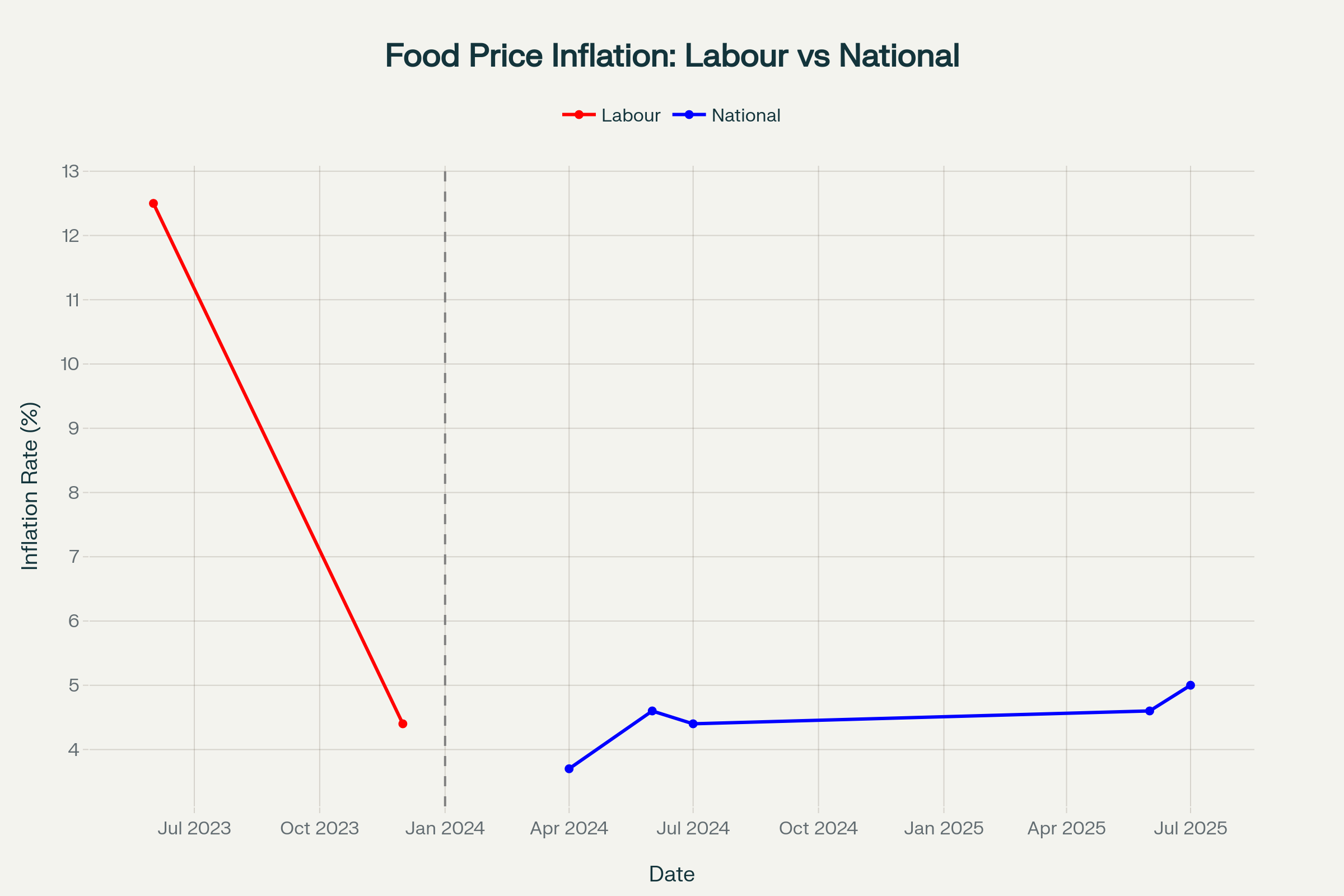
Food price inflation rates showing the transition from Labour to National government, revealing persistently high costs despite political promises
Willie Jackson's Revealing Moment of Truth
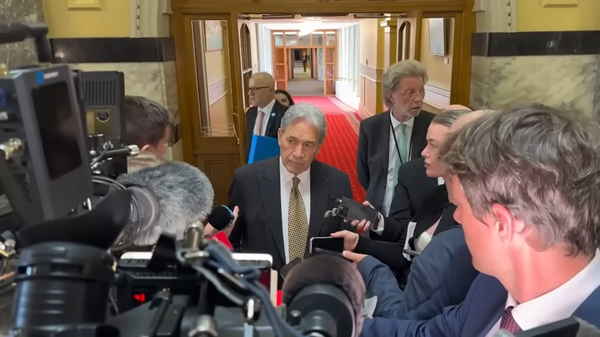
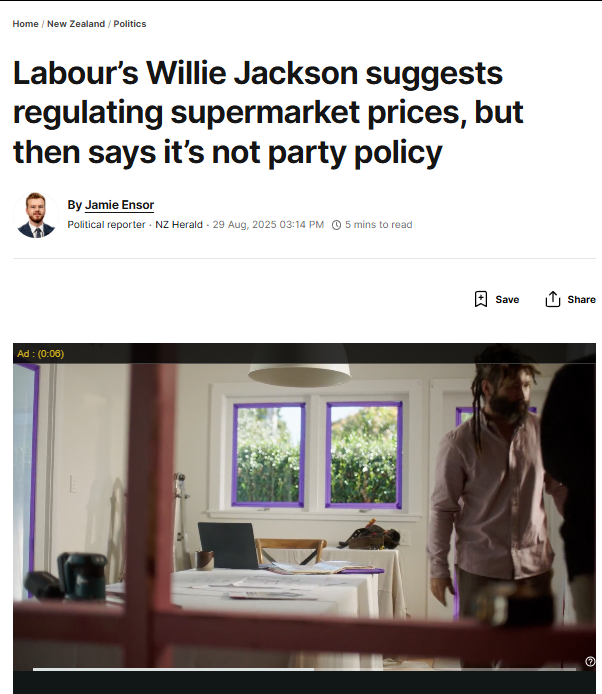
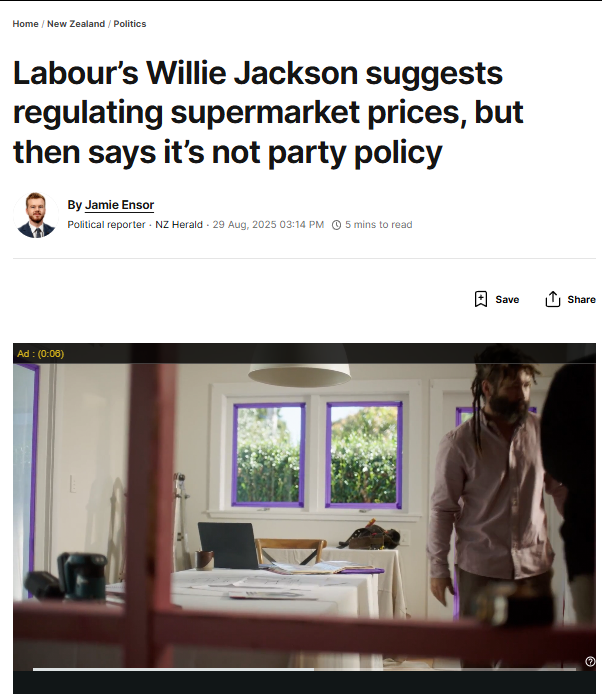
On August 29, 2025, Labour MP Willie Jackson appeared on Herald NOW and did something remarkable in New Zealand politics - he accidentally told the truth. When discussing the government's latest tinkering with supermarket consenting processes, Jackson cut through the usual political waffle and suggested what any rational person dealing with a duopoly should consider: price regulation.
"How about doing what you said you were going to do, which was address the cost of living, and looking at prices and maybe regulating prices because it is out of control and people are suffering," Jackson declared. When pressed by host Ryan Bridge about regulating supermarket prices, Jackson doubled down: "These guys should be looking at something like that".
But then came the moment that encapsulates everything wrong with Labour's approach to economic justice. National's Paul Goldsmith, channeling his inner Cold War warrior, sneered: "I think the Soviets tried that at one point and it didn't do very well". And what did our supposedly progressive Māori leader do? He immediately backtracked like a schoolchild caught speaking out of turn: "I am not saying we'll do that".
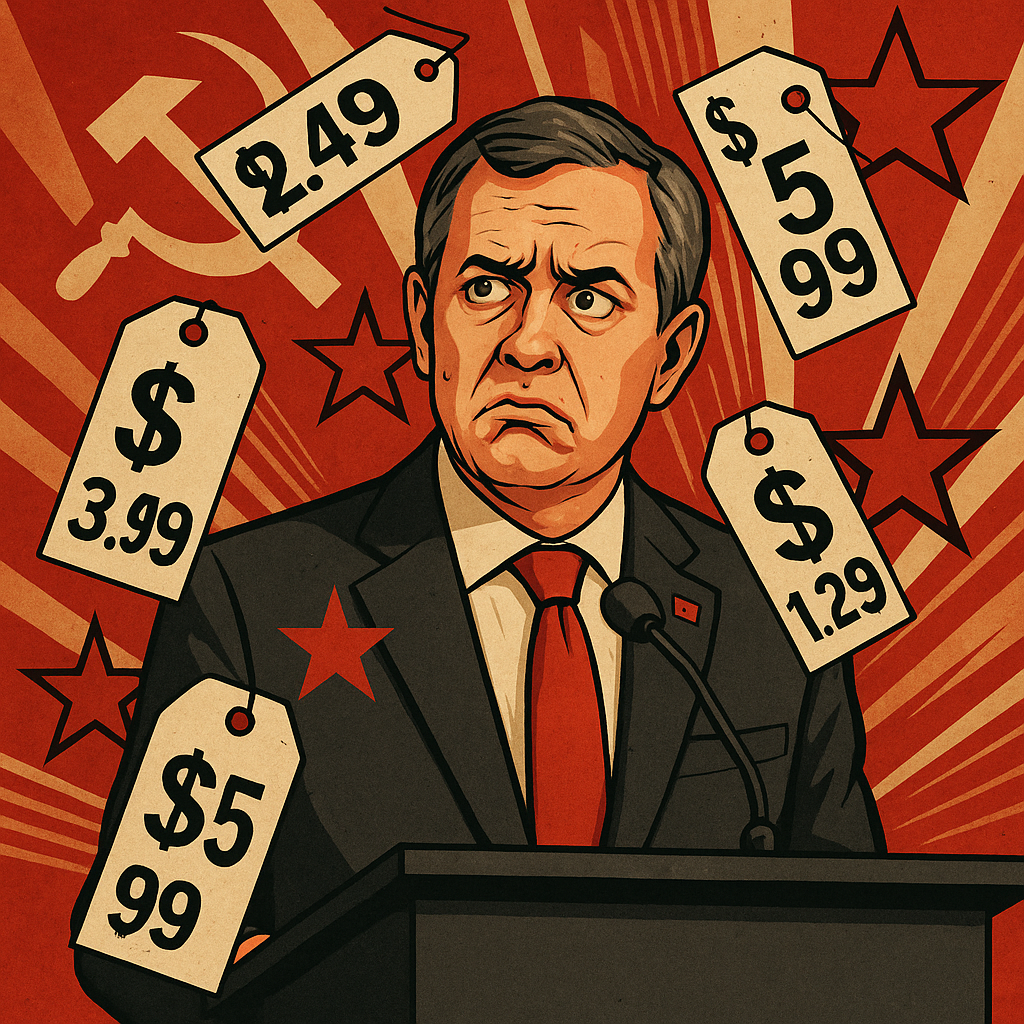
Willie Jackson's confused stance on price regulation policy
The Neoliberal Reflex - How Corporate Propaganda Becomes Common Sense
Let's examine Goldsmith's dismissive retort because it reveals everything about how neoliberal ideology has colonized political discourse. Goldsmith, described by political commentators as "possibly the only remaining member of his party who could be described as 'neoliberal'", reflexively deployed the standard corporate talking point: any government intervention in pricing equals Soviet communism.
This is intellectual dishonesty of the highest order. Price regulation is used successfully across capitalist economies worldwide, from rent controls in European cities to pharmaceutical pricing in most developed nations. But in New Zealand's colonized political discourse, even suggesting that corporate price-gouging might warrant intervention is treated as radical extremism.
What's particularly insidious is how quickly Jackson capitulated to this framing. Here we see the full psychological impact of neoliberal hegemony - even progressive politicians have internalized the idea that corporate profits are sacred, while whānau suffering is just "market forces."
This reflects what Indigenous scholar Linda Tuhiwai Smith calls the "colonization of the mind" - the process by which oppressed peoples come to police their own liberation. Jackson, despite representing communities most harmed by corporate price-gouging, immediately abandoned a policy position that would directly benefit his constituents the moment it was framed as "socialist."
Jackson's Pathetic Backtrack - When Politicians Choose Corporate Comfort Over Community Needs
The most damning aspect of Jackson's performance wasn't the initial suggestion - it was his panicked retreat. When asked directly by the Herald whether Labour supported price regulation, Jackson's response was a masterclass in political cowardice: "I suggested regulation as something the Government could look at to provide Kiwis with some relief. It is not Labour policy, our policy will be released before the election".
This is the language of a politician who knows his party's real constituency - not the struggling whānau he claims to represent, but the corporate donors and business interests who actually set Labour's economic agenda. The immediate disavowal reveals that Labour's internal polling has made it clear: challenging corporate power is off-limits, even when that power is literally starving families.
Jackson's backtrack becomes even more pathetic when we consider his claims about Labour's grocery sector achievements. He boasted that "Because of Labour, Commerce Commission now has the power to take the supermarkets to court over unfair pricing practices like misleading specials". This is like bragging about giving someone a slingshot to fight a tank - technically true but practically useless against entrenched corporate power.
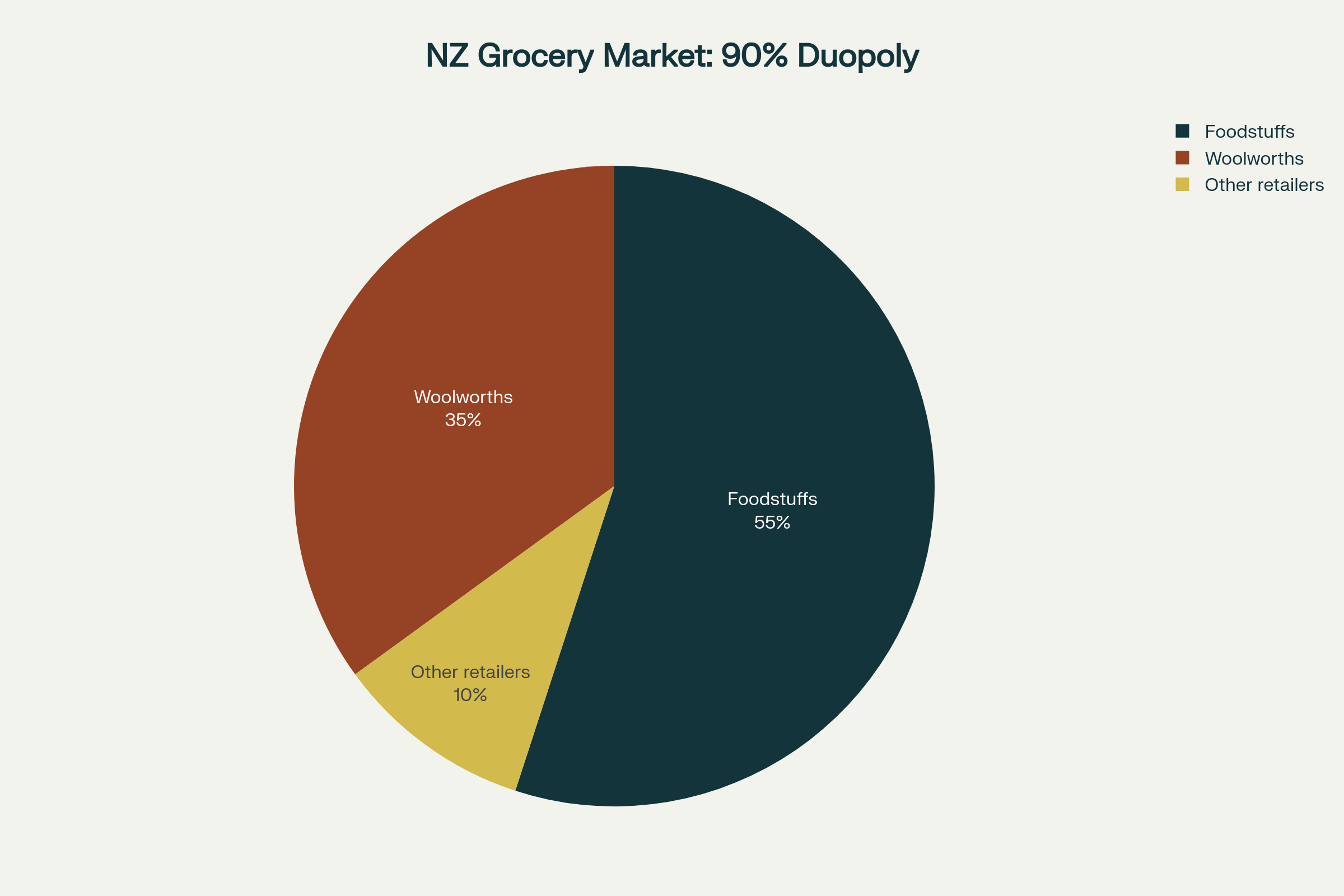
The New Zealand supermarket duopoly controlling 90% of the market, demonstrating the extreme concentration of grocery power
Labour's Six-Year Record of Enabling Corporate Exploitation
Jackson's moment of accidental honesty becomes even more damaging when viewed against Labour's actual record on grocery sector reform. Despite being in government from 2017 to 2023, Labour's most significant intervention was establishing a "Grocery Commissioner" - essentially a watchdog with no teeth to bite the duopoly.
The party that claims to represent working people had six years and a historic electoral mandate to break up the supermarket duopoly. Instead, they implemented cosmetic reforms that left the fundamental power structure intact. The Commerce Commission's 2022 market study found that the duopoly was extracting $430 million annually in excess profits, yet Labour's response was to require clearer pricing labels and unit pricing.
This represents a profound betrayal of mana whenua and tangata whenua alike. When Māori whānau struggle to afford basic groceries while corporate shareholders extract hundreds of millions in excess profits, a government claiming to uphold Te Tiriti principles should act decisively. Instead, Labour chose to protect corporate interests while offering symbolic gestures to struggling communities.
The pattern reveals itself clearly in Jackson's own ministry portfolios during Labour's term. As Māori Development Minister, he oversaw increases in government procurement from Māori businesses to 8%, which sounds progressive until you realize it represents crumbs from the table while the real wealth extraction through duopolistic pricing continues unchecked.
The Hidden Connections - Following the Money Trail
To understand why Labour refuses to challenge supermarket power, we must examine the hidden connections between political and corporate interests. While our research couldn't uncover direct financial links between Labour and the supermarket giants, the party's behavior suggests a deeper structural relationship.
Labour's 2020 election promise included launching market studies into supermarket pricing, yet when in power, they consistently chose the path of least resistance to corporate interests. The Commerce Commission study was commissioned, its findings were damning, yet no meaningful structural change followed.
This pattern reflects what political economist Noam Chomsky calls "manufactured consent" - the process by which elite interests become naturalized as common sense. In New Zealand's case, the interests of Woolworths (an Australian corporation) and Foodstuffs have become synonymous with "economic stability" in political discourse.
The revolving door between politics and corporate boardrooms ensures that challenging fundamental economic structures remains unthinkable. Former politicians routinely join corporate boards, while corporate executives advise on government policy. This creates what Indigenous scholar Glen Coulthard calls a "colonial-capitalist matrix" - a system where Indigenous liberation and economic justice become structurally impossible within existing frameworks.
Current Government's Smokescreen Solutions
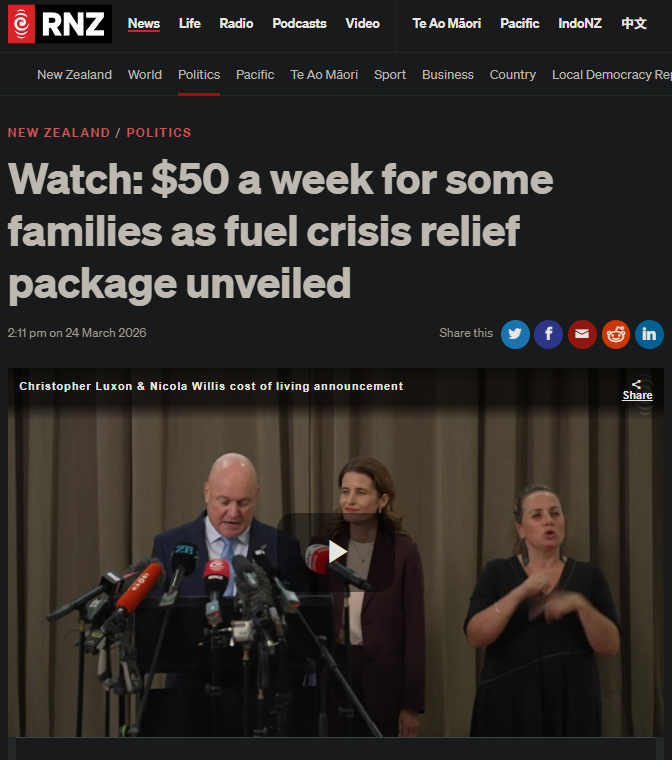
The current National-led government's response to supermarket concentration has been to announce "express lane" approvals for new supermarket developments, which Economic Growth Minister Nicola Willis presents as meaningful reform. This is like rearranging deck chairs on the Titanic while pretending you're fixing the hole in the hull.
Willis's announcements about "structural separation" being considered represent the same pattern of promising future action while maintaining current extraction. Meanwhile, food inflation has risen to 5% as of July 2025, the highest rate since November 2023, yet the government's response is to make it easier to build more supermarkets that will still be controlled by the same duopoly.
The National government's approach reveals the bipartisan consensus protecting corporate power. Whether Labour's "Grocery Commissioner" or National's "express lanes," both parties offer procedural solutions to structural problems. Neither dares suggest that perhaps corporate profits shouldn't determine whether whānau can afford to eat.
Implications for Māori Communities and Democratic Governance
Jackson's backtrack on price regulation reveals a deeper crisis in New Zealand's political system - the complete capture of mainstream politics by corporate interests. When a senior Māori politician cannot even suggest regulating corporate price-gouging without immediate retreat, we see how thoroughly neoliberal ideology has colonized political discourse.
This has particular implications for Māori communities, who face both the highest rates of poverty and the greatest impact from corporate price inflation. Statistics show Māori households spend a higher proportion of income on food, making them disproportionately vulnerable to duopolistic pricing. When Jackson abandons policies that would directly benefit his constituents, he perpetuates the colonial pattern of Indigenous leaders serving settler-colonial economic interests.
The broader democratic implications are equally concerning. If elected representatives cannot even discuss regulating corporate behavior without being accused of Soviet-style communism, then democracy itself becomes a facade. Corporate interests have achieved something the old colonial administrators could only dream of - a political system that polices itself on behalf of capital.
This connects to what Māori scholar Moana Sinclair calls "democratic deficit under settler capitalism" - the structural impossibility of Indigenous communities achieving self-determination within economic systems designed around extraction and accumulation rather than collective wellbeing.

The Māori Green Fighting Misinformation And Disinformation From The Far Right
The Choice Between Corporate Comfort and Community Survival
Willie Jackson's price regulation backflip perfectly encapsulates the spiritual and political bankruptcy of mainstream New Zealand politics. Here we have a senior Māori politician who momentarily glimpses what needs to be done - regulate corporate price-gouging - then immediately abandons the position when challenged by neoliberal orthodoxy.
This is not just political cowardice; it is a fundamental betrayal of the communities he claims to represent. While whānau choose between heating and eating, Jackson chooses between corporate comfort and community survival - and consistently chooses the corporations.
The time has come for whānau to recognize that neither Labour nor National offers genuine solutions to corporate power. Both parties are committed to maintaining a system that extracts wealth from our communities and concentrates it in corporate hands. Real change will require movements that operate outside and against this captured political system.
Jackson's performance reminds us that the colonization of the mind remains the most insidious form of oppression. Until our leaders can imagine economic systems that serve people rather than profits, we will continue to witness the pathetic spectacle of Indigenous politicians policing their own people's liberation.
The fight for affordable food is the fight for decolonization. Corporate price-gouging is colonial extraction by another name. It's time to name it, shame it, and build alternatives that serve whānau rather than shareholders.
Mā te huruhuru, ka rere ai te manu. With feathers, the bird soars. But our political leaders have had their feathers plucked by corporate interests, leaving them unable to soar beyond the narrow confines of neoliberal orthodoxy.
For those readers who find value in exposing these forms of corporate colonization and political cowardice, please consider supporting this mahi with a koha to HTDM: 03-1546-0415173-000. These are challenging economic times for many whānau, so please only contribute if you have capacity and wish to do so.
Kia kaha, kia maia, kia manawanui.
Ivor Jones
The Māori Green Lantern