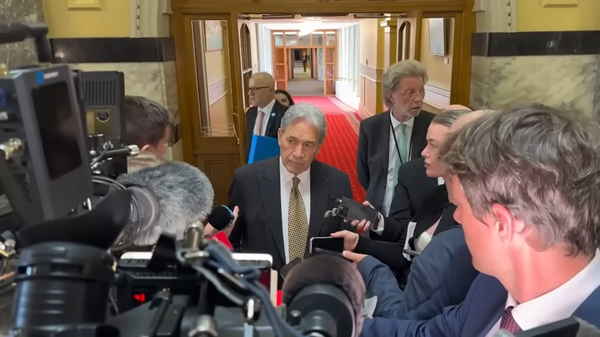
“The Half-Million Dollar Misinformation Machine” - 16 July 2025
Debunking the Retail Crime Advisory Group's Dangerous Deception

Kia ora, whānau. The Half-Million Dollar Misinformation Machine
Debunking the Retail Crime Advisory Group's Dangerous Deception
The latest government expense that should outrage every taxpayer has just been revealed: Paul Goldsmith's ministerial advisory group spent over half a million dollars in just three months1 to recycle dangerous ideas already dismissed by police as too risky. This spectacle of wasteful spending represents far more than fiscal irresponsibility - it exposes a calculated campaign to implement neoliberal surveillance policies that will disproportionately harm Māori and Pacific communities while enriching corporate interests.
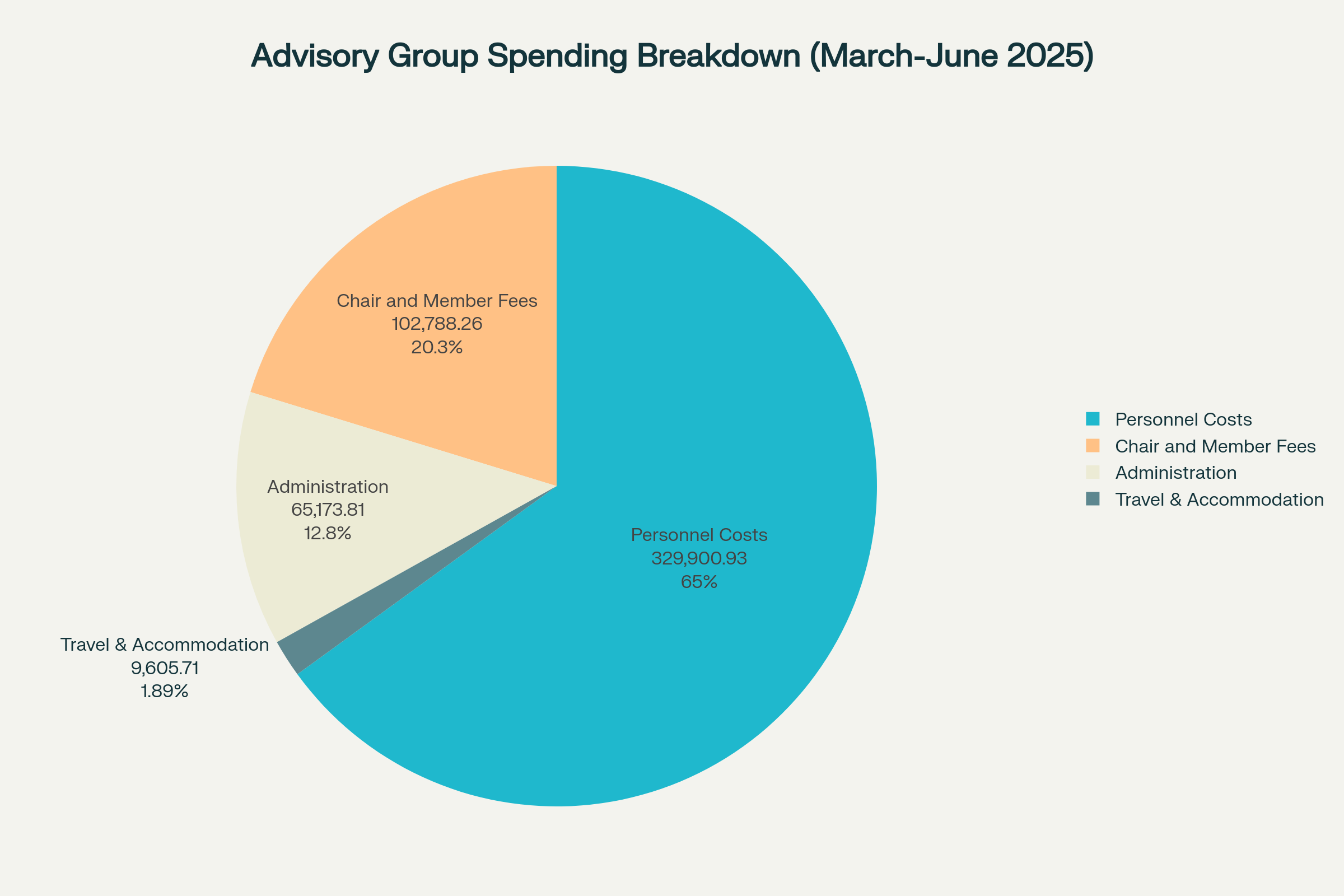
Breakdown of the Retail Crime Advisory Group's $507,468.71 spending over three months, showing personnel costs dominating at 65% of total expenditure
Background
The Retail Crime Advisory Group emerged from the coalition government's fear-mongering playbook, established in July 2024 with a staggering $1.8 million annual budget2. Chaired by Sunny Kaushal of the Dairy and Business Owners Group2, this group was supposedly created to address retail crime through evidence-based policy. However, the reality reveals a more sinister purpose: manufacturing consent for authoritarian surveillance measures under the guise of public safety.
The group's funding comes from the Proceeds of Crime Fund2, originally designed to address organised crime and drug harm. This funding source demonstrates the government's cynical appropriation of resources meant for genuine crime prevention to finance their ideological agenda. The irony is palpable - using money seized from criminals to fund policies that will criminalise the most vulnerable members of our society.
The half-million dollar spending spree from March to June 2025 breaks down as follows: personnel costs consumed $329,900.93, chair and member fees took $102,788.26, administration costs reached $65,173.81, and travel expenses added $9,605.711. This represents a burn rate that would make even the most profligate corporate executives blush.
The group's recommendations include citizen's arrest powers, on-the-spot fines for shoplifters, and toughened trespass laws1. These are not innovative solutions but recycled punitive measures that Labour's police spokesperson Ginny Andersen notes were previously dismissed as dangerous1. The Justice Ministry's own analysis confirms that citizen's arrest changes are unlikely to materially improve public safety and could lead to unreasonable use of force, particularly against children.
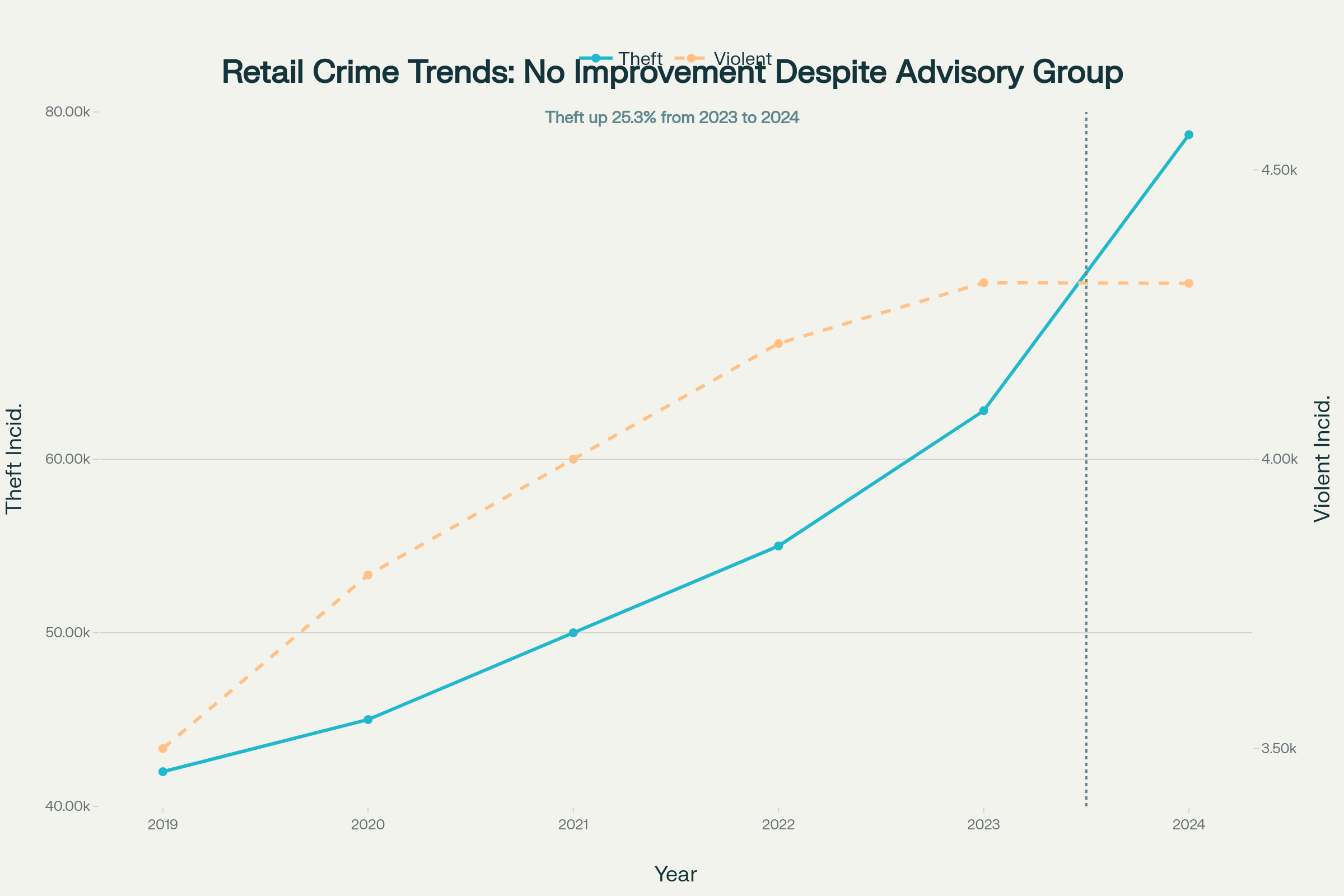
Retail crime trends from 2019-2024 showing theft incidents increased 25.3% in 2024 despite the Advisory Group's establishment, while violent incidents remained stable
From a Māori perspective, this matters because these policies will inevitably lead to over-policing of our communities. The emphasis on facial recognition technology and expanded surveillance powers represents a digital continuation of colonial control mechanisms that have historically targeted Māori. The group's advocacy for toughened trespass laws and facial recognition technology3 threatens to create a surveillance state where Māori face disproportionate monitoring and criminalisation.
The Neoliberal Surveillance Apparatus
The advisory group's recommendations expose the neoliberal state's strategy of outsourcing surveillance to private corporations while maintaining plausible deniability4. This aligns perfectly with research showing how neoliberal governance expands criminalization power through privatized surveillance networks4.
The group's push for facial recognition technology is particularly concerning. Privacy Commissioner research shows Māori are potentially targeted by CCTV systems, with documented bias and racial profiling in law enforcement creating specific risks for Māori communities. The collection of biometric data including tā moko raises serious questions about data sovereignty and the potential for false positives that frequently affect people of colour.
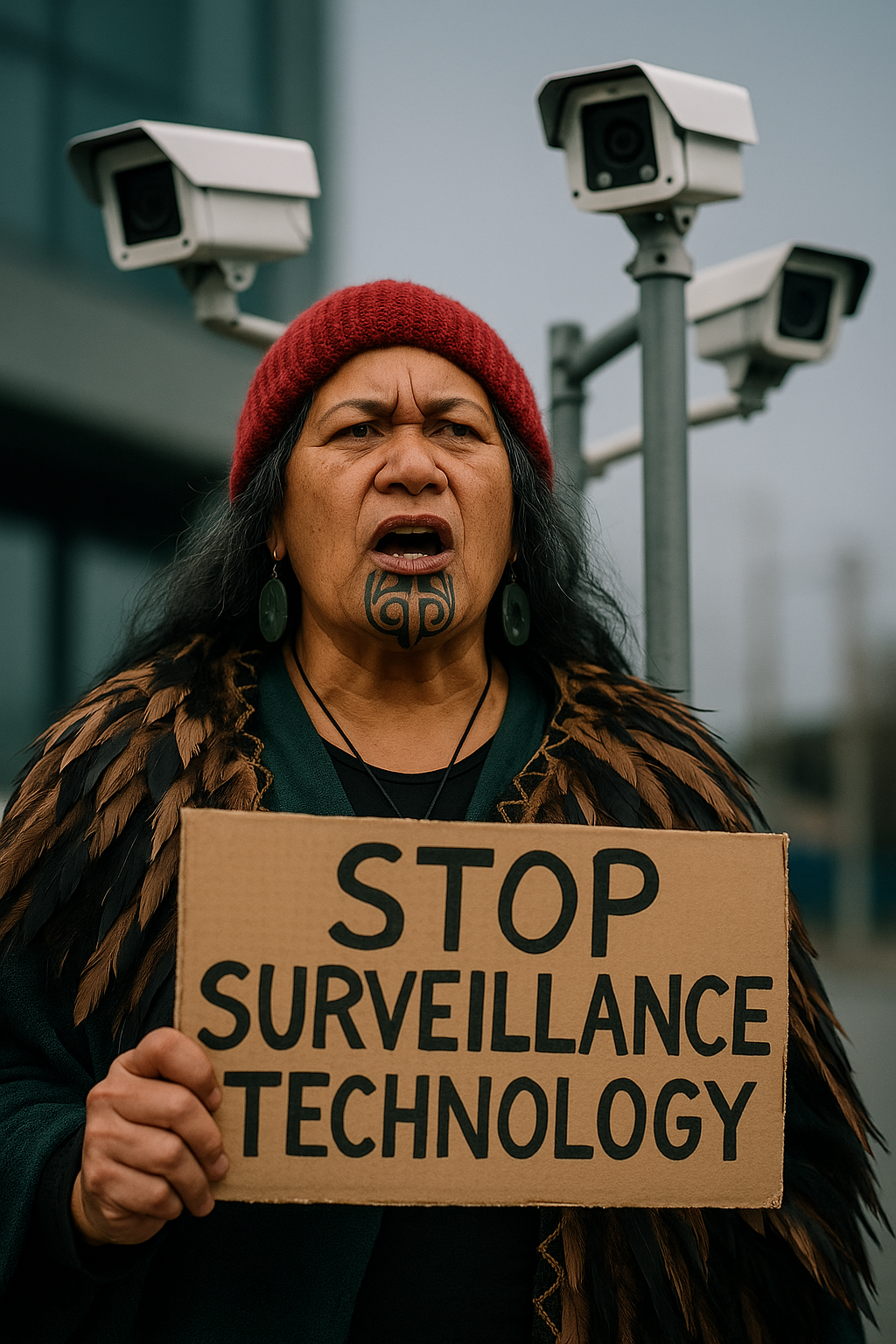
Māori activist protesting digital surveillance and facial recognition technology
Dr Karaitiana Taiuru, a leading Māori AI and data ethicist, warns that police haven't engaged with Māori communities about where identification data such as tā moko will be stored and who will have access. This represents a fundamental breach of tino rangatiratanga and data sovereignty principles enshrined in Te Tiriti o Waitangi.
Citizen's Arrest: Vigilantism by Another Name
The advisory group's promotion of expanded citizen's arrest powers represents a dangerous slide toward vigilantism. Legal experts warn that citizen's arrests can lead to excessive force and create liability for those making arrests5. The fine line between citizen's arrests and vigilantism5 becomes even finer when racial bias influences who gets targeted.
Academic research demonstrates that citizen's arrest powers can be abused, with significant risks for both arrestor and arrestee6. The government's own Ministry of Justice analysis confirms these concerns, noting that people could be encouraged to use force and restraints, which may lead to unreasonable use of force and unlawful detention.
For Māori, this represents a continuation of historical patterns where vigilante justice has been used to terrorise our communities. The expansion of citizen's arrest powers will inevitably lead to racial profiling, with Māori youth particularly vulnerable to being targeted by overzealous citizens acting as unofficial law enforcement.
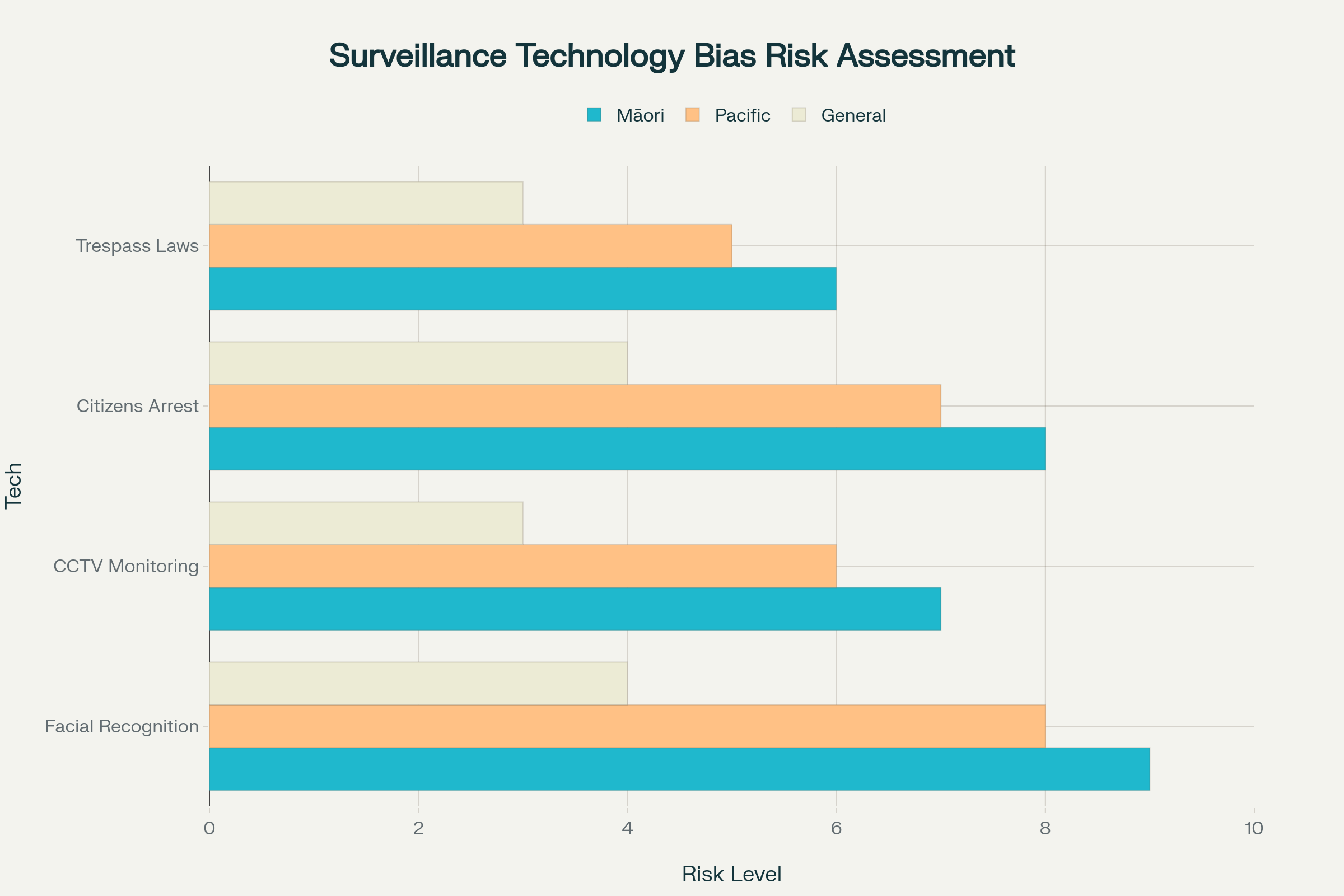
Surveillance technology bias risk assessment showing significantly higher discrimination risks for Māori and Pacific peoples compared to the general population across all proposed measures
The risks are compounded when considered alongside research showing that the expansion of citizen's arrest power legitimises vigilantism in a highly radicalised environment, getting worse at pace in NZ7. This creates a perfect storm where radicalised individuals consuming neo-Nazi/far-right content will enjoy legal cover to confront perceived enemies7.
The Politics of Fear and Data Manipulation
The advisory group's work exemplifies the politics of fear that promotes attacking targets like crime to create compliant behaviour. This fear-mongering relies on manipulated crime statistics and sensationalised narratives to justify authoritarian measures.
The group's claims about retail crime increases must be scrutinised against the backdrop of significantly under-reported retail crime, with nearly 40% of incidents never reaching police8. This under-reporting makes it impossible to establish accurate baseline statistics, yet the advisory group uses these flawed numbers to justify expanded surveillance and punitive measures.
Research shows that fear-driven crime reporting undermines community resilience and shapes political agendas in ways that don't address underlying causes of crime. The advisory group's recommendations follow this pattern perfectly - offering punitive solutions that will generate profit for security companies while failing to address the social and economic factors that drive crime.
The Corporate Welfare Dimension
The advisory group's expensive existence represents a form of corporate welfare, funnelling public money to private consultants while producing recommendations that benefit security and surveillance companies. Chair Sunny Kaushal receives $920 per day, with the potential to earn up to $230,000 annually from this role alone.
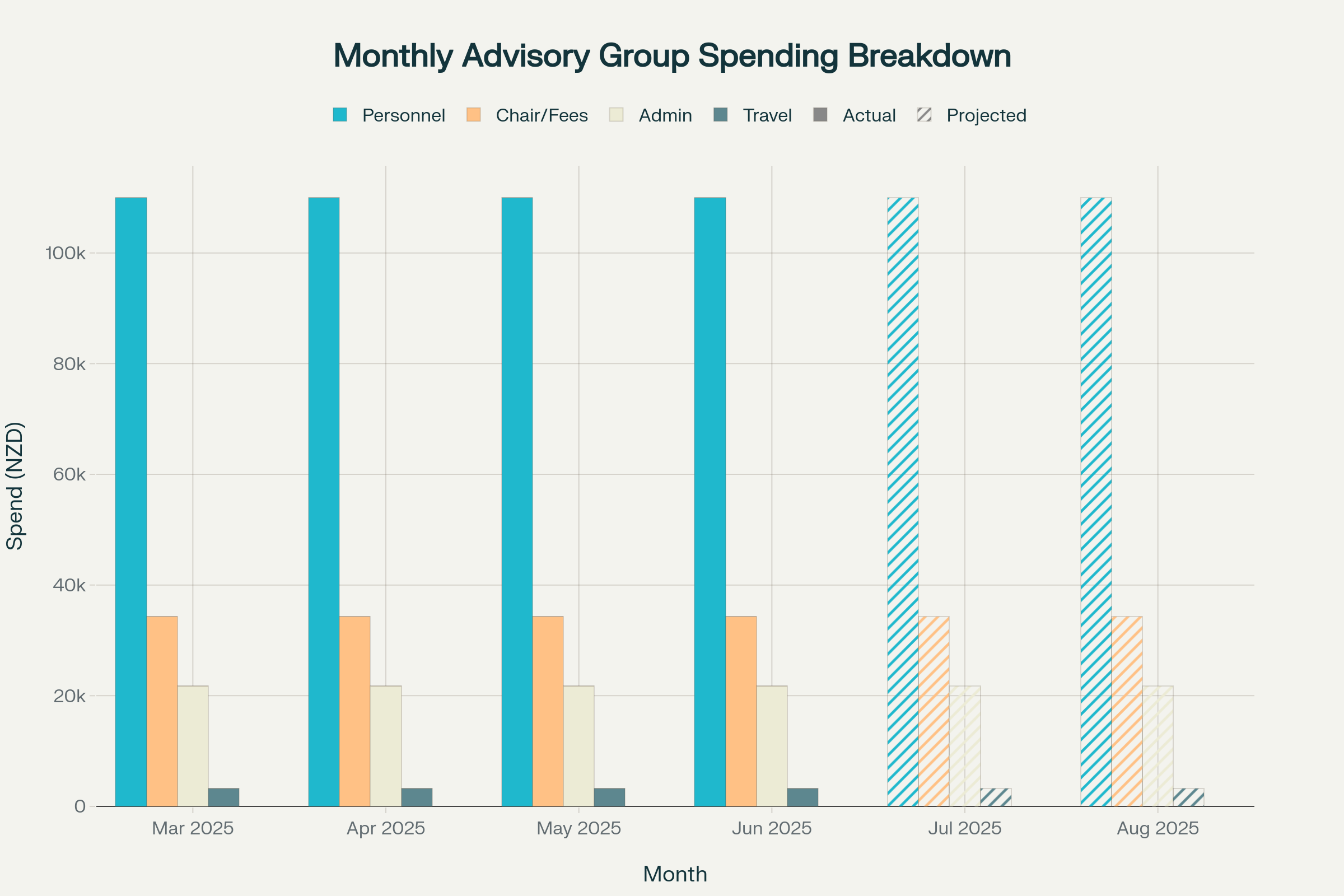
Monthly spending breakdown showing consistent $169k monthly burn rate, with personnel costs dominating across all months and no reduction in spending despite completing initial recommendations
This represents the neoliberal playbook in action: create artificial scarcity and crisis, establish expensive advisory groups staffed by industry insiders, then implement policies that benefit corporate interests while claiming to serve public safety. The group's recommendations for expanded surveillance technology and security measures will generate significant profits for the corporations that provide these services.
Digital Colonialism and Māori Data Sovereignty
The advisory group's push for facial recognition technology represents what academic research identifies as digital colonialism, where surveillance technologies dismiss obligations to Te Tiriti o Waitangi and Māori rights9. This technological colonialism operates through unregulated over-surveillance that triggers questions about police misconduct and ethnic discrimination.
The specific risks to Māori from facial recognition technology cannot be overstated. Māori technology ethicist Dr Karaitiana Taiuru warns that the government is allowing tech companies to use Māori as guinea pigs for facial recognition technology10. The technology's documented biases against people of colour mean that Māori face higher rates of misidentification and false positives.
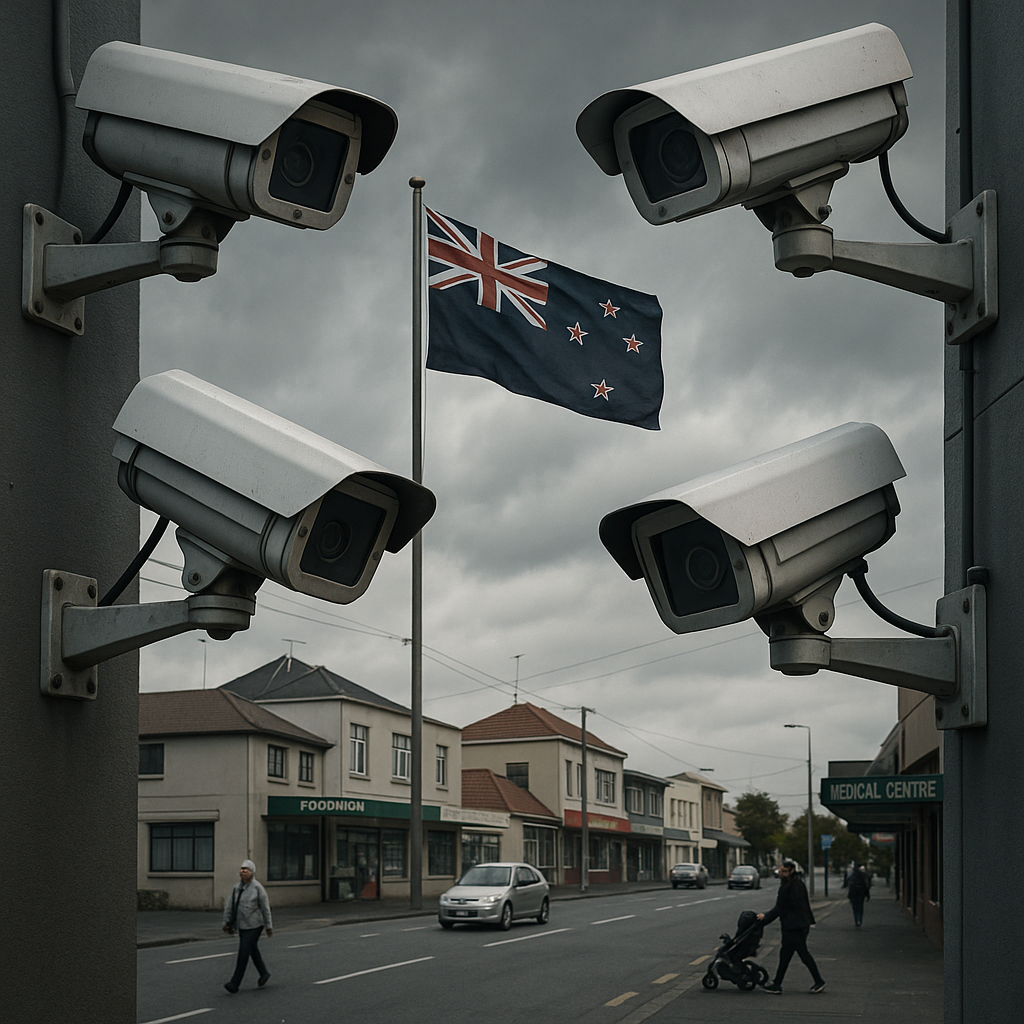
Surveillance state concept showing CCTV monitoring of New Zealand communities
Research demonstrates that facial recognition systems are the digital equivalent of the old colonial practice of collecting Māori heads or mokomokai11. Our faces and images including our moko are being taken without permission by the government and used in ways we are still not certain of.
Indigenous data specialist research shows that data is like our land and natural resources - if Indigenous peoples don't have sovereignty of their own data, they will simply be re-colonised in this information society12.
The Failure of Neoliberal Crime Policy
The advisory group's recommendations exemplify the failure of neoliberal approaches to crime prevention. Rather than addressing the social and economic factors that drive crime, they offer technological and punitive solutions that criminalise poverty and marginalisation. This approach reflects the neoliberal state's preference for managing populations through criminalization rather than addressing structural inequalities4.
The emphasis on individual responsibility and market solutions ignores the systemic factors that contribute to crime. By focusing on surveillance and punishment, the advisory group avoids addressing issues like poverty, inequality, and social exclusion that are the real drivers of criminal behaviour.
Implications
The broader implications of the advisory group's work extend far beyond retail crime. Their recommendations represent a blueprint for expanding the surveillance state while undermining civil liberties and community autonomy. The integration of facial recognition technology into retail environments will normalise constant surveillance, creating a society where privacy becomes a luxury few can afford.
For Māori communities, this represents a continuation of colonial control mechanisms adapted for the digital age. The expansion of citizen's arrest powers combined with surveillance technology creates a perfect storm for racial profiling and discriminatory enforcement. Young Māori in particular face the prospect of being monitored, reported, and detained by systems designed to see them as threats rather than community members.
The use of the Proceeds of Crime Fund to finance these measures adds insult to injury, appropriating resources meant for genuine crime prevention to fund surveillance infrastructure that will primarily harm the communities most affected by crime. This represents a fundamental corruption of the fund's purpose and a betrayal of its stated objectives.
The half-million dollar retail crime advisory group represents everything wrong with neoliberal governance: expensive consultants producing recycled ideas that benefit corporate interests while harming vulnerable communities. Their recommendations for expanded surveillance and citizen's arrest powers will create a more punitive and divided society while failing to address the root causes of crime.
The group's work exemplifies the politics of fear in action, using manipulated statistics and sensationalised narratives to justify authoritarian measures. Their push for facial recognition technology and expanded surveillance represents digital colonialism that threatens Māori data sovereignty and perpetuates racial discrimination through technological means.
As tangata whenua, we must reject these colonial surveillance mechanisms and demand crime prevention approaches that address structural inequalities rather than criminalising our communities. The money wasted on this advisory group could have funded genuine community programmes, education initiatives, and economic development projects that actually prevent crime.
The government's willingness to spend half a million dollars in three months on recycled punitive measures while claiming budget constraints prevent investment in social services reveals their true priorities. They prefer surveillance and punishment to justice and equality, control to community empowerment.
We must demand accountability for this wasteful spending and reject the advisory group's dangerous recommendations. Our communities deserve better than expensive consultants peddling surveillance solutions that will harm those they claim to protect.
The struggle for tino rangatiratanga includes the fight against digital colonialism and surveillance capitalism. By exposing the retail crime advisory group's deception and waste, we take another step toward a more just and equitable society.
Readers who find value in this analysis and want to support continued investigation into government waste and corporate welfare are invited to consider a donation to support this work. Please only contribute if you have the capacity to do so, as I understand these are challenging economic times for many whānau.
HTDM: 03-1546-0415173-000
Ngā mihi,
Ivor Jones
The Māori Green Lantern