“The Hidden Truth About Colonial Cost Crises” - 29 June 2025
How Neoliberal Policies Make Aotearoa More Expensive Than America While Politicians Blame Everyone But Themselves
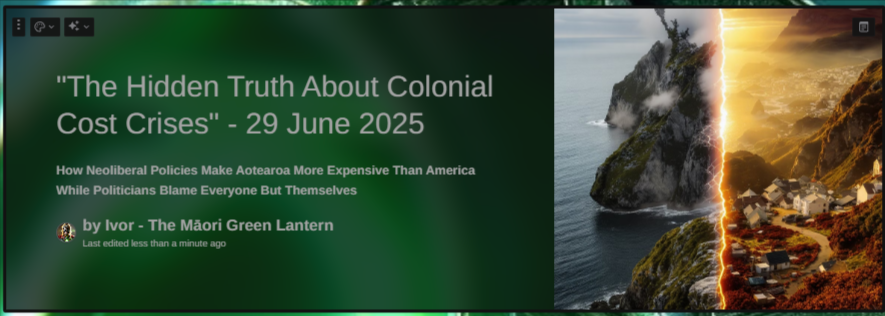
The narrative that New Zealand is an affordable paradise compared to overseas destinations is nothing more than colonial propaganda designed to keep us trapped in economic servitude. When we examine the stark reality of living costs between Santa Cruz, California and Ōpōtiki in Te Moana-a-Toi (Bay of Plenty), the truth emerges like dawn breaking over Maunga Whakatāne: despite what politicians and their media lapdogs tell us, life in Aotearoa has become crushingly more expensive than many parts of America.
Background: Two Worlds, One Broken System
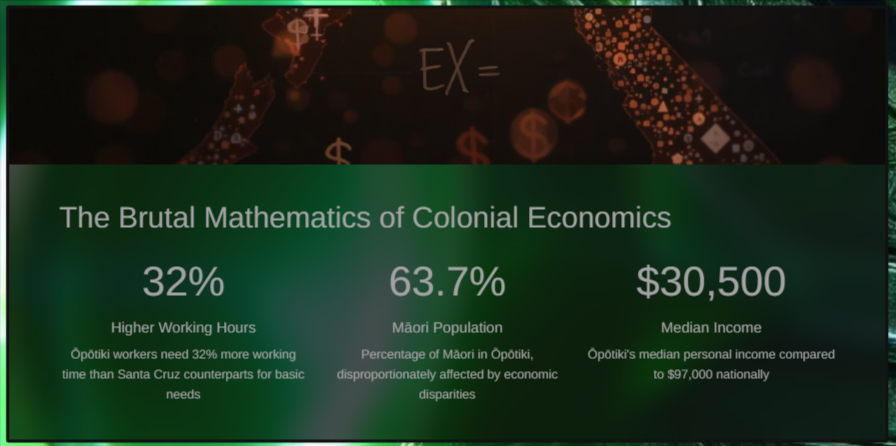
To understand this cost crisis, we must first grasp the economic realities facing ordinary whānau in both locations. Santa Cruz, California sits in one of America's most expensive states, home to Silicon Valley wealth and coastal California's notorious housing market. Meanwhile, Ōpōtiki represents rural New Zealand - a place where Māori make up approximately 63.7% of the population and where the median personal income sits at a devastating $30,500 compared to $97,000 nationally.
These are not random comparisons. Both communities face similar challenges: tourism pressure, housing shortages, and economies dependent on primary industries. Yet the outcomes reveal how neoliberal policies have systematically failed Māori and working-class communities in Aotearoa.
When "Cheap" New Zealand Costs More Than Expensive America
The premise that living costs are comparable between these locations crumbles under scrutiny. When we examine minimum wage purchasing power - the real measure of affordability for working whānau - the colonial con job becomes crystal clear.
This analysis matters because it exposes how politicians use international comparisons to gaslight us about domestic policy failures. When they claim New Zealand is "affordable" compared to overseas, they're comparing median incomes to average costs while ignoring how minimum wage workers - disproportionately Māori and Pasifika - actually survive.
The scope of this crisis extends far beyond individual family budgets. It represents a systematic transfer of wealth from working communities to property owners, from Māori to Pākehā, from young to old.
The Brutal Mathematics of Colonial Economics
Housing: Where the Lie Falls Apart
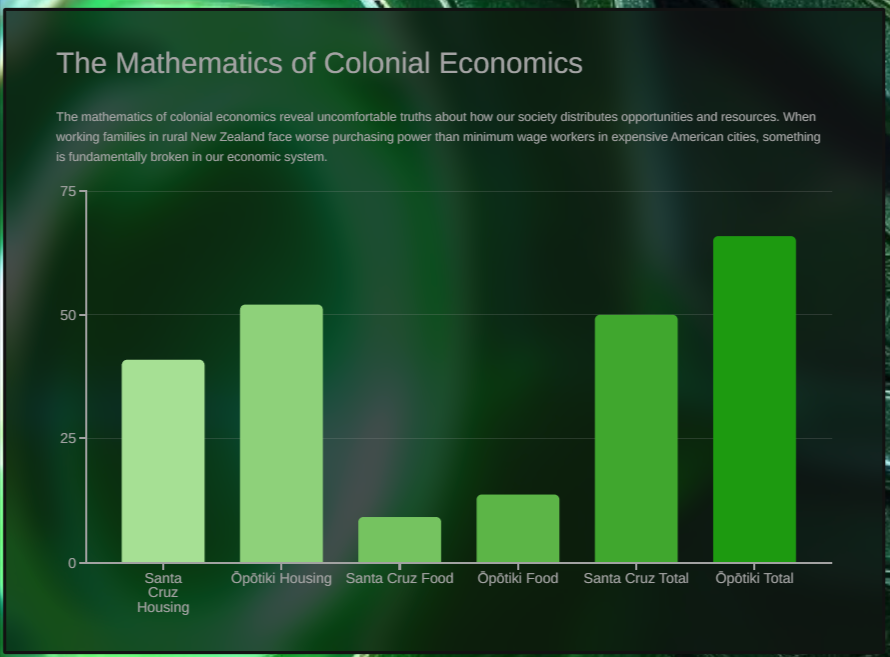
In Santa Cruz, the median rent for a 1-bedroom apartment sits at $2,706 per month, while California's minimum wage stands at $16.50 per hour. This means a minimum wage worker needs approximately 41 hours per week just to afford basic housing.
Now examine Ōpōtiki, where median rent reaches $680 per week - that's $2,944 monthly when converted to US dollars. With New Zealand's minimum wage at $23.50 per hour in New Zealand dollars (approximately $14.10 USD), an Ōpōtiki worker needs 52.2 hours per week to afford the same basic housing. That's 27% more working time required for the same basic human need.
This isn't just numbers on a spreadsheet - it's whānau forced to choose between rent and kai, between heating and healthcare. It's young Māori leaving their tūrangawaewae because they cannot afford to live where their tīpuna are buried.
Food: Feeding the Colonial Machine
The food cost disparity reveals even more sinister truths. In Santa Cruz, monthly food costs per person average $597, requiring 9.1 hours of minimum wage work weekly. Research consistently shows that food costs in New Zealand are significantly higher than international averages, with regional areas like Ōpōtiki facing additional markup due to lack of competition.
Conservative estimates put Ōpōtiki food costs at least 30% higher than Santa Cruz levels, meaning workers need approximately 13.8 hours weekly just to afford basic nutrition. This represents a 51% increase in working time required to eat.
The implications are devastating for Māori whānau, who already face persistent income inequalities and would need to spend a higher proportion of their weekly income for basic necessities compared to Pākehā families.
The Total Economic Assault
When we combine housing and food costs - the two most fundamental human needs - the picture becomes clear. A minimum wage worker in Santa Cruz needs 50.1 hours weekly to afford basic housing and food. In Ōpōtiki, that same worker needs 66.0 hours weekly - a crushing 31.8% more working time for identical basic needs.
This means Ōpōtiki workers effectively earn 32% less purchasing power than their Santa Cruz counterparts, despite New Zealand's supposedly higher minimum wage in nominal terms.
Transportation and Services: Adding Insult to Injury
The cost disparities extend beyond housing and food. Santa Cruz offers public transit passes for $65 monthly, while Ōpōtiki residents face limited public transport options, with bus fares to nearby Whakatāne costing significantly more per trip. The lack of competition and infrastructure investment in regional New Zealand forces additional costs onto already struggling whānau.
Electricity costs tell a similar story. Santa Cruz residents pay approximately $243 monthly for electricity, while New Zealand's electricity pricing structure imposes higher relative costs on low-income households through regressive pricing models.
Exposing the Neoliberal Shell Game
This cost crisis didn't emerge from natural market forces - it's the predictable result of deliberate policy choices spanning decades. Neoliberal governments have systematically:
Financialised Housing: By treating homes as investment vehicles rather than human rights, politicians created artificial scarcity that drives up costs while enriching property speculators. The median household income in Ōpōtiki District was $66,900 in 2023 compared with $97,000 nationally, yet housing costs continue rising faster than wages.
Deregulated Essential Services: Privatisation of electricity and telecommunications shifted profit motives ahead of public service, creating the high utility costs that hammer working families hardest.
Abandoned Regional Development: The concentration of economic opportunity in major centres forces young people to choose between economic survival and connection to whānau and whenua.
Ignored Māori Economic Rights: Despite Treaty obligations, successive governments have failed to address the structural inequalities that see Māori overrepresented in minimum wage work while underrepresented in asset ownership.

International Comparisons as Colonial Gaslighting
When politicians claim New Zealand remains affordable compared to international destinations, they're deploying a classic colonial technique: making victims feel grateful for their oppression. They compare our costs to the most expensive global cities while ignoring places like Santa Cruz that offer better purchasing power for working families.
This gaslighting serves multiple functions. It deflects attention from domestic policy failures, justifies continued inaction on housing and wage policy, and makes struggling whānau feel personally responsible for economic pressures created by systemic inequality.
The cost of living crisis affects different communities unequally, with Māori and Pasifika families bearing disproportionate burdens. Yet media coverage consistently frames this as a general problem affecting everyone equally, rather than recognising how structural racism amplifies economic hardship for Indigenous communities.
Regional Exploitation and the Ōpōtiki Reality
Ōpōtiki represents thousands of communities across Aotearoa where economic colonisation operates most brutally. With 7.3% unemployment compared to national averages and 44% of working age people earning $20,000 or less annually, the town exemplifies how neoliberal policies abandon rural and Māori communities.
The lack of economic diversification, limited transport links, and concentration of low-wage work creates captive populations forced to accept whatever conditions employers offer. Meanwhile, absentee landlords and corporate chains extract wealth from these communities without reinvesting locally.
This pattern repeats across rural New Zealand, where small towns become economic extraction sites for urban wealth accumulation. Young people leave for opportunities elsewhere, ageing populations struggle with fixed incomes, and local businesses can't compete with corporate chains optimised for profit extraction.
Implications: The Deepening Colonial Divide
These cost disparities create profound implications extending far beyond individual family budgets. They represent a systematic transfer of life opportunities from working communities to capital owners, from rural areas to urban centres, from Māori to Pākehā.
Cultural Destruction: When young Māori cannot afford to live in their home communities, it accelerates cultural disconnection and undermines intergenerational knowledge transfer. Whānau relationships fracture under economic pressure, weakening the social bonds that sustain Māori identity and resistance.
Democratic Erosion: Economic stress reduces political participation as people focus on immediate survival rather than long-term change. This creates space for far-right movements to blame immigrants, beneficiaries, and Māori for problems created by capitalist policy choices.
Environmental Degradation: Desperate communities accept environmentally destructive industries because they need employment, even when those industries undermine long-term sustainability and Māori environmental values.
Health Inequities: The stress of economic insecurity creates cascading health impacts, from mental health crises to delayed medical care. These costs ultimately burden public health systems while enriching private healthcare providers.
The Path Forward: Reclaiming Economic Tino Rangatiratanga
Addressing this crisis requires abandoning neoliberal orthodoxy and embracing Māori economic principles that prioritise collective wellbeing over individual profit maximisation.
Housing as a Human Right: Implement rent controls, ban foreign speculation, and build massive public housing programmes designed to provide affordable homes rather than investment returns. Follow models like Vienna's social housing success rather than failed privatisation experiments.
Living Wage Implementation: Raise minimum wages to genuine living wage levels while strengthening collective bargaining rights. Link wage increases to local cost of living rather than national averages that obscure regional disparities.
Public Banking: Establish public banks that invest in community development rather than speculative finance. Prioritise lending to cooperative enterprises and community-owned businesses over corporate profit extraction.
Regional Economic Justice: Develop comprehensive strategies to create meaningful employment in regional areas, including renewable energy projects, sustainable agriculture, and Māori enterprise development. Stop treating rural communities as resource extraction sites for urban benefit.
Māori Economic Development: Fully implement Treaty obligations by returning economic assets to Māori control and supporting Indigenous enterprise development that aligns with Māori values and environmental protection.
These aren't radical proposals - they're basic justice measures that other developed nations implement successfully. The only barrier is political will corrupted by corporate influence and colonial conditioning.
The choice facing Aotearoa is stark: continue enabling wealth extraction that enriches property speculators and corporate shareholders while impoverishing working whānau, or embrace economic systems that prioritise human wellbeing and environmental sustainability over profit maximisation.
The mathematics of colonial economics reveal uncomfortable truths about how our society distributes opportunities and resources. When working families in rural New Zealand face worse purchasing power than minimum wage workers in expensive American cities, something is fundamentally broken in our economic system.
Fixing this crisis requires more than policy adjustments - it demands a complete restructuring of economic priorities away from capital accumulation toward collective flourishing. The alternative is continued economic colonisation that destroys communities, fractures whānau, and undermines the social fabric that makes meaningful democracy possible.
As always, MGL remains humble in asking readers who find value in this mahi to consider a koha to support the cause: HTDM: 03-1546-0415173-000. MGL understands these are tough economic times for whānau, so please only contribute if you have capacity and wish to do so.
Kia kaha, kia māia, kia manawanui
Ivor Jones
The Māori Green Lantern
Kaitiaki of Truth