“The Hollow Monuments of Colonial Memory: How Hamilton's Street Names Immortalize Land Thieves and Murderers” - 24 August 2025
When a city celebrates the architects of genocide with street signs while erasing the tangata whenua, we must ask ourselves: whose history deserves to be remembered?
Kia ora whānau, greetings and blessings to you all.
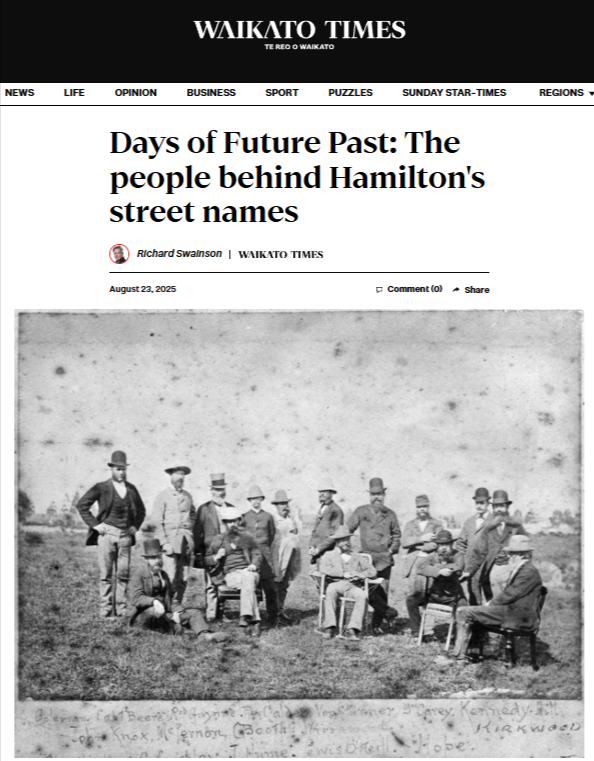
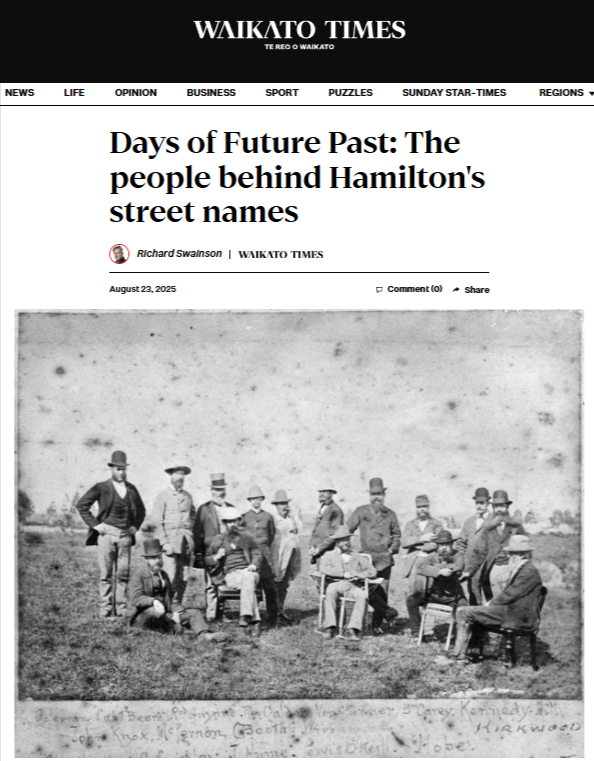
The whitewashed colonial propaganda machine is at it again. Richard Swainson's recent piece in the Waikato Times presents itself as innocent historical inquiry - a modest project to illuminate the people behind Hamilton's street names. But strip away the genteel veneer of academic curiosity and what emerges is a sordid celebration of colonial violence masquerading as heritage preservation. The Footsteps in History collective's initiative to provide "information to the general public pertaining to the historic naming of Hamilton streets" is nothing less than monument maintenance for the architects of Māori genocide.
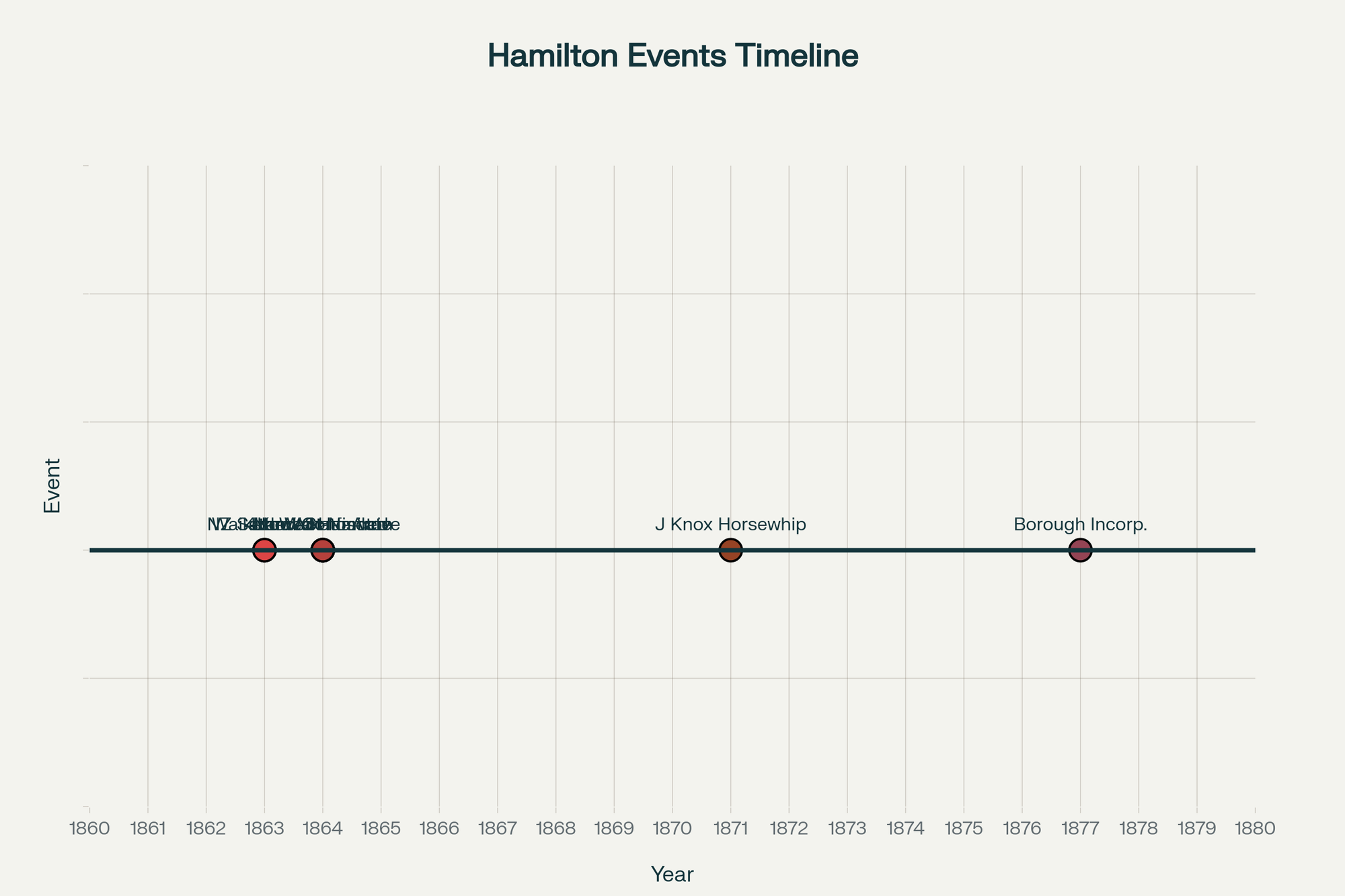
Timeline of Colonial Violence and Street Naming in Hamilton/Kirikiriroa 1863-1877
Background: The Blood-Soaked Foundation of Kirikiriroa
Before diving into the cesspit of colonial hagiography, we must understand the true history that these sanitized biographies desperately seek to obscure. Hamilton - originally Kirikiriroa, the resting place of chiefs - was built upon 1.2 million acres of confiscated Māori land. This wasn't a peaceful transfer or legitimate purchase - it was state-sanctioned theft orchestrated through the New Zealand Settlements Act 1863.
The Fourth Waikato Regiment, which Swainson romanticizes as "military settlers," were nothing more than an occupying force of land pirates. These men, recruited from Australia and Otago with promises of free land grants, were the colonial government's shock troops in their war of extermination against Waikato-Tainui. The very streets of Hamilton East became their reward for participating in what the Crown later admitted was an unjust invasion.
From a Māori worldview grounded in whakapapa, whakatōhea (collective responsibility), and mana whenua, these street names represent a profound violation of tika (justice) and pono (truth). They are monuments to manuhiri (uninvited guests) who not only overstayed their welcome but murdered their hosts and stole their whare.
Celebrating the Executioner While Erasing the Executed
Swainson's focus on John Knox - Hamilton's fifth mayor and a man publicly horsewhipped for slandering local women as having "easy virtue" - exemplifies the grotesque moral inversion at the heart of this project. Knox Street exists not because of any civic virtue, but because Knox received land grants as payment for his participation in the Waikato invasion. As historian Lyn Williams notes, "his town acre was in Knox St, his rural grant of 80 acres at Glenview."
The pattern is clear and nauseating. Hamilton's street names read like a roll call of colonial violence: Von Tempsky Street (named after a Prussian mercenary responsible for atrocities at Rangiaowhia), Grey Street (after Governor George Grey who orchestrated the land confiscations), and Bryce Street (after John Bryce who invaded the pacifist settlement at Parihaka).
Meanwhile, the original Māori place names - Kirikiriroa, Puutikitiki, Te Wehenga - were systematically erased, their stories buried beneath colonial mythology. Only now, through the courageous advocacy of tangata whenua and allies like Ian McMichael, are some of these names being restored.
The Architecture of Amnesia: How Colonial Historians Sanitize Genocide
Manufacturing Heroes from Murderers
Swainson's biographical sketch of John Knox epitomizes the colonial historian's art of moral laundering. He describes Knox as possessing "harsh, narrow, hard-working, unselfish but limited vision" - the kind of euphemistic language typically reserved for serial killers with good work ethics. The man participated in an illegal invasion that resulted in hundreds of Māori deaths and the theft of over a million acres, yet Swainson presents him as a colorful local character worthy of biographical celebration.
This sanitization follows a predictable pattern. The violence is minimized through passive voice ("land was confiscated") or disappeared entirely behind euphemisms like "military settlement" and "land grants." The perpetrators are humanized through anecdotes about their business ventures and political squabbles, while their victims remain faceless statistics. Knox's horsewhipping becomes a charming tale of frontier justice rather than evidence of his documented history of misogyny and inflammatory rhetoric.
The Myth of Moral Equivalence
Perhaps most insidiously, Swainson employs the classic colonial historian's trick of false balance. He acknowledges that Knox was "respected rather than loved" and had a "sharp speech," as if these personality quirks somehow balance out his participation in genocide. This is like describing Hitler as having "strong organizational skills but questionable people management techniques."
The entire Footsteps in History project operates under the fiction that these colonial figures are morally neutral historical curiosities rather than the architects of ongoing trauma. By treating Knox's biography as equally valid to, say, a street named after a Māori leader, the project perpetuates the colonial myth that all perspectives are equally legitimate.
Weaponizing Academic Authority
Swainson's credentials - "Dr Richard Swainson runs Hamilton's last DVD rental store and is a weekly contributor to the Waikato Times history page" - are deployed to lend academic authority to what amounts to colonial propaganda. The dry, scholarly tone masks the deeply political nature of the project: legitimizing the colonial occupation of Māori land by celebrating its foot soldiers as local heroes.
The reference to Peter Gibbons' "seminal publication Astride the River, Hamilton's official history" further weaponizes academic authority. These aren't neutral historical documents but state-sanctioned narratives designed to justify ongoing colonization. When Swainson quotes Gibbons describing Knox as typifying "the founding fathers," he's perpetuating the colonial myth of legitimate settlement while erasing the reality of violent dispossession.
The Hidden Networks of Colonial Power
Following the Money: Land Grants as Payment for Murder
The most damning evidence against Knox and his fellow "settlers" lies in the direct connection between their violence and their rewards. Knox didn't randomly decide to settle in Hamilton - he was given land there as payment for his military service in the 4th Waikato Regiment. According to the terms of enlistment, privates received 50 acres of rural land plus a town section, while officers received proportionally more.
This wasn't charity - it was a calculated strategy to place military settlers on confiscated land to deter Māori from reoccupying their territory. The colonial government understood that their theft would only be secure if they could populate the stolen land with armed settlers loyal to the Crown. Knox and his compatriots were human shields protecting the fruits of genocide.
The Business of Colonization
Knox's later career as an auctioneer reveals another layer of the colonial exploitation network. He made his living selling "surplus army stores, ironmongery, ploughs, harrows and drays" - the material remnants of the military occupation. Even more tellingly, he sold the "posts and rails that had formally encircled Sydney Square - today's Steele Park." These weren't just commercial transactions but the literal dismantling of military infrastructure as the occupation transitioned to civilian control.
His auction house at "Knox's Corner" - the intersection of Victoria Street and the street bearing his own name - became a symbol of how thoroughly the colonial elite had carved up Māori land among themselves. The man's name adorned the street where he sold the spoils of war from his shop built on stolen land.
The Orange Lodge Connection
Swainson mentions almost in passing that Knox was a prominent member of the Cambridge Orange Lodge, describing his participation in their 12 July celebrations as "the proudest moment of my life". This seemingly innocent detail reveals Knox's deep involvement in the sectarian networks that drove much of New Zealand's colonial violence.
The Orange Order wasn't just a social club - it was a militant Protestant supremacist organization with deep ties to British imperialism. Knox's boast about being among the seven founding members of Hamilton's Orange Lodge in 1871 places him at the center of the ideological apparatus that justified anti-Catholic and anti-Māori violence. The timing is significant: 1871 was the same year Knox was publicly horsewhipped, suggesting his inflammatory rhetoric extended beyond local gossip to broader sectarian agitation.
Implications: The Ongoing Violence of Colonial Memory
Intergenerational Trauma and Historical Gaslighting
For Waikato-Tainui descendants, streets named after their ancestors' killers represent ongoing psychological violence. As Tukoroirangi Morgan explains, "We've had to carry that pain of injustice and despair for 159 years... They don't have to endure the memory of murder for generation after generation".
The Footsteps in History project compounds this trauma by demanding that Māori not only live with these monuments to genocide but celebrate them as "heritage." It's the ultimate gaslighting - forcing the descendants of victims to participate in venerating their oppressors while being told this represents "sharing our history."
The Neoliberal Commodification of Genocide
The project's emphasis on providing this information "at absolutely minimal cost to the rate payer" reveals the neoliberal logic underlying colonial memory work. Genocide commemoration becomes a budget line item, historical truth a cost-benefit analysis. The real costs - the ongoing trauma to Māori communities, the perpetuation of colonial power structures, the moral degradation of treating mass murder as local color - never appear on any spreadsheet.
This commodification extends to Swainson's own position as Hamilton's "last DVD rental store" owner writing history columns. The same market forces that are killing his outdated business model are being used to package and sell sanitized colonial narratives to a public hungry for simple stories that don't challenge their comfortable assumptions about New Zealand's "peaceful" colonization.
The Seductive Power of Colonial Nostalgia
Projects like Footsteps in History succeed because they offer Pākehā New Zealanders exactly what they want: the comforting fiction that colonization was carried out by colorful characters with understandable human flaws rather than systematic genocidaires implementing state policy. Knox becomes a gruff but principled businessman rather than a willing participant in ethnic cleansing.
This nostalgia serves contemporary political purposes by normalizing ongoing colonization. If the "founding fathers" were just flawed humans doing their best in difficult circumstances, then contemporary resistance to Māori self-determination becomes unreasonable extremism rather than justified anti-colonial struggle.
The Path Forward: Decolonizing Memory
Truth Before Reconciliation
Real reconciliation requires truth, not the comfortable myths peddled by projects like Footsteps in History. Swainson and his colleagues could use their platform to tell the full story of how Hamilton was built on genocide, how street names were chosen to celebrate perpetrators, and how these monuments continue to inflict harm on tangata whenua communities.
Instead, they choose to perpetuate the colonial mythology that treats mass murder as ancient history irrelevant to contemporary politics. This isn't innocent academic inquiry - it's active complicity in ongoing colonization.
Supporting Indigenous-Led Initiatives
The real heroes in this story are people like Ian McMichael, who successfully advocated for renaming Von Tempsky Street to Puutikitiki Street, and the Waikato-Tainui leaders who refuse to let their ancestors' killers be celebrated as local heroes. Their work represents genuine historical justice rather than colonial myth-making.
Councils and historians genuinely committed to justice would center these Māori voices rather than providing platforms for colonial apologists. They would recognize that street names are not neutral historical artifacts but ongoing political statements about whose stories matter and whose violence deserves commemoration.
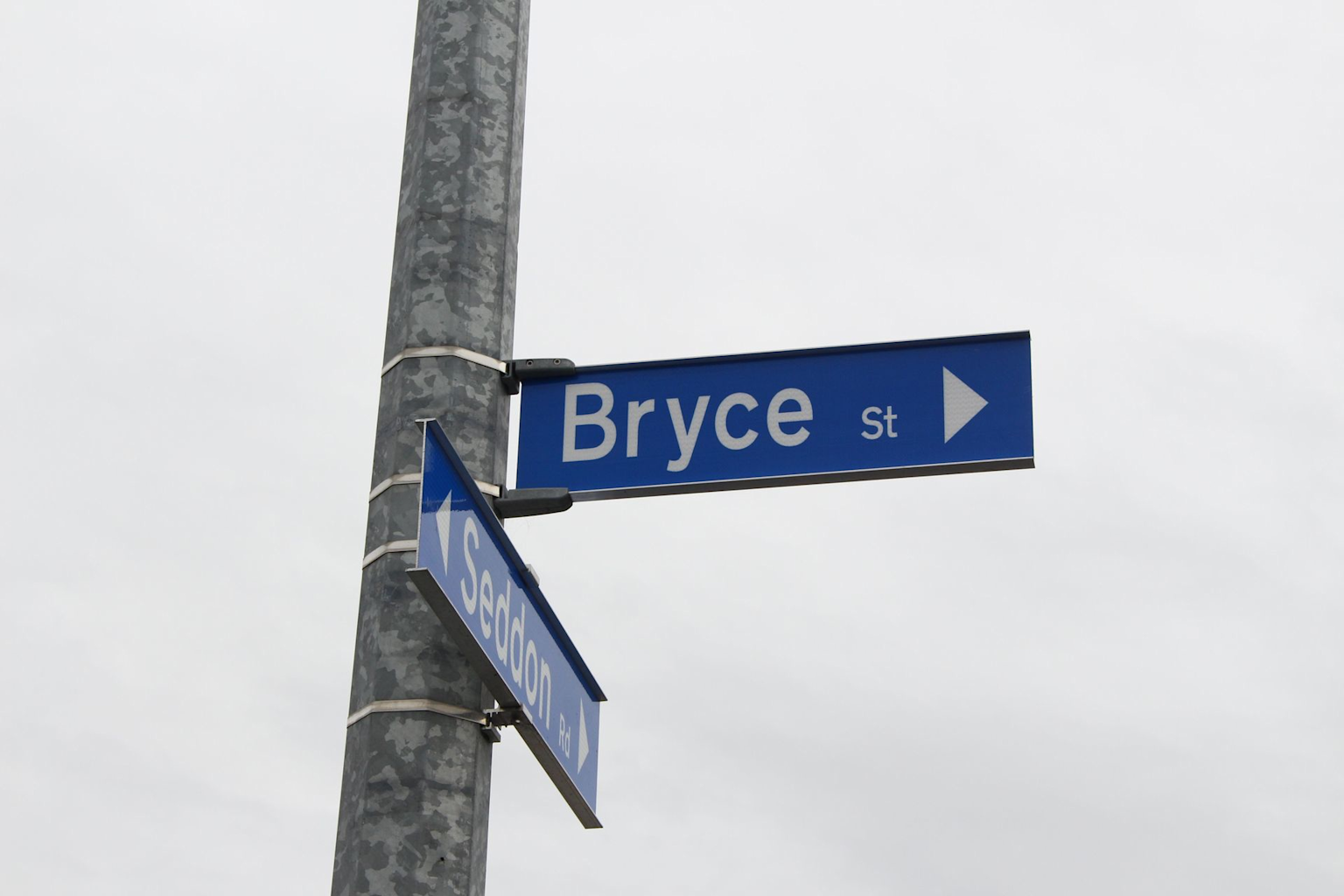
Street signs for Bryce Street and Seddon Road in Hamilton, New Zealand, indicating colonial-era street names
The fight over Hamilton's street names isn't about political correctness or historical accuracy - it's about whose version of reality gets to shape the future. Every day that Knox Street bears the name of a genocidal land thief, every morning that commuters drive down Von Tempsky Avenue, the colonial project continues its work of normalizing mass murder and land theft.
Projects like Footsteps in History aren't preserving history - they're manufacturing it, creating sanitized narratives that allow contemporary New Zealanders to inherit the fruits of genocide without confronting the moral implications of their position. They transform killers into characters, thieves into pioneers, and ongoing colonization into inevitable historical progress.
True historical justice requires more than changing street signs - it demands confronting the systems of power that continue to benefit from colonial violence. But changing those signs would be a start, a recognition that some stories deserve to die so that others might finally be heard.
Readers who find value in this work and wish to support indigenous resistance to colonial mythology can contribute a koha to HTDM: 03-1546-0415173-000. The MGL understands these are tough economic times for whānau, so please only contribute if you have capacity and wish to do so.
Mauri ora, and remember - decolonization is not a metaphor.
Ivor Jones
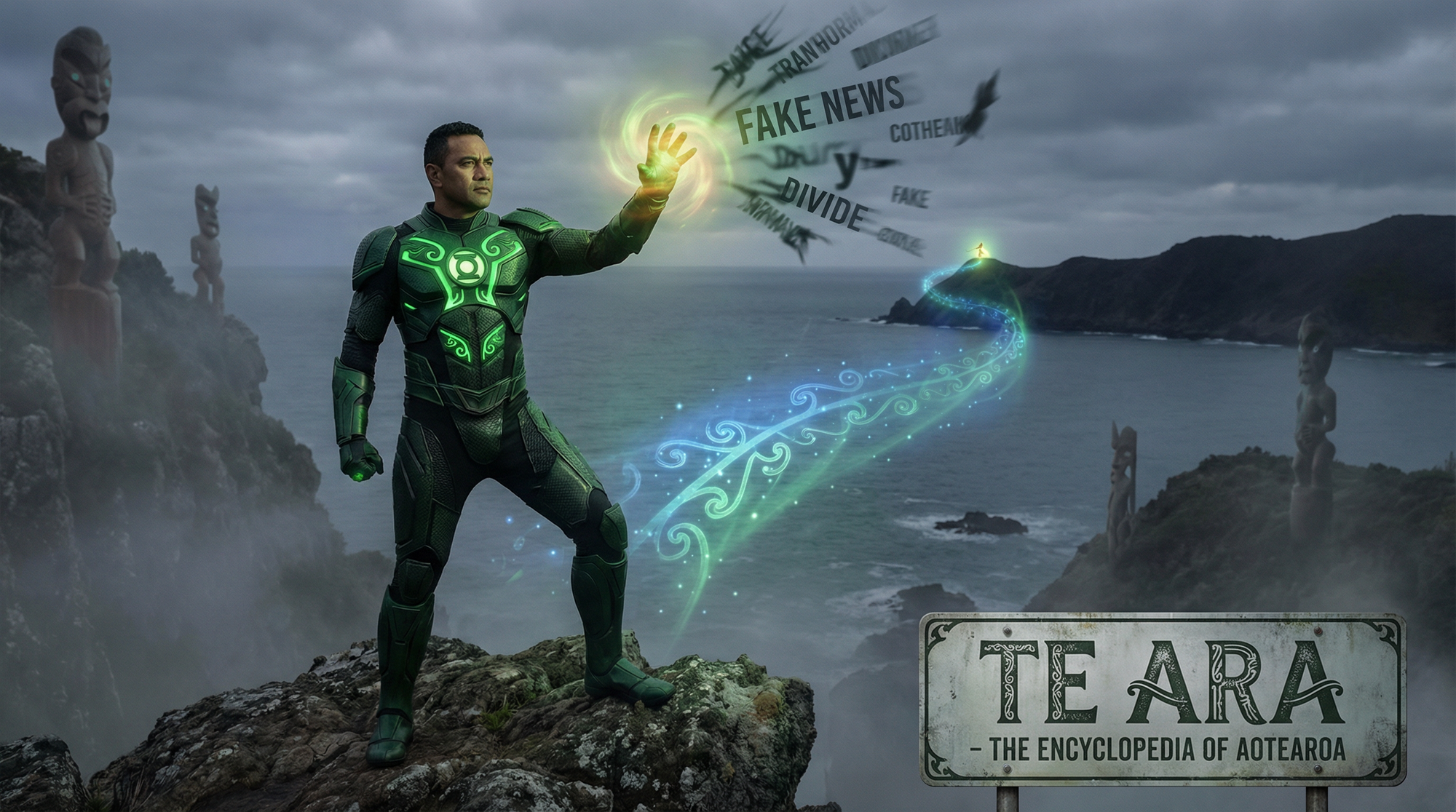
The Māori Green Lantern

The Māori Green Lantern fighting misinformation and disinformation from the far right