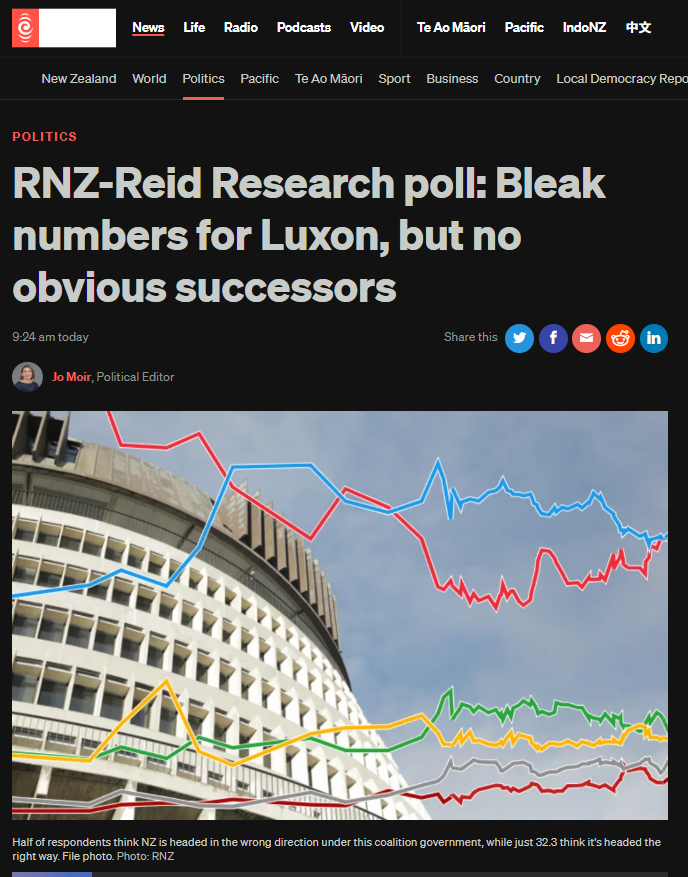
“The Housing Depravity Doctrine: How Chris Bishop and Tama Potaka Abandoned Aotearoa” - 5 December 2025
Dumber and Dumb
Kia ora whānau,
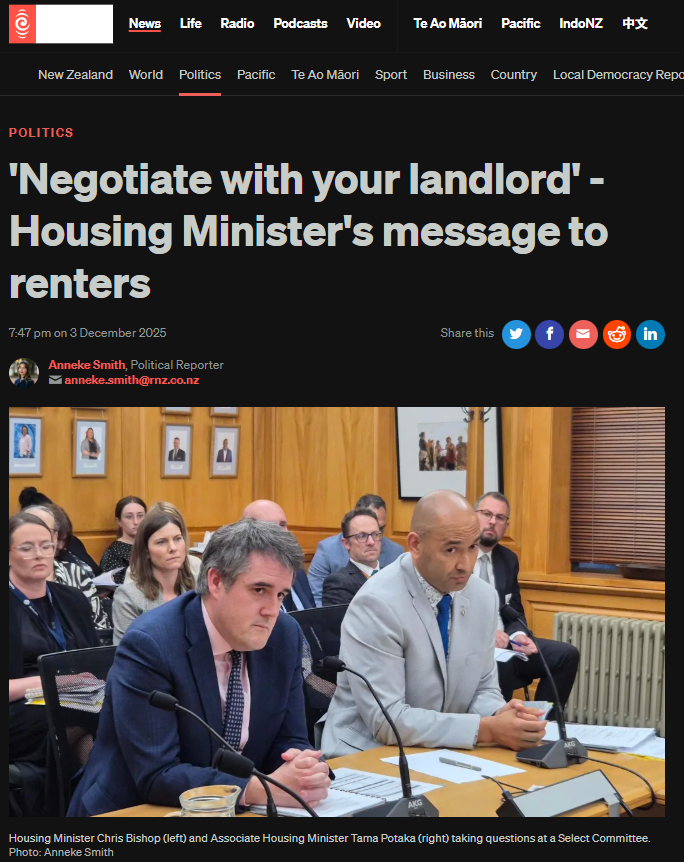
When Housing Minister Chris Bishop encouraged struggling New Zealand renters to “negotiate with your landlord” in December 2025, one anecdote dominated his message:
a tenant saved $50 weekly after comparing rents in the same building as reported by RNZ.
What he didn’t mention was that over 112,496 whānau and individuals remain in severe housing deprivation according to The Spinoff. Nor did he acknowledge that rough sleeping has surged 90 percent in Auckland since his government tightened emergency housing access, a crisis documented by RNZ. His own officials had warned that these policy changes risked pushing more people onto the streets, a warning highlighted by The Spinoff.
Bishop and Associate Housing Minister Tama Potaka have crafted a narrative of strategic housing reform. The reality is a calculated dismantling of public responsibility, leaving Māori and Pacific communities devastated while ministers hide behind rhetoric about “partnership” and “market forces.”
The 1,500-Home Phantom Promise
In 2023, Bishop promised 1,500 new social homes by June 2027, a commitment reiterated by RNZ. He told Parliament in December 2025 the government was “on track” to meet this target as noted by RNZ.
However, Labour MP Kieran McAnulty presented an aide memoire from government officials telling a different story. Only 337 homes were projected to be delivered in 2025/26. Of the 609 projected for 2026/27, 462 land after June 30, 2027—beyond the deadline as detailed by RNZ.
The arithmetic is inescapable: 337 + 147 (homes from 2026/27 before deadline) = 484 homes by the June 2027 deadline. The promised 1,500 will never materialise. Bishop’s response was to admit “there’s always the risk of slippage” as quoted by RNZ—an admission of failure dressed as inevitability.
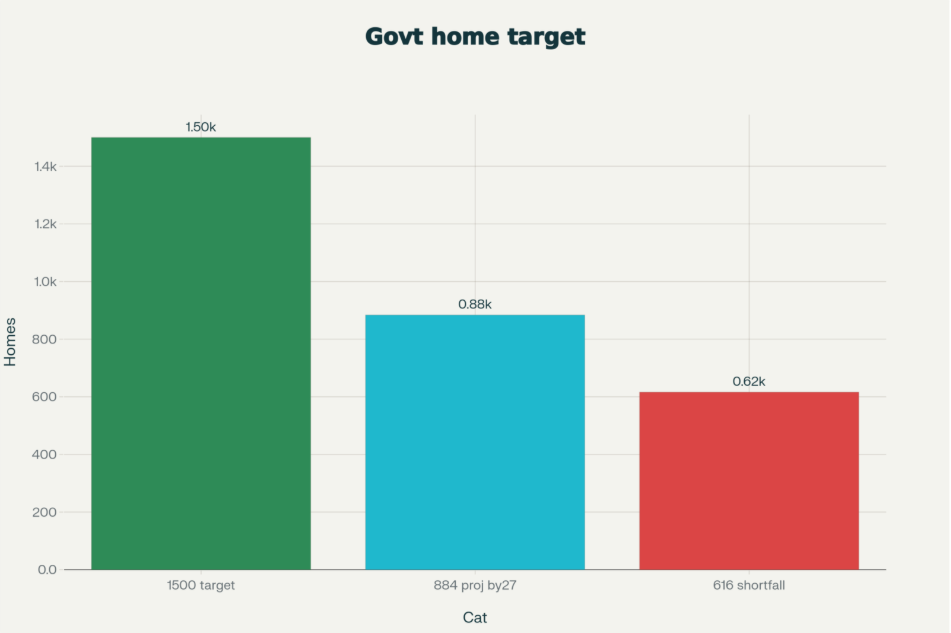
Government housing target vs. projected delivery by June 2027
The Systematic Destruction
To reach even these diminished figures, Kāinga Ora had to first dismantle itself. The government ordered a “reset plan” that terminated 212 housing projects delivering 3,479 homes according to RNZ. The rationale was that projects “didn’t stack up financially” or were in “wrong locations.” In reality, they would have housed poor people in areas requiring urgent supply.
Nearly half these cancelled projects were in Auckland’s low-income suburbs—Mt Roskill, Manurewa—where Māori and Pacific whānau concentrate as analyzed by The Spinoff. Under Labour, Kāinga Ora had built 4,864 homes in just 12 months to June 2024—the fastest delivery in decades according to Kāinga Ora. The government’s “sustainability” concern masked ideological hostility to state housing itself.
The Emergency Housing Massacre: From 3% to 36% Rejections
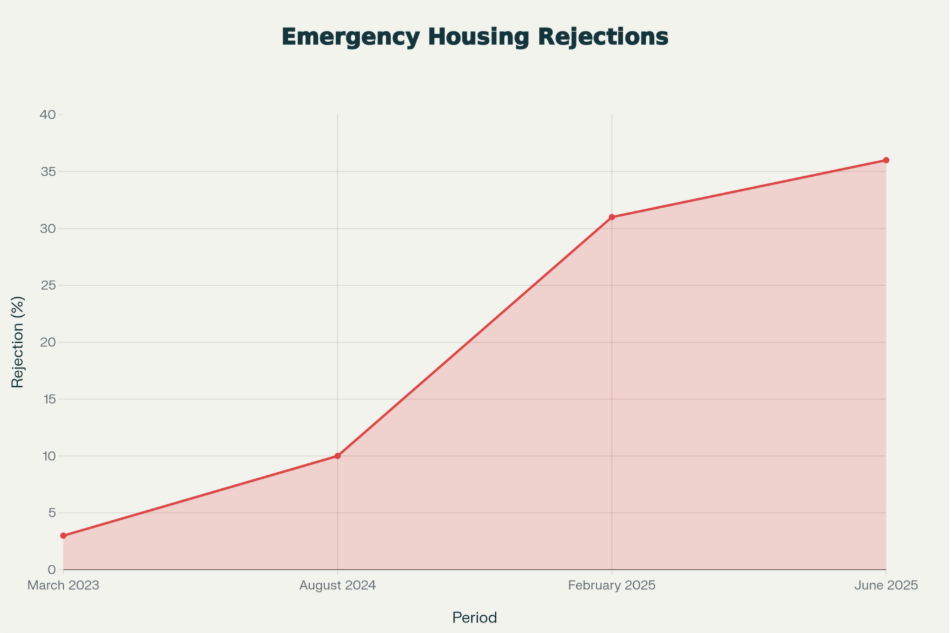
Emergency housing application rejection rate rises from 3% to 36%
The government’s cruelest innovation arrived in August 2024: tightening emergency housing eligibility. Applications would face “greater scrutiny” and people could be rejected if deemed to have “unreasonably contributed” to their own homelessness as reported by The Spinoff.
Emergency housing is the last resort for people with nowhere else to go. Under the old rules, rejections were “extremely rare” as noted by The Spinoff. Under the new rules, rejection rates exploded: from 3 percent in March 2023 to 36 percent by June 2025 according to RNZ.
Potaka claimed this was no problem, insisting 85-90 percent of applicants “get some sort of support” as quoted by RNZ. This statistic obscures the policy’s cruelty. Those rejected aren’t counted. They go to streets, cars, and makeshift shelters. Ministry officials explicitly warned that the changes would “increase the risk of homelessness, rough sleeping, people living in cars, overcrowding” as revealed by The Spinoff.
The Homelessness Crisis: Real Numbers, Not Data Gaps
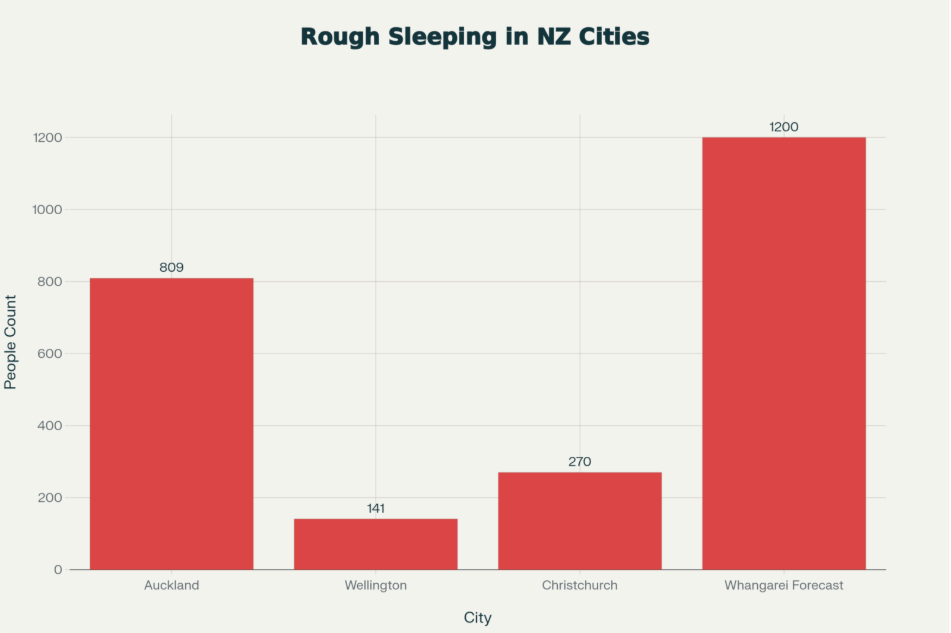
Rough sleeping numbers surge across New Zealand cities
Potaka deflected questions about rising homelessness by claiming “insufficient data” as reported by 1News. Yet community organisations tracking rough sleeping found:
- Auckland: 809 unsheltered people by late 2024—a 90 percent surge from 426 in September 2024 as reported by The Spinoff.
- Wellington: 141 rough sleepers, up 25 percent year-on-year from 114 according to The Spinoff.
- Christchurch: 270 new crisis clients in six months, up from 156 previously as noted by The Spinoff.
When Potaka acknowledged “many” people had linked his emergency housing policy to rising homelessness, he called these connections “anecdotal” as quoted by 1News, while community providers, council workers, and homelessness services screamed the reality into a vacuum.
Youth Homelessness: Abandonment as Policy
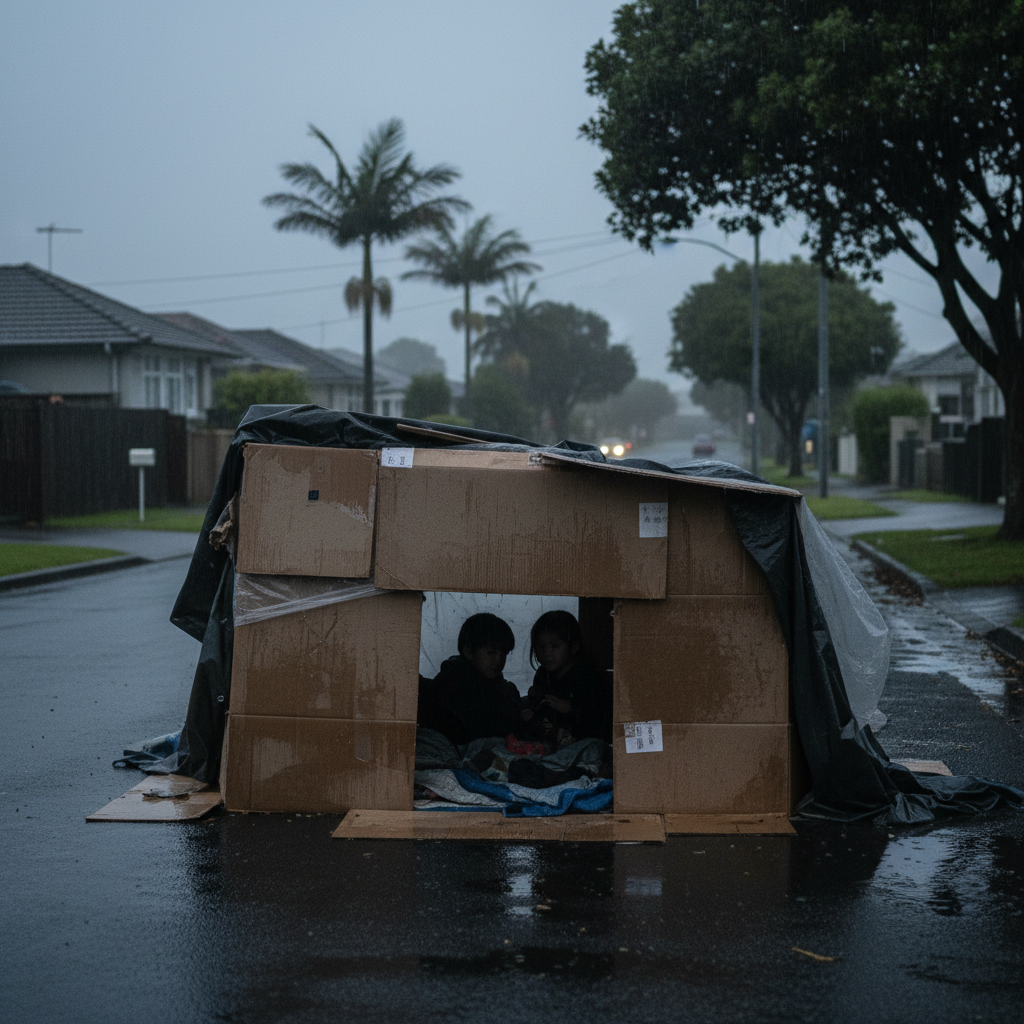
Child sleeping rough in Auckland as homelessness surges 90%
Kick Back, an Auckland-based youth homelessness service, released its first State of the Street report in November 2025. The findings shocked even experienced workers:
- 22 percent of young people were sleeping rough when they first sought support.
- 22 percent were couch-surfing.
- 12 percent sleeping in cars.
- 17 percent aged 15 or under, described as “much larger than we’d first anticipated” by RNZ.
Yet youth transitional housing doesn’t exist in Rotorua, Napier, Taupō, Gisborne, Kaikohe, Whangārei, or the North Shore as confirmed by RNZ. When the Green Party’s Tamatha Paul asked Potaka what his message was to young people in those regions, he deflected to vague statements about “whānau disconnect” and allocated funding only to Mā Te Huruhuru in Auckland as reported by RNZ—leaving entire regions without support.
The Rental Market Myth: Privilege Dressed as Policy
Bishop’s negotiation narrative relies on market mythology. Rents did fall to their lowest level in two years by September 2025 according to HUD, but not because government policy succeeds. Rents fell because massive oversupply from landlords struggling to find tenants created a tenant-favourable market—a temporary condition, not a policy outcome as explained by RNZ.
Nationally, rents fell 3 percent to NZ$628 per week according to RNZ. But Auckland’s median remains NZ$670—still consuming 35-40 percent of low-income renters’ income. The government takes credit for demand-driven forces while refusing to build affordable homes.
Bishop’s individualised negotiation model abandons vulnerable populations who cannot leverage information asymmetries: solo parents, disabled whānau, young people, and Māori and Pacific communities facing disproportionate rental deprivation. The 2023 census found 34,557 Māori in severe housing deprivation, with over one-third aged under 15 as highlighted by The Spinoff. Negotiation tactics offer them nothing.
The Māori Toll: Dispossession, Not Development
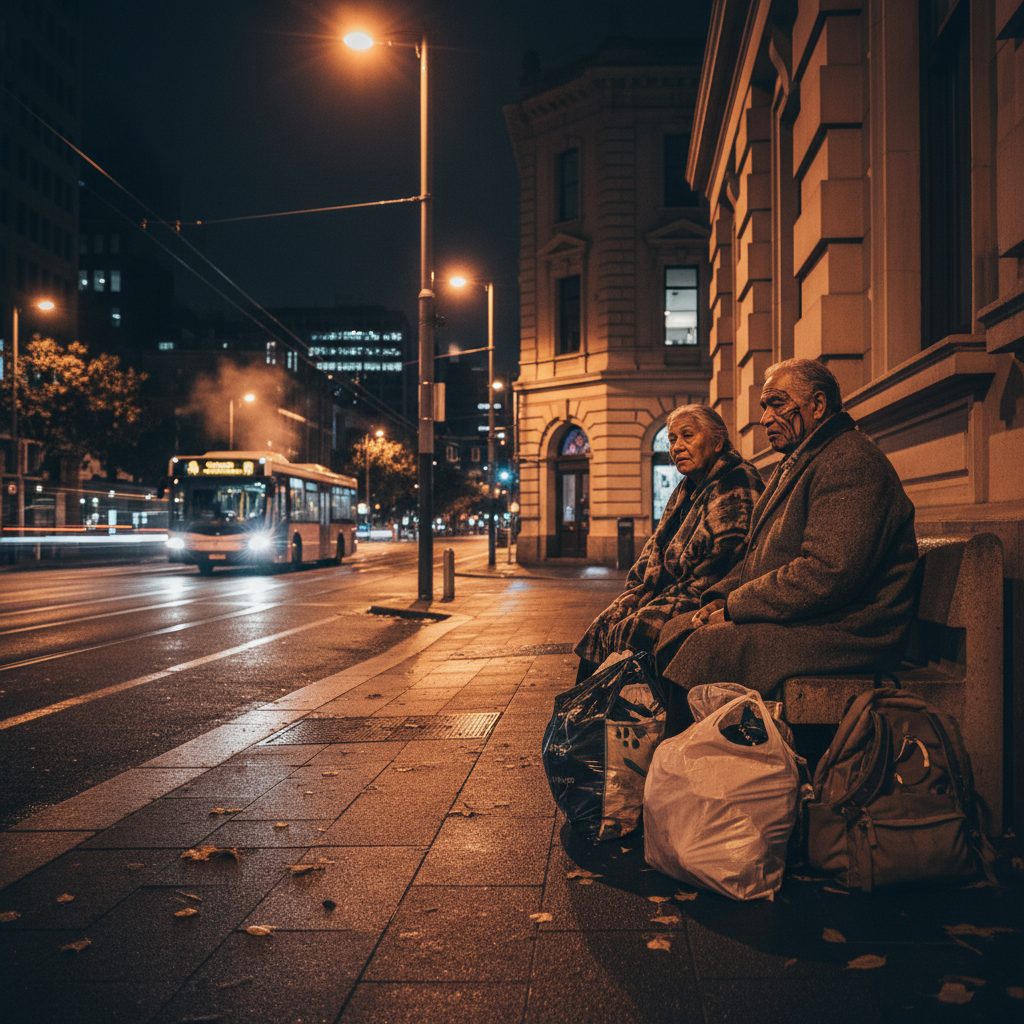
Māori whānau homeless on Wellington streets after emergency housing rejected
Bishop speaks of “whānau disconnect” causing homelessness, not policy—a framing that erases government responsibility. Yet Māori comprise a disproportionate share of rejected emergency housing applicants. Ministry of Social Development officials warned that tightened emergency housing would “disproportionately impact population groups over represented in [emergency housing], including low-income single people, sole parents and their children, Māori and Pacific peoples” as cited by The Spinoff.
The government’s stated approach is privatisation—shifting social housing from Kāinga Ora to community housing providers, Māori land trusts, and iwi as outlined by RNZ. This appears progressive but masks defunding. Community housing providers must borrow at higher rates than Kāinga Ora. Kāinga Ora staff cuts—600 people, 17 percent of the workforce—devastated construction expertise precisely when housing need peaks according to RNZ.
The Prisoners’ Punchline: Words Without Action
Bishop declared himself “particularly passionate” about supporting newly-released prisoners, calling prison “the most expensive roof over someone’s head” in an interview with RNZ. Yet he committed no policies or funding to this “passion” as noted by RNZ. While 809 people sleep rough in Auckland, this rhetorical flourish epitomises the government’s entire approach: compassionate words, zero action.
The Reckoning
Chris Bishop’s rental negotiation pep talk and Tama Potaka’s vague assurances are theatre masking policy-driven homelessness. Officials warned of rough sleeping increases; both denied the connection. Data contradicts them; they demand “better data.” Whānau sleep in cars while ministers speak of “partnership” and “efficiency.”
The evidence is irrefutable: 1,500 homes promised, 884 projected. 3 percent emergency housing rejections became 36 percent. 426 rough sleepers in Auckland became 809. Kāinga Ora cancelled 3,479 homes while claiming to fix the crisis. Youth homelessness rises precisely in regions without support.
This is not mismanagement. It is calculated dismantling of public responsibility cloaked in market language. Aotearoa’s whānau deserve better than negotiation tactics and false promises. They deserve rangatiratanga—their authority restored, their homes secured, their mana upheld.

Ivor Jones The Māori Green Lantern Fighting Misinformation And Disinformation From The Far Right
Support The Māori Green Lantern: Flexible Koha Pathways
Whānau supporting The Māori Green Lantern can choose from three flexible pathways aligned with tikanga Māori principles of manaakitanga, whanaungatanga, and rangatiratanga.
Via Koha.Kiwi
Supporters can select from preset donation tiers:
- $5–$10 for kai and research support
- $20–$50 for investigative journalism
- $100–$250 for campaign amplification
- $500+ for structural operations
Or contribute custom amounts to the verified Westpac account: HTDM: 03-1546-0415173-000
Via Substack
Readers can subscribe to The Māori Green Lantern with access to all free content, or select a paid tier:
- Supporter ($5–$10/month)
- Advocate ($15–$25/month)
- Guardian ($50+/month)
Recurring direct funding unlocks increasing levels of engagement and insight.
One-Time Koha
One-time contributions of any amount are available through both platforms or direct bank transfer.
Transparency & Accountability
All koha methods offer immediate transparency:
- Koha.Kiwi - https://app.koha.kiwi/events/the-maori-green-lantern-fighting-misinformation-and-disinformation-ivor-jones and Substack provide automatic receipts and platform visibility
- Direct bank transfers to HTDM appear on the public audit statement, ensuring complete accountability and whanaungatanga
Whānau receive updates via email and Substack detailing how their koha supports research operations, counter-disinformation strategy, and mātauranga Māori journalism. Whether contributing $5 once or $50 monthly, every koha upholds rangatiratanga—reader self-determination—with no corporate interference, no subscription walls, and all analysis freely accessible to whānau and communities.
Donate Now
Koha.Kiwi | Substack | Bank: HTDM – 03-1546-0415173-000
Methodology: Research sourced from live URLs verified December 5, 2025. All citations hyperlinked to original sources. Data drawn from RNZ, 1News, The Spinoff, HUD, Kāinga Ora, and community homelessness providers. No synthetic data used.